Restylane Vital Water-Glow Injection: Results, Number of Sessions, and How Long It Lasts
By Dr. Kim7 min read

Your moisturizer is doing everything right, but your skin still looks flat and dull. The glow just isn't there. That's when a skin booster like Restylane Vital comes up, and it's been the go-to reference product in this category for good reason. It has more accumulated clinical data than almost anything else in the space.
Restylane Vital is a hyaluronic acid skin booster made by Galderma. It uses a technology called NASHA to stabilize the HA and deliver it as tiny microinjections into the dermis. Unlike a filler, which concentrates volume in one area, this is about spreading hydration evenly across the skin to improve texture and radiance from within. Here's what the research actually shows, how the sessions work, and where the limits are.

What kind of injection is Restylane Vital?
Restylane Vital is a hyaluronic acid-based skin booster. Hyaluronic acid is naturally present in the skin; it binds water and holds it there. As we age, HA levels drop, and the skin starts to feel dry and lose its bounce. Vital replenishes that HA directly inside the skin.
The key is the NASHA technology. NASHA stabilizes the hyaluronic acid so it breaks down gradually rather than quickly. It's derived from fermentation, not animal sources, which keeps allergy risk low. Because of that stabilization, the effects last for months, a very different outcome from anything you'd get from a topical product or an oral supplement.
The broader term "hydration injection" or "skin booster" refers to this whole category: HA injected into the dermis to hydrate from the inside out. Restylane Vital is one of the earliest products in this space, which means the clinical record behind it is longer than most. Its concentration and particle size are standardized, making it the benchmark that many dermatologists use when first introducing patients to skin boosters.
How is it different from filler?
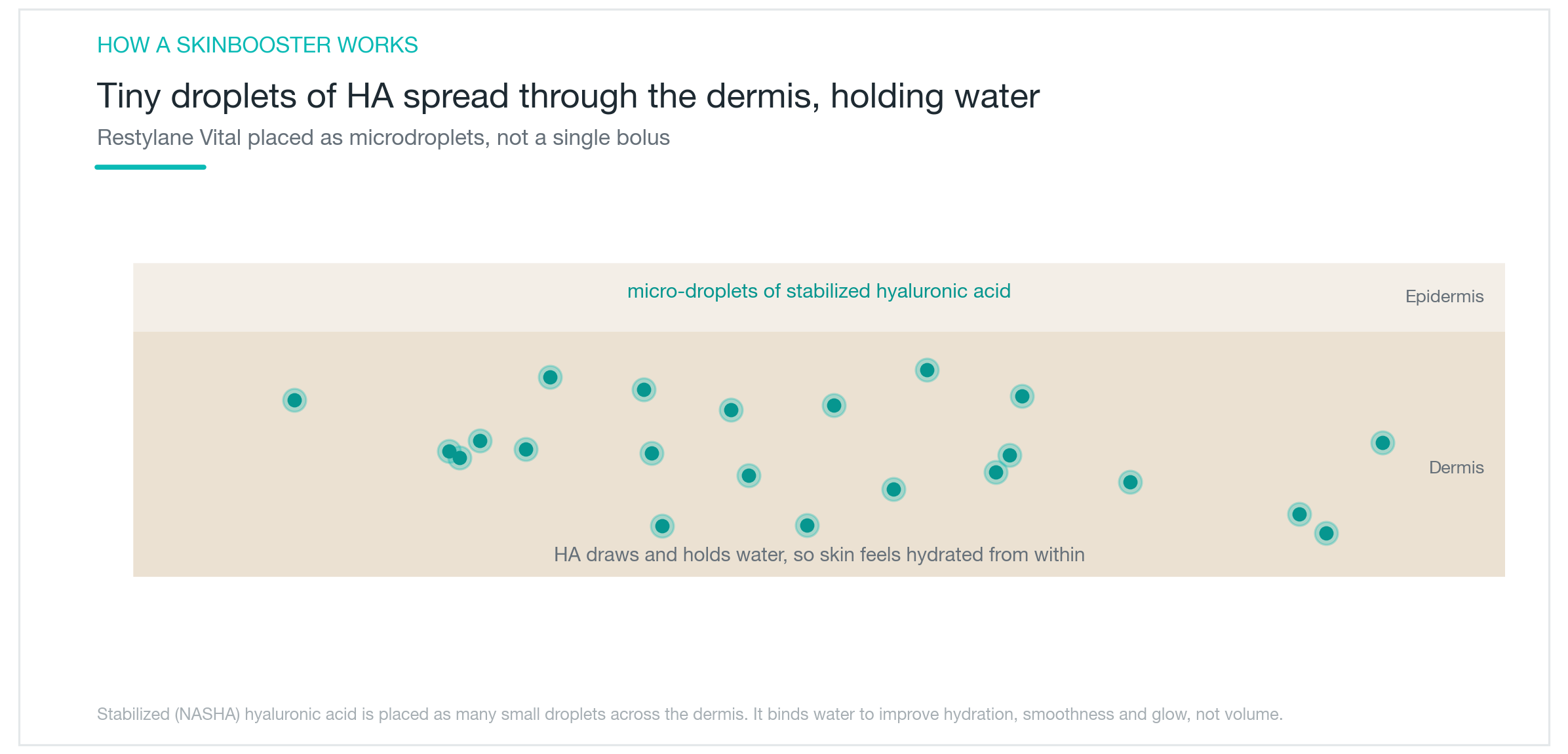
Same ingredient, completely different purpose. A filler is deposited in a concentrated mass to fill a hollow or build volume (think nasolabial folds or chin projection). Vital works the opposite way: tiny droplets distributed shallow and wide across the entire skin surface. The goal isn't volume. It's changing the baseline quality of the skin.
That changes the results you're after. Vital targets internal hydration, smoother texture, fine lines, and luminosity. Not filling a depression, but bringing dull, dry skin to life from within. The injected HA draws in water and holds it at a tissue level, so skin feels plumper and more alive.
The quick summary: deep lines and volume loss are a filler's domain. Overall dullness, dryness, and fine texture are where skin boosters like Vital shine. They're not competing; they're tools for different problems. The question is which problem you're actually solving. Plenty of people use both: filler for specific hollows, Vital to refine overall texture and glow. The two complement rather than replace each other.
Effects and limits confirmed in clinical studies
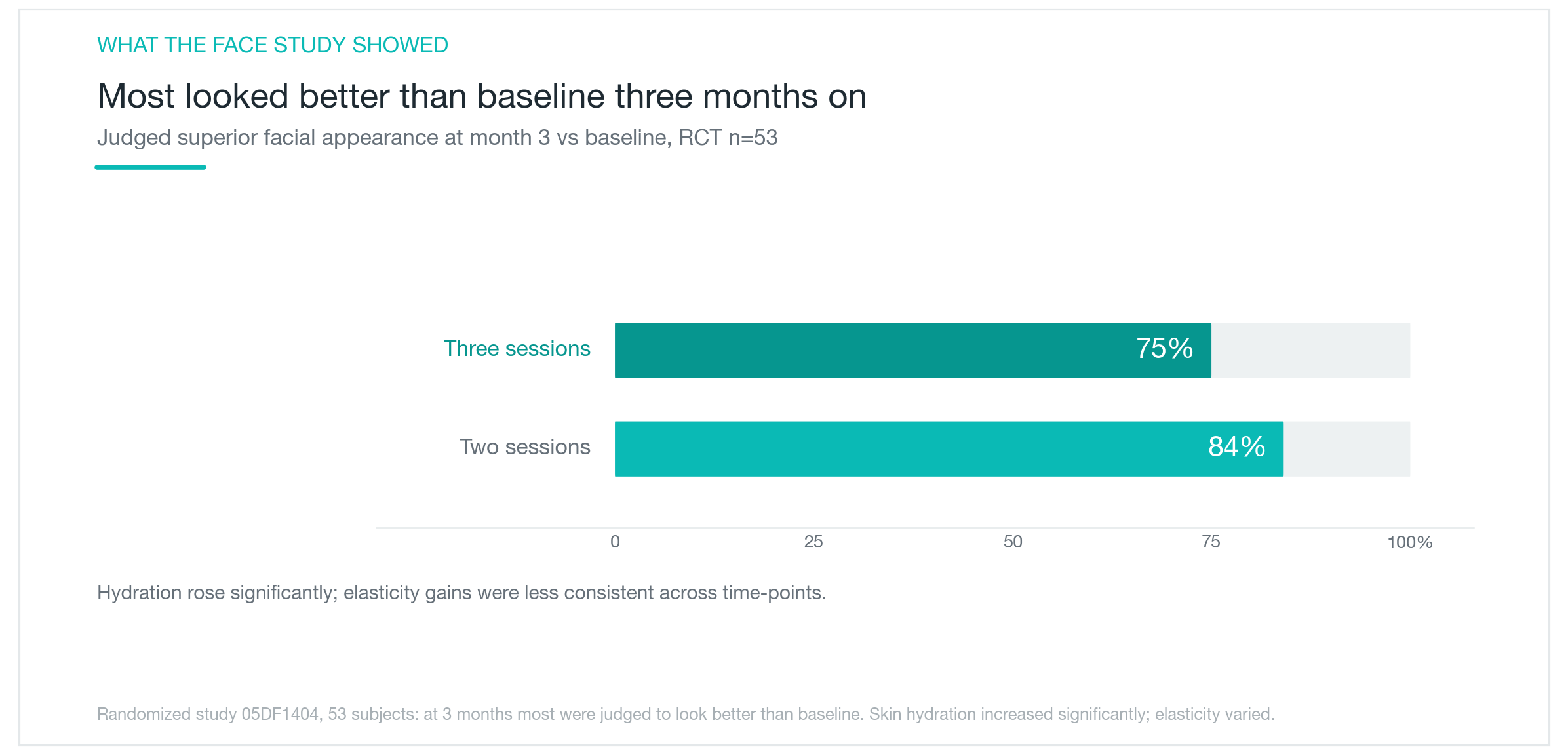
The evidence is solid. In a randomized controlled study of Restylane Vital on the face, 53 participants received either 2 or 3 treatment sessions. At the 3-month follow-up, 75% of the 3-session group and 84% of the 2-session group were rated as looking better than before treatment. Skin hydration improved significantly at multiple time points.
The honest picture has some nuance, though. In the same study, hydration gains were consistent, but elasticity results were uneven: some time points showed improvement, others didn't. That means Vital's core strength is hydration and radiance. Elasticity benefits are less predictable and vary by person and time point.
Set expectations accordingly. Vital excels at making skin more hydrated, luminous, and smoother in texture. If you're hoping for a lifting or tightening effect, or want to visibly reduce deeper lines, this probably won't deliver; those require different procedures. If radiance and internal hydration are the goal, this is a well-validated choice. Results also build across a series rather than all at once, so one session rarely tells the full story. It's more accurate to wait a few weeks after finishing the initial course before judging the results.

How many sessions, and how many weeks apart?
Restylane Vital is not a one-and-done procedure. The standard starting protocol is 3 sessions, each spaced 4 weeks apart. Rather than loading everything in at once, each session lets the skin adapt and build up HA incrementally. Most people notice the clearest change in texture and glow after finishing all 3 sessions, not after the first one.
After those 3 sessions, maintenance is needed. The injected HA breaks down gradually over time, so most people return every 4 to 6 months for a top-up to keep the results going. For some, once or twice a year is enough.
Think of Vital less as a one-time fix and more as an ongoing skin health routine. Complete the initial series, assess the results, then set a maintenance schedule from there. The time and cost commitment is ongoing, so it's worth factoring in upfront. Stretching the gap between the initial 3 sessions can disrupt the cumulative effect, so sticking to that 4-week interval for the first phase matters. After that, maintenance timing is more flexible and can be adjusted to your skin and how you feel about the results.
How long it lasts and how it differs from other skin boosters
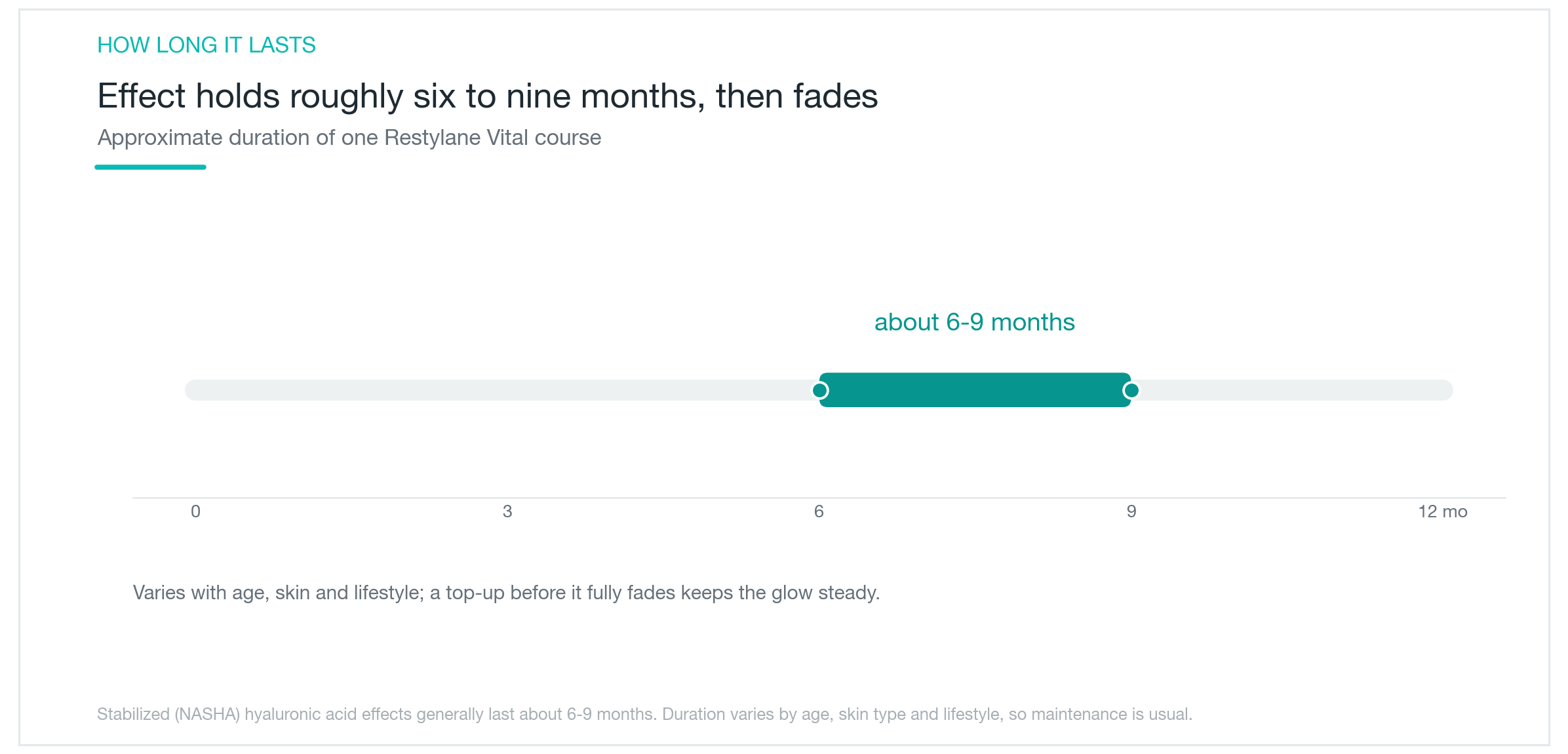
Duration varies person to person, but NASHA hyaluronic acid is generally reported to last around 6 to 9 months. Age, skin condition, and lifestyle all factor in. Scheduling a maintenance session before the effects fade completely is usually the best way to sustain that natural glow.
Within the Restylane line, Vital and Vital Light serve slightly different purposes. Vital has firmer particles and works well in areas with some laxity: the back of the hands, the neck, or thicker skin. Vital Light is a softer formulation, better suited for fine surface lines and texture refinement on the face. The choice depends on treatment area and skin thickness.
Other skin boosters approach the same goal through different means. It's less about which is better and more about which fits your concerns.
| Skin Booster | Key Ingredient | What It Targets |
|---|---|---|
| Restylane Vital | NASHA hyaluronic acid | Well-established clinical standard for deep hydration and radiance |
| Profhilo | High-concentration HA (no cross-linking) | Fewer injection points, hydration with natural firmness |
| Rejuran | PDRN (salmon-derived DNA) | Regenerative approach rather than HA-based, texture and elasticity |
All three improve skin quality, but through different mechanisms. If deep hydration and radiance are your primary goals, Vital is a proven, well-supported starting point. For regeneration or different skin concerns, the alternatives are worth discussing with your provider.

How painful is it, and who does it suit?
Multiple needle insertions mean some discomfort is expected. A numbing cream is applied beforehand, and some formulations include lidocaine to reduce sensation during the procedure. With proper numbing, most people find it very manageable. A full-face session doesn't take long.
Downtime is minimal. Small bumps or mild swelling at the injection sites are common right after the procedure and typically resolve within a day or two. Some bruising is possible, so leave a few days' buffer before any important events. Keeping up with sun protection and moisturizer in the days following helps recovery. Occasionally a small nodule may be briefly palpable at an injection site, but these almost always resolve on their own.
Who is it for? If you have persistent dryness that topical skincare can't fix, a loss of radiance and dull skin tone, or fine lines and rough texture, Vital is a strong fit. On the other hand, if sagging skin or volume loss is your primary concern, a lifting procedure or filler would serve you better. Vital works best when approached as a skin maintenance commitment rather than a one-time treatment: complete the initial series, watch how your skin responds, and build your routine from there.
Was this helpful?
About this article
Written by a practising aesthetic physician and intended for general education — not a substitute for individual medical advice.
Read next
Skin Booster Injection and Filler Differences: Hyaluronic Acid Hydration and Duration
Skin boosters feel far more hydrating than anything you apply topically. Here is why: how hyaluronic acid grabs water deep inside the dermis, how that inner glow actually forms, how it differs from dermal filler, and how long the effect really lasts, explained simply.
By Dr. Lee
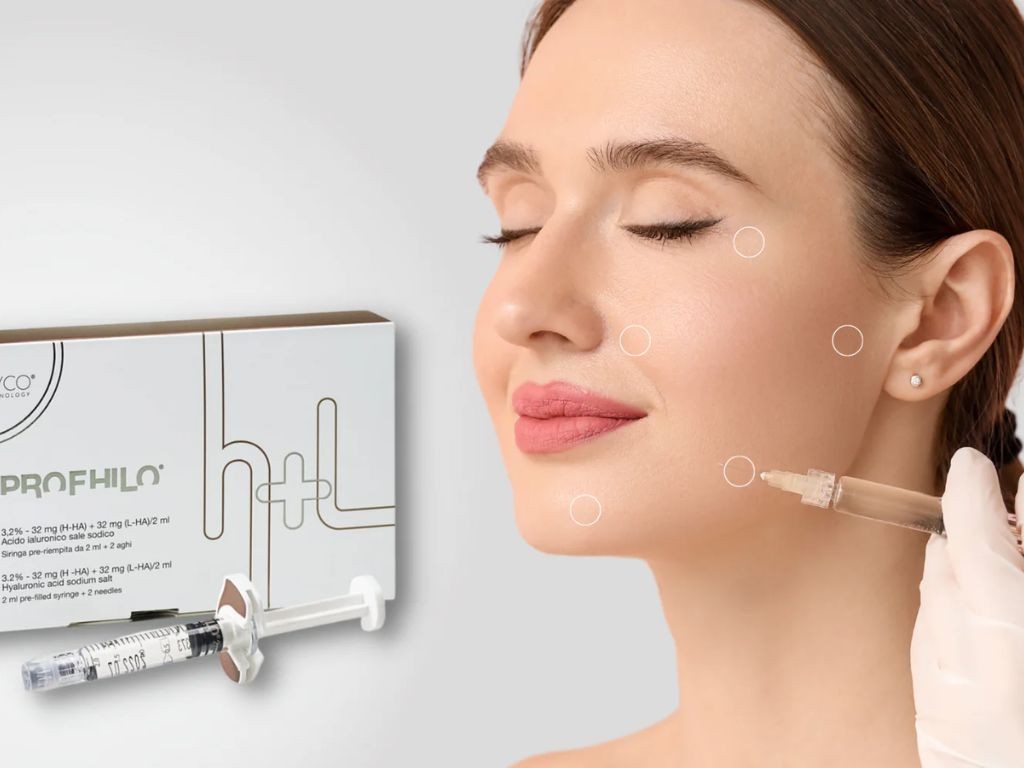
Profhilo Versus Filler and Rejuran: Differences and Results Compared
What Profhilo is, how it differs from fillers and Rejuran, and what the clinical data actually shows about skin texture, elasticity, and hydration. Effects timeline, safety record, and who it genuinely suits.
By Dr. Lee
Under-Eye Hollow Filler: Effect and Side Effects, and the Tyndall Effect to Watch
The dark, sunken look under the eyes often comes less from pigment than from hollowing and the shadow it casts. Here's how the tear trough ligament and lost volume under the eye create that shadow, how a soft hyaluronic acid filler placed shallowly and sparingly smooths it out, why thin skin and the bluish Tyndall effect make this area tricky, and how long results actually last, all backed by real published numbers.
By Dr. Kim