Under-Eye Hollow Filler: Effect and Side Effects, and the Tyndall Effect to Watch
By Dr. Kim8 min read
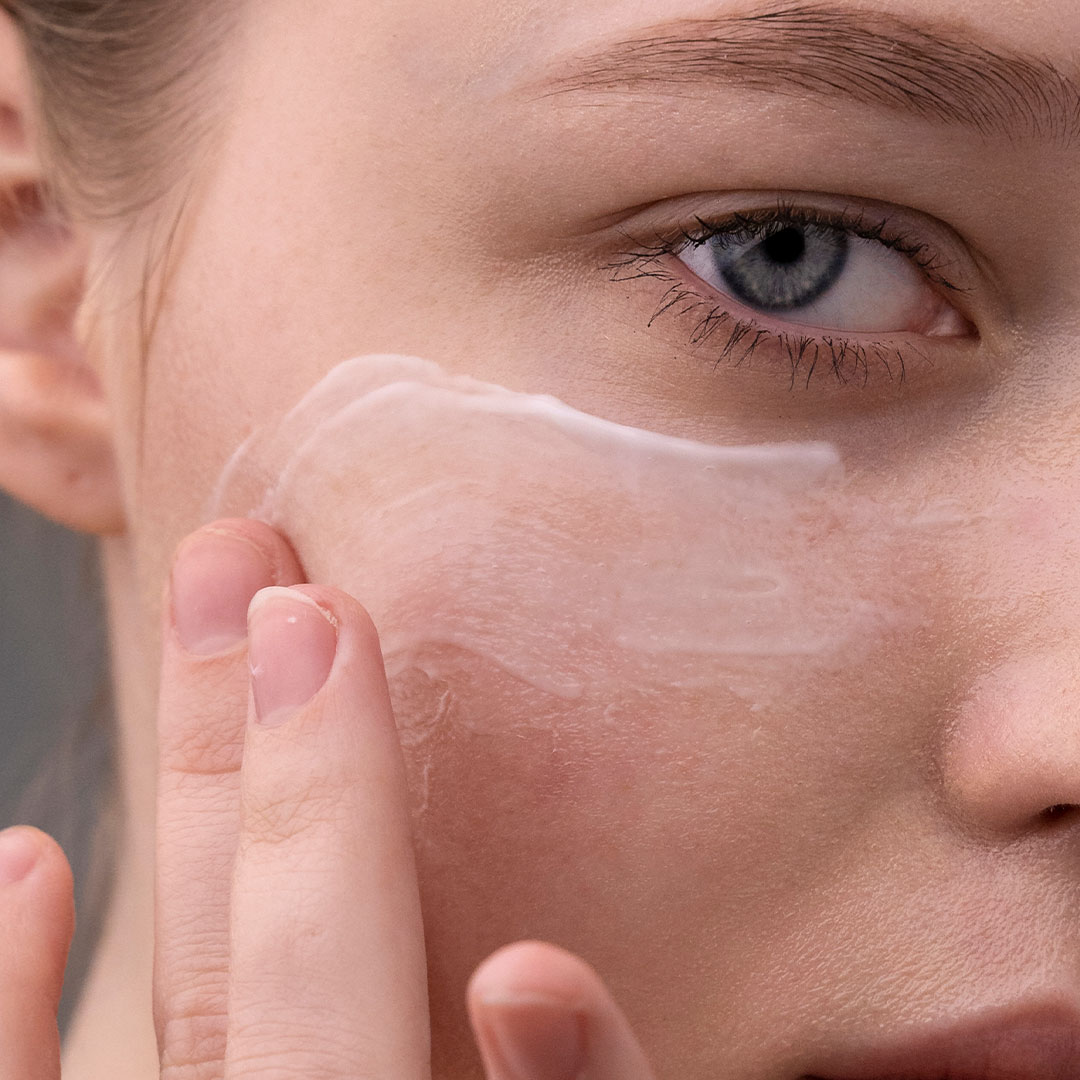
You look fine in the mirror, but in photos your under-eyes look dark and hollow, ageing your whole face. Most people blame pigment when they hear "dark circles," but a large part of that shadow isn't skin tone at all. It's the hollow itself catching the light. That's why no amount of brightening cream ever quite fixes it. Fill in that hollow with a shallow layer of filler, and the shadow softens along with it, the whole under-eye area looking brighter. The catch is that the skin here is the thinnest on the face, sitting close to blood vessels that feed the eye, so which filler goes in, at what depth, and how much, decides both how it looks and how safe it is. Knowing the mechanics and the limits ahead of time makes the consultation much easier to navigate.
How Do Under-Eye Hollows Differ From Pigment?
Two things usually overlap when the under-eye looks dark. One is true pigmented dark circles, where the skin itself carries excess pigment. The other is a shadow cast by hollowing, where the sunken groove catches light and reads as dark. The first calls for laser or brightening treatment; the second calls for filling the hollow to erase the shadow. Many people actually have a mix of both, so a consultation usually starts by sorting out which one is doing more of the work.
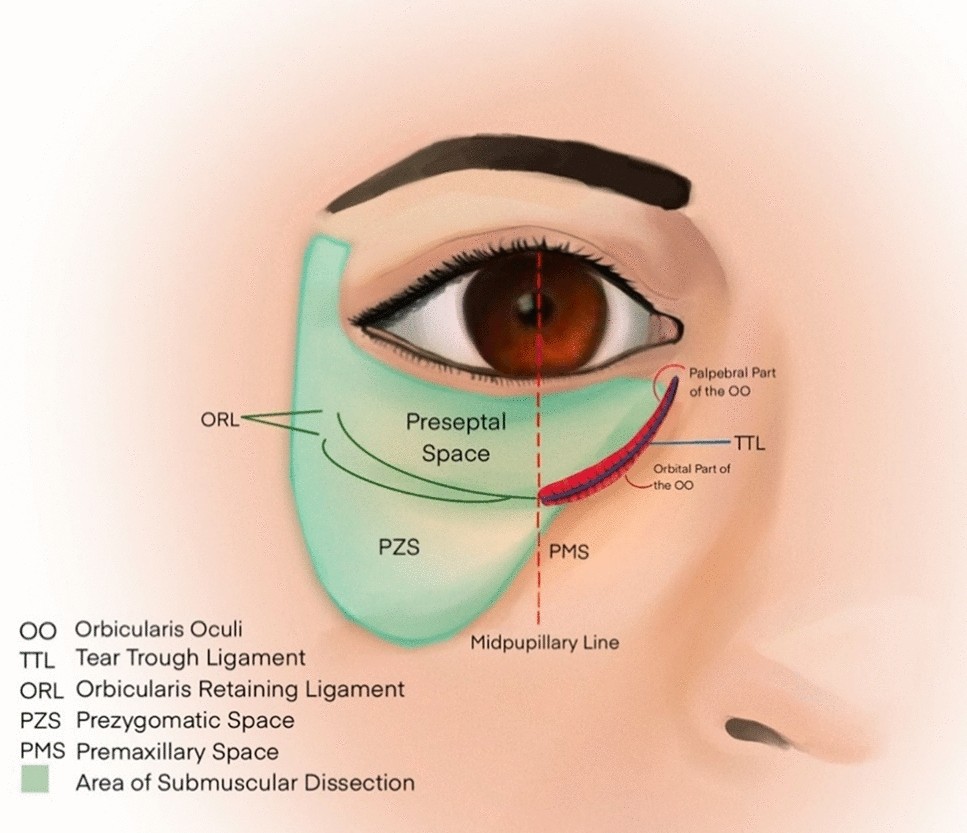
There's a clear structural reason the under-eye hollows out. Just below the lower eyelid sits the tear trough ligament, which anchors the skin firmly to the orbital bone. That ligament pulls the skin down, while the fat pad above it tends to bulge forward as we age. The result is a visible groove between the bulging fat and the tethered skin, and that groove reads as a shadow whenever light hits it.
On top of that, the orbital bone and cheek fat both shrink over the years. With less support underneath, the groove deepens and the shadow darkens further. Overhead lighting makes it worse, casting a shadow that can make you look tired or sleep-deprived even when you're not. So the under-eye shadow isn't purely a pigment issue. It's a shadow created by hollowing and sagging as the face ages. If hollowing is the cause, filling that groove to erase the shadow makes sense.
How Long Does Filler Last Under the Eyes?
Under-eye filler is a treatment where a hyaluronic acid gel is placed shallowly beneath the hollowed groove to smooth out the shadow. Hyaluronic acid is a substance already present in our bodies, and it draws in water to create volume. Placed carefully into the tear trough, the gel softens the shadow in the groove and brightens the whole area. The real goal is bridging the height difference between the bulging fat and the sunken groove. Because it's adding volume rather than cutting tissue the way surgery does, the effect is visible right after treatment.
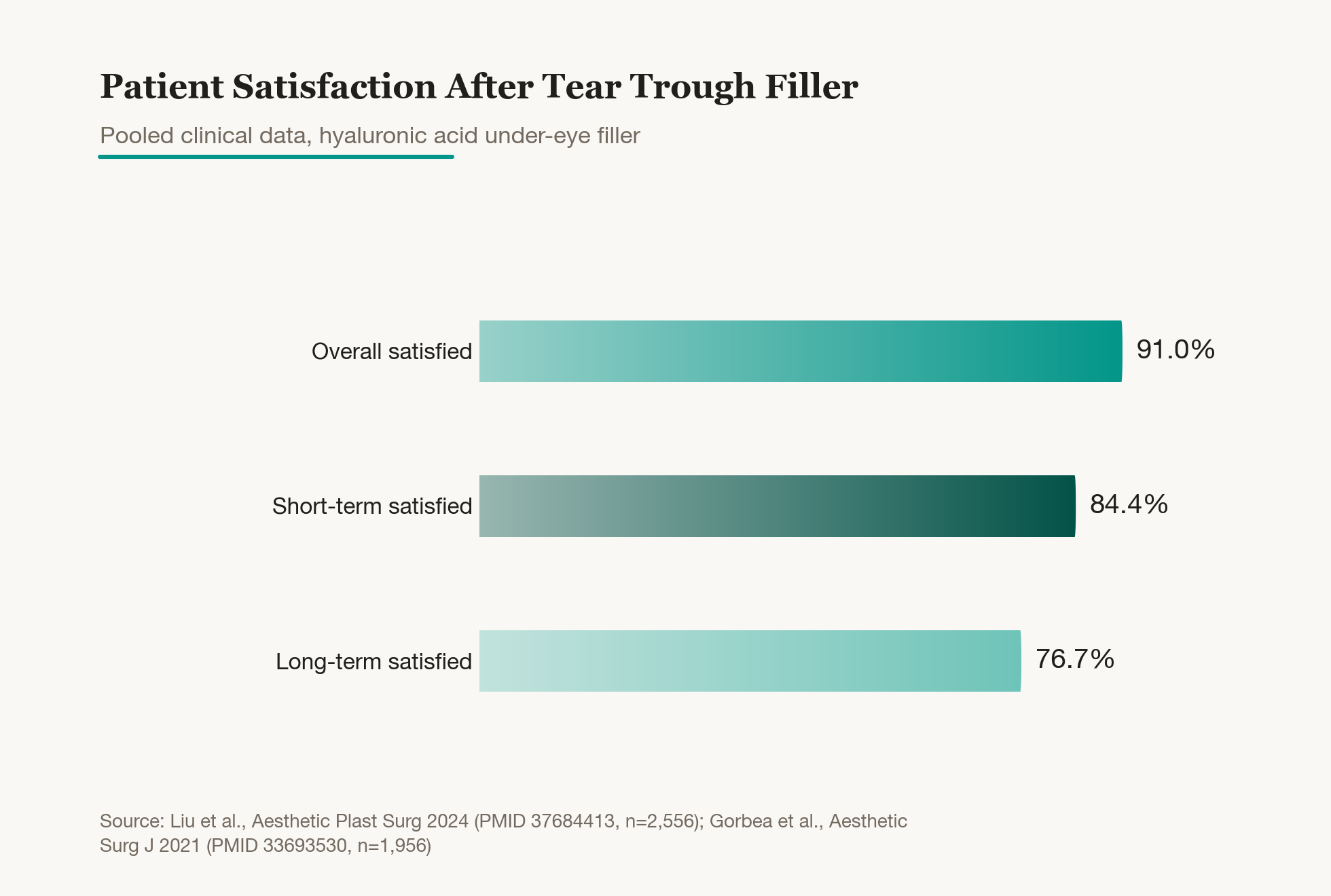
There's solid evidence behind the results, too. Pooling 31 studies and 2,556 patients who received under-eye filler, 91 percent, or roughly nine in ten, were satisfied with their outcome. As the graph above shows, another large-scale analysis found satisfaction at 84 percent right after treatment, holding around 77 percent even after time had passed. Because the under-eye area bothers people so much, satisfaction rates here tend to run high.
Results also tend to last longer under the eyes than in most other areas. In a study that followed 155 patients for an average of more than two years, improvement barely faded between the 6-month, 12-month, and 18-month marks. This is likely because the under-eye area moves less and has slower turnover, so the filler breaks down slowly. Still, results vary from person to person, so touching up with small amounts as needed is the best way to keep the look going.
Why Is Under-Eye Filler Tricky?
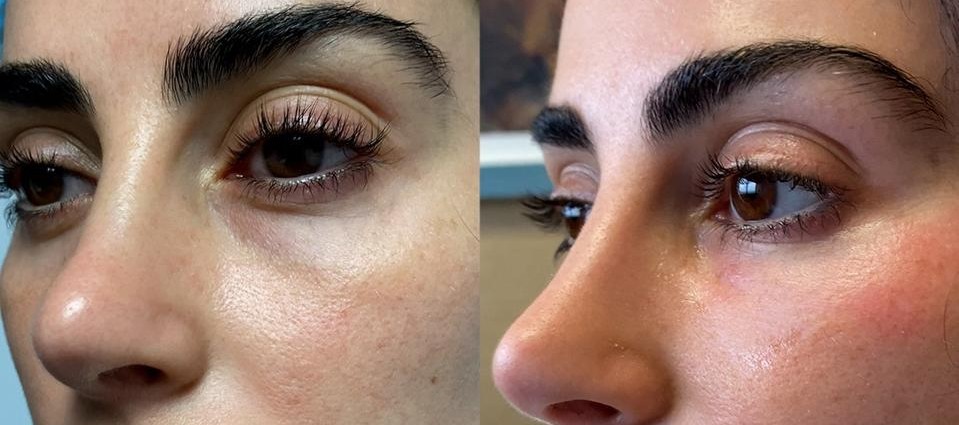
The under-eye has the thinnest skin on the entire face. Because it's so thin, even a slightly heavy hand shows, and any gel that clumps shallowly creates a visible bulge. Worse, when filler shows through such thin skin, light scatters and gives off a bluish tint known as the Tyndall effect. It's the same principle as a drop of milk clouding blue in a glass of water: that bluish, vein-like tint is a sign the filler sits too close to the surface.
Swelling is also especially common here. Under-eye tissue holds onto water easily, and hyaluronic acid itself draws in moisture, so puffiness or heaviness the morning after isn't unusual. That's why only a small amount of a soft, less water-hungry filler is used here. A firmer, high-volumizing filler meant for the cheeks tends to backfire under the eyes, clumping and showing through instead of blending in.
Technique and depth matter just as much. Using a blunt-tip cannula to place the filler in a deep layer close to the bone helps avoid the shallow blood vessels and cuts down on the Tyndall effect. Because it's hard to fully reverse an over-filled under-eye, it's much safer to start conservatively and build up later if needed. The table below summarizes the standards followed for under-eye treatment.
| Item | Under-eye standard |
|---|---|
| Product | Soft HA, small dose |
| Layer | Deep, close to bone |
| Tool | Blunt cannula |
| Avoid | Shallow overfilling |
How Common Are Side Effects?
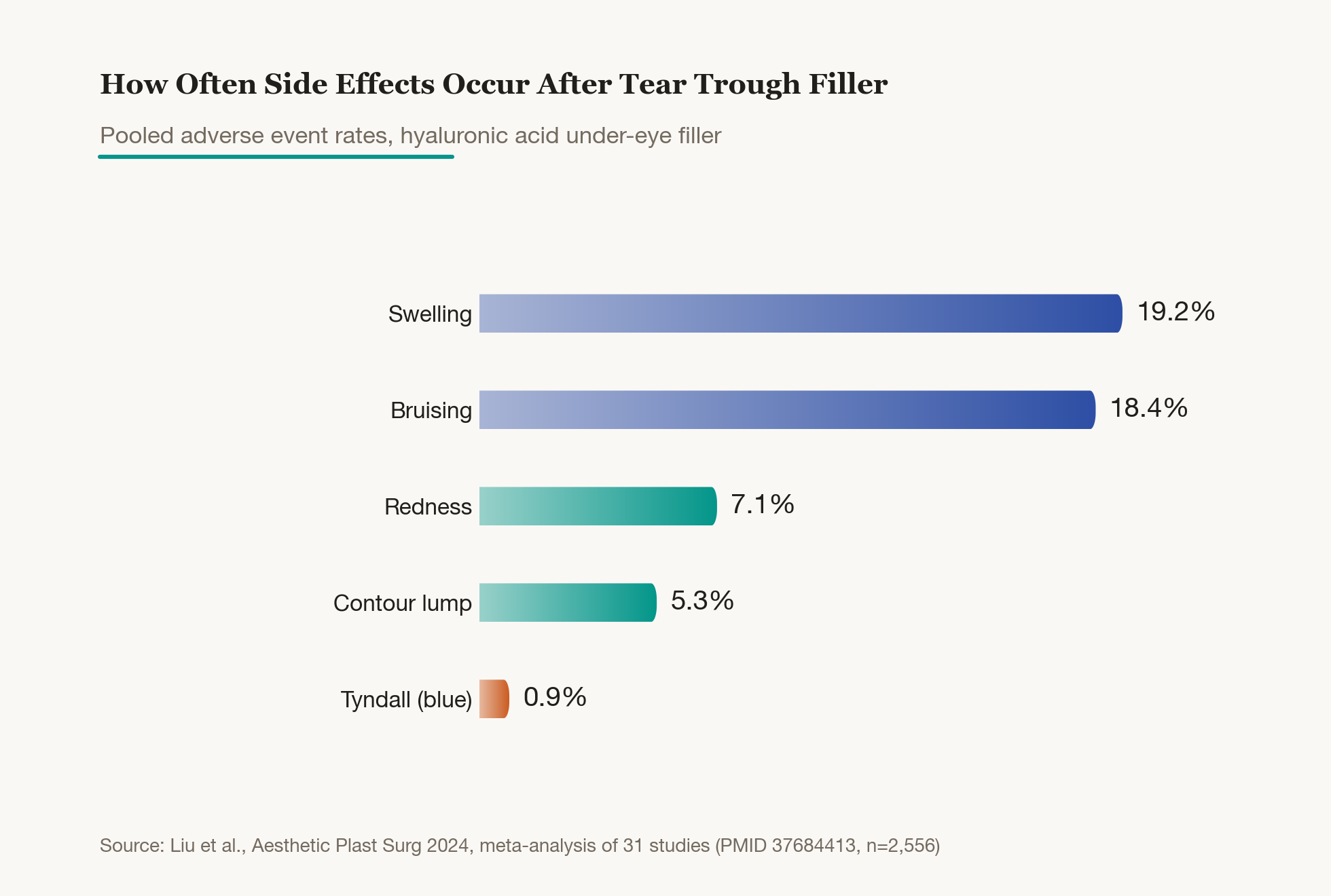
Most side effects are mild and resolve on their own. In an analysis pooling 2,556 patients, swelling occurred in about 19 percent and bruising in about 18 percent, the two most common reactions, but both usually cleared up within days to a couple of weeks. Redness showed up in around 7 percent. As the graph above shows, the more frequent reactions tend to be the ones that fade fastest.
The ones worth a bit more attention are lumping and the Tyndall effect. Uneven clumping of the gel showed up in about 5 percent of cases, while the bluish Tyndall effect was rarer, around 1 percent. That said, some reports put Tyndall closer to 3 percent after a first treatment, dropping below 2 percent on touch-ups, which underscores why it's best not to overfill on the first pass.
Technique alone cuts these reactions substantially. One analysis found bruising rates dropped from 17 percent with needle injection down to about 7 percent when a cannula was used instead. So injecting slowly, in small amounts, not too shallowly, and with a cannula is the surest way to keep side effects low. In rare cases, a small lump can show up months later, but even these delayed reactions are usually resolved with a dissolving injection. Icing for a couple of days after treatment and sleeping in a way that avoids pressure on the area also helps swelling and bruising clear faster.
When Filler Suits You and When to Avoid It
Under-eye filler works best for people whose shadow comes from hollowing rather than pigment. If a shallow groove is casting the shadow, even a small amount of filler can brighten the area noticeably. On the other hand, if under-eye fat is already bulging prominently, simply filling the groove can make the whole area look more swollen, so combining it with fat repositioning or removal is usually the better route.
There are cases where it's best to skip the treatment altogether. This includes pregnancy or breastfeeding, active inflammation or infection around the eyes, and a history of hypersensitivity to hyaluronic acid. If you tend to swell easily under the eyes or have frequent allergy-related puffiness, it's worth discussing this beforehand, since swelling can linger longer than usual. Anyone who's had under-eye fat removal or eye surgery before should also mention it, since the tissue there behaves differently.
Aftercare is simple. Cutting back on salty food and alcohol for a few days after treatment, and sleeping in a way that avoids pressure on the area, helps swelling go down faster. Under-eye results tend to last well once properly filled, but the gel does break down gradually, so small touch-ups over time keep the line looking natural. It's also better to start with less than you think you need and build up gradually rather than going heavy from the start, both for a natural look and for safety. If the shadow is a mix of pigment and hollowing, filler alone won't solve everything, so it's worth discussing a combined approach with laser or other treatments during your consultation.
Was this helpful?
About this article
Written by a practising aesthetic physician and intended for general education — not a substitute for individual medical advice.
Read next
Tear Trough Filler Duration and Side Effects, Including Vessel Risks
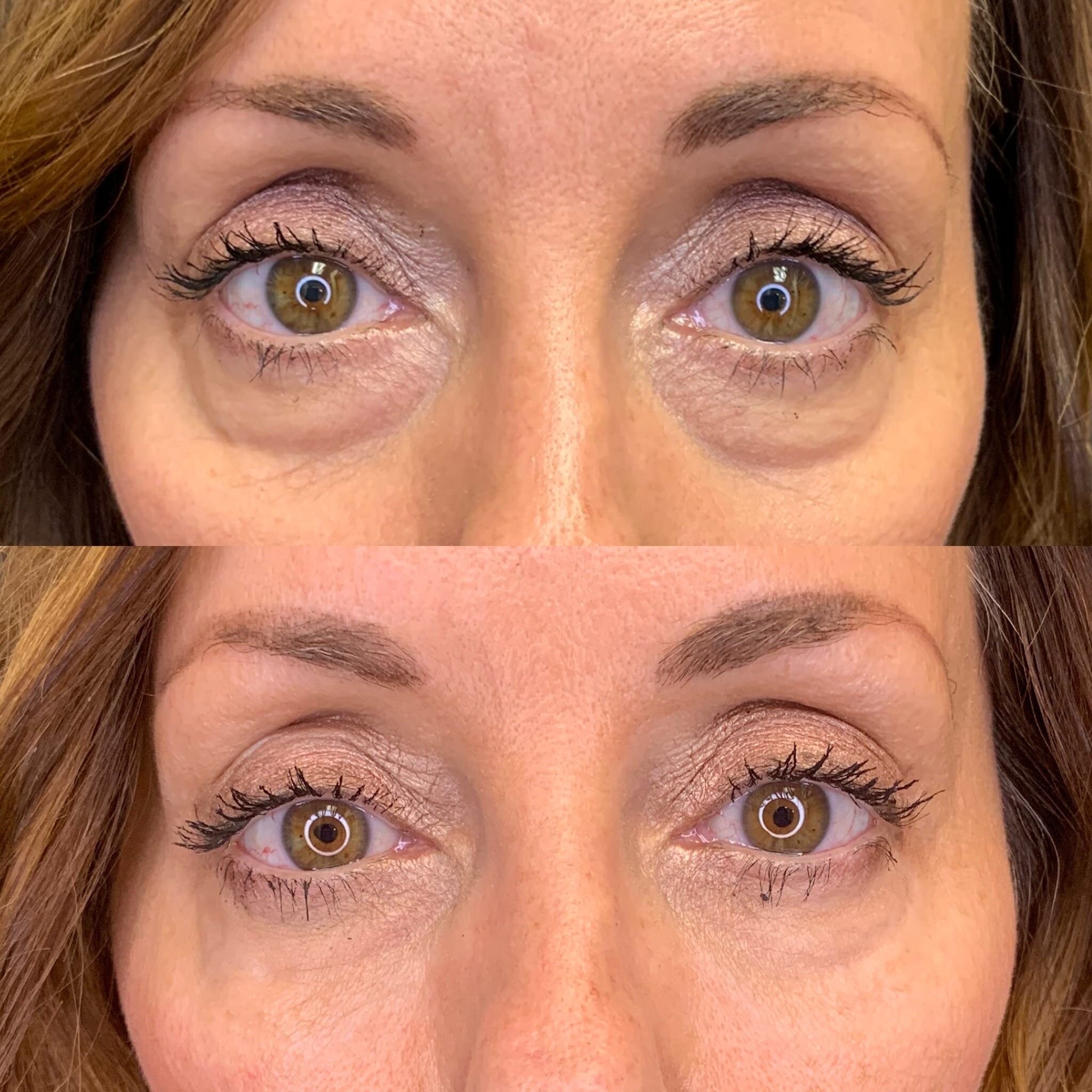
The hollow that forms just under the under-eye fat pad, the tear trough, improves when filler physically fills that empty space. But skin and blood vessels are thin in this area, so there are separate precautions around cannula technique and the Tyndall effect. Here is how the filling works, how long results last, and what recovery looks like.
By Dr. Kim
Under-Eye Booster Effect: How Much Does It Differ by Dark Circle Type?
Why the under-eye area hollows out and casts a shadow in the first place, and why under-eye filler relies on an unusually soft, shallow injection technique. Here's why results vary so much by dark circle type, and how to avoid lumping and the blue-tinted Tyndall effect.
By Dr. Lee

Pebbled Chin Botox: Results, How Long It Lasts, Dosage, and Side Effects
Chin botox (mentalis botox) smooths out the pebbled, orange-peel texture that shows up on an overactive chin. Here's how relaxing the mentalis muscle evens out the skin, the typical dose and injection points, when results appear and how long they last, how this differs from a weak or protruding chin, and the side effects worth knowing about, all backed by real evidence.
By Dr. Kim