Restylane Types and Results: How Long They Last and Side Effects
By Dr. Lee9 min read
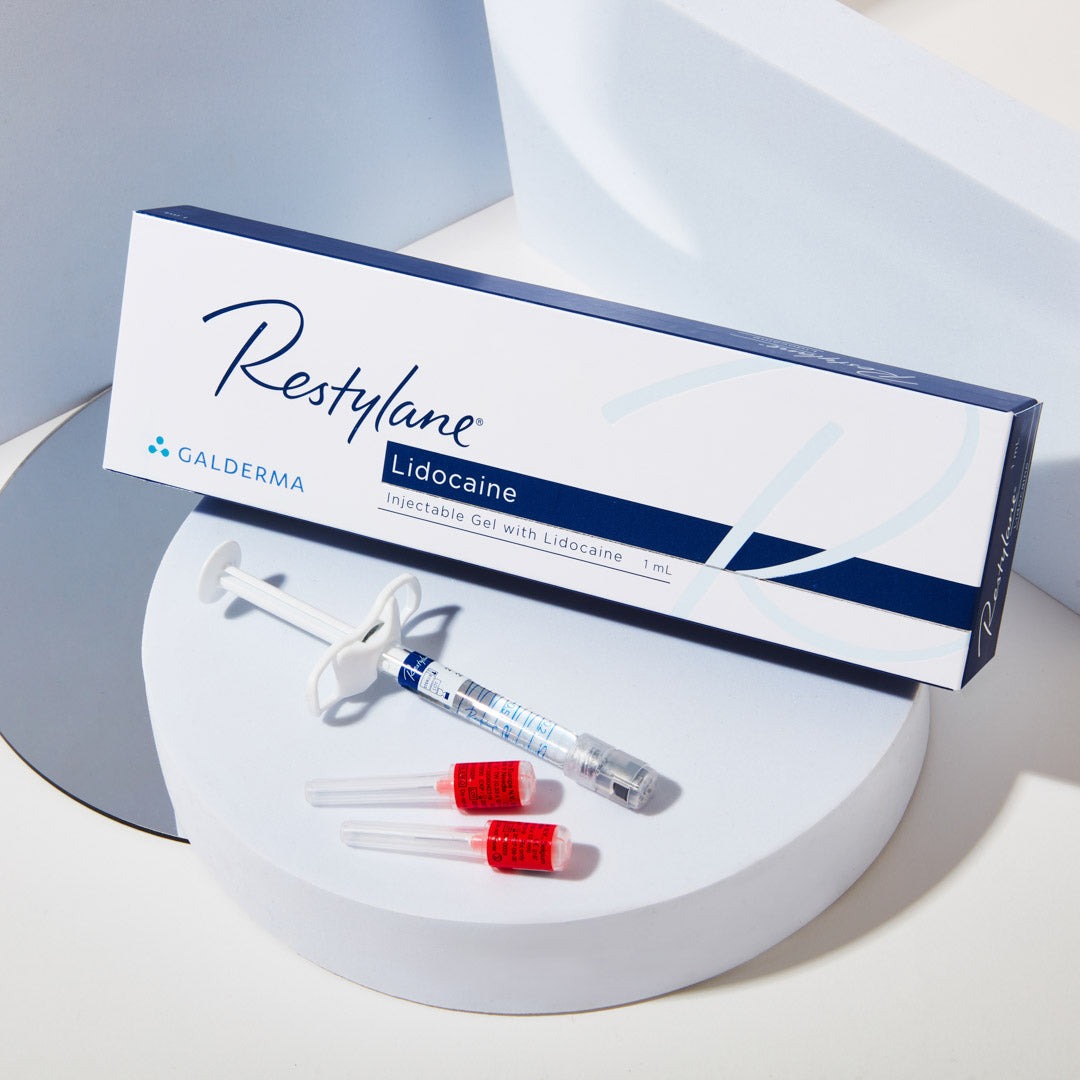
If you've been researching fillers, you've probably come across Restylane. What's confusing is the lineup that follows it: Lyft, Defyne, Refyne, Kysse, Contour. Each name sounds slightly different, and it's easy to lose track of what any of them actually do or which one would apply to your concern. On top of that, some Restylane products are described as firm while others are described as soft, which raises the reasonable question of why the same brand feels so different depending on which product you get.
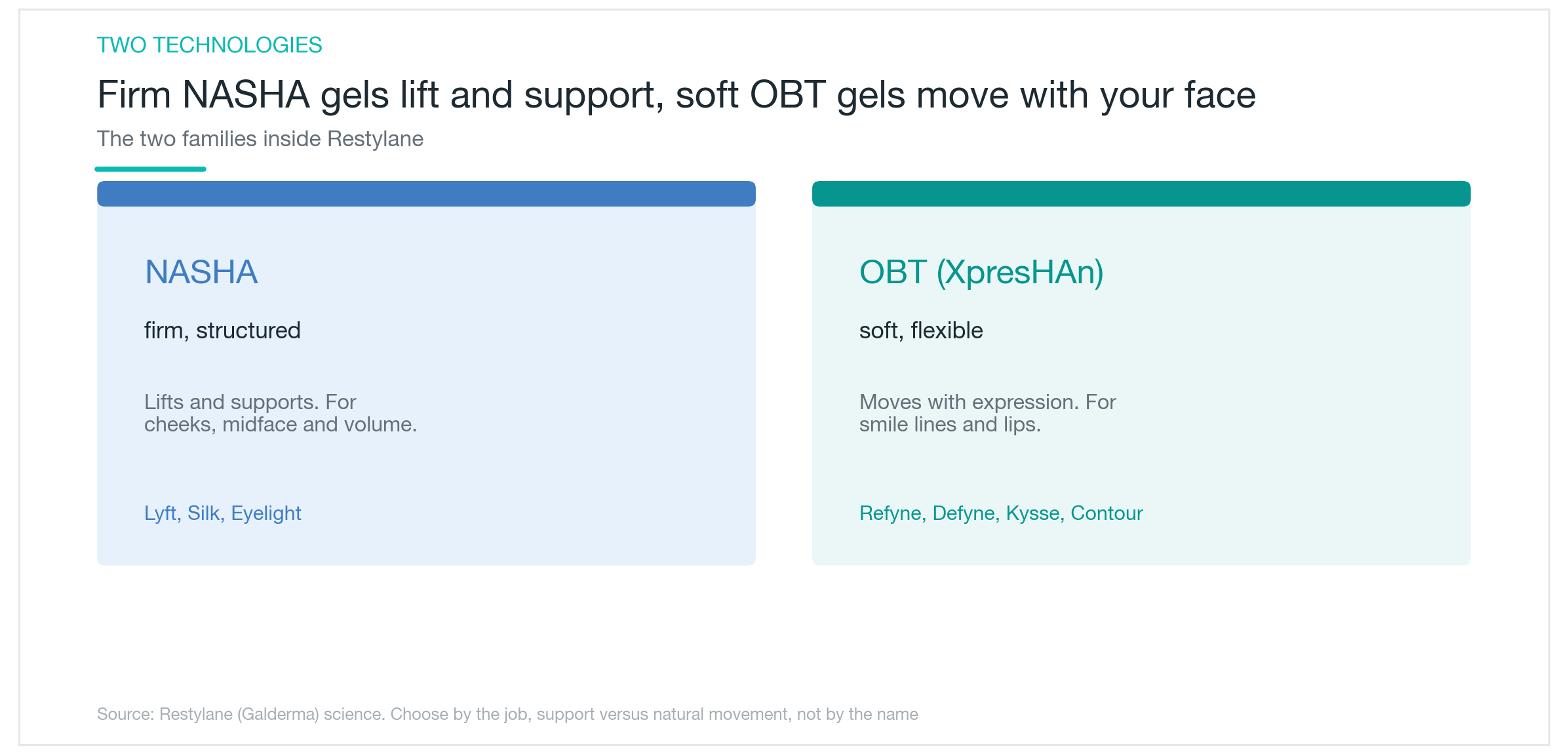
The short answer: Restylane is not a single product. It's a family of hyaluronic acid fillers made by Galderma, built on two distinct manufacturing technologies called NASHA and OBT. NASHA produces a firmer gel with strong support. OBT, also called XpresHAn, produces a softer, more flexible gel that moves with the face. Which product is right for you depends primarily on whether you need structure and lift or natural, dynamic movement. Below is a breakdown of the two technologies, how the product lines differ, what to expect from treatment, and where the real safety considerations lie.
What kind of filler is Restylane?
Restylane is a hyaluronic acid filler that originated in Sweden and is now made by Galderma. Hyaluronic acid, commonly abbreviated HA, is a molecule that occurs naturally in the skin. It binds water and keeps tissue plump and hydrated. As we age, HA levels decline and skin loses volume, leading to lines and hollows. In filler form, HA is processed into a gel and injected directly into those areas to restore fullness right away. The result is visible the same day, which sets it apart from treatments like Sculptra or Radiesse that stimulate collagen over several months.
Restylane is one of the longest-established HA fillers, and that long clinical track record is one of its strengths. One more point worth knowing: because Restylane is an HA filler, it is reversible. If the result is unwanted or a complication arises, a clinician can inject hyaluronidase, the enzyme that dissolves HA, to break the filler down. This reversibility is the core safety advantage that HA fillers hold over permanent or non-dissolvable alternatives.
Unlike Sculptra or Radiesse, which stimulate new collagen over time, Restylane adds volume directly at the point of injection. The different names within the family reflect different formulations, not different mechanisms. Understanding the two underlying technologies makes the lineup considerably easier to navigate.
How are NASHA and OBT different?
Every Restylane product is built on one of two manufacturing approaches, and those approaches produce meaningfully different gels.
NASHA creates a firmer, denser gel with clearly defined particles. That structure gives it strong lifting capacity and good shape retention, making it well suited for areas that need structural support: sunken cheeks, cheekbones, deeper nasolabial folds. The gel holds its position and can bear some mechanical load, which is what you want when the goal is to lift and support rather than soften.
OBT, which Galderma also calls XpresHAn technology, produces a softer, more elastic gel. It stretches and distributes more readily, which means it can follow facial movement without clumping or feeling stiff. When you smile, speak, or make expressions, an OBT filler in a dynamic area will move with you rather than against you. That property makes it appropriate for areas that experience a lot of movement: nasolabial folds, lips, and mid-face areas where a rigid mass would look unnatural.
Neither technology is inherently better than the other. NASHA is the right choice when you need firm support in a relatively static area. OBT is the right choice when you need softness and flexibility in a high-movement area. Knowing which category your concern falls into makes the individual product names much easier to understand.
Restylane types compared in a table by use
The five most commonly used Restylane products, compared:
| Product | Technology | Texture | Primary Area |
|---|---|---|---|
| Lyft | NASHA | Firm, strong support | Cheeks, cheekbones, nasolabial folds |
| Defyne | OBT (XpresHAn) | Firm but flexible | Deep nasolabial folds, mouth area |
| Refyne | OBT (XpresHAn) | Soft and flexible | Moderate nasolabial folds, expressive areas |
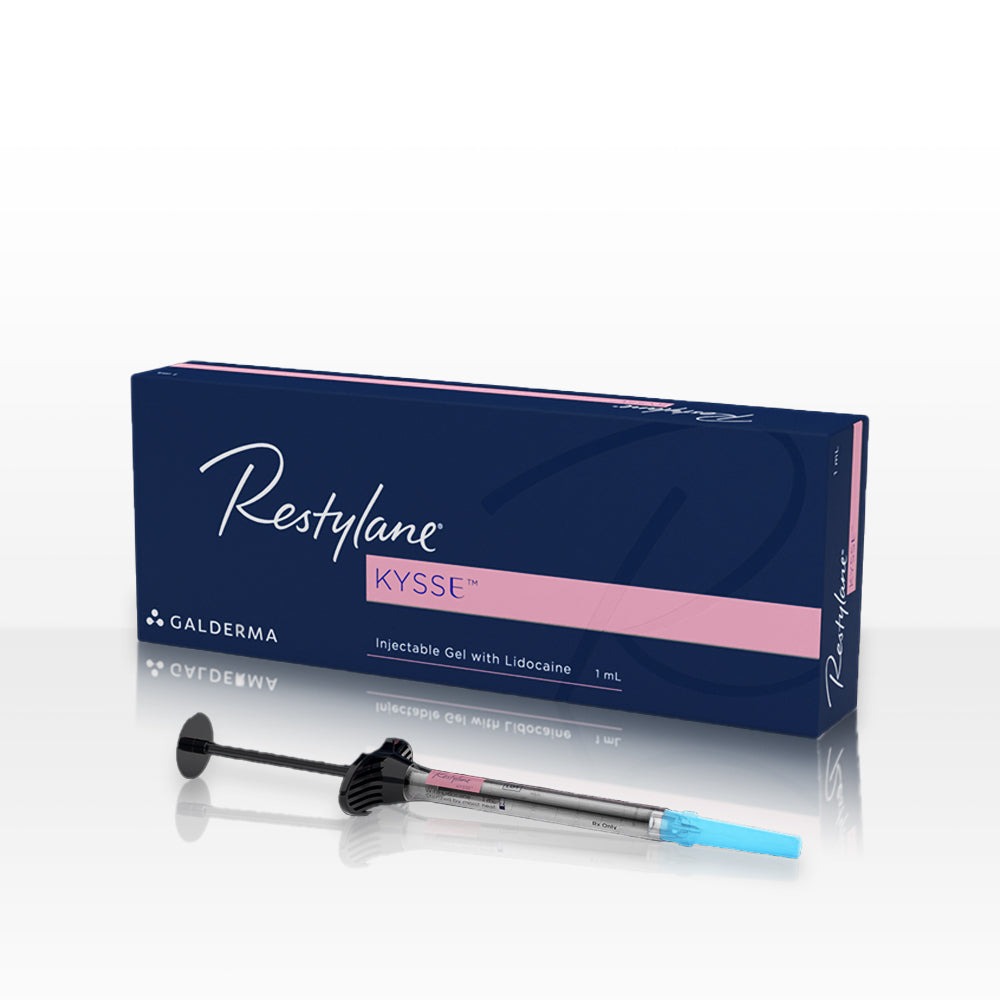
| Kysse | OBT (XpresHAn) | Soft, elastic | Lips |
| Contour | OBT (XpresHAn) | Flexible volume | Cheeks, mid-face, temples |
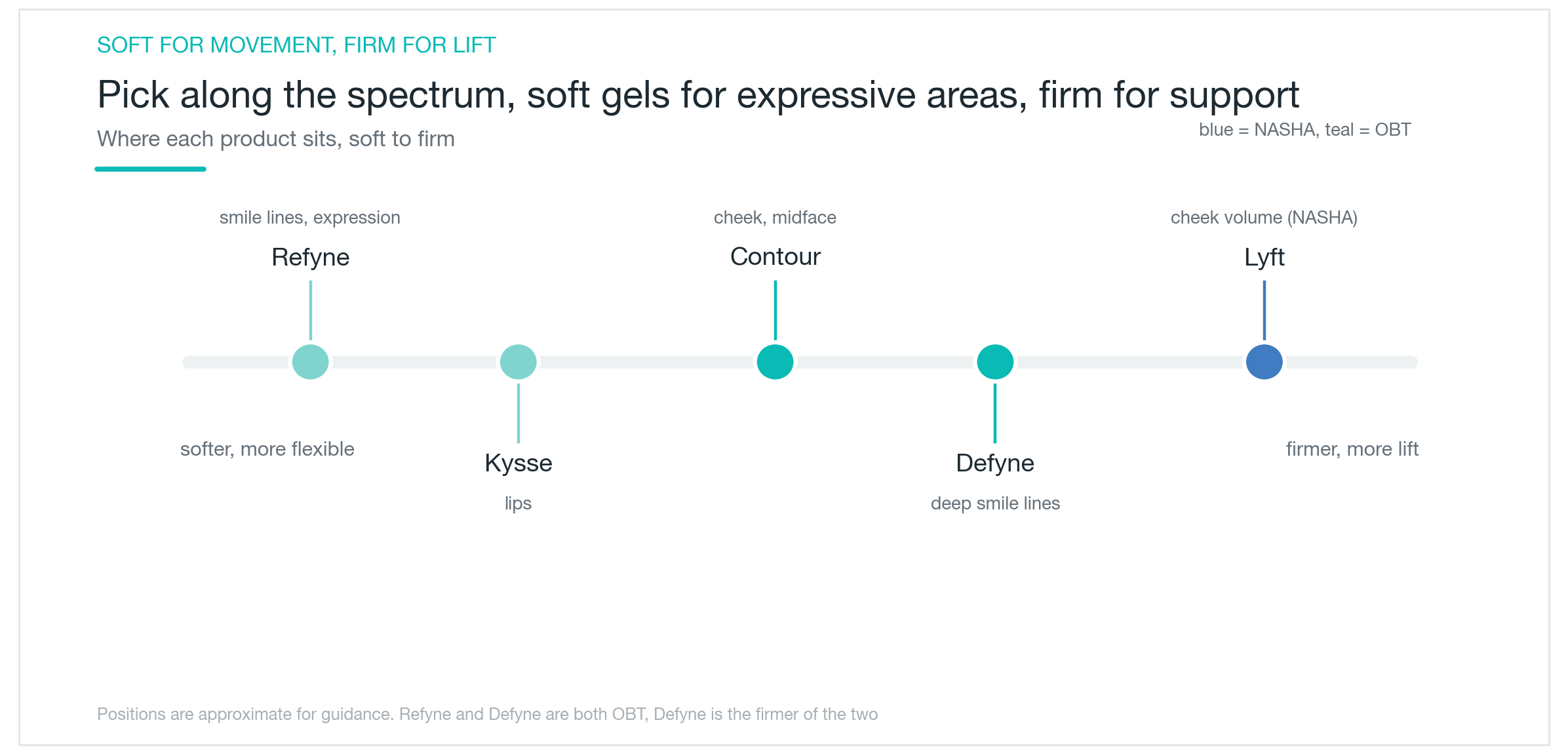
As the table shows, Lyft is the only NASHA product in this group. It is the firm structural option, best for areas that need support and lift. The remaining four, Defyne, Refyne, Kysse, and Contour, are all OBT formulations, each tuned for different levels of softness and different face zones.
Defyne and Refyne are both used in and around the nasolabial folds, but they are not interchangeable. Defyne is the firmer of the two and handles deeper folds, while Refyne is softer and better suited to moderate folds or areas where expressiveness is especially important. Kysse is formulated specifically for lips, where softness and elasticity matter most. Contour adds flexible volume to the mid-face, cheeks, and temples without the rigidity of NASHA. Beyond these five, Galderma also makes products like Silk for fine lines and lips, and Eye Light for under-eye hollows, all of which sit within the same two-technology framework.
Rather than memorizing product names, the more useful question to ask is: does this area need firm structural support, or does it need to move naturally with your expressions? That distinction points you toward NASHA or OBT, and the specific product follows from there.
What determines a natural-looking result?
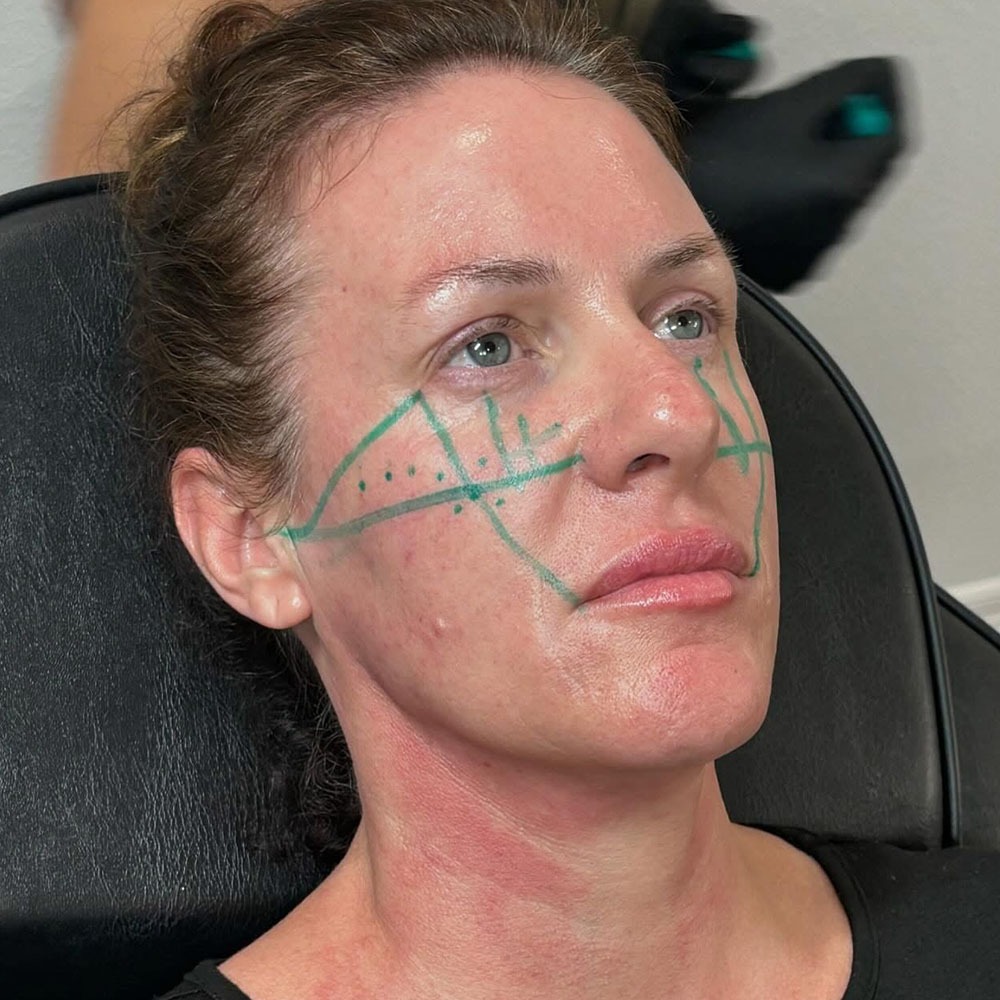
The effect is real. Volume appears the same day as treatment. The final result settles in around 1 to 2 weeks once post-injection swelling resolves. One of the practical strengths of the OBT line is that the gel is specifically designed to move with the face, so smiling, speaking, and making expressions does not produce an obvious stiffness or lumpiness in treated areas. Clinical evaluations of OBT-based nasolabial fold correction have shown high ratings for natural appearance during facial movement.
Whether the result looks natural comes down primarily to volume calibration, product selection, and placement depth. Overfilling any area produces an overdone look. The standard approach among experienced injectors is to start conservatively and reassess. Adding volume at a follow-up is easy. Reducing a result that is too full is considerably harder, and while hyaluronidase can dissolve HA, dissolving filler selectively is less precise than placing it conservatively in the first place.
Product-to-area matching matters just as much as quantity. Placing firm NASHA in a high-movement zone like the nasolabial folds can produce stiffness or visible clumping when the face moves. Placing soft OBT in the cheeks where structural support is needed may result in rapid absorption and limited lift. Even within the OBT family, using Defyne where Refyne is appropriate, or Kysse where a more structural option is needed, changes the outcome noticeably.
One more point: filler restores volume. It does not lift sagging tissue. Attempting to address significant facial laxity purely with filler tends to add bulk rather than elevation, which can look heavier rather than refreshed. For concerns that are primarily about laxity, a lifting treatment is the more appropriate primary intervention. Filler and lifting often complement each other, but they address different problems.
Procedure and how long it lasts
Treatment is typically brief. Topical anesthetic cream is applied first, or the product itself already contains lidocaine to reduce discomfort. The filler is then placed using either a fine needle or a cannula, which is a blunt-tipped flexible tube. Needles allow precise, targeted placement. Cannulas enter through a single entry point and can distribute filler across a broader area with a single insertion, which tends to reduce bruising and lower the risk of vascular injury. The session typically takes 10 to 20 minutes depending on the area, and most patients return to normal activity immediately after.
Downtime is generally mild. Redness, swelling, and bruising are common immediately after injection and typically resolve within a few days to 2 weeks. If bruising is a concern, it's sensible to schedule treatment at least a week ahead of any important commitments.
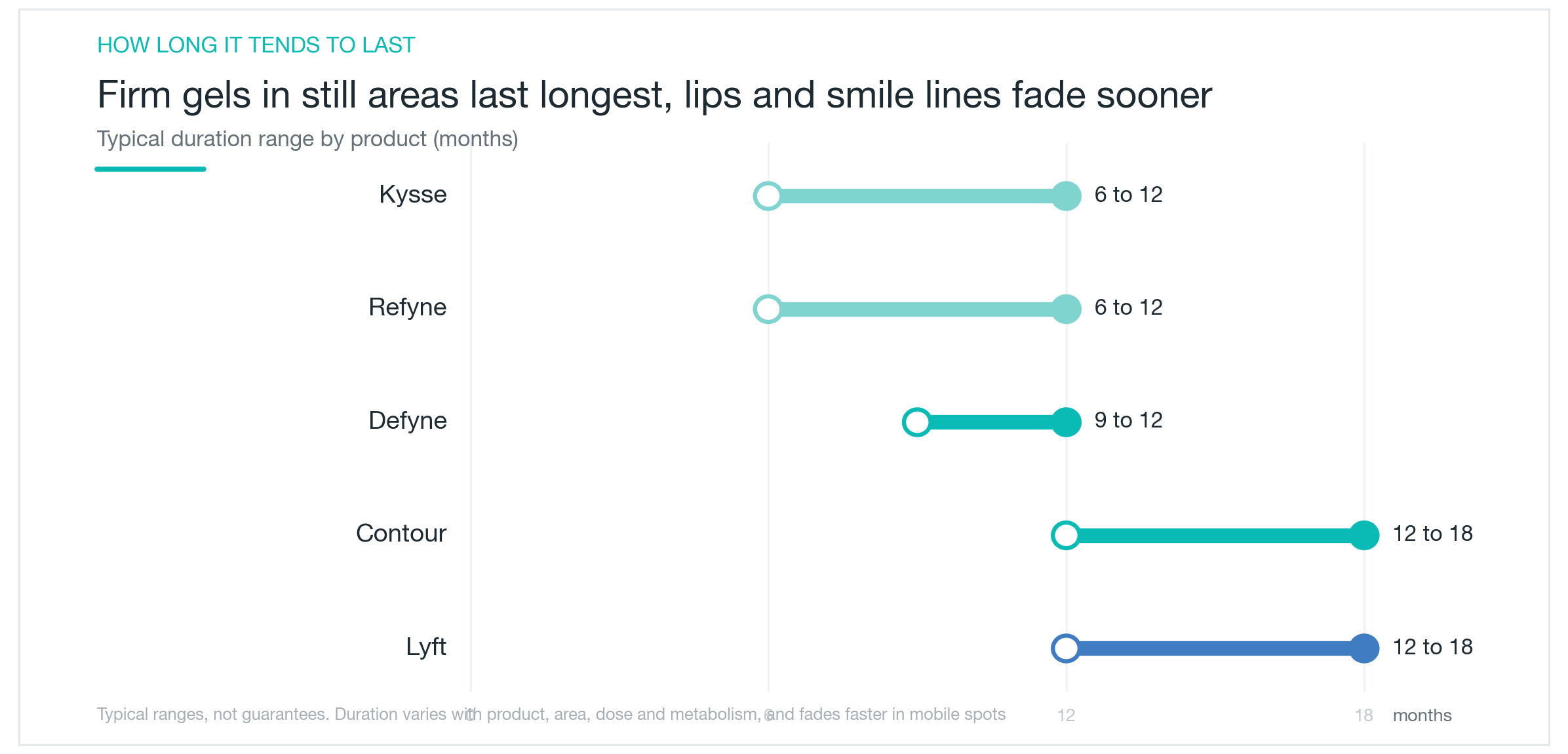
How long results last depends on the product and the area. As a general range, Restylane products typically last 6 to 18 months. Firmer, deeper-placed products like Lyft, and less mobile areas like the cheeks, tend toward the longer end. High-movement areas like the lips and mouth, and softer formulations, tend toward the shorter end. Individuals with higher metabolic rates often absorb filler more quickly as well.
The implication is that Restylane is a maintenance treatment, not a one-time correction. Thinking about it in terms of a repeating cycle of 6 to 18 months is a more accurate frame than expecting permanence. When estimating cost, factor in the frequency of upkeep over time rather than just the initial session.
How common are side effects, and how are they reversed?
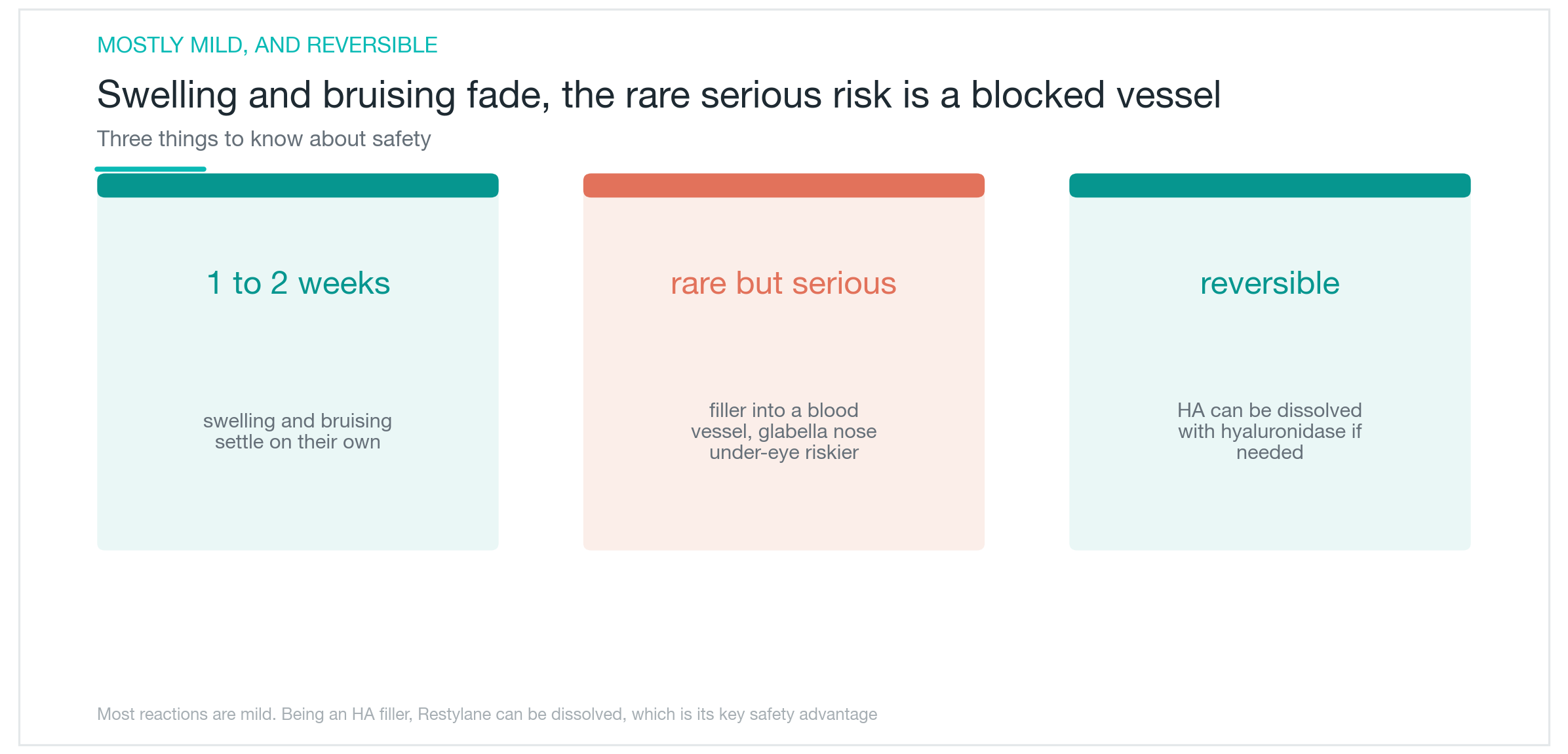
Most side effects are minor. Swelling, bruising, and firmness at the injection site in the days following treatment are expected and typically resolve within 1 to 2 weeks. Occasionally a small nodule forms at the injection point; most of these resolve on their own over time or respond to gentle massage. In rare cases, delayed nodules can appear weeks to months after treatment. These generally respond to treatment.
The serious risk, though rare, is vascular occlusion: filler accidentally injected into or compressing a blood vessel, cutting off local circulation. In severe cases this leads to skin necrosis. In extremely rare cases it can affect vision. Areas with more complex vascular anatomy, including the glabella, nose, and under eye, carry higher risk and require a more technically cautious approach.
Two things follow from that risk. First, treatment should be performed by a clinician with thorough knowledge of facial vascular anatomy. Second, hyaluronidase should be immediately on hand at the clinic so that a vascular event can be addressed in real time. The dissolvability of HA fillers is not just a cosmetic convenience; it is the core safety mechanism that allows rapid intervention if something goes wrong.
Restylane is not appropriate during pregnancy or breastfeeding, for anyone with a known sensitivity to hyaluronic acid, or if there is active inflammation or infection in the treatment area.
To summarize: Restylane is an HA filler family from Galderma built on two technologies, firm NASHA for structural support and flexible OBT for natural dynamic movement. Knowing which type of area you are treating makes the product choice straightforward. Results are visible the same day, reversible if needed, and most natural when the right product is placed in the right area in conservative amounts by a clinician who knows the anatomy.
Was this helpful?
About this article
Written by a practising aesthetic physician and intended for general education — not a substitute for individual medical advice.
Read next

Belotero Types and Differences: Under-Eye Filler Duration and Side Effects
A clear breakdown of what Belotero is, how Soft, Balance, Intense, and Volume differ in HA concentration, firmness, and depth, why CPM technology gives it an edge under the eyes, and what the honest safety picture looks like, including how to reverse it with hyaluronidase.
By Dr. Kim
Juvederm Filler Types Compared: Voluma and Volbella Duration
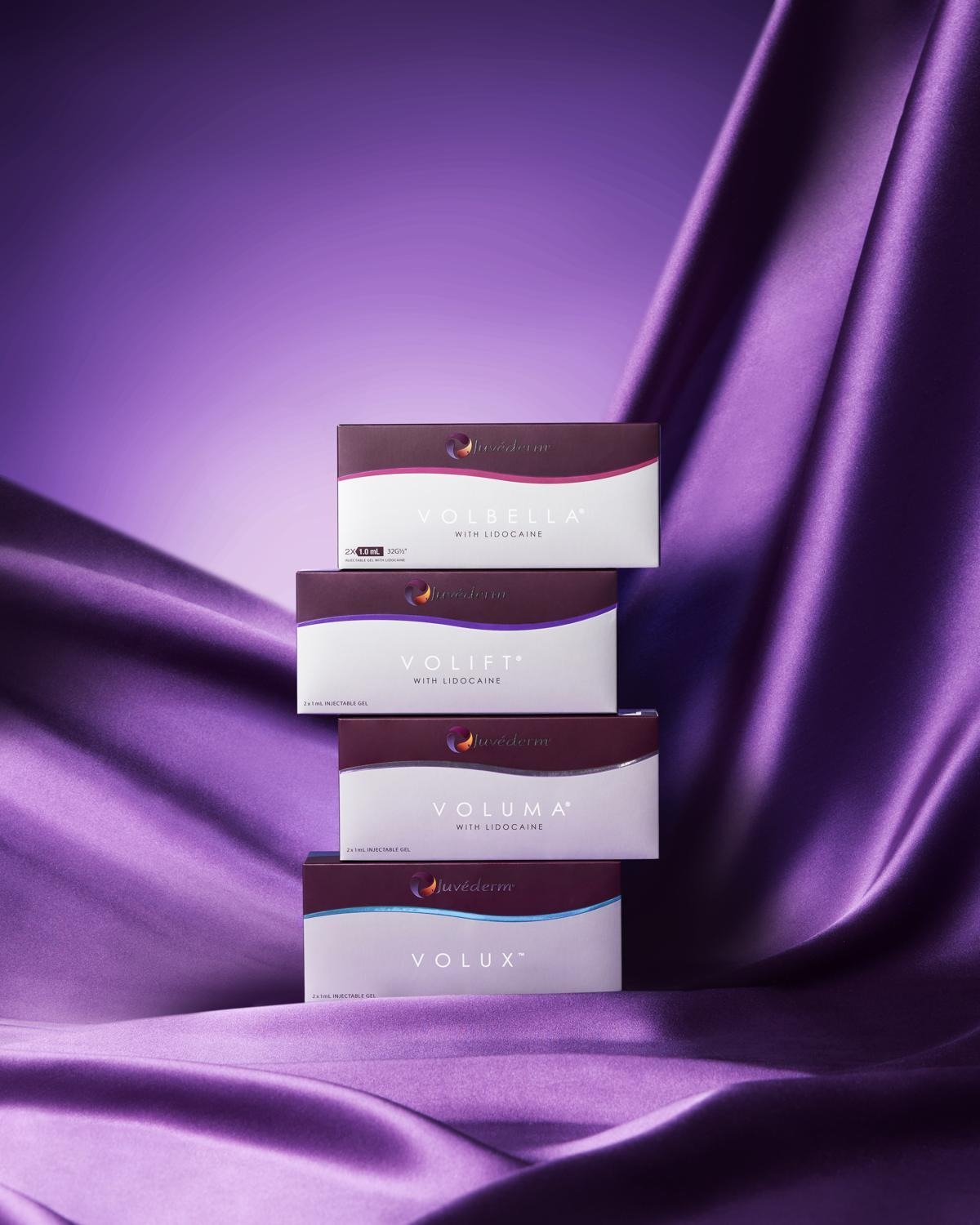
A clear breakdown of what Juvederm is, why there are so many lines (Voluma, Volux, Volbella, Volift, and more), which product goes where, how long each one lasts, and what the real safety picture looks like, including how to reverse it if something goes wrong.
By Dr. Lee

Forehead Botox Dose and Side Effects: Should It Be Done Together With the Frown Area?
A clear breakdown of which muscles forehead and glabella botox target, why treating the forehead alone can lower your brows, standard unit counts per area, when results appear, how long they last, and what side effects to watch for, all backed by clinical data.
By Dr. Lee