Rejuran Healer, Eye, and HB: Differences and Types Compared
By Dr. Lee8 min read

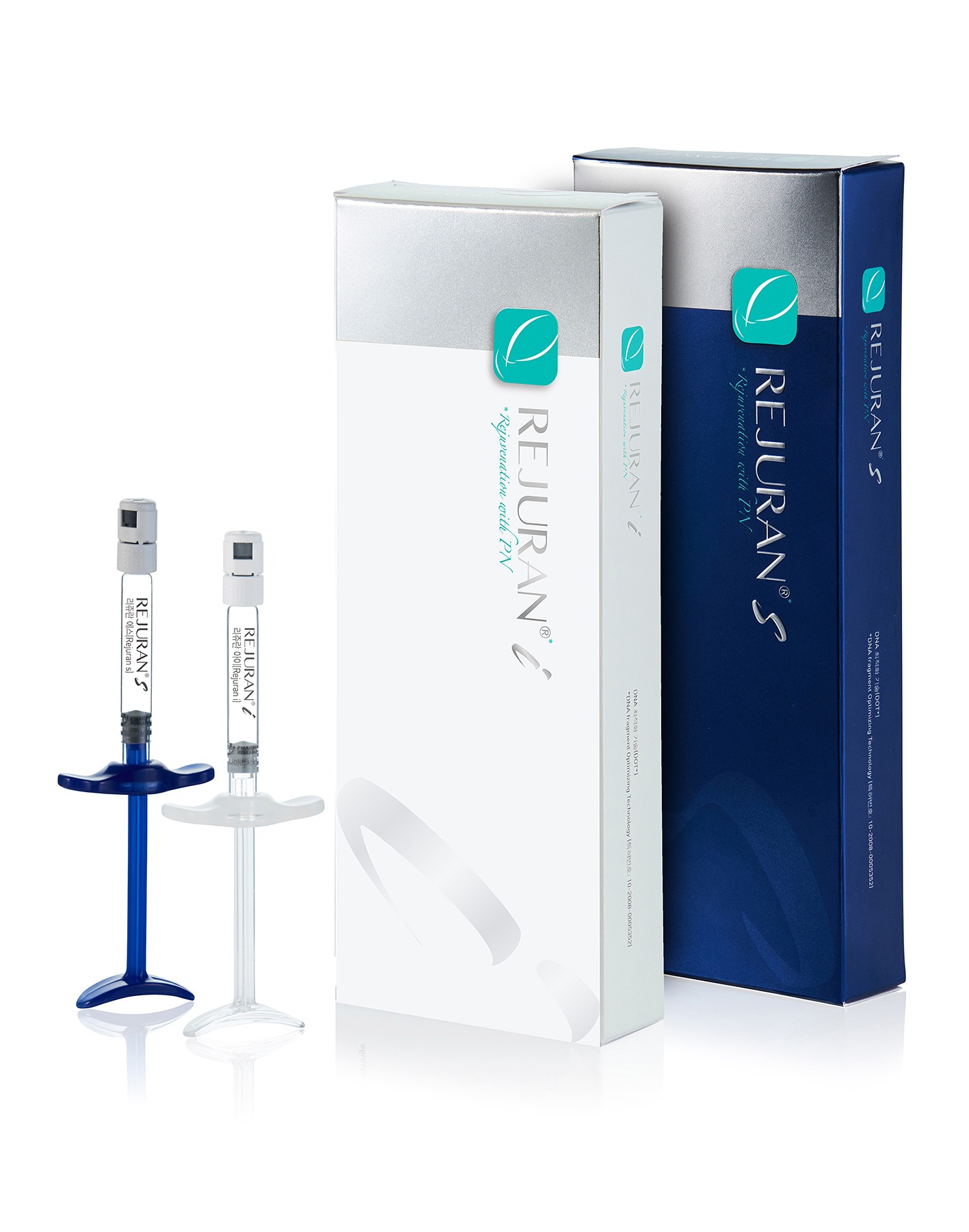
Most people come in having searched "Rejuran" and walk out slightly confused. The clinic menu shows Healer, Eye (i), HB, sometimes S. Each has a different name and a slightly different pitch. If you're not sure which one applies to you, that's understandable.
The short answer: Rejuran is a family of injections, not a single product. All of them carry PN (polynucleotide), the long-chain DNA fragment derived from salmon sperm cells. That regenerative core is shared across every product in the line. What separates Healer from Eye from HB is the PN concentration, whether hyaluronic acid (HA) and lidocaine are added, and which area on the face each formulation is calibrated for. Below is a breakdown of each type by ingredient and concentration, a comparison table, and an honest look at embossing technique and downtime.
Why are there several types of Rejuran?
Rejuran is a registered brand from PharmaResearch, a South Korean manufacturer. The active ingredient common to every product in the line is PN (polynucleotide), a long-chain DNA fragment extracted from salmon or trout sperm cells. You'll sometimes see the related term PDRN (polydeoxyribonucleotide) used interchangeably in clinic materials. They come from the same biological source, but PDRN refers to shorter fragments while PN describes longer-chain variants. Rejuran products use PN.
Inside the skin, PN does two things. It provides a moisture-retaining scaffold in the dermis, and it activates fibroblasts to produce collagen and stimulate new microvasculature. That second function is why results emerge gradually over weeks rather than immediately after injection. This is not a filler. It doesn't add volume on contact. Instead, it prompts your skin to rebuild its own structure, which is why a course of three to four sessions spaced a few weeks apart tends to produce more meaningful results than a single treatment.
Every product in the Rejuran family shares that regenerative mechanism. The differences between Healer, Eye (i), HB, and the scar-targeting S come down to where the formula is intended to be used, how concentrated the PN is, and what else has been added to the base. The product names reflect those adjustments, not fundamentally different ingredients.
Healer, Eye, and HB compared by ingredients and dose
The three most commonly compared formulations side by side:
| Item | Rejuran Healer | Rejuran i (Eye) | Rejuran HB |
|---|---|---|---|
| Manufacturer | PharmaResearch | PharmaResearch | PharmaResearch |
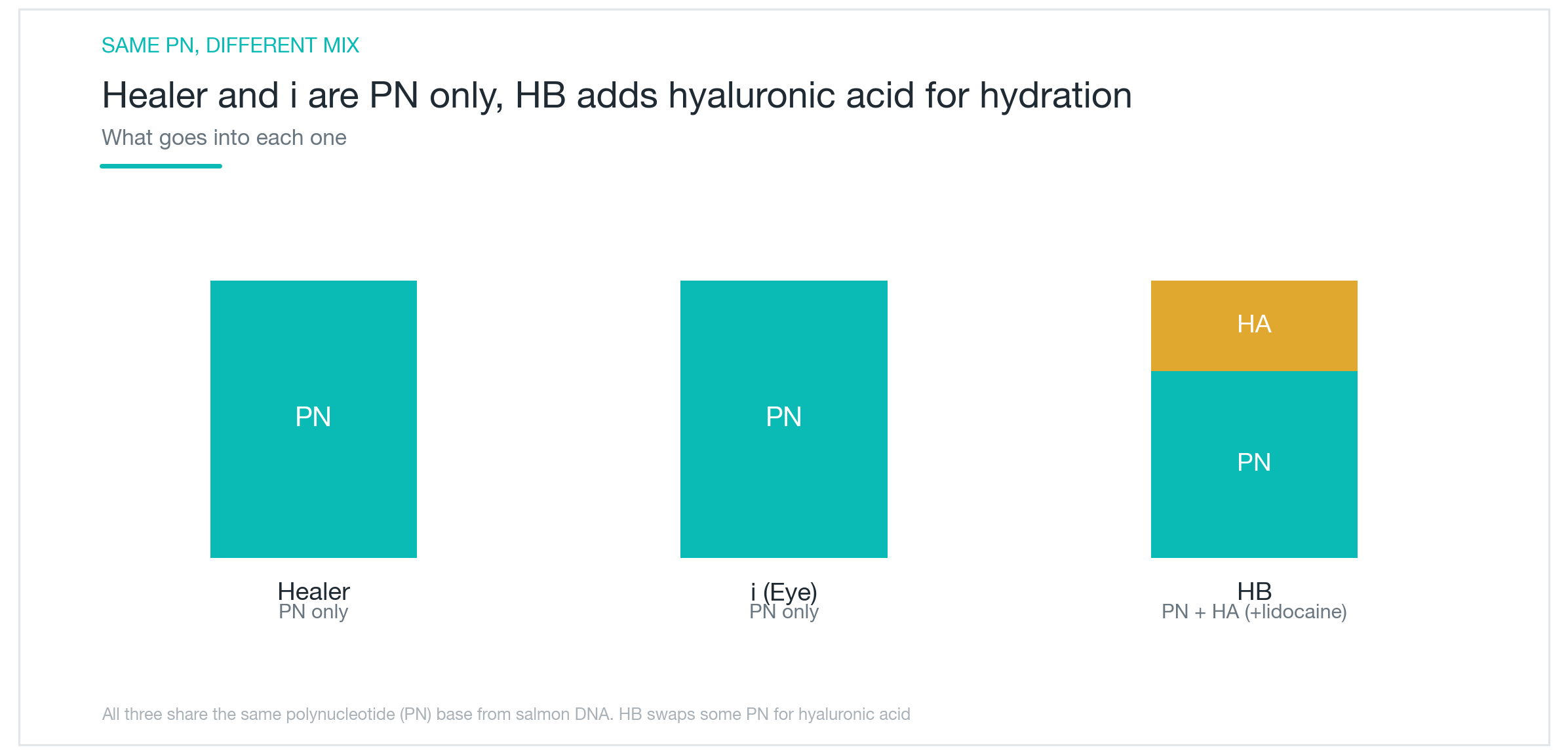
| Key ingredient | PN (polynucleotide) only | PN (polynucleotide) only | PN + HA (hyaluronic acid) + lidocaine |
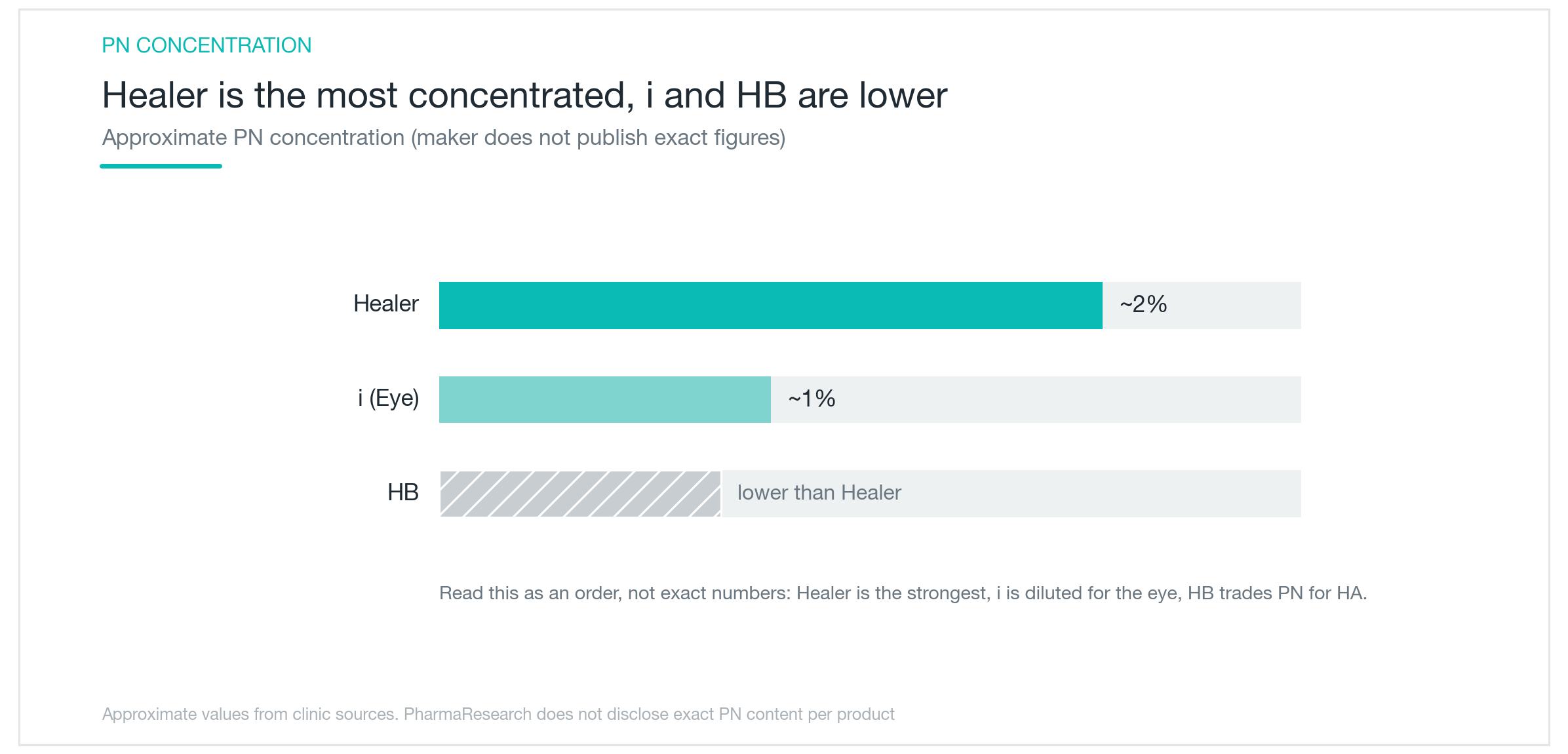
| PN concentration | Highest (approx. 2%) | Lower (approx. 1%) | Lower than Healer (HA compensates) |
| Formulation viscosity | Standard | Reduced for the periorbital area | HA added for moisture reinforcement |
| Primary treatment area | Face overall | Eye corners, under-eye | Face overall |
| Target effect | Skin texture and elasticity regeneration | Fine lines and dullness under the eyes | Regeneration plus immediate hydration and radiance |
| Injection discomfort | Topical anesthetic required | Topical anesthetic required | Lidocaine included, tends to be less uncomfortable |
| Embossing (emboss) | Small papules right after injection, settle in 1 to 2 days | More noticeable around the thin eye area | HA extends visible fullness slightly longer |
These three are not competing products. They're members of the same family. Rejuran i lowers PN concentration and viscosity to suit the thin, sensitive periorbital skin. Rejuran HB adds HA to layer hydration and immediate radiance alongside the regenerative effect, and includes lidocaine to reduce discomfort during the session. None is categorically superior. The choice follows your concern: overall texture and firmness, the under-eye area specifically, or regeneration combined with instant moisture.
How do PN concentration and hyaluronic acid differ?
Two variables separate the formulations on the ingredient level: how concentrated the PN is, and whether HA is present.
Healer carries the highest PN load, around 2%. Eye (i) brings that down to roughly 1%, with viscosity also reduced so the formula spreads easily in the thinner periorbital tissue. HB reduces PN concentration below Healer's level and adds HA to compensate. Healer and Eye are pure-PN formulas, focused entirely on regeneration. HB splits its intent between regeneration and hydration.
Worth noting: PharmaResearch does not publicly disclose precise PN concentrations, so figures across different sources vary slightly. Trust the relative order rather than the exact percentages. Healer is the most concentrated, Eye and HB are lower.
The HA in HB behaves differently from what you'd find in a volumizing filler like Juvederm or Restylane. It's not there to fill hollows or restore lost volume. It's there to hold moisture and deliver an immediate hydrated, radiant appearance while the PN does its slower regenerative work. Think of the PN as the crew rebuilding the structural framework over weeks, and the HA as the humidifier running in the background while the work is in progress. Results from HB's hydration component appear faster after injection than the regenerative changes from the PN.
The lidocaine in HB is a practical addition. Embossing injections, where small droplets are deposited in the superficial dermis at dozens of points across the face, can be uncomfortable even with topical anesthetic. Lidocaine in the formula reduces that discomfort during the session.
One honest caveat: head-to-head clinical trials directly comparing Healer, Eye, and HB for regenerative outcomes are limited. All three share the same PN mechanism, so the regenerative trajectory is similar in principle. Ranking them precisely by efficacy isn't well-supported by current published data.
How many days do Rejuran bumps take to settle?
The question patients ask most often before their first session is about the lumps.
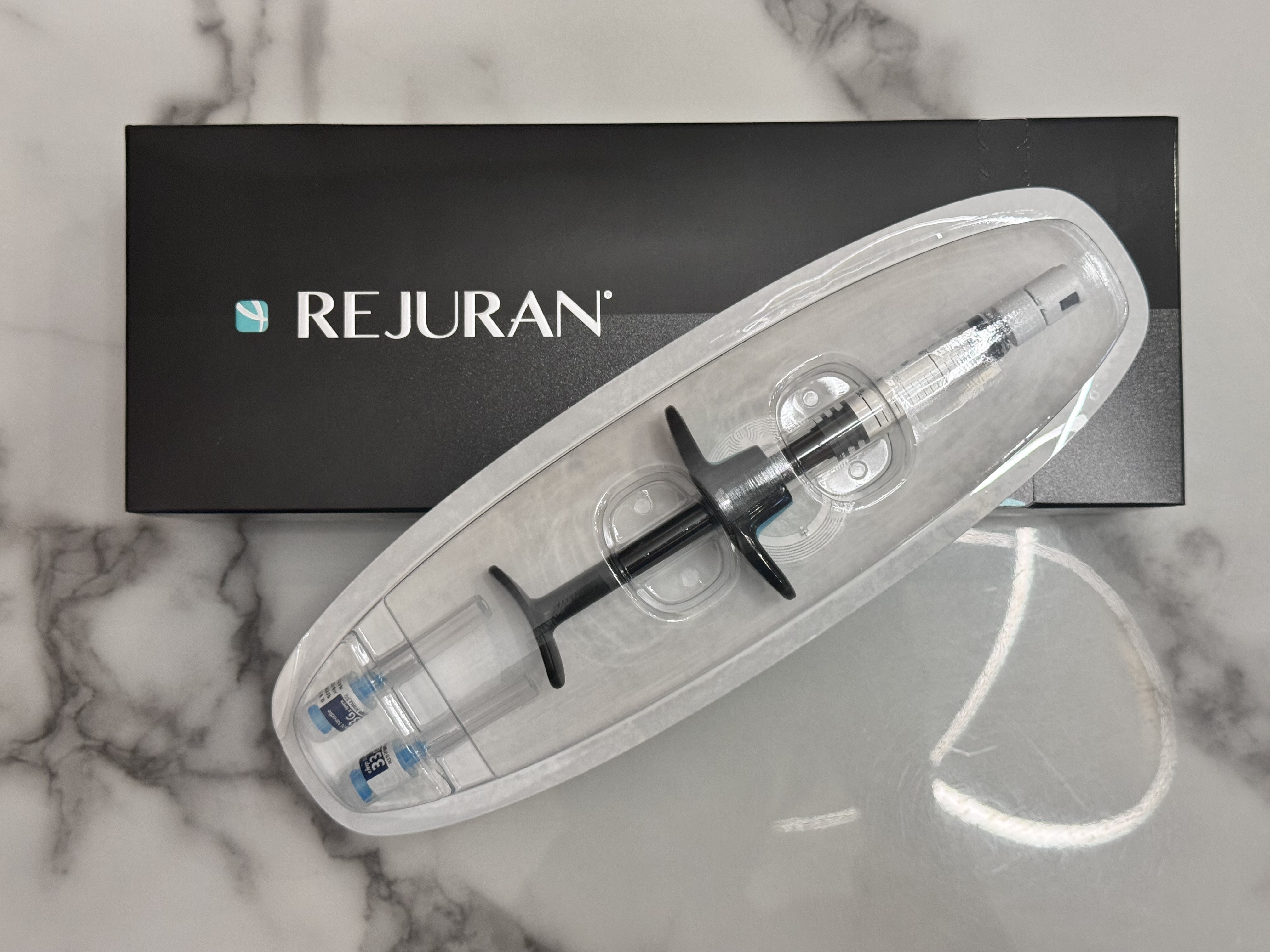
Rejuran is typically injected using a technique called embossing (called embo in Korean clinics). The practitioner deposits small individual droplets of the formula just beneath the skin surface at many closely spaced points across the treatment area. Each droplet raises a small visible papule at the injection site, leaving a temporarily bumpy texture across the skin.
This is normal and expected, not a reaction or complication. The papules reflect the product sitting in the superficial dermis as your tissue begins to absorb it. They typically flatten within one to two days. With HB, the added HA retains water in those droplets, so the fullness can take a day or two longer to fully settle compared to Healer.
Bruising is possible with any injection, and the periorbital area is particularly prone to it. The skin under and around the eyes is the thinnest on the face and runs over a dense capillary network. Rejuran Eye (i) patients see bruising more often and more visibly than those receiving Healer on the cheeks or forehead. If you have an event or obligation where visible bruising would be a problem, schedule your session at least a week before it.
A typical session involves dozens to over a hundred injection points distributed evenly across the treatment zone, administered after topical anesthetic. Total session time is usually around thirty to forty minutes. The embossing papules are visible and palpable afterward, but most patients can go about their day.
For the first day after treatment: skip saunas, alcohol, and intense exercise. All can prolong swelling or worsen bruising. A simple, gentle moisturizer and sun protection are the most useful things while the skin settles. While papules remain, thick makeup applied over them causes more irritation than leaving the skin alone.
Which Rejuran fits your concern?
The practical guide:
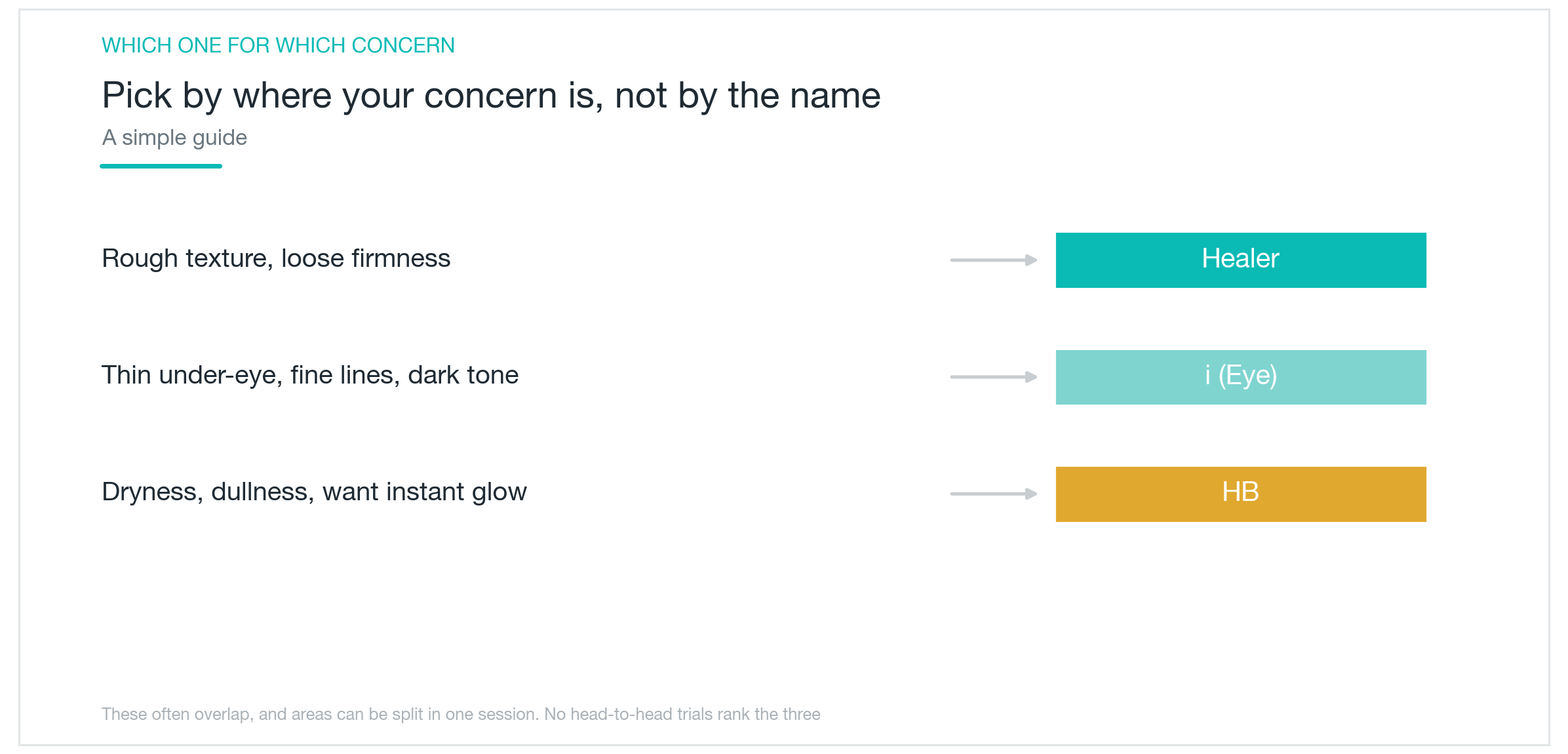
If your main concern is overall skin texture, elasticity, and a loss of that dense, resilient quality across the face, Healer is the baseline choice. It carries the highest PN concentration and focuses entirely on regeneration.
If the under-eye area is the priority, whether thin crepey skin, fine lines, or a dull or dark tone from vascular pooling in thin periorbital tissue, Eye (i) is calibrated for that zone. Its lower viscosity and reduced concentration make it appropriate for skin that Healer's standard formula would be too firm for.
If you want regeneration but also want immediate visible hydration and radiance, and you'd prefer a more comfortable injection, HB covers both. The HA delivers perceptible moisture from the session itself, while the PN gets to work on longer-term repair underneath.
When two concerns overlap, practitioners sometimes split formulations across zones in the same session: Healer across the face and Eye (i) around the periorbital area on the same visit. That's a clinical judgment call based on your specific skin condition and the volume being placed.
A few standard contraindications apply across all Rejuran products. Anyone with a fish allergy must disclose it before a session. The source material is salmon, and while hypersensitivity reactions are uncommon, they can occur. Rejuran is not appropriate during pregnancy, during active infection at the treatment site, or over areas with active inflammation. Patients on anticoagulants or who bruise easily should mention it ahead of time.
The most useful reframe for choosing between types: start with your concern rather than the product name. Is the issue overall skin quality, the eye area specifically, or baseline dryness combined with regeneration? That narrows the field. The exact formulation and session plan are worth working through with your practitioner based on your skin condition and what you're actually hoping to achieve.
Was this helpful?
About this article
Written by a practising aesthetic physician and intended for general education — not a substitute for individual medical advice.
Read next
Rejuran, Water-Glow Shots and Salmon Injections: Differences, Effect and Duration
Rejuran, Juvelook, and Re2o all fall under the skin booster label, but their active ingredients, mechanisms, and accumulated clinical evidence are entirely different. An evidence-based breakdown of what each one actually does and how to decide which fits your skin concern.
By Dr. Lee
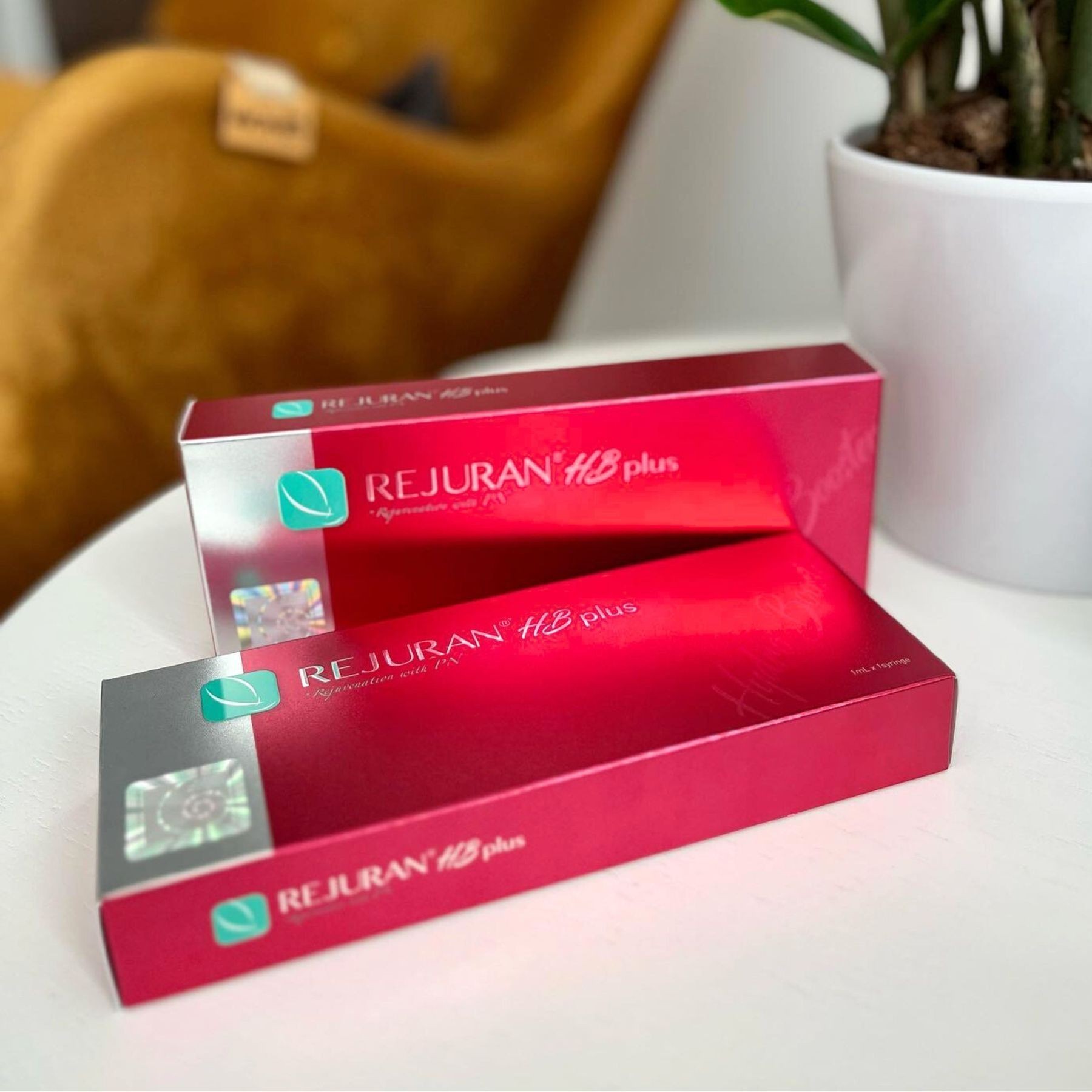
Rejuran HB+ and Healer: Differences, Lidocaine Effect, and PN Concentration
Rejuran HB Plus is not a new raw material. It is the same PN in Rejuran Healer with lidocaine and hyaluronic acid added. Here is a principle-first look at how each of those two ingredients affects pain, absorption, and PN concentration.
By Dr. Kim
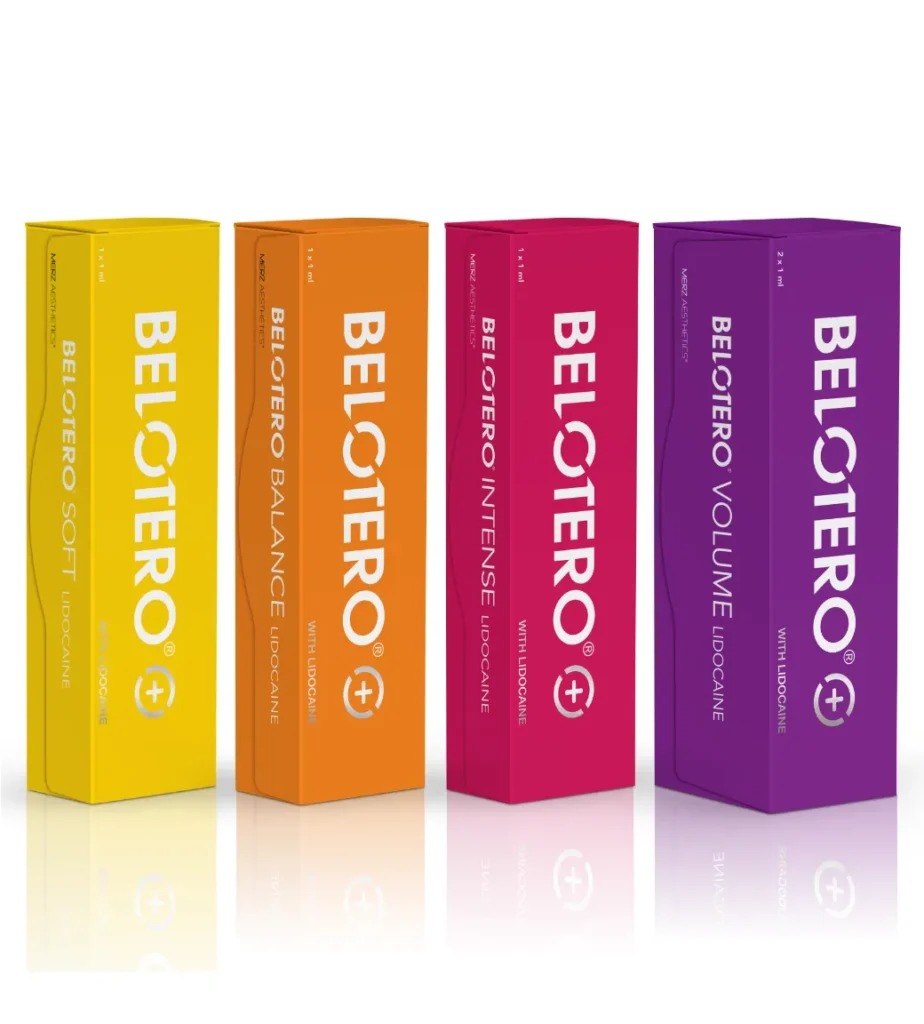
Belotero Types and Differences: Under-Eye Filler Duration and Side Effects
A clear breakdown of what Belotero is, how Soft, Balance, Intense, and Volume differ in HA concentration, firmness, and depth, why CPM technology gives it an edge under the eyes, and what the honest safety picture looks like, including how to reverse it with hyaluronidase.
By Dr. Kim