Rejuran HB+ and Healer: Differences, Lidocaine Effect, and PN Concentration
By Dr. Kim7 min read
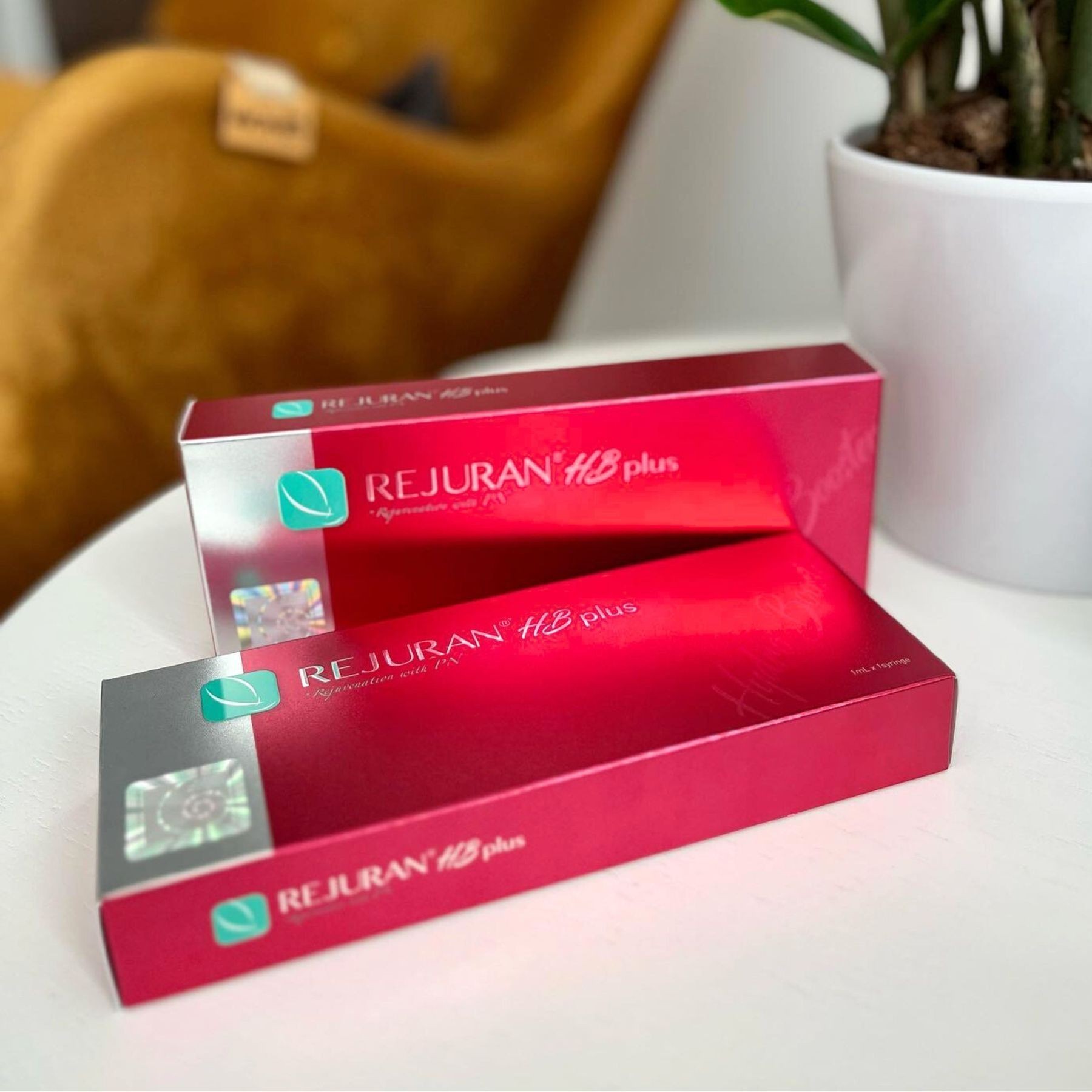
Anyone looking into Rejuran Healer runs into the name Rejuran HB Plus sooner or later. The similar name makes it sound like a completely different treatment, but HB Plus is not a new device or a new raw material. It is a modified version of the same Rejuran Healer with two extra ingredients added in.
Both products share the same core ingredient: PN, or polynucleotide, a DNA fragment extracted from salmon or trout that helps skin regenerate. HB Plus simply adds lidocaine, a local anesthetic, and hyaluronic acid on top of that base. This piece walks through why those two ingredients were added and what actually changes as a result.
The ingredient names sound complicated, but the framework is simple. PN is the main body that drives regeneration, and lidocaine and hyaluronic acid are two side branches that make that main body a bit easier to tolerate. Once you have that relationship straight, the difference between the two products becomes much easier to sort out.
How are Rejuran HB+ and Healer different?
The main ingredient in Rejuran Healer is PN, a DNA fragment pulled from salmon or trout testes. Once it is injected into the skin, it acts like a wound-recovery signal and helps drive cell regeneration.
HB Plus takes that same PN base and adds lidocaine and hyaluronic acid to it. The raw material itself has not changed. Think of it as the same PN with two supporting ingredients mixed in, rather than a separate treatment altogether. The two products are less like different treatments and more like the same core with an option added on top. Whichever one you choose, the main reaction happening inside the skin points in the same direction.
The "HB" in the name is not a marker of some new technology either. It simply signals that two ingredients were added to the existing Healer formula, and in practice, clinics tend to describe it as an upgraded version aimed at less pain and easier absorption. So choosing one over the other does not lead to wildly different results. It is more accurate to say the sensation during the procedure and the speed of the initial visible effect are what actually change.
How does lidocaine reduce pain?
The lidocaine in HB Plus is a local anesthetic commonly used in dental work and other minor procedures. It briefly blocks the sodium channels, the small gates in the cell membrane that generate electrical signals at nerve endings, cutting down the sting felt the moment a needle goes in.
The original Rejuran Healer solution is fairly viscous, so injecting it requires some pressure, and that pressure itself is often what gets felt as pain. Lidocaine works by interrupting the pain signal before it reaches the brain, so it does not change the tissue response at the injection site itself. It only reduces pain while leaving the regeneration response untouched. That is why the sensation during treatment feels gentler, even though what happens during recovery is no different from the original Healer.
Why was hyaluronic acid added?
Hyaluronic acid is an ingredient that draws in and holds onto water in the skin. Like a sponge soaking up liquid, it can hold hundreds of times its own weight in moisture.
Adding hyaluronic acid to HB Plus produces two changes. One is a lower viscosity in the formula, which lets the injection glide in more smoothly. The other is an immediate glow, or a hydrated look, right after the procedure. If PN is the ingredient that slowly builds collagen over several weeks, hyaluronic acid fills in the immediate effect that would otherwise be missing in the meantime. That is why the change you notice in the mirror on the day of treatment tends to show up faster with HB Plus.
The difference in PN concentration in HB+
Because HB Plus packs lidocaine and hyaluronic acid into the same volume, the concentration of PN itself ends up lower than in the original Healer. It is the same logic as adding more syrup to a cup of water: the syrup-to-water ratio in that cup drops.
That does not mean the effect drops by the same amount. Less pain means a larger area can be treated comfortably, and the added hyaluronic acid fills in the early hydration, so the effect you actually notice can end up feeling similar, or even more immediate. Looking purely at PN stimulation on its own, though, the original Healer works at a somewhat more concentrated level. Regeneration strength and treatment comfort end up trading off against each other.
Because of that, it is hard to call one product flatly better than the other. If you want the more concentrated option, the original Healer is the answer. If you want to reduce the pain burden while getting treated regularly, HB Plus is the answer. Since it is the same ingredients combined in a different ratio, the choice really comes down to what kind of treatment experience you are looking for.
How the regeneration response works in both products
Once PN enters the skin, the body reads it as a signal that recovery is needed. It is a much milder version of the same response the body mounts when it sends recovery cells to a small wound.
During this process, fibroblasts, the skin cells that produce collagen, become active, and new collagen and blood vessels start to form. Lidocaine and hyaluronic acid do not take part in this reaction itself. One briefly blocks the pain signal, and the other holds onto moisture, so the direction of the regeneration response driven by PN is the same in both products. In the end, PN is always the one driving recovery, and the other two ingredients simply make that process a bit more comfortable.
Hyaluronic acid also has a reported effect of keeping the surrounding environment a little more hydrated while PN settles in and does its work, since it holds onto moisture in the skin for an extended period. It does not directly amplify the strength of the regeneration response, but it comes closer to setting the stage where that response takes place.
Is HB+ better if you are sensitive to pain?
HB Plus tends to be an easier fit in the following situations.
- People sensitive to pain: lidocaine reduces the sting felt as the needle passes through, which lowers the barrier for a first treatment.
- Thin, dry skin: the added hyaluronic acid means less tightness or dryness right after treatment, along with an immediately noticeable glow.
- Multiple areas in one session: with less pain, treating a wider area across several sessions feels less tiring.
On the other hand, some people choose the original Healer and accept the extra pain because they want the strongest possible PN stimulation. This is less a question with one correct answer and more something that depends on your pain tolerance and how much you want to see an immediate effect.
Differences in aftercare
Aftercare principles are largely the same for both products. The key is not to interfere with PN as it settles in and drives its response.
With HB Plus, though, sensation can stay a bit numb while the lidocaine effect wears off, so it is best to avoid pressing or rubbing the face firmly for a few hours after treatment. Less pain does not mean aftercare can be treated any less carefully.
The added hyaluronic acid can also make early swelling look a bit more noticeable, but this is described as a natural response tied to its water-holding property, and it typically settles within a few days. Sun protection is considered helpful for both products in maintaining newly formed collagen over time.
References
Korean Dermatological Association, American Academy of Dermatology (AAD), and Ministry of Food and Drug Safety (MFDS).
Was this helpful?
About this article
Written by a practising aesthetic physician and intended for general education — not a substitute for individual medical advice.
Read next
Filorga NCTF 135 Ingredients and the Difference From Water-Glow Injections, Including Sessions and Interval
Filorga NCTF 135 is a mesotherapy treatment that delivers vitamins, amino acids, minerals, and hyaluronic acid, dozens of ingredients in a single syringe, straight into the dermis. Here's a principle-first look at why so many ingredients are mixed together, what each one actually does in the skin, and how this differs from a classic skin booster.
By Dr. Kim

Water Glow Injection and Skin Booster: Differences and Purpose by Ingredient
A water glow injection is one type of skin booster that uses hyaluronic acid to add hydration, while skin boosters are a broader category that also includes ingredients supporting tissue regeneration. Here is a look at what each treatment actually contains and what it is designed to achieve.
By Dr. Lee

REJUVIEL Filler Lineup: How Long It Lasts and Aftercare
REJUVIEL is a hyaluronic acid filler made by Pharma Research, built from a French medical grade raw material that is crosslinked so it does not break down too quickly in the body. The V, W, and C lines differ in particle size and firmness, so each is used for different areas. Here is how the crosslinked structure creates volume and absorbs slowly, and how the lines differ from one another.
By Dr. Kim