Refractory Melasma Treatment: How Is Stacking Lasers and Medication Done?
By Dr. Kim8 min read
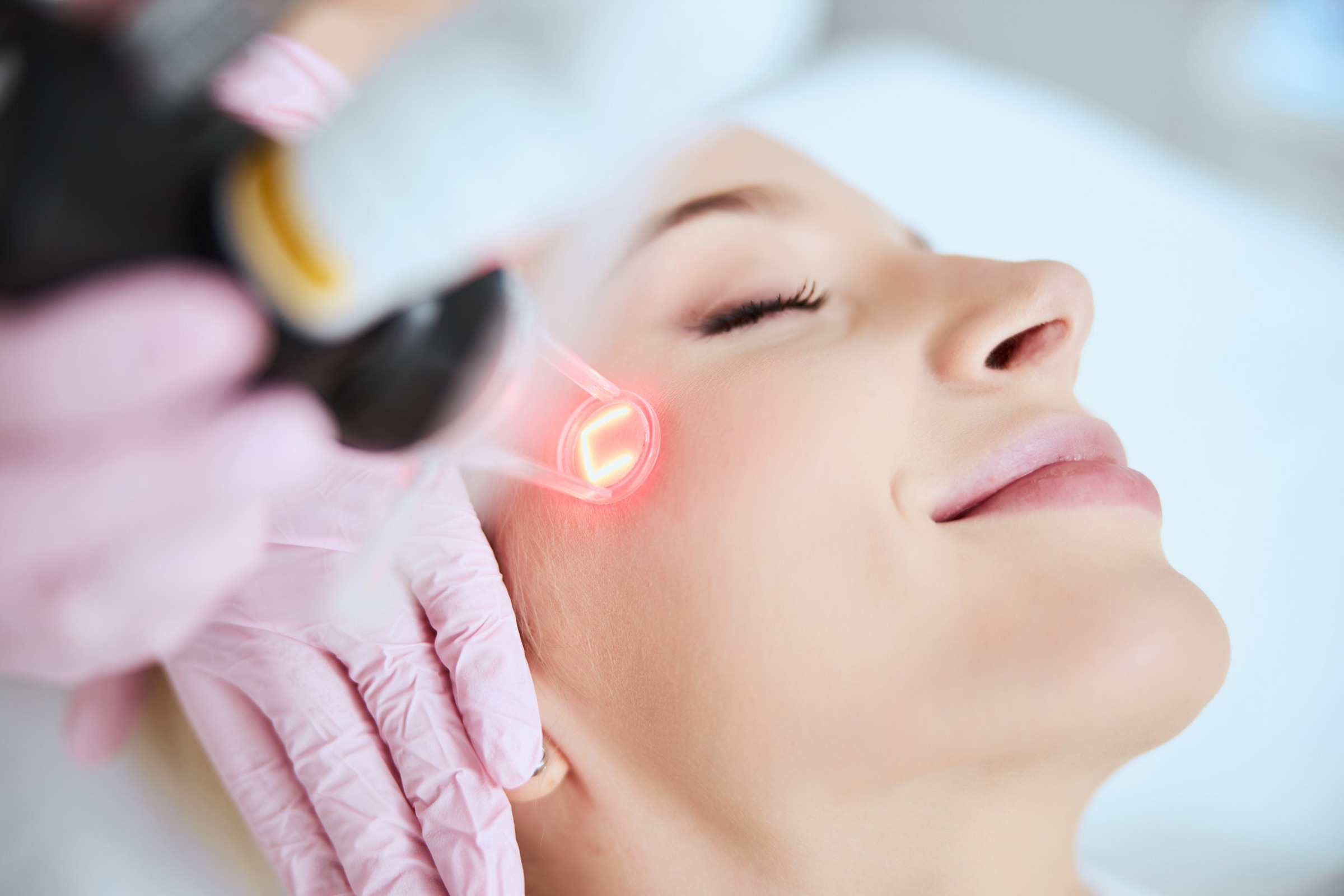
Melasma has a reputation for being one of the most stubborn pigment conditions out there. Plenty of people go through 3 to 6 months of laser toning only to watch it fade, then darken again. That's why practitioners increasingly reach for stacking, layering several different treatments with different mechanisms instead of relying on a single device.
Why is melasma so hard to pin down with just one approach? And does combining treatments actually change the outcome? Let's walk through why melasma keeps coming back, the logic behind stacking, and what to watch out for along the way.
Why does melasma keep coming back?
Skin is dotted with tiny factories called melanocytes, the cells that produce pigment. Exposure to UV light or heat kicks these factories into higher gear. In melasma-prone skin, these cells are already wired to be oversensitive, so even mild stimulation is enough to switch them back on.
The problem doesn't stop there. In melasma lesions, the basement membrane, the thin layer separating the epidermis from the dermis, is often weakened in patches. Once gaps form in that membrane, melanin from the epidermis leaks down into the dermis below. Pigment that settles into the dermis doesn't shed away like surface pigment does, so it lingers and tends to come back even after treatment. It's a bit like ink on paper: wipe it off the surface and it's gone, but once it soaks through to the fibers underneath, no amount of scrubbing gets it all out. That's part of why melasma feels slower and more stubborn than other types of pigmentation.
Why does repeating toning alone hit a plateau?
Low-fluence Q-switched laser toning, which spaces low-power passes 1 to 2 weeks apart over 5 to 10 or more sessions, is effective at breaking down melanin sitting in the epidermis. Because the energy is spread across many gentle passes instead of one strong hit, side effects tend to be minimal.
But as mentioned, part of melasma's pigment has already migrated into the dermis, and blood vessel issues are often tangled in around it too. Toning is strong on epidermal pigment, but it doesn't reach dermal pigment or the vascular component nearly as well. That's why long courses of toning alone often hit a plateau where the pigment simply stops improving. The first 5 to 6 sessions often bring a noticeable fade, and then, no matter how many more rounds follow, nothing changes. The pigment sitting in the dermis and the vessels feeding it are both out of toning's reach.
How does stacking layer treatments together?
Melasma usually involves several problems layered on top of each other at once: epidermal pigment, dermal pigment, blood vessels, and oversensitized melanocytes. It's a bit like trying to open several different locks with a single key.
Stacking assigns a device suited to each of these problems and runs them in sequence. A typical plan might use low-power toning to clear epidermal pigment, a vascular laser to calm redness and vessel activity, and topical or oral brightening medication layered on top. Each treatment takes on a different piece of the problem rather than one device trying to do everything.
Not every device gets used on the same day. Many plans shift the emphasis session by session, leaning more on pigment one time and more on vessels the next, adjusting the rhythm as needed. If the pigment looks especially dark during a given period, the pigment laser gets more weight; if the face looks flushed, the vascular laser takes priority. Splitting things up this way reduces how much stimulation the skin absorbs in a single visit and builds in time to recover between rounds.
Why melasma may need vascular treatment
Look closely at a melasma lesion and you'll often find noticeably more small blood vessels than in normal skin nearby. These vessels do more than just add redness. Signaling molecules carried through the bloodstream are thought to keep prompting nearby melanocytes to produce more pigment.
In effect, the vessels act like a supply route, delivering raw material and instructions straight to the pigment factory. Clear out the pigment while leaving those vessels untouched, and the signal keeps arriving, making a relapse likely down the road. That's exactly why vascular laser (pulsed dye laser, which targets hemoglobin in the blood) or IPL (intense pulsed light, a device that emits a mix of wavelengths) often gets added into a stacking plan, to dial back that supply route as well. It's the same reason melasma can look suddenly darker after a hot sauna session or a spicy meal that flushes the cheeks: the vessels dilate and the signaling ramps up right along with them.
The roles of topical and oral medication
If lasers work by breaking down pigment that's already formed, topical and oral medications work upstream, dampening the process by which melanocytes make pigment in the first place. Hydroquinone, a brightening ingredient that blocks the enzyme responsible for making melanin, essentially slows down the factory's production line itself.
Tranexamic acid, an ingredient that curbs vascular and inflammatory signaling to suppress pigment production, helps quiet that vascular signal mentioned earlier. It's often used both orally and topically at the same time. While the laser clears the visible pigment, the medication works in the background to keep new pigment from forming as quickly. Put simply, the laser clears out existing inventory while the medication slows down the factory's production rate, two different jobs handled in parallel.
Does firing the laser harder make melasma darker?
This is the most important part. Melasma-prone melanocytes are already sensitive, so lasers run too strong or too often turn that very heat into a fresh source of irritation. Skin reads this as an injury and mounts an inflammatory response.
Inflammation itself acts as a powerful signal telling melanocytes to produce even more pigment. So a treatment pushed too aggressively in an effort to clear melasma can backfire, triggering a new round of post-inflammatory hyperpigmentation (PIH), pigment that lingers after inflammation has settled. This is exactly why stacking multiple devices doesn't mean cranking every single one to full power; instead, lowering the intensity of each device and dividing the workload between them keeps the total amount of stimulation in check, which is the safer approach. For instance, hitting freshly sun-tanned skin with a strong laser right after a trip can make pigment darker instead of lighter. That's why it's best to avoid heavy UV exposure right before a session and to schedule the next round only once skin has fully calmed back down.
How far apart and how many treatments?
- Interval between sessions: Usually spaced 4 to 6 weeks apart. Skin needs roughly that much time to calm down after laser stimulation and for newly formed pigment to settle, so scheduling sessions too close together can let irritation build up and backfire.
- Total sessions: Commonly planned over 5 to 10 or more sessions, treated as a long game rather than a quick fix. Because the pigment spans both the epidermis and dermis and vascular factors are tangled in as well, progress tends to come gradually, layer by layer, rather than all at once.
- Maintenance: Once melasma has faded, sun protection combined with low-intensity maintenance treatment is common practice. Once melanocytes become sensitized, they rarely return fully to their original baseline, so pigment can return easily if stimulation builds up again.
During summer, when UV exposure is stronger, pigment is more easily re-triggered, so it can help to space sessions out a bit more or lean harder on maintenance treatment during that stretch. In winter, with weaker UV exposure, some plans go the other way and tighten the interval for a more active push.
What to check before you start
Melasma varies from person to person: in some people, the pigment sits mostly in the epidermis, while in others it has migrated deeper into the dermis. That's why it's worth checking which layer the pigment sits in before starting, using a Wood's lamp or skin imaging. If the pigment is concentrated in the epidermis, the laser component of the plan can be weighted more heavily; if it's sitting deep in the dermis, the plan shifts toward more medication and a more cautious, lower-power approach with the laser.
Because stacking layers several treatments in sequence, it also matters that one clinician designs the overall plan and adjusts intensity along the way based on how skin is responding. If pigment looks darker or redness increases partway through the course, that can be a sign the stimulation has been too much, so it's worth checking in before moving on to the next session.
Melasma is better thought of as something to manage rather than something to cure outright. Even after stacking brings the pigment down significantly, keeping up with sun protection and low-intensity maintenance is reported to be the most realistic way to slow down a relapse.
References
Korean Dermatological Association, Ministry of Food and Drug Safety (MFDS), American Academy of Dermatology (AAD), and U.S. Food and Drug Administration (FDA).
Was this helpful?
About this article
Written by a practising aesthetic physician and intended for general education — not a substitute for individual medical advice.
Read next

Freckles Versus Melasma: How Do Their Laser Treatments Differ?
At a glance, freckles and melasma both look like brown spots, which makes them easy to mix up. But where the pigment actually sits in the skin, and why it shows up in the first place, are completely different. That difference decides whether you need a strong laser or a gentle toning session, and why one of the two keeps coming back.
By Dr. Lee
Laser for Melasma and Sun Spots: Epidermal Versus Dermal Pigment
Melasma and sunspots can look like the exact same shade of brown, yet how deep that pigment sits changes everything about how it responds to treatment. Here is why epidermal and dermal pigment are handled with completely different principles, and why that distinction matters so much for planning care.
By Dr. Lee

Aegyo-Sal Filler: Technique, Amount, Lumps and the Tyndall Effect
A look at what aegyo-sal is and how hyaluronic acid filler recreates that puffy under-eye line when you smile. We cover why subtle, small-volume results have become the trend over dramatic fullness, plus the lumping, sagging, and Tyndall effect that can happen if too much is injected.
By Dr. Kim