Reepot Laser Results: Can One or Two Sessions Clear Lentigines That Toning Couldn't?
By Dr. Lee7 min read
Solar lentigines and seborrheic keratosis that have settled darkly on the face or the backs of the hands can be stubborn. Multiple rounds of laser toning often leave them largely unchanged, which is how many people end up looking into Reepot. The claim that it can clear them in a single session sounds almost too good, and then there's the mention of scabbing, which raises questions of its own.
The core of it: Reepot is not a toning laser that gradually fades mild pigmentation. It is a targeted pigment laser designed to shatter dense, concentrated lesions in one hard hit. Its defining feature is VSLS, a pre-cooling mechanism that protects surrounding vessels and normal skin during each pulse, keeping the energy focused on pigment. That design is why dark solar lentigines and seborrheic keratosis typically clear in one to two sessions. The trade-off is a scabbing process that takes one to two weeks to resolve.
How does the Reepot laser work?
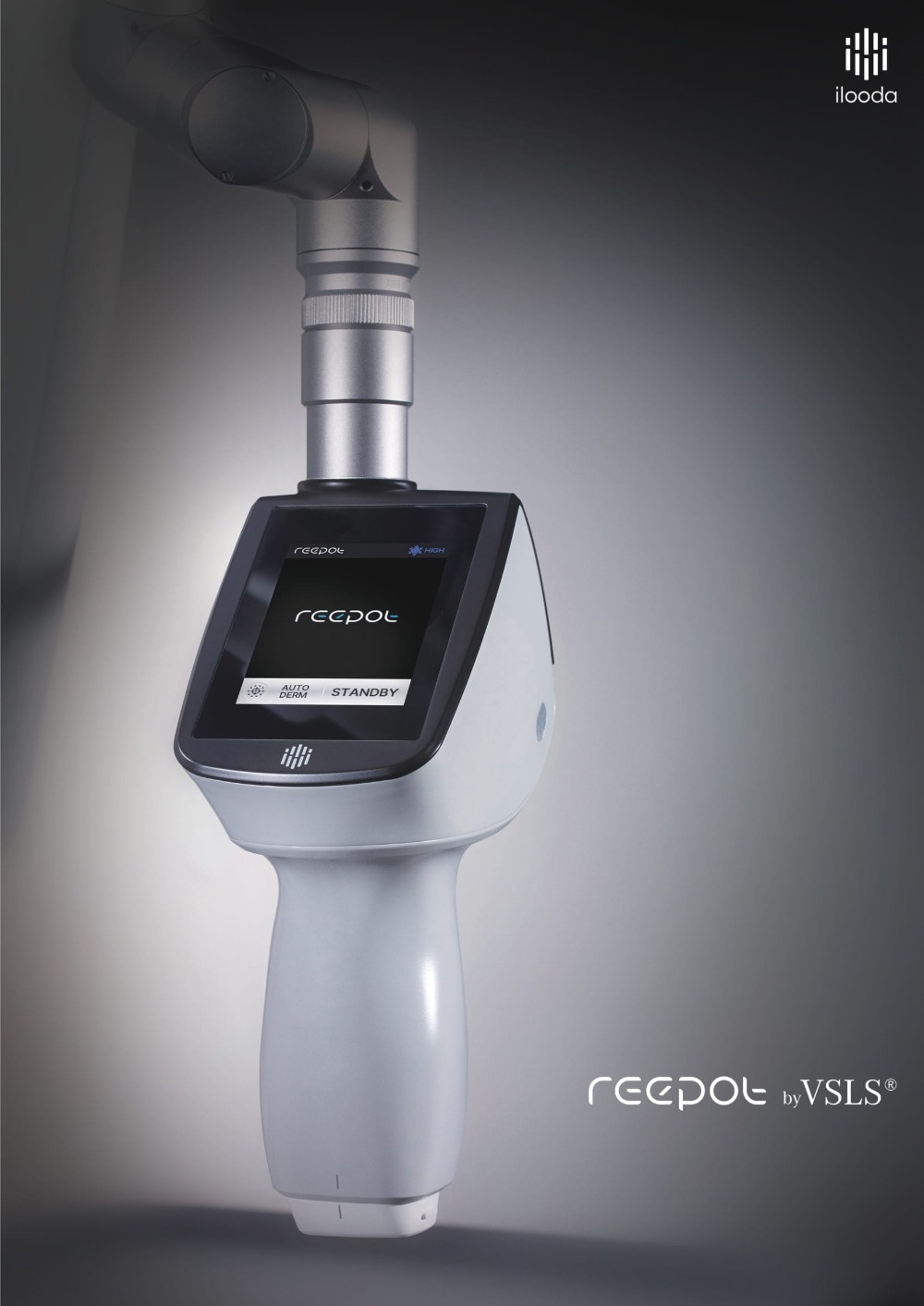
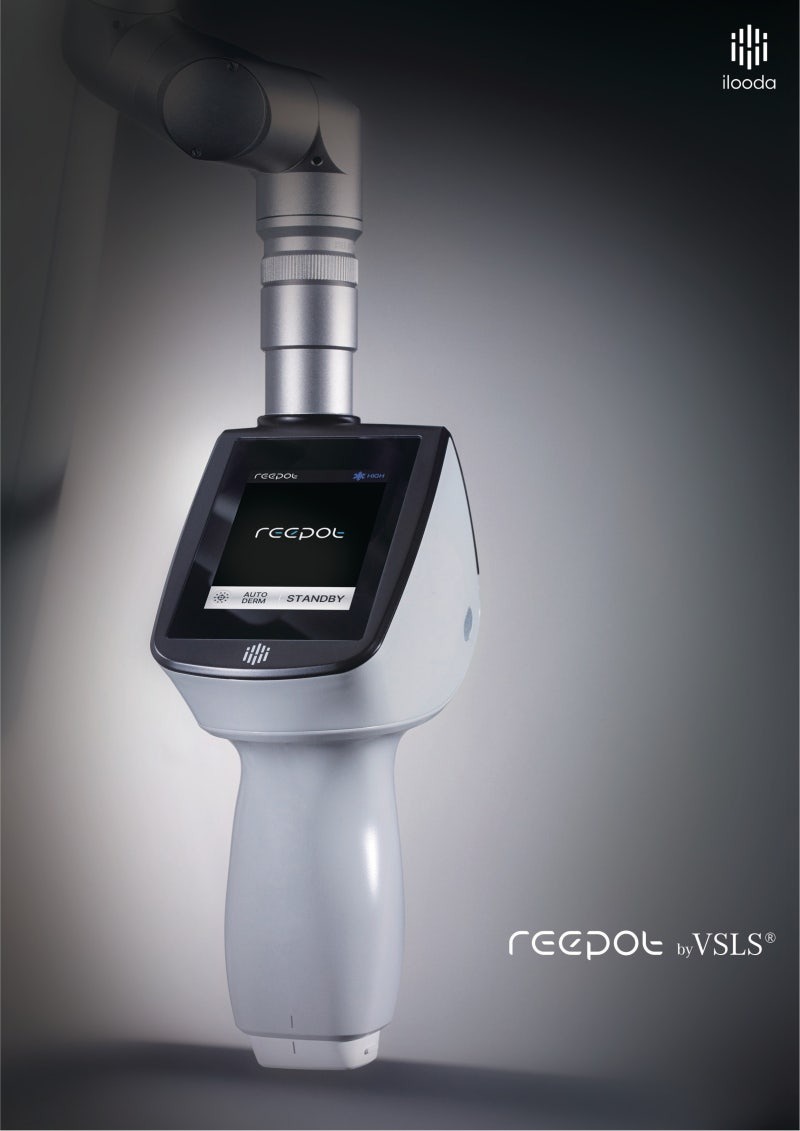
Reepot is a pigment laser developed by Classys, a Korean medical device company. It operates at 532nm, a wavelength that is strongly absorbed by brown melanin, making it well suited to dense, well-defined lesions like solar lentigines and seborrheic keratosis. In simple terms, it is a laser built to hit pigment hard and precisely.
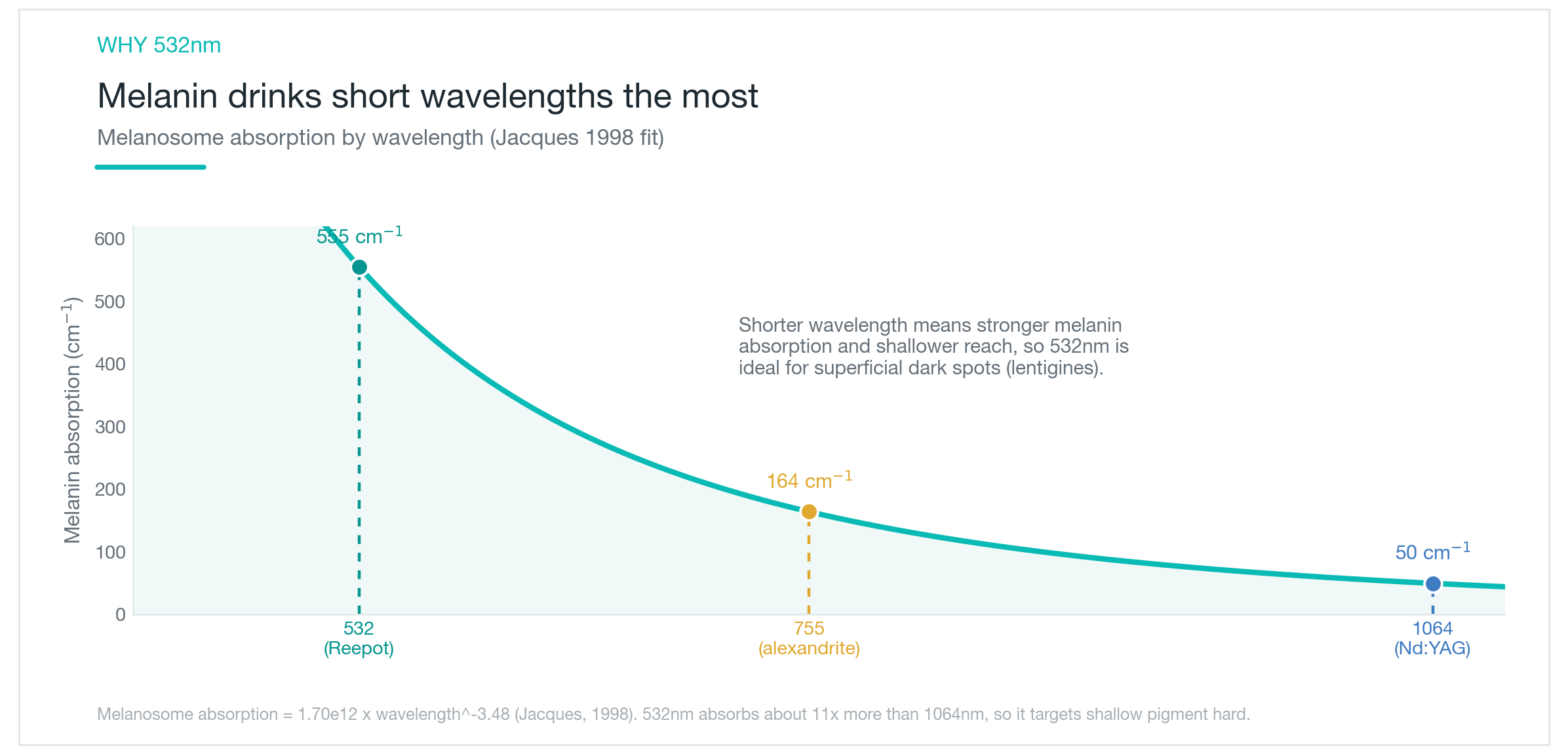
Melanin absorbs light more strongly at shorter wavelengths. At 532nm, melanin absorption is about 11 times higher than at 1064nm, the wavelength most commonly used in laser toning. That gap is why 532nm can shatter shallow solar lentigines and seborrheic keratosis in a way that toning cannot. The flip side: it is less suited to deeper pigment or the faint, diffuse pigmentation of melasma.
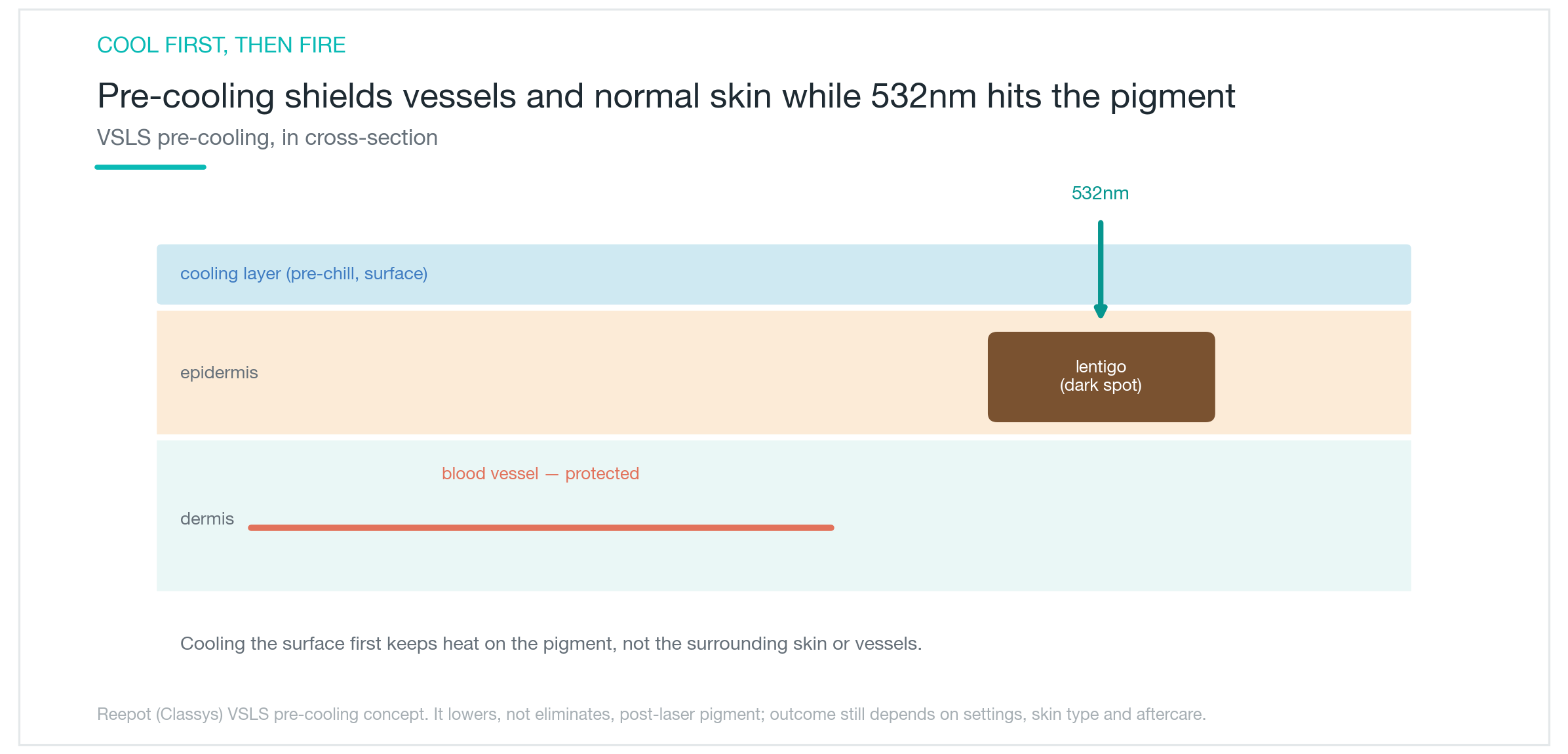
What sets Reepot apart from other pigment lasers is VSLS. The handpiece delivers an intense burst of cold immediately before each pulse, rapidly chilling the superficial tissue. This concentrates the laser's energy in the melanin target while limiting heat spread into surrounding skin and vessels. Reepot holds clearance from both the Korean MFDS and the US FDA, and the cooling handpiece makes the procedure comparatively fast and tolerable.
VSLS cooling just before firing
The biggest complication risk with any pigment laser is post-inflammatory hyperpigmentation, or PIH. Asian skin types carry higher baseline melanin and more reactive melanocytes, so excessive thermal spread during a laser pulse can produce new darkening in the very area being treated.
VSLS pre-cooling addresses this directly. By chilling the skin before each pulse, the system keeps heat concentrated in the target lesion rather than spreading laterally into surrounding melanocytes. That means less thermal injury to normal tissue, and a lower PIH risk, even at the higher fluences needed to break up dense lesions. Still, lower risk is not zero risk. Skin type, the operator's fluence settings, and post-procedure sun care all shape the outcome. On Asian skin, how the operator calibrates output matters as much as the cooling technology itself.
Is Reepot better for lentigines or melasma?
Reepot's clinical strength is precisely in the lesions that frustrate toning: dense, well-defined, darkly pigmented spots. Solar lentigines and seborrheic keratosis, both sharply bordered and concentrated, respond well. Most patients see clear, visible fading after one session; larger or deeper lesions sometimes need a second.
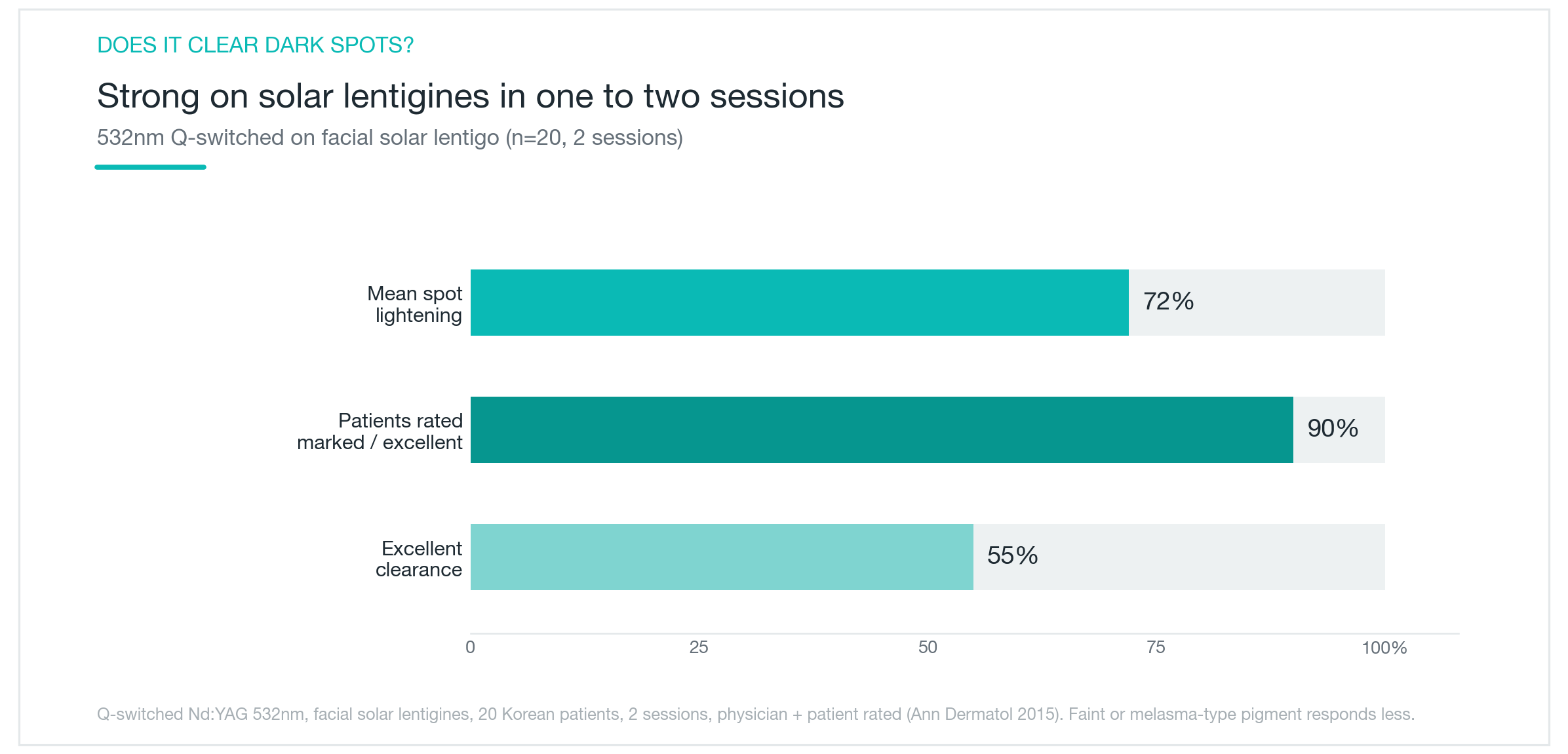
Clinical data supports this. In a study of 20 Korean patients, facial solar lentigines lightened by an average of 72% after 2 sessions, and more than half of participants showed an excellent response. Faint or diffuse pigmentation responded considerably less well.
Melasma is a different matter entirely. Diffuse, hormonally driven pigmentation often worsens under high-energy treatment. Melasma calls for low-energy, multi-session laser toning or topical agents, not Reepot. If there is any uncertainty about whether you are dealing with a solar lentigo, seborrheic keratosis, or melasma, a dermatological evaluation comes first. Among solar lentigines, darker and more clearly bordered lesions clear more reliably than shallow, diffuse ones.
Why do scabs form and when do they fall off?
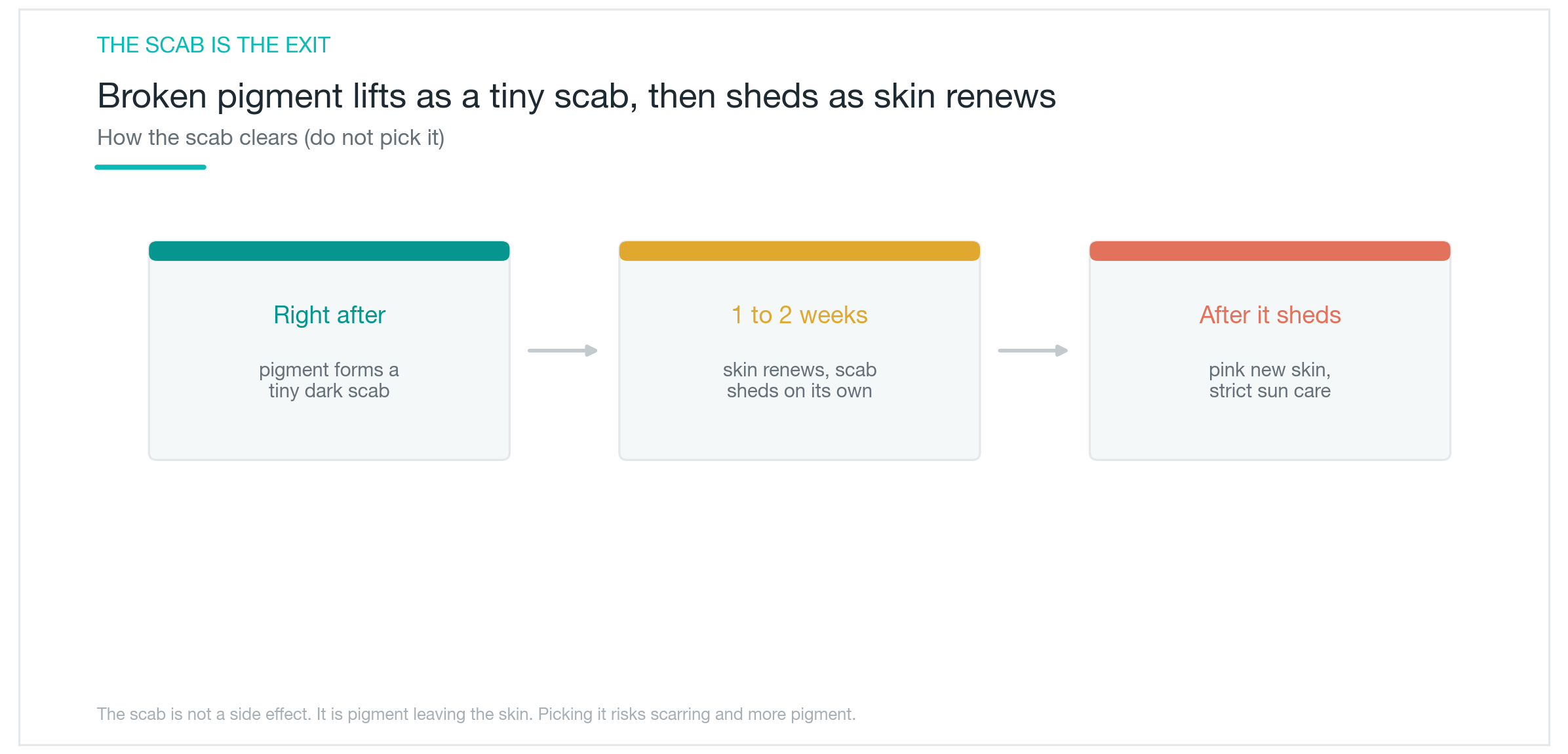
The scab is not a side effect or a sign that something went wrong. When the laser pulse destroys melanin at the skin surface, the disrupted pigment and surrounding tissue consolidate into a small crust. The treated spots will look darker and slightly raised immediately after the session. That dark crust is the destroyed pigment visible at the surface.
Over the following one to two weeks, new skin regenerates from below and the crust separates naturally. Many clinics cover the treated spots with a thin protective dressing or regeneration tape to keep the scab intact until it lifts cleanly. The one rule that matters most: do not pick, scratch, or forcibly remove the scab. Pulling it off early exposes unprotected tissue and significantly raises the risk of scarring and PIH. Once the scab separates, the new skin beneath is pink, thin, and highly sensitive to UV. Sun protection during this window is not optional. Unprotected UV exposure on freshly healed skin reliably stimulates melanocyte activity, which is the exact outcome the laser was intended to prevent. Scab care and consistent daily SPF together account for roughly half the final result.
How does it compare with toning and IPL?
Three pigment treatments come up most often in comparison:
| Treatment | Best suited for | Scabbing and downtime | Typical sessions |
|---|---|---|---|
| Reepot | Dark solar lentigines, seborrheic keratosis | Scab 1–2 weeks | 1–2 sessions |
| Laser toning | Melasma, faint diffuse pigmentation | Minimal | Multiple sessions |
| IPL | Mild scattered spots, redness | Minor crusting a few days | Multiple sessions |
None of these is universally superior. The right choice depends on whether the pigmentation is dark and defined or faint and diffuse, and on tolerance for downtime. For a single dark solar lentigo or a raised seborrheic keratosis, Reepot is efficient: one or two sessions usually do it, and the total cost stays contained. For melasma or widespread mild pigmentation with no tolerance for any downtime, laser toning is the right track. IPL falls between them, useful for scattered light freckle-type spots combined with diffuse redness. One practical question beyond efficacy: can you manage one to two weeks of visible scabbing, and will you reliably protect the area from the sun? If yes, Reepot delivers clear results efficiently. If not, a lower-intensity approach is the more realistic option.

Side effects and who the treatment suits
Reepot's side effect profile is relatively favorable for a high-fluence pigment laser, largely because of VSLS pre-cooling. The expected sequence after a session (temporary darkening, scabbing, and gradual resolution over one to two weeks) is predictable. Redness and localized swelling immediately after the procedure are normal and short-lived. Sun protection after Reepot is not cosmetic maintenance. Solar lentigines recur when melanocytes in the treated area are repeatedly activated by UV, so broad-spectrum SPF daily from the day the scab falls off is non-negotiable.
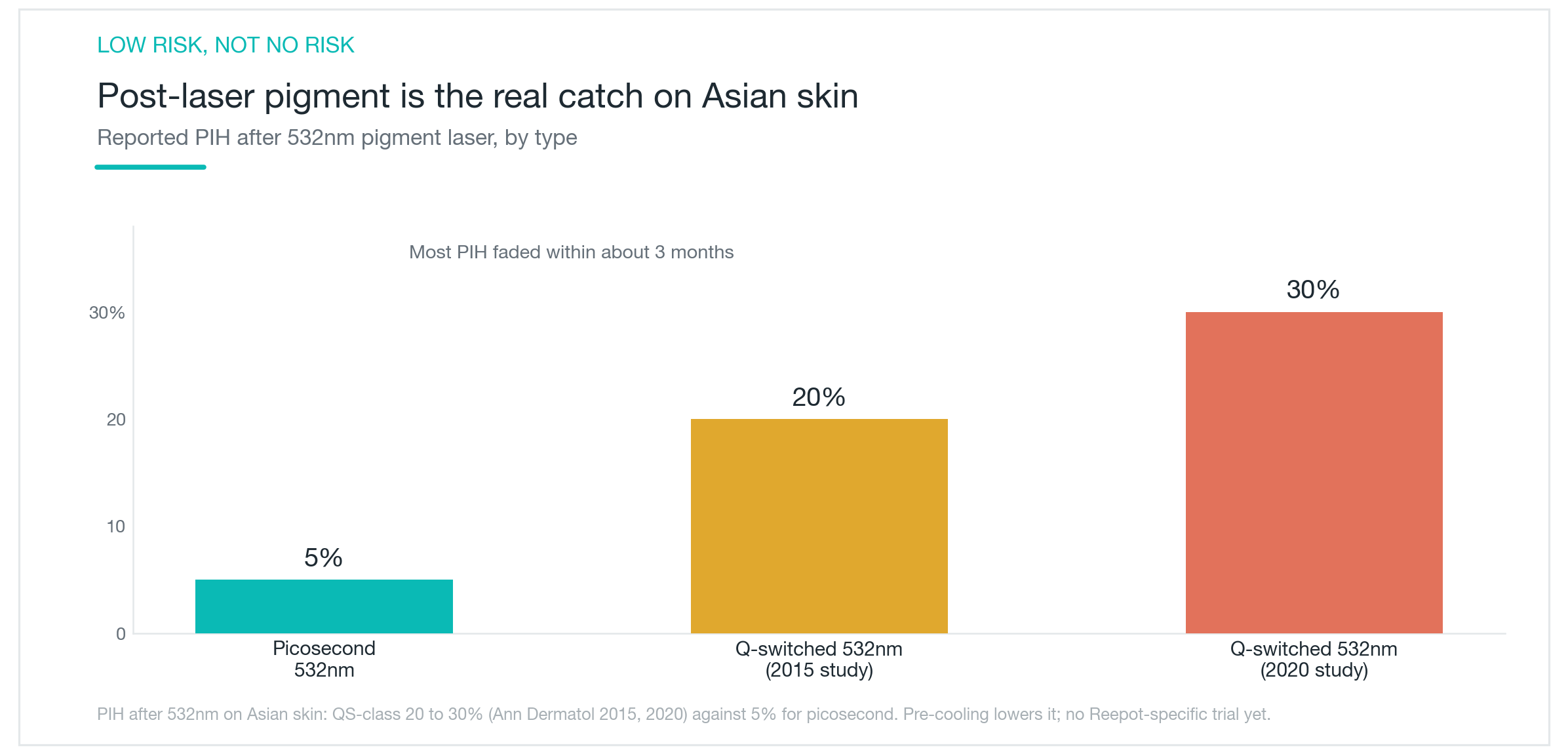
For context on risk: across 532nm Q-switched laser studies, post-laser PIH was reported in 20 to 30% of cases. The newer picosecond approach brought that number down to around 5%. Most cases resolved within approximately 3 months. There is no published Reepot-specific comparative study yet. "Lower risk" means lower among pigment lasers, not zero. On Asian skin, the operator's fluence calibration and the patient's post-procedure sun care are what ultimately decide whether PIH appears.
Cautions and contraindications: active inflammation or infection in the treatment area, photosensitizing medications, and pregnancy all warrant discussion with a clinician before proceeding. In patients who have melasma alongside discrete lesions, high-energy treatment risks worsening the melasma and requires careful clinical judgment. The patients who benefit most are those with dark, well-defined solar lentigines or seborrheic keratosis that have been resistant to toning, who can accept one to two weeks of scabbing and commit to strict sun protection throughout the recovery period.
Was this helpful?
About this article
Written by a practising aesthetic physician and intended for general education — not a substitute for individual medical advice.
Read next

CO2 Pinhole Laser for Under-Eye Syringoma: How Many Sessions Until It Fades?
The CO2 pinhole method uses a laser to burn narrow, deep holes directly into a lesion to remove tissue on the spot. Here's how it's used for under-eye syringoma, eyelid xanthelasma, telangiectasia, and scars, backed by evidence, including clearance rates, recovery time, and the pigmentation risk that matters most for Asian skin.
By Dr. Kim
LDM Ultrasound Effects: Soothing Post-Procedure Swelling and Red, Hot Skin
A plain-language look at how LDM ultrasound vibrates millions of times per second to stir up cell metabolism and circulation, why that helps swelling and inflammation settle down, and why it's used even on sensitive skin. Also covers how results build up over repeated sessions and where this treatment fits in practice.
By Dr. Kim
Nevus of Ota Treatment: Q-Switched Laser Sessions and Intervals
Nevus of Ota sits deep in the dermis rather than on the skin's surface, which is exactly why no amount of concealer can hide it. Here is a mechanism-focused look at why only a laser with a specific wavelength can reach that depth, and why treatment is spread across 6 to 10 sessions at 6 to 8 week intervals instead of being done all at once.
By Dr. Lee