CELLREDM and Re2O: Differences and How Long Their Effects Last
By Dr. Lee11 min read
A patient came in recently with a note pulled up on her phone: a list she'd assembled from Instagram threads and Reddit rabbit holes. Profhilo, Sculptra, Restylane Skinbooster, and CELLREDM, each followed by a question mark. She'd done the homework. She just couldn't get a straight answer on what CELLREDM actually was and how it differed from the rest. That frustration is fair. The injectable skin rejuvenation category has exploded in the last few years, and the marketing language around each product tends to blur things more than it clarifies them.
The categories are worth keeping straight. Hydration boosters, dilute HA injectables like Restylane Vital or Juvederm Hydrate, work by drawing water into the dermis. They improve surface dewiness but don't touch the underlying architecture. Collagen stimulators like Sculptra go a layer deeper, prompting the body to generate new collagen over weeks and months. That approach is legitimate, but you're still waiting on the body's own response, and that response varies considerably from person to person.
CELLREDM operates from a different premise. Rather than sending a signal and waiting, it delivers the actual structural raw material, the extracellular matrix (ECM) scaffold itself, directly into the dermis. One caveat worth stating upfront: no published clinical trials have been conducted under the CELLREDM brand specifically. Every efficacy figure I'll cite comes from trials on the same material category, human acellular dermal matrix (phADM), which shares CELLREDM's composition and mechanism. That's the honest baseline for everything that follows.
How is CELLREDM different from existing skin boosters?
CELLREDM is an injectable skin booster manufactured by Hans Biomed in South Korea. The company positions it as a fifth-generation product; its material is human-derived ECM, specifically acellular dermal matrix (ADM) processed from human donor dermis.
To understand why that matters, think about what the dermis actually is. Below the epidermis lies a dense protein scaffold, mostly collagen and elastin fibers interlaced in a three-dimensional mesh, with a hydrated ground substance filling the spaces between them. Cells live and function within that scaffold. It provides the firmness, elasticity, and bounce that younger skin has. With age, that architecture thins and loosens, and a significant share of what we call "aging skin" (sagging, enlarged pores, loss of elasticity) traces back to that scaffolding deteriorating, not just to surface dehydration.
ADM is what you're left with after stripping the cells from human dermal tissue while preserving the protein scaffold. Surgeons in the US have used sheet-form ADM for tissue reconstruction for decades; AlloDerm is probably the best-known example. CELLREDM applies the same principle in injectable form: rather than a surgical implant, it's a particle suspension delivered through a needle into the dermis.
That's the core distinction from the other categories. HA hydration boosters add water-holding capacity. Sculptra and similar collagen stimulators prompt the body to synthesize collagen from scratch, which is effective but slow and variable. CELLREDM delivers pre-formed structural material. Think of it as placing the framing rather than asking the crew to build from raw lumber, or shoring up the foundation instead of watering the garden above it.
Human origin carries regulatory and safety weight. Because CELLREDM comes from donor tissue rather than a synthetic source, it falls into a separate regulatory category in Korea, one where sourcing, processing standards, and formal approval status all matter. The primary immunogenic concern with any human tissue product is residual cellular material, particularly DNA fragments. CELLREDM's processing is designed to bring residual DNA below 50 ng/mg, preserving the ECM scaffold while removing the cellular debris that could trigger an immune response.
Ingredient composition and particle size
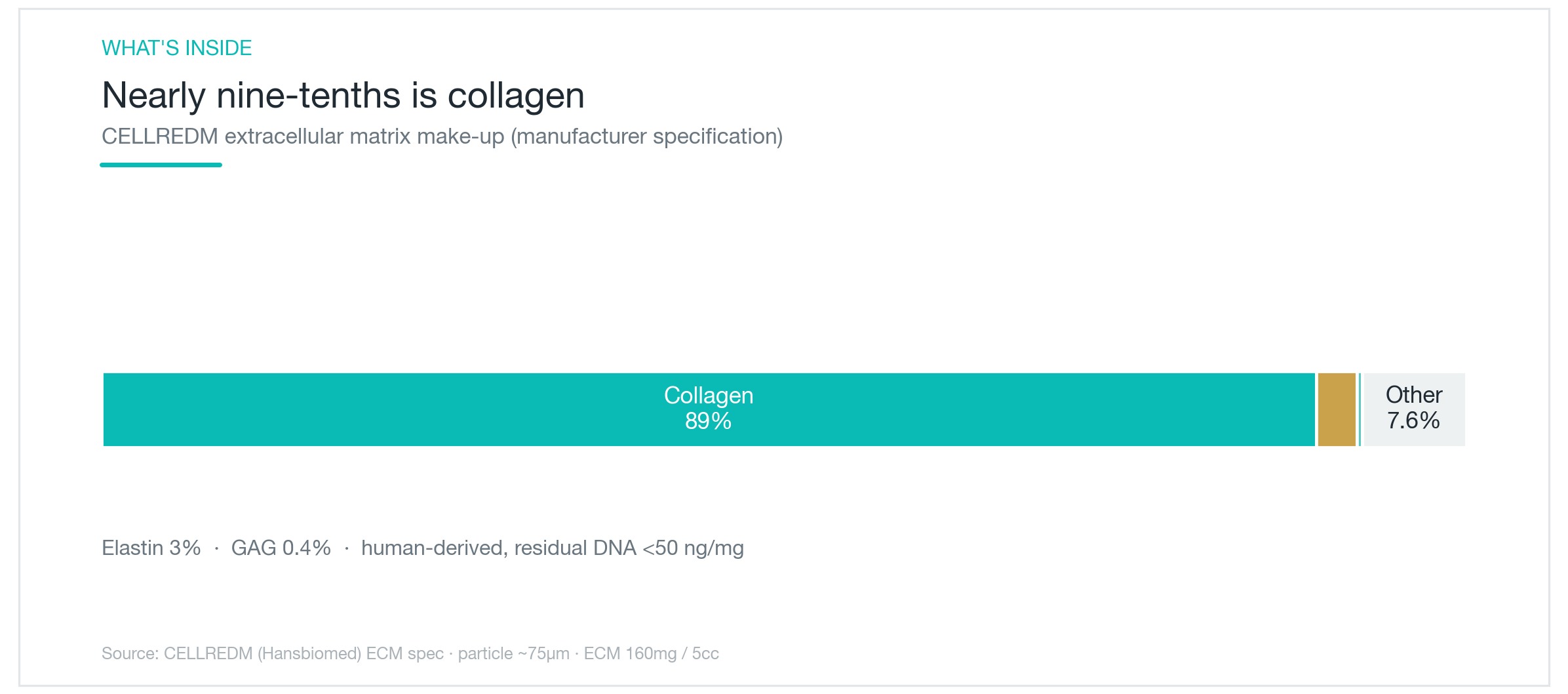
The chart shows CELLREDM's ECM composition by the manufacturer's published specs. Collagen accounts for roughly 89%, elastin around 3%, and glycosaminoglycans (GAGs) approximately 0.4%. Particle size is listed at approximately 75 µm, and total ECM content per 5 cc vial is 160 mg.
A few things stand out. This isn't a blend of isolated purified proteins. It's processed to retain the native architecture of human dermis, with collagen, elastin, and GAGs present in their natural proportions and spatial arrangement. That distinction matters because skin cells behave differently when they encounter a structurally familiar environment versus an isolated component or synthetic analog.
Each element pulls its own weight. Collagen is the main load-bearing scaffold. Elastin provides recoil, the snap-back quality that progressively weakens with age. GAGs, despite their small percentage by weight, are functionally critical: they hold water within the fiber network, and they anchor the signaling molecules that direct cell behavior and tissue remodeling. Delivering all three in their native ratio gives the dermis something structurally coherent to work with.
The 75 µm particle size is a deliberate engineering decision. Too large, and particles won't pass cleanly through the needle or will lump post-injection; too small, and they can't function as structural anchors. This size aims to balance smooth injectability with scaffold integrity. The 160 mg/5 cc figure provides a rough measure of how much structural material is being deposited per session.
That said, composition specs and in-dermis results are different questions entirely. Good architecture on paper is not a guarantee of strong clinical outcomes. Whether these particles integrate into your dermis and remodel the tissue around them is a question only human trial data can answer, and I'll get to that next. One additional note on precision: the manufacturer's ~89% collagen figure is a spec claim; independent analyses of comparable phADM materials have reported values closer to ~80% depending on the measurement protocol used. Read the composition profile as directional, not exact.
What numbers came from trials of the same class?
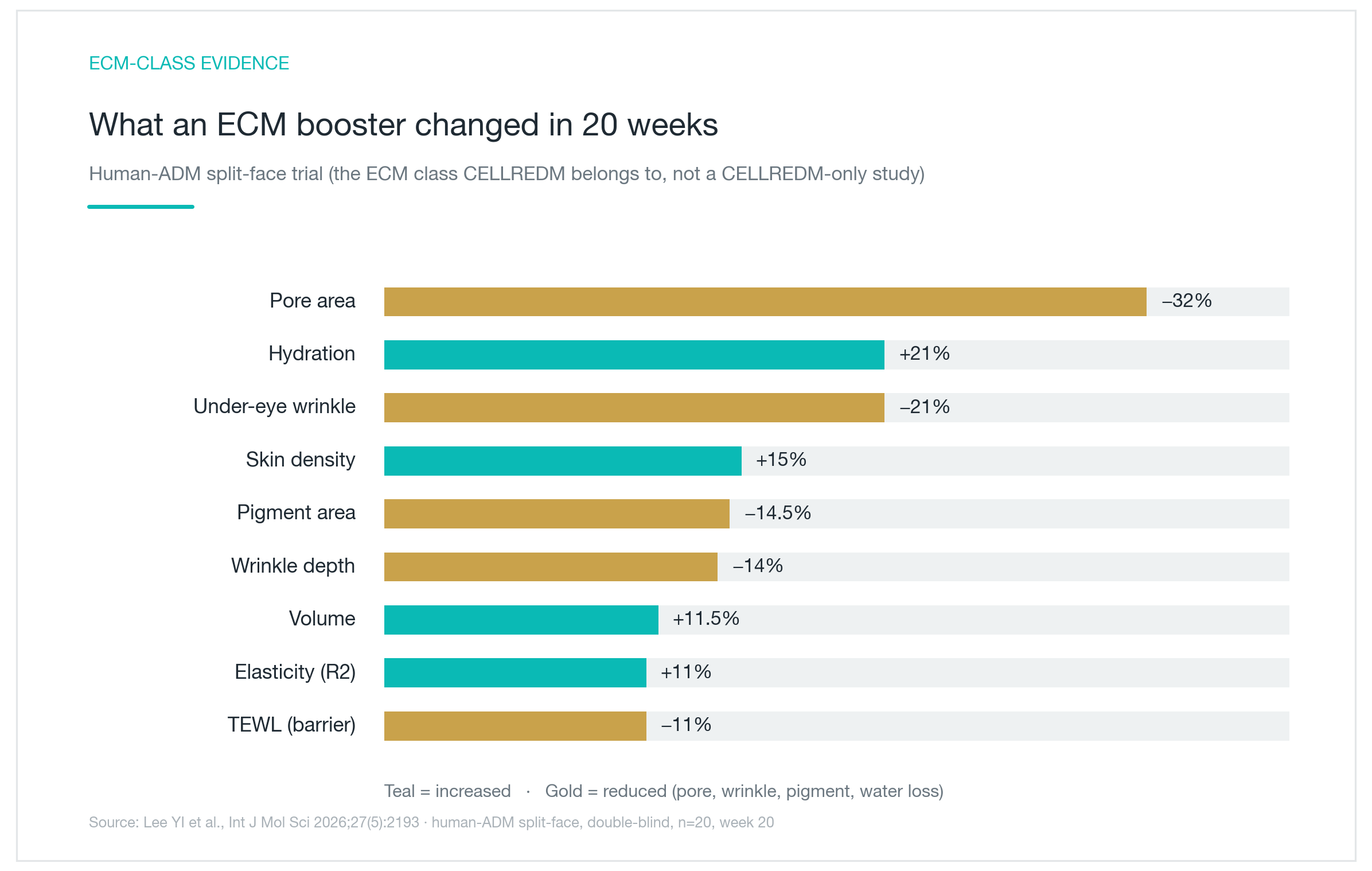
The numbers in this chart are not from a CELLREDM-branded trial. They come from a split-face randomized study pitting human phADM ECM against hyaluronic acid on the same subjects, same material category as CELLREDM, same mechanism and composition. Because both treatments were applied to opposite sides of the same person's face, patient-level variables like age, lifestyle, and baseline skin quality are controlled for equally on both sides. That's a relatively clean comparison design.
Twenty subjects were followed over 20 weeks. On the ECM-treated side, nine parameters improved: hydration up ~21%, skin density up ~15%, volume up ~11.5%, elasticity up ~11%. On the reduction side, pore area down ~32%, under-eye wrinkling down ~21%, pigmentation down ~14.5%, wrinkle depth down ~14%, and TEWL (transepidermal water loss, a proxy for skin barrier integrity) down ~11%.
What stands out is that the improvements weren't confined to surface hydration. Density and elasticity, structural properties of the dermis itself, moved meaningfully. The pore area reduction of nearly one-third is particularly notable because enlarged pores are often a downstream consequence of collagen and elastin loss in the dermis beneath the pore opening; structural improvement at that level could plausibly account for visible pore refinement. This is a different mechanism from pore-minimizing topicals that work on the surface.
The limitations deserve equal weight. Twenty subjects is a small cohort, and these results represent the phADM category, not CELLREDM specifically. Take this data as a directional signal, the type and scale of effect this material class can produce, not as a personal prediction. The source: Lee YI et al., Int J Mol Sci 2026;27(5):2193.
When do CELLREDM results appear?
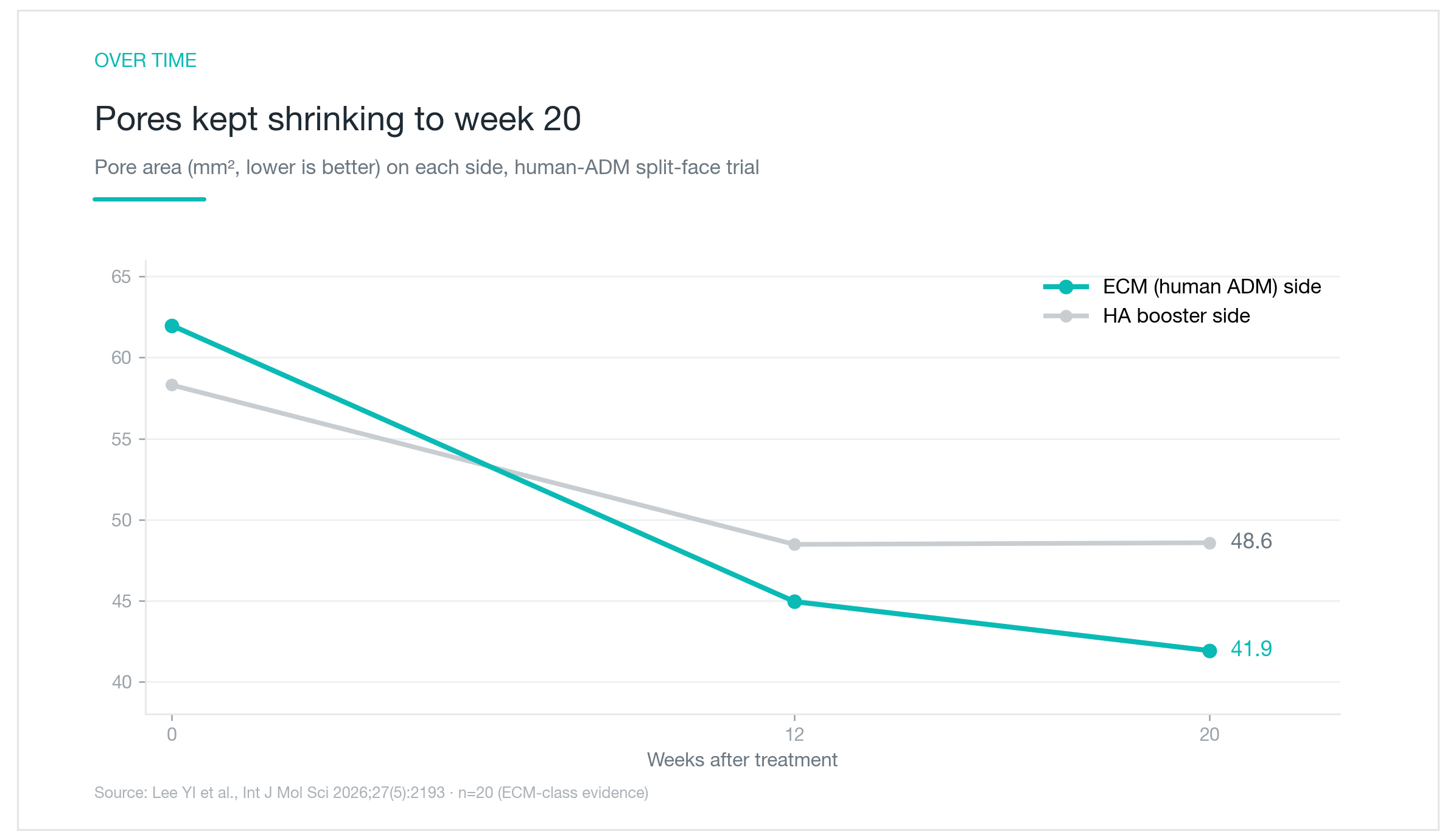
The line graph tracks pore area from baseline to 20 weeks, same phADM split-face trial, still not CELLREDM-specific. The ECM side moved from approximately 62 mm² at baseline to roughly 45 mm² at week 12, then continued to 42 mm² by week 20. The HA side started at about 58 mm² and flattened around 48 mm². The ECM curve kept declining past the point where HA plateaued.
The shape of that curve tells you something important about the mechanism. HA's effect attenuates as the material degrades and disperses, and the hydration benefit fades with it. The ECM curve keeps declining because the underlying process is integration, not just swelling: scaffold particles settling into the dermis, cells migrating onto them, and new tissue forming around them. That takes weeks, not hours.
The practical implication: this is not a treatment where you leave the office and look different by the weekend. Most of the meaningful change accumulates between weeks 4 and 12. In clinic, it's common to hear from patients who felt like nothing had happened through the first two sessions, then noticed something at session three: a different texture under the fingertips, a quality of firmness that wasn't there before. That trajectory is consistent with what the graph shows. Judging this treatment after a single session is the equivalent of evaluating Sculptra at two weeks.
The typical protocol, three sessions spaced four weeks apart, is designed around this accumulation curve. Complete the recommended course before forming a verdict. The graph gives you a reference for the expected direction; it doesn't promise you'll hit those exact numbers.

How does it differ from Re2O?
Anyone who's researched CELLREDM has almost certainly encountered Re2O (also marketed as Lituo), made by Humedics in Korea. At the category level, these two are genuinely close: both deliver human-derived phADM ECM into the dermis, and both are built on the same core premise, supplying pre-formed structural scaffold rather than triggering the body to build it. That makes them meaningfully different from Sculptra, Radiesse, or any HA-based booster, and it puts them in the same competitive lane with each other.
The differences exist but live in the details. Different manufacturers, different processing protocols. CELLREDM specifies a particle size of approximately 75 µm and lists collagen at ~89%; Re2O's published specs differ. These variations aren't trivial in theory: particle size affects needle passage, tissue distribution, and early scaffold behavior, and processing protocol shapes the material's final physical properties. In practice, whether those specification differences produce clinically meaningful differences for patients is genuinely unknown, because the head-to-head split-face trial that would answer that question has not been done.
That's the honest limit of what anyone can say here. The clinical evidence for both products comes from phADM category trials, not brand-versus-brand comparisons. Neither product has published data proving superiority over the other. Neither brand has a robust independent dataset at all yet; both are relatively recent to market. Any provider claiming one is definitively better than the other is running ahead of the evidence.
My answer when patients ask: this isn't a ranking problem. It's a question of manufacturer, specific product characteristics, your provider's hands-on experience with each, and the clinical context for your skin. If you encounter a strong comparative pitch in either direction, that's a signal to ask what data it's based on.
Who should get it, and what to watch for?
The patients most likely to get real value from CELLREDM are those who have done multiple rounds of HA hydration boosters and feel like they're addressing the wrong problem, maintaining surface moisture while the underlying firmness and pore quality continue to decline. If the concern is pure dehydration, HA does that efficiently and at lower cost. But when the complaint is that skin feels "thin," "loose," or "lacking density" despite being well-moisturized, that points to a structural issue, and CELLREDM's mechanism is more directly targeted at it.
It is not a volumizer. Patients seeking significant lift, projection, or fill in areas like the cheeks, nasolabial folds, or marionette lines will get more from a structural HA filler, Juvederm Voluma, Restylane Lyft, or, for longer-term collagen regeneration, Sculptra. CELLREDM's effect is quieter: a gradual improvement in baseline skin quality, firmness, and pore refinement rather than a visible change in contour. That's appropriate for the right patient and underwhelming for the wrong one. Getting expectations calibrated before treatment matters more than it might with some other procedures.
Protocols vary by clinic, but three sessions at roughly four-week intervals is a common structure. Duration of effect is typically communicated as six to twelve months; it's worth knowing that this figure is drawn from clinical observation of the phADM category rather than from long-term CELLREDM-specific tracking data. Factor that uncertainty, along with the total course cost (meaningfully higher than standard HA boosters, due to the material's production requirements), into the decision.
Side effects are consistent with intradermal injection in general: temporary swelling, bruising, and palpable firmness at injection sites are expected and typically resolve within a few days. Persistent lumping beyond that window warrants a follow-up with the injecting provider. Because this is a human-derived tissue product, confirming that what you're receiving is a legitimately sourced, properly approved product is a safety question, not just a regulatory formality. Gray-market or unverified sourcing raises real risks of immune reaction and contamination. Standard contraindications apply: pregnancy, breastfeeding, active infection or inflammation at the treatment site, and known autoimmune conditions. If you're on anticoagulants, immunosuppressants, or any medications that could interact, disclose everything before the first session.
Was this helpful?
About this article
Written by a practising aesthetic physician and intended for general education — not a substitute for individual medical advice.
Read next
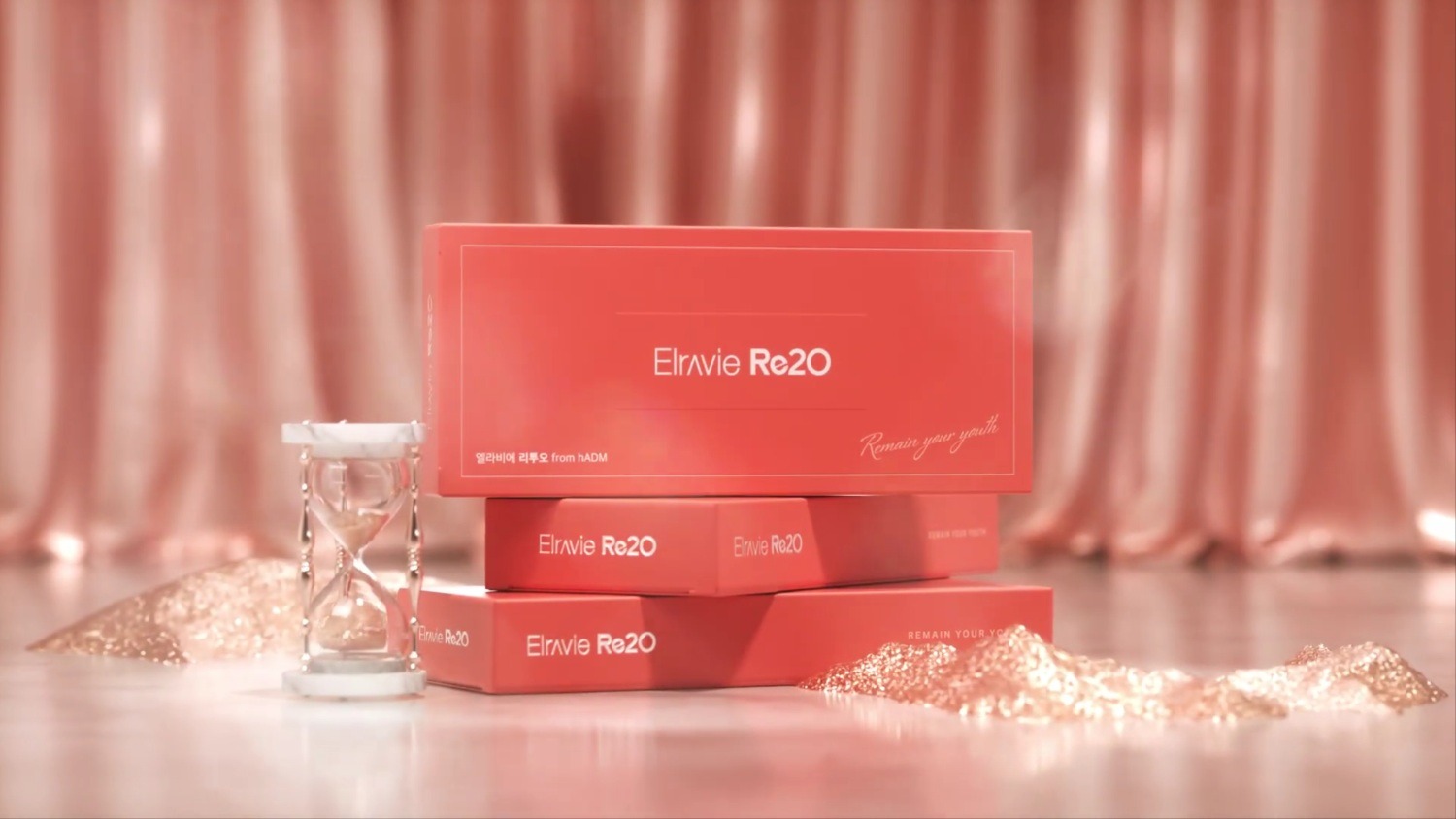
Re2O ECM: How It Differs From Hyaluronic Acid Boosters
Re2O (Elravie Re2O) deposits human-derived extracellular matrix straight into the dermis rather than waiting for your skin to build it. A clinical breakdown of its composition, what a 20-week split-face trial against HA actually revealed, and who genuinely benefits.
By Dr. Kim

Juveacell Effects and Side Effects, Including the Difference From Rituo and Cellredm
What Juveacell is, what happens when you inject human-derived dermal matrix directly into skin, how its concentration and volume stack up against Rituo (Re2O) and Cellderm, and when the evidence says results actually appear.
By Dr. Kim
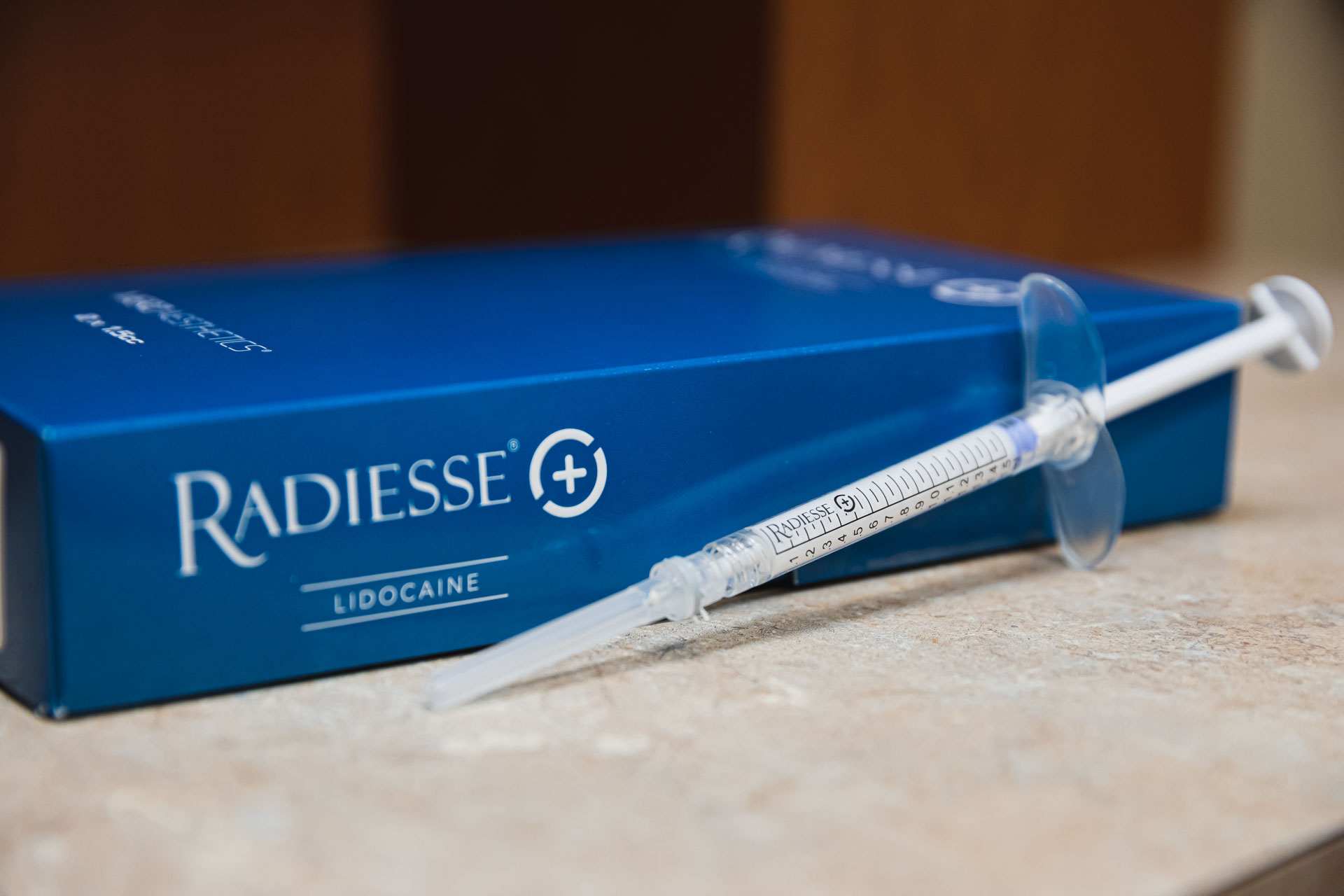
Radiesse Skin Booster: Results, How Long It Lasts, and Differences From Sculptra
Radiesse (CaHA) delivers immediate volume while triggering your body to produce new collagen in the neck, décolleté, and hands. What the biopsy data and ultrasound measurements actually show, how long results last, how it compares to Sculptra, and who makes a good candidate.
By Dr. Lee