Pigmentation After Laser Hair Removal: Why It Happens and How to Prevent It
By Dr. Lee7 min read
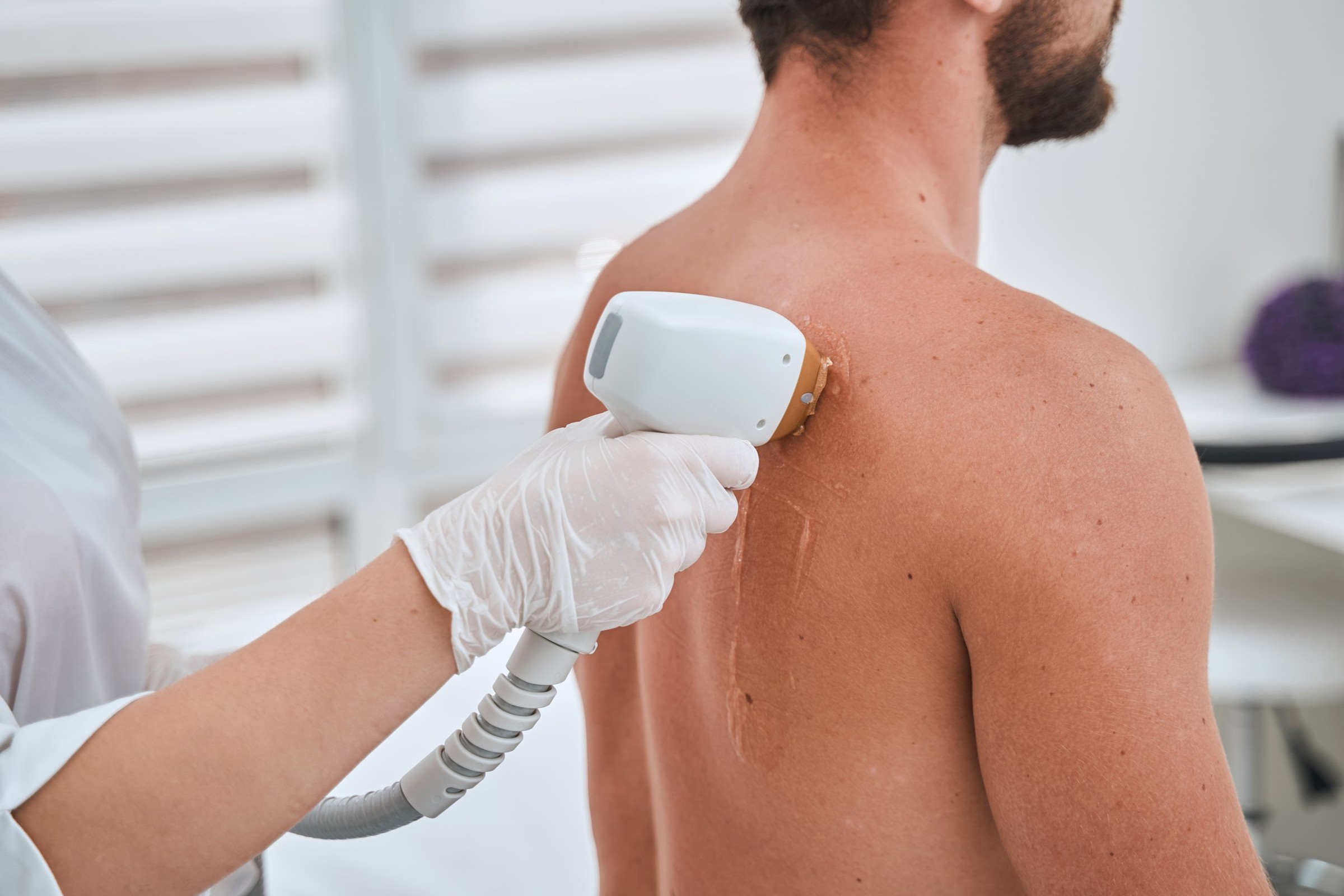
Some people end up with blotchy brown patches after laser hair removal. The hair is gone, but the marks left behind are, in a way, even more distracting. Most of these marks are hyperpigmentation, and if you trace the marks back to their origin, they often started as a mild burn to the epidermis during treatment. Once you understand why a laser that seemed harmless can leave a burn, and why that burn turns into hyperpigmentation, it becomes clear what can actually be done to prevent it.
Why do brown marks appear after hair removal?
Hyperpigmentation is the skin's own defense response after it has been irritated. It produces extra melanin to protect itself. When the skin is injured or exposed to heat, melanocytes get triggered and release more pigment than usual.
In laser hair removal, the most common trigger for this response is a burn. When laser energy heats not just the hair inside the follicle but also the epidermis just slightly, that heat stimulus activates the melanocytes. This is why the skin often looks fine for the first few days after treatment, then brown spots gradually surface somewhere between two weeks and a month later.
The important thing to understand here is that hyperpigmentation itself is not a disease. It is a normal part of how skin recovers from irritation. The problem starts when the response is stronger or longer lasting than it needs to be, leaving a mark that becomes a cosmetic concern. So the most reliable way to reduce hyperpigmentation is not to treat it after it appears, but to avoid pulling the trigger, the burn, in the first place.
How does the laser target melanin in the hair?
Laser hair removal works on a principle called selective photothermolysis. In simple terms, the laser is tuned to a wavelength that gets absorbed strongly by dark pigment. Hair inside the follicle looks dark because it is packed with melanin, and that melanin absorbs the laser light intensely, converting it into heat.
That heat then reaches down to the follicle root, damaging the cells that produce hair so they can no longer grow new strands. In principle, the laser should be selectively cooking only the hair. But the catch is that the epidermis also contains melanin. The same pigment that determines your skin tone ends up absorbing part of that laser light too.
Understanding this principle also explains why hair removal lasers are built differently from other laser types. Pigment lasers and tattoo removal lasers fire extremely short pulses to shatter their target almost instantly. Hair removal lasers, on the other hand, need to deliver heat gradually down to the follicle root, so the pulse duration is comparatively long. Because of that difference, the epidermis stays exposed to heat for longer as well, which increases the chance of epidermal damage.
How heat spilling into the epidermis becomes a burn
Ideally, laser energy would reach exactly the depth of the follicle and nowhere else, but in practice that is not what happens. Melanin in the epidermis absorbs part of the laser light before it ever reaches the follicle, heating up the surface layer of skin on its own. It is a bit like sunlight warming up the curtain before it ever gets to the person sitting behind it.
When the epidermis heats up too much this way, it turns red and stings, and in more severe cases it can blister or crust over. This level of thermal damage is exactly what a burn is. As the burn heals, melanin gathers at the site, and that is how hyperpigmentation is left behind.
Why are darker and tanned skin at higher risk?
The more melanin the epidermis contains, the more laser light it absorbs before the light ever reaches the follicle. That is why people with naturally darker skin, or anyone who has recently been out in the sun, face a higher burn risk from the same energy setting. The epidermis is already carrying a darker protective layer, so it intercepts the laser light first.
Getting hair removal right after summer tanning or during a season of heavy outdoor activity raises that risk considerably. On the other hand, if your skin tone is naturally lighter and you have not had much recent sun exposure, the epidermis has less melanin to absorb the light, so more of it reaches the follicle as intended. This is exactly why clinics always check skin tone and recent tanning history before treatment.
For the same reason, risk also varies somewhat by body area. Areas that are naturally darker, such as the underarms or groin, carry more epidermal melanin than the arms or legs, so they can react more sensitively to the same power setting. That is why clinics adjust output by treatment area, and that adjustment is really a practical safeguard against burns.
How longer wavelengths and cooling protect the epidermis
Using a longer wavelength reaches the deeper melanin inside the follicle relatively better than it reaches the melanin in the epidermis. This is because longer wavelengths penetrate more deeply into skin, and the proportion absorbed as they pass through the epidermis drops. That is why a longer wavelength laser is often the first choice for patients with darker skin tones.
Cooling devices serve the same purpose. Touching a cold tip to the skin surface during treatment, or spraying a cooling gas, selectively cools the epidermis and slows down how quickly heat builds up there. The follicle sits deep enough that it is barely affected by this surface cooling, while the epidermis cools right away, giving it more of a buffer to withstand the same laser energy.
What should you check before treatment?
Preparing properly before treatment genuinely helps lower burn risk. The following steps are all about stabilizing the epidermal melanin so the laser behaves as expected.
- Check for recent tanning or heavy sun exposure: if your skin has tanned in the past few days, epidermal melanin is temporarily elevated, which raises burn risk, so it is safer to postpone treatment until the skin settles back down.
- Do a test shot on the treatment area: firing the laser on a small spot before treating a larger area lets you catch skin that reacts more sensitively than expected.
- Check for medications or ingredients that increase photosensitivity: some acne medications and antibiotics make skin more sensitive to light, raising burn risk at the same energy level, so it is worth mentioning these to your provider beforehand.
- Check for recent whitening or exfoliating treatments: when the epidermis has been thinned, laser energy can penetrate deeper than expected, so leaving enough time between treatments is recommended.
How should you manage a burn if one occurs?
The skin stays sensitive for a few days after treatment, and how it is handled during this window largely determines whether it progresses into hyperpigmentation. Even if a burn does occur, managing it properly early on can limit how much hyperpigmentation follows.
- If the skin turns red or stings right after treatment, a cold compress to draw out the heat helps. The longer residual heat lingers, the longer it keeps stimulating melanocytes.
- Applying sunscreen carefully to the treated area for several days afterward is recommended. Adding UV exposure on top of already sensitized skin can leave hyperpigmentation darker.
- If crusting or blistering develops, avoid picking at it. Disturbing the wound restarts the healing process and can prolong inflammation.
- It is best to avoid hot environments such as saunas or steam rooms for a while. Additional heat can re-trigger melanocytes that are already irritated.
If hyperpigmentation has already appeared, it usually fades gradually over time, and consistent sunscreen use throughout that period is the most basic form of care. That said, if the discoloration stays dark for a long stretch, it is safer to have a dermatologist check it. In the end, how carefully heat-related irritation is minimized before and after treatment is what determines whether you end up with smooth skin or lingering marks after hair removal.
References
Korean Dermatological Association, American Academy of Dermatology (AAD), and Ministry of Food and Drug Safety (MFDS).
Was this helpful?
About this article
Written by a practising aesthetic physician and intended for general education — not a substitute for individual medical advice.
Read next

Black Carbon Peel: How It Works and Precautions After Treatment
Carbon peel (black peel) works by letting microscopic carbon particles bind to sebum and dead skin cells deep in the pores, then using a laser to selectively burn away that carbon, carrying the buildup out with it. Here's how carbon absorbs laser energy, and why the heat that reaches the dermis in the process ends up smoothing skin texture.
By Dr. Lee

Blue Light Pigmentation and Collagen Damage: Causes and Care
Blue light is the wavelength emitted by phone and computer screens, and because it's longer than UV rays, it reaches deeper into the skin, all the way to the dermis. Here's how this light generates free radicals inside skin cells and stimulates pigment cells, leading to dark spots and collagen breakdown, along with practical ways to cut back on screen exposure and protect your skin.
By Dr. Lee
Alex Toning: Effects, How It Works, Side Effects and Aftercare
Alex toning uses a 755nm alexandrite laser that is selectively absorbed by melanin to fade dark spots and pigmentation. Here is how the wavelength concentrates heat only in pigment cells, and why treatments are split into multiple low-energy sessions.
By Dr. Kim