Alex Toning: Effects, How It Works, Side Effects and Aftercare
By Dr. Kim7 min read
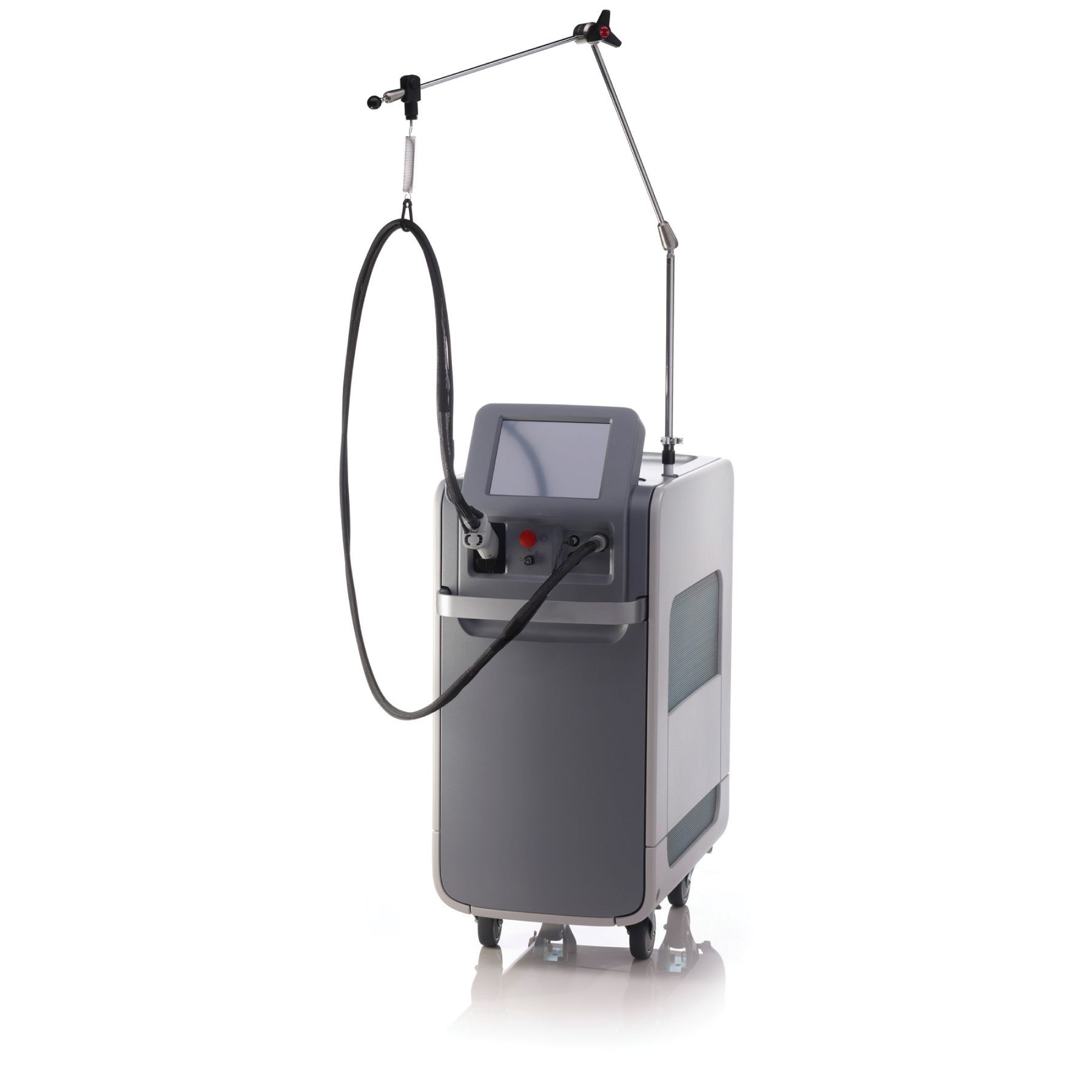
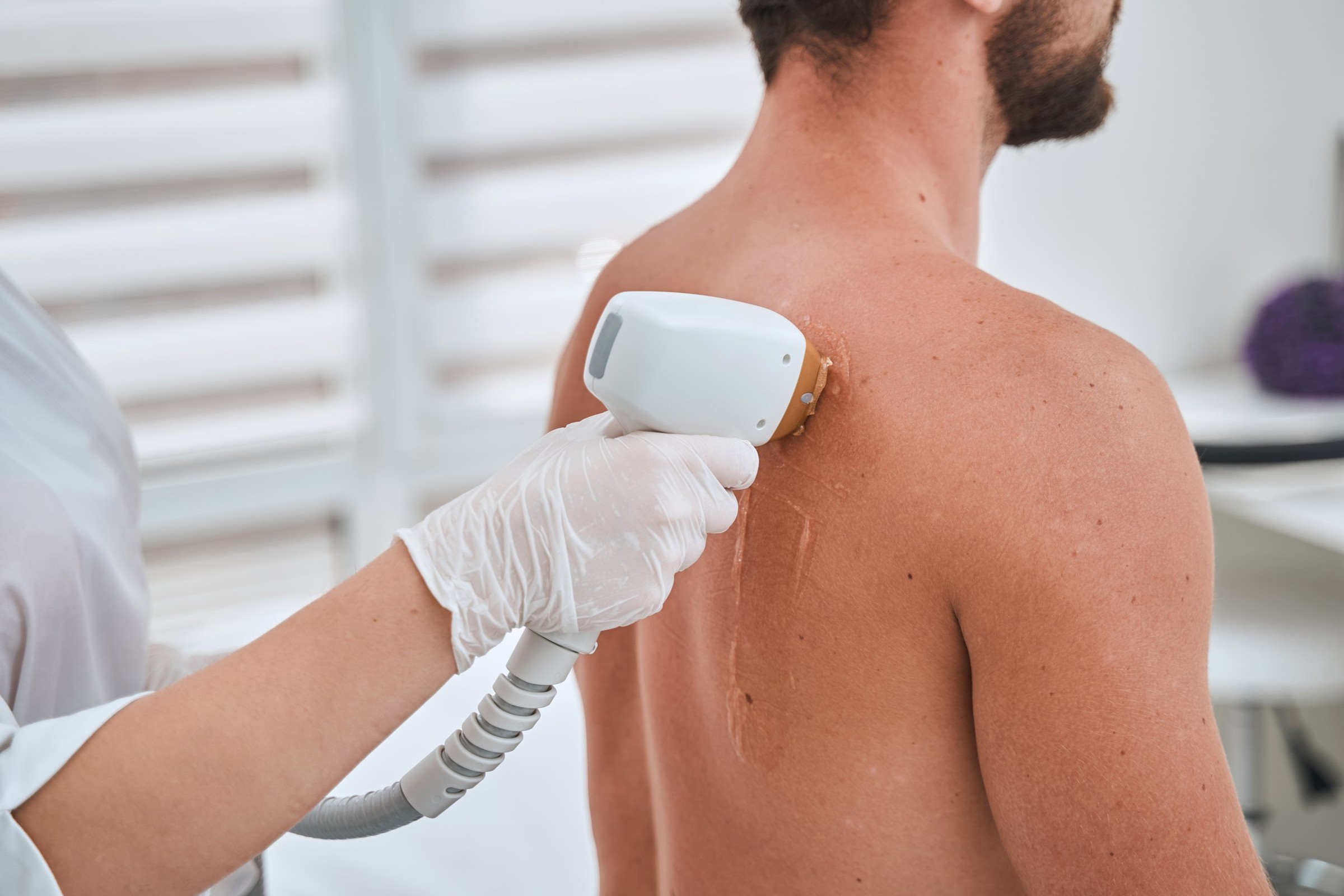
Alex toning treats pigment with a laser that uses the gemstone crystal alexandrite as its medium to produce a 755nm wavelength of light. The name might sound unfamiliar, but the principle is simple. This wavelength is readily absorbed by melanin in the skin, so the laser can apply heat only where pigment has gathered while leaving the surrounding skin alone.
That is also where the word toning comes from. Rather than firing one strong pulse, the device delivers many passes at a gentler intensity, gradually fading pigment the way you might slowly even out a skin tone. Below is a step by step look at why the treatment is split into multiple sessions, why this particular wavelength is chosen, and how it differs from other pigment lasers.
Alexandrite laser and how toning works
The alex in alex toning refers to the alexandrite crystal. When this crystal is pumped with intense light, it emits a laser beam at a 755nm wavelength, a range that sits between red light and infrared and is invisible to the human eye.
This type of device is also used for tattoo removal and hair removal, but changing the delivery pattern and intensity adapts it for treating pigmented lesions as well. In toning mode, the energy is lowered and the treatment area is widened, so the goal shifts from burning off a single lesion to evening out the tone of the whole face. That is why it is mainly used for pigmentation that is spread broadly, such as melasma and dark spots.
Why does the 755nm laser heat only pigment?
The basic principle behind laser treatment is selective photothermolysis. The term sounds technical, but the idea is straightforward: a specific wavelength of light is absorbed strongly by tissue of a matching color, while other tissue simply lets the light pass through. It works the same way a black shirt heats up in sunlight while a white shirt stays comparatively cool.
Melanin is a brown or black pigment, which makes it especially good at absorbing 755nm light. Collagen, blood vessels, and normal skin cells absorb this wavelength much less by comparison. As a result, the heat generated along the laser's path concentrates almost entirely where melanin has gathered, and that heat damages the pigment-carrying cells so the color fades over time.
How is it different from other wavelengths?
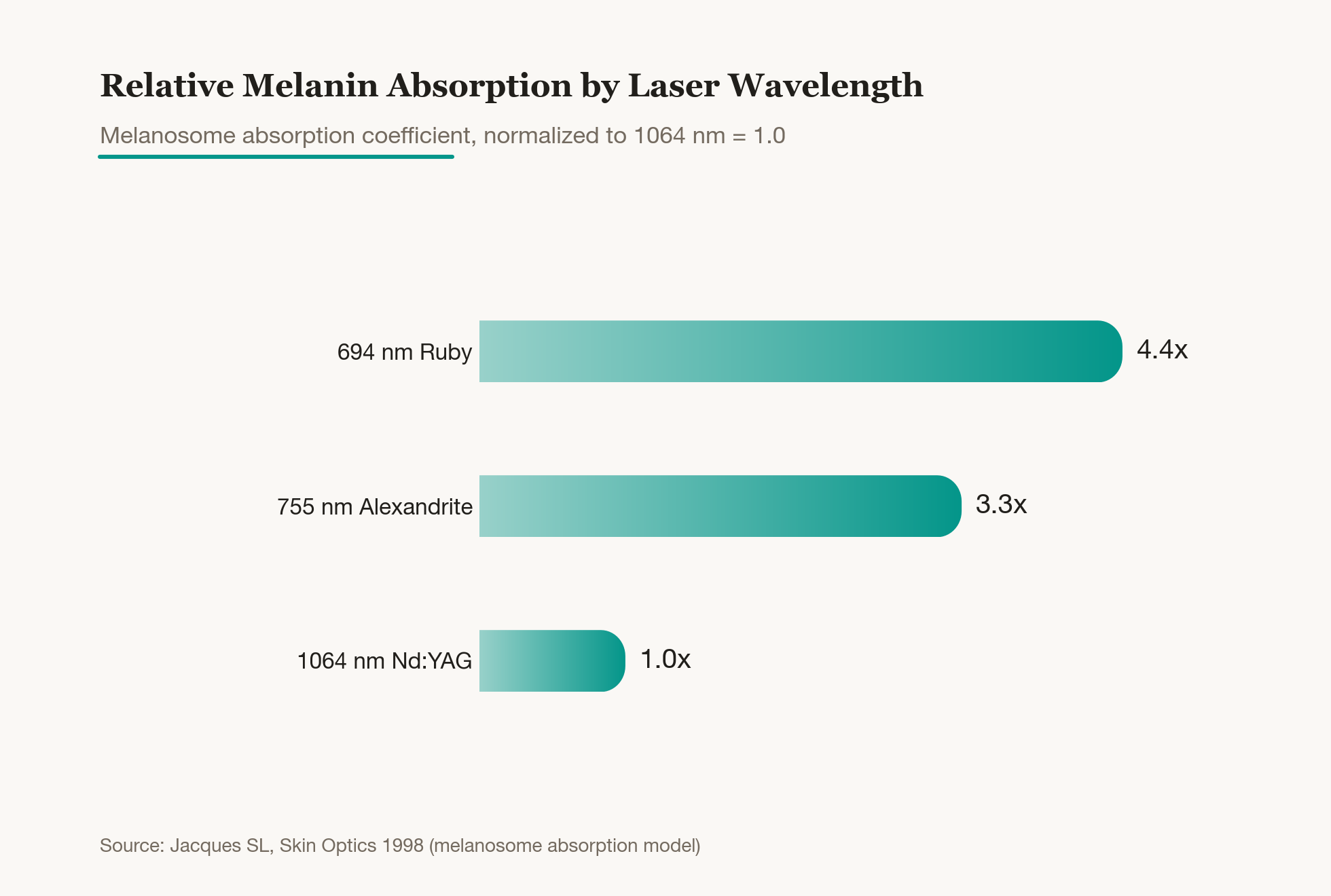
Pigment lasers behave somewhat differently depending on their wavelength. The shorter the wavelength, the more strongly it is absorbed by melanin, but the less deeply it penetrates the skin, and the relationship reverses as the wavelength grows longer. Lining up the 694nm ruby laser, the 755nm alexandrite laser, and the 1064nm Nd:YAG laser, melanin absorption drops and skin penetration deepens in that order.
755nm sits roughly in the middle. It is absorbed well enough for pigment that sits shallow in the epidermis, such as dark spots or melasma, while reaching a shallower depth than 1064nm so it does not affect tissue deeper than necessary. For pigment that sits deep in the dermis, such as Ota nevus, the deeper-penetrating 1064nm wavelength is generally considered the better choice. The wavelength is selected based on how deep the lesion sits.
It also helps to know that the same alexandrite device can serve different purposes depending on how it is fired. A short, powerful pulse concentrated on a single point works more like breaking up tattoo ink or a thick lesion, while a wide spot size paired with low energy swept across the whole face becomes toning. Even at the same wavelength, adjusting how the energy is distributed turns it into what feels like an entirely different treatment.
Why is it split into several sessions?
Alex toning does not aim to clear a lesion in a single pass. Instead, it delivers low energy over several sessions, usually spaced a few weeks apart. The reason for this slow approach comes down to side effect risk.
Higher energy fades pigment faster, but it also stimulates the surrounding normal tissue more, raising the risk of a rebound reaction called post-inflammatory hyperpigmentation, where the treated area actually turns darker than before. Lowering the energy and increasing the number of sessions reduces the stimulation delivered at any one time, which lowers that risk, though it takes longer for the pigment to fade. In short, this is an approach that leans toward safety over speed.
Which pigment responds well?
Alex toning is generally considered to respond well to pigmented lesions that sit in the epidermis, the outermost layer of skin. Because the epidermis is shallow, the 755nm wavelength reaches it easily, and melanin is packed densely within the epidermal cells there, so heat concentrates efficiently.
It is mainly used for lesions such as the following.
- Freckles: melanin gathers in small dots within the shallow epidermis, so even a wavelength that penetrates only slightly is absorbed well.
- Epidermal dark spots and seborrheic keratosis: melanin that has built up in epidermal cells from long term sun exposure, sitting in the same shallow layer and responding similarly well.
- Some cases of melasma: melasma confined to the epidermis responds, but mixed type melasma that also involves the dermis tends to respond more slowly and can even worsen from the stimulation, so a cautious approach is recommended.
Skin care after treatment
Right after treatment, the skin is in a state similar to a mild burn, so reducing further irritation during recovery is the core of proper aftercare.
- Sunscreen should be applied more carefully than usual. Irritated skin becomes more sensitive in how it produces melanin, so sun exposure at this stage can make pigmentation worse rather than better.
- Flaking skin should not be picked or peeled off by hand. Forcing it off irritates the skin underneath and can trigger a stronger inflammatory response.
- Exfoliants and retinol should be paused for several days. Adding another irritant on top of skin that is already irritated can actually slow down recovery.
- Moisturizing should be more generous than usual. While the skin barrier is recovering, a lack of hydration is known to slow the healing process.
Side effects and precautions after treatment
The most commonly reported side effect is post-inflammatory hyperpigmentation. As mentioned earlier, if the energy is too high or aftercare is lacking, the treated area can end up paradoxically darker than before. This reaction is known to occur more often in people with darker skin tones, meaning skin that already contains more melanin, so for those cases it is safer to lower the energy further and space out the sessions.
Temporary redness or fine scabbing can occur occasionally, and these usually settle within a few days. That said, if the depth and type of the lesion are not assessed carefully beforehand, the response can turn out differently than expected, so it is safer to have the nature of the lesion evaluated before treatment.
It is also known that firing the laser near artificially placed pigment, such as eyebrow tattoos or permanent makeup, can cause the color to shift unexpectedly. For that reason, moles, tattoos, and semi-permanent makeup on the face are typically checked beforehand and avoided during treatment. Because visible results take time to build up, it is more effective to follow the recommended interval across several sessions rather than getting impatient after one or two with no visible change.
References
Korean Dermatological Association, American Academy of Dermatology (AAD), and Ministry of Food and Drug Safety (MFDS).
Was this helpful?
About this article
Written by a practising aesthetic physician and intended for general education — not a substitute for individual medical advice.
Read next
Q-Switched Laser Toning: How It Works, White Spot Side Effects, and Treatment Interval
Laser toning fires low energy again and again instead of one strong blast, and there is a real reason for that. Here is the pigment-breakdown science behind it, how overtreatment can trigger side effects like hypopigmentation, and how to keep session spacing safe.
By Dr. Lee
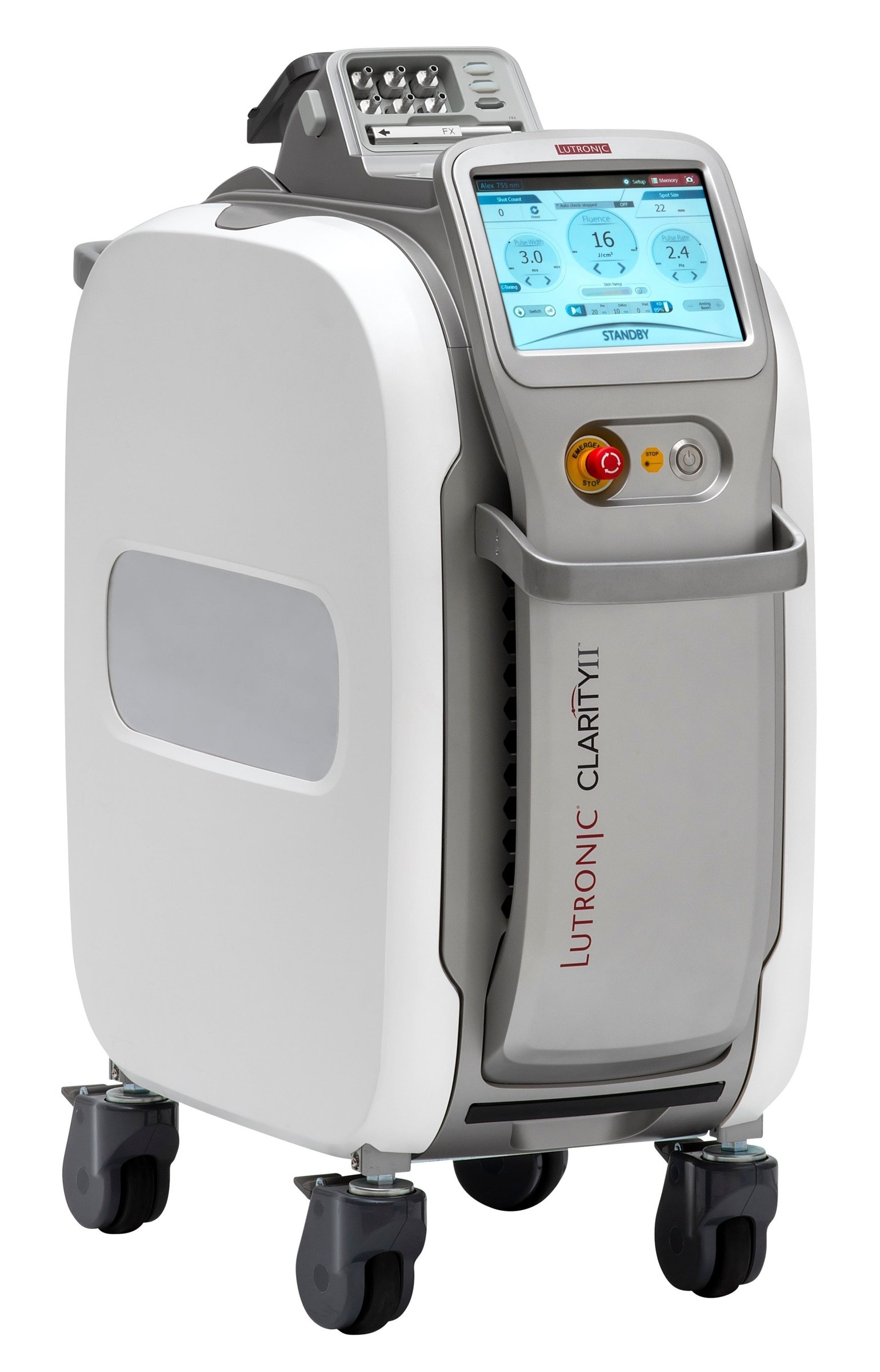
Clarity II Toning: Effects, How It Works and the Difference Between 755 and 1064 Nanometers
Clarity II toning pairs an alexandrite laser with an Nd:YAG laser in a single device, treating shallow spots and deeper melasma with two different approaches. Here is why two wavelengths are needed and how toning differs from a procedure that removes a mole.
By Dr. Kim
Pigmentation After Laser Hair Removal: Why It Happens and How to Prevent It
Laser hair removal works by using heat to destroy melanin inside the follicle, but when that heat spreads into the epidermis, it can leave a burn that later turns into hyperpigmentation. Here is why burn risk changes with skin tone, wavelength choice, and cooling method, along with ways to reduce it beforehand.
By Dr. Lee