Q-Switched Laser Toning: How It Works, White Spot Side Effects, and Treatment Interval
By Dr. Lee7 min read
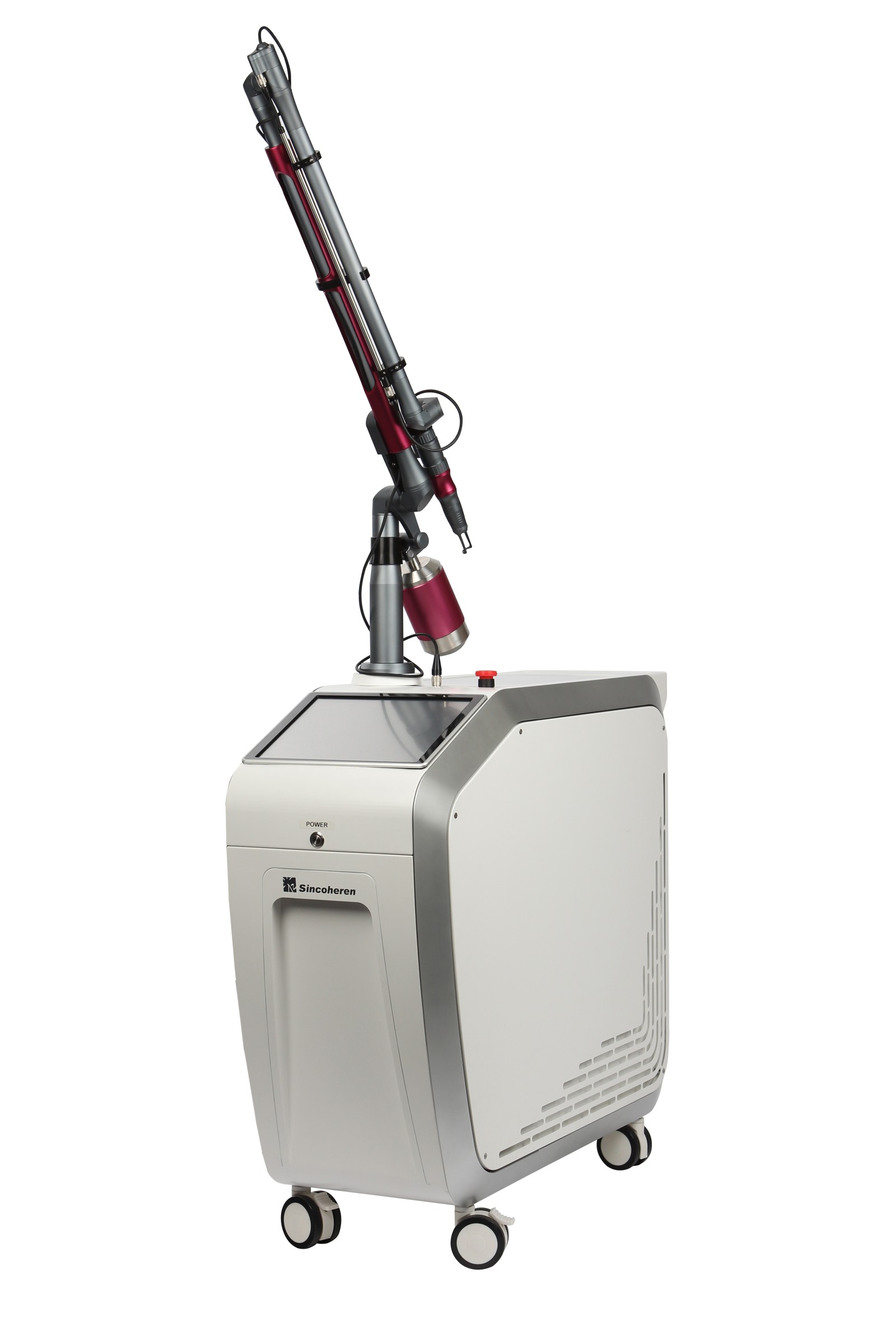
Laser toning is one of the most common treatments people reach for when they want to fade dark spots or melasma on the face. Unlike most other pigment lasers, though, it never fires one strong pulse. Instead it delivers low energy over 5 to 10 sessions, spaced 1 to 2 weeks apart. A lot of people wonder why the device deliberately holds back and repeats the process instead of just finishing the job in one go.
There is a clear reason behind this approach. Rather than turning up the power to clear pigment faster, laser toning is built to control both the reach of that power and the side effects it can cause. Here is how the treatment actually breaks down pigment, and why pushing it too hard can backfire into problems like hypopigmentation.
How does a Q-switched laser target only pigment?
The device used in laser toning is called a Q-switched laser. Q-switching means compressing the laser energy into an extremely short burst, usually somewhere between 5 and 10 nanoseconds, which is a fraction of a billionth of a second. Think of a camera flash firing for just an instant to produce a bright burst of light. It works on a similar idea.
This laser is tuned to a specific wavelength, one that melanin in the skin happens to absorb far more readily than the surrounding tissue does. Because melanin soaks up so much more of that particular light, the heat generated by the laser concentrates almost entirely where the pigment sits rather than spreading through the whole area of skin. This targeted heating is called selective photothermolysis, and the easiest way to picture it is a magnet that only reacts to black fabric. It ignores everything else and locks onto the pigment.
Why is laser toning fired gently in parts?
Melanin pigment is stored inside melanocytes, the cells that produce it, packed into tiny sacs called melanosomes. Laser toning targets those melanosomes specifically. Set the energy low, and the laser only cracks the melanosomes open enough to shatter the melanin inside into smaller fragments, without seriously damaging the cell itself. In effect, it pops the pigment-filled sacs one by one while leaving the cell around them mostly intact.
The reason the treatment spreads this out over 5 to 10 sessions of mild stimulation instead of trying to clear a large amount of pigment in one shot is to fine-tune exactly how much melanosome breakdown happens each time. Lower energy means less pigment clears per session, but it also means much less risk of damaging the melanocyte itself. Breaking pigment down gradually like this, in small doses, ends up producing a safer and more even fade.
What happens when it is fired hard at once?
It seems logical that cranking up the energy would clear more pigment, faster. In practice, it is not that simple. Once the energy climbs high enough, the heat no longer stays contained to a single melanosome. It spreads into the surrounding cells and tissue. It is a bit like touching a hot pan: the burn is not limited to your fingertip, the skin around it stings too.
When heat spreads further than it needs to, the skin reads that as damage and mounts an inflammatory response. The problem is that this inflammation can itself trigger new pigmentation. So a laser fired too aggressively in an attempt to erase pigment can ironically create a different pigment problem altogether, post-inflammatory hyperpigmentation. That is exactly why laser toning starts low on energy and spreads treatment across multiple sessions instead.
Why do white spots form?
The side effect people worry about most with laser toning is hypopigmentation, or white spots. This is a fundamentally different problem from pigment simply fading. It is not just the melanosomes breaking down anymore. If the melanocytes themselves, the cells that manufacture pigment in the first place, get damaged from repeated heat exposure, that patch of skin loses its ability to produce pigment at all. It is a bit like a factory shutting its doors: once that happens, nothing comes off the line.
This kind of damage tends to show up when the energy has been set higher than necessary, or when the same area gets treated too often, more than the recommended 5 to 10 sessions, without at least 1 to 2 weeks of recovery time between visits. Once melanocytes sustain serious damage, recovery has been reported to take anywhere from 6 months to 2 years, and in some cases the color may not fully return. This is exactly why laser toning has to be dosed carefully, checking how the skin is responding and adjusting both energy and session count along the way.
Skin changes in the first three or four days after treatment
Right after a pass with the laser, spots that held pigment can briefly turn slightly white or look temporarily darker. This is a normal reaction from the melanosomes breaking apart, and it typically settles within 20 minutes to an hour. But if that whitening looks intense, almost like a layer of frost has formed on the skin, it can be a sign the energy ran too high, and the provider should dial it back immediately.
Over the following 3 to 7 days, the shattered pigment naturally sheds off as tiny flakes or fine crusting. During this stretch the skin can feel a bit dry or slightly rough, though this usually settles within about a week. The visible fading tends to show up gradually, after that flaking has fully cleared and the skin has settled back down.
Why shouldn't the interval be shortened?
Laser toning is typically done over 5 to 10 sessions, spaced 1 to 2 weeks apart. Cram the sessions too close together and the skin gets hit with more heat before it has even finished settling from the last round, which raises the risk of overtreatment problems like hypopigmentation. Keep the spacing where it should be, though, and the skin gets time to recover while the pigment keeps fading gradually, session by session. Aftercare matters just as much as the spacing itself.
- Why strict sun protection matters: UV exposure is one of the biggest triggers that pushes melanocytes to produce more pigment. Any fading the treatment achieves can be undone by sun exposure, so sunscreen needs to go on carefully throughout the entire treatment period.
- Why hot compresses and saunas should be avoided: Right after treatment, the skin is especially sensitive to heat. Adding more heat on top of that can amplify the inflammatory response, so it is considered safer to skip hot environments for 3 to 5 days.
- Why other peels or laser treatments need spacing from this one: Stacking multiple treatments piles up stress on the skin, which makes it hard to tell which one caused a problem if something goes wrong, and raises the overall risk of side effects. It is safer to let the skin fully settle from one treatment before planning the next.
What to check before treatment
Because laser toning demands careful, precise dialing in of energy and session spacing, it matters a lot to have it done by an experienced provider. It is common practice to test a low energy setting on a small patch of skin first before treating the full area, since pigment levels and skin response vary enough from person to person that the same energy setting can produce very different results.
It is also important to speak up immediately if the skin whitens more intensely than expected during treatment. That kind of overreaction can be an early warning sign for hypopigmentation, and the provider needs to lower the energy or pause the treatment right then. Pushing to speed up the schedule or asking to raise the energy on your own, just to see faster results, is something worth avoiding.
References
Korean Dermatological Association, Ministry of Food and Drug Safety (MFDS), American Academy of Dermatology (AAD), and U.S. Food and Drug Administration (FDA).
Was this helpful?
About this article
Written by a practising aesthetic physician and intended for general education — not a substitute for individual medical advice.
Read next
Alex Toning: Effects, How It Works, Side Effects and Aftercare
Alex toning uses a 755nm alexandrite laser that is selectively absorbed by melanin to fade dark spots and pigmentation. Here is how the wavelength concentrates heat only in pigment cells, and why treatments are split into multiple low-energy sessions.
By Dr. Kim
Cafe-au-Lait Spots Returning After Laser: Causes, Number of Sessions and Expectations
A café au lait spot forms because the pigment-making cells in that one patch of skin are locally overactive. Laser treatment breaks up the pigment that has already built up, but it doesn't switch off those cells, which is why the color so often returns. Here's the biology behind it, why results differ so much from person to person, and what a realistic treatment timeline actually looks like.
By Dr. Kim

ABNOM Pigmentation: How It Differs From Melasma, Laser Sessions and Side Effects
ABNOM (acquired bilateral nevus of Ota-like macules) sits in the dermis, beyond the reach of brightening creams or oral supplements. Here's what separates it from melasma, why Q-switched laser is the standard treatment, and what clinical data say about session count, clearance rates, and the real risk of post-treatment darkening.
By Dr. Lee