Enlarged Pores: Causes, Care, and Which Ingredients Work
By Dr. Kim6 min read
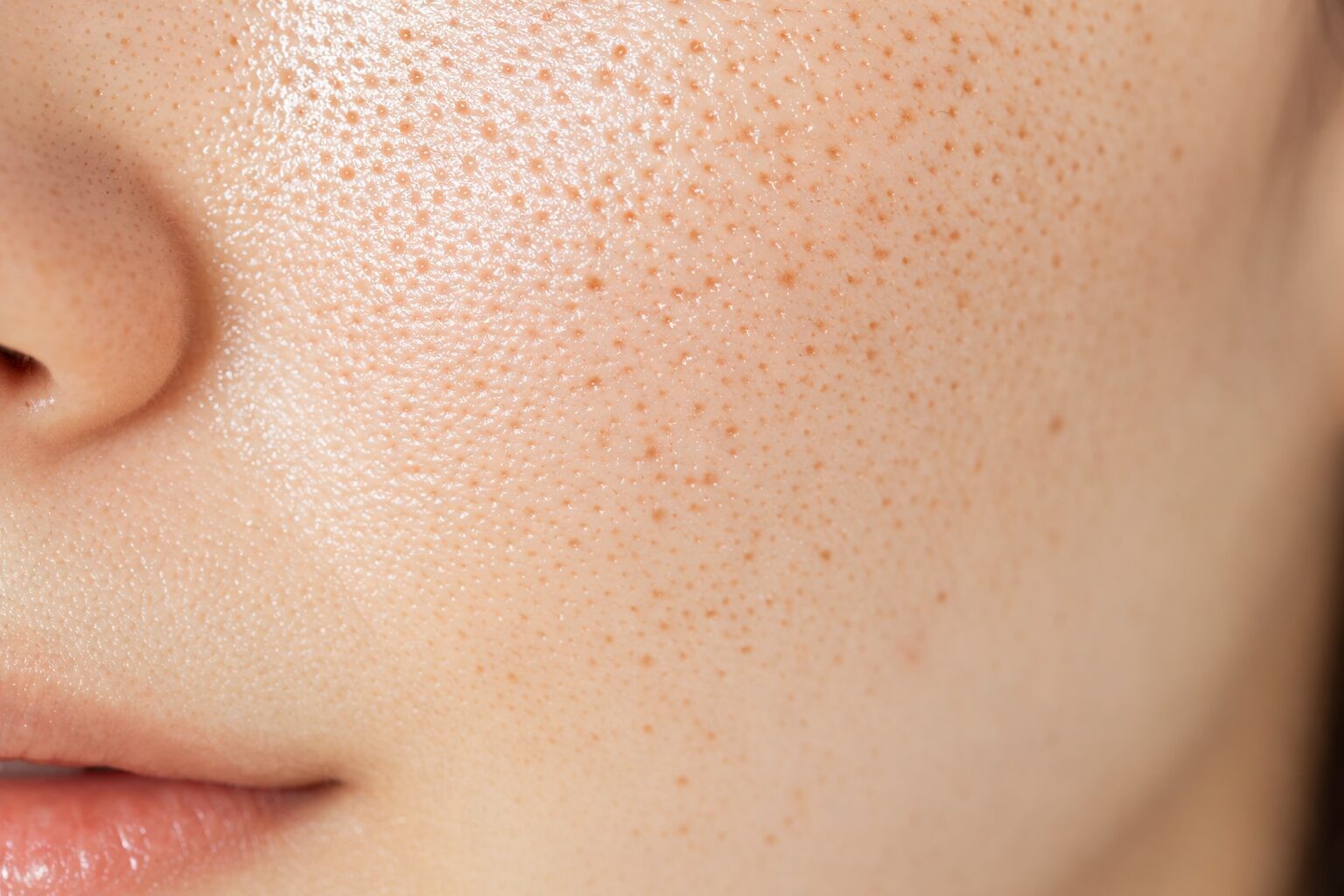
Pores are the kind of thing you only notice when you lean in close to the mirror. Once the skin around your nose and cheeks starts looking bumpy, no amount of washing seems to make it feel clean. But pores are supposed to be there. They're the openings sweat and oil travel through, so there's no getting rid of them entirely. What actually happens is that a few different factors stack up and make them look bigger than they are. And once you understand what those factors are, there's a real way to make pores look tighter, even if you can't erase them completely.
What makes pores look bigger?
Three things work together to make pores appear larger. One is how much oil your skin produces, another is how much support the pore walls get from your skin's elasticity, and the last is how thick the hair follicle itself is (the small channel inside the skin that a hair grows out of).
When oil production is high, the pore opening tends to stay stretched out. Think of a pipe under constant pressure, its opening gradually widens over time. On top of that, as skin ages or gets repeated sun exposure, the collagen and elastin that hold the area around the pore start to break down. Without that support, the pore opening can't spring back the way it used to, so it stays visibly open. These three factors often overlap in the same person, which is why pore care rarely works if you only tackle one of them.
Why does excess sebum widen pores?
The sebaceous gland sits right next to the hair follicle and produces the oil that keeps skin lubricated. When it produces too much, the skin around the pore opening swells slightly. Oil and dead skin cells then build up inside the pore, which makes the opening look even wider.
Areas like the nose and forehead, where sebaceous glands are packed closely together, tend to show this more than other parts of the face, simply because the gland density is higher there to begin with. That's why controlling oil is often the first step in pore care. Niacinamide is the go-to ingredient for this. It's thought to work at the cellular level, slowing down the metabolic process the sebaceous gland uses to produce oil in the first place.
Loss of elasticity and sagging pores
A pore isn't just a hole. It's more like an opening that the surrounding skin tissue cinches closed, the way a drawstring pulls a bag shut. Collagen and elastin in the dermis are what give that surrounding tissue the strength to do this.
Think of a rubber band. A fresh one snaps right back after you stretch it, but an old, worn-out one stays loose once it's been pulled. Skin around the pores behaves the same way. When collagen levels are strong, the pore can tighten back up even after a bit of extra oil stretches it out. Once collagen has thinned, though, a pore that's been stretched tends to stay that way. This ties directly into sun exposure, since UV light activates enzymes (MMPs, or matrix metalloproteinases) that break collagen down.
How do retinoids act on pores?
Retinoids are vitamin A derivatives, with retinol and prescription-strength tretinoin being the two most common. They work through two mechanisms at once.
The first is speeding up cell turnover (the cycle in which surface skin cells get replaced by new ones), which clears out the dead skin and oil buildup sitting inside the pore, much like unclogging a drain. The second is stimulating fibroblasts in the dermis to produce more collagen, which is what rebuilds the elasticity around the pore mentioned above. In clinical studies, consistent use of 0.2% retinol reduced visible pore size by roughly 30% on average, and prescription-strength tretinoin has shown even greater improvement in some trials. That said, retinoids take time to work because the skin needs time to rebuild its surface layer, so visible change typically requires 4 to 12 weeks of consistent use.
How to use niacinamide and BHA
Beyond oil control, niacinamide also strengthens the skin barrier. A stronger barrier holds onto moisture better, and that in turn reduces the sagging around pores that makes them look more prominent. One study found that using 4% niacinamide for 8 weeks led to a noticeable reduction in pore size.
Salicylic acid (BHA) is oil-soluble, which lets it travel deep into the pore to clear out trapped oil and dead skin. That's the key difference from AHA, which works on the skin's surface because it's water-soluble, while BHA can actually reach inside the pore. A few combinations tend to work particularly well together.
- Retinol + sunscreen: retinoids can make skin more sensitive to UV during the day, so pairing them with sunscreen helps stop that newly built collagen from being broken down again.
- Niacinamide + moisturizer: reducing oil production can leave skin feeling dry, so keeping hydration up protects the barrier while you're using it.
- BHA, start low and build up: since it penetrates deep into the pore, jumping straight to a high concentration is more likely to cause irritation, so it's better to start low and increase gradually as your skin adjusts.
What procedures exist if topicals aren't enough?
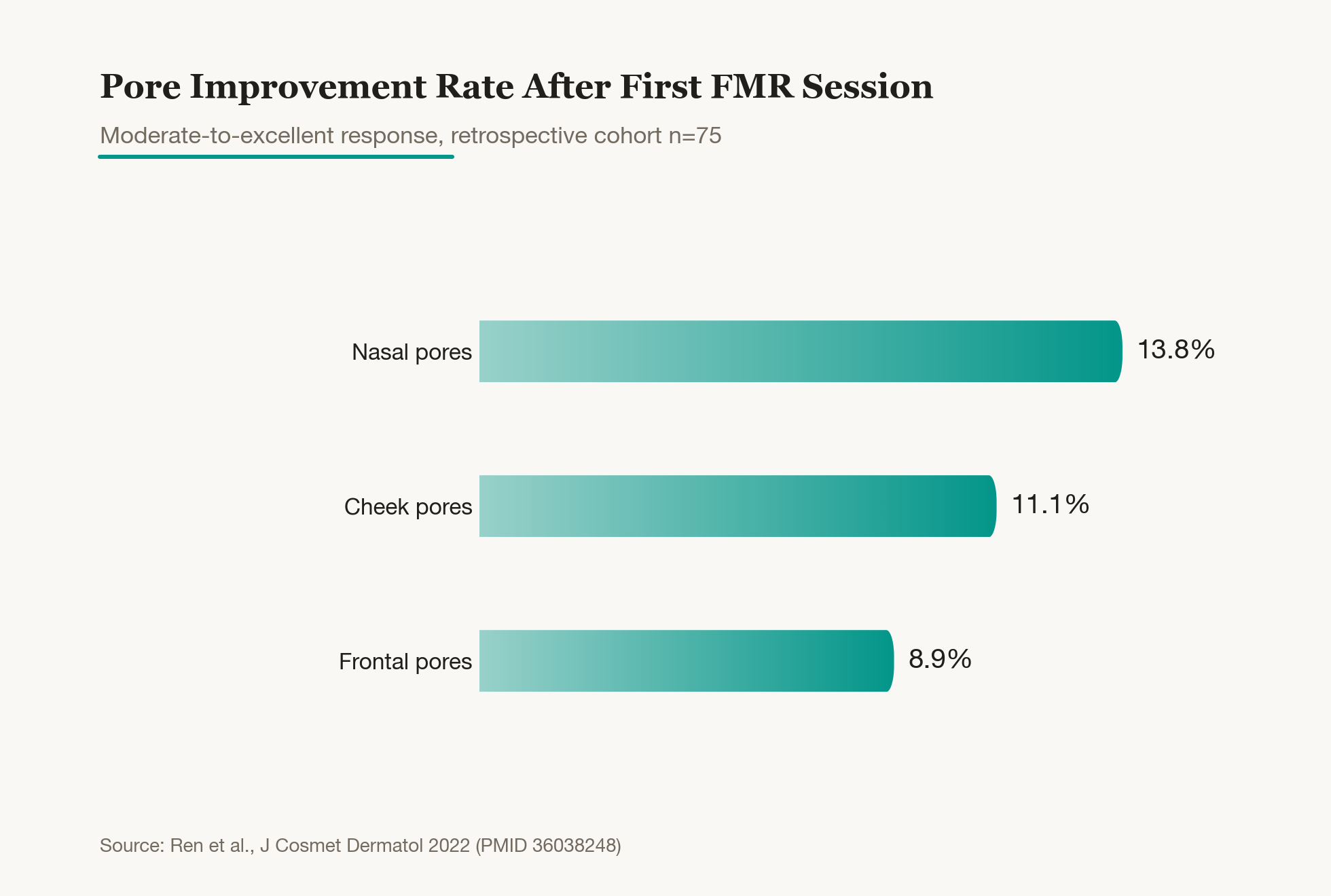
When topical products alone don't feel like enough, many people look into in-office treatments too. Fractional lasers and radiofrequency microneedling are the two most common options. Both work on a similar principle: they create controlled micro-injury in the skin to trigger new collagen production.
Lasers use light energy, while radiofrequency microneedling uses fine needles combined with heat, both creating tiny injuries in the dermis. As skin heals from that injury, it produces new collagen and elastin, which is exactly what rebuilds the elasticity around the pore described earlier. Redness or light scabbing after treatment usually settles within a few days, and the actual pore-tightening effect, as collagen rebuilds, tends to show up gradually over 4 to 12 weeks. Results are generally reported to last anywhere from 6 to 12 months, depending on how well skin is maintained afterward.
Lifestyle habits that maintain results
Pore care isn't a one-time fix, it's something that pays off with consistency over time. A few things are worth keeping in mind.
- Cleanse gently: scrubbing hard because pores bother you can actually damage the skin barrier, which then triggers even more oil production, a cycle that makes things worse.
- Wear sunscreen every day: repeated UV exposure breaks down the same collagen you're working to rebuild around the pore.
- Give it a few weeks before judging results: both retinoids and niacinamide need time for skin turnover and new collagen to take hold, so expecting results within days usually ends in disappointment.
Pore size itself is largely genetic and hard to change, but managing the two things that actually drive how visible pores look, oil and collagen, can make a real difference. Results tend to last longer when you combine the right ingredients with consistent habits rather than relying on just one fix.
References
Korean Dermatological Association, American Academy of Dermatology (AAD), and Ministry of Food and Drug Safety (MFDS).
Was this helpful?
About this article
Written by a practising aesthetic physician and intended for general education — not a substitute for individual medical advice.
Read next
Why Is My Scalp Oily? Causes, and Why It Gets Shiny Before the Face
The scalp packs in far more oil glands than the face, which is why it can look shiny within hours of a wash. Here is how male hormones and enzyme activity drive oil production, and how ingredients like salicylic acid and niacinamide each target a different part of that process, along with washing habits and in-clinic treatments worth knowing.
By Dr. Lee

5 Treatments for Enlarged Pores: Results and Recovery Time Compared
Which cosmetic treatments actually work for enlarged pores? Here are the top 5 evidence-based options with real improvement numbers, why pores can never fully disappear, and how to choose safely for your skin type. All figures come from actual research data, nothing inflated.
By Dr. Kim
Blackheads: Causes, Care and Is It Okay to Squeeze Them by Hand?
Blackheads aren't trapped dirt. They're a plug of sebum and dead skin cells inside the pore that turns dark through oxidation. Here's why extracting them often leaves marks, and which ingredients actually help, explained through the science behind it.
By Dr. Kim