Brown Acne Marks: Causes, How Long They Last, and How to Care for Them
By Dr. Kim7 min read
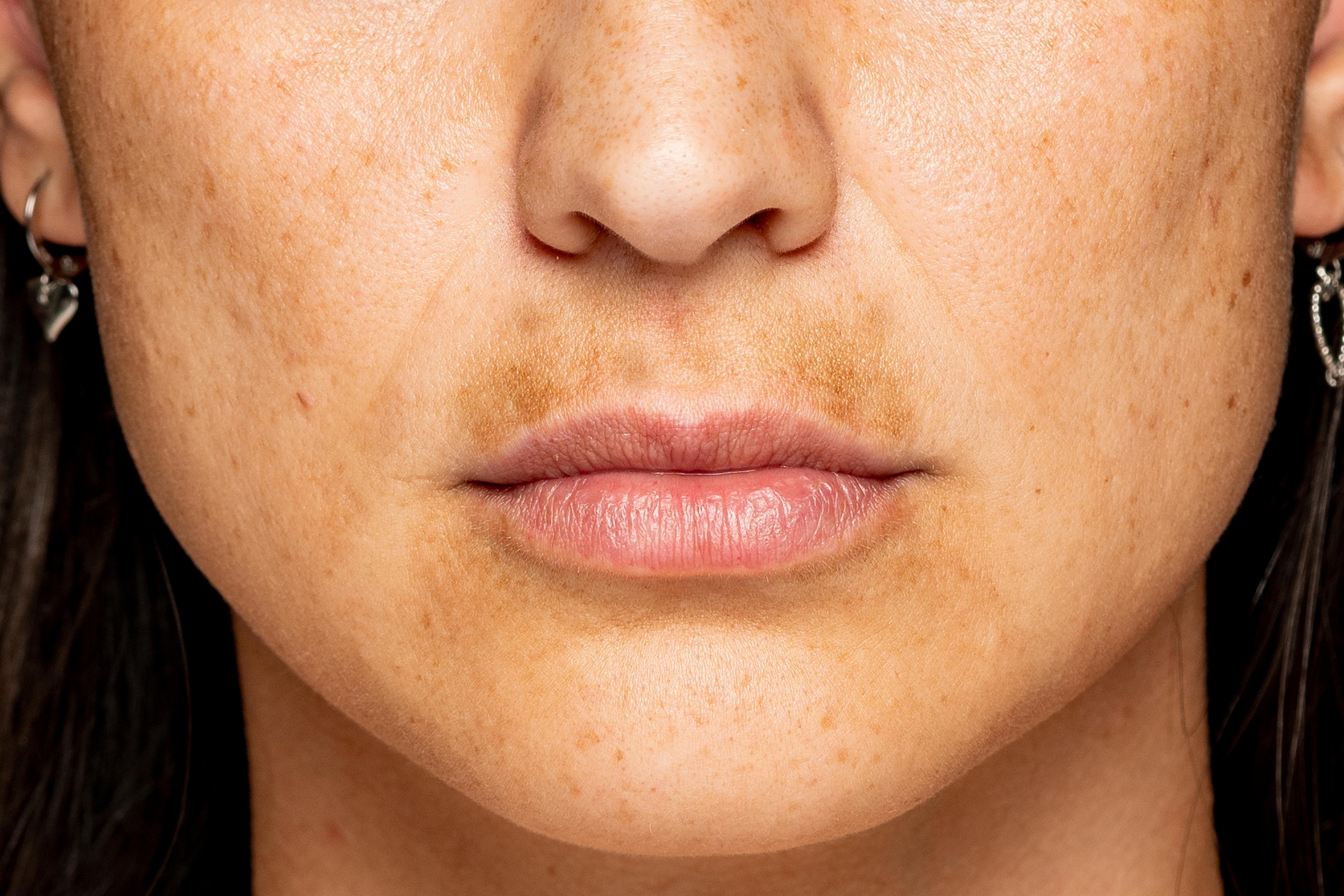
An acne breakout can heal completely and still leave a brown mark behind for a long time. Many people notice it every time they look in the mirror, and even makeup only covers it so much, which can be genuinely frustrating.
That brown mark has a real name: post-inflammatory hyperpigmentation. It shows up when melanin, the skin's natural pigment, builds up in excess after inflammation passes through. Why does it turn brown in particular, and why does it take anywhere from 6 weeks to 14 months to fade? Let's walk through the mechanism step by step.
Why do brown marks form?
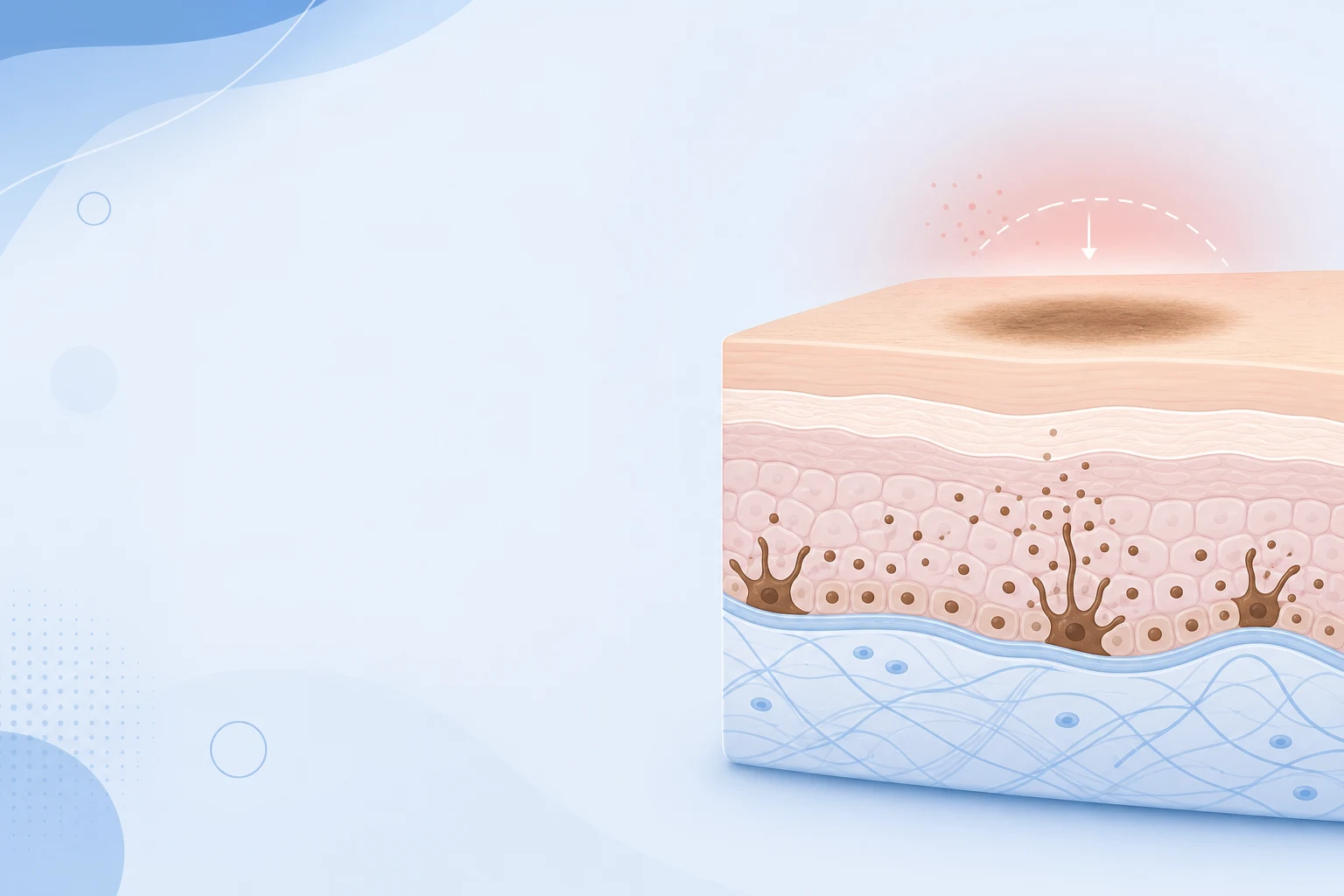
Deep in the skin are cells that produce melanin, called melanocytes. Under normal conditions, they're quiet cells that only step up production when exposed to UV light.
Inflammation, like a pimple, changes that. Wherever inflammation flares up, the skin releases a cascade of signaling molecules. These molecules repeatedly poke and provoke nearby melanocytes, not unlike someone knocking on your door over and over.
Once triggered, melanocytes start producing far more melanin than usual. That extra pigment scatters and settles into both the shallow and deeper layers of skin, which is what shows up as a brown mark. In other words, the mark isn't caused by the inflammation itself, it's caused by the excess melanin the inflammation leaves behind.
How are red marks different from brown marks?
Right after a pimple heals, the mark often looks red rather than brown. That redness isn't pigment at all, it's dilated blood vessels showing through the skin as a result of inflammation. If you press on it and the color briefly fades before returning, that's a strong sign it's this kind of vascular mark.
Over time, that redness can shift into brown, or a mark can start out brown from the start. That's the stage where melanin, as described above, has begun accumulating. A telltale sign is that the color doesn't change when you press on it, and it looks brown or dark brown.
Because the two marks come from different causes, they fade at different speeds and respond to different care. Red marks from blood vessels tend to fade relatively quickly, while brown marks from melanin buildup take much longer.
How mark color changes with depth
The depth at which melanin settles also changes how a mark looks. When melanin stays in the shallow layer, the epidermis close to the surface, the brown color shows through fairly clearly, similar to a light wash of brown paint on white paper.
But once melanin sinks deeper into the dermis, things look different. Pigment sitting in the dermis has to be seen through several layers of skin above it. As light scatters passing through those layers, the mark tends to look more gray-brown or even slightly bluish rather than a clean brown. It's a similar idea to how shallow water looks clear while deep water looks blue.
So a mark that looks unusually dark or has a bluish cast can be a sign that melanin has already migrated down into the dermis. These marks generally take longer to fade than shallower brown marks confined to the epidermis.
Why does fading take months?
Skin renews itself on a set cycle, with new cells forming as older ones flake off as dead skin. This process is called skin turnover. The melanin sitting inside a brown mark also has to ride this turnover cycle upward and eventually shed before the mark can fade.
The catch is that turnover doesn't happen overnight. Melanin sitting in the shallow layer clears out relatively fast, but melanin that has sunk into deeper layers takes far longer to work its way out. That's why shallow marks tend to fade in as little as 6 weeks to 3 months, while deeper marks can linger for 6 months to as long as 14 months.
There's another factor at play too: if irritation continues, melanocytes get triggered again and produce even more pigment. Picking at the area or exposing it to UV before the mark has fully faded can restart pigment production in the same spot. That's why fading speed varies so much from person to person, and from situation to situation.
Why does UV keep marks from fading?
UV exposure is naturally a trigger for melanocytes, the same mechanism that tans and darkens skin. But an area that's already sensitized from recent inflammation reacts even more strongly to the same amount of sun exposure.
In other words, when UV light hits a spot that already has hyperpigmentation, the melanocytes there get hit with a double dose of stimulation. Instead of fading, the mark can actually get darker, or take much longer to fade than it otherwise would.
That's why it's worth wearing sunscreen even on cloudy days while a mark is still present, and covering up with a hat or umbrella during peak sun hours. This isn't just a generic recommendation, it's a habit that directly reduces stimulation to melanocytes and genuinely supports recovery.
Do deeper skin tones take longer?
Even with the same kind of acne, how much pigmentation is left behind varies a lot from person to person, and this difference tends to track with how deep the person's natural skin tone is.
The reason has to do with how reactive melanocytes are. In people with darker skin, melanocytes are naturally more active at producing melanin to begin with. Like dry firewood that catches easily from even a small spark, the same level of inflammation triggers more pigment, and triggers it faster.
That's why, for people with deeper skin tones, keeping inflammation from escalating in the first place matters even more from the moment a pimple appears. And if a mark has already settled in dark, it helps to keep in mind that fading may simply take longer, and to be patient rather than rushing it.
Habits that make marks last longer
- Picking or squeezing pimples: this spreads inflammation deeper and wider, stimulating melanocytes across a broader area.
- Spending time outdoors without sunscreen: as explained above, this double-triggers melanocytes and drives up pigment production.
- Rubbing the area or over-exfoliating: physical friction reads as an inflammatory signal too, and can set melanocytes off again.
- Letting acne inflammation drag on untreated: the longer inflammation lasts, the longer melanocytes stay stimulated.
Care that helps marks fade
- Wearing sunscreen every day: this cuts down on extra stimulation reaching melanocytes.
- Calming acne inflammation early: the shorter the inflammation lasts, the less time pigment has to build up.
- Keeping to a gentle routine that doesn't disrupt the skin barrier: a weakened barrier makes it easier for even small irritants to trigger an inflammatory response.
- Giving it enough time: since the turnover cycle runs on its own timeline, steady, consistent care tends to work better than trying to force things along.
Depending on how deep and widespread the pigmentation is, dermatologists may also consider topical products or in-office procedures. Whatever the approach, sunscreen and inflammation control remain the foundation everything else builds on.
Should you see a doctor if nothing changes after 6 months?
Most post-inflammatory hyperpigmentation is reported to fade naturally over time. That said, if a mark shows almost no improvement after 6 months, or seems to be spreading, it's worth getting it checked by a dermatologist.
This is especially true when the color looks unusually dark or you suspect the pigment has settled deep into the skin. As explained earlier, melanin that has reached the dermis takes far longer to clear through turnover alone, and self-care may only get you so far.
In these cases, it helps to consult a specialist and map out a care plan suited to your skin. Once the depth and extent of the pigmentation is actually assessed, choosing the right approach tends to manage the mark far more efficiently than simply waiting it out.
References
Korean Dermatological Association, Ministry of Food and Drug Safety (MFDS), American Academy of Dermatology (AAD), and U.S. Food and Drug Administration (FDA).
Was this helpful?
About this article
Written by a practising aesthetic physician and intended for general education — not a substitute for individual medical advice.
Read next
Brown Acne Marks: How Long Do They Take to Fade?
The brown mark left behind after a pimple clears isn't a scar. It's melanin that got overproduced during inflammation and settled into the skin. How long it takes to fade depends on whether that pigment stayed in the epidermis or sank into the dermis, and the right ingredients and sun protection can speed the process along.
By Dr. Lee
Red Acne Marks: Causes, How Long They Last, and Laser Treatment
A clear, research-backed guide to why red marks (PIE) appear after acne heals, how they differ from brown pigmentation (PIH) and pitted scars, how long they take to fade naturally, how vascular lasers like Vbeam and Excel V speed up the process, how to manage them at home with sunscreen and calming care, and why treating them early matters before they turn into scars.
By Dr. Kim
Blackheads: Causes, Care and Is It Okay to Squeeze Them by Hand?
Blackheads aren't trapped dirt. They're a plug of sebum and dead skin cells inside the pore that turns dark through oxidation. Here's why extracting them often leaves marks, and which ingredients actually help, explained through the science behind it.
By Dr. Kim