PicoSure Laser Pigment Removal: How Is It Possible Without Heat?
By Dr. Kim6 min read
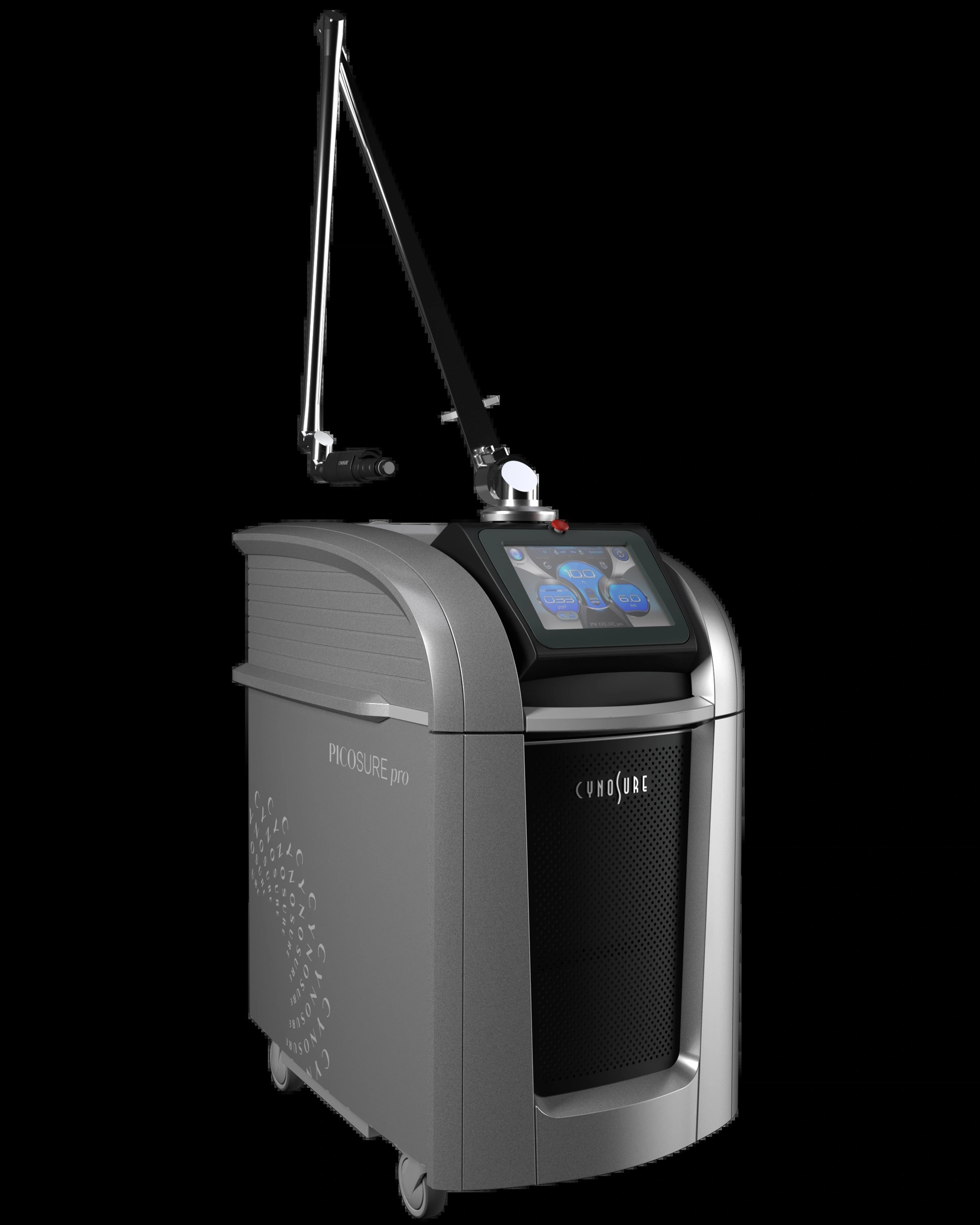
Among pigment lasers, PicoSure carries speed right in its name. Pico comes from a unit meaning one trillionth, so a picosecond is a stretch of time far too short for the eye to register. When that sliver of time meets a component called a focus lens array, the way pigment is treated changes at a fundamental level. Here is why a single unit of time can reshape the entire outcome of a treatment.
How is a picosecond laser different from a regular laser?
Most conventional pigment lasers fire light in nanoseconds, or billionths of a second. PicoSure delivers energy a thousand times faster than that, in picoseconds. A shorter duration means a stronger force is packed into an even briefer instant.
When a laser pulse lasts longer, the tissue tends to absorb heat and warm up gradually. When the pulse is extremely short, there is no time for heat to spread at all, so only a physical shockwave is delivered in that instant. It is similar to the difference between slowly melting ice and shattering it with a single hammer strike. PicoSure works closer to the second approach, so less heat spreads into the tissue around the pigment, which is understood to lower the risk of side effects such as burns or discoloration.
Even when treating the same pigment concern, a method that applies heat over a longer stretch and one that delivers a sudden physical shock tend to produce different recovery patterns. Prolonged heat is more likely to warm the surrounding tissue as well, which is reported to lead to swelling or scabbing somewhat more often, while shock-based methods are generally associated with a shorter recovery window.
The role of the focus lens array
One of PicoSure's core components is the focus lens array. As the name suggests, it is a tightly packed arrangement of many tiny lenses. When laser light passes through them, a single wide beam splits into hundreds of extremely small points before it reaches the skin.
It works on the same principle as using a magnifying glass to focus sunlight onto a single spot, heating only that point while the surroundings stay unaffected. Rather than spreading energy out, the focus lens array channels it into narrow individual points. As a result, the energy density at each point becomes far higher than with standard delivery, while the tissue between those points receives almost no stimulation and remains untouched. The structure is strong at the narrow points and weak everywhere else.
How shock waves break pigment
When the energy passing through the focus lens converges on a single point inside the skin, it triggers an instant of optical breakdown right at that spot. This reaction is commonly known as LIOB, or laser induced optical breakdown. It can be understood as an extremely small air bubble forming and disappearing inside the tissue in a fraction of a second.
In that brief moment when the bubble forms and collapses, a pressure wave, essentially a microscopic shockwave, spreads through the surrounding tissue. This shockwave is the force that physically shakes pigment particles apart. It works much like shaking a bottle of carbonated soda, where the bubbles inside generate a sudden burst of pressure. Because the pigment is broken apart by a momentary physical impact rather than being burned away by heat, this process is called photomechanical destruction.
This shock-based reaction also matters because it does not shave away the surface of the epidermis. Methods that ablate the surface often leave flaking or redness during recovery, whereas photomechanical destruction tends to leave the outer skin intact while disturbing pigment only beneath the surface.
Why does only pigment break, with no burns?
The laser does not destroy tissue at random. Melanin has a distinct property of absorbing certain wavelengths of light exceptionally well. PicoSure's wavelength is tuned to the range melanin absorbs most efficiently, so even when the same light is fired everywhere, far more energy is absorbed at the sites where pigment is present.
Timing adds a second layer of precision. It takes a certain minimum amount of time for a pigment particle to absorb heat and let it spread to the surrounding area. Because PicoSure's pulse duration is shorter than that window, the pulse ends before heat has a chance to escape the pigment particle. It is a bit like touching a hot pot for only a split second, brief enough to avoid a burn. As a result, the pigment particle itself is broken apart while nearby blood vessels and normal skin cells are relatively spared.
Where does the broken pigment go?
Breaking down pigment does not make it vanish on the spot. A picosecond laser is defined by how finely it pulverizes pigment, down to particles as small as dust. The smaller the particles, the easier they are for the body to process.
These finely broken pigment particles are engulfed by macrophages, immune cells that clear away waste and foreign material in the body, and gradually carried out through the lymphatic system. It works much like a garbage truck hauling away trash that has already been shredded into small pieces. Large chunks slow down a single truck, but the finer the material, the easier it is to transport. This process unfolds gradually over weeks rather than a day or two, which is why the fading of pigment is also understood to appear gradually over time.
Does collagen increase along with pigment removal?
The shockwave produced by the focus lens does not stop at pigment alone. Part of that force travels down past the epidermis into the dermis. Fibroblasts, the cells responsible for producing collagen, reside in the dermis, and they interpret the shockwave as a kind of stimulus signal.
The body naturally responds to microscopic injury by trying to repair it. The same way new skin forms after a wound, collagen synthesis is reported to gradually pick up around the tiny stimulation points created by the focus lens. This is why repeated PicoSure sessions aimed at pigment often leave people noticing smoother-looking skin texture along with lighter pigment. Pigment clearance and skin renewal, in effect, occur together within a single treatment.
That said, this collagen stimulation is not as strong as procedures designed from the start to target firmness, such as thread lifts or radiofrequency devices. Because it is more of a byproduct of the pigment-breaking process, it is common for people whose main goal is pore refinement or firmness to pair PicoSure with a treatment aimed specifically at that.
Aftercare for the weeks following treatment
While the microscopic stimulation from the laser settles and pigment continues to clear, a few care habits matter.
- Sun protection: Skin is especially sensitive to pigment reactions right after treatment. Sun exposure can restimulate melanin production, which may trigger post inflammatory hyperpigmentation and make the pigment worse rather than better, so consistent sun protection is recommended.
- Avoiding irritating ingredients: Exfoliants and high concentration acids can further irritate a skin barrier that is still recovering, so switching to gentler products until the skin calms down is advised.
- Adequate hydration: If the skin lacks moisture while the barrier is repairing itself, that recovery can be delayed, which is why hydration is emphasized alongside sun protection.
- Avoiding excessive friction: Scrubbing the face hard while cleansing or forcibly removing flaking skin can disturb tissue that has not fully settled, so extra care is needed.
How much and how quickly pigment fades can vary depending on the type and depth of the pigment as well as individual skin response, which is why treatment is commonly spread across several sessions.
References
Korean Dermatological Association, American Academy of Dermatology (AAD), and Ministry of Food and Drug Safety (MFDS).
Was this helpful?
About this article
Written by a practising aesthetic physician and intended for general education — not a substitute for individual medical advice.
Read next
Q-Switched Laser Toning: How It Works, White Spot Side Effects, and Treatment Interval
Laser toning fires low energy again and again instead of one strong blast, and there is a real reason for that. Here is the pigment-breakdown science behind it, how overtreatment can trigger side effects like hypopigmentation, and how to keep session spacing safe.
By Dr. Lee
Vbeam Laser Effect on Tiny Vessels and Redness, and Downtime
Vbeam is a vascular laser that uses a specific wavelength tuned to hemoglobin, the pigment in blood, to coagulate dilated capillaries without harming the surrounding skin. This column breaks down why that wavelength zeroes in on blood vessels, along with the bruising, downtime, and sessions it takes to see results.
By Dr. Lee
REVINAS Shockwave Effects and Side Effects: Can It Lift Without Heat?
A clear-eyed look at what REVINAS is, how shockwave energy stimulates tissue, what the collagen and cellulite research actually shows, and where the 'deep SMAS lifting' claim crosses from mechanism into marketing, including the fact that no REVINAS-specific clinical trials exist.
By Dr. Kim