Pico Toning: How It Works, Results, and Why Spots and Melasma Respond at Different Speeds
By Dr. Lee8 min read
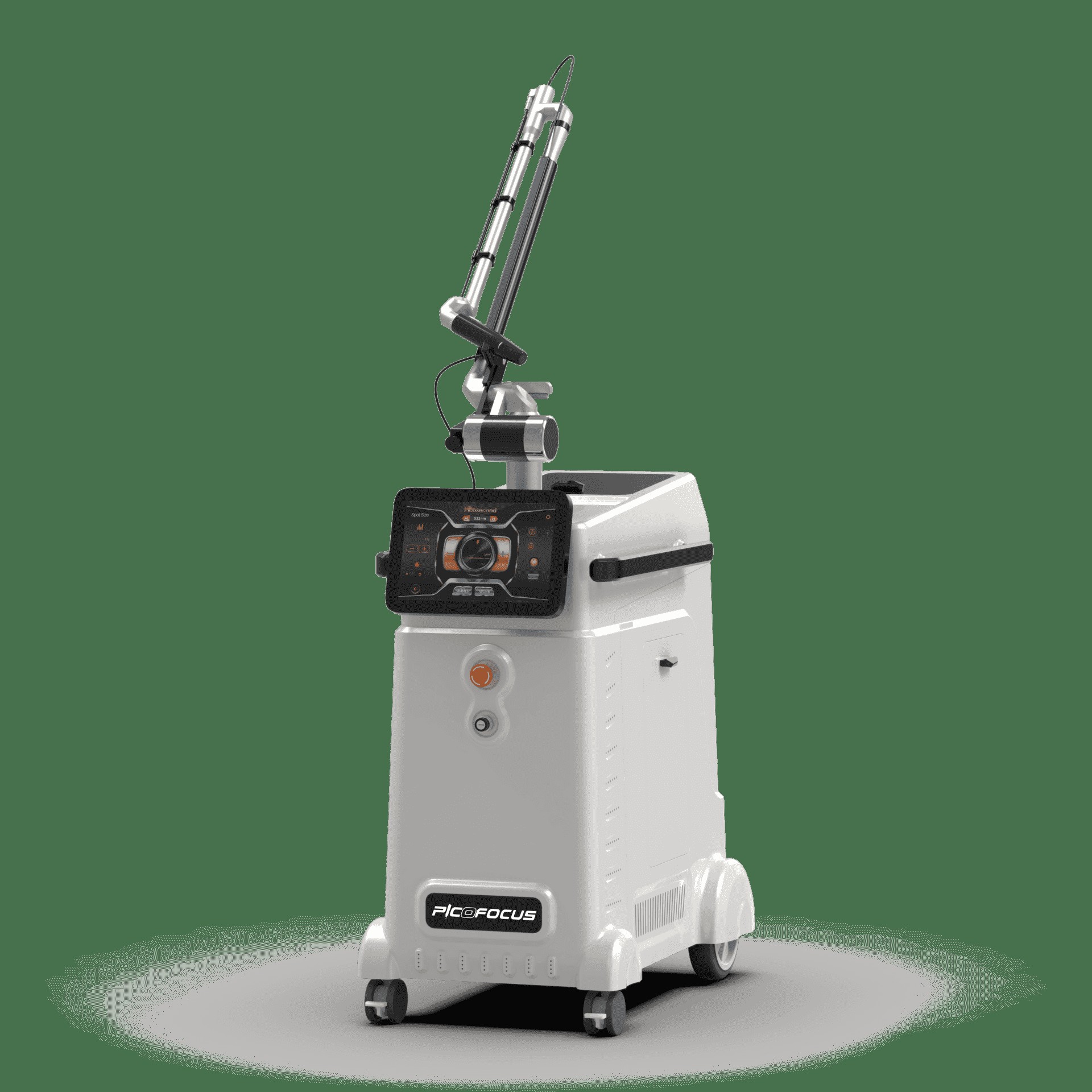
Walk into almost any dermatology clinic or skin care center these days and pico toning is one of the first laser names you will hear. If melasma, sunspots, or light freckles have been bothering you, chances are someone has already suggested it.
What most people never get is why the machine is built around picoseconds, a unit almost nobody has an intuition for, or how firing light that briefly manages to target pigment and nothing else. Once you understand the mechanism, it becomes clear why this treatment can be used so broadly across different pigment types on the face, melasma included, without the drama of a heavier laser.
How short is a picosecond?
A picosecond is one trillionth of a second. That number is basically impossible to picture, so think of it this way: the light switches on and off in a flicker that short. It is hundreds of times shorter than a single pulse from the older nanosecond lasers, which themselves fire in bursts a thousand times longer than a picosecond.
The reason for cutting the pulse this extreme comes down to a timing gap between how fast the light fires and how fast heat spreads outward. Heat needs a certain amount of time to travel sideways through tissue. Fire the light in a burst shorter than that window, and the energy has nowhere to go but straight into the target, no time to leak into the surrounding area. It is a bit like pressing a water balloon slowly, which lets the water bulge out to the sides, versus striking it fast, which pops only the exact spot you hit.
How pigment breaks into fine pieces
Melanin sits in skin as tiny black or brown granules, and those granules happen to absorb certain wavelengths of light unusually well. Lasers exploit that quirk, tuning the beam to a wavelength melanin soaks up eagerly.
Once the pulse shrinks down to picoseconds, what happens inside those granules changes completely. A huge burst of energy gets trapped inside the granule in an instant, and instead of slowly cooking it with heat, a tiny shockwave erupts at its surface. That shockwave shatters the granule into dust-sized fragments, scattering what used to be one solid clump of pigment into countless smaller pieces. The body's cleanup crew, macrophages, then recognizes those fragments, engulfs them gradually, and clears them out through the lymphatic system. Repeat that process enough times and the pigment visibly fades.
The principle of breaking pigment with shock waves, not heat
Lasers interact with tissue in one of two broad ways: cooking it with heat, or shattering it with a shockwave. The shockwave route has a name, the photoacoustic effect, meaning light generates an instantaneous pressure wave the same way sound does.
Older nanosecond lasers fire a comparatively long pulse, so a meaningful chunk of the energy the pigment absorbs turns into heat along the way. That heat does not stay confined to the target pigment, it bleeds into the normal skin cells right next door. A picosecond laser's pulse is so brief that heat barely has a chance to spread before the reaction is already over, dominated instead by the shockwave. So even when breaking down the same amount of pigment, the surrounding tissue reportedly takes on relatively little thermal damage. Less thermal damage tends to mean an easier recovery too, with lighter redness, swelling, and scabbing afterward.
Why use low energy over many passes?
The name pico toning carries that word toning for a reason. Instead of one strong blast, the device layers lower-energy light two to four times within a single session.
Crank the energy up and a single pigment granule shatters more dramatically, but the tissue around it takes a proportionally bigger hit too. Dial it down and each granule only breaks apart a little, while the irritation drops right along with it. So spreading two to four low-energy passes across a session lets the small amounts of shattered pigment from each pass add up to a similar overall result, with far less irritation left behind. It is the same logic as pouring water: dump it all at once and it carves a deep gouge in the soil, but pour the same amount gradually in smaller amounts and the ground barely erodes.
Fire at full strength and skin often turns faintly white and puffy right after the session. The stronger that reaction, the longer recovery tends to take, and the bigger the rebound risk that irritation reawakens the pigment and darkens it again. Toning mode, by contrast, passes over the skin gently two to four times with barely a visible reaction, which is exactly why it suits melasma so well, a pigment type that reacts badly to any kind of irritation.
Why does melasma push back against irritation?
Melasma is notoriously harder to manage than other pigment conditions. It does not just respond to UV, heat, friction, and inflammation of almost any kind can make it darken again. The cells that produce melanin, melanocytes, tend to rebel when irritated, pumping out even more pigment in response rather than backing off.
That is why hitting melasma with a heat-heavy treatment at full strength can lighten it temporarily, only to have it rebound darker once the irritation kicks in. Against that backdrop, a shockwave-dominant approach like pico toning, one that relies far less on heat, is generally considered a better fit for melasma. That said, melasma is not a condition with a single root cause that simply goes away, so it is more realistic to expect gradual fading across five to ten sessions than a single treatment that clears it for good.
Do spots and melasma respond at different speeds?
Even with the exact same pico toning session, sunspots, meaning simple pigment spots sitting in the shallow epidermis, tend to respond fairly quickly. The pigment is clustered close to the surface, so light reaches it easily, and the fragments have a short path to travel once the body starts clearing them.
Melasma is different. Its pigment often extends beyond the epidermis into the deeper dermis. Light has a harder time reaching evenly that deep, and combined with melasma's tendency to fight back against irritation, the response is slower and varies a lot from person to person. That is why treatment plans usually expect sunspots to wrap up within one to three sessions, while melasma gets approached as a longer game from the outset.
How many sessions do you need for results?
Shattering the pigment granules does not make them disappear on the spot. Macrophages need time to engulf the fragments and clear them out through the lymphatic system, which is why a visible change often takes two to four weeks to show up even after a single session.
Pigment also tends to sit in layers of varying depth rather than one uniform sheet, so a single session rarely breaks every granule evenly. Here is why that matters in practice.
- Pigment stacks in layers at different depths, so one session tends to reach the shallow layer first while the deeper layer only gets its turn in a later round.
- The body needs two to four weeks to clear out shattered pigment fragments, so waiting for that clearance window before the next pass simply works better.
- The melanocytes that produce pigment in the first place are not eliminated by the treatment, they stay put, so suppressing newly forming pigment calls for repeated sessions spaced out over time.
For these reasons, the generally recommended approach is spacing sessions two to four weeks apart and repeating five to ten times.
How are settings adjusted for darker skin?
Melanin does not stay confined to pigment lesions like melasma or sunspots, it is spread throughout the epidermis and is what determines overall skin tone. The darker the skin, the more of this background melanin is naturally present.
Laser light cannot cleanly isolate pigment inside a lesion from the melanin surrounding it, so it inevitably reacts to some degree with that background melanin too. Use the same intensity on darker skin that works fine on lighter skin, and the normal skin around the lesion can end up irritated as well, sometimes leaving patchy discoloration or darkening the pigment right back up. That is why intensity gets set individually before treatment, factoring in skin tone, how deep the pigment lesion sits, and any past history of pigmentation issues. Even with the same pico toning device, settings often look quite different from one person to the next for exactly this reason.
Aftercare and precautions
Pico toning generally recovers more gently than other lasers, but that does not mean zero irritation. Right after a session, the skin barrier is temporarily weaker, so it can react more sensitively than usual to UV exposure or friction.
Layering on sunscreen more diligently than usual, and avoiding hot compresses, saunas, or anything else with strong heat exposure for about a week, is said to support a smoother recovery. This matters even more for anyone dealing with melasma, since heat and irritation are exactly what can bring the pigment back darker, so aftercare deserves extra attention in that case.
References
Korean Dermatological Association, Ministry of Food and Drug Safety (MFDS), American Academy of Dermatology (AAD), and U.S. Food and Drug Administration (FDA).
Was this helpful?
About this article
Written by a practising aesthetic physician and intended for general education — not a substitute for individual medical advice.
Read next
Cafe-au-Lait Spots Returning After Laser: Causes, Number of Sessions and Expectations
A café au lait spot forms because the pigment-making cells in that one patch of skin are locally overactive. Laser treatment breaks up the pigment that has already built up, but it doesn't switch off those cells, which is why the color so often returns. Here's the biology behind it, why results differ so much from person to person, and what a realistic treatment timeline actually looks like.
By Dr. Kim
Alex Toning: Effects, How It Works, Side Effects and Aftercare
Alex toning uses a 755nm alexandrite laser that is selectively absorbed by melanin to fade dark spots and pigmentation. Here is how the wavelength concentrates heat only in pigment cells, and why treatments are split into multiple low-energy sessions.
By Dr. Kim
Exosome Treatment Effects: How Are They Different From Stem Cells?
Exosomes are tiny signal packets that cells release into their surroundings, delivering only the messages a stem cell creates rather than the stem cell itself to the skin. Here is a plain look at how exosomes carry regeneration and calming signals, why clinics so often pair them with laser treatments, and how much evidence has actually built up so far.
By Dr. Kim