Vertical Lip Lines Treatment: Filler Versus Radiesse Botox Compared
By Dr. Kim10 min read
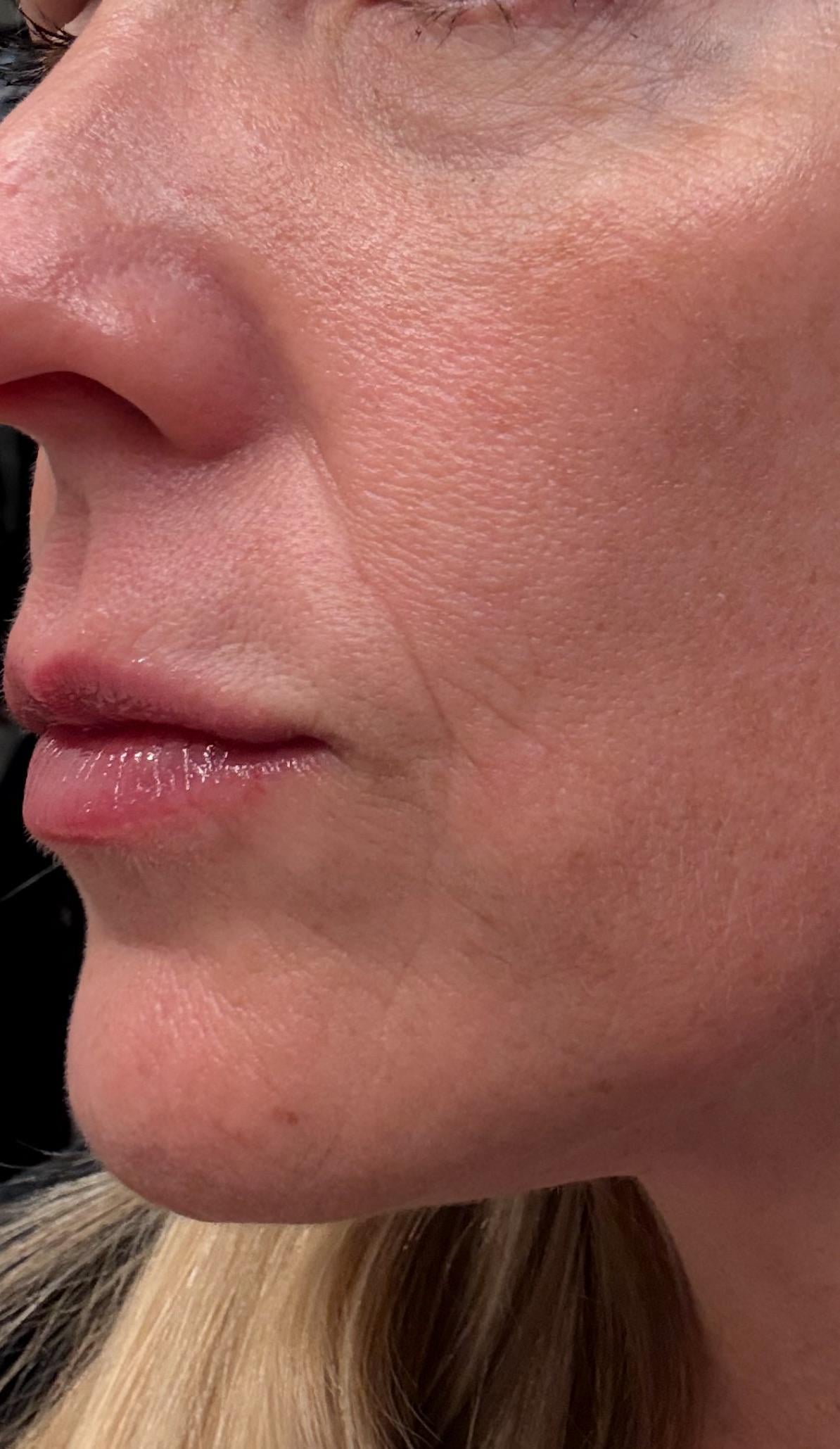
Those fine vertical lines running up and down along the lips are often called barcode lines, since the tight vertical grooves look a bit like the stripes on a product barcode. Some people call them smoker's lines or cat lines, since they tend to bunch up around the mouth when you smile. Most people don't notice them at first. It's usually when lipstick starts feathering into the lines that people really start paying attention.
These lines don't come from just one cause. The muscle around the mouth folds the same way over and over, collagen and volume under the skin fade with age, and sun exposure and smoking pile on top of both. Because the causes differ, the right fix differs too: filler to fill in volume, Botox to relax the muscle, or Radiesse and laser to rebuild skin texture. Here's how each option actually works, what the research shows about results, and what to know about the arteries and speech function around the mouth.
Why do vertical lip lines form?
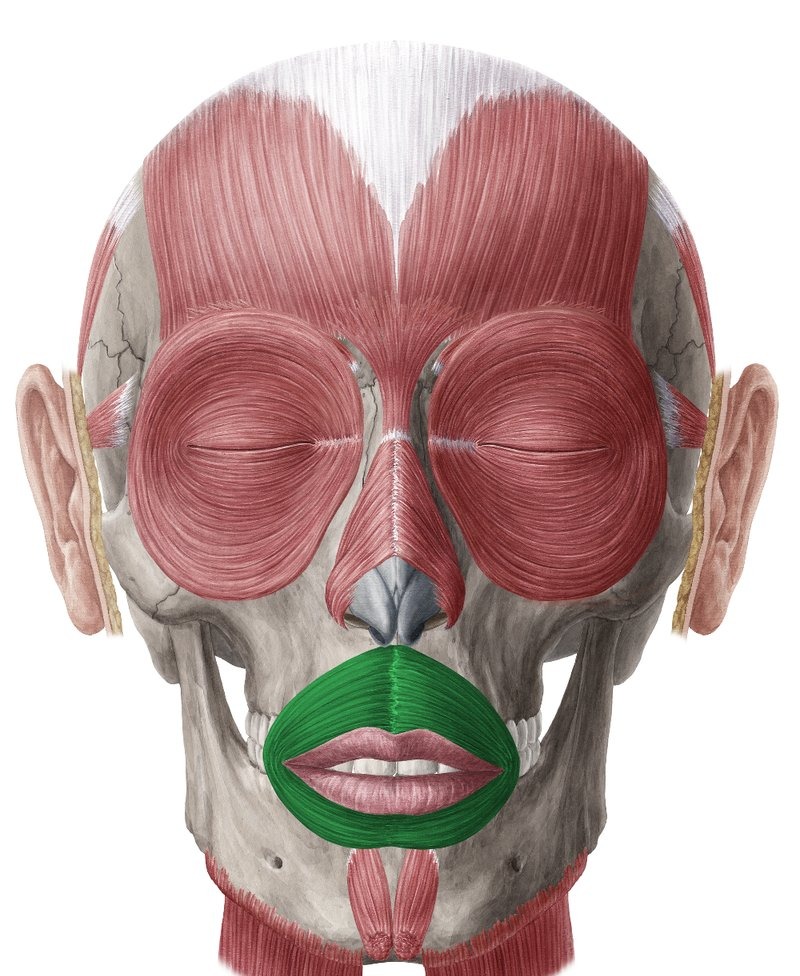
The first cause is muscular. The orbicularis oris, the ring-shaped muscle that purses the lips, is working constantly while you talk, sip through a straw, or smile. It contracts nonstop. Fold a piece of paper in the same spot enough times and a crease stays behind, and the same thing happens here: the muscle folds in the same place again and again until a vertical line settles in. People who smile a lot or purse their lips often tend to see these lines show up a bit earlier.
The second cause is skin aging itself. As we get older, collagen in the dermis thins out, the skin above the lips gets thinner, and the fat and bone underneath lose some of their support. Once that inner cushioning weakens, fine lines stand out more. On top of that, the skin above the lip has fewer oil glands to begin with, so it dries out faster than skin elsewhere on the face, which is exactly why lines show up here before anywhere else. As the lip border loses its crisp definition, the vertical lines end up looking even longer.
Sun exposure and smoking speed the whole process along. UV light breaks down collagen in the skin, and smoking not only forces the lips to purse over and over but also reduces blood flow. In the end, vertical lip lines are what happens when muscle-driven creasing and skin aging show up in the same spot at once. That's why one single treatment rarely erases them completely, and it usually makes more sense to figure out which cause is doing more of the damage before picking an approach.
How HA filler fills the lines around the mouth
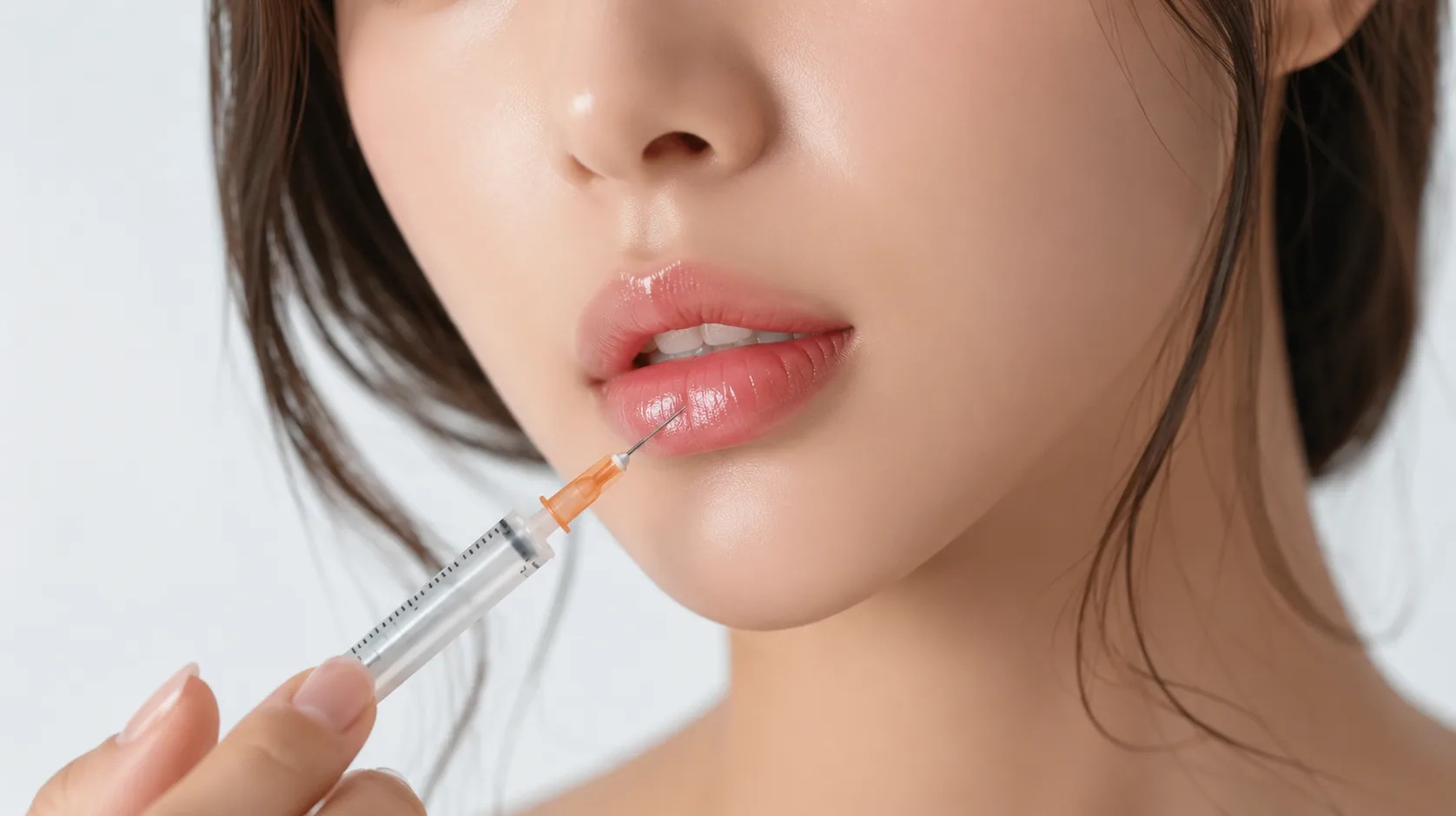
When you want to fill in a sunken groove right away, HA (hyaluronic acid) filler is the go-to option. A small amount placed into the shallow dermis fills the vertical lines directly, or traces along a blurred lip border to restore definition. The change is visible right away, and the skin looks noticeably smoother. If needed, the sides near a drooping mouth corner can be lightly supported too, which brightens the overall expression.
The key factor here is how soft the filler is. The area around the lips is constantly moving as you talk and smile, so a firm filler here tends to feel like a hard bump under the skin and can be felt as lumps. That's why a soft, gel-like formula that spreads gently is used in a shallow layer. Among the softer options, Belotero Soft, which is designed specifically for shallow placement, works well. Its fine, flexible particles spread thinly into delicate spots like fine lines, without the ridging or lumpiness that can show through the skin's surface.

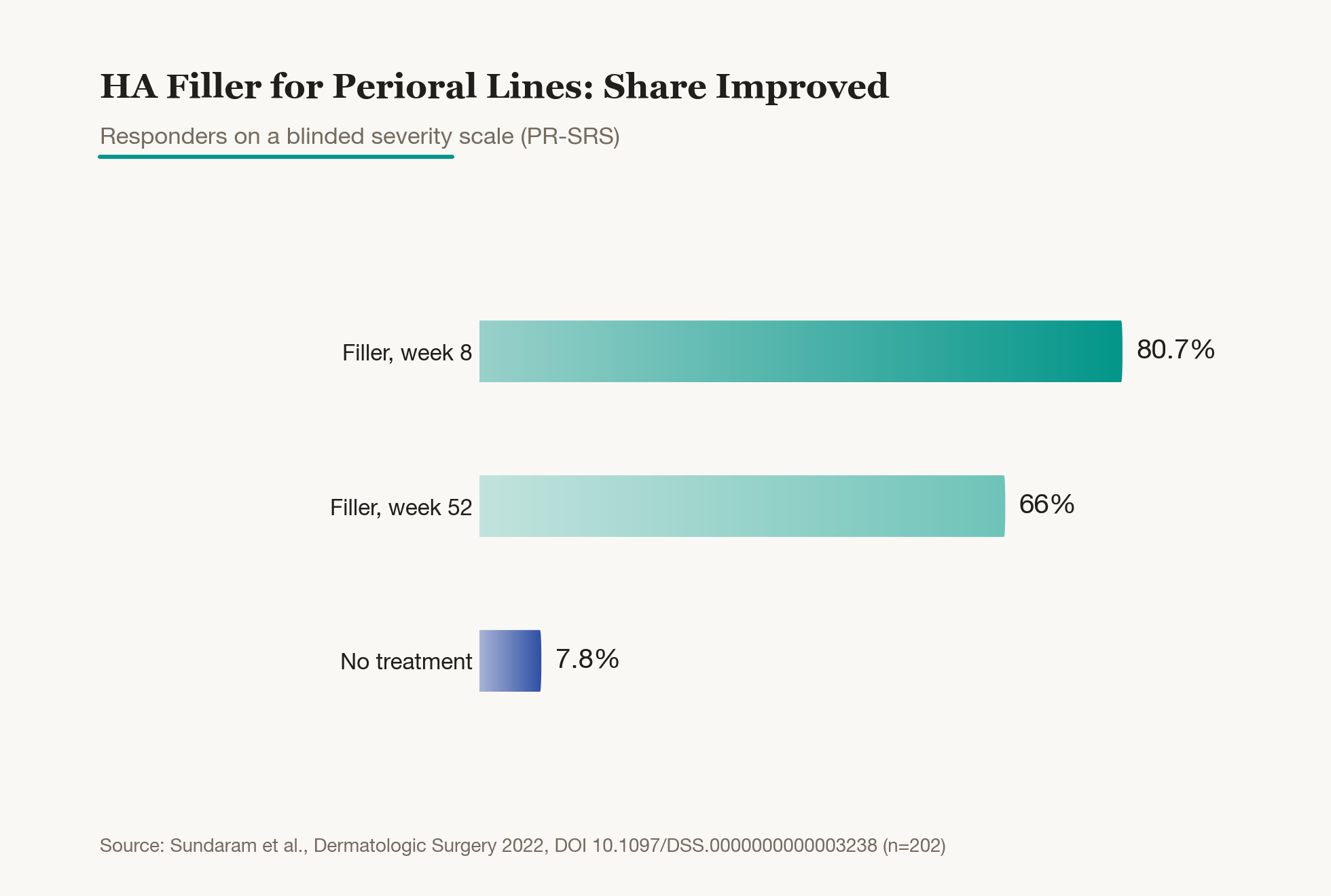
The data backs this up. In a randomized controlled trial of 202 people looking at perioral fine lines, 80.7% of those treated with filler saw their lines improve by week 8, compared to just 7.8% in the untreated group. At the one-year mark, 66% still had visible improvement. Another study focused specifically on upper lip lines found a similarly wide gap, an 80.2% success rate versus 11.9%, with results lasting around 6 months. HA filler also comes with a safety net: if the result isn't quite right or something goes wrong, it can be dissolved with an enzyme called hyaluronidase, which makes it a relatively low-risk option to try first.
How much Botox is needed around the mouth?
Where filler works by filling in a sunken area, Botox works directly on the muscle that's creating the crease in the first place. When the orbicularis oris squeezes tightly, the vertical lines fold deeper, so taking just a small amount of strength out of that muscle keeps the folding shallower. As a bonus, the lip border tends to turn slightly outward, giving the lips a subtly fuller look.
Dosing is everything here. The mouth handles speech and expression, so even a small overcorrection is noticeable. If the orbicularis oris loses too much strength, sounds like "p" and "b" can start to slip, and sipping through a straw or whistling gets harder. That's why the key is placing a small amount symmetrically along the upper border of the muscle.
Both the benefits and the limits matter here. In a study of 18 people treated with Botox around the mouth, lines softened and lips looked fuller, and 72% went on to repeat the treatment, which suggests satisfaction was reasonably high. That said, results typically last only 3 to 4 months before another session is needed, and relaxing the muscle alone isn't enough for lines that have already become deeply set. That's why Botox is more often paired with filler or Radiesse than used on its own.
| Category | Key Point |
|---|---|
| Target | Overactive orbicularis oris |
| Dose | Small, symmetric placement |
| If overdone | Speech issues, trouble with straws |
| Duration | 3 to 4 months |
The Radiesse hyperdiluted method
Radiesse is a CaHA (calcium hydroxylapatite) filler. It's made of tiny calcium particles, the same mineral found in our bones and teeth, suspended in a gel, and it does two things at once. First, the gel itself fills in the sunken area right away. Then, over time, the particles stimulate fibroblasts in the skin to produce fresh collagen and elastin, similar to how planting a seed leads to a sprout weeks later.
For thin, delicate areas like vertical lip lines, a technique called hyperdilution is used. Radiesse is diluted with saline until it's almost watery, then spread thinly and broadly across the skin instead of being placed as a concentrated deposit. This builds up texture and elasticity without adding much bulk.
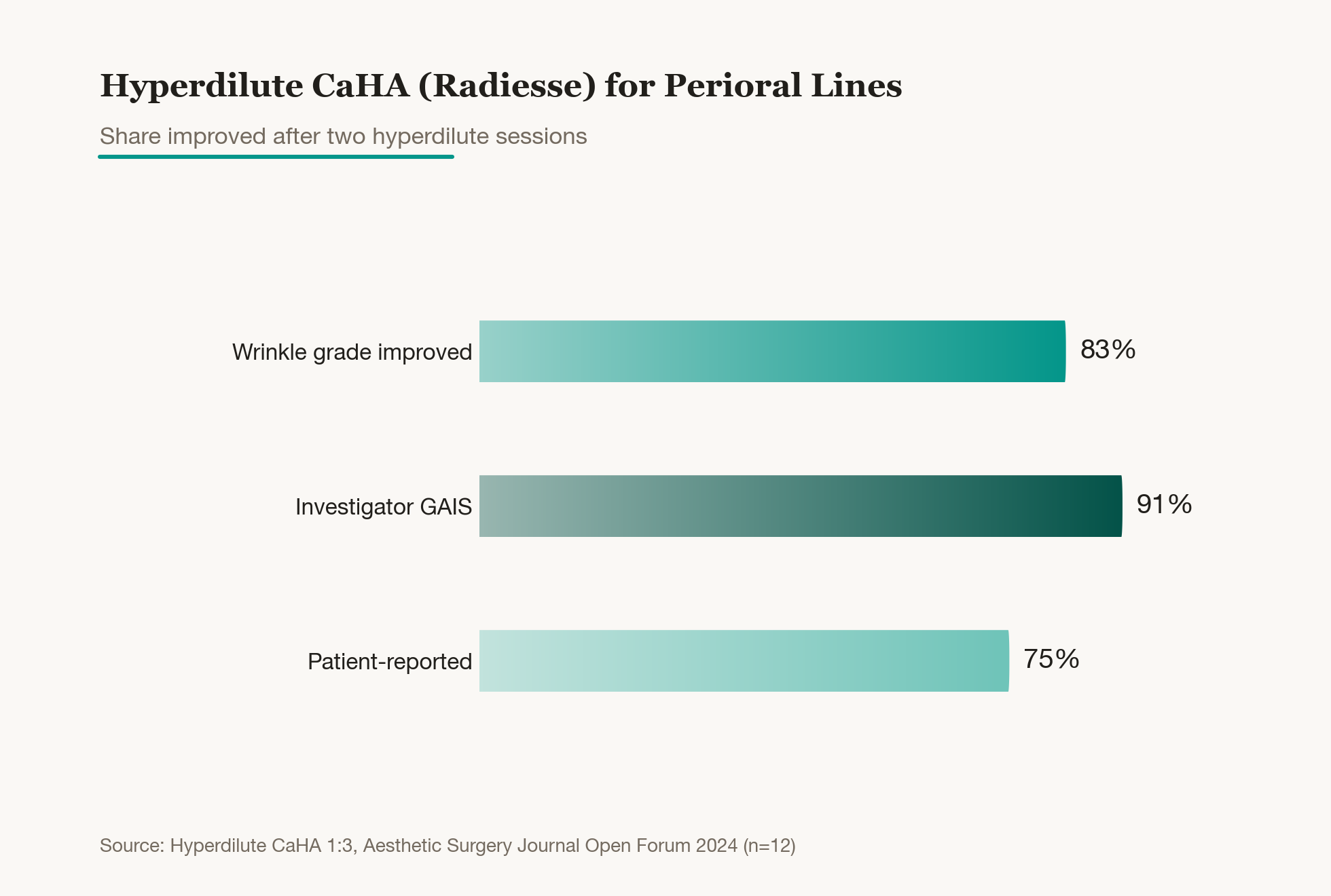
The evidence is building up here too. In a study of 12 people who received two sessions of hyperdiluted Radiesse around the mouth, 83% improved by at least one grade on a wrinkle severity scale, and the treating physicians rated 91% as improved. A separate tissue study on the neck found collagen increasing noticeably by 4 months, with elastic fibers and new blood vessels increasing significantly between 4 and 7 months. One important thing to keep in mind: unlike HA filler, Radiesse cannot be dissolved with hyaluronidase, so it needs to be placed carefully, in small amounts, in a shallow layer, right from the start.
When are laser and skin boosters needed?
If filler fills in volume and Botox relaxes muscle, laser and skin boosters work on the skin itself. This approach suits cases where creasing has been there long enough that the surrounding texture has roughened too.
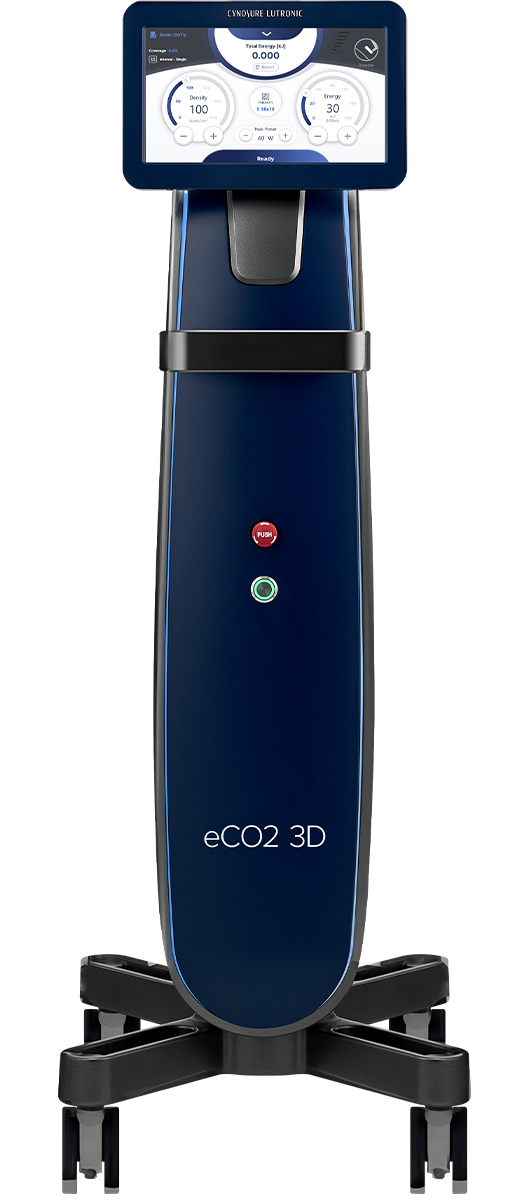
Fractional lasers create a dense grid of tiny thermal channels in the skin, and as those channels heal, fresh collagen fills back in. A study using fractional CO2 laser on sun-damaged skin found that, 6 months later, fine lines had improved by an average of 52.5%, texture by 56%, and overall appearance by 61.5%. Beyond softening fine lines, laser also refines pores and evens out skin tone, which is one of its biggest advantages. That said, it doesn't smooth everything out in one go; results build up gradually over several weeks, and there's typically a few days of redness and flaking to recover from after treatment.
Skin boosters are a gentler option. Diluted HA or PN-based ingredients are injected in tiny amounts into the shallow layer of skin to add hydration and refine texture. They don't smooth out deep lines on their own, but they leave the surface looking dewy and smooth, which helps filler or laser results look more natural. That's why skin boosters are usually paired with another treatment as a finishing touch rather than used alone.
Treatment combinations by cause and safety rules
The right answer depends on the cause. If shallow fine lines are the main issue, soft HA filler tends to work best. If the lines deepen mainly when you purse your lips, Botox is a better fit. If texture and elasticity have dropped off, Radiesse, laser, or skin boosters make more sense. For lines that are deeply set, combining filling with texture-focused treatment usually gives the most natural result.
| Main Cause | Best Approach |
|---|---|
| Shallow fine lines | Soft HA filler |
| Deepens when pursed | Small-dose Botox |
| Texture, elasticity loss | Radiesse, laser |
| Deeply set lines | Filler plus laser |
If you're not sure where to start, try looking in the mirror with your lips relaxed and see if the vertical lines are still visible. If they only show up when you purse your lips, the muscle is likely playing the bigger role. If they're there even when your lips are relaxed, skin and volume loss are probably driving more of it. You don't have to tackle everything at once, since addressing the bigger cause first can still get you a natural-looking result.
Safety is worth keeping in mind too. An artery supplying the upper lip runs through this area, so if filler is accidentally injected into a blood vessel, it can, in rare cases, become a real problem. If you feel unusually severe pain right after injection or notice the skin turning pale, let your injector know immediately. HA filler can be dissolved with hyaluronidase if this happens, but Radiesse cannot be reversed with this enzyme, which is exactly why placing it carefully, in small, shallow amounts, matters even more. In the end, choosing an injector who really knows the vascular anatomy around the mouth matters just as much as which product they use.
Was this helpful?
About this article
Written by a practising aesthetic physician and intended for general education — not a substitute for individual medical advice.
Read next
Marionette Line Filler: Results, How Long It Lasts, and Combining With Botox
Marionette lines running from the corners of the mouth down toward the jaw form when the supporting ligaments loosen, the fat pad sags, and the muscle pulling down on the mouth corners adds to the strain. HA filler works by rebuilding this collapsed structure from the inside out, restoring lost volume layer by layer. Here's a look at recovery time, how long results last, and why Botox is often paired with it.
By Dr. Kim
Vertical Lip Lines: Causes, Filler Treatment, Duration, and Care
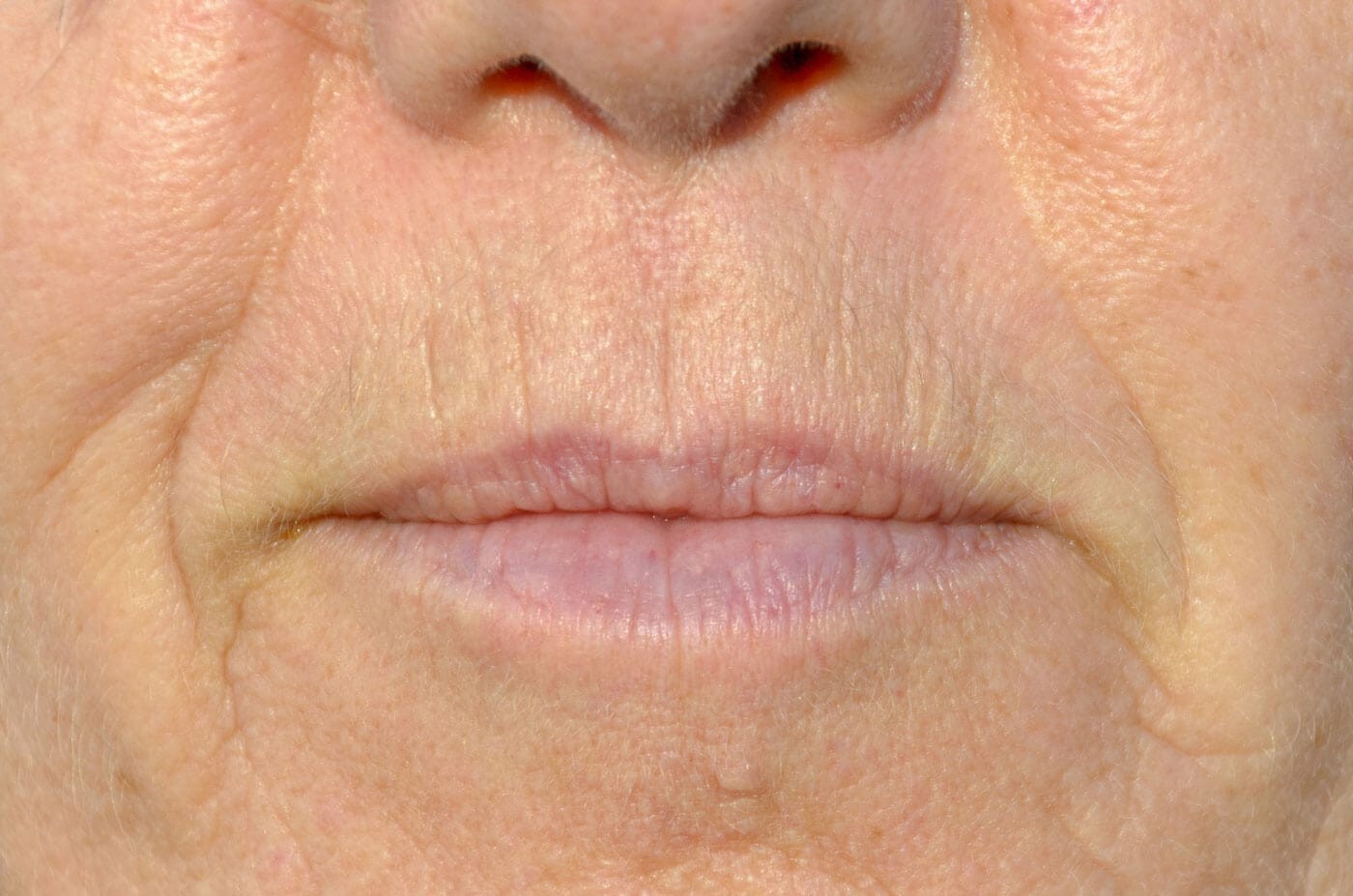
Vertical lip lines form when repeated movement of the muscles around the mouth combines with volume loss. Smoking is one of several factors that speeds up this process. Here is how filler addresses these lines, how long results tend to last, and how to care for them afterward.
By Dr. Kim
Cherry Angioma: Causes, Symptoms, Laser Treatment and When to See a Doctor
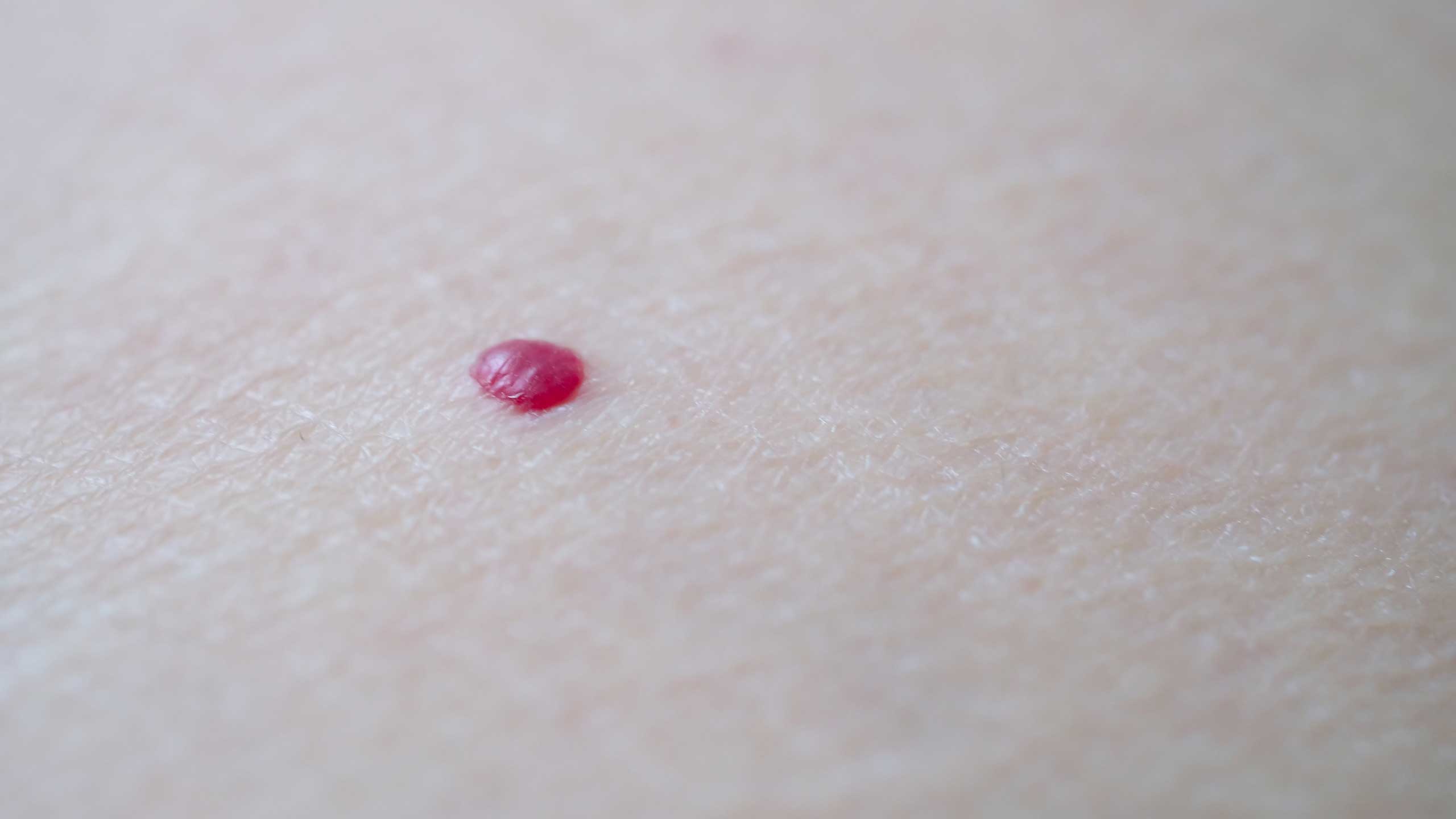
What are those bright red spots called cherry angiomas that show up on the chest or back? A clear, research-backed guide to why they increase with age, how to tell them apart from moles, warts, and purpura, whether pulsed dye, KTP, or long-pulsed Nd:YAG laser or electrocautery works best for removal, how to minimize scarring and dark marks, and when it's time to see a doctor.
By Dr. Kim