Vertical Lip Lines: Causes, Filler Treatment, Duration, and Care
By Dr. Kim7 min read
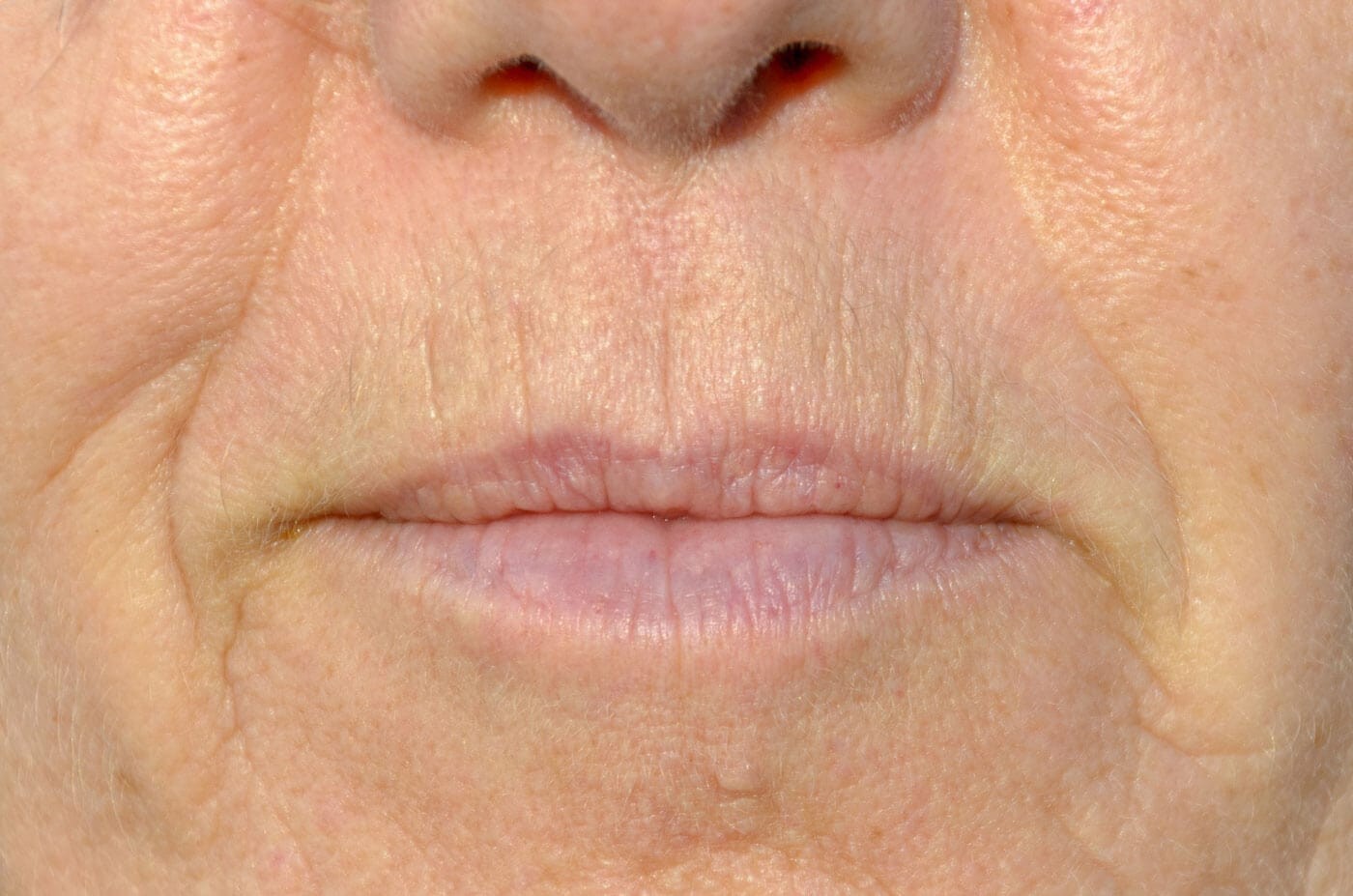
Those fine vertical grooves running above and below the lips are called vertical lip lines. They are also commonly known as smoker's lines, but they show up just as often in people who have never smoked a cigarette in their life. Most of the blame falls on the changes the skin and muscles around the mouth go through with age.
These lines never come from just one cause. The repeated pull of the muscles around the mouth works together with the gradual loss of volume in the lips themselves. Smoking happens to speed up both of these changes at once, which is exactly why its name got attached to this particular wrinkle. Here is a closer look at how filler actually works on these lines.
Why are the lines around the lips especially deep?
The muscle that circles the mouth is called the orbicularis oris. Unlike most other facial muscles, it does not attach to bone, it connects almost directly to the skin. So every time it moves, that force travels straight to the skin surface instead of being cushioned by bone or a fat layer underneath.
Think about how many times a day you purse and open your lips, whether you're talking, drinking, or eating, thousands of repetitions add up, and the same spot keeps folding over and over. It's a lot like creasing a piece of paper in the same place again and again, the line only gets deeper. On top of that, the skin above and below the lips is thinner than skin elsewhere on the face and has fewer oil glands, so the same amount of folding leaves a more visible mark here than it would anywhere else.
Add sun exposure into the mix and collagen and elastic fibers in the dermis gradually break down. Collagen works like a support beam holding the skin up from underneath, and once that beam weakens, the fold no longer smooths itself back out, it just stays put. That's why lines around the lips tend to show up earlier, and more clearly, than wrinkles in other areas as we age.
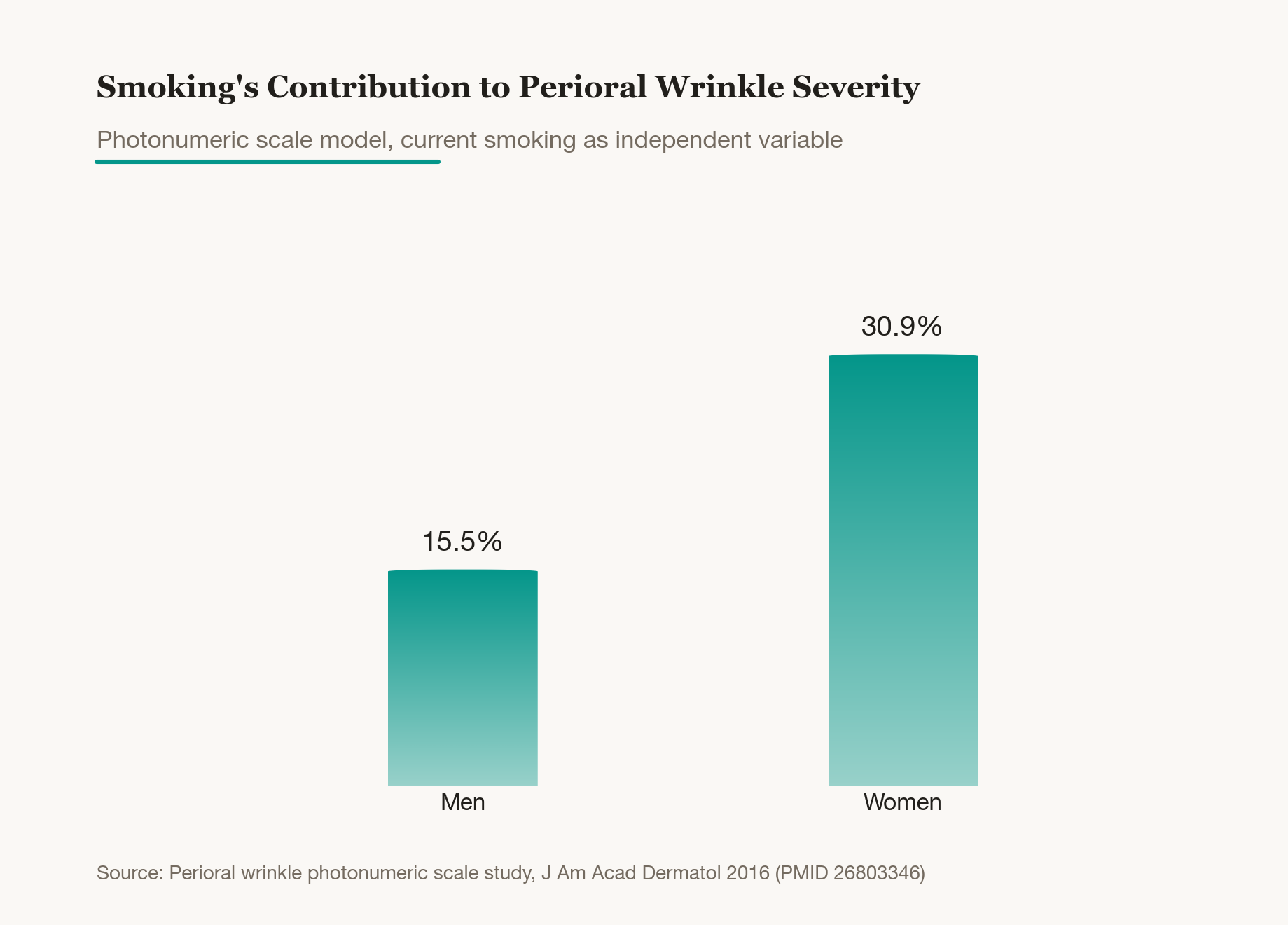
How smoking affects lip lines
Smoking adds two separate forces to this exact spot. The first is movement. Drawing in cigarette smoke requires pursing the lips and pulling in with real effort, over and over, and that motion refolds the same crease dozens of times a day. Folding the same line far more often than the average person means it settles in faster and deeper.
The second is blood flow. Nicotine narrows blood vessels. When vessels narrow, less oxygen and fewer nutrients reach the skin, and the cells responsible for producing collagen slow down along with them. It's similar to a potted plant that's been watered less, the leaves wilt first, and skin with poor circulation simply repairs itself more slowly.
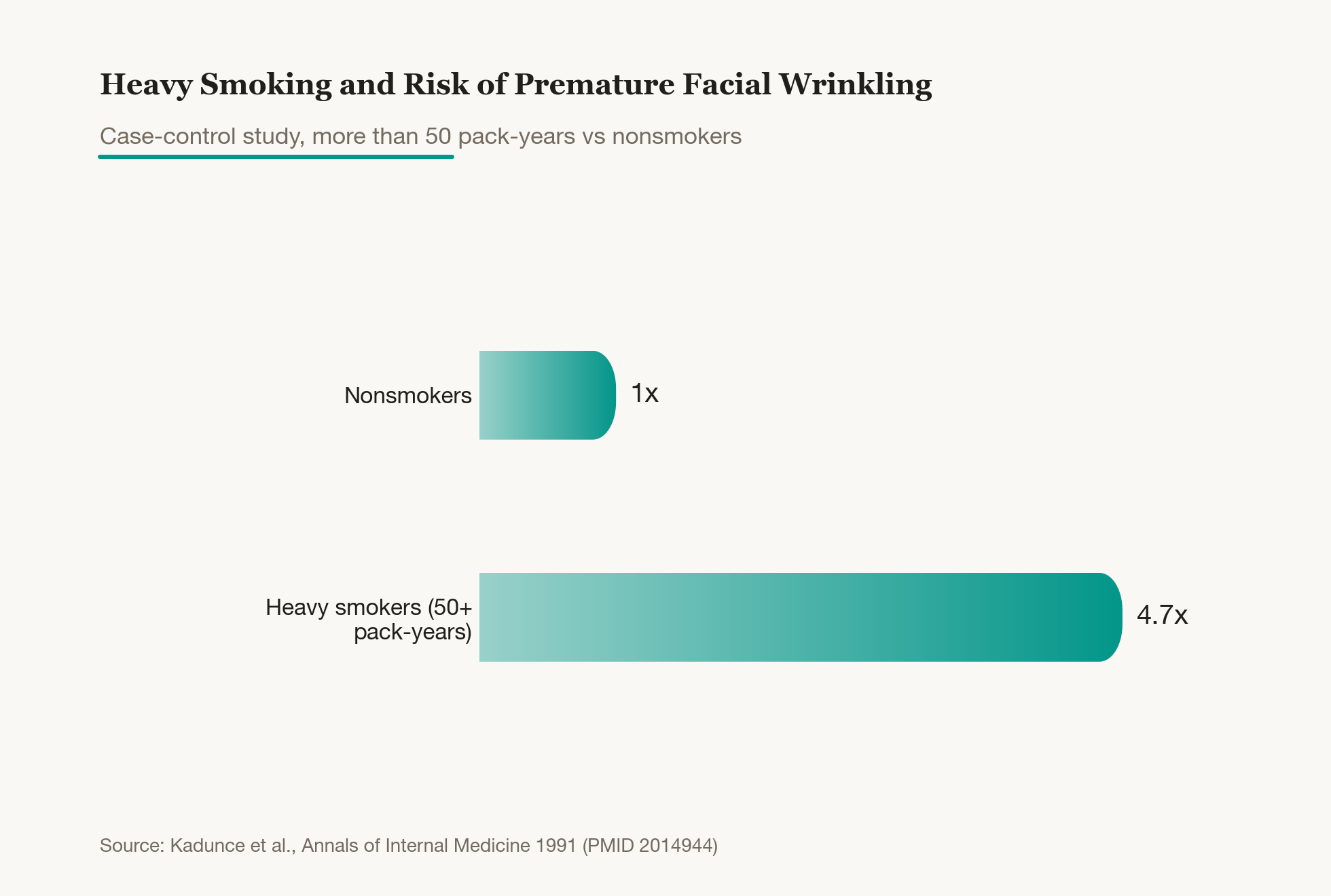
Because repeated folding from the motion and reduced recovery from poor circulation happen in the same spot at the same time, lines around a smoker's lips are known to appear earlier and more visibly than in non-smokers. That said, these lines aren't exclusive to smokers, non-smokers experience the same change with age, just to a lesser degree.
Do lines show more when the lips get thinner?
Aging also shrinks the volume of the lips themselves. The fat layer and collagen inside the lips gradually decrease, the lips thin out, and the border of the lip becomes less defined. This change doesn't create wrinkles directly, but it makes any wrinkles already there look far more pronounced.
A cushion is a useful comparison. A cushion that's still fully stuffed keeps its seams pulled taut, so they barely show. But once the filling inside thins out and the cushion goes flat, that same seam folds much more deeply and becomes obvious. Lips work the same way, once the volume supporting them from underneath is gone, the lines on the surface have nothing holding them smooth, so they show through as they are.
That's why, when addressing vertical lip lines, we look not just at the lines themselves but also at how much lip volume remains. Lips that have lost a lot of volume rarely look natural if you only fill in the wrinkles, in many cases volume needs to be restored first before the lines soften along with it.
How does filler fill the lines?
Most fillers used for vertical lip lines are hyaluronic acid, or HA. HA pulls in and holds far more water than its own weight, so even a small amount injected into a groove fills that area from within and lifts it back up. It works much like pouring water into a well, once the space fills, the surface levels out.
At the same time, HA gel has a certain amount of elasticity and viscosity, so once a groove is filled, it resists the pulling force of the muscle more than it did before. There are even reports of changes in the electromyographic activity of the orbicularis oris after lip filler, suggesting that filler does more than simply occupy space, it also seems to cushion the folding motion the muscle creates in the first place.
When lip volume has dropped along with the lines, filler is often added to the lips themselves to build support from underneath, following the same cushion logic mentioned earlier, refill the inside and the surface wrinkle naturally softens too. In some cases, a very small dose of botulinum toxin is added to gently reduce the strength of the muscle above the lip, though the dose has to be adjusted carefully so speaking and eating aren't affected.
Filler procedure and how long it takes
Because the skin here is thin and there are quite a few blood vessels nearby, much smaller amounts are injected carefully in several passes compared to other areas. Most filler products already contain lidocaine, a local anesthetic, mixed in, so the stinging sensation during the procedure tends to pass quickly.
The filler is usually placed by tracing a fine line along the wrinkle, or by injecting very small amounts at short intervals across several passes. Injecting too much at once in this area can cause lumping or unnatural clumping, so spreading a small amount across multiple passes tends to give a more natural result.
The procedure itself usually takes around 20 minutes. Right afterward, though, some swelling and light bruising can appear along the needle path, and that swelling can make results look more dramatic than they'll actually settle into. It's best to judge the final result only after the swelling has fully gone down.
How long does filler last, and how to care for it?
HA filler is gradually broken down by enzymes in the body over time. Because the area around the lips moves so often, it tends to break down faster here than in other areas, with results typically fading gradually somewhere between 6 and 12 months. That range varies from person to person depending on the specific product used and individual metabolism.
A few things can help with aftercare:
- For the first few days after the procedure, it helps to avoid pursing your lips tightly or sucking hard on a straw. The filler hasn't fully settled yet, and repeated force can push it out of place.
- It's best to avoid saunas or steam rooms for about a week after the procedure. Heat causes tissue to swell and loosen, which makes it easier for filler to shift out of position.
- Using sunscreen and a dedicated lip balm consistently helps. UV exposure is one of the main culprits behind collagen breakdown, so keeping up aftercare protects results you worked to achieve.
- Cutting back on smoking is also known to help results last. The same repeated motion and reduced blood flow described earlier keep working the same way after the procedure, and they can speed up how quickly the filler breaks down.
A single treatment doesn't last forever, so many people maintain results over time with small touch-up amounts as the effect gradually fades.
References
Korean Dermatological Association, American Academy of Dermatology (AAD), and Ministry of Food and Drug Safety (MFDS).
Was this helpful?
About this article
Written by a practising aesthetic physician and intended for general education — not a substitute for individual medical advice.
Read next
Marionette Line Filler: Results, How Long It Lasts, and Combining With Botox
Marionette lines running from the corners of the mouth down toward the jaw form when the supporting ligaments loosen, the fat pad sags, and the muscle pulling down on the mouth corners adds to the strain. HA filler works by rebuilding this collapsed structure from the inside out, restoring lost volume layer by layer. Here's a look at recovery time, how long results last, and why Botox is often paired with it.
By Dr. Kim
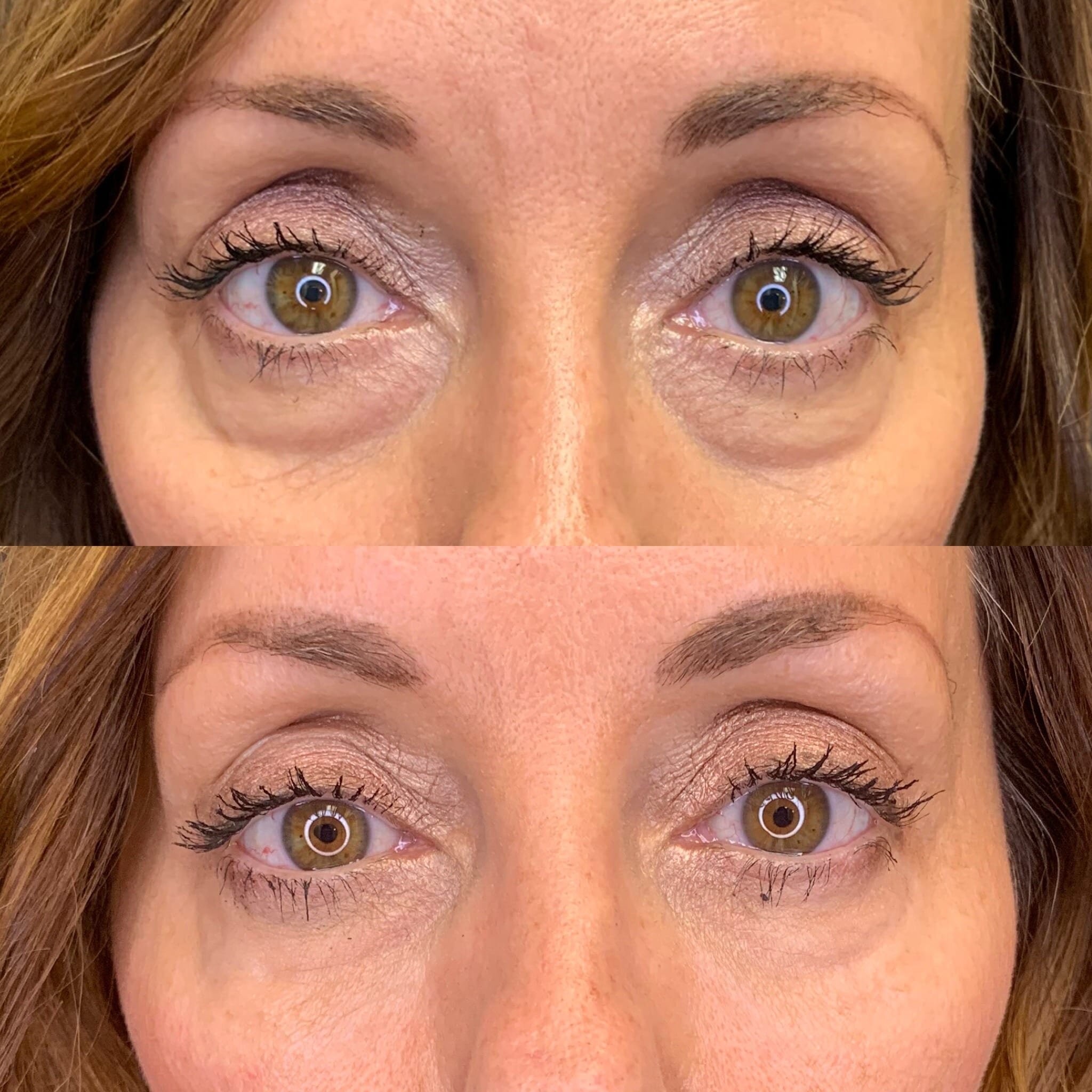
Tear Trough Filler Duration and Side Effects, Including Vessel Risks
The hollow that forms just under the under-eye fat pad, the tear trough, improves when filler physically fills that empty space. But skin and blood vessels are thin in this area, so there are separate precautions around cannula technique and the Tyndall effect. Here is how the filling works, how long results last, and what recovery looks like.
By Dr. Kim
Gummy Smile Botox Effects, Duration, and Side Effects
A gummy smile happens when your gums show more than usual as you smile, and an overactive lip-lifting muscle is one of the most common causes. Botox works by slightly reducing the strength of that muscle so your lip doesn't rise as high when you laugh. Here's how to tell whether muscle is really the cause, plus how long the results tend to last.
By Dr. Lee