Gummy Smile Botox Effects, Duration, and Side Effects
By Dr. Lee7 min read
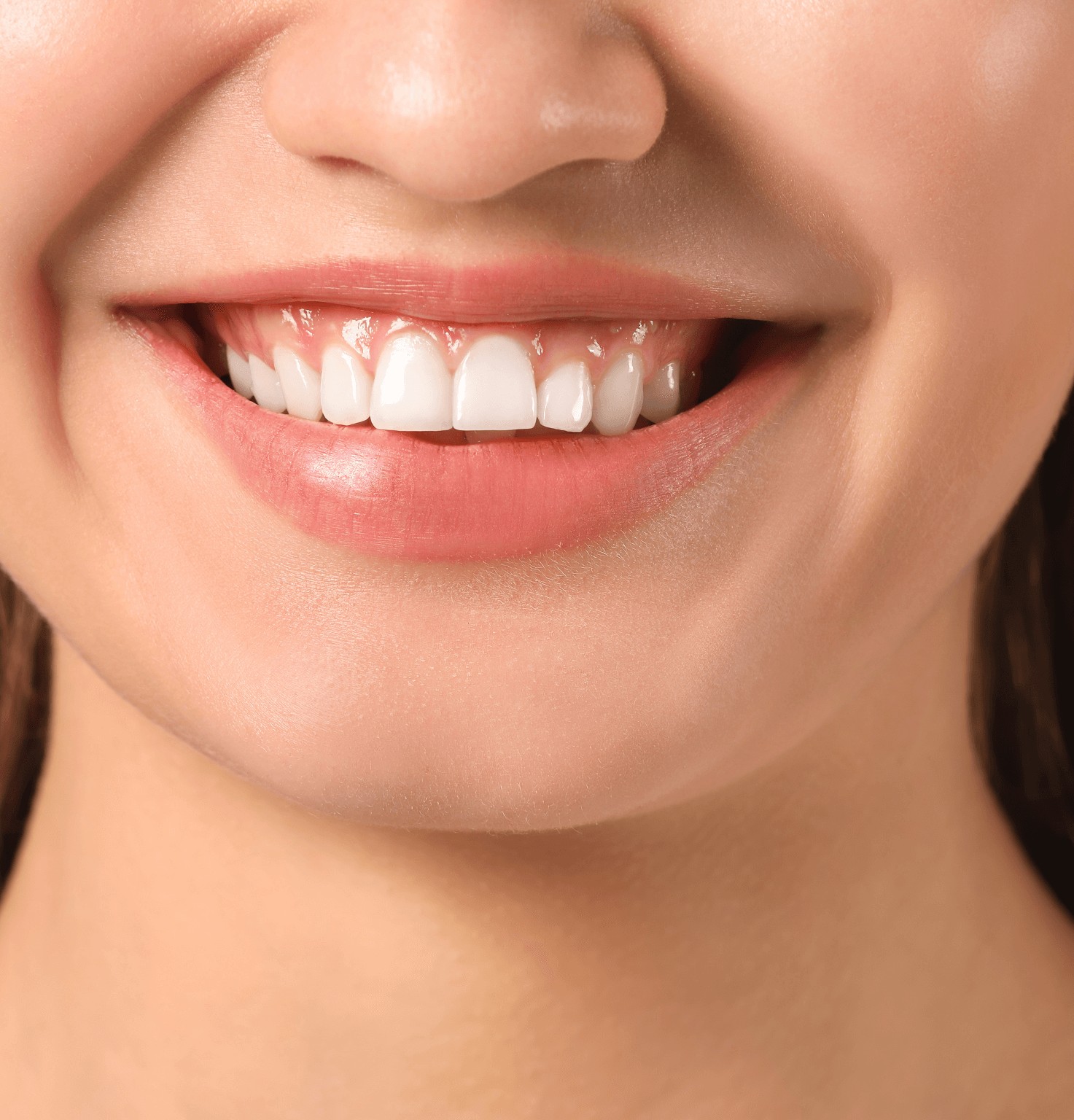
A gummy smile is when your upper gums show more than usual once you break into a full smile. People sometimes joke about it, but it's really a combination of how the lip-lifting muscles move, how your facial bones are shaped, and how much gum tissue you have.
Of these, the part Botox can actually correct is the muscle-driven kind. It works by slightly reducing the strength of the muscle that's pulling your lip up harder than it needs to. Let's break down exactly which muscle gets targeted and why that produces the effect it does.
Why does a gummy smile happen?
There isn't just one cause behind gums showing more when you smile, which is exactly why the fix isn't the same for everyone. Three factors are known to work either together or on their own.
- Hyperactive muscle type: The muscle that lifts your upper lip moves more forcefully, or more often, than it really needs to. The muscle itself is normal, but the nerve signal reaching it is unusually strong, so the lip gets pulled up too far. This is considered the most common type of gummy smile.
- Skeletal type: The upper jawbone itself has grown vertically longer than average. Because the bone is simply longer, even a small lip movement is enough to expose the gums. Since the problem is bone length rather than muscle, this calls for a different approach.
- Gingival type: The gum tissue covers more of the tooth surface than it should. Teeth look shorter and the gums stand out, and that's caused by having more gum tissue than usual, not by anything muscular.
These three types can look almost identical on the surface, so it's hard to tell them apart just by looking in a mirror. That's exactly why an accurate diagnosis before treatment matters so much.
Which muscles does Botox act on?
Lifting the upper lip isn't the job of a single muscle. Several work together, most notably the levator labii superioris, the levator labii superioris alaeque nasi, and the zygomaticus minor. Think of them as several hands pulling on the same curtain at once.
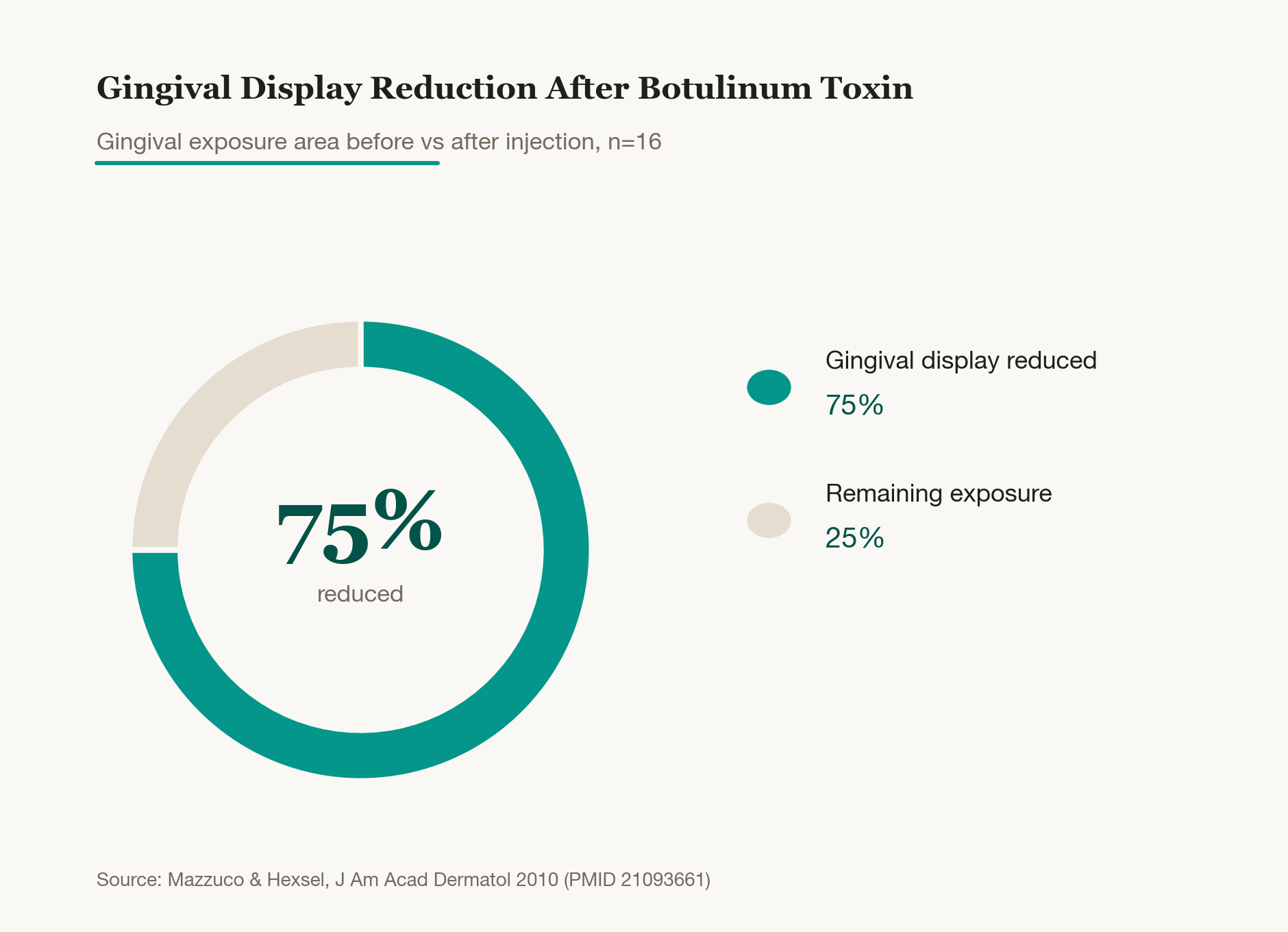
In the hyperactive muscle type of gummy smile, those hands are simply tugging the curtain harder than they need to. Botox is injected into these muscles and partially blocks the signal the nerve sends to them. With that signal reduced, the muscles pull with a bit less force, so the lip doesn't rise nearly as high when you smile.
One of the standard injection sites used for this is often called the Yonsei point. It's located beside the nose, right where several of these lip muscles pass through, and a small amount is injected there to slightly reduce the pull of multiple muscles at once, helping the lip move more naturally overall.
Why a cause diagnosis is needed before treatment
Botox only reduces muscle strength, it can't change bone length or the amount of gum tissue you have. So if the underlying cause is something other than muscle, the results may not turn out as strong as expected.
With the skeletal type, where the upper jawbone itself is simply longer, no amount of muscle relaxation will shorten that bone. In these cases, an approach that addresses the bone directly, such as orthodontics or orthognathic surgery, is generally recommended. With the gingival type, where there's excess gum tissue, gum contouring treatment tends to be the more direct solution.
That's why, before treatment, it's recommended to check smile photos and video and evaluate how much gum shows alongside how the muscles actually move. The more the muscle is responsible for the overall picture, the more noticeable the results from Botox tend to be.
When does Botox start to work?
Botox doesn't take effect the moment it's injected. Because it works by blocking the release of the chemical messenger at the point where nerve meets muscle, it takes some time for the messenger that's already been released to be used up.
Changes typically start showing between 3 and 7 days after injection, and the effect usually looks its most noticeable somewhere between 2 and 4 weeks. It's a bit like gradually turning down the volume rather than flipping a switch, so you're more likely to notice your lip rising a little less each day than to wake up one morning with a sudden change.
During this window, your smile might feel slightly different from what you're used to. Since the muscles are adjusting to their new balance of strength, things may not look perfectly symmetrical at first, but this typically settles into place naturally as time goes on.
How long does gummy smile Botox last?
Botox's effect on muscle isn't permanent. Over time, the nerve rebuilds a new pathway for sending signals to the muscle, a bit like traffic finding a new route once the original road reopens.
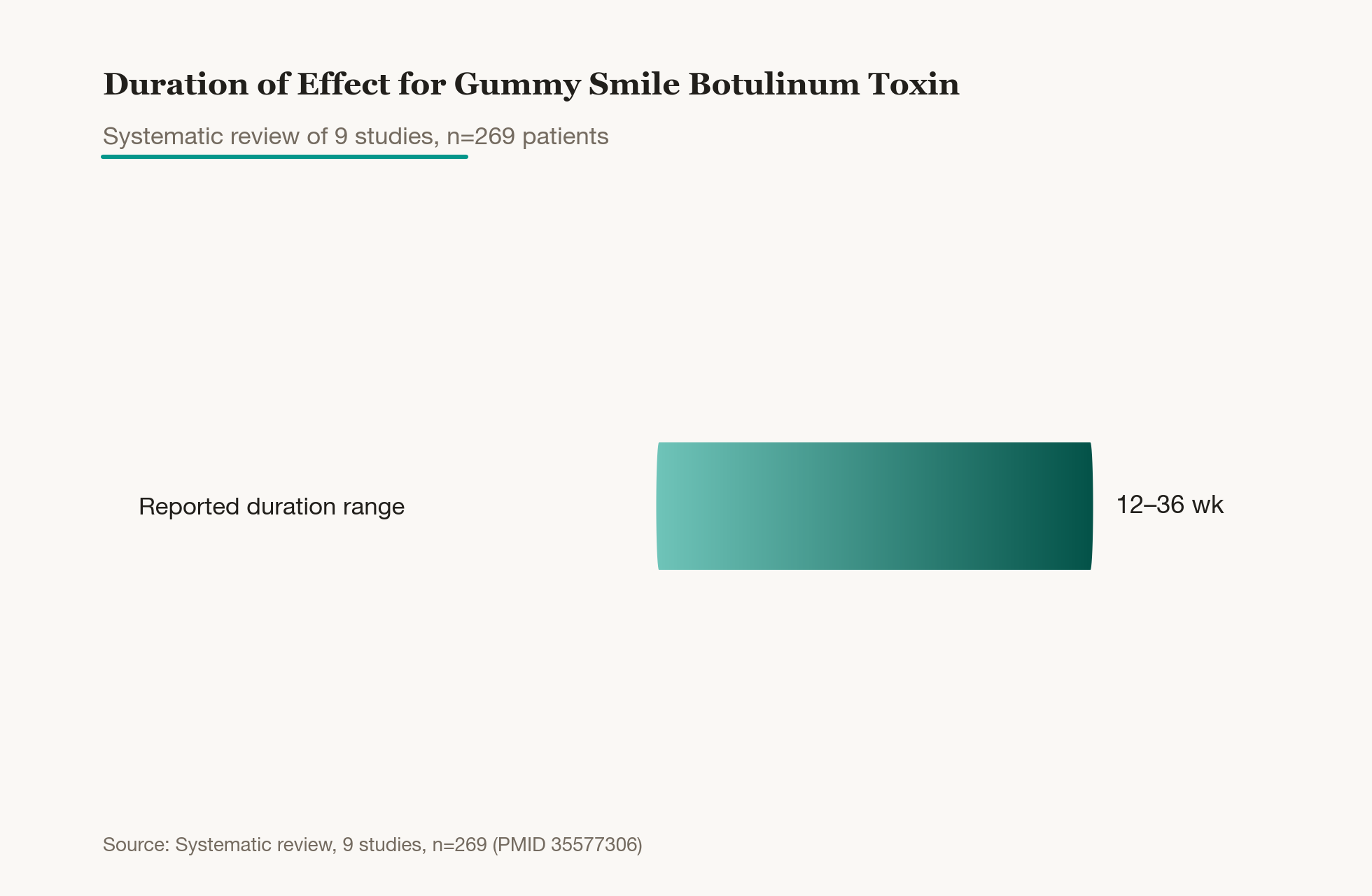
The results of gummy smile Botox are generally reported to last somewhere between 3 and 6 months. That's roughly in line with Botox used elsewhere on the face, but since everyone's muscle size and habits differ, the actual duration varies from person to person. Once the effect fades, another injection is needed, and this cycle typically repeats.
The dose depends on how much gum shows in the first place. Men also tend to have larger muscles in this area than women, so a comparable result may require a somewhat higher dose. The larger the muscle, the more area there is where the signal needs to be reduced.
Can the lip feel awkward as a side effect?
Because this treatment reduces muscle strength, going beyond the intended area can affect how the lip moves overall. Here are the effects most commonly reported.
- Asymmetry: Even a small difference in the amount or placement of the injection on each side can cause one side of the lip to move differently than the other, since each muscle responds slightly differently to begin with.
- Restricted lip movement: If the dose is higher than needed, speaking, whistling, or drinking through a straw can feel a little more awkward than usual, since the muscles involved in pursing the lips are weakened along with the target muscle.
- Unnatural-looking smile: Relaxing the muscle too much can leave the lip barely moving when you smile, which can look a little stiff. Reducing the strength by just the right amount is what leads to a natural-looking result.
- Temporary drooping: In rare cases where nearby muscles are affected too, the corner of the mouth can appear to droop slightly. This is generally described as resolving on its own once the effect wears off.
These effects are generally reported to fade naturally over time, but how precisely the injection site and dose are controlled has a major influence on the final result.
Which gummy smile types respond well to Botox
Botox tends to work particularly well for the hyperactive muscle type of gummy smile, especially when it's mild to moderate, since even a small adjustment to muscle strength can produce a noticeable change.
On the other hand, when the upper jawbone is significantly longer or the gum tissue itself is thick, Botox alone has its limits. In these cases, consulting a dentist or oral and maxillofacial surgeon about treating the bone or gum tissue directly tends to be the more accurate path forward.
Ultimately, gummy smile Botox works best once the actual cause has been pinned down and muscle turns out to be a significant part of the picture. Not skipping that diagnostic step is really the first move toward a result you'll be happy with.
If several causes are overlapping, it's more realistic to let Botox handle the muscle portion first and plan any remaining treatment alongside it, rather than expecting Botox alone to solve everything. That approach tends to keep expectations and results much closer together.
References
Korean Dermatological Association, American Academy of Dermatology (AAD), and Ministry of Food and Drug Safety (MFDS).
Was this helpful?
About this article
Written by a practising aesthetic physician and intended for general education — not a substitute for individual medical advice.
Read next

Trapezius Botox Effect and Duration, Including Side Effects and Who It Suits
Trapezius Botox, known as Bobby Botox, relaxes the muscle at the top of the shoulders to make the neck look longer and the shoulder line smoother. Here is an easy, research backed look at how it slims the shoulders, how long results last, whether shoulder weakness or other side effects show up, and who makes the best candidate.
By Dr. Kim
Crow's Feet Botox: Effects, Duration and Dose
A clear look at how crow's feet Botox works. It eases the orbicularis oculi muscle that creases the outer eye corner when you smile, softening the lines it leaves behind. This guide covers the standard 24-unit dose split across both sides, where the injections go, when results show up, the roughly four-month duration, the limits for deep static wrinkles, and side effects, all backed by real clinical study numbers.
By Dr. Kim
Lip Filler Duration and Side Effects, Including Aftercare
Lip volume filler works by drawing in water through hyaluronic acid as it settles into place. Because lips move more than other areas, how long results last and how recovery unfolds differ too. Here's a full rundown of the texture differences between filler types and how to care for results safely.
By Dr. Kim