PDRN and PN Skin Boosters: Differences and Results Compared
By Dr. Kim6 min read
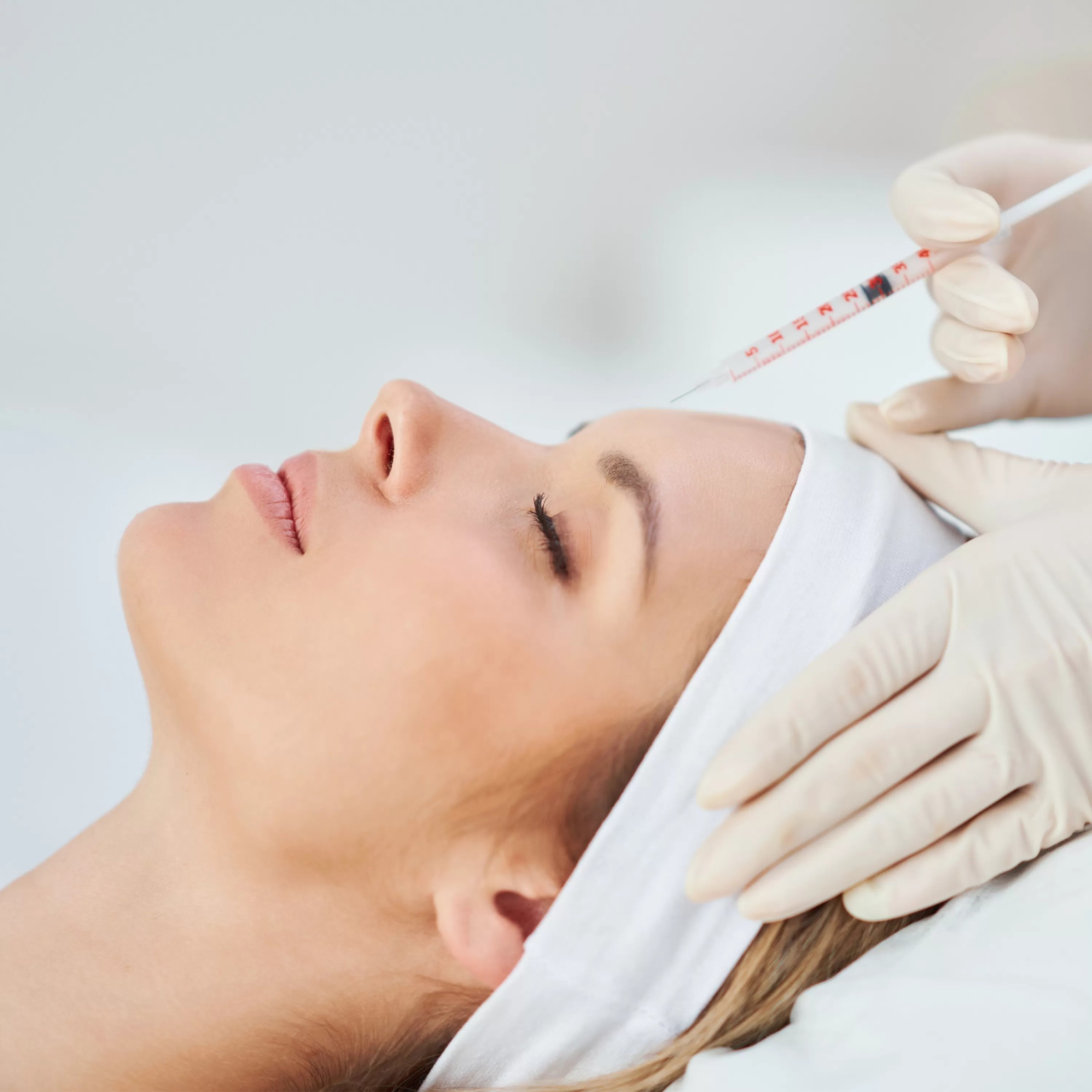
PDRN and PN show up side by side in almost every skin booster consultation, Rejuran included. Because they sit on the same ingredient list, it is easy to assume they are basically the same thing. In reality their molecules are a different size, and that single difference sends them to different jobs in the skin.
The names look alike, which makes the mix-up understandable, but there is really only one thing separating them: chain length. A short chain earns the name PDRN, a long chain earns the name PN. That one variable decides where each ends up, how it works once it gets there, and how long its effect sticks around.
So when a patient in the consultation room asks which one is better, there is no clean answer. It is not a matter of one beating the other. Each chain length is simply built for a different job. A thin, dry epidermis tends to respond better to the short chain, while dermal firmness that has started to sag leans toward the long one.
What is the difference between PDRN and PN?
Both ingredients belong to the same broad family: polynucleotides, chains built by stringing DNA fragments together. Both start out the same way too, extracted from the testes of salmon or trout and then purified.
The split happens in the next step. Cut the DNA into short fragments and you get PDRN, short for polydeoxyribonucleotide. Leave it largely intact, close to its original length, and you get PN, polynucleotide. Same raw material, but the processing step gives it two very different personalities.
Source materials and manufacturing process of the two
Both PDRN and PN start life as fish DNA. Because its structure closely resembles human DNA, the body tends not to treat it as a foreign threat and instead accepts it as raw material for repair.
What changes on the way to the finished product is the purification and cutting process. PDRN goes through enzymatic or physical treatment that chops the chain down to short pieces. PN keeps that cutting to a minimum and preserves as much of the original long chain as possible. Cut the chain or leave it intact, that single fork in the road decides which personality each ingredient ends up with.
How does chain length change where they are absorbed?
Chain length translates directly into molecular size. PDRN's short chain means a smaller molecule, while PN's long chain means a considerably larger one. Studies report that PN's molecular weight runs well above PDRN's.
Smaller molecules move more freely through the body, the same way a small object slips easily through a narrow gap. That lets PDRN reach the epidermis, the skin's outer layer, fairly easily. PN, being the larger molecule, tends to stay closer to the injection site, settling in and around the dermis instead.
This size gap also shapes how quickly the effect is felt after treatment. Small molecules spread fast but do not linger long, while large molecules spread more slowly yet stay put much longer. It is a bit like dropping ink into water versus spooning out a thick batter: the ink spreads instantly but fades, while the batter moves slowly and holds its shape.
What does PDRN do?
Once PDRN reaches the epidermis, it stimulates adenosine receptors, gateway-like structures on the cell surface that pick up recovery signals. When these receptors open, the cell reads it as a cue to repair damaged tissue.
At the same time, the fragments produced as PDRN breaks down double as raw material for building new DNA and protein. This runs through what is called the salvage pathway, the body's own recycling route for reusing existing material, so it can deliver building blocks quickly without needing a full synthesis process. That is part of why PDRN is considered strong at reinforcing the skin barrier and locking in surface hydration.
This trait also explains why PDRN has a long history of use for wound healing and circulation issues. It is reported to help especially with thin, easily irritated skin or areas that are slow to recover after treatment. Because its short chain also breaks down and clears the body relatively fast, keeping the effect going usually calls for repeat sessions at regular intervals.
How does PN work in the dermis?
Once PN moves past the epidermis and settles into the dermis, it starts to behave differently. Its long chains tangle together and form a porous, mesh-like structure, full of tiny gaps like a sponge. This structure is called a scaffold, the temporary support framework that holds tissue in place, much like the scaffolding put up around a building under construction.
That mesh is very good at holding onto water, which fills the dermis with hydration. Because the chains are large and stick around for longer, fibroblasts, the cells in the skin that produce collagen, also stay attached to this structure for an extended stretch of time. The longer fibroblasts stay stimulated, the longer the signal to keep producing collagen is said to continue.
Picture it as a wet sponge tucked under the skin. As long as the sponge holds water, that area stays soft and firm, and the cells attached to it keep working under continuous stimulation. The thicker and sturdier the chain, the longer this sponge is reported to hold its position.
Collagen signaling pathways and differences in speed
Both PDRN and PN are reported to support collagen production in the end, but the pathway that switches the signal on and the speed at which it works are not the same. PDRN leans toward sending a comparatively fast recovery signal through adenosine receptors, while PN leans toward a slower, sustained signal built on fibroblasts staying attached to its scaffold over time.
Think of PDRN as a short, sharp bell and PN as a light left on for a long stretch. The bell triggers a quick response, while the light stays on quietly for much longer. That is why clinical reports describe the two effects as overlapping in kind but different in how long they last.
The two signals are not entirely separate either. The recovery signal that starts in the epidermis reaches down and influences dermal cells to some degree, and collagen produced in the dermis in turn becomes the foundation that supports the epidermis above it. The two layers exchange signals and recover together, which is why it is described as difficult to fully separate the effects of the two ingredients.
When they are used together, and how to choose
In practice, clinics rarely commit to just one. Picking or blending PDRN and PN to fit the situation is common, and the following guidelines tend to come up often.
- If epidermal recovery and immediate hydration are the priority, a PDRN-heavy formula is usually favored, since its short chain reaches the epidermis quickly.
- If dermal volume and lasting firmness are the goal, a PN-heavy formula is usually favored, since its scaffold structure sticks around and keeps stimulating fibroblasts.
- For scars or heavily irritated areas, combining both is also a common choice, since it can send recovery signals to the epidermis and dermis at the same time.
Both ingredients work by boosting the skin's own capacity to recover, so the change tends to appear gradually over time rather than as an immediate volume effect. That is why it helps, during a consultation, to talk through whether the epidermis feels thin and dry or the dermis has lost more of its firmness. That distinction is usually the clearest guide to which one fits your skin right now.
References
Korean Dermatological Association, American Academy of Dermatology (AAD), and Ministry of Food and Drug Safety (MFDS).
Was this helpful?
About this article
Written by a practising aesthetic physician and intended for general education — not a substitute for individual medical advice.
Read next

Rejuran PN and PDRN Salmon Injections: Differences and Results Compared
PN (polynucleotide) and PDRN (polydeoxyribonucleotide) both get called 'salmon injection,' yet they work differently. Here's how Rejuran, Placentex, and the rest compare, what the clinical numbers actually show, and how to match the right one to your skin goals.
By Dr. Kim
Lizne Skin Booster: Can It Be Used Around the Eyes and Mouth?
Lizne is a skin booster that injects PN extracted from salmon species directly into the dermis to support regeneration and barrier strength. It is designed to be applied gently even to thin, sensitive areas like the eyes, mouth, and neck, with a focus on recovery for reactive skin. Here is how its effects accumulate session by session.
By Dr. Kim
Cafe-au-Lait Spots Returning After Laser: Causes, Number of Sessions and Expectations
A café au lait spot forms because the pigment-making cells in that one patch of skin are locally overactive. Laser treatment breaks up the pigment that has already built up, but it doesn't switch off those cells, which is why the color so often returns. Here's the biology behind it, why results differ so much from person to person, and what a realistic treatment timeline actually looks like.
By Dr. Kim