Oligio X and Oligio Compared: Differences in Cooling and Power
By Dr. Kim6 min read
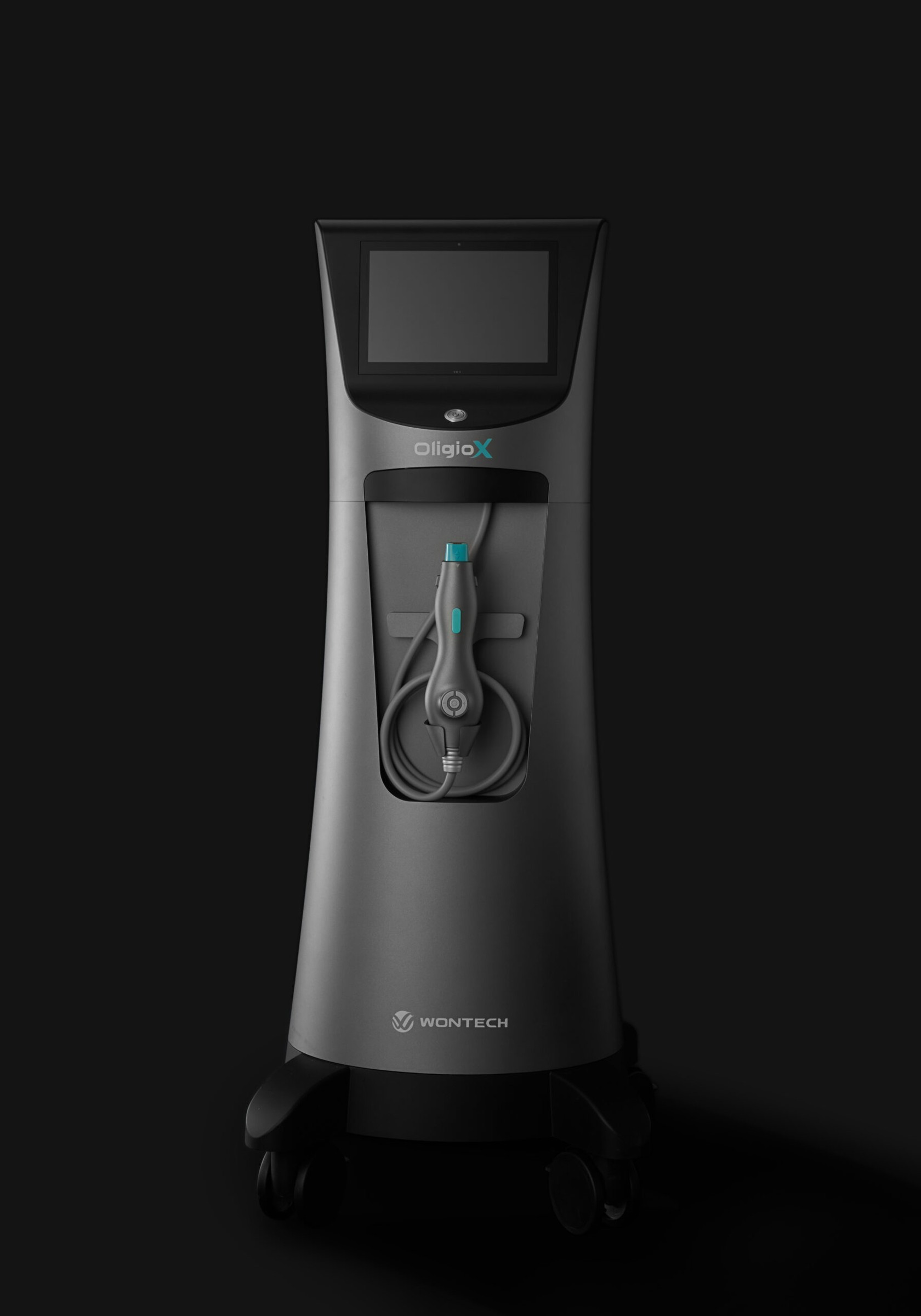
Oligio is one of the more recognized Korean RF lifting devices on the market. Not long after it launched, Wontech introduced Oligio X, positioned as an upgraded model. The name suggests a simple sequel, but the differences actually run deeper, touching how the device generates heat and how it manages that heat once it's created.
Two questions come up most often: cooling and power. These two elements aren't independent. They're tightly linked, so changing one reshapes the entire treatment experience. This article walks through that relationship piece by piece.
How does Oligio X relate to the original Oligio?
Oligio X belongs to the same device family as the original Oligio. It carries over the same core principle: RF energy is delivered beneath the skin to generate heat, and that heat triggers collagen renewal. Collagen works like a supportive scaffold under the skin, so when heat stimulation prompts new collagen to form, the skin gains more of its own structural support.
That said, Oligio X is introduced as an upgraded model with more refined hardware for generating and managing heat. Think of it as cooking on the same stove, but with a more precise heat dial and a better heat distribution pattern across the pan's surface. So it's more accurate to think of Oligio X as an additional option layered on top of the original Oligio rather than a straight replacement for it.
How did the cooling change?
In RF lifting, cooling isn't a minor add-on. It's a core part of the treatment itself. Keeping the skin surface cool while precisely heating the dermis underneath is what allows collagen stimulation without burns. If the surface heats up too, pain intensifies and the risk of burns rises along with it.
Oligio X is described as having a strengthened cooling system compared to its predecessor. From the moment the tip touches the skin, cooling engages more tightly, extending the window during which the surface stays at a lower temperature. When the surface stays reliably cool, practitioners can push higher energy levels while patients tend to feel relatively less pain. That's where the idea that cooling and power move together as a pair comes from.
A useful comparison is a heat-resistant pad added to the handle of a hot frying pan. The pan itself may run at the same heat or even hotter, but if the handle stays cool, your hand feels less of that heat. Oligio X's enhanced cooling plays a similar role.
Does better cooling allow higher power?
Better cooling alone doesn't automatically make a treatment more effective. Since collagen stimulation ultimately comes down to the heat energy delivered to the dermis, a wider power range is what allows the energy to be tailored to different skin conditions.
Oligio X is reported to be designed for stronger energy delivery than the original model. But higher power isn't automatically better. In areas where skin is thin or sensitive, lower power can actually be the safer choice, which is exactly why a wider power range matters so much. It means practitioners can fine-tune energy levels to match the specific area and skin condition.
This is where the point connects with the strengthened cooling. Because the surface stays reliably cooled, there's more room to try higher power settings while keeping surface damage risk relatively low. On the flip side, raising power without adequate cooling only increases pain and risk together.
G mode and X mode, chosen by area
Two names come up often when explaining Oligio X: G mode and X mode. Think of it as a single device housing two distinct heat delivery approaches, which the practitioner selects based on need.
G mode is described as using relatively gentle heat to warm the upper dermis, closer to a slow, sustained delivery of heat. X mode, by contrast, is described as delivering stronger heat targeted at the deeper dermis. The two modes are aimed at different depths and intensities.
The reason for splitting the modes is straightforward. Skin thickness and the degree of sagging vary across different areas of the face, so choosing a different intensity for each area tends to be safer and more efficient than pushing the same intensity across the entire face. Using the same power on a thicker area like the cheeks and a thinner one like the eye area can leave one under-treated and the other over-treated.
What changed and what stayed the same in Oligio X
Placed side by side, the two devices show clear overlaps and clear differences. Here's a summary.
- Energy delivery principle: Both models rely on the same principle of heating the dermis with RF energy to trigger collagen renewal. The underlying lifting mechanism doesn't change between device generations.
- Cooling system: Oligio X is introduced with a strengthened cooling structure. The improvement is aimed at holding surface temperature more steadily to ease the pain burden.
- Power range: Oligio X offers a wider power range along with the G/X dual mode. This comes down to having more options for choosing different intensities by area.
- Basic treatment flow: Moving the tip across the face in a grid pattern to deliver energy is a similar core process for both devices. The fundamental treatment method for lifting devices doesn't change much even across generations.
Seen this way, Oligio X isn't a completely different treatment. It's more natural to understand it as a model that refines two axes, cooling and power, more precisely while keeping the same underlying principle.
Is Oligio X less painful?
The biggest question when considering any treatment is usually pain and recovery time. Because of the strengthened cooling, people who've had Oligio X often report that even the same energy level felt relatively less hot. That tracks as a natural result of the surface being cooled more effectively.
That said, pain can vary considerably depending on individual skin sensitivity, the treatment area, and the power level a practitioner chooses. Even on the same device, raising the power increases stimulation accordingly, so better cooling doesn't mean pain disappears entirely.
Downtime follows a similar pattern. Swelling and redness are reported to settle within a few days, similar to the original Oligio, but recovery speed varies from person to person. How quickly tissue responds to heat stimulation and settles afterward differs by individual.
What to ask at your clinic consultation
A newer device doesn't automatically mean a better outcome. Instead, confirming a few things during your consultation can make your expectations much clearer.
- Ask which model the clinic uses and at what power range. Even devices with the same name can be run at different intensities and settings depending on the clinic.
- It helps to discuss during the consultation which mode, G or X, suits your skin thickness and degree of sagging, or how the two might be combined. Different areas have different tissue conditions, which calls for different depths of heat.
- If you've had other RF or ultrasound lifting treatments before, it's worth mentioning that history. A recent treatment history can change how your tissue responds to heat stimulation.
Going through these steps, whether you choose Oligio X or the original Oligio, brings you closer to the option that actually fits your skin.
References
Korean Dermatological Association, American Academy of Dermatology (AAD), and Ministry of Food and Drug Safety (MFDS).
Was this helpful?
About this article
Written by a practising aesthetic physician and intended for general education — not a substitute for individual medical advice.
Read next
Oligio Versus Thermage: Differences, Plus Oligio X Cooling Compared
What Oligio is as a monopolar RF device, where it stands relative to Thermage in the same RF family, how solid its dedicated clinical evidence is, what changed with Oligio X, and who benefits most, examined without exaggeration.
By Dr. Kim
Eye Shurink, Eye Thermage and Eye Oligio: Differences and Effects Compared
Eye Shurink, Eye Thermage and Eye Oligio are the three names that come up most often for eye area lifting, and they work through two different kinds of energy: ultrasound and radiofrequency. Here is how each one actually works on the delicate skin around the eyes, and which one fits which concern.
By Dr. Lee
Air Subcision and Needle Subcision: Differences and Pain Compared
Air subcision uses compressed air to push a cannula through skin and release the fibrous bands tethered beneath a scar. Needle subcision aims for the same goal by hand, but the way force is delivered, and how it feels against the tissue, is different. Here is how the two methods actually compare, principle by principle.
By Dr. Kim