Niacinamide Benefits: How It Brightens and Repairs the Barrier, and the Right Concentration
By Dr. Lee6 min read
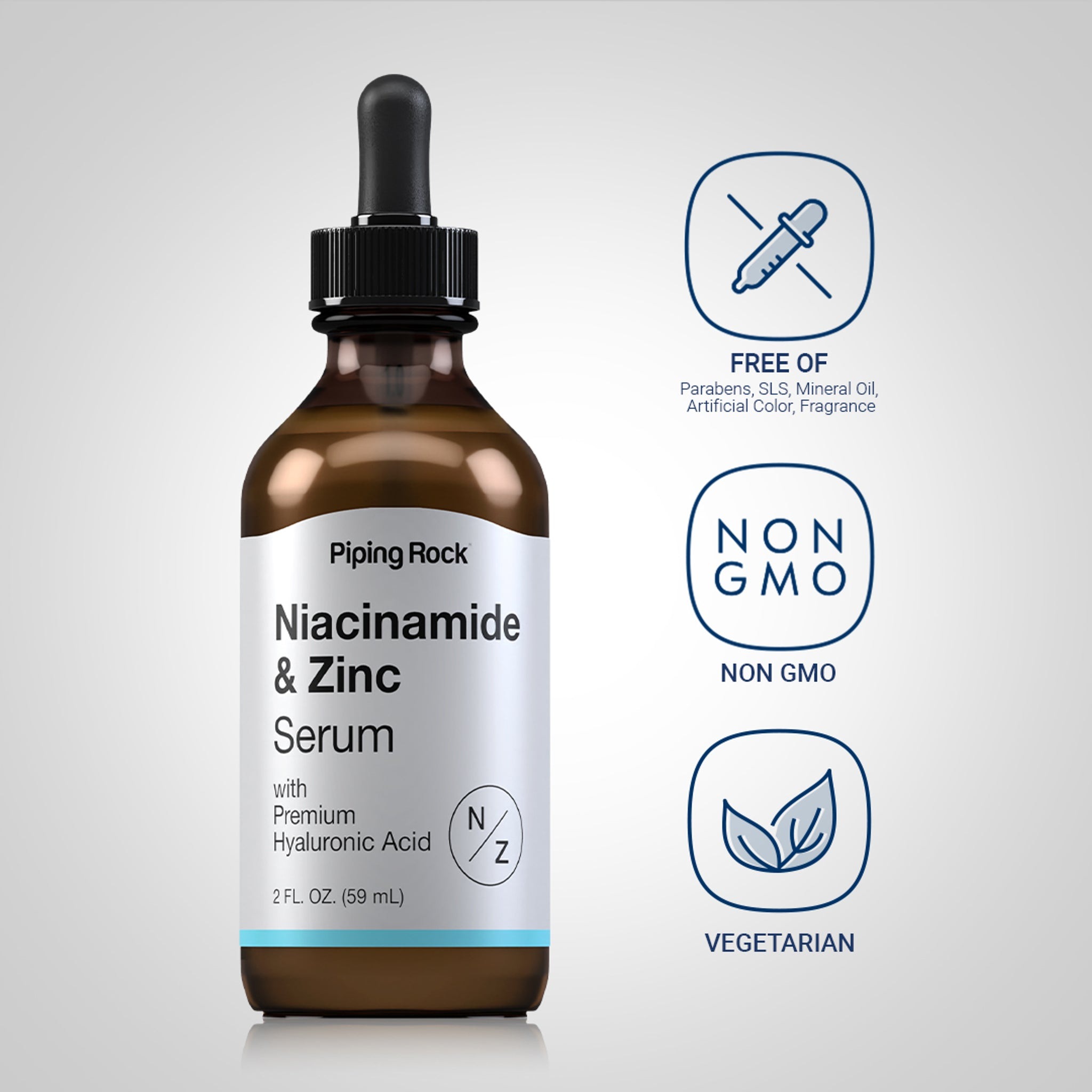
Scan almost any ingredient list and niacinamide turns up again and again. It is in brightening essences, in calming creams, and even in products aimed at breakouts. When one ingredient shows up in that many categories, it is fair to wonder if it is just being marketed as a cure-all.
The truth is niacinamide earns its spot in all three because it genuinely works through two separate pathways in the skin. One slows down how pigment travels once it has already formed, and the other helps rebuild the protective barrier that wraps around every skin cell. Both are worth understanding on their own terms, so let's go through them one at a time.
What kind of ingredient is niacinamide?
Niacinamide is one of the active forms of vitamin B3, a nutrient the body relies on to convert food into usable energy. Once niacinamide enters a cell, it gets converted into NAD+ and NADP+, two coenzymes that show up in energy production and metabolism all over the body.
Skin cells run on the same fuel. When niacinamide is applied topically, it essentially tops up the raw material cells use to manage pigment and to build barrier lipids. It is not a single-target ingredient aimed at one specific complaint. It is closer to a resource that gives skin cells more to work with across several jobs at once, which is exactly why it ends up doing more than one thing.
How does melanin leave color in the skin?
Melanin, the pigment that determines skin tone, is produced inside specialized cells called melanocytes. When it is first made, it sits packaged inside tiny pouches called melanosomes, essentially small containers holding pigment.
The problem is that melanosomes do not stay put. They get handed off to nearby keratinocytes, the cells that make up the visible surface of the skin. Think of it like packages leaving a distribution center and arriving at individual homes: pigment travels from melanocytes to surface cells in much the same way. Once enough of that delivered melanin builds up in the surface cells, it shows up as the dark spots, patches, and dullness we actually notice.
How it slows the delivery of pigment packages
Niacinamide does not stop melanin from being produced in the first place. Instead, research points to it acting on that delivery step, the handoff where melanosomes move from melanocytes into keratinocytes, and slowing it down.
At the point where melanocytes and keratinocytes meet, there is a specific signaling pathway the two cell types use to communicate, and niacinamide appears to interfere with that pathway, reducing the speed of transfer. Back to the delivery analogy: it is not blocking packages from being made, it is slowing the trucks leaving the warehouse. Slower delivery means less pigment accumulates in the surface cells, which gives visible discoloration room to fade.
Why do pigmentation and the barrier break down together?
Pigmentation and barrier health look like unrelated topics at first glance. One is about color, the other is about hydration and protection. In real skin, though, the two are frequently tangled together.
A weakened barrier tends to react more easily to UV exposure and outside irritants, and when that reaction ramps up inflammatory signaling, melanocytes can pick up on it and start producing more pigment. In other words, skin with a compromised barrier tends to develop discoloration more easily and hold onto it longer. That is exactly why fading pigment on its own is not the whole story, and why an ingredient like niacinamide, with both pathways built in, matters here.
The pathway that increases ceramides
The outermost layer of skin is often compared to a brick wall, with mortar holding the bricks together. Keratinocytes are the bricks, and ceramide, along with other lipids, is the mortar filling the gaps between them. When there is enough of that mortar, the wall stays sealed, moisture stays in, and irritants stay out.
Research suggests niacinamide supplies keratinocytes with material they need to synthesize ceramide and other lipids. The enzymes responsible for building lipids inside cells use niacinamide as a coenzyme along that metabolic pathway. More raw mortar means fewer gaps in the wall and, over time, a tighter barrier. Studies following skin treated consistently with niacinamide for 4 to 12 weeks have reported increased lipid content in the stratum corneum along with reduced transepidermal water loss.
Does redness calm down once the barrier is restored?
Skin with a weakened barrier lets irritants slip through the gaps in the stratum corneum more easily, and that irritation often triggers blood vessels to dilate, which is what shows up as flushing or a burning sensation on the face. Once ceramide levels rise and those gaps close up, there is simply less of a path for irritants to get in, which can bring redness and burning down as a result.
That chain breaks down into three parts.
- More ceramide means fewer gaps in the stratum corneum, so fewer irritants get through. Less irritation getting in means less reason for blood vessels to dilate.
- Lower transepidermal water loss means the skin surface dries out and cracks less often. Cracks are a weak point that invites irritation, so fewer of them tends to mean fewer sensitive reactions.
- Niacinamide has also been reported to reduce the release of inflammatory signaling molecules. Even when irritation does get in, the body's response to it is somewhat muted, which can help redness fade rather than linger.
The right concentration is 2 to 5%: start low
Niacinamide is not an ingredient where higher concentration automatically means a bigger effect. Most formulations use somewhere between 2% and 5%, and several studies within that range report both pigment improvement and barrier benefits together.
Going too high can actually trigger burning or flushing, according to some reports. If the barrier is already compromised or skin runs sensitive, it makes sense to start at a lower concentration, give it 2 to 4 weeks to see how skin responds without irritation, and only then move up gradually. First-time users generally do fine starting around 2% and watching how their skin reacts from there.
Can you use it with other brightening ingredients?
Because niacinamide works by slowing melanin's delivery rather than blocking pigment production itself, it targets a different point in the process than ingredients that suppress melanin synthesis directly. Combining the two can mean targeting two separate stages at once, which some research suggests works well together.
That said, layering several brightening ingredients at once can add up to more irritation than skin can comfortably handle. When introducing something new, it is safer to add one ingredient at a time and watch how skin responds, rather than stacking several changes at once.
References
Korean Dermatological Association, Ministry of Food and Drug Safety (MFDS), American Academy of Dermatology (AAD), and U.S. Food and Drug Administration (FDA).
Was this helpful?
About this article
Written by a practising aesthetic physician and intended for general education — not a substitute for individual medical advice.
Read next

Niacinamide: Benefits and the Right Concentration, Plus What to Use It With
Niacinamide (vitamin B3) does a lot for skin, from strengthening the barrier and fading dark spots to calming acne and controlling oil. Here is how it actually works, which concentrations the research supports, and whether it really clashes with vitamin C or retinol.
By Dr. Kim
Sensitive Skin Redness: Causes, Barrier and Vessel Problems, and Care
Redness from sensitive skin is not the same as a healthy flush. It comes from two things happening together, a thinning barrier that lets irritants in more easily and blood vessels that overreact once they do. Understanding both makes the path to care clear.
By Dr. Lee
Density RF Effects: How Many Sessions and How Long Do Results Last?
Density RF pairs two radiofrequency modes with very different personalities to chase two goals at once: the instant tightening you feel right after treatment, and the collagen renewal that builds slowly over the following 4 to 12 weeks. Here is why two modes are needed, the order in which heat actually works inside the skin, and why the treatment is spread across multiple sessions instead of done all at once.
By Dr. Kim