Niacinamide: Benefits and the Right Concentration, Plus What to Use It With
By Dr. Kim7 min read

Niacinamide is one of those rare skincare ingredients backed by solid research and genuinely broad utility. It strengthens the skin barrier, brightens tone, minimises pores, calms redness, and controls oil, all at the same time. And it is gentle enough that even sensitive skin usually handles it well.
That combination of multi-tasking ability and low irritation potential is what makes it such a popular first active ingredient. It also plays nicely with vitamin C, retinol, and most other actives. This is a look at how it actually works, what the research numbers say about brightening, barrier repair, and pore size, and how to choose a concentration that suits your skin.
Why does one ingredient have several effects?
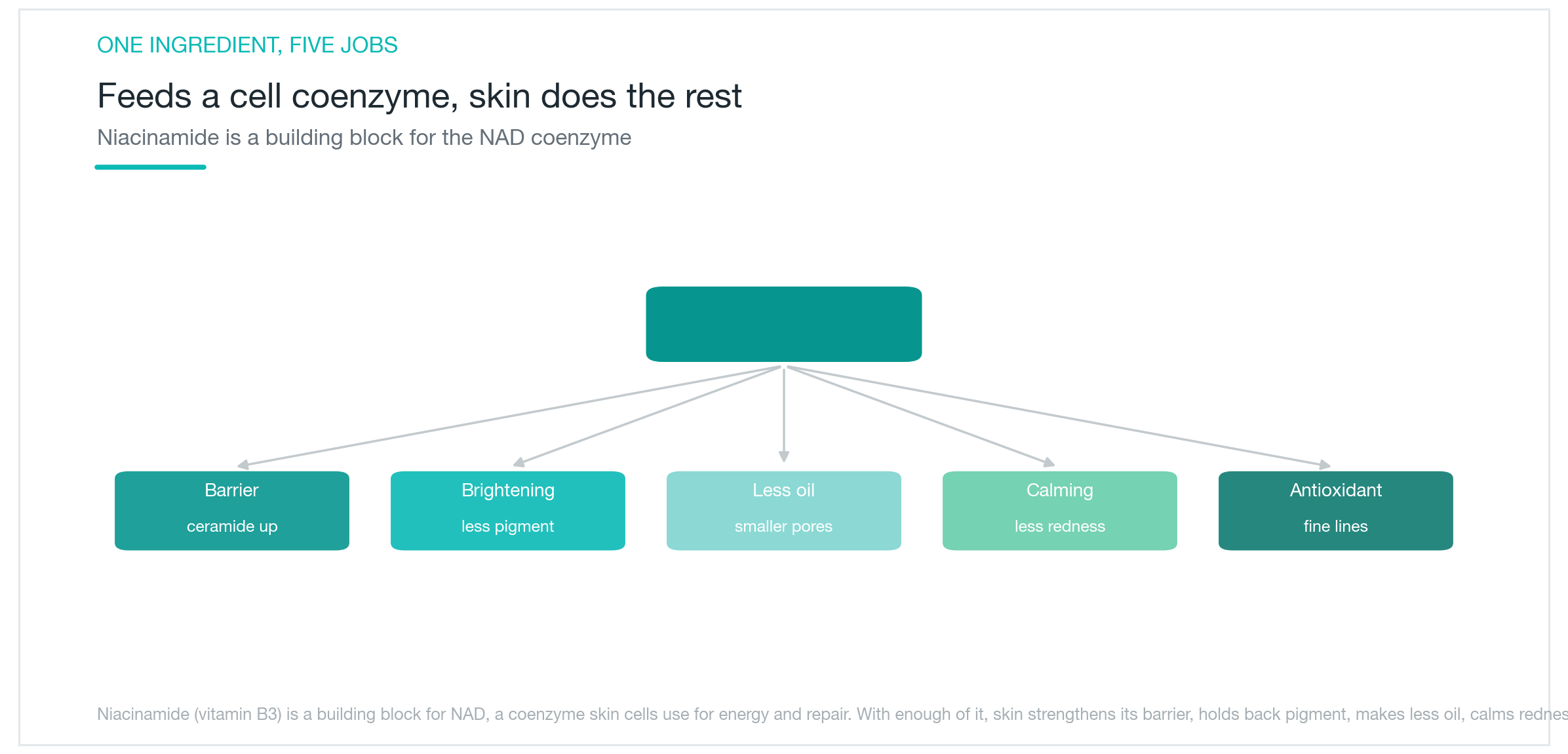
All of niacinamide's benefits trace back to one mechanism. Inside skin cells, it serves as a building block for NAD, a coenzyme central to energy metabolism. When cells have enough NAD to work with, they perform their normal functions more efficiently, and that shows up across several different areas of skin health.
There are five main effects. First, it increases the synthesis of lipids like ceramide, which strengthens the skin barrier and reduces water loss. Second, it blocks the transfer of melanin-loaded packages (melanosomes) from pigment-producing cells to the skin's surface, which evens tone. Third, it reduces sebum production, which helps with pore appearance. Fourth, it dials down inflammatory signals, easing acne and redness. Fifth, it has antioxidant activity that contributes to smoother texture and firmer-looking skin over time.
These five effects make niacinamide useful for a wide range of skin concerns, often at the same time. Dry or reactive skin gets barrier support. Dull or uneven skin gets brightening. Oily skin gets sebum regulation. Getting all of that from one simple addition to a routine, backed by randomised controlled trials, is a hard combination to beat.
How does the brightening effect work?
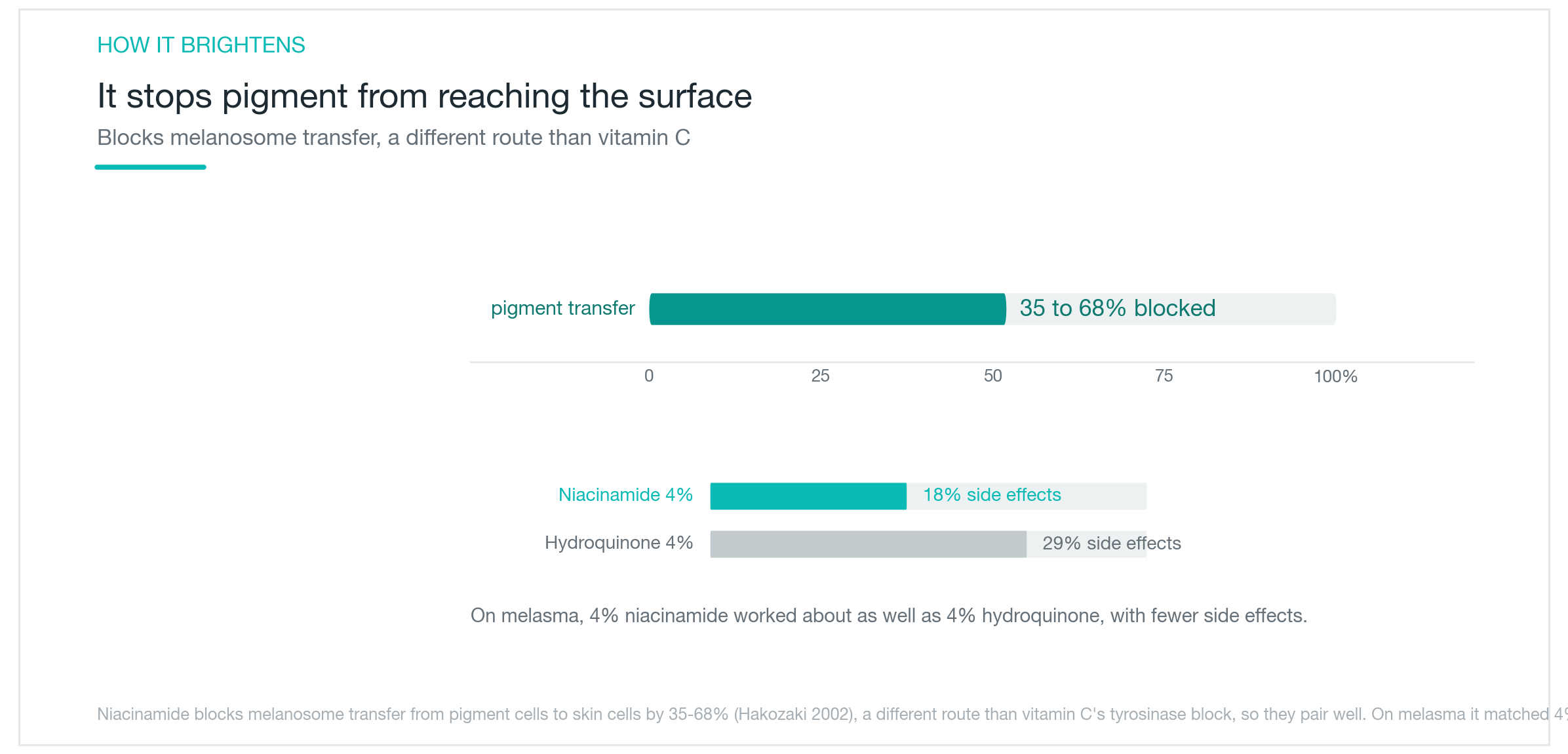
The mechanism is different from vitamin C, which is worth knowing. Vitamin C blocks the enzyme that makes melanin in the first place. Niacinamide works further down the line, interrupting the transfer of already-formed melanin packages (melanosomes) from pigment cells to the surrounding skin cells. Less melanin reaching the surface means a more even, brighter tone.
The research numbers are concrete. In cell studies, niacinamide reduced melanosome transfer by approximately 35 to 68 percent. A clinical study using 5% niacinamide for 8 weeks showed visible reduction in hyperpigmentation and overall brightening. In a melasma study, 4% niacinamide performed comparably to 4% hydroquinone in terms of lightening effect, with fewer side effects.
Because vitamin C and niacinamide work at different points in the pigmentation process, they complement rather than duplicate each other. One interrupts melanin production; the other blocks its delivery to the surface. Used together, they approach pigmentation from two angles simultaneously. And for anyone with skin too sensitive for harsher brightening treatments, niacinamide offers a genuinely gentle starting point.
Does it help the barrier, pores, and acne too?
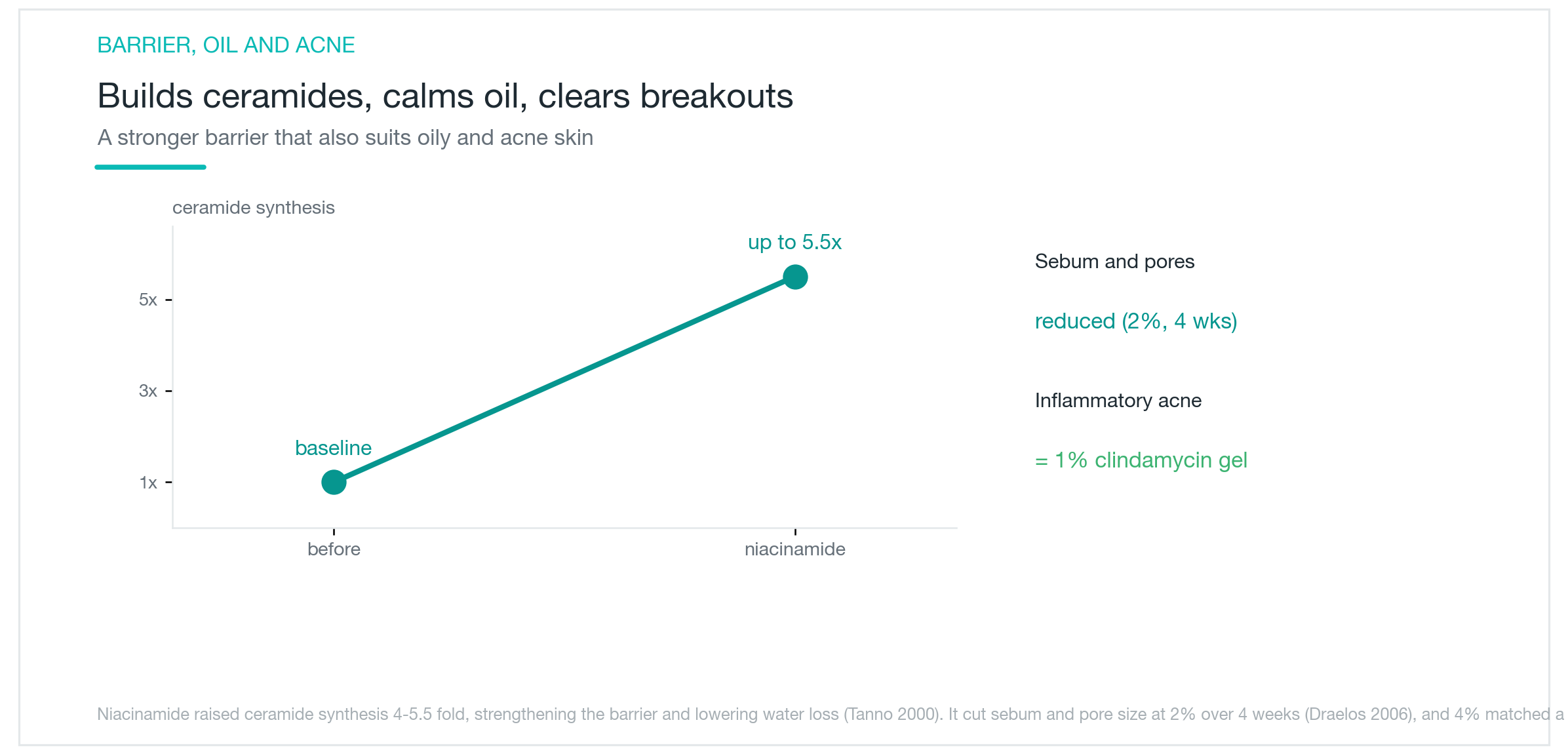
Barrier repair is one of niacinamide's strongest suits. The mechanism is direct: it increases synthesis of ceramide and other barrier lipids that keep skin hydrated and protected. In one study, ceramide synthesis increased by approximately 4 to 5.5 times, with a measurable reduction in water loss as a result. A stronger barrier means less sensitivity to environmental triggers and less of that tight, parched feeling after washing.
Pores and sebum respond well too. A study using 2% niacinamide for 4 weeks showed reduced sebum production and smaller-looking pores. Less oil on the surface also means pores appear less prominent. The fact that this was seen at the relatively low concentration of 2% makes it accessible even for skin that reacts to stronger actives.
For acne, an 8-week study found that 4% niacinamide gel produced comparable improvement in inflammatory acne lesions to clindamycin gel, a commonly prescribed antibiotic treatment. The added benefit: no risk of antibiotic resistance, which is a genuine concern with long-term antibiotic use. All of that together (barrier repair, pore refinement, and acne support) makes niacinamide a reasonable fit for most skin types.
Which concentration has been shown to work?
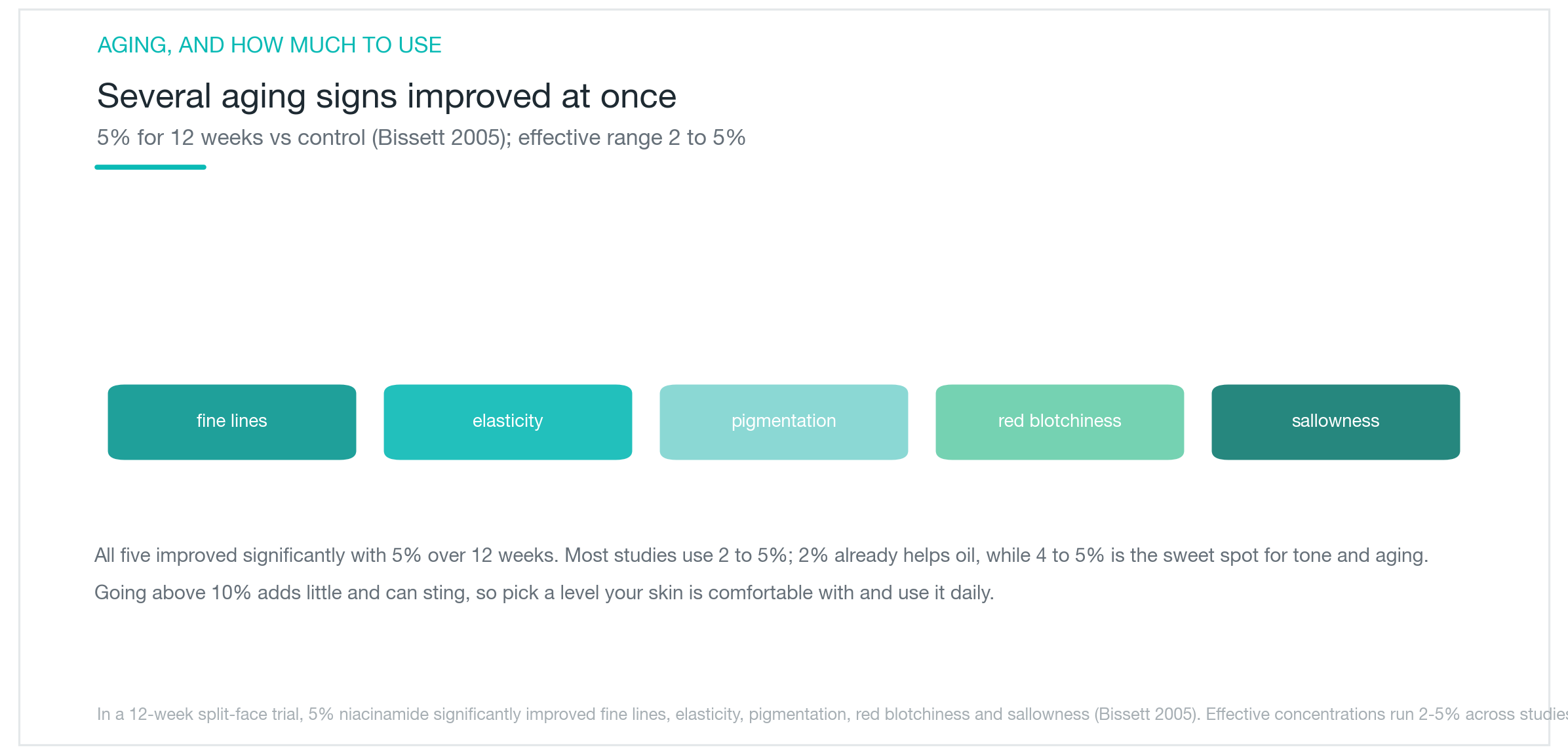
One well-designed study put several of niacinamide's effects to the test at once. In a double-blind, controlled trial on photoaged skin, 5% niacinamide applied for 12 weeks produced statistically significant improvements across multiple markers: reduced fine lines and wrinkles, improved elasticity, less hyperpigmentation, reduced redness, and a more even, less yellowish tone. That is a broad set of outcomes from a single ingredient.
As for concentration, most of the research showing meaningful results used concentrations between 2 and 5%. Sebum control was demonstrated at 2%. Brightening, anti-inflammatory effects, and signs of aging were more commonly studied at 4 to 5%. For most people, a product in the 4 to 5% range offers a good balance. For sensitive skin, starting at 2% still gets you real benefits.
Higher concentrations, around 10%, are available, but there is no clear evidence that they produce proportionally stronger results. There is a modest increase in the chance of temporary flushing at higher amounts. Consistency matters more than chasing the highest number. Most of the visible changes (brighter tone, more refined texture, calmer skin) take 8 to 12 weeks of regular use to become apparent, so patience is part of the formula.
Can you use it with vitamin C and retinol?
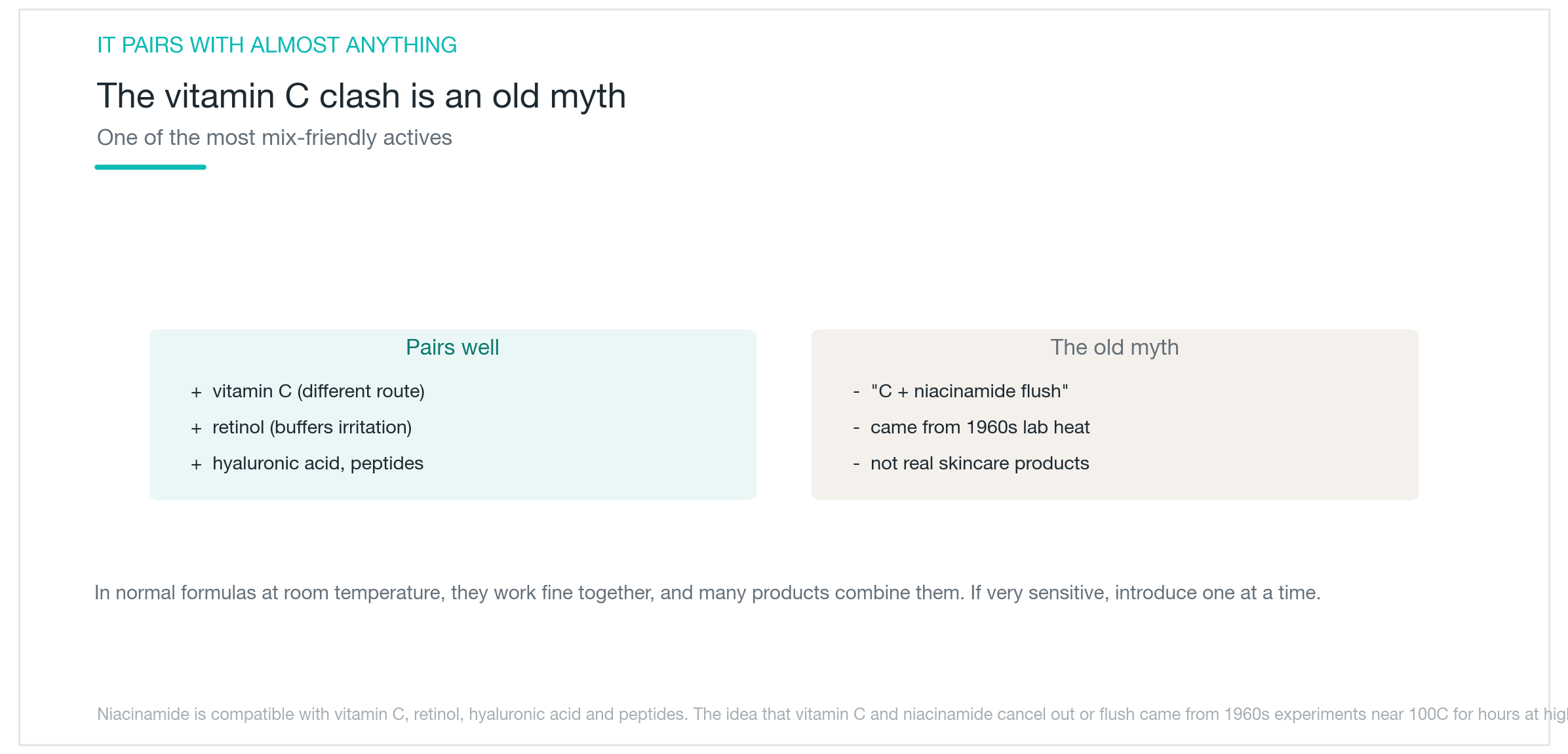
Generally, yes. There has been a long-running concern online that combining niacinamide and vitamin C produces a compound called nicotinic acid that causes flushing. That claim comes from a 1960s lab experiment conducted at temperatures close to 100 degrees Celsius, over several hours, using concentrations far higher than anything found in a real product. At room temperature and normal skincare concentrations, that reaction does not occur in any meaningful quantity.
In practice, the two ingredients complement each other well. Their brightening mechanisms are different and non-overlapping, and there are plenty of formulated products on the market that contain both. Niacinamide also pairs naturally with retinol: it helps reinforce the skin barrier, which can ease some of the initial irritation that retinol sometimes causes, making it easier for skin to adapt.
Niacinamide is compatible with nearly everything: vitamin C, retinol, hyaluronic acid, peptides, AHAs, and BHAs. If your skin is particularly reactive, introducing one new ingredient at a time and watching how it responds is always a sensible approach. But there is no science-backed reason to treat niacinamide as a problem ingredient that needs to be kept separate.

How to start if you're new to it
Niacinamide suits nearly every skin type. Dry or reactive skin benefits from the barrier effect. Dull or uneven skin sees brightening. Oily skin gets sebum regulation. For anyone who has found other active ingredients too irritating, niacinamide gives you real, research-backed results without the sensitivity trade-off.
Application is uncomplicated. Morning or evening works equally well. Apply it after cleansing, either as a serum or before your moisturiser. It is gentle enough for twice-daily use, and it layers well with other products. If you are starting out, a 4 to 5% product once a day is a reasonable entry point. Increase frequency as your skin adjusts.
The changes are gradual but cumulative. With consistent daily use over 8 to 12 weeks, most people notice a brighter tone, smoother texture, and calmer skin overall. It is the kind of ingredient you can use long-term without worrying about irritation, and it keeps getting along with whatever else you add to your routine over time. If you want to build up to vitamin C or retinol eventually, niacinamide makes a solid foundation to start from.
Was this helpful?
About this article
Written by a practising aesthetic physician and intended for general education — not a substitute for individual medical advice.
Read next
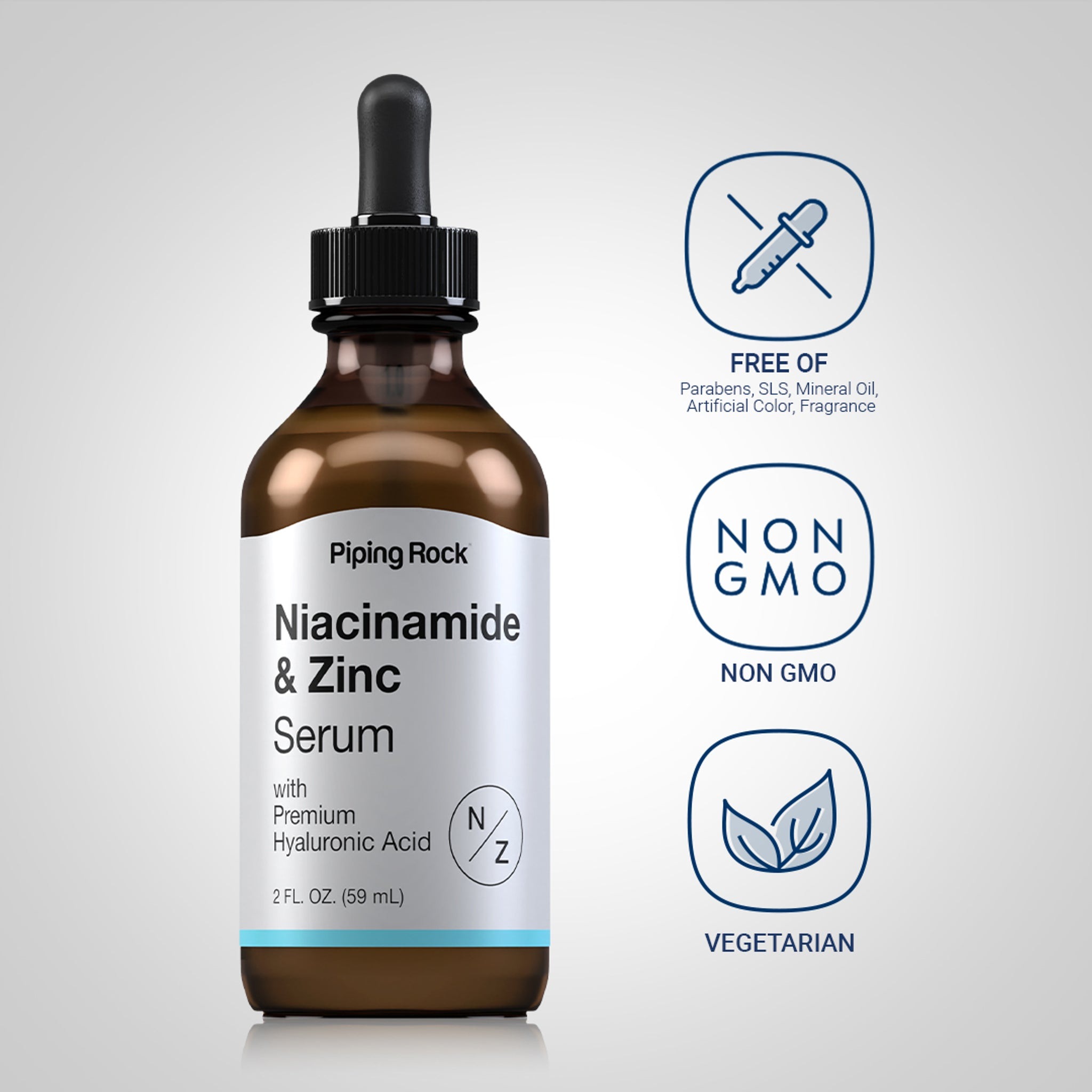
Niacinamide Benefits: How It Brightens and Repairs the Barrier, and the Right Concentration
Niacinamide works by blocking the path melanin travels along, fading discoloration, while also helping skin produce more ceramide, the lipid that keeps the barrier intact and calms redness and sensitivity. Here is how both effects happen at once, and what concentration actually makes sense.
By Dr. Lee
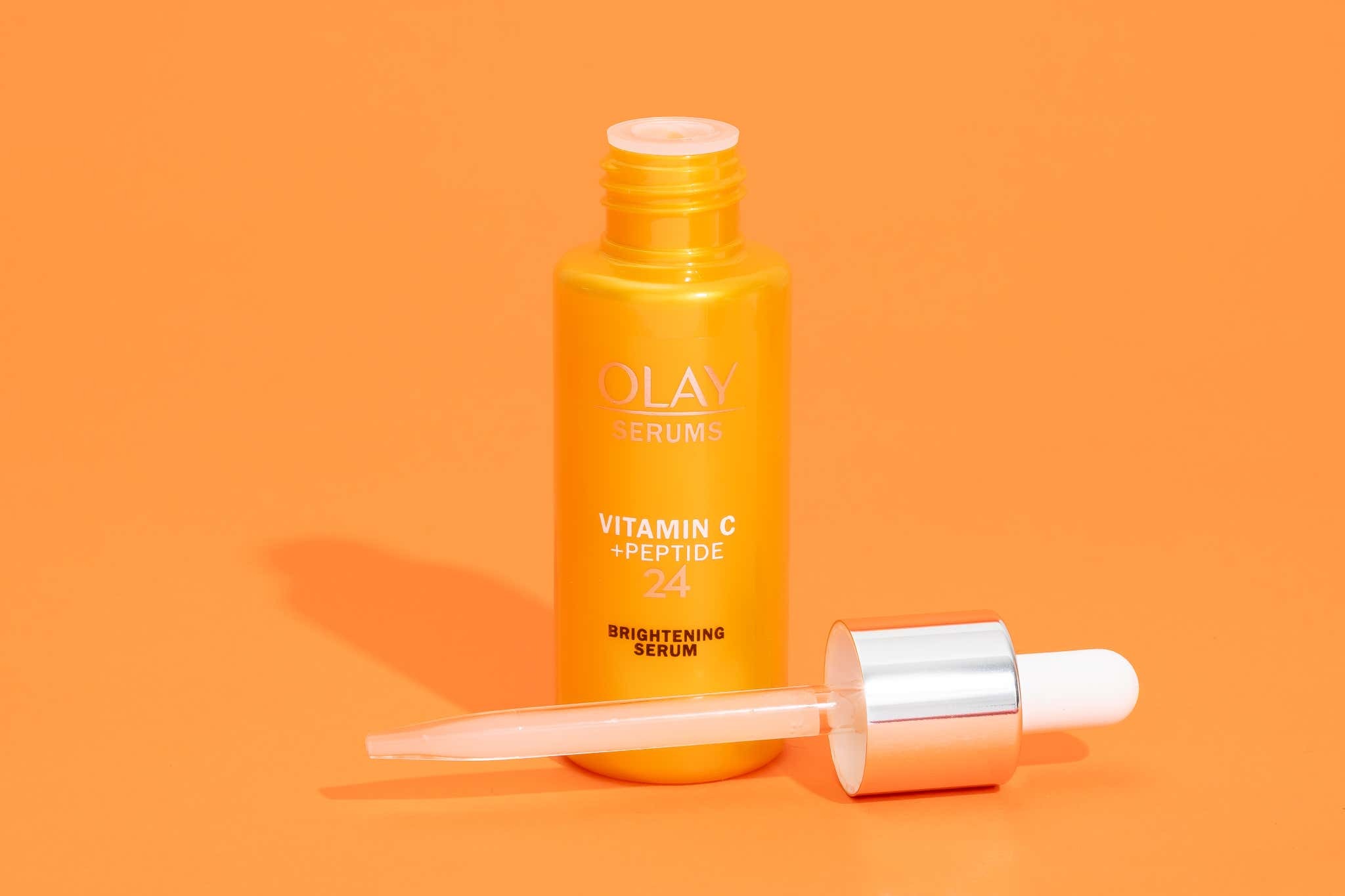
Does Vitamin C Serum Work on Spots and Firmness?
Vitamin C serum has a reputation for fading dark spots and firming skin, but it also carries a warning label: it oxidizes fast and loses potency once it does. This piece walks through how vitamin C actually curbs melanin and protects collagen, why the molecule is so unstable to begin with, and how to pick a formula that gets around the problem.
By Dr. Lee
Nasolabial Fold Treatment: Which Is Right for You, Filler or Thread Lift?
Whether your nasolabial folds come from sagging, lost volume, or aging skin decides whether filler, thread lifting, or a collagen stimulator is the right call. Here is what actually works for each cause, how long the results hold, and how to stay safe around the vessels beside the nose, all explained simply with real study numbers.
By Dr. Lee