Neck Lifting With RF, Ultrasound, and Threads: Differences and Results by Cause
By Dr. Lee7 min read
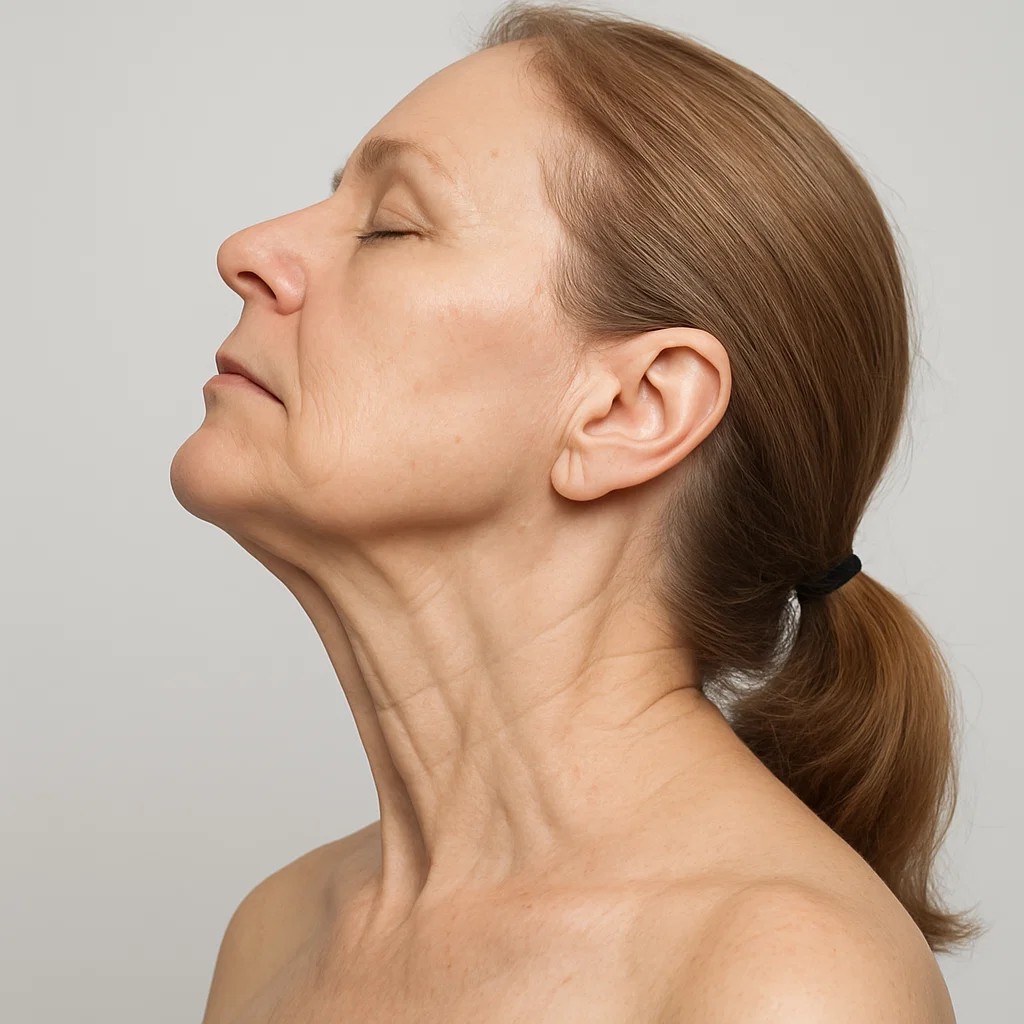
The first question that comes up when you start thinking about a neck lift is which treatment to choose. RF options like Thermage, ultrasound options like HIFU, and thread lifting all address neck sagging, but they work on different layers and in different ways. Which one actually fits depends on what is causing the sagging in the first place. The approach changes depending on whether the skin itself has thinned and stretched, or whether the fascia or muscle underneath has separated. Here is how each of the three treatments works in the neck, layer by layer, and which one tends to fit which cause.
Why does the neck sag differently from the face?
Neck skin is thinner than facial skin to begin with. In some spots it is only about half the thickness, so once sagging starts, it shows up faster than it does on the face. On the face, a fascial layer called the SMAS, a thin membrane wrapping under the skin that holds fat and muscle in place, provides firm support for fat and muscle. The neck has a comparatively weaker version of this support structure.
On top of that, a thin, wide muscle called the platysma stretches across the neck from side to side. When this muscle is taut, the neckline looks smooth, but as it loosens with age and separates down the middle, two vertical bands often become noticeable. In other words, neck sagging happens because skin, fat, fascia, and muscle, several different layers, weaken at different rates. So instead of expecting one treatment to fix everything, the first step is figuring out which layer has weakened the most.
When only skin elasticity is lost
The most common pattern is a simple loss of elasticity in the skin. As collagen and elastin, the elastic fibers that keep skin firm, gradually decline with age and sun exposure, neck skin can crepe like thin paper and develop horizontal lines. It helps to think of this as a case where the muscle and fascia are still fine and only the surface elasticity has been lost.
This pattern tends to show more horizontal fine lines than vertical bands, and if you gently pull the skin under the chin, the lines often smooth right out. It is a bit like an old sweater whose surface has pilled from wear, the yarn itself, the underlying structure, is still intact, only the surface texture has worn thin. The support structure beneath the skin is still there, and only the surface has weakened.
When split muscle causes vertical lines
The second pattern comes from the platysma separating down the middle, which shows up as vertical bands. This muscle normally runs from both sides toward the front of the neck like a thin sheet. As the connection between the two halves loosens with age, a gap opens in the center and appears as a vertical groove. This is where what is commonly called turkey neck comes from.
This is not just a surface skin issue, the cause sits in the muscle itself, so stimulating the skin alone does not smooth the vertical bands out very well. It is similar to an old rubber band that has lost its elasticity, pulling it taut just makes it sag again, because the tension in the muscle layer itself has dropped. For this pattern, you need to work a layer deeper than the skin before you see much change.
How deep does radiofrequency heat reach?
Thermage works by passing RF energy, heat generated by resistance as electrical current passes through tissue, into the skin to heat the dermis. When the heat reaches the dermal collagen, the collagen structure contracts immediately, and new collagen forms gradually over the following months, restoring elasticity over time. Because the tip cools the skin surface at the same time, deep heat can be delivered without burning.
The depth Thermage heats runs mainly from the dermis to the upper subcutaneous fat, a shallower layer than the platysma muscle mentioned earlier. That makes it especially useful for the crepey, thinned pattern where surface elasticity has dropped. It has relatively less effect on vertical bands caused by a separated muscle. It is a bit like ironing, ironing smooths out surface wrinkles in fabric, but it cannot fix a stretched-out seam in the fabric itself.
Does ultrasound reach the fascia and muscle?
HIFU focuses ultrasound energy on a single point to create an instant burst of high heat right at that spot. What sets it apart from RF is that this focal point can be adjusted to any target depth, from below the dermis down through the fascia and into the muscle. At each point the focus reaches, a tiny thermal coagulation point forms, and the tissue around it contracts immediately before collagen fills in afterward.
Because the focal point can be lowered all the way to the fascia or muscle layer, HIFU works more directly on cases where the platysma has separated and formed vertical bands. It stimulates the muscle layer itself with heat to help restore its tension. That said, neck skin is thin, so setting the focal depth incorrectly can end up stimulating deeper than necessary, and providers are typically advised to set the depth more conservatively than they would on the face.
How do thread lifts work on the neck?
Thread lifting places threads with small hook-shaped barbs under the skin to physically catch and pull the tissue. The layer these threads pass through is usually the shallow subcutaneous fat, sitting shallower than RF or HIFU. That means the visible change right after the procedure comes on fast, but the range the pulling force reaches is relatively localized.
Neck skin is thinner than facial skin and moves more, so placing threads too densely leaves more room for visible marks or bumpiness than it would on the face. Because of this, thread lifting in the neck is more often used to support mild sagging than as a standalone treatment. The threads dissolve over time and collagen fills in where they were, the same principle as on the face, but in the neck, the number and depth of threads are typically kept more conservative.
How the treatment combination changes by cause
Neck sagging more often comes from several weakened layers together than from a single cause. In practice, providers typically match the approach to the specific cause below, and combine two or more when needed.
- Skin has thinned and loosened alone: An RF-focused approach works well here, since heating dermal collagen is well suited to restoring surface elasticity.
- Platysma bands are prominent: An ultrasound-focused approach fits better, since the focal point can reach the fascia and muscle layer, the actual source of the vertical bands.
- Sagging is mild and localized: Thread lifting can serve as a supporting treatment, since the threads pull tissue immediately and produce visible change quickly.
- Several layers have weakened together: RF and HIFU are often combined or staggered over time, since each layer responds to a different type of stimulation and no single treatment covers everything.
Aftercare and precautions
Neck skin is naturally thin and sensitive, so a few basics are usually recommended regardless of which treatment you choose. Sun protection is said to help slow the rate at which collagen breaks back down, so it is worth keeping up consistently.
For the first few days after a procedure, it is generally recommended to avoid rubbing the neck hard or massaging it aggressively, since tissue or threads that have not settled yet can shift under pressure. New collagen takes several months to fully form, so it is natural to give it time and avoid judging the result too soon.
Depending on which treatment was done, some swelling or stiffness can linger for a few days. During that period, keeping the neck in a relaxed position rather than bending or tilting it sharply for long stretches is generally advised to help the tissue settle properly.
References
Korean Dermatological Association, American Academy of Dermatology (AAD), and Ministry of Food and Drug Safety (MFDS).
Was this helpful?
About this article
Written by a practising aesthetic physician and intended for general education — not a substitute for individual medical advice.
Read next
Eye Shurink, Eye Thermage and Eye Oligio: Differences and Effects Compared
Eye Shurink, Eye Thermage and Eye Oligio are the three names that come up most often for eye area lifting, and they work through two different kinds of energy: ultrasound and radiofrequency. Here is how each one actually works on the delicate skin around the eyes, and which one fits which concern.
By Dr. Lee

Double Chin Treatment: Which Method Fits Fat or Sagging?
Whether your double chin comes from excess fat or from sagging skin and fascia determines which treatment should come first: deoxycholic acid injections, RF devices like INMODE, thread lifting, or HIFU. We break down what real studies show and why diagnosing the cause matters most.
By Dr. Kim

Nasolabial Fold Treatment: Which Is Right for You, Filler or Thread Lift?
Whether your nasolabial folds come from sagging, lost volume, or aging skin decides whether filler, thread lifting, or a collagen stimulator is the right call. Here is what actually works for each cause, how long the results hold, and how to stay safe around the vessels beside the nose, all explained simply with real study numbers.
By Dr. Lee