Toenail Fungus Laser: Effectiveness, Cure Rate, and Number of Treatments
By Dr. Lee8 min read
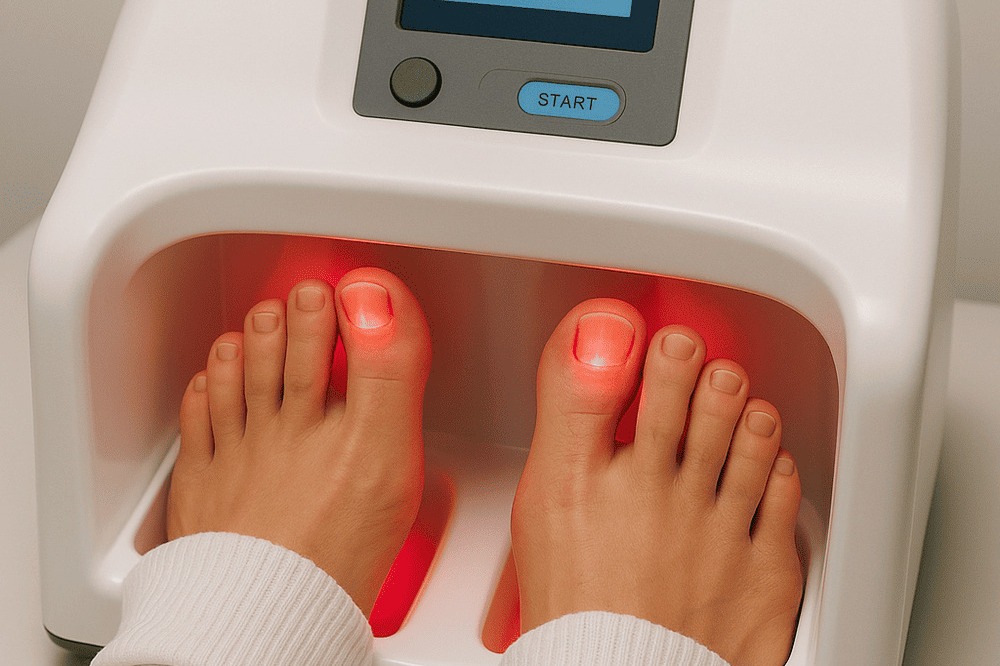
If a nail is turning yellow, growing thicker, and starting to crumble, it is likely onychomycosis, or nail fungus. The fungus has settled in beneath the nail itself, so topical treatment alone often falls short, leaving many people dealing with it for years.
Oral medication is the standard treatment, but liver enzyme levels or interactions with other medications can make it a difficult option for some. Laser has emerged as an alternative in those cases, using light that penetrates the nail and delivers heat to the fungus hiding underneath. Here is a full breakdown, backed by real study numbers, of how the laser reduces fungus, how its cure rate compares with oral and topical treatments, how many sessions it takes, and how to prevent relapse. Even long-standing nail fungus can be managed well once you understand the right approach.
Why does toenail fungus form and how does it spread?
Nail fungus develops when fungal organisms work their way into the nail. The main culprit is usually dermatophytes, often called ringworm fungi, which feed on keratin, the protein that makes up nails. Because the fungus spreads beneath the nail and between the nail layers, topical medication applied to the surface struggles to reach it.
Once fungus takes hold, the nail gradually deteriorates. It turns yellow or cloudy white, grows thicker, and the edges start to crumble. Debris can build up underneath the nail, sometimes causing it to lift away from the nail bed.
Toenails are affected far more often than fingernails. Feet stay warm and damp inside shoes, and toenails are thicker, both of which create ideal conditions for fungus to thrive. Left untreated, it can spread to neighboring nails or the sole of the foot, and a thickened nail pressing on the surrounding tissue can lead to pain or a secondary bacterial infection.
| Type | Features |
|---|---|
| Distal subungual | Most common, starts at the tip and sides |
| White superficial | White patches on the nail surface |
| Proximal subungual | Starts near the nail root |
| Total dystrophic | Entire nail thickened and deformed |
How does laser kill the fungus?
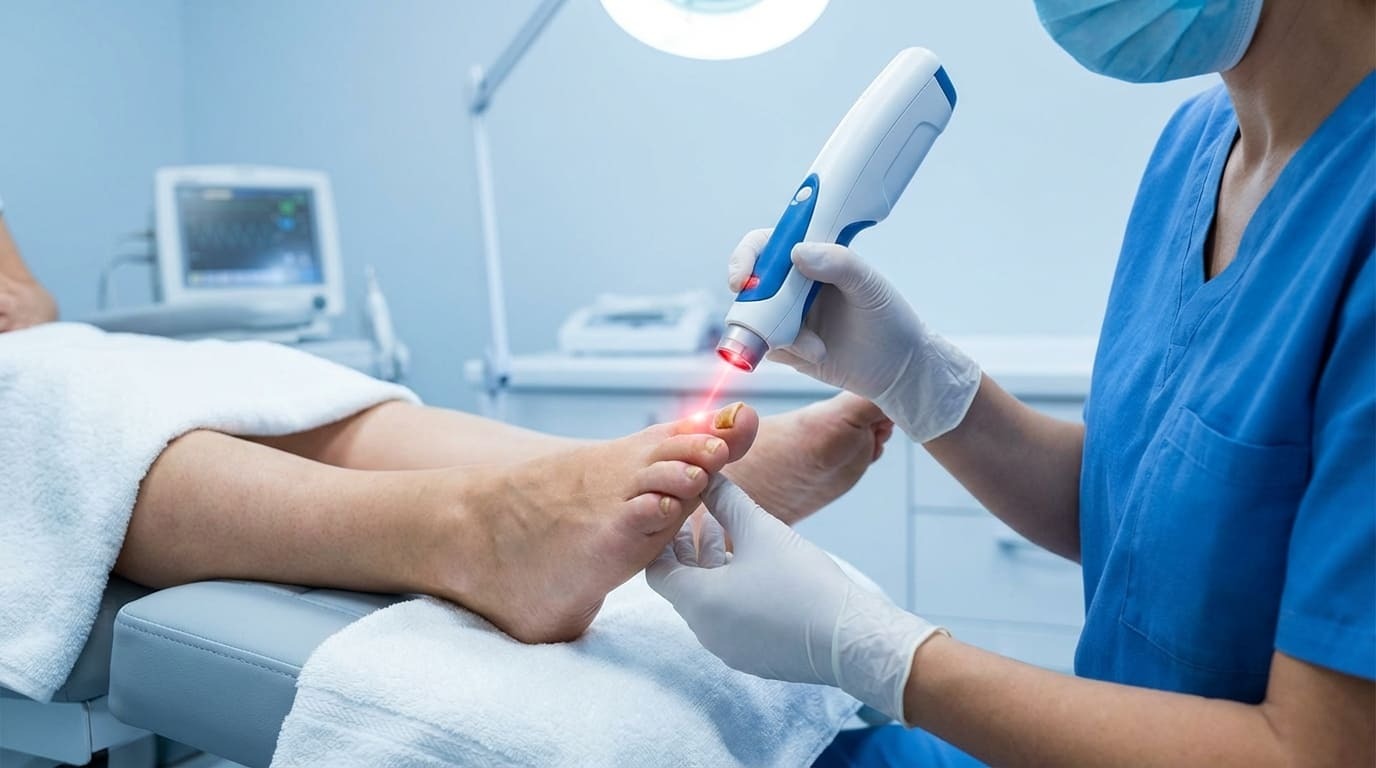
Laser treatment involves directing a specific wavelength of light at the nail. The 1064nm Nd:YAG laser is the one most commonly used for nail fungus. As this light passes through the nail plate and reaches the tissue beneath, its energy converts into heat.
That heat is the key. Fungus is vulnerable to it, and once the temperature beneath the nail rises enough, the fungus's proteins and cell structure are damaged, suppressing its growth. It is a way of delivering heat directly to fungus that has been hiding deep inside a thick nail, out of reach of topical medication. To avoid concentrating heat in one spot, the light is applied evenly over the nail in multiple passes.
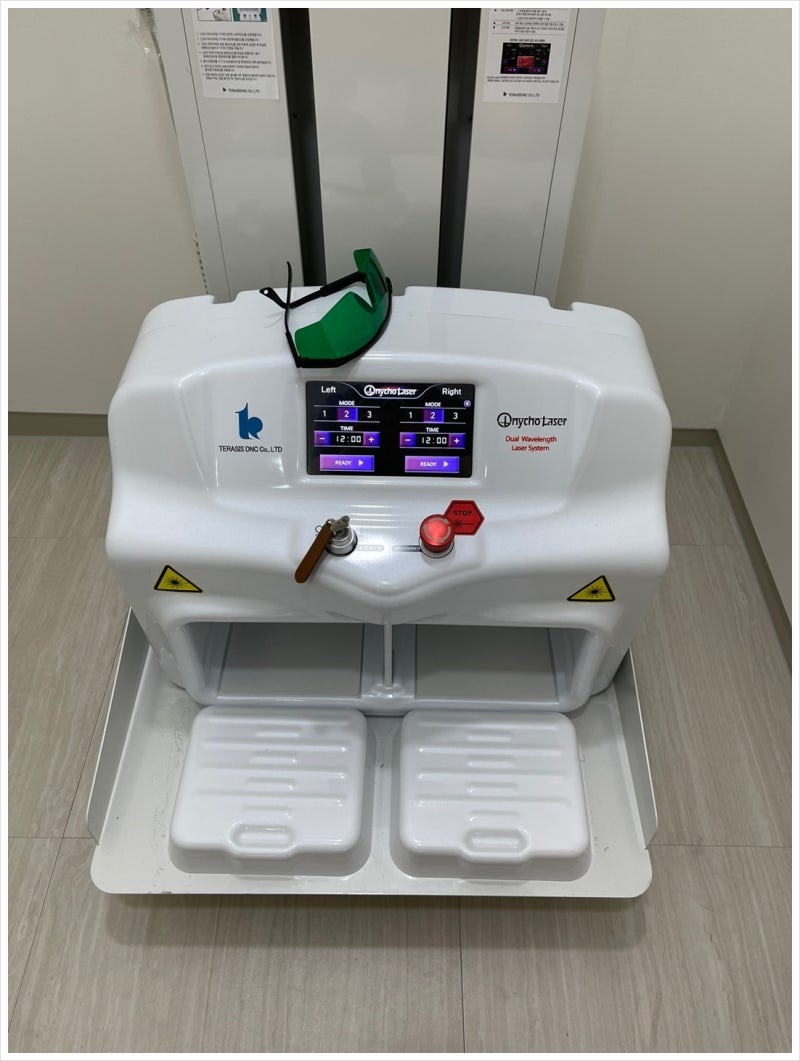
At 1064nm, the wavelength is long enough to penetrate even thick nails effectively, which is why it suits deep, thick lesions like nail fungus so well. Unlike oral medication, which circulates through the entire body before reaching the nail, laser is a localized treatment that delivers heat directly to the site, putting less strain on the liver or other organs. That is exactly why it appeals to people who find oral medication difficult to take. Since it involves no cutting or nail removal, just light, the treatment itself is not particularly burdensome either.
How does it compare with oral and topical medication?
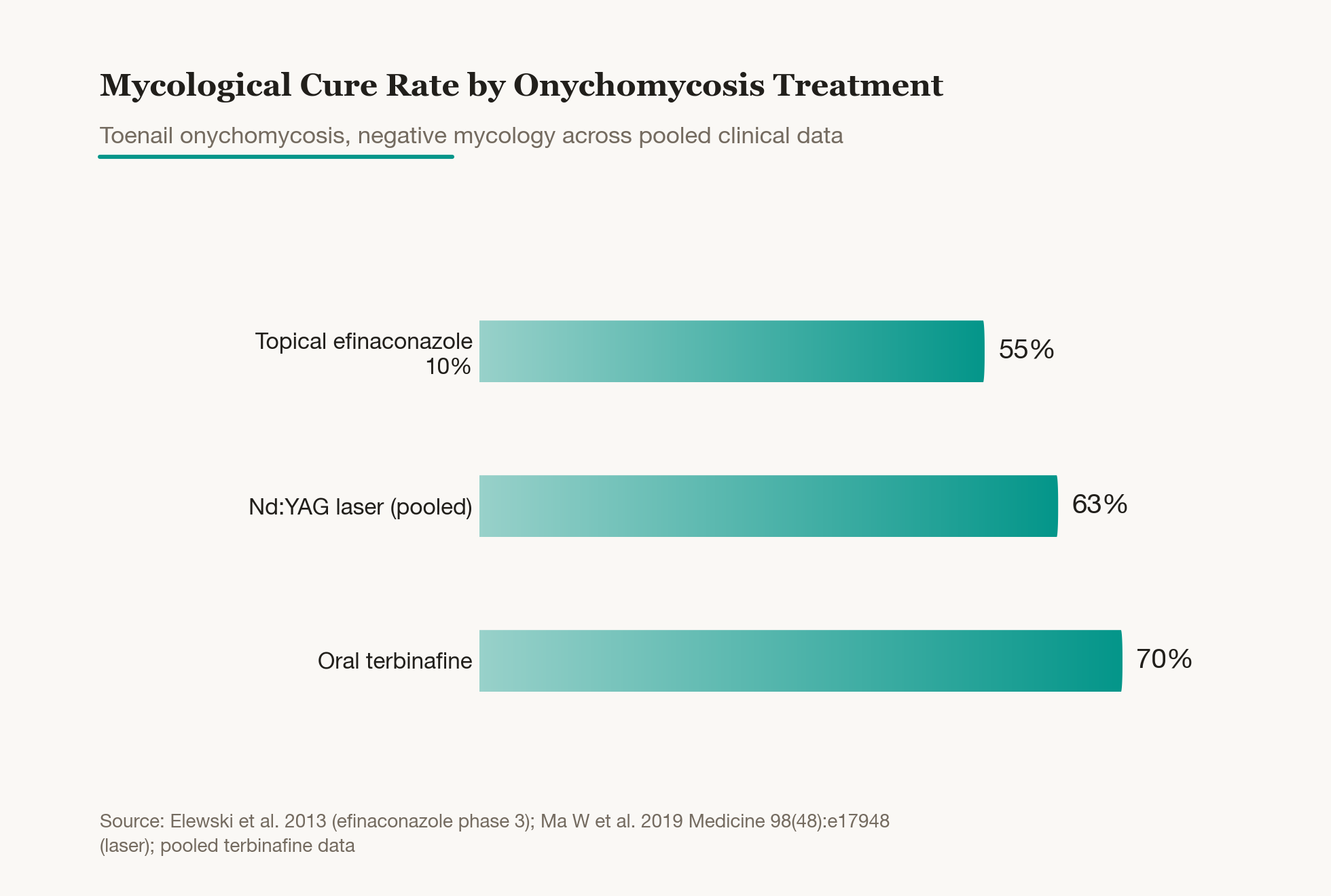
The standard treatment for nail fungus is oral medication. The leading drug, terbinafine, suppresses fungus from within the body and is usually taken for about 12 weeks for toenails. It clears fungus in about 70% of cases and achieves a completely clean nail in about 38%, making it the most reliably effective option. That said, liver enzymes need to be monitored during treatment, and interactions with other medications should be checked as well.
Topical treatment is applied directly to the nail so the medication can penetrate it. Efinaconazole 10% solution, applied daily for 48 weeks, cleared fungus in about 55% of cases. It is a good choice for early cases, thinner nails, or when someone prefers to avoid oral medication.
Laser sits between the two, offering a way to fight fungus with heat and no pills at all. It is especially useful for people with liver conditions, those on multiple medications, or those planning a pregnancy. Since the heat targets only the nail, there is much less concern about systemic side effects, which is a major advantage.
| Treatment | Fungal cure rate | Notes |
|---|---|---|
| Laser | About 63% | No pills needed, fewer side effects |
| Oral terbinafine | About 70% | Standard, requires liver monitoring |
| Topical efinaconazole | About 55% | Suits early, thinner nails |
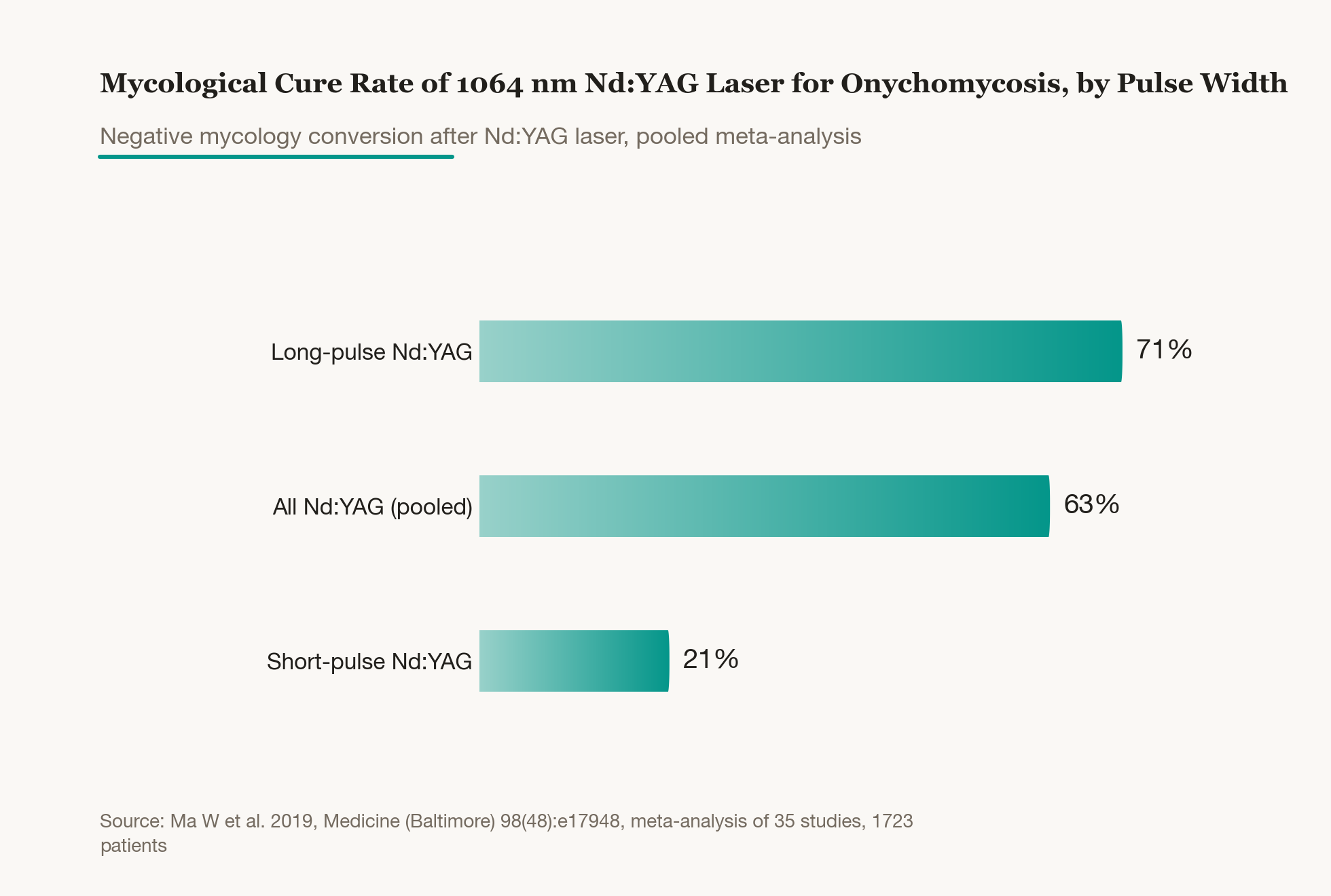
How negative culture rates change with pulse width
Here is what the numbers show. A meta-analysis pooling 35 studies and 1,723 patients found that Nd:YAG laser treatment led to a negative fungal test in about 63% of cases. That is a bit lower than oral medication but on par with or ahead of topical treatment.
Pulse width, meaning how long the light is delivered, matters a lot here. Long pulse settings that deliver heat thoroughly reached a fungal clearance rate of about 71%, while short pulse settings reached only about 21%. Even at the same 1064nm wavelength, results can vary widely depending on the settings, which is why it makes a real difference to be treated with a device and settings that use long pulse to properly deliver heat.
One thing worth noting is what counts as cured. A negative fungal test and a nail that visibly looks clean happen at different times. Even after the fungus is gone, the already-damaged nail needs to grow out and be replaced by healthy new nail before it looks clean, so visible improvement takes longer to show. That means results should be judged after the nail has grown out, not right after treatment. Watching for a clean, healthy nail growing in from the base is a good way to gauge whether treatment is working.
How many sessions, and when will results show?
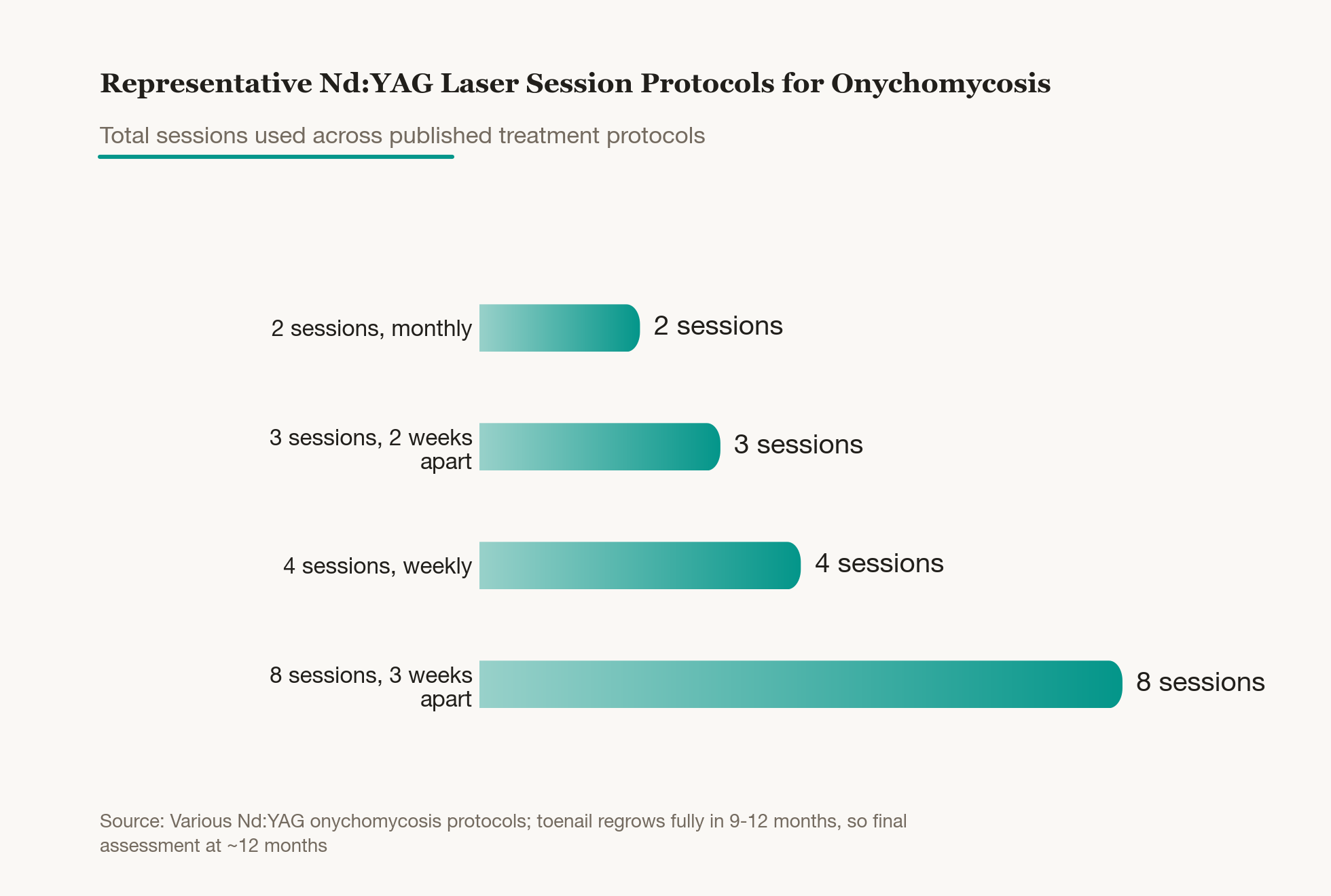
Laser treatment is not a one-time fix and is usually spread across several sessions. Protocols vary by study, but 3 to 4 sessions spaced one to four weeks apart is common, with some protocols ranging from 2 to as many as 8 sessions. With each session, the fungus is suppressed further and the nail grows in progressively cleaner.
A single session takes just a few minutes. There is some stinging heat while the light is applied, but it is tolerable for most people, and no anesthesia is needed. You can put your shoes back on and return to daily activities right after, with essentially no downtime. Nail damage or bleeding is rare, and mild when it does occur. Filing down a thickened nail before treatment can help the light reach the fungus more effectively, boosting results.
It is important to give it enough time before judging the outcome. A nail takes 9 to 12 months to grow out completely, so even after the fungus is cleared, it can take nearly a year for the whole nail to look clean. There is no need to be discouraged if there is no visible change a few weeks after treatment. A clean, healthy nail gradually emerges from the base as the nail grows out at its own pace.
Combined care and daily habits to prevent recurrence
There is an honest point worth making here. Laser reduces the fungus within the nail, but it cannot change the environment that let the fungus take hold in the first place. If fungus is still present elsewhere on the foot, or if shoes and socks stay damp, fungus can migrate back onto a nail that took hard work to clear, causing a relapse.
That is why ongoing care matters just as much for keeping results long term. Several studies have found that combining laser with oral or topical medication achieves a higher cure rate than either approach alone. If relapses are frequent or the affected area is large, it makes sense to consider combination treatment from the start.
Daily habits matter too. Wash your feet daily and dry thoroughly between the toes, and wear breathable shoes in rotation with dry socks often. If athlete's foot is also present, treat it at the same time with an antifungal ointment, and if a family member has fungus too, treat everyone together to help break the cycle of reinfection. Cutting down on the places fungus can live this way helps the clean nail achieved through laser treatment last much longer. More than anything, staying patient and keeping up with care and combination treatment is the surest path to a full cure.
Was this helpful?
About this article
Written by a practising aesthetic physician and intended for general education — not a substitute for individual medical advice.
Read next
Nevus of Ota Laser Treatment: Number of Sessions, Results, Recurrence, and Side Effects
Nevus of Ota shows up as bluish-grey patches around one eye and cheekbone, and because the pigment sits deep in the dermis, brightening creams barely touch it. Here's how many sessions of 1064 nm Q-switched Nd:YAG or picosecond laser it typically takes, along with the real risk of recurrence and pigment side effects.
By Dr. Kim

Keloid Scar Treatment Effects and Recurrence Rate, From Steroid Injections to Surgery
How keloids differ from hypertrophic scars, why keloids form from collagen overgrowth, how much combining steroid injections with 5-FU cuts recurrence, what silicone, compression, laser, and cryotherapy each do best, and why surgery should never be used alone, all explained with real study numbers.
By Dr. Kim

Body Onda: Effects, Approach by Area, Number of Sessions and How Long It Lasts
Body Onda is a non-surgical body contouring treatment that uses microwave energy to selectively heat the fat layer beneath the skin, shrinking fat cells while tightening the skin above them. Here is why the heat targets fat rather than skin, why fat reduction and tightening happen together, how the approach differs for the abdomen, arms, and flanks, and how many sessions it takes to see lasting results.
By Dr. Kim