Keloid Scar Treatment Effects and Recurrence Rate, From Steroid Injections to Surgery
By Dr. Kim8 min read

If a healed wound on your arm, chest, or earlobe swells up bigger and firmer than the original injury, it could be a keloid. Even small wounds, like acne, pierced ears, or a surgical incision, can trigger one.
A keloid is not just a scar. It is what happens when the collagen that heals a wound keeps growing instead of stopping. That is why it usually makes more sense to treat it actively rather than wait for it to fade on its own.
There are many options, from steroid injections and combined 5-FU therapy to silicone, compression, laser, cryotherapy, and surgery. Each targets a different part of the problem and cuts recurrence by a different amount. Here is a clear rundown, backed by real study numbers, of what each option does best, how much it reduces recurrence, and why combining several methods usually beats relying on just one.
How do keloids differ from hypertrophic scars?
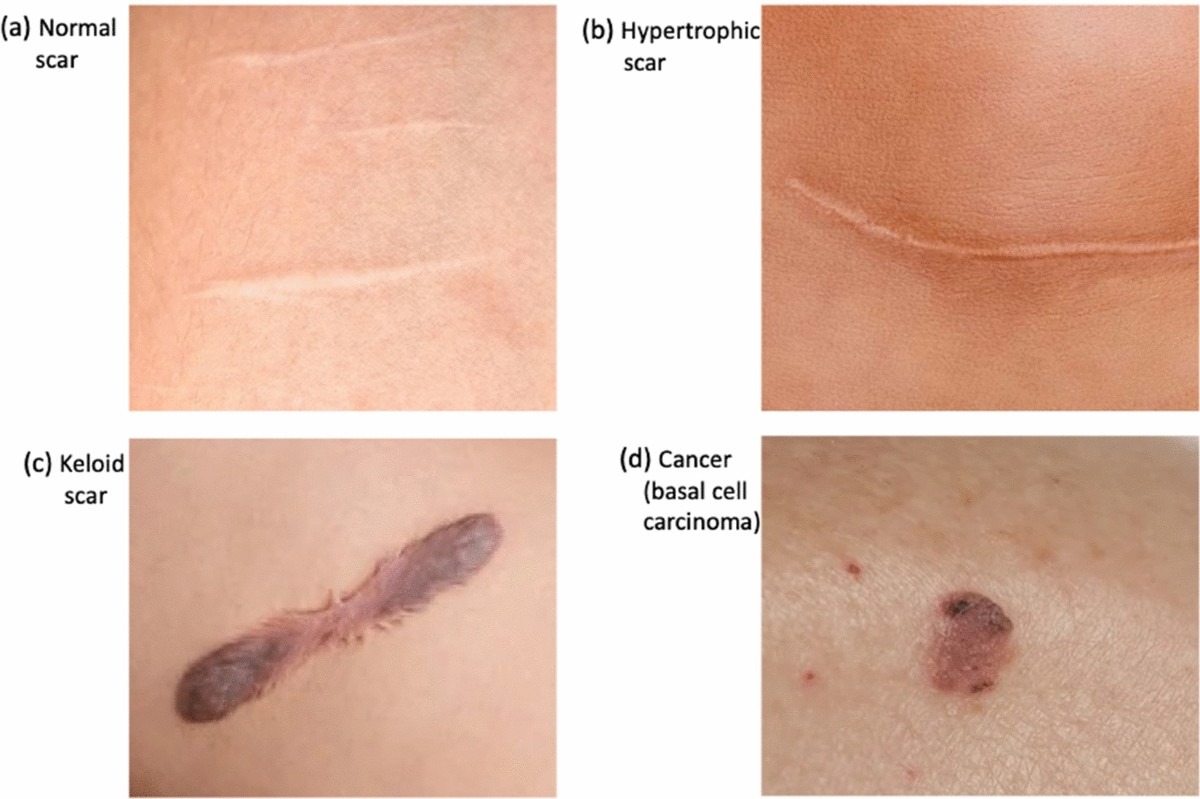
Not every raised scar is a keloid. The clearest way to tell a keloid from a hypertrophic scar is whether it spreads beyond the original wound's border.
A keloid grows outward past the wound like crab claws reaching sideways. It ends up far larger and firmer than the original injury and does not shrink on its own over time. A hypertrophic scar, by contrast, stays raised but confined within the wound and does not cross that border. It often flattens out gradually over one to two years.
On the surface, both look similar: red, firm, and raised. But under a microscope, the collagen arrangement is different. In a hypertrophic scar, collagen forms in neat, wavy bundles. In a keloid, thick, blunt collagen bundles tangle together with no real pattern. That difference is part of why keloids are so much harder to manage.
They respond to treatment differently too. Hypertrophic scars tend to respond well to treatment and can even improve on their own, while keloids are far more stubborn and often come back even after being cut out. So the first step in treatment is figuring out which one you actually have.
| Feature | Keloid | Hypertrophic scar |
|---|---|---|
| Border | Grows past the wound | Stays within the wound |
| Fades on its own | Rarely | Can fade gradually |
| Response to treatment | Stubborn, recurs often | Responds relatively well |
Why do keloids form?
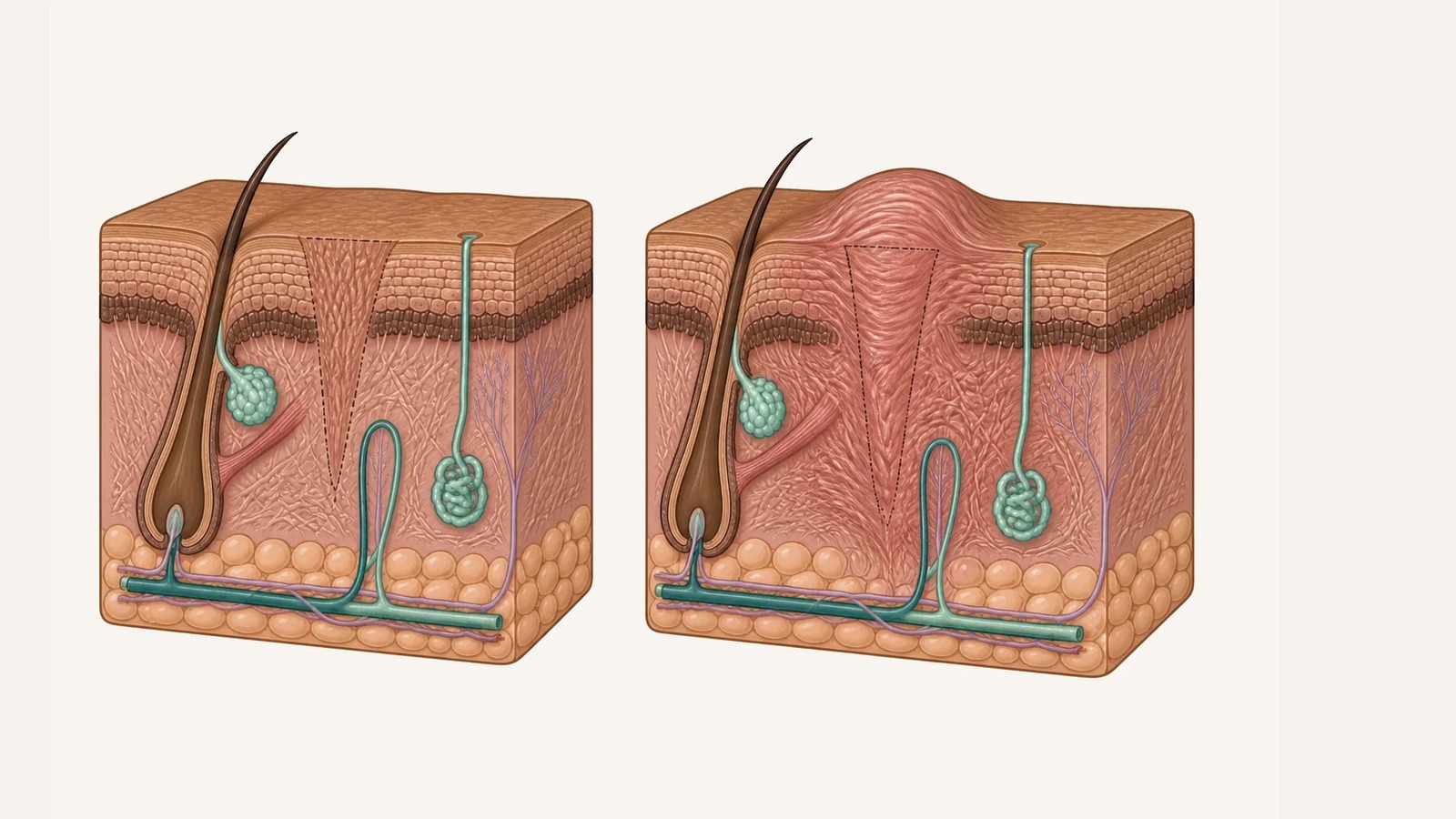
A keloid forms when the wound healing process fails to stop on time. When skin is injured, the body builds collagen to fill in the damage. Normally, collagen production shuts off once the wound has healed, but in a keloid, that brake fails.
Fibroblasts are the cells deep in the dermis that produce collagen. In a keloid, these fibroblasts stay in an overactive state, churning out far more collagen than needed and never stopping. That is why the scar swells beyond the original wound's boundaries.
Underlying this is chronic inflammation in the dermis. Inflammatory signals linger at the wound site and keep stimulating the fibroblasts. That is also why keloids tend to form on high-tension areas like the chest, shoulders, and earlobes, and why some people are simply more prone to them than others. Deeper skin pigmentation also raises the likelihood of keloids, and having a family member with a keloid raises your own risk.
This is also why a keloid, once it forms, does not disappear on its own. The switch that keeps collagen production running stays on, so left alone, it can even keep growing. That is why treatment aimed at reining in this overreaction is necessary.
First treatment for keloids: steroid injection
The standard first-line treatment for keloids is an intralesional steroid injection. The drug used is triamcinolone, injected directly into the scar tissue.
The mechanism is straightforward. The steroid calms inflammation within the scar and suppresses the activity of the fibroblasts that produce collagen. It also helps break down collagen that has already built up, so the raised scar gradually flattens while itching and pain ease as well.
Treatment is usually given in multiple sessions spaced three to four weeks apart, with the response guiding how treatment continues rather than finishing in one visit. Studies show that steroid injections alone bring noticeable flattening in roughly half to most scars. The injection itself can sting a little, since firmer scars don't let the medication spread evenly and that can cause some ache, but the area is small and it's over quickly.
That said, it does not work equally well for everyone. About half of keloids respond poorly to steroids alone, and some scars that improve can swell back up again. Injecting too often or too aggressively can thin the skin or leave visible blood vessels, so getting the dose and interval right matters. That is exactly why combination therapy, discussed next, has become so common.
Does adding 5-FU reduce recurrence?
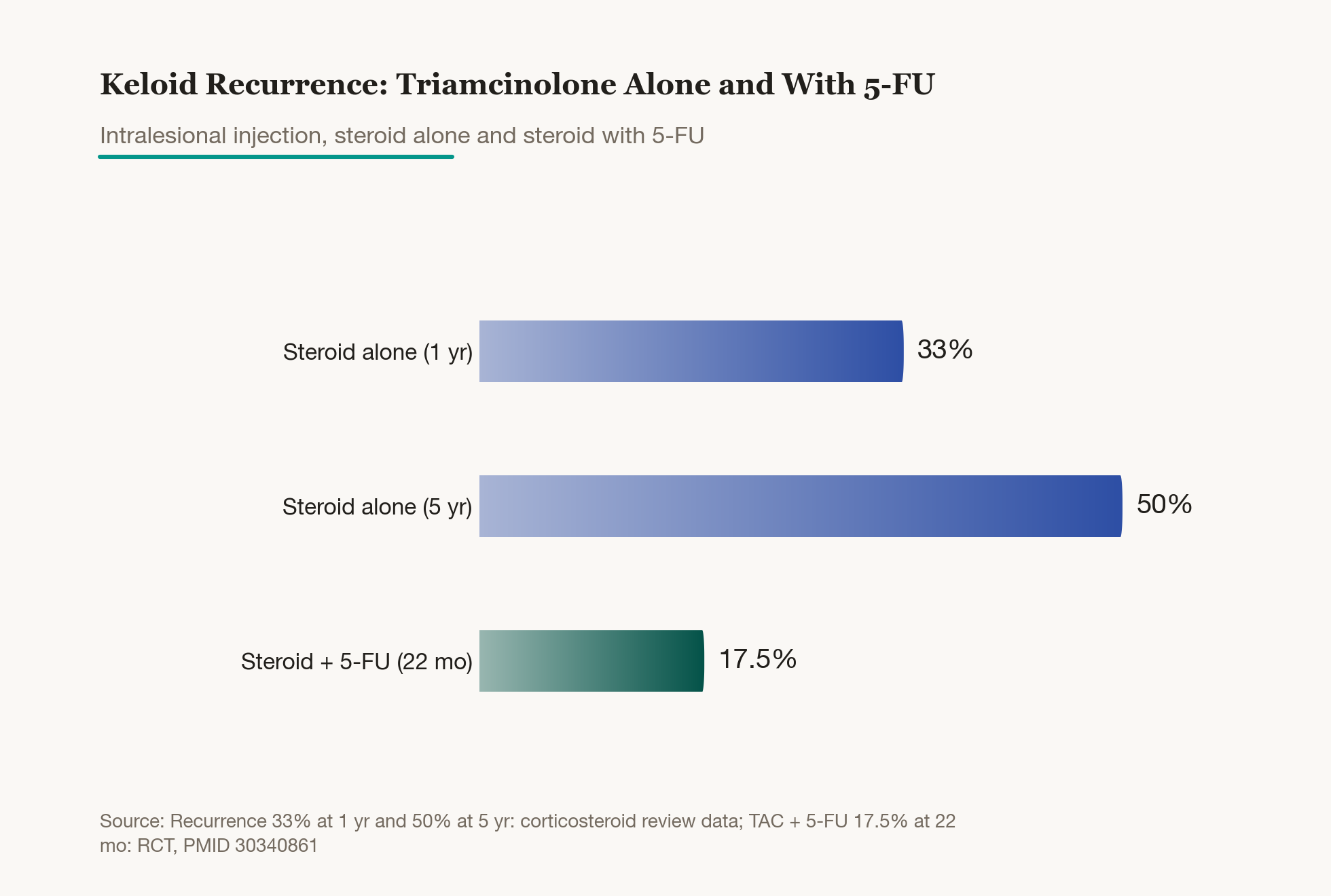
Steroid injection is a good starting point, but recurrence tends to catch up over time. With steroid alone, recurrence climbs to about 33% at one year and about 50% at five years, meaning roughly half of treated scars swell back up.
That is why combining steroid with 5-FU has become widely used. 5-FU is a drug originally used to stop cells from over-proliferating, and here it further suppresses the overactive fibroblasts that keep churning out collagen.
The numbers make the benefit clear. In one randomized controlled study, the group treated with steroid plus 5-FU had a recurrence rate of just 17.5% at 22 months of follow-up, well below the recurrence seen with steroid alone.
Improvement also came faster, and a higher share of scars flattened by more than half in the combination group. Because steroid doses could be reduced alongside 5-FU, side effects like thinning skin and visible blood vessels were actually less common. 5-FU works especially well on keloids, where cells keep proliferating, so the more stubborn the keloid, the greater the benefit of combining the two. That is why this combination has become a reliable step up from steroid alone.
Do silicone or cryotherapy help too?
Beyond injections, several other methods help manage scars, and since they each target something different, they are often used together.
Silicone is the go-to for prevention and maintenance. Applying silicone gel or sheets consistently over a scar keeps it hydrated and reduces swelling. A pooled analysis of 10 studies found that silicone lowered the risk of scar formation by about 30%. It works best when started right after a new wound has healed.
Compression therapy works by physically pressing on the scar. Wearing a compression garment at 15 to 25mmHg for an extended period reduces scar thickness, firmness, and redness. It has long been used for burn scars.
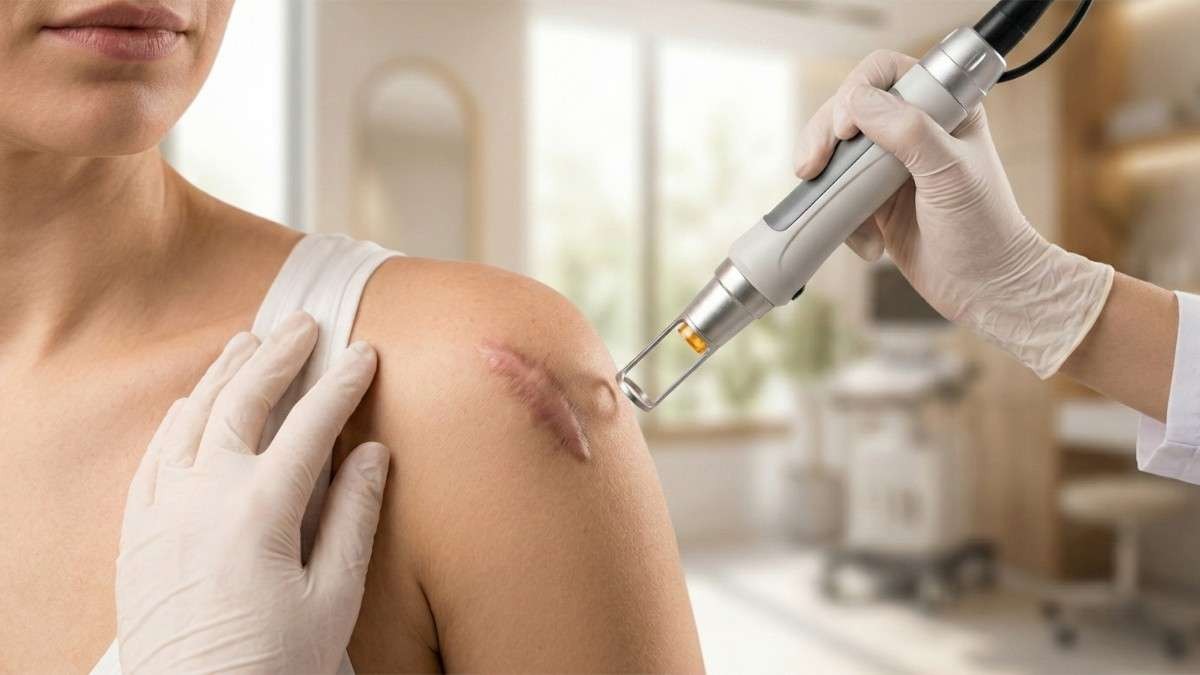
Laser targets redness and height. Adding a steroid injection to a vascular laser like pulsed dye laser has been reported to reduce elevation by about 60%, redness by about 40%, and itching by about 75%.
Cryotherapy freezes the scar to shrink its volume. The intralesional freezing method reduced scar volume by roughly 51 to 63%. It can cause pigment loss and lightening of the skin, though, so people with deeper skin tones should use it with caution.
| Method | Targets | Key result |
|---|---|---|
| Silicone | Prevention, maintenance | About 30% lower scar risk |
| Compression | Thickness, firmness | Worn at 15 to 25mmHg |
| Laser | Redness, height | 60% less elevation, 40% less redness |
| Cryotherapy | Volume | 51 to 63% less volume |
Surgery combined with radiation
If a scar is large or old and does not budge with injections, surgical removal comes to mind. But surgery on a keloid needs to be handled with care.
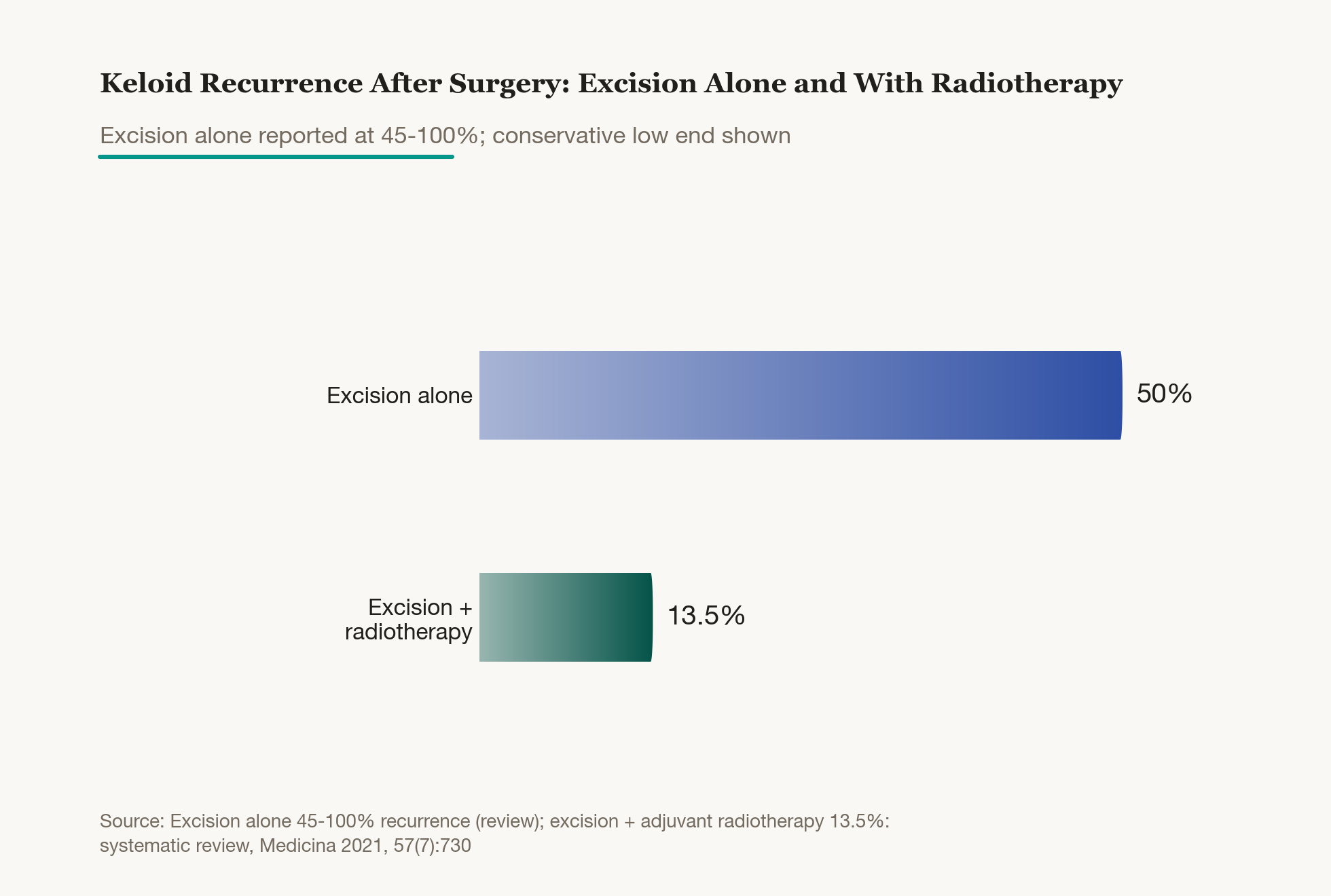
Cutting out a keloid on its own leads to very high recurrence, ranging from 45% up to 100% depending on the study. A new wound forms at the excision site, and that wound can grow right back into another keloid, sometimes even bigger than before.
That is why surgery is never done alone and is always paired with another treatment. Adding radiation right after excision drops recurrence to about 13.5%. Instead of radiation, ongoing steroid or 5-FU injections and compression therapy are also used.
Surgery makes sense in clear cases: scars that are too large, stubborn keloids that do not respond enough to injections and laser, or areas like the earlobe that are well suited to excision and closure. On the other hand, small, early keloids are often well controlled with injections and silicone alone, without needing to reach for a scalpel. If surgery is done, following up consistently with radiation, injections, or compression afterward is the key to preventing recurrence. The right approach depends on the scar's size, location, and how it has responded so far, and getting that call right is what leads to safe, satisfying results.

Was this helpful?
About this article
Written by a practising aesthetic physician and intended for general education — not a substitute for individual medical advice.
Read next
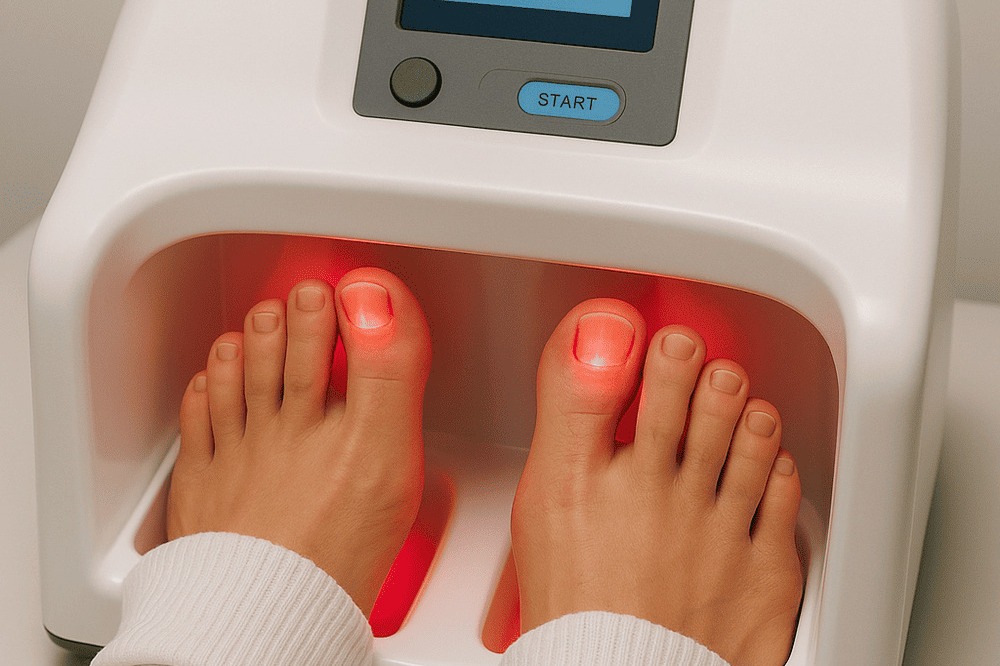
Toenail Fungus Laser: Effectiveness, Cure Rate, and Number of Treatments
Why laser is used for yellowed, thickened nail fungus, how the 1064nm Nd:YAG laser uses heat to fight fungus, how its cure rate compares with oral terbinafine and topical treatment, how many sessions it takes, and how to prevent relapse and keep results lasting, all explained with real study numbers.
By Dr. Lee

Stretch Mark Treatment: Effect and Number of Sessions, Including Laser and Radiofrequency Differences
A clear look at why stretch marks form and what sets red stretch marks apart from white ones. We break down, with real study numbers, how much fractional laser, radiofrequency microneedling, and pulsed dye laser for red marks actually fade them, plus what topical tretinoin can and cannot do at home.
By Dr. Lee
Nasolabial Fold Treatment: Which Is Right for You, Filler or Thread Lift?
Whether your nasolabial folds come from sagging, lost volume, or aging skin decides whether filler, thread lifting, or a collagen stimulator is the right call. Here is what actually works for each cause, how long the results hold, and how to stay safe around the vessels beside the nose, all explained simply with real study numbers.
By Dr. Lee