Types of Lasers for Facial Redness: Differences Between Devices and How to Choose
By Dr. Lee9 min read

If your cheeks always look red, tiny capillaries show through near your nose, or your face flushes at the slightest warmth, makeup alone often cannot hide it. Creams and serums have their limits with this kind of redness, so lasers and light treatments that target the blood vessels directly are widely used instead.
Lasers work well on redness because the principle is simple. The light targets only the hemoglobin inside the widened blood vessels and heats it up, shrinking the vessel that was showing through as red. But redness comes in different types, and each device is good at different areas, so picking the right device for your specific redness matters. Here is a simple, study-backed breakdown of how the laser fades redness, what each device does best, which one fits which type, and how many sessions and downtime to expect.
Why does facial redness look red?
The red color shows through because blood vessels near the skin's surface have widened or become more numerous. This generally falls into three types. The first is diffuse redness, a soft overall flush across the cheeks. The second is telangiectasia, the thin visible red lines known as broken capillaries. The third is reactive flushing, where the face suddenly turns red in response to a trigger and then fades again.
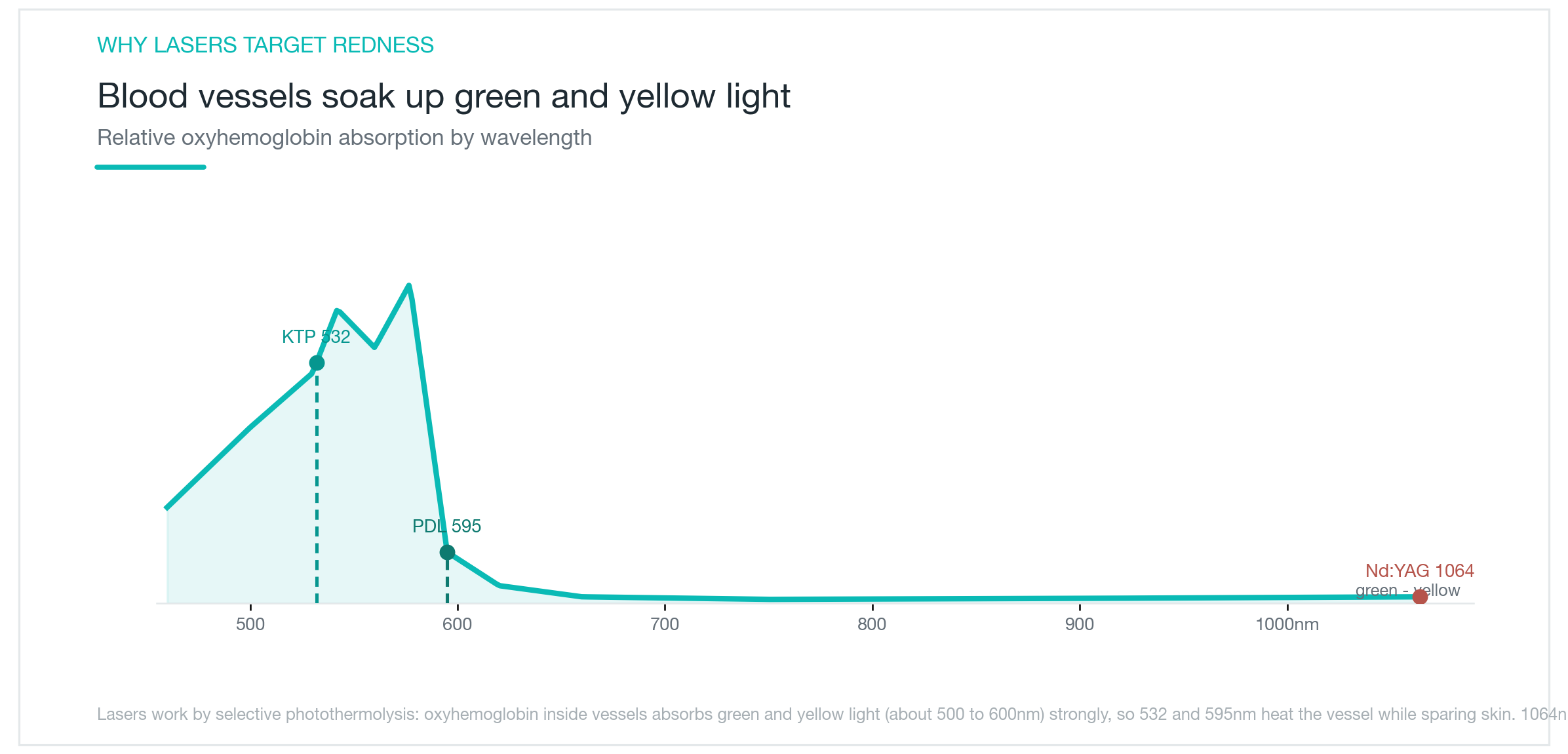
The way lasers reduce redness is simpler than it sounds. The red blood inside the widened vessel absorbs yellow and green light (532 to 595nm) very well. When this light is fired, only the vessel that absorbed it heats up and shrinks, while the skin around it stays untouched. It is a way of picking out just the vessel that was causing the redness.
While pigment lasers for melasma target brown pigment, redness lasers target the red blood inside vessels. The depth the light reaches also depends on its color. Shorter wavelengths like green light absorb strongly but only reach shallow depths, so they work well on fine surface capillaries. Longer wavelengths closer to red light go deeper, so they work better on thicker, deeper vessels. That is why the right device depends on whether your redness sits shallow or deep.
Four types of lasers for redness
There are four main devices used for redness.
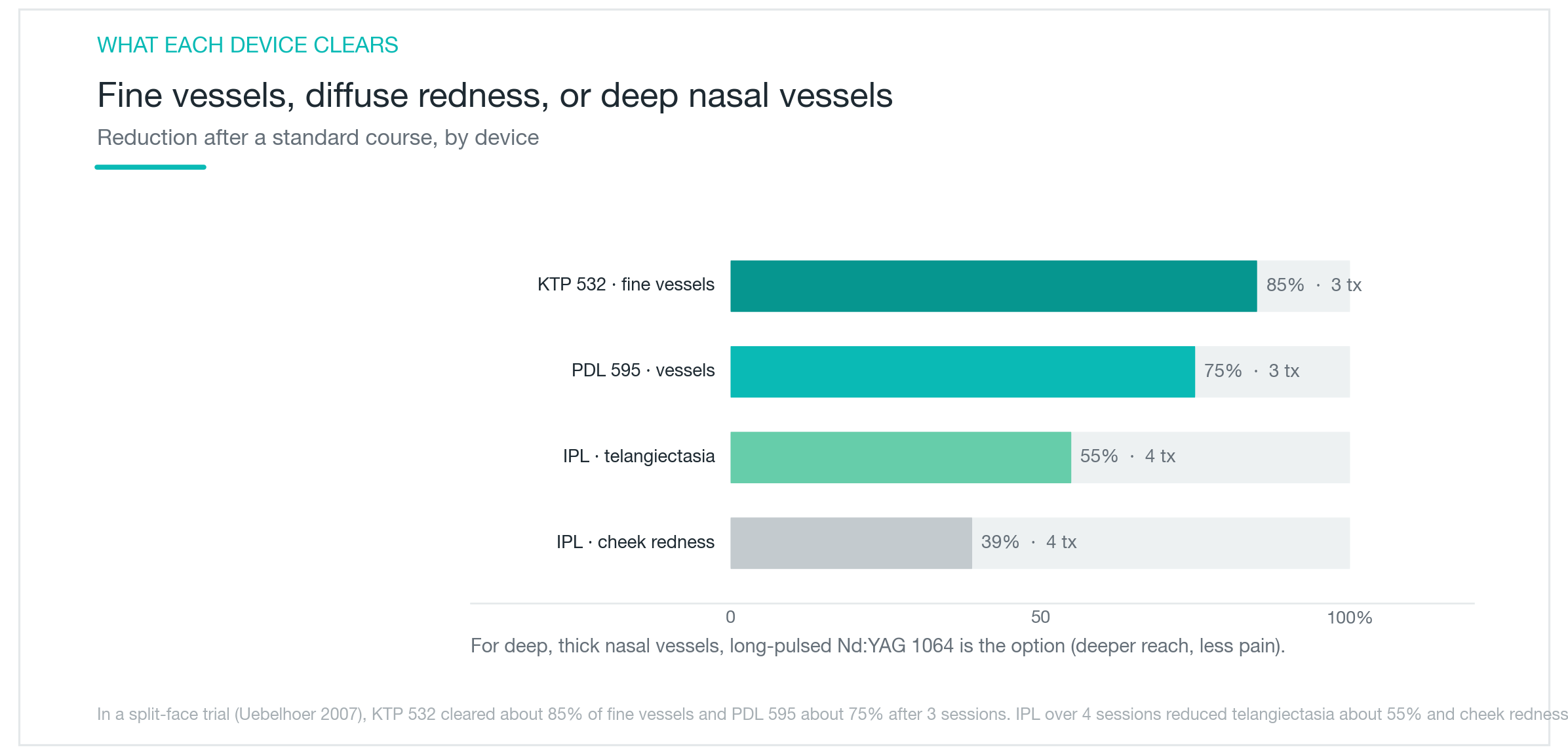
The first is the PDL laser, best known by the brand Vbeam. It uses 595nm yellow light, which gets absorbed right into the red vessels and shrinks them selectively. It is the go-to standard device for treating redness and the one used most often. In one study, vessels shrank by about 75% after 3 sessions. A cooling spray is often used alongside the laser to keep it more comfortable.
The second is the KTP laser. KTP is a special crystal that light passes through, which converts it into 532nm green light. This green light is absorbed even more strongly by red vessels, so it works especially well on fine, shallow capillaries. In one study, vessels shrank by up to about 85% after 3 sessions. On the other hand, redness or swelling right after the treatment tends to be a bit more noticeable. In Korea, Excel V is popular because it combines this green light (532nm) with a deeper-reaching wavelength (1064nm), treating vessels and pigment at the same time.
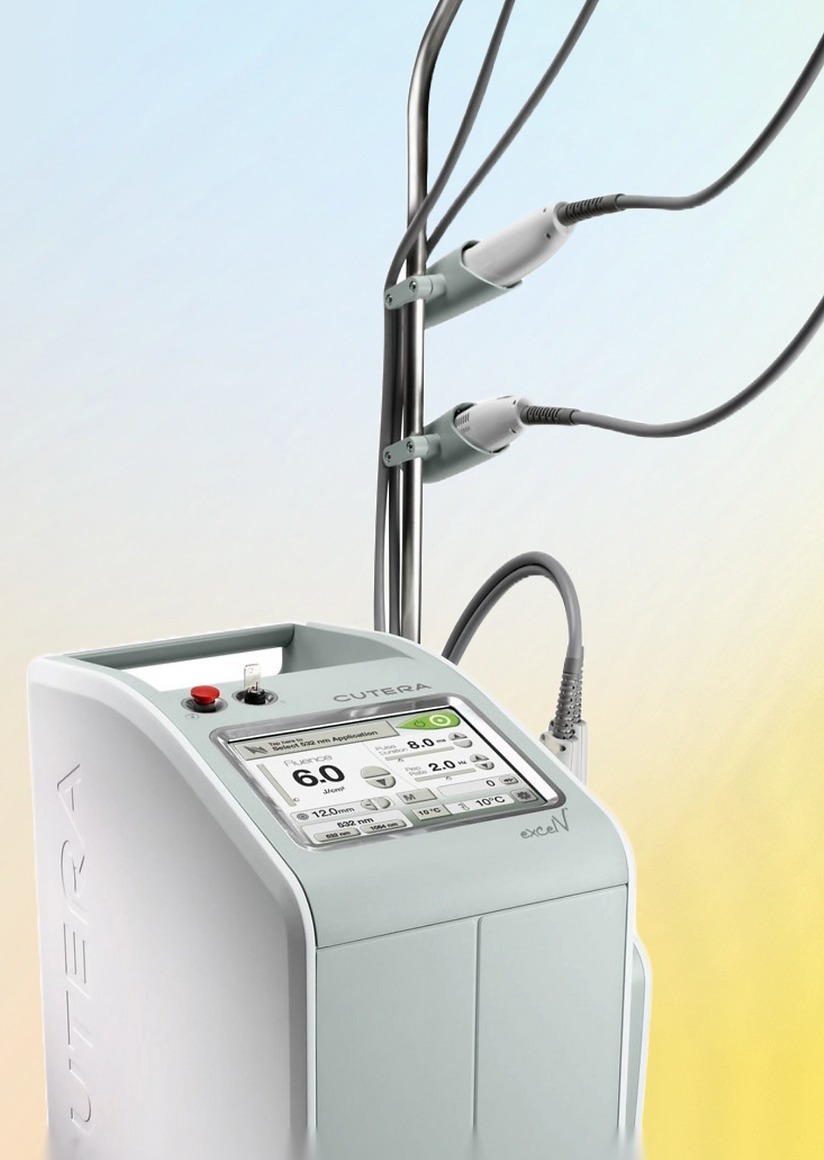
The third is the IPL laser. While the lasers above fire a single color of light, IPL fires multiple colors of light at once. This makes it good for clearing up both the soft background redness across the whole cheek and pigment at the same time. In one study, cheek redness faded by about 39% and capillaries by about 55% after 4 sessions.
The fourth is the Nd:YAG laser. Its 1064nm light goes deeper than the other lasers, so it is used on thicker, stubborn vessels near the nose. It tends to be a bit less effective but also less painful.
Which device is used for which type of redness?
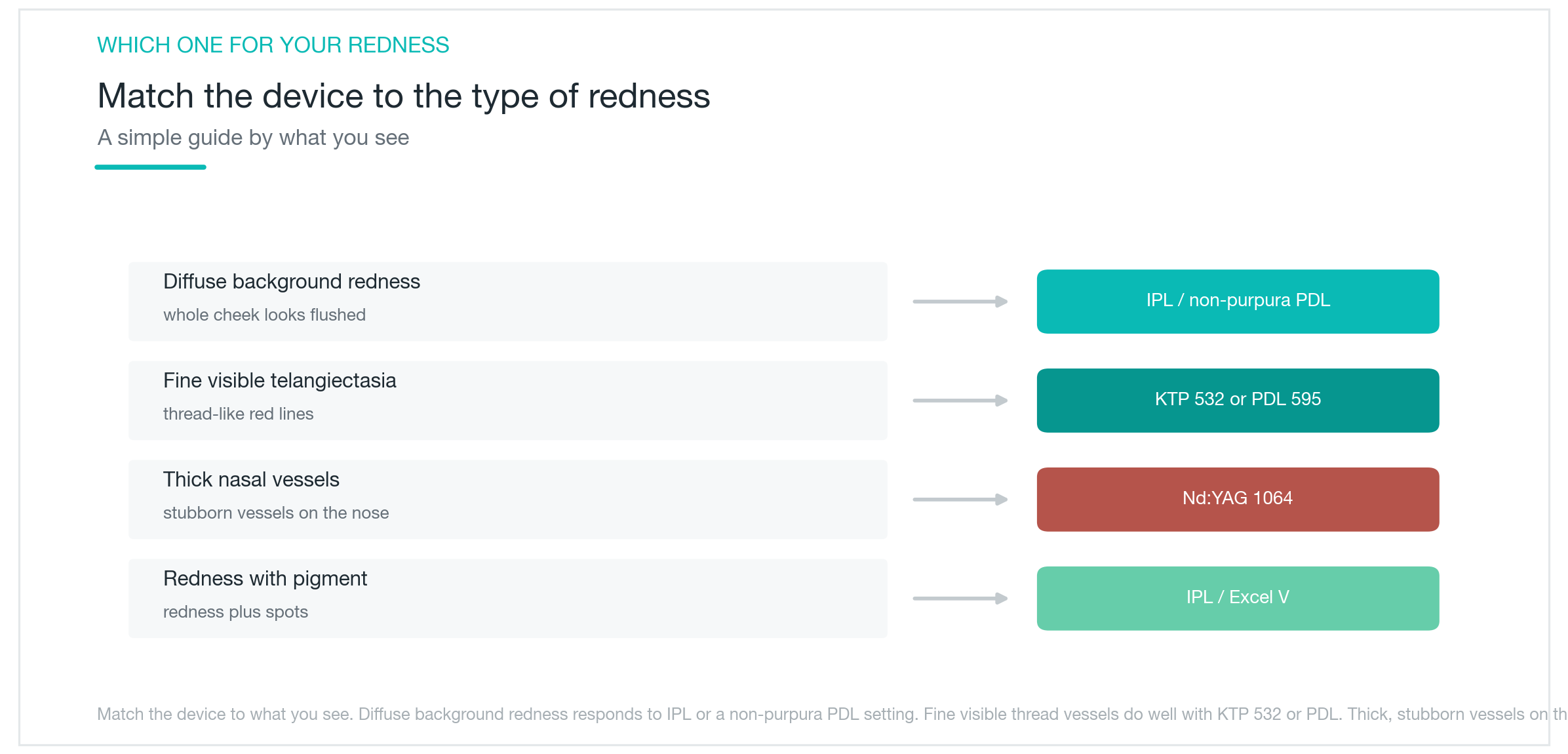
Which device to choose depends on the type of redness you have. If your whole cheek has a soft diffuse flush, IPL or PDL set to avoid bruising works well. If pigment is present too, IPL or Excel V is a good choice since it clears redness and pigment together.
For clearly visible fine capillaries, KTP at 532nm or PDL works well. Shallow, thin vessels respond especially well to KTP. On the other hand, thick, dark vessels around the nose or nostrils, or deep vessels that do not respond well to PDL may be better suited to the deeper-reaching Nd:YAG at 1064nm.
In simple terms, think of background redness as IPL, fine capillaries as KTP or PDL, and thick nose vessels as Nd:YAG. Of course, redness is often a mix of types, so in practice devices are combined, or a device that treats both pigment and vessels together is used. For example, IPL might clear the background redness on the cheeks while PDL or KTP finishes off the remaining visible capillaries. This is why finding an experienced practitioner who can assess your specific redness and choose the right device matters so much for the result. Since vessel depth and thickness vary from person to person even with the same type of redness, it is safer to adjust based on how your skin responds rather than committing to one device from the start.
How many sessions are needed, and will it bruise?
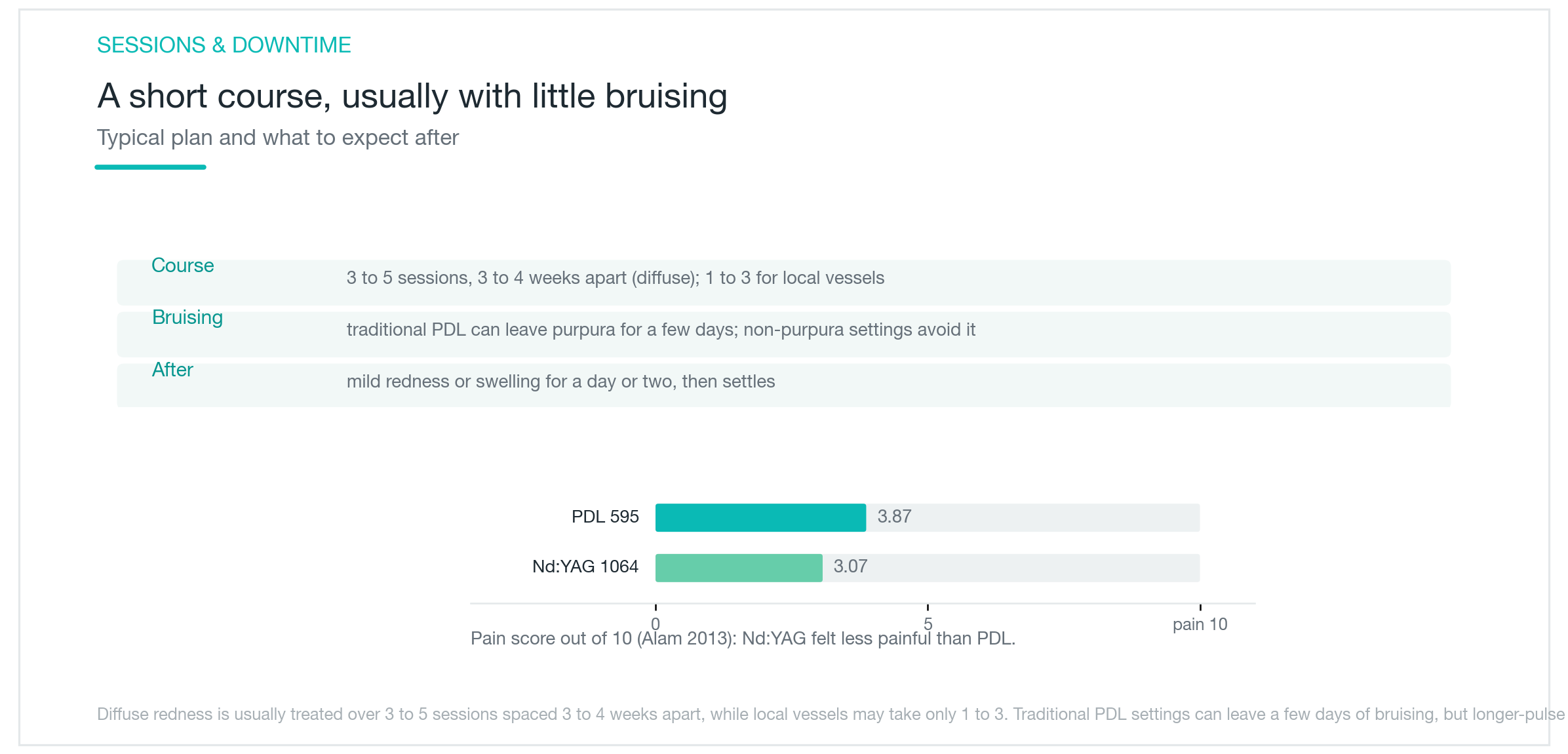
Treatment is usually done over several sessions rather than just one. Diffuse redness across the whole cheek typically needs 3 to 5 sessions spaced 3 to 4 weeks apart as the standard, while localized capillaries can improve with just 1 to 3 sessions. The effect builds up as you repeat the treatment.
Downtime depends on the setting used. The traditional PDL setting can cause purpura, bruising that lasts a few days, but nowadays a non-purpuric setting with a longer pulse width and multiple passes is often used instead, so many people come away without any bruising at all. Cooling gas or cold air used alongside the laser also reduces pain and swelling.
Side effects are generally mild and temporary. Some redness or light swelling can last a day or two after treatment and usually settles on its own. Pain levels vary by device, and one study found Nd:YAG caused less pain than PDL. Pigmentation changes can rarely occur but usually fade over time. Matching the device to your skin tone lowers the risk of side effects even further. You can usually wash your face and wear light makeup the same day, just avoiding harsh exfoliation or a hot sauna for a few days. Applying sunscreen carefully right after treatment helps lower the risk of pigmentation.
What a laser can't change, and recurrence
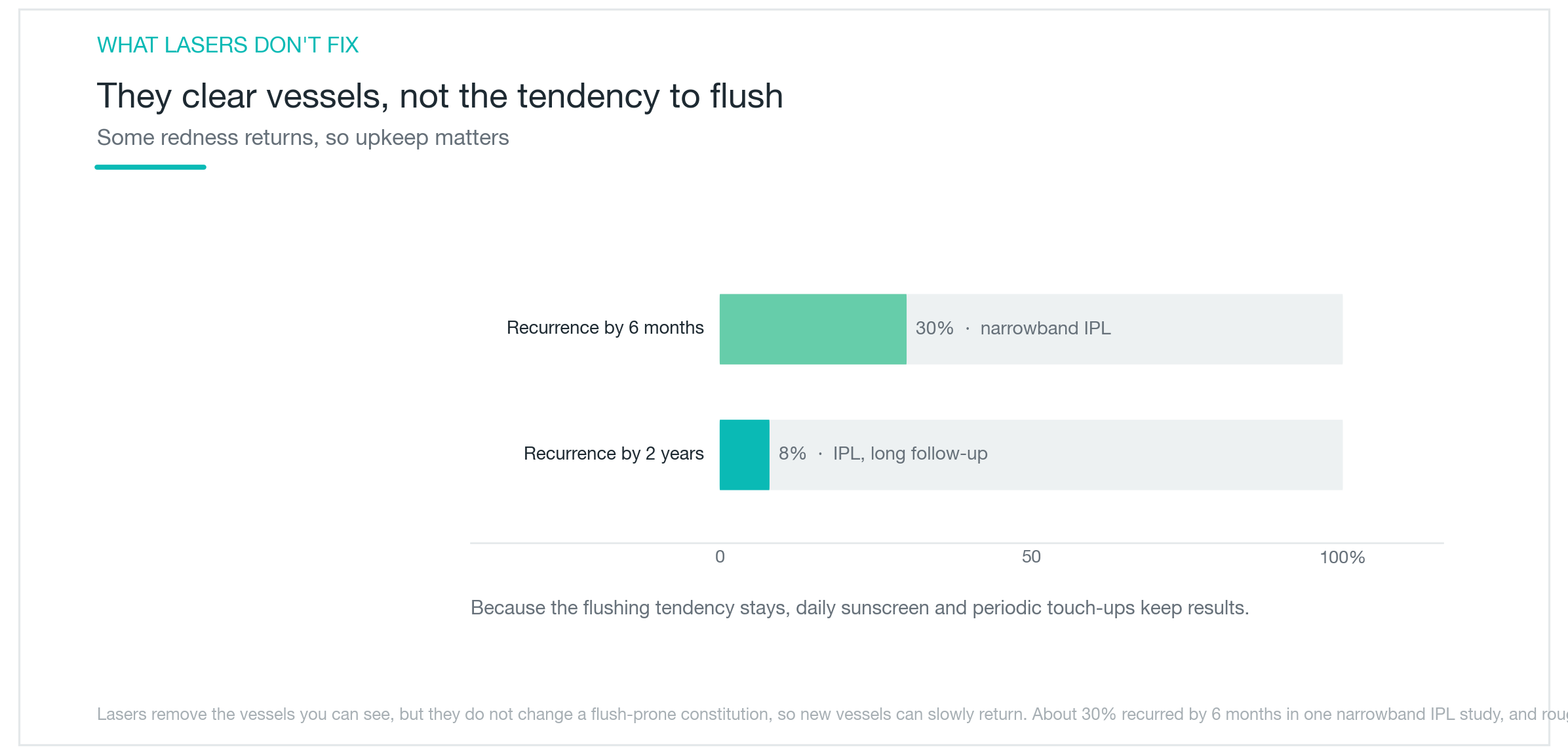
There is one honest caveat worth mentioning. A laser only reduces the vessels and redness that are already visible; it does not change the underlying tendency to develop redness in the first place. So over time, new vessels can form again and the redness can slowly come back.
In fact, one study found about 30% relapse at 6 months after IPL treatment, while another longer follow-up found about 8% relapse at 2 years. So it helps to think of redness treatment not as a one-time fix but as ongoing maintenance to keep the improvement going. With good maintenance treatments, most people can keep a satisfying result for a long time.
Above all, daily lifestyle habits need to go hand in hand with treatment. UV exposure is one of the biggest factors that worsen redness, so wearing sunscreen every day is key to keeping the laser results lasting longer. Cutting back on things that trigger flushing, like intense heat, sudden temperature changes, or heavy drinking, also helps. If the redness is long-standing and quite pronounced, a skin condition called rosacea may be involved as well, and adding medication alongside the laser can make the results last even longer in that case.

Redness that responds well to laser
Facial redness laser is a good fit for people whose redness would not settle down with soothing skincare alone. If your cheeks are always red and hard to cover with makeup, if capillaries near your nose stand out and bother you, or if your face flushes at the slightest warmth, this is a good option for you. The big advantage is that it selectively reduces the vessels without any cutting.
It is good to keep expectations realistic while staying optimistic. Rather than clearing everything in one go, redness is reduced step by step over several sessions, and the improvement is then maintained. Surface vessels and capillaries in particular tend to respond well, which is why satisfaction tends to be high.
Redness is something you can manage well, not something you have to just live with. Daily life often feels much more comfortable once the self-consciousness around redness eases. Finding an experienced practitioner who can accurately assess your type of redness and skin tone and match the device and settings accordingly leads to safe, satisfying results. If you have a darker or tanned skin tone in particular, the settings need to be chosen more carefully because of pigmentation risk, so it is worth mentioning this during your consultation. Add in sunscreen and lifestyle care, and you can keep your clearer skin looking that way for much longer.
Was this helpful?
About this article
Written by a practising aesthetic physician and intended for general education — not a substitute for individual medical advice.
Read next
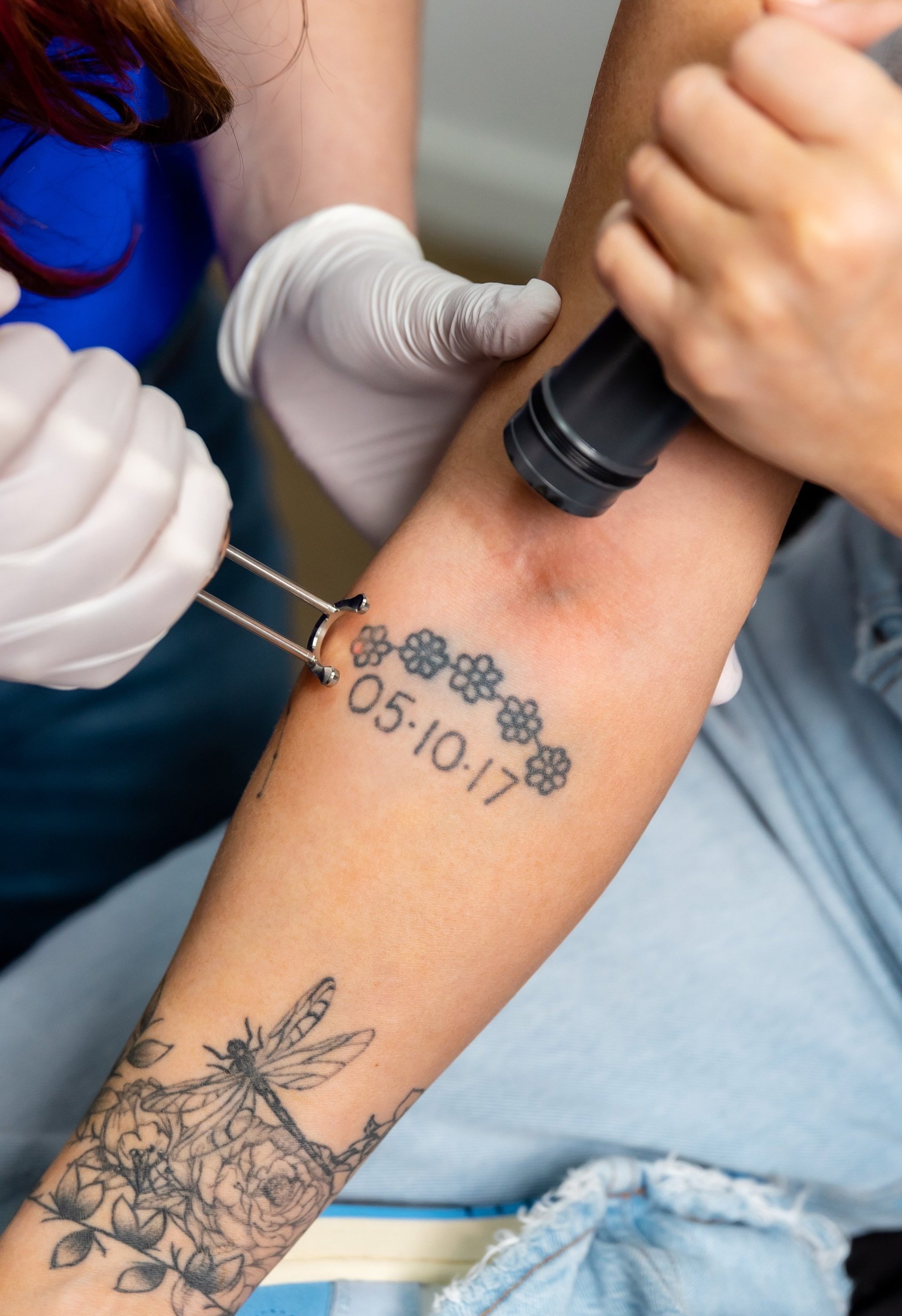
Tattoo Removal Laser Sessions: How Many Do You Need by Color?
How tattoo removal lasers actually break down ink, why black, red, and green each need a different wavelength, how many sessions different tattoo types really take, and why permanent eyebrows sometimes turn darker instead of fading, explained simply with real research numbers.
By Dr. Kim
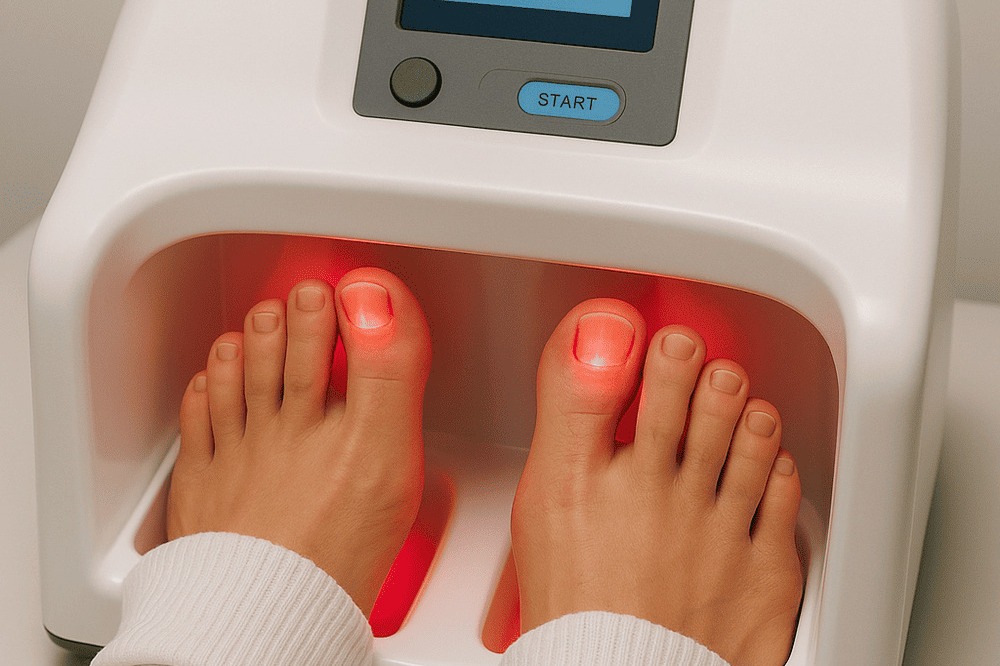
Toenail Fungus Laser: Effectiveness, Cure Rate, and Number of Treatments
Why laser is used for yellowed, thickened nail fungus, how the 1064nm Nd:YAG laser uses heat to fight fungus, how its cure rate compares with oral terbinafine and topical treatment, how many sessions it takes, and how to prevent relapse and keep results lasting, all explained with real study numbers.
By Dr. Lee
Nasolabial Fold Treatment: Which Is Right for You, Filler or Thread Lift?
Whether your nasolabial folds come from sagging, lost volume, or aging skin decides whether filler, thread lifting, or a collagen stimulator is the right call. Here is what actually works for each cause, how long the results hold, and how to stay safe around the vessels beside the nose, all explained simply with real study numbers.
By Dr. Lee