miraDry Underarm Sweat Treatment: Results, How Long It Lasts, Sessions, and Recovery
By Dr. Lee7 min read
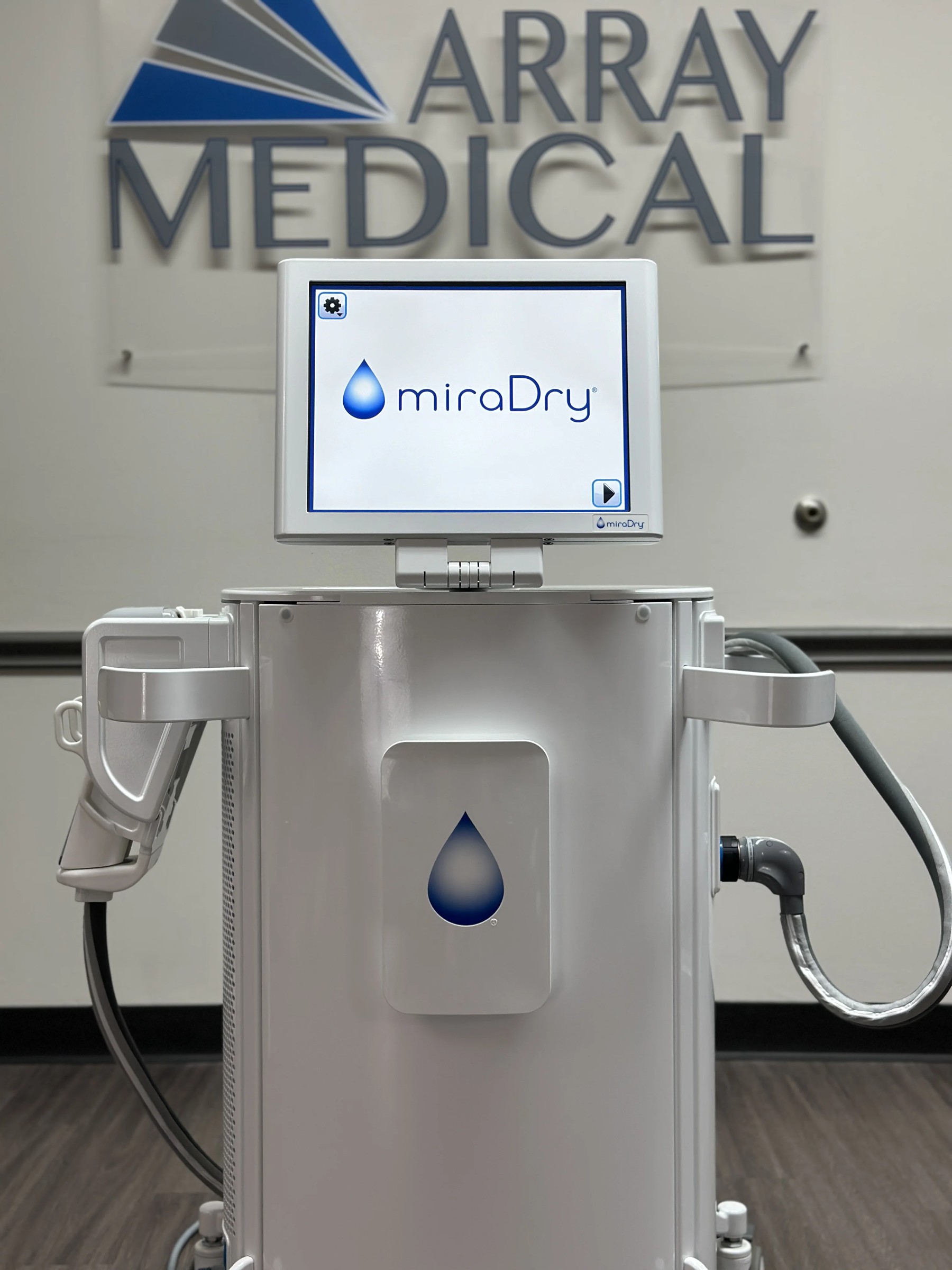
Once summer arrives, some people start choosing their outfits around underarm sweat. Light colors get ruled out entirely, hands keep drifting toward the underarms, and worry about sweat sets in before every social occasion. This kind of hyperhidrosis isn't simply sweating a bit more than average. It means the sweat glands themselves are working far more actively than everyone else's.
miraDry takes a completely different approach: it eliminates the sweat glands themselves. The mechanism has nothing in common with Botox, which uses an injection to temporarily block the signal that tells glands to sweat. miraDry instead aims a specific type of energy, microwaves, precisely beneath the underarm skin and destroys the sweat and odor glands with heat, exactly where they sit.
Below, we go through why this approach lasts so long, the mechanism behind targeting only the sweat glands, and why it's mainly used on the underarms rather than other parts of the body.
Why are there so many sweat glands in the underarms?
Sweat glands are distributed across the entire body, but the underarms carry an especially high density of them. This is one of the few areas where eccrine glands (which produce watery sweat) and apocrine glands (which produce the oily secretion behind body odor) sit clustered together.
Eccrine glands exist mainly to regulate body temperature, releasing sweat to cool the body when it heats up. Apocrine glands switch on after puberty, and their secretion develops its characteristic smell once it meets bacteria on the skin's surface. That's also why apocrine glands cluster in hair-bearing areas like the underarms and groin.
People with hyperhidrosis have been reported to carry more of both gland types genetically, or glands that respond more sensitively to sympathetic nervous system stimulation. In effect, their sweat glands run on a more sensitive switch. Even mild stress or a slight rise in temperature sets them off first, which is why underarm sweat and odor so often become a combined concern.
How do microwaves heat only the sweat glands?
Microwaves are the same electromagnetic energy used in a kitchen microwave oven. When electromagnetic waves at a certain frequency pass through tissue and interact with water molecules, heat is generated. A microwave oven heats food by agitating the water inside it, and miraDry applies that same principle directly to the layer of skin where the sweat glands sit.
The miraDry device doesn't deliver this energy to the surface of the skin. It focuses on the layer beneath the epidermis and dermis where the sweat glands are concentrated. Underarm skin thickness varies from person to person, but the sweat glands generally sit within a fairly consistent depth range, and the device targets that depth band to concentrate its energy.
At the same time, a cooling plate stays in contact with the skin surface and continuously cools it. That way, enough heat reaches the deep layer where the glands sit, while the shallow epidermis is protected from burns. It works something like a compress that keeps the surface cool while heating only what's underneath. That combination of cooling and heating is the core of miraDry's design.
Can it be used for sweaty hands and feet?
miraDry delivers its energy through a handheld device pressed directly against the skin. For this method to work properly, the flat underside of the device needs stable, even contact with a flat surface of skin.
The underarms are a relatively broad, flat area, which makes it easy to get even contact with the device. Palms and soles, on the other hand, have much more contour and far less flat surface area, which makes it much harder to deliver energy evenly the same way. That's why hand and foot hyperhidrosis is more commonly managed with other approaches, like iontophoresis or oral medication.
The underarms also have sweat glands packed into a relatively shallow, narrow layer, which allows for precise targeting. Hands and feet have sweat glands spread across a much wider depth range, with nerves and blood vessels running densely through the tissue as well. That leaves a single-device approach facing considerable structural constraints.
Do eliminated sweat glands grow back?
This is where miraDry diverges most sharply from Botox. Botox works by blocking the release of acetylcholine, the substance that carries the nerve signal to sweat glands, which temporarily puts the glands to sleep. Because the cell function that produces that neurotransmitter recovers over time, sweating typically returns after 4 to 6 months.
miraDry, in contrast, damages the sweat gland tissue itself with heat. Once a cell's protein structure breaks down past a certain temperature, the cell cannot regain normal function, in much the same way a hard-boiled egg can't turn back into a raw one. The heat-damaged sweat gland cells die or lose function, and the body gradually absorbs and clears them away.
The key point is that the number of underarm sweat glands doesn't increase once a person reaches adulthood. Sweat gland count is set around the time of birth, and no additional glands are known to form afterward. That means new sweat glands don't grow back where the treated ones used to be, which is why miraDry's results are reported to be long-lasting.
How many sessions do you need?
Eliminating every sweat gland in the underarm perfectly in a single session isn't easy, because the area the device's energy reaches doesn't line up exactly with the full underarm surface.
- The edges and border areas of the underarm can receive relatively weaker energy delivery, so some sweat glands may be left untreated after the first session.
- Sweat gland depth and density vary from person to person, so standard device settings may not deliver enough heat to reach every gland.
- People with a larger underarm area can be hard to cover fully within a single treatment pass, so the applicator is sometimes repositioned and the area treated again.
- For this reason, treatment is often done in about 2 sessions spaced 6 weeks to 3 months apart, with the second session clearing whatever glands remained after the first.
There's a reason for the spacing, too. The tissue needs to go through swelling and recovery after the first session before the next session can be targeted accurately. If heat is applied again while swelling is still present, it becomes difficult to tell which areas have already been treated.
Swelling and recovery time after treatment
Even though only the sweat glands are targeted for removal, the surrounding tissue is affected by the heat energy as well. That's why swelling, stiffness, and temporary numbness are common afterward.
- Swelling is a natural inflammatory response as fluid gathers around the heat-damaged tissue. It's usually most intense between 2 and 5 days after treatment, and settles within 1 to 2 weeks.
- Stiffness or a pulling sensation appears as the dermis and subcutaneous tissue recover after being exposed to heat.
- Some people report limited arm movement for a stretch afterward. This happens because the treated tissue is temporarily more sensitive, and it resolves for most people as time passes.
- The area may feel slightly lumpy to the touch, which is understood to be a temporary change that occurs as the damaged tissue is absorbed by the body.
All of these reactions ultimately reflect the body's own process of clearing away the damaged sweat gland tissue. Once the swelling and stiffness of the first 1 to 2 weeks pass, the area settles naturally, minus the sweat glands.
Does it reduce body odor too?
Apocrine glands are the main source of odor. miraDry doesn't distinguish between eccrine and apocrine glands when targeting them; it delivers heat to all the sweat gland tissue sitting within that depth layer.
As a result, a reduction in sweating has been reported to come along with a reduction in the secretions that cause odor. Because the two gland types are intermixed at similar depths, a treatment aimed at one naturally affects both. This mechanism is also why many people seek out miraDry specifically to reduce sweat odor.
Why results vary from person to person
Sweat gland count and distribution differ from person to person. Some people are genetically predisposed to a higher density of glands, while others have relatively fewer. Because of this variation, the degree of improvement people notice after treatment can differ from one individual to the next.
There is also some discussion that, considering the body's overall capacity for sweating, other sweat glands may compensate to some degree even after a portion of the underarm glands is eliminated, since the body doesn't rely on the underarms alone to regulate its temperature. That said, clear improvement in underarm sweat and odor themselves is commonly reported.
References
Korean Dermatological Association, Ministry of Food and Drug Safety (MFDS), American Academy of Dermatology (AAD), and U.S. Food and Drug Administration (FDA).
Was this helpful?
About this article
Written by a practising aesthetic physician and intended for general education — not a substitute for individual medical advice.
Read next

Body Onda: Effects, Approach by Area, Number of Sessions and How Long It Lasts
Body Onda is a non-surgical body contouring treatment that uses microwave energy to selectively heat the fat layer beneath the skin, shrinking fat cells while tightening the skin above them. Here is why the heat targets fat rather than skin, why fat reduction and tightening happen together, how the approach differs for the abdomen, arms, and flanks, and how many sessions it takes to see lasting results.
By Dr. Kim
Skin Booster Injection and Filler Differences: Hyaluronic Acid Hydration and Duration
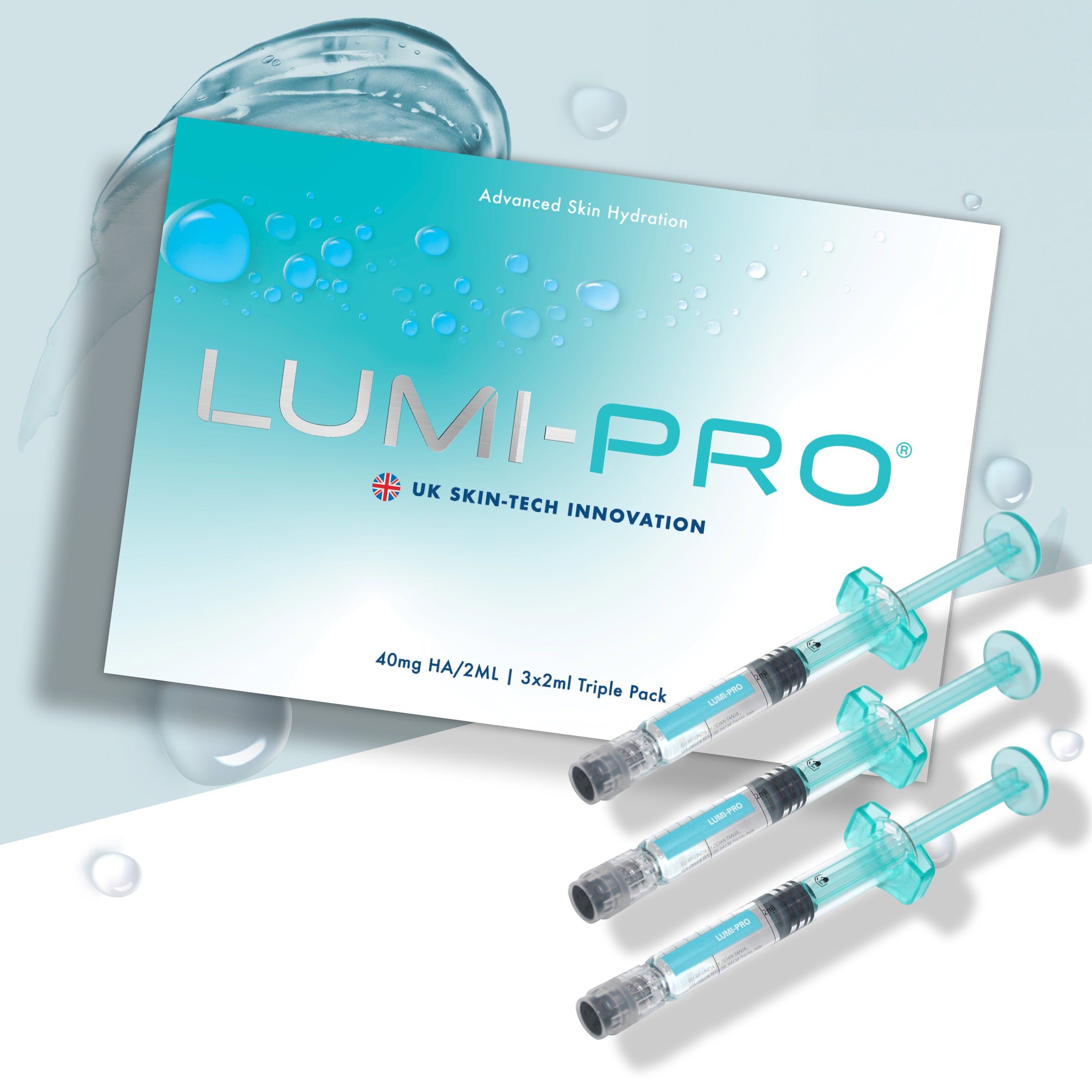
Skin boosters feel far more hydrating than anything you apply topically. Here is why: how hyaluronic acid grabs water deep inside the dermis, how that inner glow actually forms, how it differs from dermal filler, and how long the effect really lasts, explained simply.
By Dr. Lee
Onda Microwave Treatment: How Many Sessions, and How Long Do Results Last?
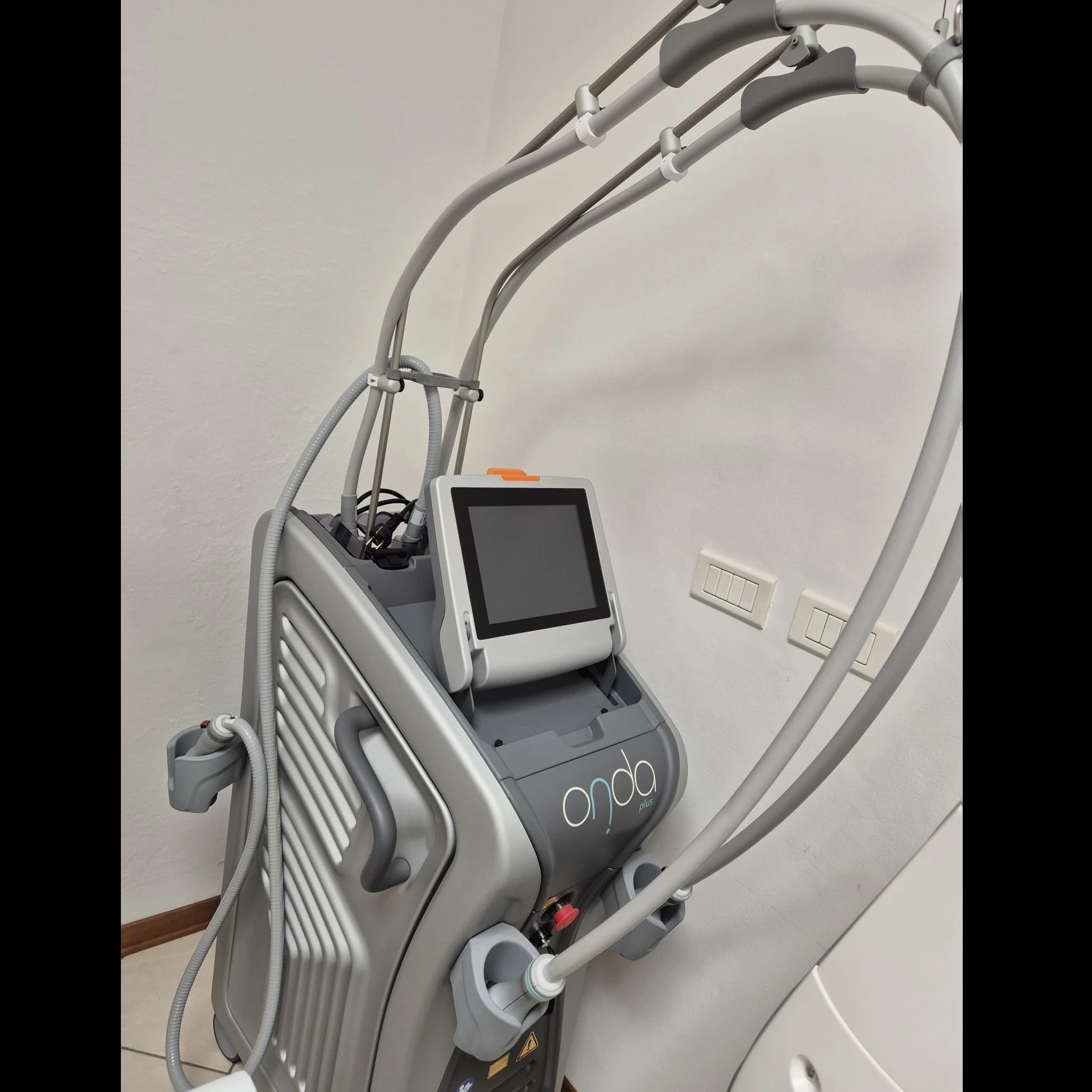
Onda uses microwave energy, the same technology behind a microwave oven, to heat the skin from within and act on fat cells and collagen at once. This article breaks down why microwaves reach deep into the fat layer, and why fat reduction and skin tightening happen together in a single session.
By Dr. Kim