Mid-Cheek Filler: Restoring Hollow Cheeks and Sagging Together
By Dr. Kim7 min read
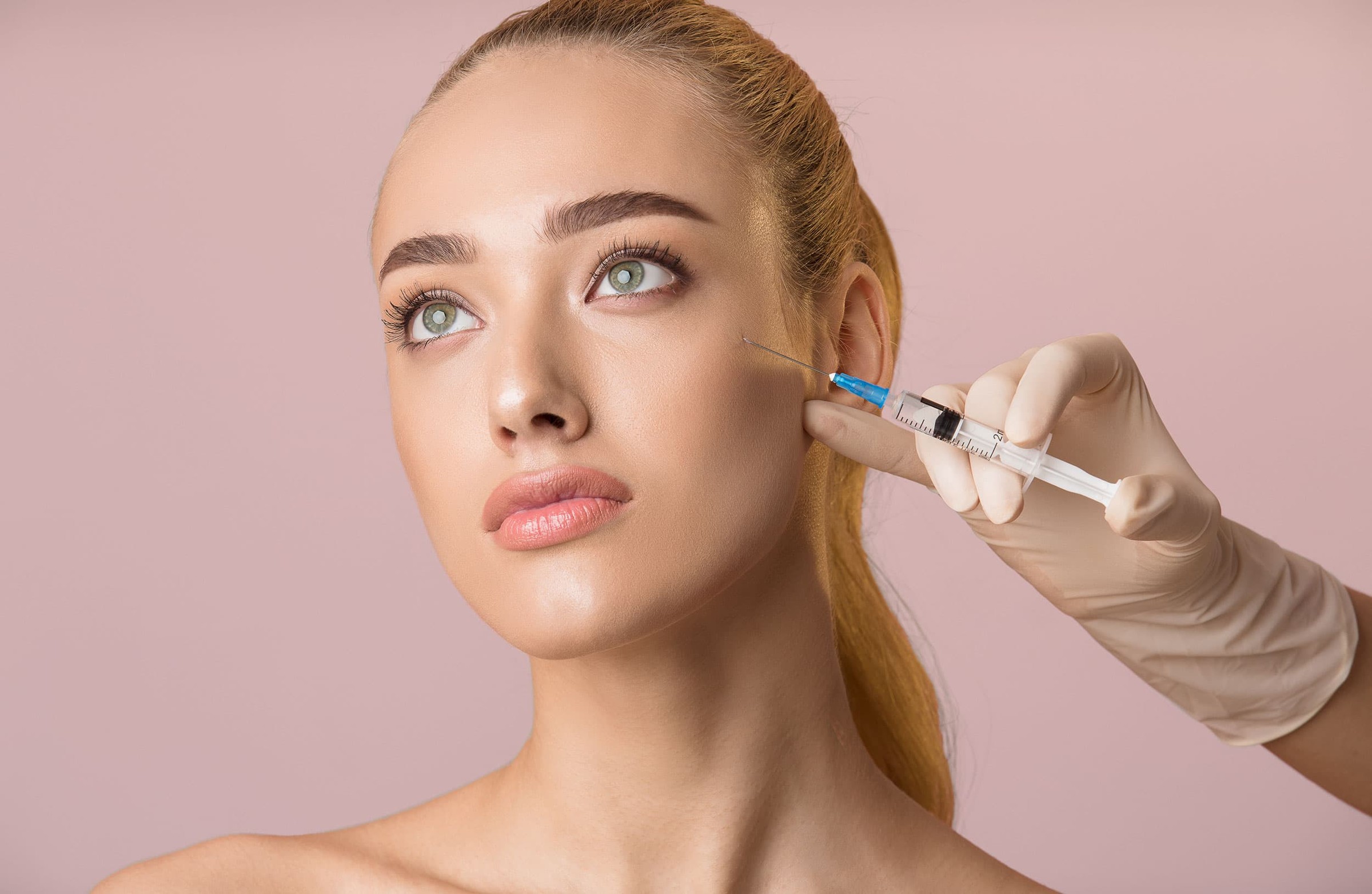
If the area between your lower eyelid and cheekbone looks unusually sunken when you check the mirror, that spot is called the mid-cheek. It sits right in the center of the face, bridging the under-eye area and the cheekbone. When it hollows out, the whole face can look shadowed and tired, and it often reads as older than your actual age.
Most people assume this is purely a sagging problem, so they go looking for a lifting treatment first. But the mid-cheek is a spot where hollowing and sagging happen together, which means it also needs an approach that restores the lost volume itself. Pulling tissue upward will not bring back volume that has already disappeared. Here is why this area hollows out in particular, and how filler works to fill it back in.
Why do cheeks hollow first with age?
Beneath the mid-cheek sits a cluster of fat known as the malar fat pad, the layer of fat under the skin at the cheekbone. This layer is what gives the face its soft volume. As we age, though, the volume of this fat layer itself starts to shrink.
Fat cells throughout the body change in both size and number with age, and the face is no exception. The shallow fat layer running from the under-eye area to the cheekbone tends to thin out earlier than fat in other parts of the face. So a spot that looked full in your twenties can gradually start to look sunken.
Bone changes play a role too. The cheekbone and upper jawbone slowly resorb at the surface with age, meaning their volume decreases. The underlying skeletal framework that once supported the face literally gets smaller. With both fat and bone shrinking at once, the skin covering them loses its support and starts to look hollow.
How do ligaments and bone affect the midface?
Under the skin of the face, ligaments (fibrous, cord-like structures that anchor skin firmly to bone) sit in various spots. The cheek area has its own set of these ligaments, and their job is to keep the fat layer and skin from drifting out of place.
Over time, though, these ligaments gradually stretch and loosen, much like a rubber band that has lost its elasticity after years of use. Once the ligaments loosen, the fat layer that used to sit higher up starts to slide downward under gravity.
So the mid-cheek does not hollow out for just one reason. It is the combined result of three separate changes: fat loss, bone resorption, and loosened ligaments. That is why treating this area works best when it accounts for both volume and structural support, rather than focusing on just one factor.
How does mid-cheek filler restore volume?
Mid-cheek filler is most often made from hyaluronic acid (HA, a sugar-based substance naturally found in skin and joints that has a strong ability to hold onto water). It is injected either into the space once occupied by the thinned fat layer, or into a deeper layer, to replace the volume that has been lost.
How deep the filler goes depends on the goal. Placing it right above the periosteum (the thin membrane covering bone) helps compensate for the skeletal volume lost to bone resorption. Placing it a bit more shallowly, closer to where the fat layer used to sit, creates volume with a softer texture closer to natural cheek tissue.
That is why the injector assesses each patient's facial structure to decide which layer to target and how much to use. If significant bone resorption is present, the approach leans toward the deeper layer. If it is mainly the fat layer that has thinned, a shallower layer is factored in as well. This is why the technique can vary even when treating the same area, depending on the underlying cause.
The amount injected in a single session matters too. Filling in too much volume relative to how hollow the area actually is can leave the face looking puffy or artificially rounded. For that reason, many injectors recommend filling only part of the needed volume at first, then reassessing and adding more over time, giving the tissue time to adjust to the filler.
Why does restoring volume also improve sagging?
As mentioned earlier, the mid-cheek is a spot where hollowing and sagging occur together. Interestingly, restoring volume alone often resolves much of the sagging as well. The reason becomes clear once you think about the underlying structure.
When filler is placed in a deeper layer, the skin and fat sitting above it get lifted up by the added volume, much like how a tent pole pulls the fabric above it taut once it is raised. With the pole, in this case the filler, providing support from below, the tissue that had been drooping naturally rises back into place.
This is different from a thread lift or other technique that physically pulls tissue upward. Instead, it builds new support from underneath and lets the tissue above settle into position on its own. That is why, even in cases where nasolabial folds looked deep or the under-eye boundary was sharply defined, restoring mid-cheek volume often softens that boundary noticeably.
Mid-cheek filler side effects and precautions
Because the mid-cheek responds so well to treatment, it is also an area that demands close anatomical attention. Major blood vessels that supply the face run through this region, and there is also a small opening beneath the eye, the infraorbital foramen, through which a nerve passes.
If filler is accidentally injected into a blood vessel, it can block that vessel and lead to rare but serious complications such as skin necrosis or vision problems. For that reason, this area calls for an injector who understands the anatomy precisely and knows how to inject at a safe layer and angle that avoids the vessels.
Hyaluronic acid filler also has the advantage of being reversible if something goes wrong, using hyaluronidase (an enzyme injection that breaks down filler). Because it can be dissolved more easily than other filler types, it is often considered a relatively reassuring option even for first-time patients.
This is also why a pre-treatment consultation includes questions about vascular conditions or any medications that affect bleeding. That information lets the injector adjust the injection speed and technique more carefully. Ultimately, a safe procedure starts with accurate information shared upfront.
What determines a natural-looking result?
Even with the same mid-cheek filler, results can look different from person to person because facial structure and injection technique both vary. A few factors work together to shape how natural the final result looks.
- Facial bone shape: Whether the underlying cheekbones are wide and angular or narrow and slender changes how the same amount of filler ultimately reads on the face, since bone structure determines the direction the added volume takes.
- Degree of fat loss and bone resorption: How far each of these has progressed determines the amount of filler needed and how deep it should go, since a different underlying cause calls for a different target layer.
- Physical properties of the filler product: Products vary in how firmly they hold their shape and how softly they spread, so the right texture depends on whether the goal is structural support or a softer, more natural feel.
- The injector's anatomical experience: An injector who knows the vascular anatomy and layers precisely can achieve a safer, more natural result with the same amount of product, since the final outcome often comes down to skill more than the product itself.
Because these four factors interact with one another, taking the time during consultation to assess your own facial structure and determine the right area and amount is the most reliable path to a natural-looking result.
References
Korean Dermatological Association, American Academy of Dermatology (AAD), and Ministry of Food and Drug Safety (MFDS).
Was this helpful?
About this article
Written by a practising aesthetic physician and intended for general education — not a substitute for individual medical advice.
Read next
Tear Trough Filler Duration and Side Effects, Including Vessel Risks
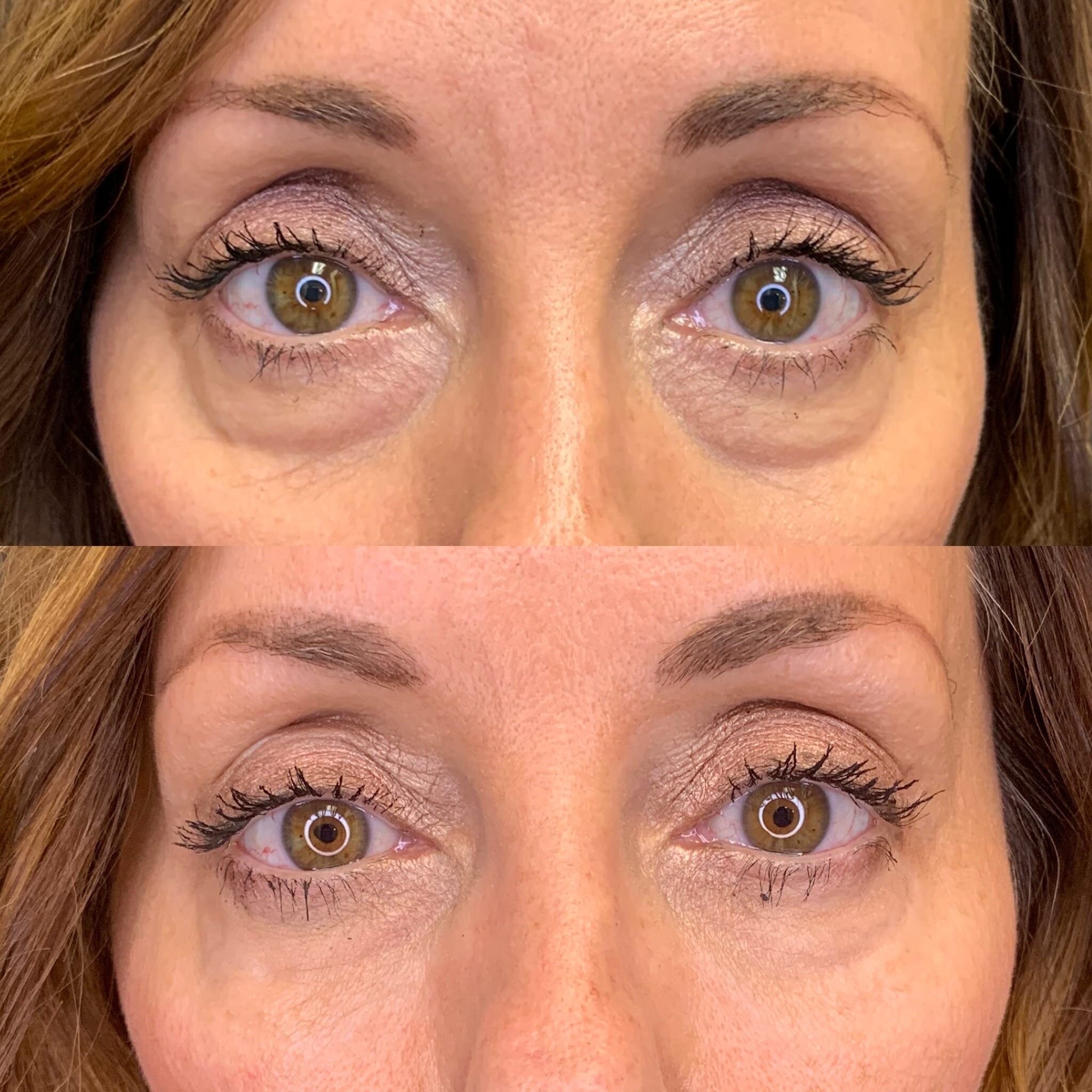
The hollow that forms just under the under-eye fat pad, the tear trough, improves when filler physically fills that empty space. But skin and blood vessels are thin in this area, so there are separate precautions around cannula technique and the Tyndall effect. Here is how the filling works, how long results last, and what recovery looks like.
By Dr. Kim
Anterior Cheek Filler: Effects and How It Improves Nasolabial Folds and Sagging Together
Why sunken cheeks and a hollow midface make a face look tired and older, and how restoring cheek volume with filler can soften nasolabial folds and sagging together. This guide covers the elasticity and firmness of volumizing HA fillers, how cannula technique and injection depth help avoid vascular complications, and what the research shows about hyaluronidase reversal and how long results last.
By Dr. Kim

Body Onda: Effects, Approach by Area, Number of Sessions and How Long It Lasts
Body Onda is a non-surgical body contouring treatment that uses microwave energy to selectively heat the fat layer beneath the skin, shrinking fat cells while tightening the skin above them. Here is why the heat targets fat rather than skin, why fat reduction and tightening happen together, how the approach differs for the abdomen, arms, and flanks, and how many sessions it takes to see lasting results.
By Dr. Kim