Anterior Cheek Filler: Effects and How It Improves Nasolabial Folds and Sagging Together
By Dr. Kim9 min read
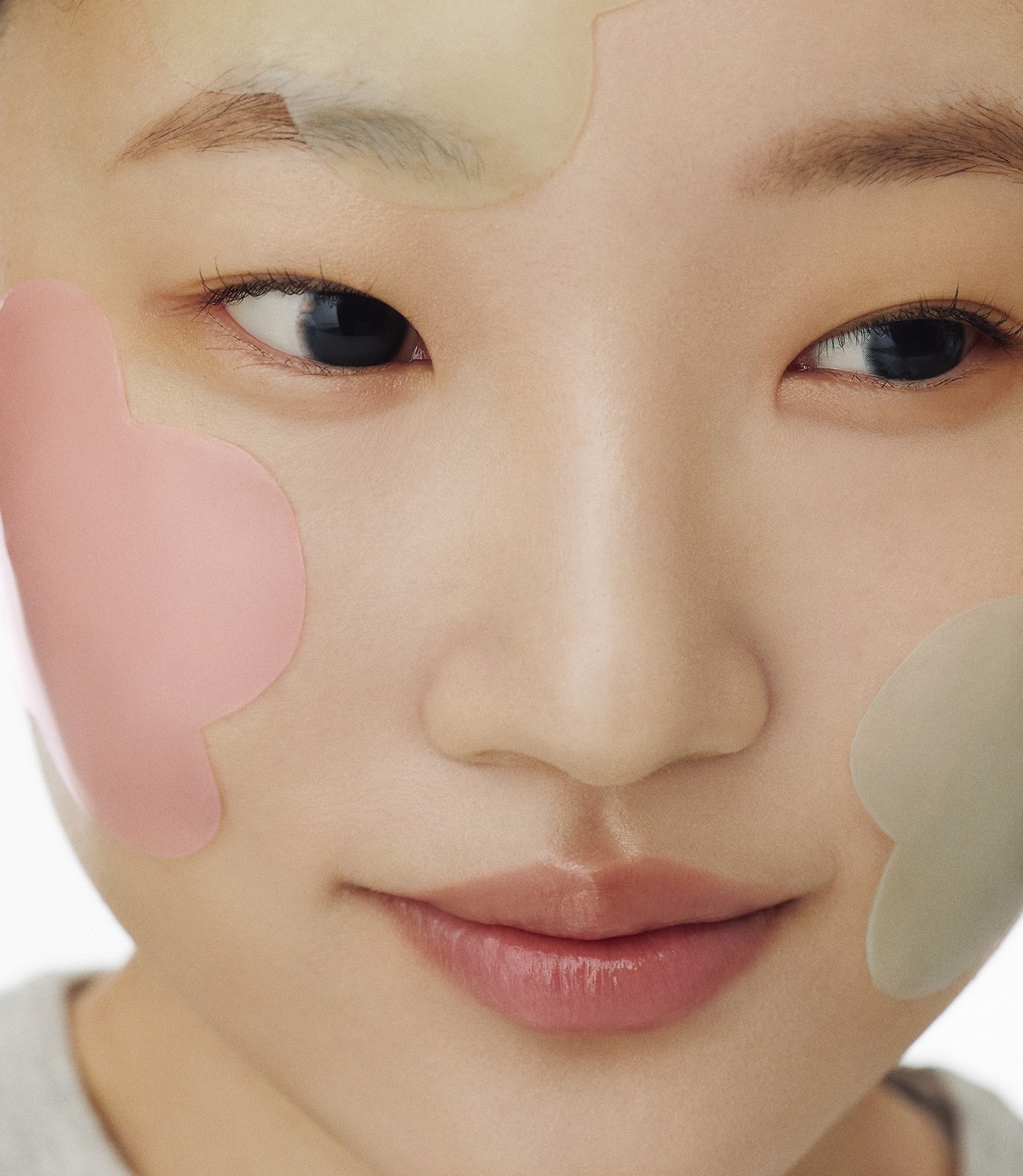
You look fine straight on in the mirror, but somehow the same face looks tired in photos taken from the side or at a three-quarter angle. When the area under the eyes and the upper cheekbone go flat and hollow, a shadow falls across the inner cheek, and the whole face reads older and more worn out than it actually is. The midface is supposed to be the highest, most light-catching part of the face. Once it starts to sink, the tissue below it seems to slide downward too, deepening the nasolabial folds and the shadow around the mouth. That is why so many people now skip filling the fold itself and instead restore volume higher up, in the cheek and upper cheekbone, to lift the whole face at once. The cheek does sit close to blood vessels that connect toward the eye, though, so knowing which filler goes into which layer ahead of time makes it much easier to walk into a consultation with confidence.
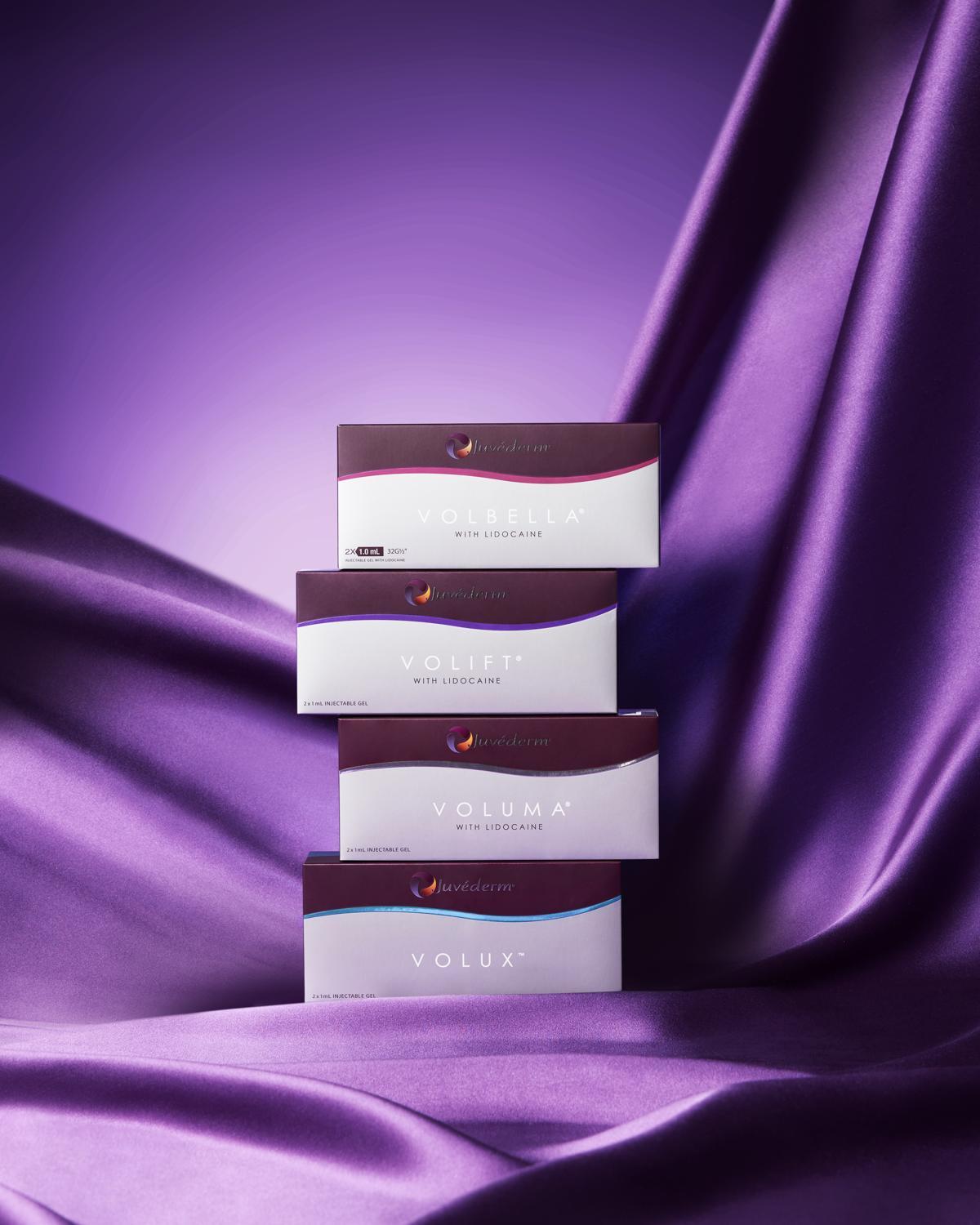
Why does a sunken midface make you look older?
The midface is the highest point of the face, the part that catches the most light. When it stays full and taut, the face looks three-dimensional, young, and full of life. As we age, though, this high point gradually flattens for several reasons.
First, the maxilla and the bone beneath the eye socket slowly resorb, lowering the scaffolding that everything else rests on. The deep cheek fat that used to fill that space loses volume and starts sagging, and once the ligaments that anchor the fat loosen, the whole cheek slides down. The cheekbone flattens, the tissue beneath it folds over itself, and both the nasolabial fold and cheek sagging become more noticeable at the same time.
So the real starting point of an aged look is often lost midface volume, not the wrinkle itself. As the under-eye area hollows, it casts a shadow that looks like a dark circle, and as the cheek drops, even the jawline underneath starts to look blurred. This is also why filling the nasolabial fold on its own can end up looking unnatural. If lost volume is the cause, restoring what sank is the place to start. The table below lays out how these changes overlap.
| Cause | Location | Visible Effect |
|---|---|---|
| Bone resorption | Maxilla, under-eye bone | Lower scaffolding |
| Fat loss | Deep cheek fat | Volume loss |
| Loosened ligaments | Cheek support ligaments | Sagging, nasolabial folds |
Does filling the cheeks soften nasolabial folds too?
The nasolabial fold is simply the crease that forms when the cheek sinks and slides downward. No matter how much you fill the crease itself, it deepens again quickly if the cheek above it keeps sagging. Filling the sunken cheekbone to rebuild that support works the other way: the tissue that was drooping over it gets pulled back up, and both the fold and the cheek sagging soften at the same time. It works the same way a collapsed post does. Prop the post back up, and the fabric draped over it pulls taut again.
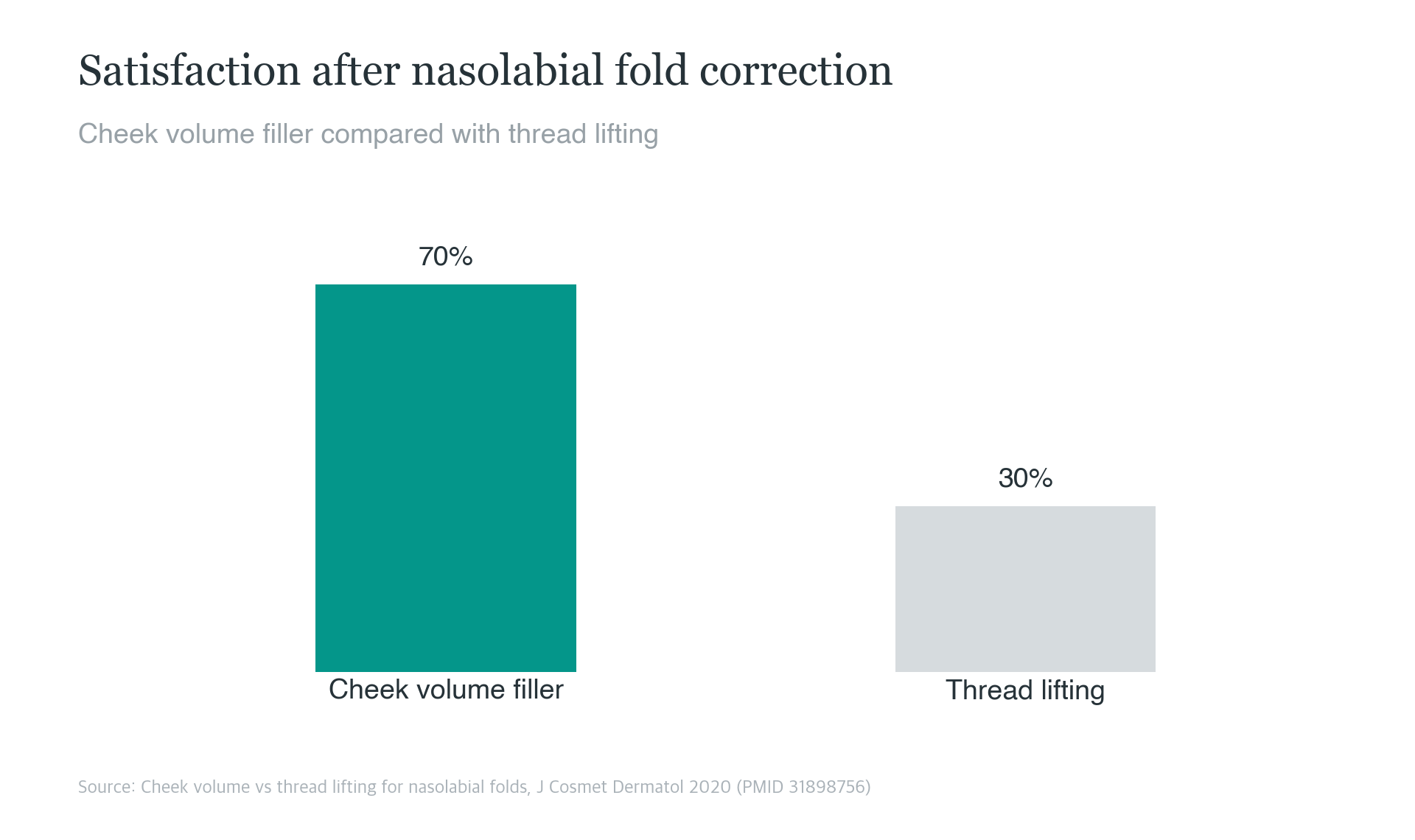
A study comparing these two approaches in people with deep nasolabial folds found that 7 in 10 patients were satisfied after volume was restored to the cheekbone, compared with only 3 in 10 after thread lifting. Rebuilding the sunken support first led to a more natural improvement than pulling the sagging skin upward from above.
That's why, even when someone comes in specifically about nasolabial folds, we look at the cheek and cheekbone first. If volume loss is the underlying cause, filling that area tends to give better, longer-lasting results. It also brings back the natural highlight along the cheekbone, which makes the whole face look younger. That said, filler alone has its limits when sagging is severe, and combining it with a lifting procedure usually works better in those cases.
Why use a firm product for cheek filler?
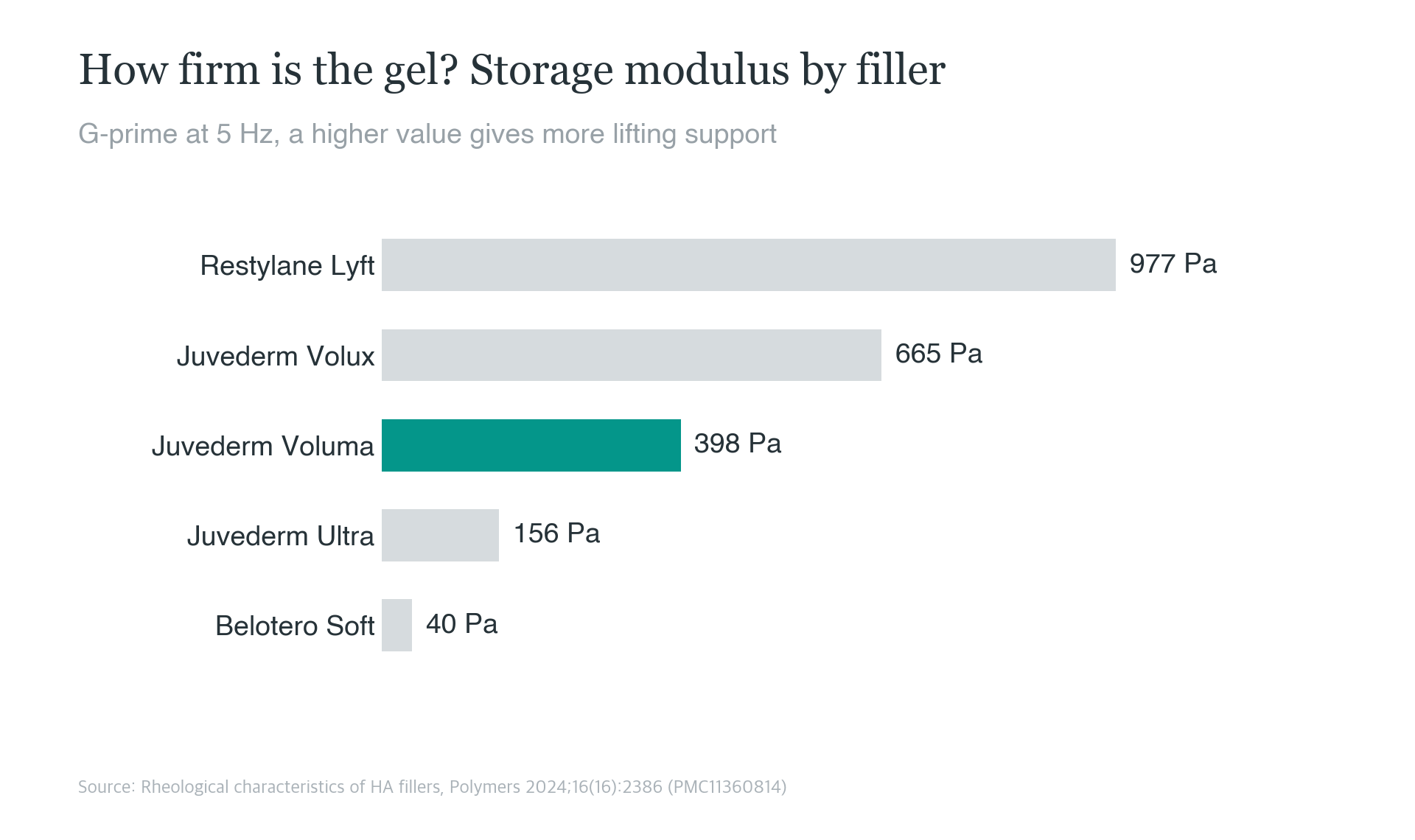
Not all fillers are the same gel with different names. Each product has its own firmness, and that firmness is measured by a value called G-prime. Think of it as how much a piece of jelly springs back into shape after you press it with a finger. The higher the G-prime, the more the gel resists spreading under pressure and the more lift and structure it can hold.
The cheek and cheekbone need to support a wide, deep surface right against the bone. A soft filler placed there gets pushed sideways and bunches up every time you smile or chew, and the volume settles quickly. That's why firmer products with a higher G-prime are the standard choice for deep volumizing. Looking at the graph above, Belotero Soft, which is used in shallow layers, sits at around 40, while Voluma, a common choice for cheek volume, comes in at 398, and the firmer Restylane Lyft reaches 977.
Firmer isn't automatically better, though. Placing a firm product too close to the surface in thin-skinned areas like under the eyes tends to look obvious and lumpy, and pooled gel can even show through as a bluish tint under the skin. So even within the same cheek, it's common to use a firmer product for deep volume and a softer one to smooth the surface on top. Which layer gets which product is really what decides how natural the final result looks.
Injection layer and tools that avoid vessel accidents
The cheek looks wide and flat enough to be safe, but the facial artery, its branch the angular artery, and the infraorbital artery emerging below the eye socket all run through this area. These vessels connect to the blood supply of the eye, so if filler is accidentally injected into a vessel and travels backward, it can, in rare cases, cause skin necrosis or vision loss.
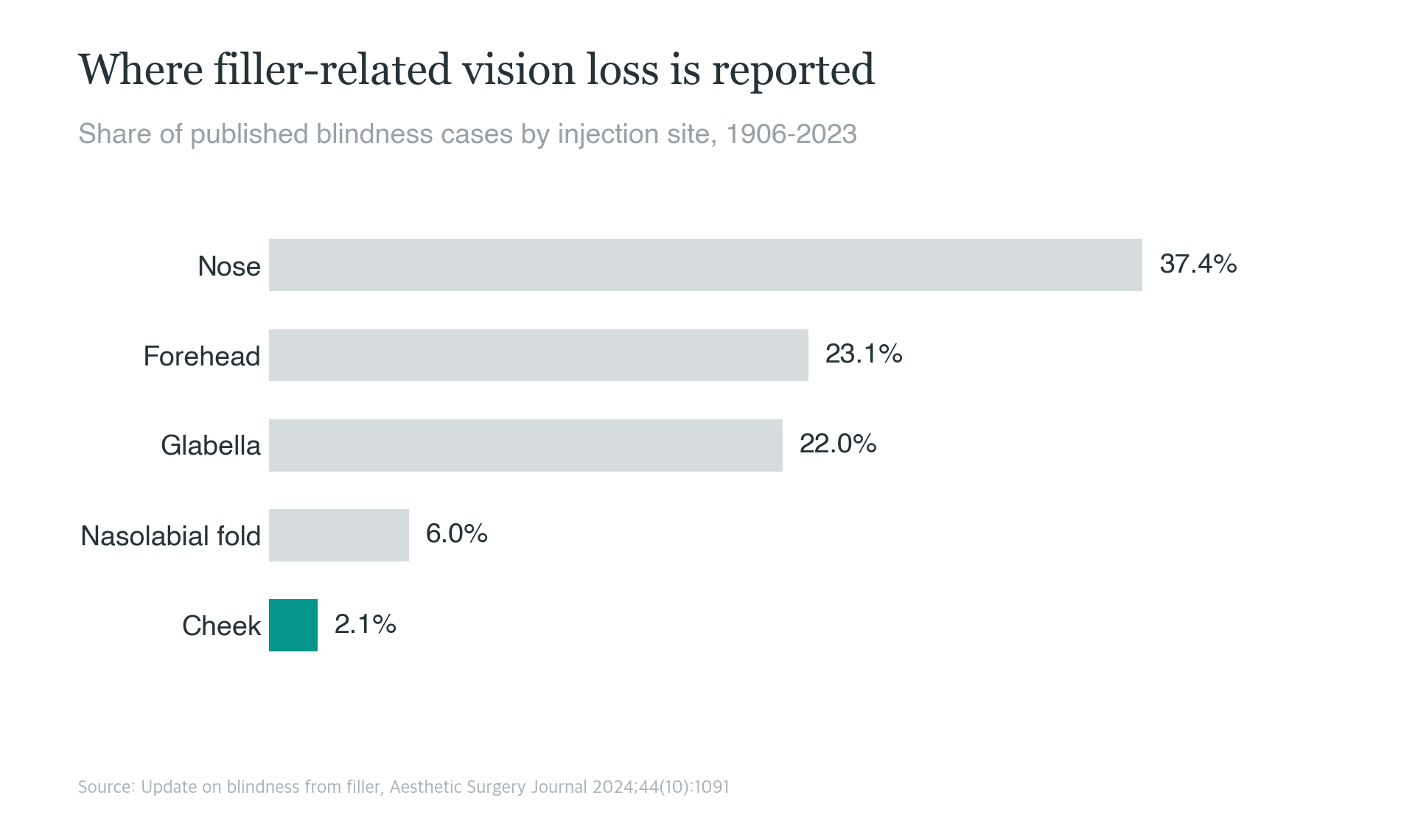
As the graph above shows, when filler-related vision loss cases are broken down by injection site, the nose accounts for the most at 37.4%, and the cheek itself is fairly rare at 2.1%. The nasolabial fold, which sits right next to the cheek, comes in at 6%, though, which isn't negligible, so extra care is needed when working under the cheekbone.
The basics of reducing risk come down to injection depth and technique. Placing volume deep, just above the periosteum, avoids the shallower layer where the vessels run, and using a blunt-tipped cannula instead of a sharp needle lets it push vessels aside rather than pierce them, lowering the risk further. On top of that, the rule is to inject slowly in small amounts rather than pushing a large volume at once. Gently pulling back on the syringe to check for blood return before injecting also helps. Even so, if sudden severe pain, skin blanching, or blurred vision occurs during injection, treatment must stop immediately and be addressed right away.
How long does cheek filler last?
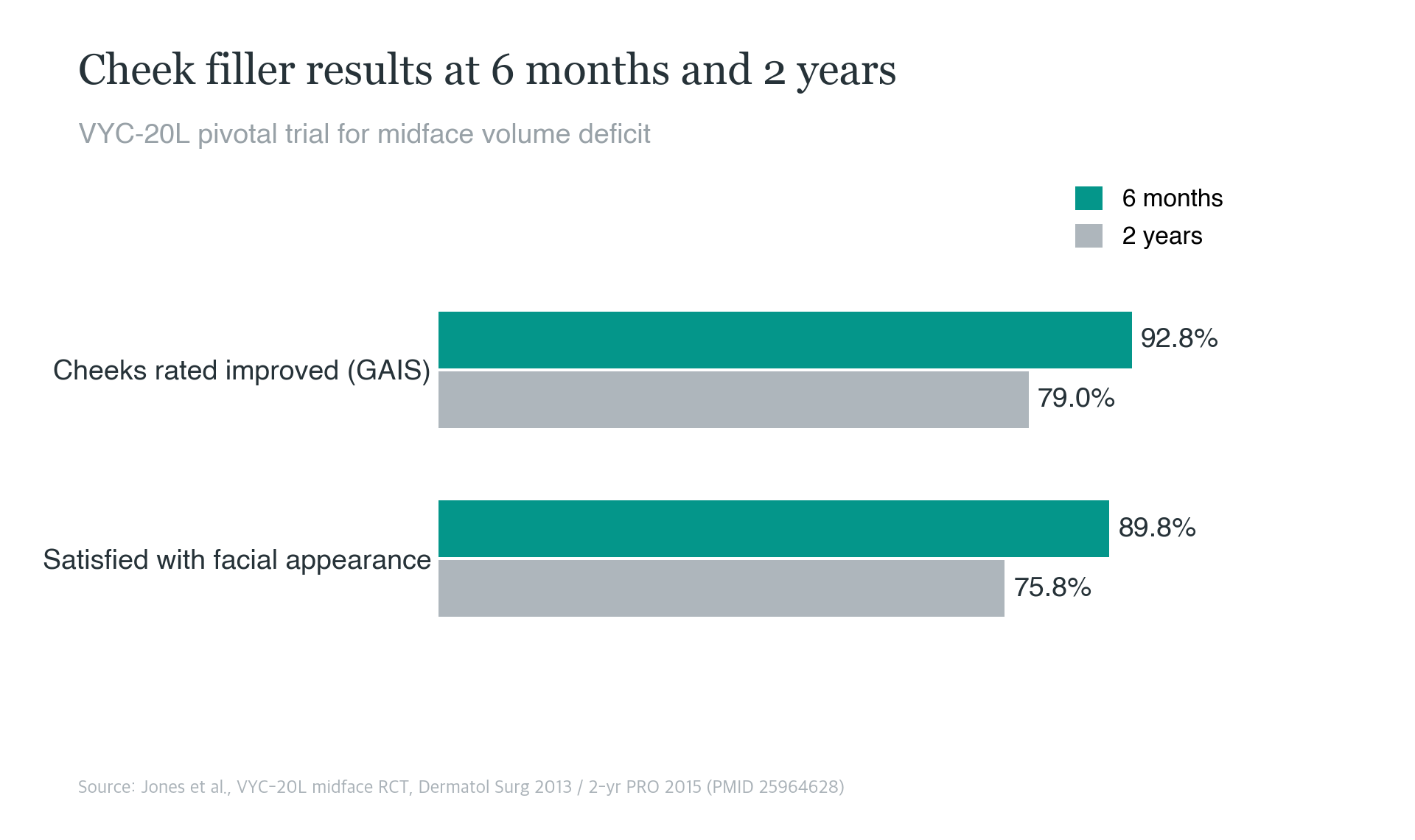
One of the biggest advantages of cheek filler is how long it lasts. In a large clinical study using a volumizing product, 92.8% of patients rated their cheeks as improved at 6 months, and 79.0% still reported improvement at the 2-year mark. Overall facial satisfaction followed a similar pattern, holding at 89.8% at 6 months and 75.8% at 2 years, meaning roughly 3 out of 4 patients stayed satisfied. Almost half still had their original correction visibly intact at the 2-year point.
Because the results last this long, it's important not to overfill from the start. Injecting a large volume in one session can make the cheeks look puffy when you smile, and hyaluronic acid absorbs water over time, so the area can end up looking even bigger than intended. This is what people mean by an overfilled, or "filler face," look. An overprojected cheekbone doesn't read as youthful either. It just looks artificial.
Starting slightly conservative and adding small amounts over time as you watch how the results settle is the safer, more natural approach. The cheek moves constantly with expression, so deciding on volume based only on a resting face can leave it looking lumpy when you smile. Checking the profile and a smiling expression, not just the front view, before deciding how much to inject makes it much easier to get a result that brightens the face without ever looking obvious.

Who is it right for, and how can it be reversed?
Cheek filler works best for people whose cheekbone has flattened and nasolabial folds have deepened due to bone and fat loss. If sagging is severe or the cheek itself is naturally full and heavy, a lifting procedure or a different approach may work better than filler, so it's worth identifying the underlying cause first. It should be avoided during pregnancy or breastfeeding, if there's active inflammation or infection in the cheek area, or by anyone with a history of hypersensitivity to hyaluronic acid.
Since most cheek fillers are HA-based, one big advantage is that they can be reversed with hyaluronidase, an injectable enzyme that dissolves the gel, if something goes wrong. It's used not only when a patient is unhappy with the result or the filler has bunched up, but also whenever there's a sign of vascular occlusion. If severe pain, skin blanching, or a mottled, net-like discoloration shows up, a high dose of hyaluronidase is injected directly into that spot to dissolve the filler and restore blood flow.
Reversal is a race against time, though. The longer a vessel stays blocked, the harder it becomes for tissue to recover, so catching the warning signs early and acting immediately matters more than anything else. That's why it's safest to get cheek filler at a clinic with real injection experience and hyaluronidase ready for emergencies. If pain or discoloration continues after the procedure, don't wait it out. Contact the clinic right away.
| Category | Good Fit | Worth Reconsidering |
|---|---|---|
| Candidate | Volume loss, mild folds | Severe sagging, full cheeks |
| Product | Firm volumizing HA | Soft product for thin skin |
| Safety | Cannula, deep layer | Hyaluronidase if issues arise |
Was this helpful?
About this article
Written by a practising aesthetic physician and intended for general education — not a substitute for individual medical advice.
Read next
Under-Eye Hollow Filler: Effect and Side Effects, and the Tyndall Effect to Watch
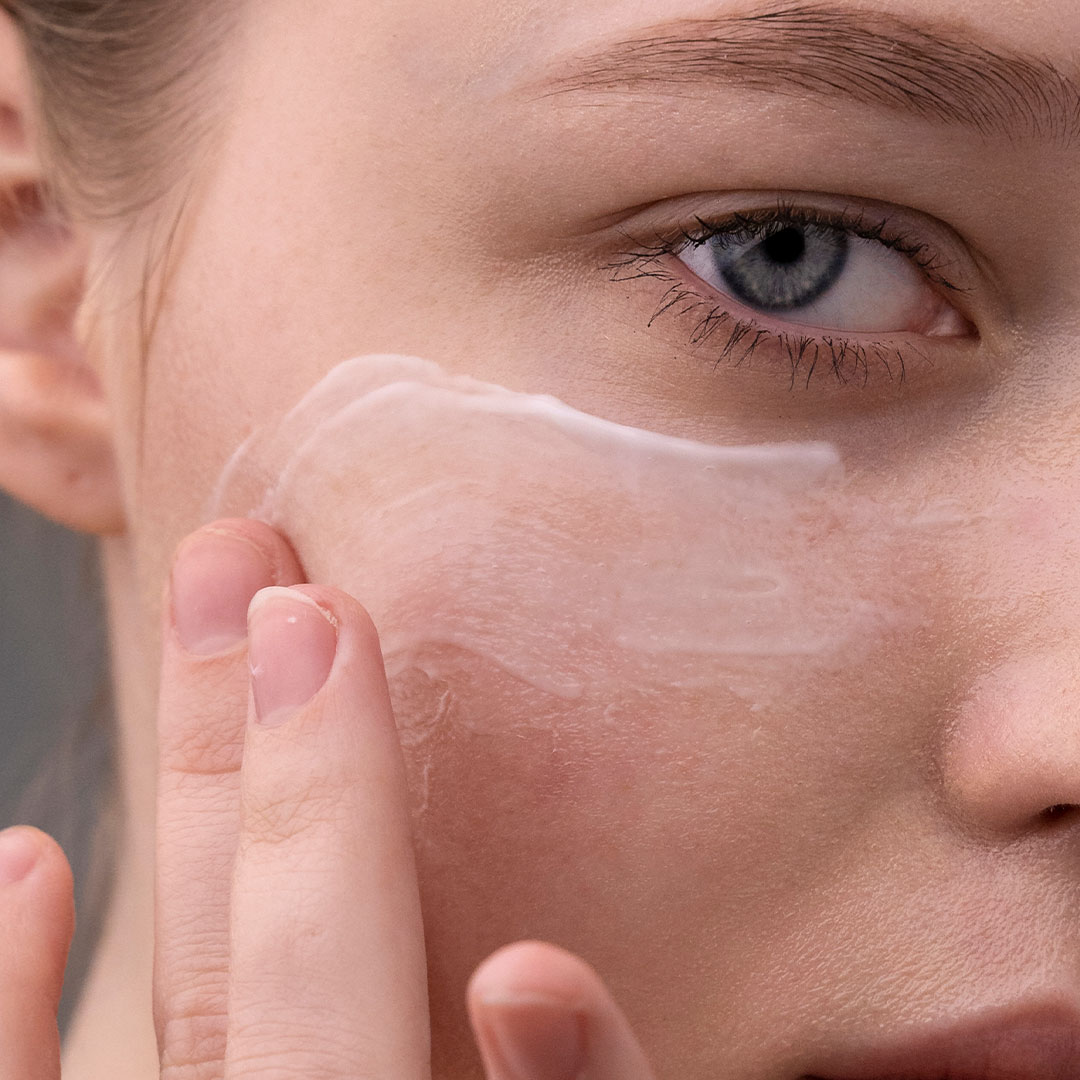
The dark, sunken look under the eyes often comes less from pigment than from hollowing and the shadow it casts. Here's how the tear trough ligament and lost volume under the eye create that shadow, how a soft hyaluronic acid filler placed shallowly and sparingly smooths it out, why thin skin and the bluish Tyndall effect make this area tricky, and how long results actually last, all backed by real published numbers.
By Dr. Kim
Marionette Line Filler: Results, How Long It Lasts, and Combining With Botox
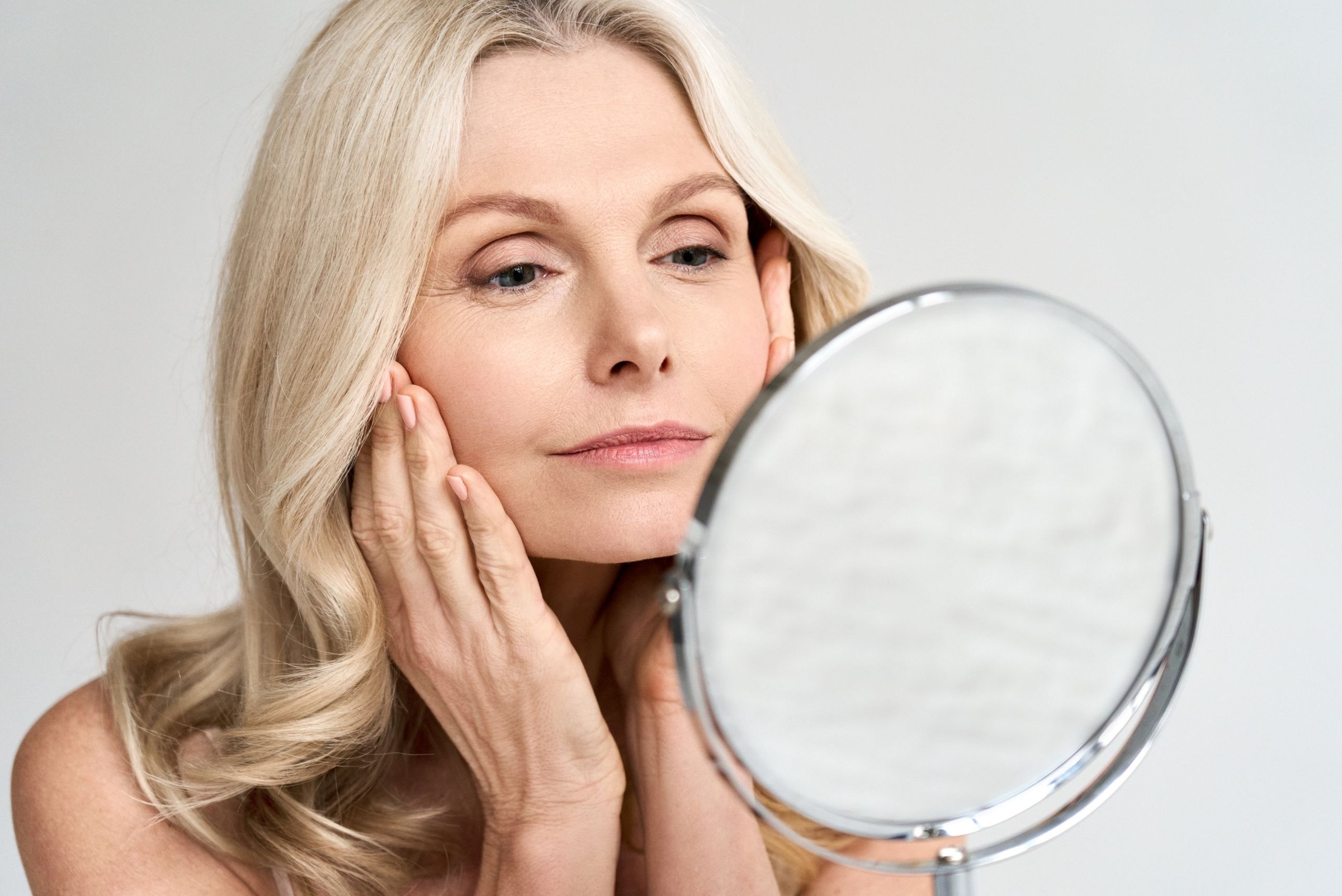
Marionette lines running from the corners of the mouth down toward the jaw form when the supporting ligaments loosen, the fat pad sags, and the muscle pulling down on the mouth corners adds to the strain. HA filler works by rebuilding this collapsed structure from the inside out, restoring lost volume layer by layer. Here's a look at recovery time, how long results last, and why Botox is often paired with it.
By Dr. Kim

Pebbled Chin Botox: Results, How Long It Lasts, Dosage, and Side Effects
Chin botox (mentalis botox) smooths out the pebbled, orange-peel texture that shows up on an overactive chin. Here's how relaxing the mentalis muscle evens out the skin, the typical dose and injection points, when results appear and how long they last, how this differs from a weak or protruding chin, and the side effects worth knowing about, all backed by real evidence.
By Dr. Kim