Why Men's Pores Look Larger: Sebum and Collagen Loss Explained
By Dr. Lee6 min read

Men's pores are usually blamed on excess oil, and that's true, but only half true. If oil were the only cause, good skincare would keep pores looking the same over the years. In reality, plenty of men notice their pores getting more visible as they get older, even when their oil production hasn't changed much.
Two separate forces are at work here. One is androgen activity, which starts at puberty and continues for life, enlarging the sebaceous glands and pushing out more oil. The other moves much more slowly: collagen that once helped cinch the pore opening back down gradually thins out, so a pore that's stretched once has a harder time closing again. Let's walk through why both of these show up so strongly in men's skin.
Why do men have larger oil glands?
A sebaceous gland is basically a tiny oil factory sitting under the skin, and the factory itself is built differently in men. Starting in the womb and continuing through puberty, androgens (the umbrella term for male hormones) drive men's sebaceous glands to grow larger and pack more densely than women's.
The nose, forehead, and inner cheeks, the classic T-zone, already have a naturally high density of sebaceous glands, which is exactly why pores stand out most there. When a bigger gland sits under the skin, the pore opening connected to it has to be wider too, the same way a bigger water tank needs a wider outlet to drain properly.
So the first reason men's pores look large isn't a skincare failure, it's structural. Two men the same age with identical routines can still have very different pore sizes if one simply has larger glands to begin with.
How does testosterone increase sebum?
The hormone actually running this system is testosterone, the primary male hormone. But testosterone doesn't act on the skin directly. Skin and hair follicle cells contain an enzyme called 5-alpha reductase, which converts testosterone into a much more potent form called DHT (dihydrotestosterone).
DHT then locks onto androgen receptors on sebaceous gland cells, fitting like a key into a lock. Once that key turns, the gland cells enlarge and the enzymes that produce oil ramp up their activity, so overall sebum output rises.
How strongly this plays out varies from person to person. Someone with more 5-alpha reductase, or more sensitive androgen receptors, will produce more oil even at the same testosterone level, and this is essentially what people mean when they say they were "born with oily skin." It's also why acne and enlarged pores tend to show up together at puberty: this DHT pathway switches on all at once.
How oil and dead skin cells stretch the pore
Sebum itself is completely normal, it's what keeps skin from drying out. The trouble starts when it mixes inside the pore with dead skin cells that should have shed already. When that debris can't clear out in time and clumps together with the oil, the pore opening narrows and hardens, much like hair and grease clogging a drain.
That hardened clump, called a comedone (blackhead or whitehead, depending on the type), keeps growing in volume inside the pore. Like air filling a balloon, as the clump gets bigger the opening stretches with it, making the pore look larger and more obvious to the eye.
When the clogged material near the surface is exposed to air, it oxidizes and darkens, which is what a blackhead actually is, not trapped dirt, but oxidized sebum. When the pore is fully sealed off from air instead, the plug stays pale and shows up as a whitehead.
Why don't pores shrink when oil is controlled?
You'd think clearing up the oil problem would let a pore return to its original size, but that's often not the case. This is where the second force, collagen loss, comes in. The area around a pore opening normally has collagen and elastin fibers wrapped around it like an elastic band, cinching the opening back closed.
Over years of sun exposure and aging, though, those collagen and elastin fibers gradually break down and thin out, a change dermatologists call perifollicular elastosis. Like an old elastic waistband that's lost its stretch, weakened fibers simply can't pull a widened pore back in anymore.
Men tend to use sunscreen less consistently than women, so this shift tends to show up earlier. That's why pores that were mainly an oil problem in someone's twenties can stay structurally wide later on, even after oil production naturally settles down with age.
How many times a day should you wash your face?
If oil is the issue, washing more often and more aggressively feels like the obvious fix, but it can actually backfire. Over-cleansing strips away the protective oil layer along with the dirt, and skin reads that as a sign it's dehydrated, so it signals the sebaceous glands to produce even more oil. That's the rebound effect: the more you wash, the oilier skin can get.
Cleansing gently with lukewarm water, roughly twice a day, morning and night, tends to keep oil production and the skin barrier in better balance. Hot water is worth avoiding since it strips the oil layer too aggressively. A light moisturizer right after cleansing also helps, since it keeps the sebaceous glands from having to work overtime to compensate.
Ingredients and habits for pore care
Real pore care has to address both mechanisms at once, oil overproduction and collagen loss around the opening. A handful of ingredients and habits cover both fronts:
- Salicylic acid (BHA): Because it's oil soluble, it can penetrate deep into an oil filled pore and dissolve the clog of dead skin and sebum from the inside, something water soluble ingredients can't do as well.
- Niacinamide: Helps regulate how much oil the glands produce while also strengthening the skin barrier, essentially turning down the oil signal itself.
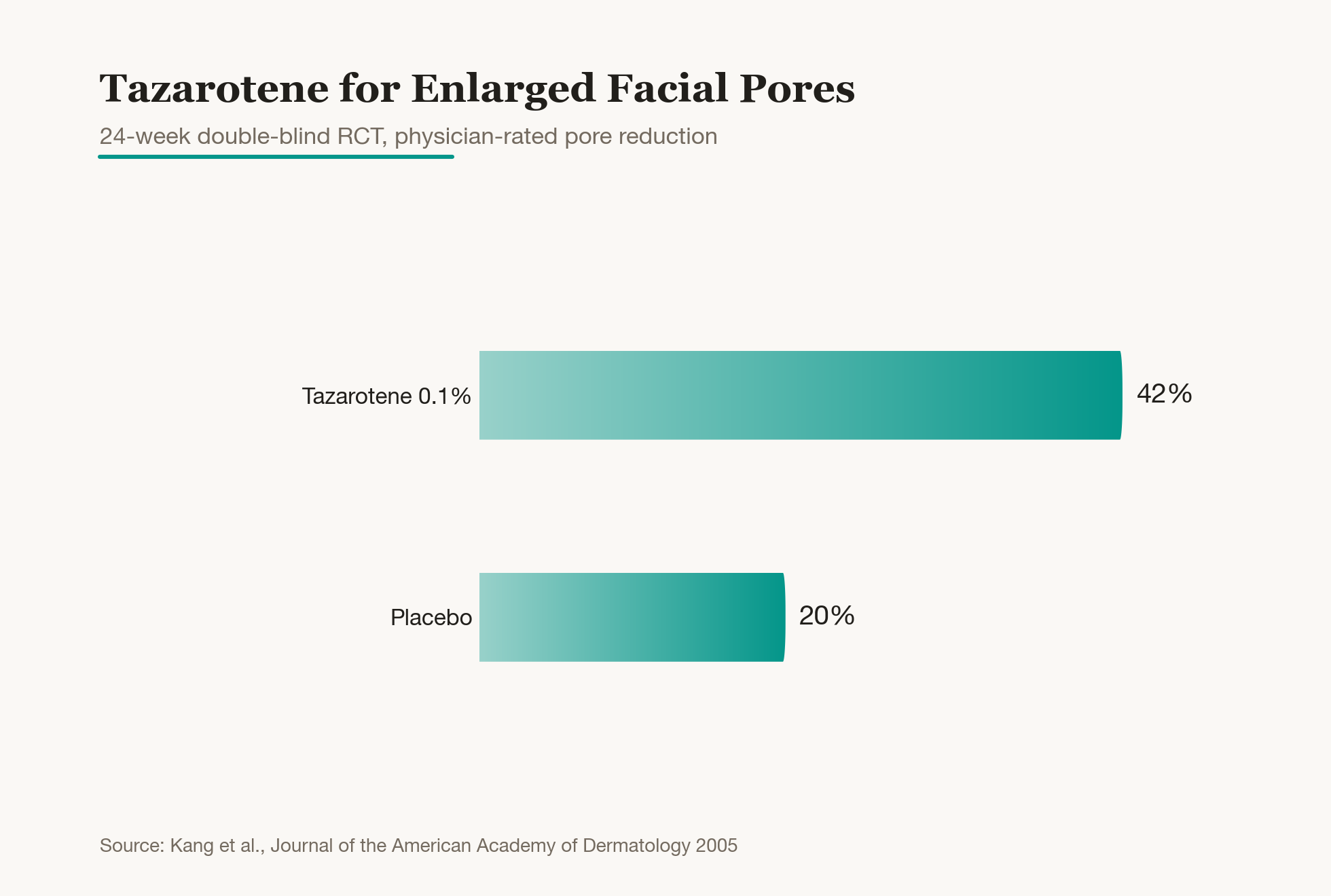
- Retinoids: Keep dead skin cells from piling up and clogging pores, while also stimulating collagen production, so they work on both the clogging side and the structural support side at once.
- Sunscreen: Protects the collagen and elastin around each pore from further UV breakdown. It's the step that gets the least attention day to day, but it may matter most for pore size over the long run.
These four work on different parts of the problem, but they all point toward the same outcome, keeping oil production in check while preserving the elasticity that holds the pore wall together. That's why a single product rarely does the job as well as combining gentle cleansing, oil control, gentle exfoliation, and daily sunscreen. Kept up consistently, these habits tend to make pores look more refined over time.
References
Korean Dermatological Association, American Academy of Dermatology (AAD), and Ministry of Food and Drug Safety (MFDS).
Was this helpful?
About this article
Written by a practising aesthetic physician and intended for general education — not a substitute for individual medical advice.
Read next

Décolleté Aging: Causes, Care, Laser Treatment and Recovery Time
The décolleté has fewer oil glands and thinner skin than the face, so it takes UV damage harder and shows it sooner. Here's how collagen and elastic fibers break down first, why fine lines, discoloration, and broken capillaries settle in, and the sunscreen-to-retinoid-to-treatment routine that actually helps.
By Dr. Kim
Enlarged Pores: Causes, Care, and Which Ingredients Work
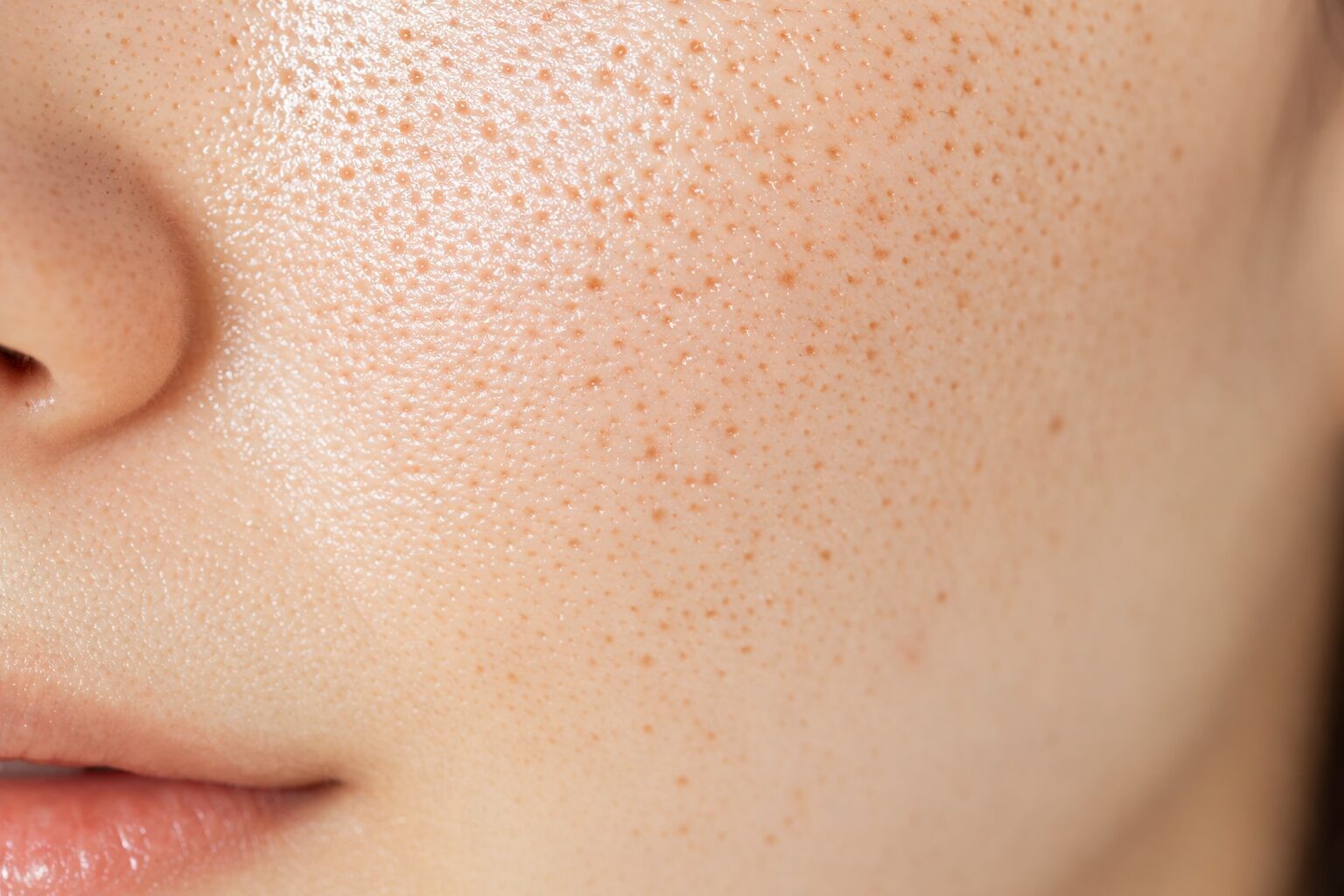
Enlarged-looking pores come from oil production and the elasticity around the pore working together. Here is how retinoids, niacinamide, and in-office treatments each tighten pores, explained through the actual mechanisms behind them.
By Dr. Kim
Why Pores Get Larger: Causes, Care, and Treatment Results
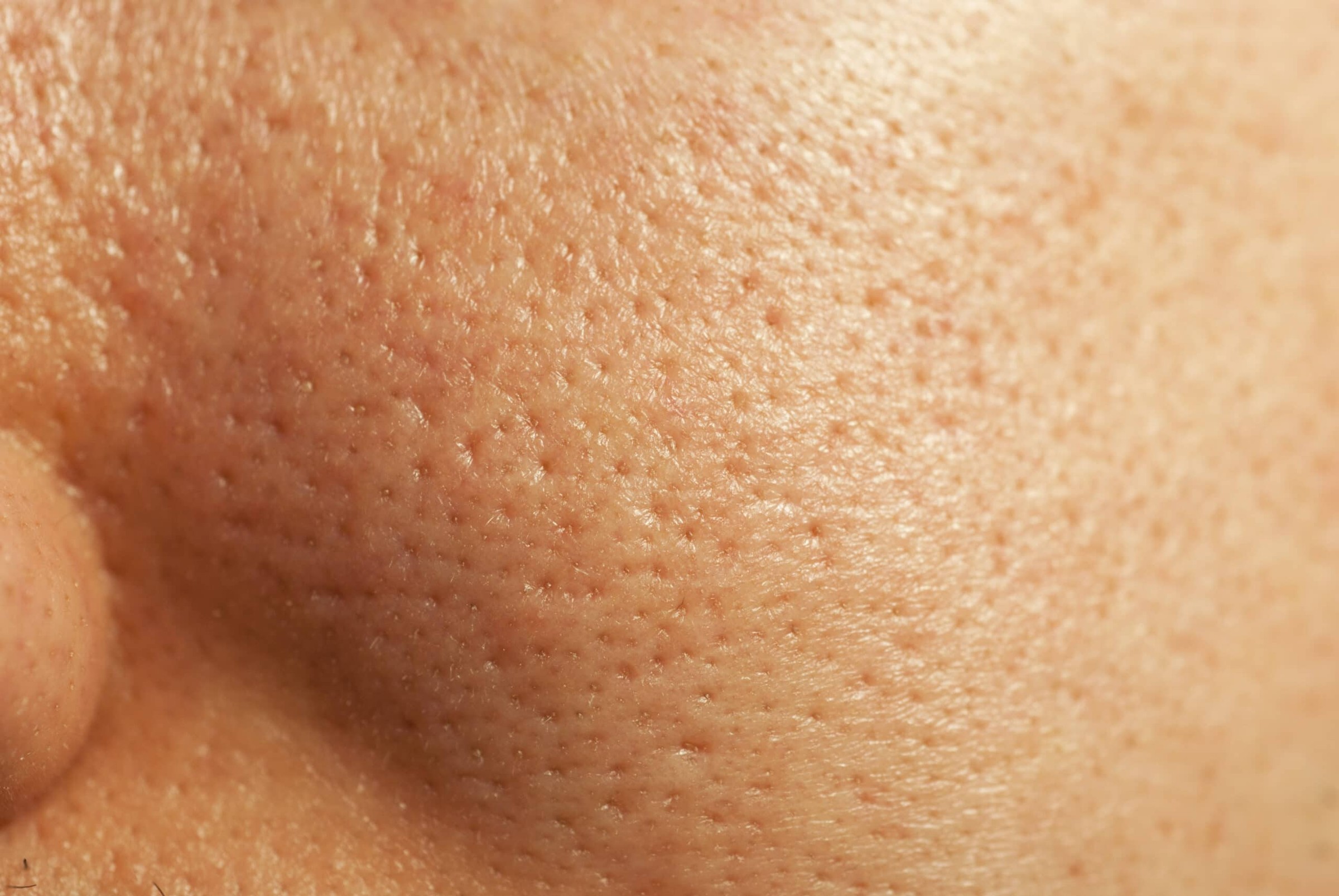
Pores widen when oil and dead skin push out from inside while the elastic tissue around them loses its grip. Here is why a stretched pore rarely bounces back by itself, and what treatment actually targets.
By Dr. Kim