Décolleté Aging: Causes, Care, Laser Treatment and Recovery Time
By Dr. Kim7 min read

The décolleté is the area from the base of your neck down to the upper chest, the part that shows when you wear a V-neck top. For a lot of people, this exact spot develops fine lines and blotchy discoloration before the face does, even when they've been just as diligent about skincare.
The truth is, the décolleté isn't built like facial skin at all, and that structural gap is what makes aging show up here first. Let's walk through why this happens and what actually helps.
Why is décolleté skin weaker than the face?
Décolleté skin is thinner than facial skin. The dermis, the layer underneath that holds collagen and elastic fibers, has less physical thickness to work with, so those fibers simply have less room to hold their shape. Think of folding a thick sheet of paper versus a thin one the same number of times. The thin one creases first every time.
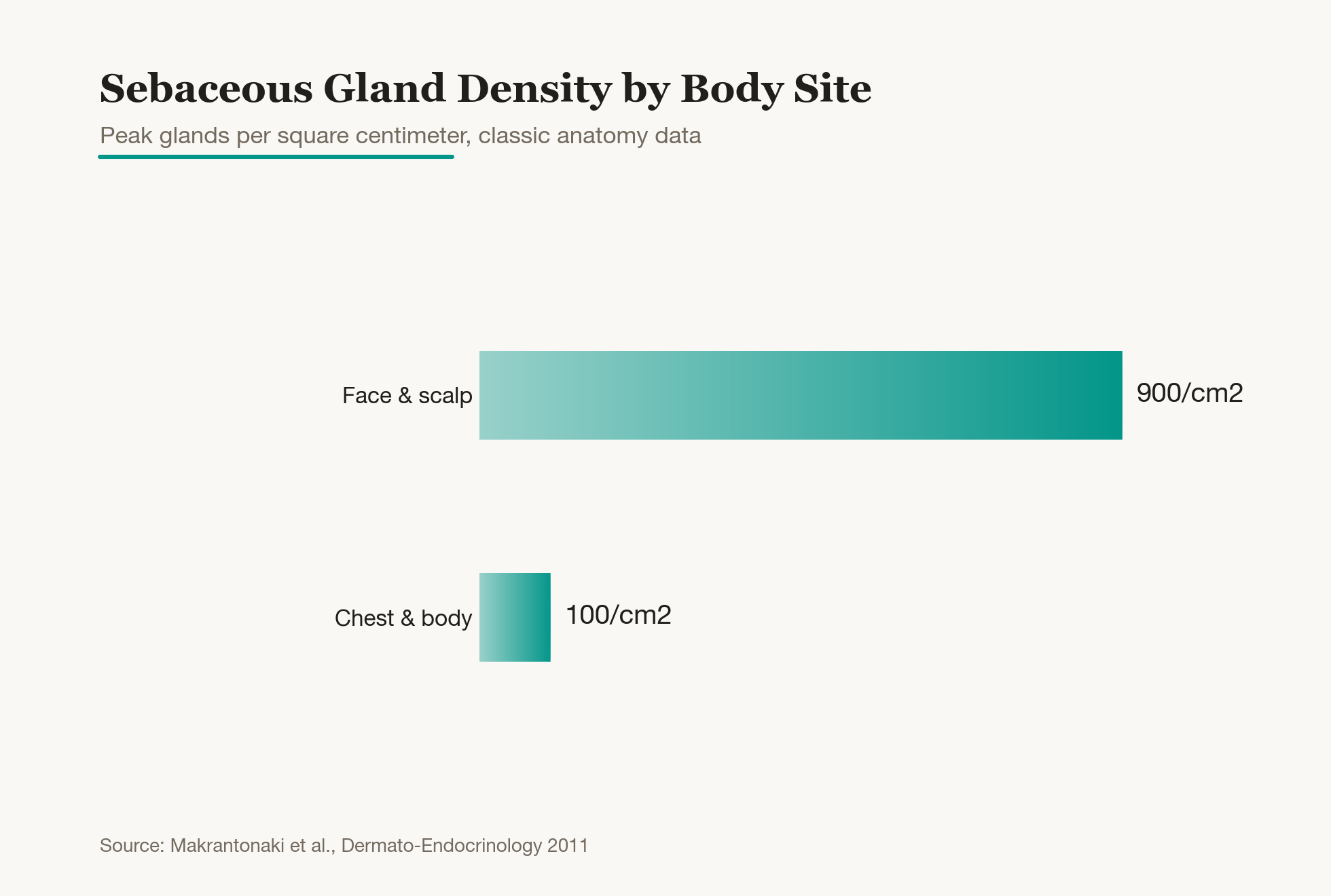
On top of that, this area has a lower density of sebaceous glands (the tiny glands that release oil onto the skin). That oil normally forms a coating that locks in moisture, so a thinner coating here means the skin dries out faster and its barrier function is weaker. A weaker barrier means it reacts more easily to everything from sun to friction.
Habits make it worse. Most people stop their sunscreen and serum routine at the jawline and never bring it down past the neck. But UV exposure on the chest isn't necessarily lower than on the face, and it can actually be higher thanks to V-necks and off-the-shoulder styles. So you end up with skin that's already thinner and weaker, getting less care while catching just as much sun, if not more.
Why do red patches and brown spots form together?
Years of accumulated UV exposure on the décolleté can produce a distinctive mottled pattern, patches of visible red capillaries mixed with areas of darker brown discoloration. The medical term for this is poikiloderma of Civatte.
UV light irritates the walls of blood vessels under the skin, causing capillaries to widen, and at the same time it switches on melanocytes (the cells that produce skin pigment). The result is two changes layered over the same area: red where vessels have dilated, brown where melanin has clustered.
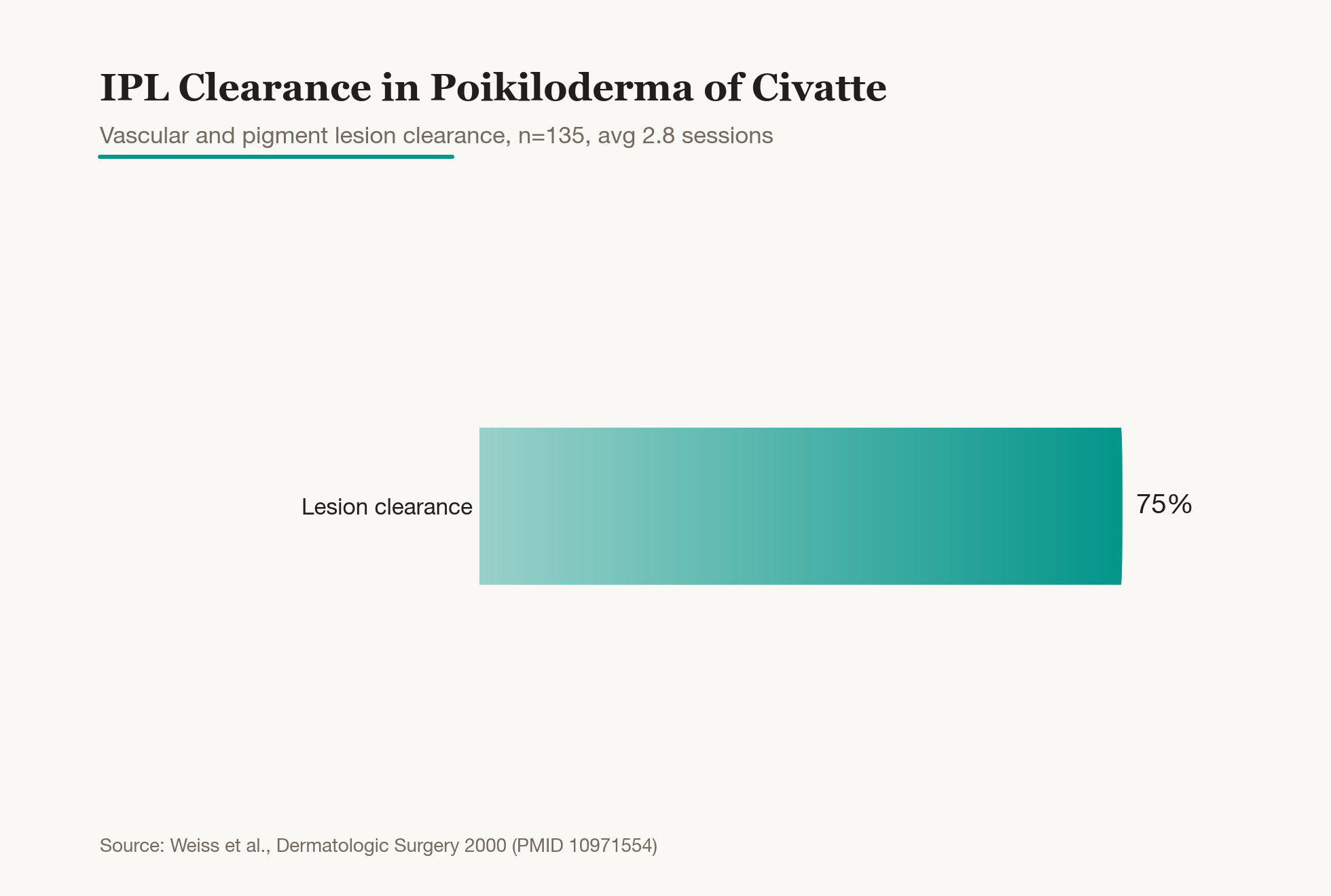
Interestingly, the strip of skin under the jaw, where the chin casts a shadow, tends to stay relatively undamaged, simply because it gets less direct sun. So the overall pattern ends up with a visible border between the blotchy zone and the clearer, shaded strip beneath it. In one clinical study, IPL (intense pulsed light, a device that uses a broad spectrum of light for phototherapy) given three times at three-week intervals faded these vascular and pigment changes by more than 75%.
Why do décolleté wrinkles form?
Décolleté wrinkles don't run in quite the same direction as facial wrinkles. Sleeping on your side compresses and folds the chest tissue along a repeated line, and because you fold along that same line night after night, the skin gradually "remembers" the crease.
When collagen and elastic fibers are still plentiful, a crease from sleeping smooths right back out by morning, the same way a brand-new rubber band snaps right back after you stretch it. But as those fibers decline with age, the crease behaves more like an old, worn-out rubber band. It stops bouncing back and stays put even through the day.
So décolleté wrinkles aren't something that appears overnight. They're the result of repeated physical folding piling up together with gradual collagen loss.
What can topical ingredients do?
Retinol (a vitamin A derivative) speeds up skin cell turnover and stimulates fibroblasts, the cells in the dermis responsible for making collagen. It clears away old surface cells while signaling underneath for fresh collagen to fill back in.
Niacinamide (a vitamin B3 derivative) supports the synthesis of the lipids that make up the skin barrier, and it slows the transfer of melanin toward the surface. That means it helps fade blotchy discoloration while also reinforcing the moisture barrier of thin décolleté skin, doing both jobs at once.
Because décolleté skin is more reactive than facial skin, it's best to start retinol at a low concentration, two to three times a week, and build up gradually from there. Starting too strong too fast tends to bring on redness or flaking more easily here, simply because the barrier is thinner to begin with.
Why does the bone show when volume is lost?
The fat layer under the skin thins out with age, just like everywhere else. That layer normally sits over the bone and muscle of the upper chest, cushioning it into a smooth, gentle curve. As the cushion thins, the contours of the bone and tendons underneath start showing through the surface.
It's similar to a pillow: when the stuffing is thick, you can't feel the frame inside, but once the stuffing gets compressed and thin, the frame becomes noticeable. In these cases, a small amount of hyaluronic acid (HA) filler is sometimes used to soften the skin's surface texture. That said, this only addresses surface smoothness, and how much it helps and how long it lasts varies from person to person.
How far can light treatment go, and how long is recovery?
Once red capillaries or pigment spots have already settled in, topical products alone rarely clear them completely. That's where IPL or vascular laser comes in, targeting blood vessels and pigment separately. Light energy gets absorbed by hemoglobin in the vessels or by melanin in the pigment, generates heat, and that heat gradually breaks down the targeted vessels and pigment clusters.
If the goal is improving overall texture and firmness, fractional laser is often considered alongside this, creating microscopic injury that triggers collagen renewal. Swelling and redness after treatment usually settle within a few days, but it typically takes 4 to 12 weeks before you actually notice a difference in texture. How long the results last depends on your aftercare, but most reports put it somewhere between 6 and 12 months.
Daily care habits to keep up
None of this is complicated once you know the basic principles. These habits work together to slow the aging process here.
- Apply sunscreen down over the neck and décolleté every day: since UV exposure is the single biggest driver of the discoloration and capillary changes described above, stopping at your jawline undercuts the whole point. Carry your sunscreen down and apply it just as carefully.
- Use retinol and niacinamide consistently at a gentle concentration: if you want both collagen renewal and a stronger barrier, easing in slowly gets you there without irritation, and lets you keep it up long-term, which matters more than going in strong and quitting early.
- Switch up your sleeping position now and then: repeatedly folding the same spot in the same direction is exactly what teaches skin to hold a crease, so alternating sides reduces that one-sided physical strain.
- Keep the barrier supported with a proper moisturizer: since this area has fewer oil glands and dries out easily, a separate moisturizer that replenishes both water and lipids helps prevent the fine lines that come from a weakened barrier.
None of these habits show results overnight. But keep at them, and the décolleté ends up just as well cared for as your face, giving you skin you can feel confident showing off during the seasons when it's on display.
References
Korean Dermatological Association, American Academy of Dermatology (AAD), and Ministry of Food and Drug Safety (MFDS).
Was this helpful?
About this article
Written by a practising aesthetic physician and intended for general education — not a substitute for individual medical advice.
Read next
Neck Wrinkles: Causes and Treatment, and Can Botox and Lifting Help?
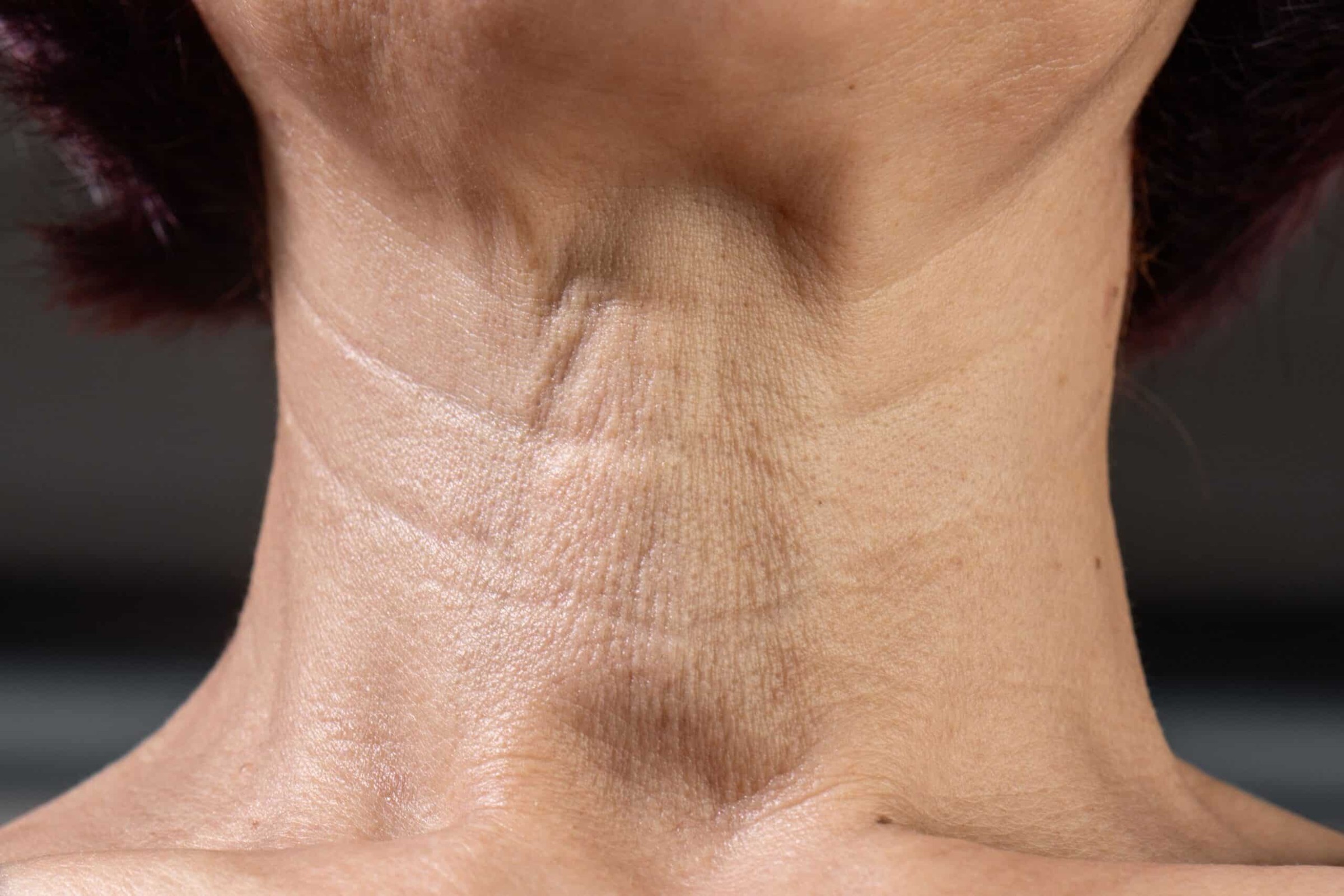
The neck has thinner skin and fewer oil glands than the face, so it tends to lose firmness earlier, and because it moves constantly, vertical bands and horizontal lines often show up together. Here is why sagging and lines overlap on the neck, and how both skincare and treatments work to address them.
By Dr. Kim
Keloid Scar Causes and Treatment, Including Recurrence and Management
A keloid is a scar that keeps piling up collagen even after the wound has fully healed, growing larger than the injury that started it. Here's why the collagen never seems to know when to stop, how a keloid differs from an ordinary scar, how injections and laser treatments work to calm it down, and why it tends to come back so often.
By Dr. Lee
Back Acne: Causes, Treatment Ingredients, Healing Time and Care
Back acne starts from the same root as facial acne, but thicker skin, denser oil glands, sweat, and friction change how it grows. Here is why the back breaks out so easily and why treatment takes longer to work, along with how to manage it.
By Dr. Kim