Back Acne: Causes, Treatment Ingredients, Healing Time and Care
By Dr. Kim7 min read
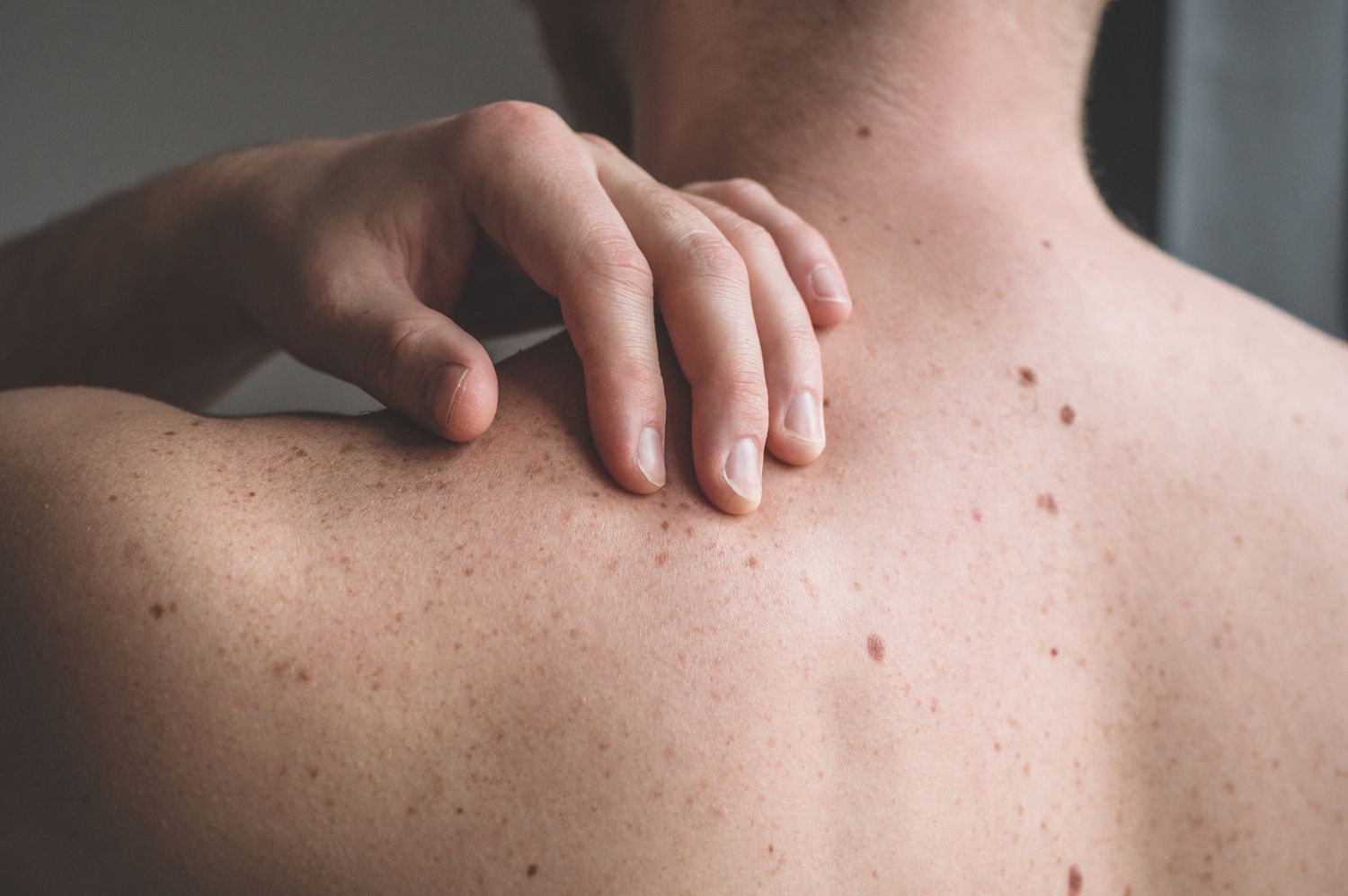
It is tempting to treat back acne the same way you treat facial acne. But the back is a different piece of skin: it is thicker, and it carries a different density of oil glands. So while the root cause looks a lot like facial acne, the speed of improvement and the way you need to manage it end up being quite different.
Back acne tends to show up right where a bra strap or backpack strap presses against the skin, or wherever sweat sits for a long time after a workout. It also shows up in a wide range of forms, from tiny bumps to red, swollen ones. Let's walk through why the back behaves this way, and what actually helps.
Why does acne form so easily on the back?
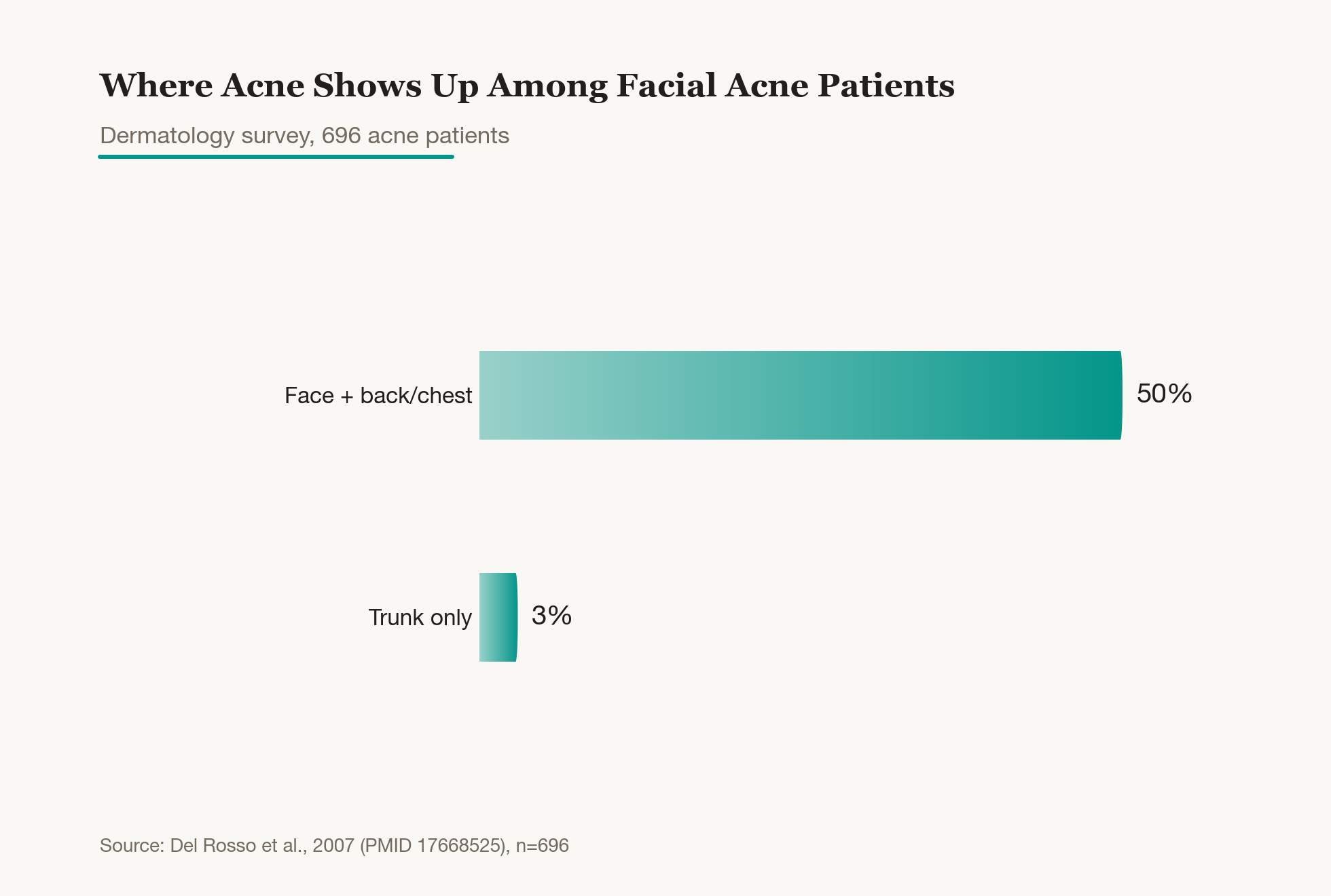
The upper back and shoulder area is one of the places on the body where oil glands are packed the most densely. Oil glands are like small factories that produce sebum, the oily substance that keeps skin from drying out.
Each pore in this area tends to have a larger, more crowded set of oil glands attached to it, so the same level of stimulation produces more sebum here than it would on the face. Once sebum builds up, it mixes with dead skin cells and clogs the pore opening more easily. Inside that clogged pore, Cutibacterium acnes, a bacterium that naturally lives in the pores, starts to multiply, and that is what kicks off the inflammatory response.
In other words, back acne starts exactly the same way facial acne does: a clogged pore, bacterial growth inside it, and the body's inflammatory response to defend that spot. The only real difference is that the back has a much higher density of oil glands, so this process happens over a wider area and more often.
Why is the back more sensitive to hormonal changes?
Oil glands are highly sensitive to androgens (male hormones). During puberty and adulthood alike, whenever androgen levels rise and fall, the oil glands on the back and shoulders pick up that signal and ramp up sebum production.
The back and shoulders are areas where oil glands develop heavily from as early as fetal development, so they react more strongly to the same hormonal trigger than the face does. That is why many people notice breakouts on the back before the face when hormones shift, whether from a menstrual cycle or from stress. Different parts of the body simply respond to hormonal changes on their own schedule.
How do sweat and friction affect it?
Sweat on its own does not cause acne directly. But when sweat-soaked clothing sits against the skin for a long time, the area around the pores stays damp, and once friction is added on top of that, the pore opening becomes irritated and clogs more easily.
The same goes for anything that presses on the skin repeatedly, like workout clothes, backpack straps, or bra straps. Repeated pressure and friction irritate the follicle wall and make it thicken, and a thickened follicle wall blocks the sebum produced inside from draining out normally. Acne that develops from this kind of physical irritation is sometimes called acne mechanica.
So after a heavy sweat session, if you stay in the same clothes too long, you are essentially creating the perfect conditions for bacteria to multiply and pores to clog at the same time.
Are small bumps fungal folliculitis?
When a cluster of small, uniform bumps suddenly appears on the back, it is not always bacterial acne. Sometimes it is folliculitis caused by an overgrowth of Malassezia, a type of yeast that naturally lives on the skin, inside the hair follicles.
The two conditions can look very similar, which makes them easy to confuse, but since the underlying organisms are different, the treatment needs to be different too. Bacterial acne responds well to antibiotics or benzoyl peroxide (an ingredient that suppresses bacteria and helps clear dead skin cells), while fungal folliculitis needs an antifungal ingredient instead. Sticking with antibiotics alone can actually create better conditions for the fungus to grow.
So if the bumps on your back are similar in size and shape and come with noticeable itching, it is worth considering fungal folliculitis as a possibility. Getting the cause right is the first step to managing it well.
How each treatment ingredient works
Knowing how an ingredient works helps you pick the right product for your back. Here are the main ones and how each one operates.
- Salicylic acid: This ingredient dissolves well in oil, which lets it travel down into pores clogged with sebum and gently loosen the dead skin cells there. Its ability to reach deep inside the pore is what sets it apart from other exfoliating ingredients.
- Benzoyl peroxide: It works by directly reducing bacteria inside the pore while also releasing oxygen. Cutibacterium acnes prefers a low-oxygen environment, so once oxygen levels rise, conditions become much harder for the bacteria to thrive in.
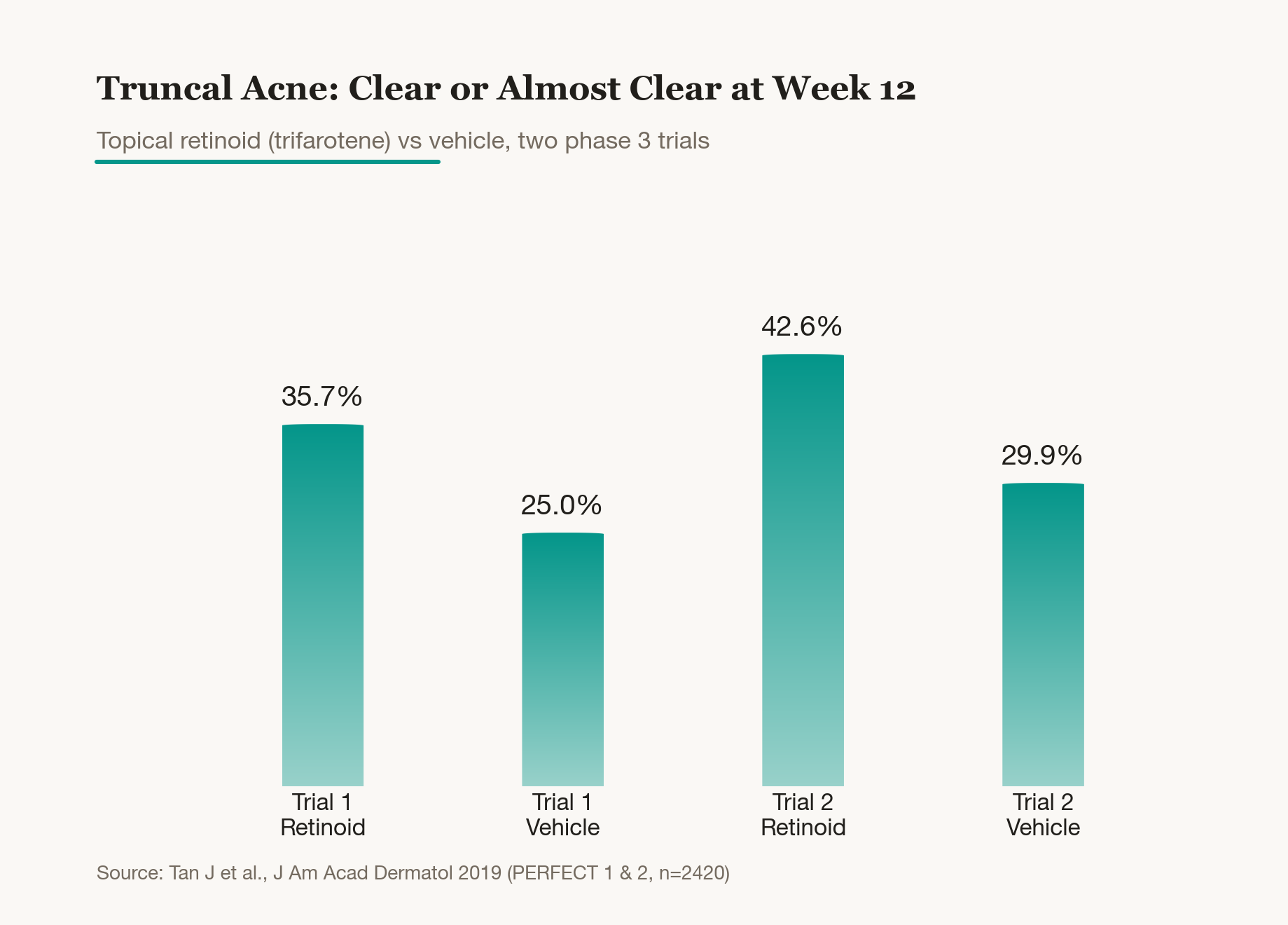
- Topical retinoids like adapalene: These slow down how quickly dead skin cells clump together at the pore opening, helping them shed naturally before they get a chance to clog the pore. What makes retinoids distinct is that they act before inflammation even begins.
Each of these ingredients targets a different point in the process, which is why they are often combined depending on the symptoms rather than used alone. Since back skin can be sensitive to irritation, it is best to start with a lower concentration.
Why does it heal more slowly than facial acne?
Even with the exact same ingredients, back acne often seems to improve more slowly than facial acne. There are two reasons for this.
First, the skin on the back has a thicker outer layer (stratum corneum) than facial skin. That means active ingredients have a longer path to travel to reach their target, so it simply takes more time. Second, it is harder to apply a product evenly across a large area like the back than it is on the face, so the amount and location of product that actually reaches the skin tends to be uneven in practice.
For these reasons, back acne is generally reported to take about 4 to 12 weeks of consistent care before a noticeable change appears. And once the acne itself clears, the red marks or pigmentation left behind can take anywhere from 6 to 12 months to fully fade. Rather than switching products impatiently every few days, sticking with one approach for at least a month or two gives you a much clearer read on whether it is working.
Habits that help back acne
Applying the right ingredients matters, but everyday habits play a role too. Here is why each of these habits helps.
- Change out of sweaty clothes as soon as possible: When sweat-soaked fabric sits against the skin for too long, the area around the pores stays damp and friction increases as well.
- Choose loose, breathable clothing: Reducing the constant pressure clothing puts on the skin also reduces the irritation that thickens the follicle wall.
- Rinse conditioner and hair treatments thoroughly so they do not run down onto your back: Oily residue from hair products left on the skin is another common way pores end up clogged.
- Pick a non-comedogenic sunscreen (labeled as unlikely to clog pores): Sun protection is still necessary, but a heavier, oilier formula can clog pores that are already prone to breaking out.
No single habit will make back acne disappear on its own. But each one chips away at the conditions that let pores clog and bacteria multiply, and combined with the right ingredients, the effects add up over time.
References
Korean Dermatological Association, American Academy of Dermatology (AAD), and Ministry of Food and Drug Safety (MFDS).
Was this helpful?
About this article
Written by a practising aesthetic physician and intended for general education — not a substitute for individual medical advice.
Read next
Maskne Causes and Care: Why Does It Cluster on the Chin and Cheeks?
A lot of people notice more breakouts along the jaw and cheeks the longer they wear a mask. Friction, high humidity, and clogged pores team up to weaken the skin barrier and give inflammation an easy foothold. Here is a look at why this happens and how to manage it, built around the underlying mechanisms.
By Dr. Kim

Teen Acne: Causes, Care and When to See a Clinic
Teen acne starts when androgen hormones ramp up oil production, then moves through a few predictable stages that end in clogged pores and inflammation. Here is why this stage of life hits so hard, what actually helps at home, and when it is time to see a dermatologist.
By Dr. Lee

Décolleté Aging: Causes, Care, Laser Treatment and Recovery Time
The décolleté has fewer oil glands and thinner skin than the face, so it takes UV damage harder and shows it sooner. Here's how collagen and elastic fibers break down first, why fine lines, discoloration, and broken capillaries settle in, and the sunscreen-to-retinoid-to-treatment routine that actually helps.
By Dr. Kim