Teen Acne: Causes, Care and When to See a Clinic
By Dr. Lee7 min read

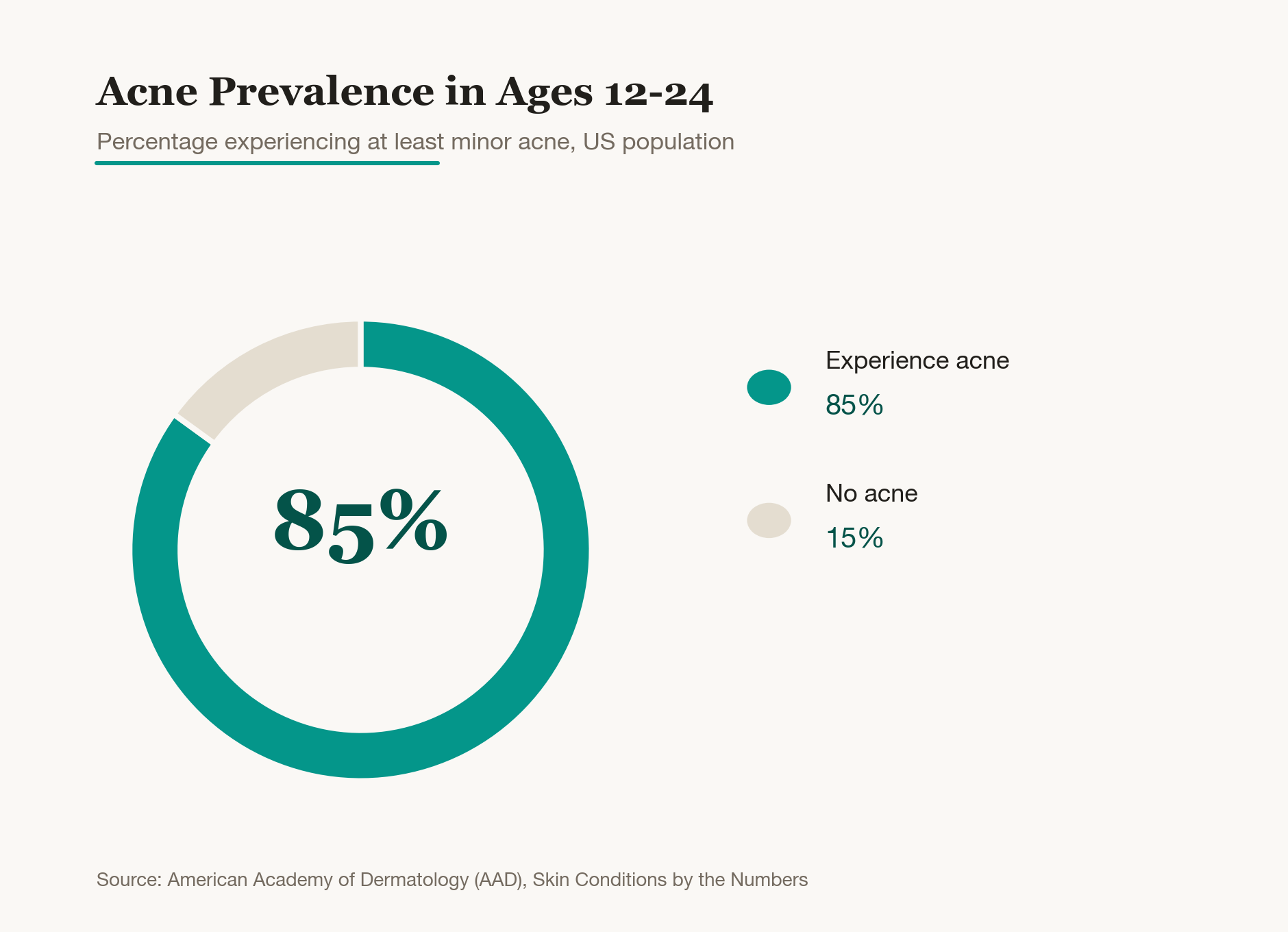
Once puberty kicks in, breakouts tend to show up fast across the forehead, cheeks, and jawline. Skin that looked fine yesterday suddenly has a handful of new bumps, and that catches both teens and parents off guard. But acne at this stage is really just the visible side effect of a body shifting into adulthood. Hormones stimulate the oil glands, oil and dead skin cells clog the pores, and bacteria move into that clogged space. Once you see the sequence laid out, it makes sense why breakouts cluster so heavily during the teen years, and what kind of care actually moves the needle.
Why Does Acne Crowd In at Puberty?
When puberty starts, the pituitary gland, adrenal glands, and gonads all ramp up production of androgen hormones. Androgens are the hormones behind male traits like testosterone, but girls produce a meaningful amount too, and the hormones act the same way in both. When androgens reach the oil glands (the tiny glands in the skin that produce sebum), the glands grow larger and start pumping out more oil. That is why skin that used to be smooth before puberty suddenly turns shiny, with new bumps following soon after.
Because this hormonal shift unfolds gradually over several years, breakouts usually build up slowly around the time of a first period or voice change rather than appearing all at once. And since every oil gland responds to hormones a little differently, two kids the same age can have completely different experiences: one barely gets a pimple, another breaks out across the whole face. That gap has nothing to do with how hard someone tries to keep their skin clean. It comes down to how sensitive their oil glands and hormone receptors happen to be.
How Do Hormones Affect the Oil Glands?
The oil glands exist to build a natural film that protects the skin. A normal amount of oil keeps skin from drying out. The issue is that puberty hormones push these glands well past what the skin actually needs. When androgens bind to cells in the oil gland, the enzymes that build fat molecules inside those cells kick into higher gear, and oil output can jump to several times what it was before puberty.
That extra oil is supposed to travel up through the pore and reach the surface, but when there is too much of it, some gets stuck partway and pools inside the pore. Picture a drain that keeps taking in grease until it slowly backs up, that is roughly what is happening under the skin. On top of that, the stress that comes with exams or short sleep during the teen years raises cortisol, a stress hormone that is known to push oil production even higher. That is part of why so many teens notice their skin getting worse right around exam season.
How Does a Clogged Pore Become a Comedone?
Extra oil on its own does not turn into a pimple right away. The next step is that cells lining the inside of the pore stop shedding on schedule and start piling up. Normally, old cells on the pore wall shed at a regular pace and get replaced by new ones. During puberty, that shedding rhythm gets thrown off, so dead cells build up inside the pore more easily than before.
Add the extra oil on top of that buildup, and the opening of the pore slowly seals shut with a mix of dead cells and oil. This early clogged stage is called a comedone. When it stays under the surface and looks pale, it is a whitehead; once it oxidizes and darkens, it becomes a blackhead. At this point there is still no inflammation, so it usually just feels like a small, firm bump under the skin. Things change once bacteria start multiplying inside that sealed-off space.
How Do Acne Bacteria Increase Inflammation?
Inside a clogged pore, oil is abundant and oxygen is scarce, which happens to be the ideal environment for Cutibacterium acnes (C. acnes, formerly known as Propionibacterium acnes), a bacterium that thrives without oxygen. This bacterium naturally lives on everyone's skin in small amounts, so it is not the presence of it that is the problem. The problem starts when it multiplies rapidly inside a clogged pore, feeding on all that extra oil.
As the bacteria grow, the byproducts and enzymes they release irritate the pore wall, and the immune system responds by sending immune cells to the area, which is what triggers inflammation. That inflammatory response is exactly why acne turns red, swells, and feels tender. If the inflammation stays shallow, it usually resolves as a small red bump. But when it reaches deeper layers of the skin, it can develop into a painful cystic breakout and carry a much higher risk of leaving a scar behind. This is part of why starting treatment early is known to help limit scarring.
What Can You Do at Home?
Teen acne cannot be fully prevented, but there are ways to keep it from getting worse. The following habits are known to help.
- Wash your face twice a day with a gentle cleanser and lukewarm water. Scrubbing too hard can actually irritate the skin barrier and make inflammation worse.
- Introduce benzoyl peroxide in a low concentration and build up slowly. It works by raising oxygen levels inside the pore, which makes it a harder place for C. acnes to survive.
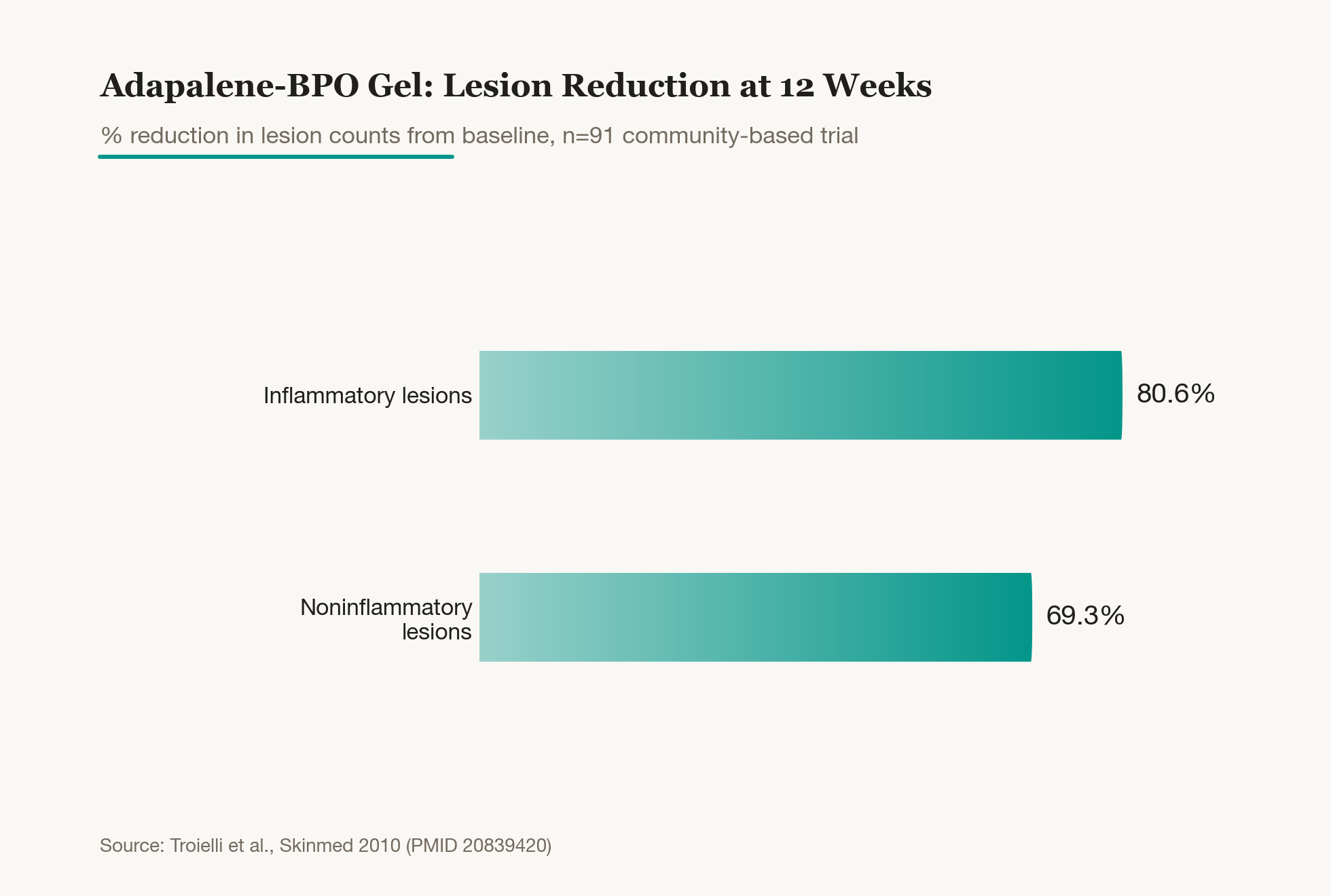
- Use a retinoid such as adapalene at night. Retinoids help normalize the shedding cycle so dead cells clear out before they have a chance to clog the pore.
- Do not pick or squeeze breakouts. Pressing on a pimple can push inflammatory material deeper into the surrounding tissue, which raises the risk of scarring.
- Wear sunscreen every day. UV exposure tends to make the dark marks left behind after inflammation darker and slower to fade.
With consistent use, visible improvement is generally reported somewhere between 4 and 12 weeks. Stopping early because results are not showing up right away can leave the skin irritated again, so sticking with a routine for at least two to three months is recommended.
Should You See a Clinic If It Won't Clear?
If home care is not working, or cystic, painful breakouts keep coming back, it is worth seeing a dermatologist. When breakouts spread widely across the jaw, back, or chest, or red marks are lingering longer than expected, starting treatment before scarring sets in tends to give better results.
Dermatologists often start with topical or oral antibiotics to bring bacteria levels down, and in more severe cases may consider an oral medication like isotretinoin. Isotretinoin is known to work by shrinking the oil glands themselves, which lowers oil production at the source. Because it requires careful monitoring for side effects, it is safest to make this decision together with a specialist.
For girls whose breakouts cluster along the jawline and flare in sync with their menstrual cycle, treatment sometimes looks at hormonal balance alongside the skin itself. That pattern lines up with the way androgen levels rise and fall across the cycle, tracking with ovulation and menstruation, and interacting with the oil glands along the way. In these cases, looking at the full cycle rather than just the skin is known to help.
Teen acne generally settles down naturally as hormones stabilize in the later teen years, and most people see a noticeable improvement after about 6 to 12 months of consistent care. Until then, the goal is not to rush results but to steadily reduce inflammation and keep scarring to a minimum.
References
Korean Dermatological Association, American Academy of Dermatology (AAD), and Ministry of Food and Drug Safety (MFDS).
Was this helpful?
About this article
Written by a practising aesthetic physician and intended for general education — not a substitute for individual medical advice.
Read next
Maskne Causes and Care: Why Does It Cluster on the Chin and Cheeks?
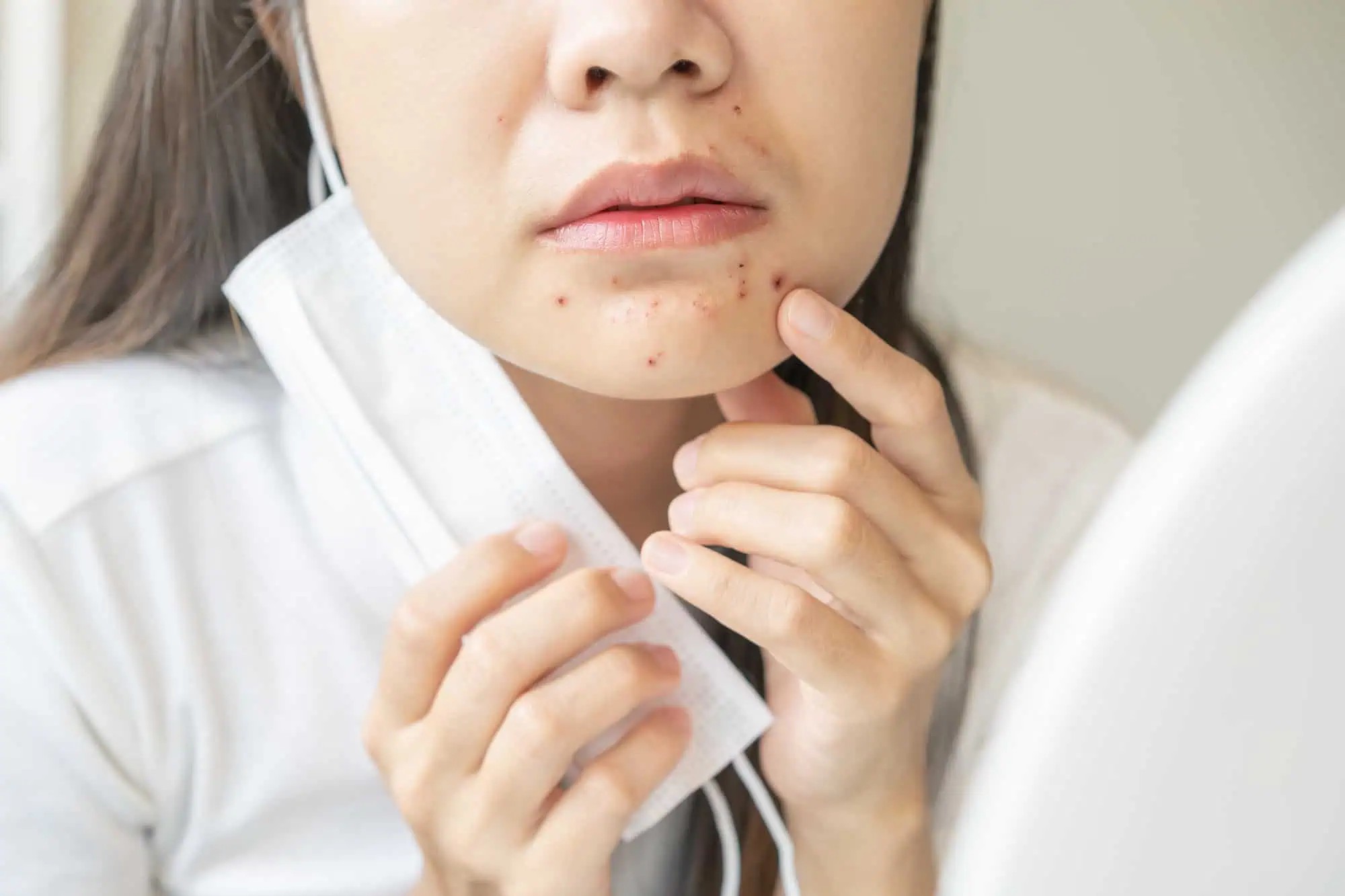
A lot of people notice more breakouts along the jaw and cheeks the longer they wear a mask. Friction, high humidity, and clogged pores team up to weaken the skin barrier and give inflammation an easy foothold. Here is a look at why this happens and how to manage it, built around the underlying mechanisms.
By Dr. Kim
Adult Acne: Causes, Care Ingredients and When to See a Dermatologist
Adult acne shows up in different spots than teenage acne, and the causes are different too. Here is how hormones, skin barrier function, and daily habits combine to trigger jawline breakouts, along with the ingredients and habits that actually help.
By Dr. Kim

Décolleté Aging: Causes, Care, Laser Treatment and Recovery Time
The décolleté has fewer oil glands and thinner skin than the face, so it takes UV damage harder and shows it sooner. Here's how collagen and elastic fibers break down first, why fine lines, discoloration, and broken capillaries settle in, and the sunscreen-to-retinoid-to-treatment routine that actually helps.
By Dr. Kim