Adult Acne: Causes, Care Ingredients and When to See a Dermatologist
By Dr. Kim7 min read
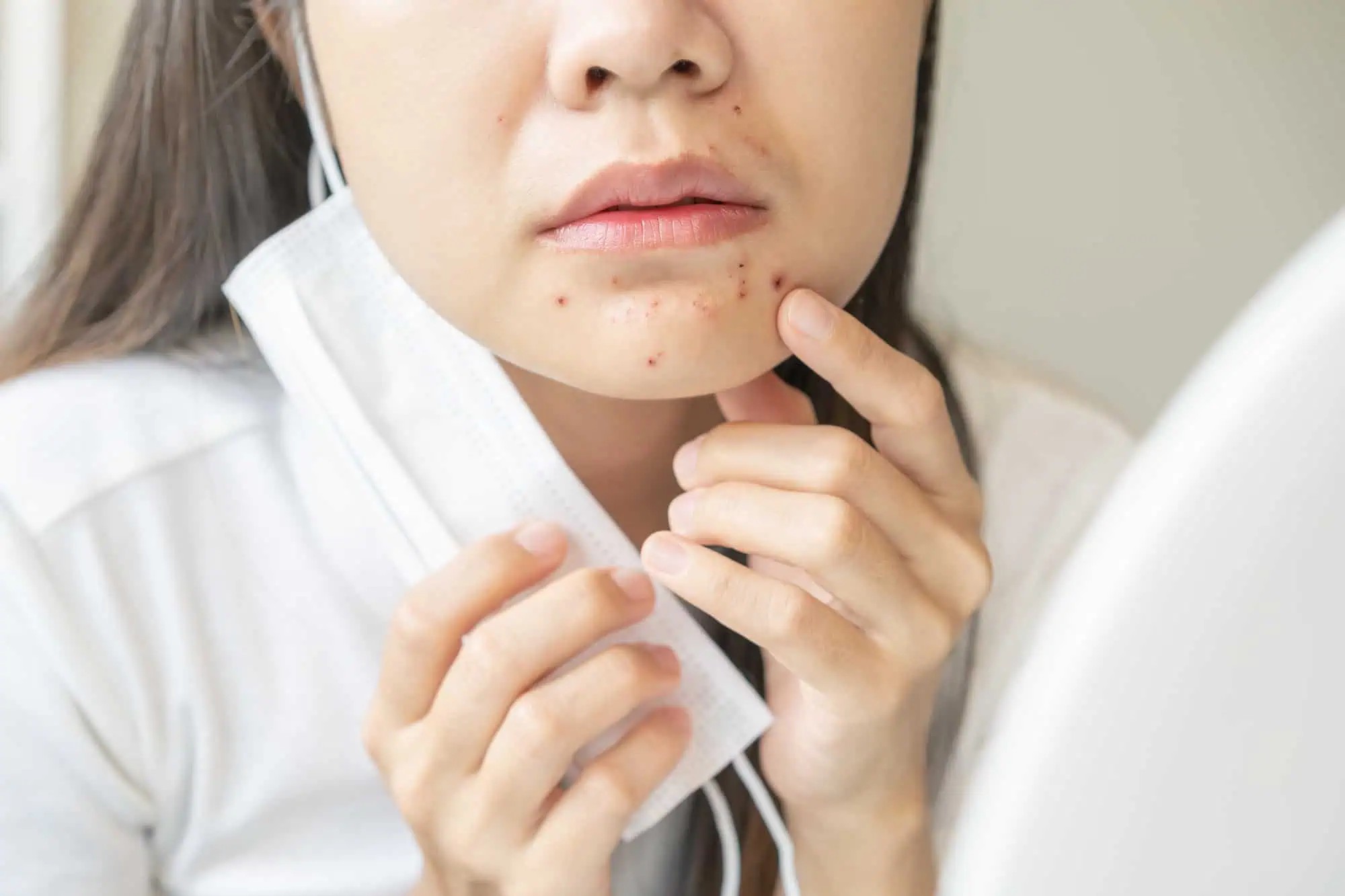
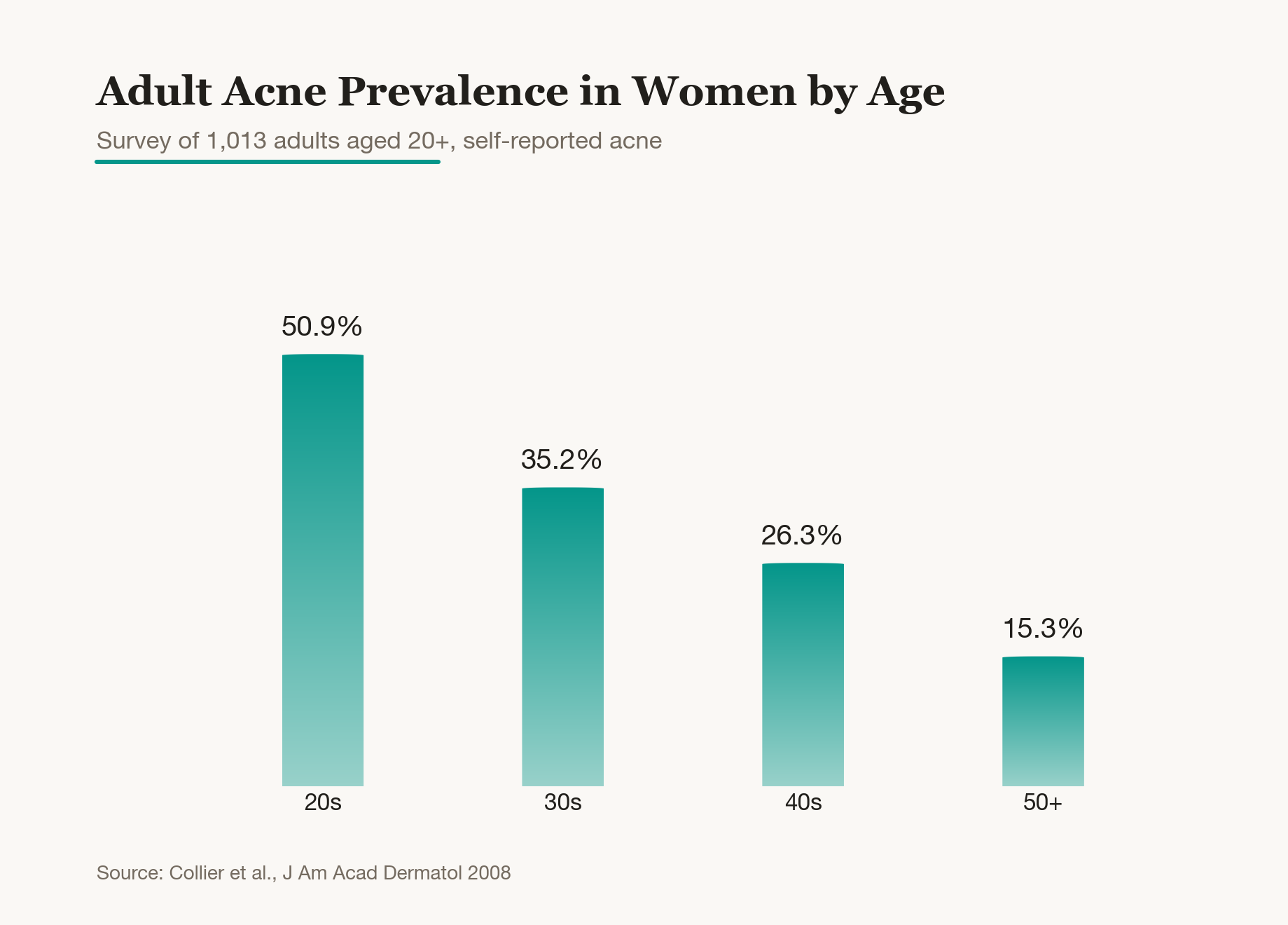
It catches people off guard when acne shows up again well past their teenage years. Teen breakouts tend to cluster as small whiteheads across the forehead and nose, but adult acne usually concentrates along the jawline and around the mouth. On top of that, instead of shallow little bumps, it tends to show up as red, firm blemishes that stick around much longer.
Because both get called "acne," it's easy to assume the same routine will fix both. But adult acne isn't really a surface skin problem. It's more of a tangle between internal hormones and the skin's barrier function. Once you understand why it lands where it does and why it's so stubborn, the right approach becomes a lot clearer.
How is it different from teenage acne in where it appears?
Teen acne tends to spread broadly across the forehead, nose, and cheeks. That's because sex hormone levels are rising across the board during puberty, which stirs up oil glands over the entire face at once.
Adult acne, on the other hand, tends to concentrate in narrower zones like the jawline, around the mouth, and down toward the neck. And once a blemish appears, it often stays red for a while and then reappears in roughly the same spot. Rather than the widespread pattern of teen acne, it looks more like specific oil glands reacting with unusual sensitivity.
Teen acne also tends to fade on its own over time, while adult acne keeps recurring unless daily habits and hormonal cycles change. That's because the trigger isn't a one-time growth phase, it's a signal that repeats month after month.
Why the jawline and around the mouth?
The skin around the jawline and mouth has a denser cluster of receptors that respond to androgens (the hormone family more associated with men, though present in small amounts in women too). Think of receptors as locks, and hormones as the key that knocks. The more locks packed into an area, the bigger the reaction to the same amount of hormone.
Here's the interesting part: people with adult acne don't necessarily show elevated androgen levels on a blood test. In many cases, the hormone level is completely normal, but the oil glands along the jaw and mouth simply react to that hormone with extra sensitivity. So it's less about how much hormone is circulating, and more about how reactive the skin happens to be in that particular spot.
Once those receptors are triggered, the oil glands start producing more sebum than usual. That extra oil clogs the pore opening, and inside that clog, acne bacteria (Cutibacterium acnes) multiply, leading to the red, firm, inflamed bumps.
The jawline also takes extra physical stress, since it's the spot people touch most with masks, scarves, and hands. Add friction on top of already sensitive oil glands, and pores clog more easily, which slows down recovery compared to other areas of the face.
Effects of stress and lack of sleep
When you're under stress, your body ramps up production of a hormone called cortisol. Cortisol is meant to keep the body alert during a crisis, and oil glands respond to that same signal by producing more sebum.
That's why so many people notice their jaw and mouth breakouts flaring up right around exams or deadlines. Several studies have found that higher stress levels correlate with worse acne. That said, stress alone doesn't cause acne. It's more accurate to say stress adds extra oil on top of glands that were already sensitive to begin with.
Lack of sleep works through a similar pathway. When you're sleep deprived, your cortisol rhythm gets thrown off, and the time your skin has to repair its barrier shrinks. That's why a few sleepless nights can bring out blemishes in spots that never used to break out.
Sleep and stress also feed into each other. Stress disrupts sleep, and poor sleep pushes stress hormones back up, creating a cycle that keeps repeating. So when acne flares, protecting your sleep matters just as much as any skincare ingredient.
Why does jawline acne flare before your period?
After ovulation and before your period starts, progesterone levels rise. Progesterone slightly swells the oil glands, which can narrow the pore opening more than usual during this window.
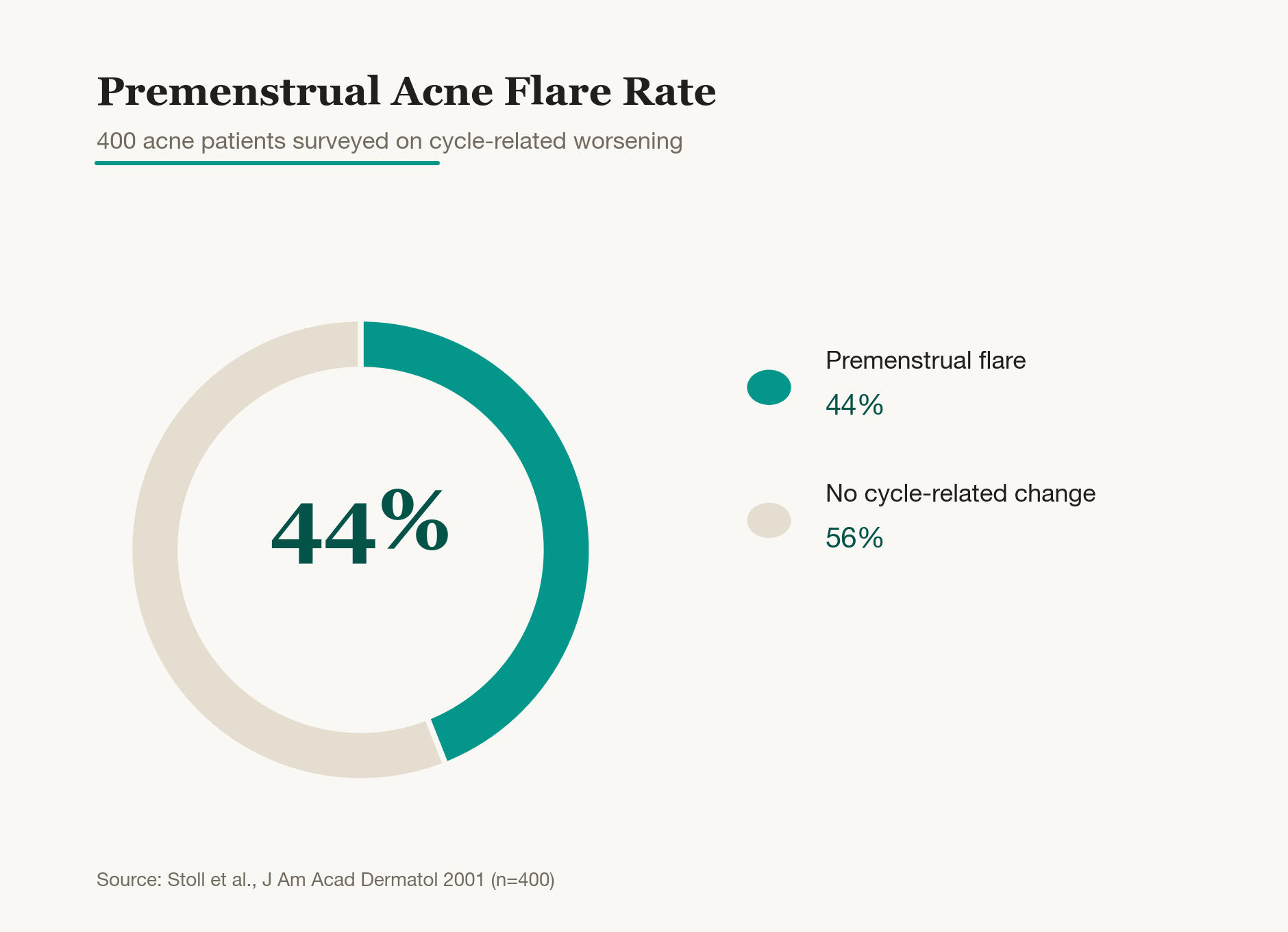
At the same time, estrogen, the hormone that normally keeps skin smooth and hydrated, drops relatively lower during this phase. With that restraining influence weakened, androgen-related signals end up standing out more. That's why jaw breakouts tend to cluster in the week or so before a period.
Since this pattern repeats once a month, tracking when your breakouts flare can help you map out your own skin's cycle. Once you know the pattern, you can ramp up your routine slightly ahead of that window.
How to care for it steadily with gentle ingredients
Because adult acne skin tends to be reactive, sticking with gentle ingredients consistently works better than switching things up often. These are the ingredients most commonly recommended.
- Niacinamide: regulates oil production and strengthens the skin barrier. A stronger barrier reacts less to outside irritation, which creates an environment where fewer new breakouts form.
- Azelaic acid: eases the buildup of dead skin cells inside pores while also curbing acne bacteria growth. It tackles both clogging and inflammation at the same time.
- Retinoids (including retinol): help dead skin cells shed normally instead of clumping inside pores. Visible results usually take about 8 to 12 weeks of consistent use, so it's important not to quit early just because you don't see changes right away.
- Salicylic acid (BHA): dissolves well in oil, letting it reach deep into oil-clogged pores to clear out debris. Unlike water soluble AHA, it's better suited for the oilier jawline area.
- Benzoyl peroxide: works directly to reduce acne bacteria. It can be irritating, so start with a low concentration, and layering it with other actives can increase irritation, so it's best used on a separate schedule.
Rather than piling all of these on at once, it's better to start with one or two, watch how your skin adapts, and add more gradually to keep irritation in check.
When should you see a dermatologist?
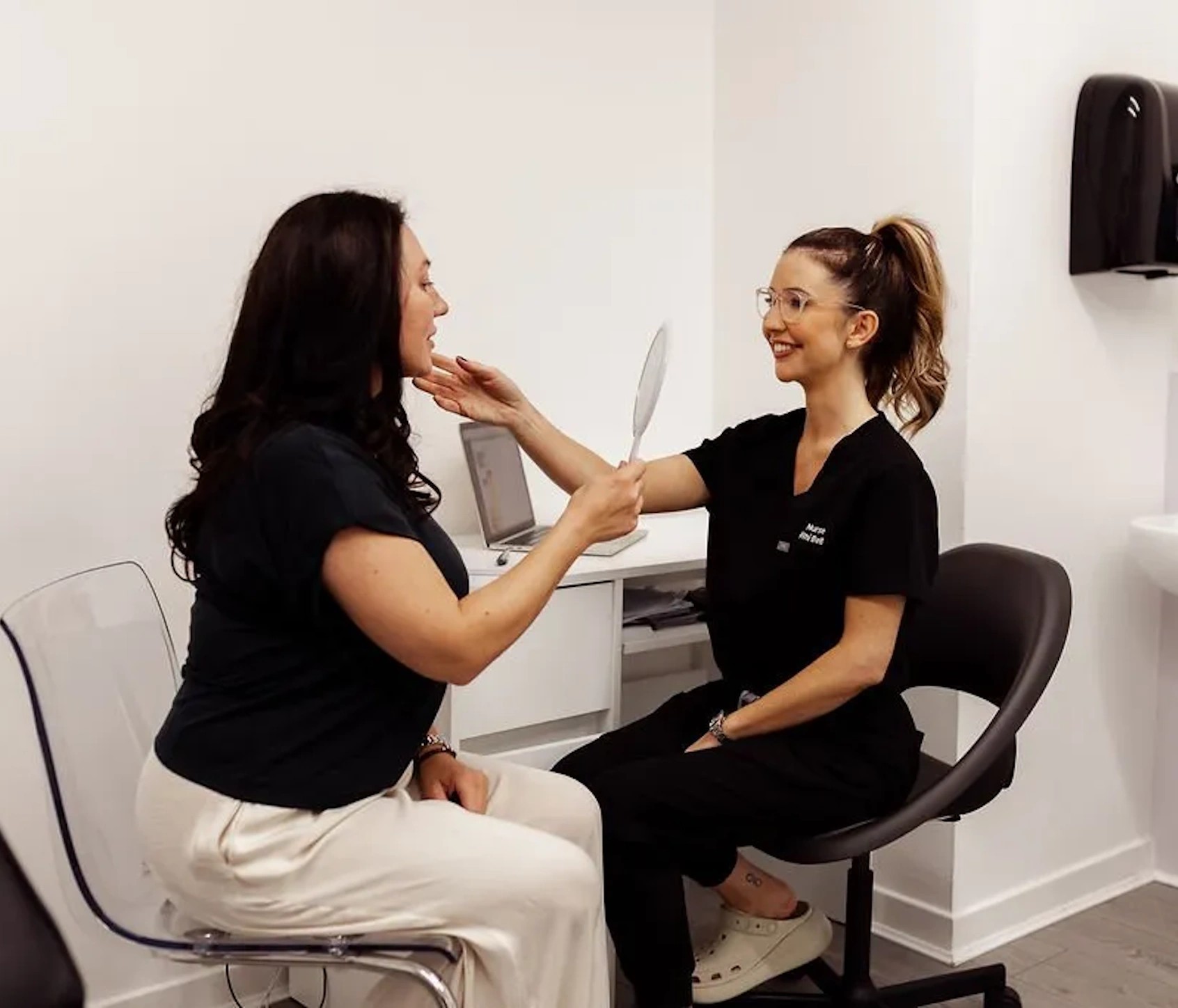
If red blemishes keep recurring for over a month despite home care, or if marks or scars start forming where breakouts have healed, that's considered a sign to see a dermatologist. Catching inflammation before marks form is the best way to reduce lasting traces later.
For breakouts confined to the jawline that keep recurring, topical treatment alone sometimes isn't enough, so dermatologists may also consider oral medication or hormone-regulating treatment. Which approach fits best gets decided after reviewing where the acne shows up, how severe it is, and how closely it tracks with your menstrual cycle.
If sudden acne comes along with increased body hair or an irregular cycle, it's worth checking your hormones more broadly rather than treating it purely as a skin issue, since skin often serves as a window into what's happening internally.
Once treatment starts, it typically takes about 4 to 12 weeks of consistent use before changes become visible. Since adult acne builds on a repeating cycle rather than a one-time event, giving one approach enough time to work tends to produce better results than switching too soon.
References
Korean Dermatological Association, American Academy of Dermatology (AAD), and Ministry of Food and Drug Safety (MFDS).
Was this helpful?
About this article
Written by a practising aesthetic physician and intended for general education — not a substitute for individual medical advice.
Read next

Teen Acne: Causes, Care and When to See a Clinic
Teen acne starts when androgen hormones ramp up oil production, then moves through a few predictable stages that end in clogged pores and inflammation. Here is why this stage of life hits so hard, what actually helps at home, and when it is time to see a dermatologist.
By Dr. Lee
Hormonal Acne Causes: Why It Keeps Returning on the Chin and Around the Mouth
Breakouts that keep returning to the jaw and mouth in adulthood follow a different pattern than teenage acne. Here is a look at how hormones like androgens keep stimulating the oil glands and hair follicles, plus how the menstrual cycle and stress fit into the picture.
By Dr. Kim
Winter Dry Skin: Causes and Care, Including Ceramides
As temperature and humidity both drop in winter, skin loses moisture much faster than usual. When the ceramide-rich skin barrier weakens, tightness, flaking, and sensitivity tend to show up together. Here's a rundown of the moisturizing ingredients, layering order, and habits that keep the barrier intact.
By Dr. Lee