Hormonal Acne Causes: Why It Keeps Returning on the Chin and Around the Mouth
By Dr. Kim6 min read
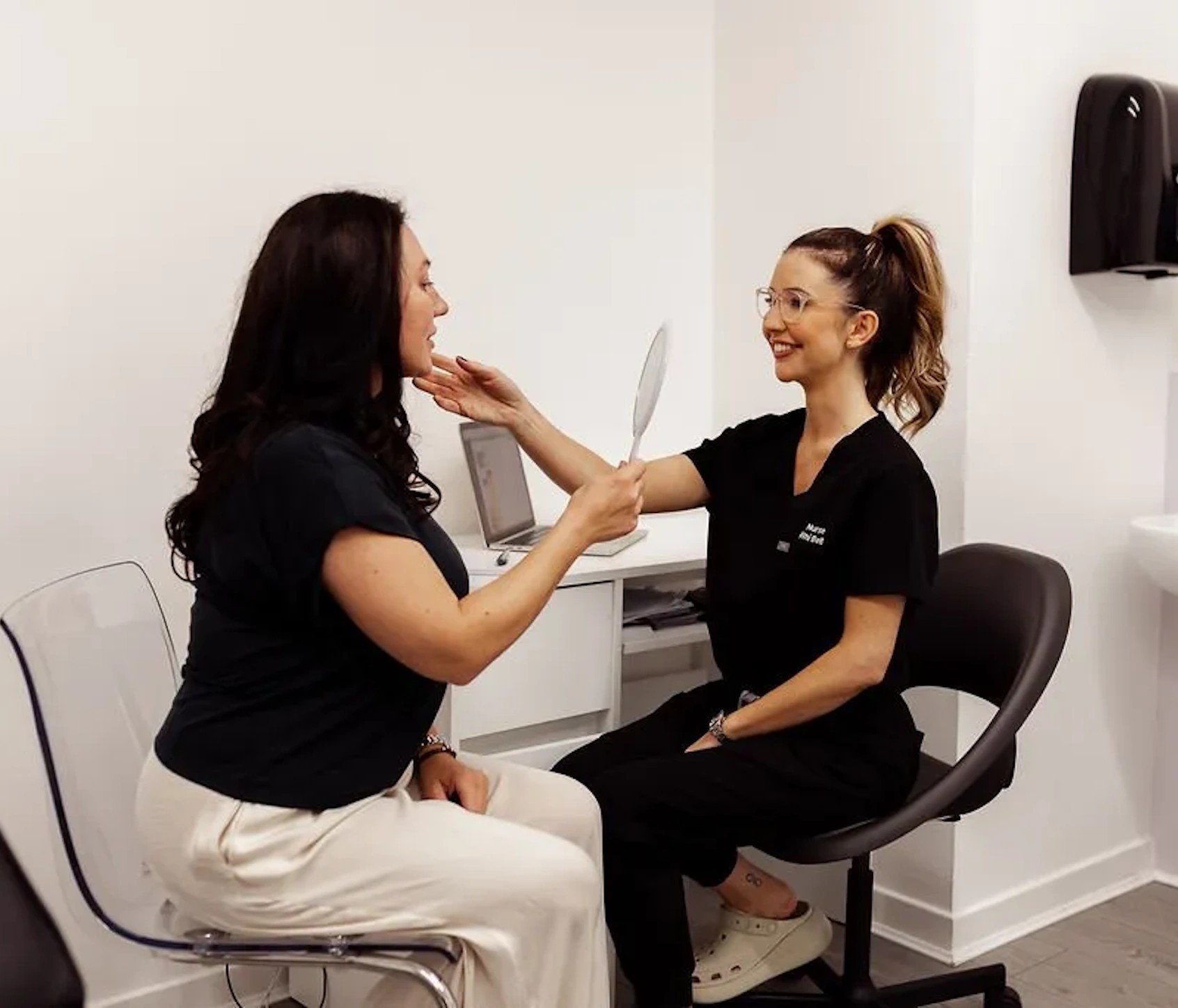
Plenty of people find that their skin actually got worse after their teenage years, not better. If breakouts keep showing up in the same spot along the jaw, mouth, and jawline, there is a good chance a different cause is behind it than the acne you had as a teenager. That cause is hormones. This is less a surface skin problem than a change driven by hormonal signals repeatedly stimulating the oil glands underneath, which is why switching skincare products alone rarely fixes it. Here is the reasoning behind why the jaw and mouth area gets hit so consistently.
Why does acne recur on the chin and not the forehead?
The forehead and nose already have a lot of oil glands, so they tend to break out from the teenage years onward. The jaw, mouth, and jawline are different. The oil glands in this area happen to be packed unusually densely with androgen receptors.
Think of a receptor as a lock that accepts hormones as the key. The more locks there are, the more strongly that area's oil glands react to the same amount of circulating hormone. So even a small shift in hormone levels shows up first along the jaw and mouth, and the same spot keeps flaring up again and again.
That explains why different parts of the same face respond so differently. The forehead and nose have more oil glands to begin with, so they break out easily from puberty, but they are relatively less sensitive to hormonal shifts themselves. The jaw and mouth, by contrast, have fewer oil glands but a higher density of receptors, or locks, so they react first whenever hormones rise and fall. That is why many people feel that the location of their breakouts genuinely changed as they got older.
How androgens stimulate the oil glands
Oil glands are tiny factories inside the skin that produce sebum. The switch that turns this factory on is androgen, the male hormone. Androgen exists naturally in the female body too, and when the amount ticks up even slightly, whether from ovulation or stress, the oil glands pick up on it and ramp up sebum production.
The problem is that oil is not the only thing that increases. Androgen also causes the keratinocytes lining the follicle opening to form faster and thicker. When the extra oil and thickened keratin clump together at the follicle opening, the exit narrows, creating the perfect environment for acne bacteria to multiply.
Why is chin acne deep and throbbing?
Acne on the jaw feels nothing like the small bumps on the forehead. It is firm and throbs when you touch it, and even when it looks small on the surface, it often sits fairly deep in the skin.
Once the follicle opening is blocked and oil and keratin get trapped inside, acne bacteria multiply and release inflammatory substances. The trouble is that the blockage sits closer to the dermis than the surface. When inflammation cannot stay contained near the top and spreads into deeper tissue, it develops into a firm red nodule or a cyst that feels like a fluid-filled lump. That is why these breakouts tend to linger longer and leave marks more easily than shallow surface pimples.
The dermis is the layer that supports the skin, held up by a dense scaffold of collagen protein. When inflammation reaches this scaffold, the body rushes to rebuild tissue to close the wound, and if that process does not go smoothly, the result is a mark that either sinks in or, less often, raises up thick. Unlike surface acne that resolves without touching deeper layers, jaw acne is especially prone to scarring because the inflammation reaches so much further down.
Why does chin acne get worse before your period?
Many women notice jaw breakouts showing up a few days before their period starts. That is not a coincidence. After ovulation, levels of progesterone rise, and this hormone also stimulates the oil glands.
At the same time, the body tends to retain more fluid during this window, which causes slight swelling at the follicle opening. A narrower opening combined with more oil creates conditions that are more prone to clogging than usual. On top of that, estrogen relatively drops off during this phase, and since estrogen normally works to hold sebum production in check, that shift lets the oil glands run more freely.
This pattern continues throughout the luteal phase, from ovulation until the period begins. That is why breakouts often calm back down naturally once hormones settle a few days into the period. If a jaw breakout shows up around the same time every month, it is not a sign of neglecting your skincare routine. It is a sign that your skin is simply following this cyclical hormonal rhythm.
How does it differ from teenage acne?
Teenage acne tends to spread widely across the forehead and nose, the T-zone, where oil glands are already plentiful. Adult hormonal acne, on the other hand, tends to cluster in a narrower area around the jaw, jawline, and mouth. As mentioned above, that is because the oil glands in this region carry more hormone receptors.
The shape also differs. Teenage acne skews toward shallow forms like blackheads and whiteheads, while adult hormonal acne shows up more often as firm red nodules or cysts. And once it appears, it tends to linger for weeks and reappear in roughly the same spot.
How does stress affect acne?
Under stress, the body releases a hormone called cortisol. Cortisol's original job is to put the body on alert during a crisis. It also appears to make the androgen receptors in the oil glands more sensitive.
In other words, stress itself does not directly produce oil, but it acts as an accomplice that amplifies how strongly androgen stimulates the oil glands. That is why so many people notice their jaw acne getting worse during stretches of ongoing pressure, like exams or deadlines. Lack of sleep works through the same channel, further destabilizing the cortisol rhythm. In the end, it is rarely just one hormone at work. Several signals overlap to keep hitting the same spot over and over.
How is hormonal acne managed?
You cannot eliminate hormones themselves, but you can adjust the surrounding conditions so the oil glands are less reactive to triggers. Each habit below works either by slowing down how fast pores clog or by cutting down what fuels inflammation.
- Avoid harsh cleansing: Scrubbing hard or washing with hot water thins the skin barrier, which makes it more vulnerable to inflammation, not less.
- Use noncomedogenic products: Avoiding pore-clogging ingredients helps keep an already narrow follicle opening from getting blocked any further.
- Do not touch or pick: Bacteria from your fingertips can transfer to the area, and applying pressure can push inflammation deeper into the tissue.
- Protect your sleep schedule: Insufficient sleep throws off the cortisol rhythm, which can make the oil glands react even more sharply to androgen.
When the pattern is persistent and clearly tied to a cycle, dermatologists often use a topical retinoid such as tretinoin or benzoyl peroxide to slow down how quickly follicles clog, and add hormone-targeted treatment such as spironolactone or an oral contraceptive when needed. Which treatment fits best usually depends on where the acne shows up, what form it takes, and how it recurs, so if the pattern is clear and consistent, seeing a dermatologist tends to be a more direct path forward than trying to manage it on your own.
References
Korean Dermatological Association, American Academy of Dermatology (AAD), and Ministry of Food and Drug Safety (MFDS).
Was this helpful?
About this article
Written by a practising aesthetic physician and intended for general education — not a substitute for individual medical advice.
Read next
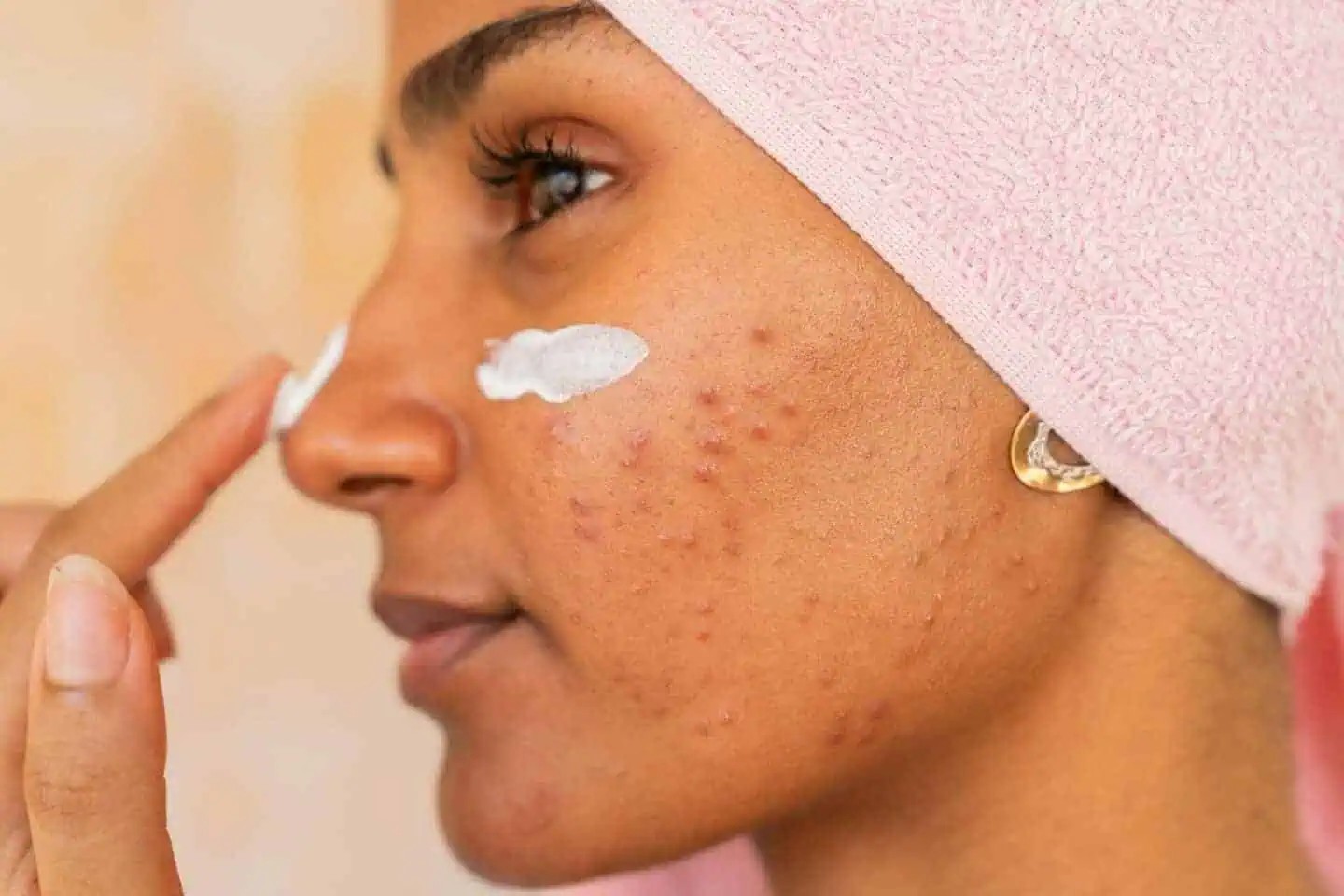
Causes of Excess Sebum: Is It Hormones or Stress?
Sebum output isn't decided by the oil glands alone. Androgens are the hormone that tells the glands how hard to work, and puberty, the menstrual cycle, stress, and blood sugar swings all feed into that same signal. Here is how the hormone-gland relationship explains those sudden oily days.
By Dr. Lee
Maskne Causes and Care: Why Does It Cluster on the Chin and Cheeks?
A lot of people notice more breakouts along the jaw and cheeks the longer they wear a mask. Friction, high humidity, and clogged pores team up to weaken the skin barrier and give inflammation an easy foothold. Here is a look at why this happens and how to manage it, built around the underlying mechanisms.
By Dr. Kim
Why Is My Scalp Oily? Causes, and Why It Gets Shiny Before the Face
The scalp packs in far more oil glands than the face, which is why it can look shiny within hours of a wash. Here is how male hormones and enzyme activity drive oil production, and how ingredients like salicylic acid and niacinamide each target a different part of that process, along with washing habits and in-clinic treatments worth knowing.
By Dr. Lee