Beard Laser Hair Removal: How Many Sessions, and How Painful Is It?
By Dr. Kim9 min read

More men are looking into laser hair removal because of stubble that turns coarse again just hours after a morning shave, or the red bumps that follow razor use. Unlike hair removal on a woman's arms or legs, men's beard hair is thick, dark, and densely packed into a small area, which makes it a trickier target for a laser to handle even with the same technology. Thick, dark hair is actually a good target for lasers and responds well, but that same density means pain and folliculitis need extra attention too. GentleMax Pro Plus pairs Alexandrite and Nd:YAG wavelengths in a single device, built specifically to handle thick beard hair across a range of skin tones. You're probably wondering how many sessions it takes, how much to worry about pain or folliculitis, and how it stacks up against shaving every day. We'll go through all of it below.
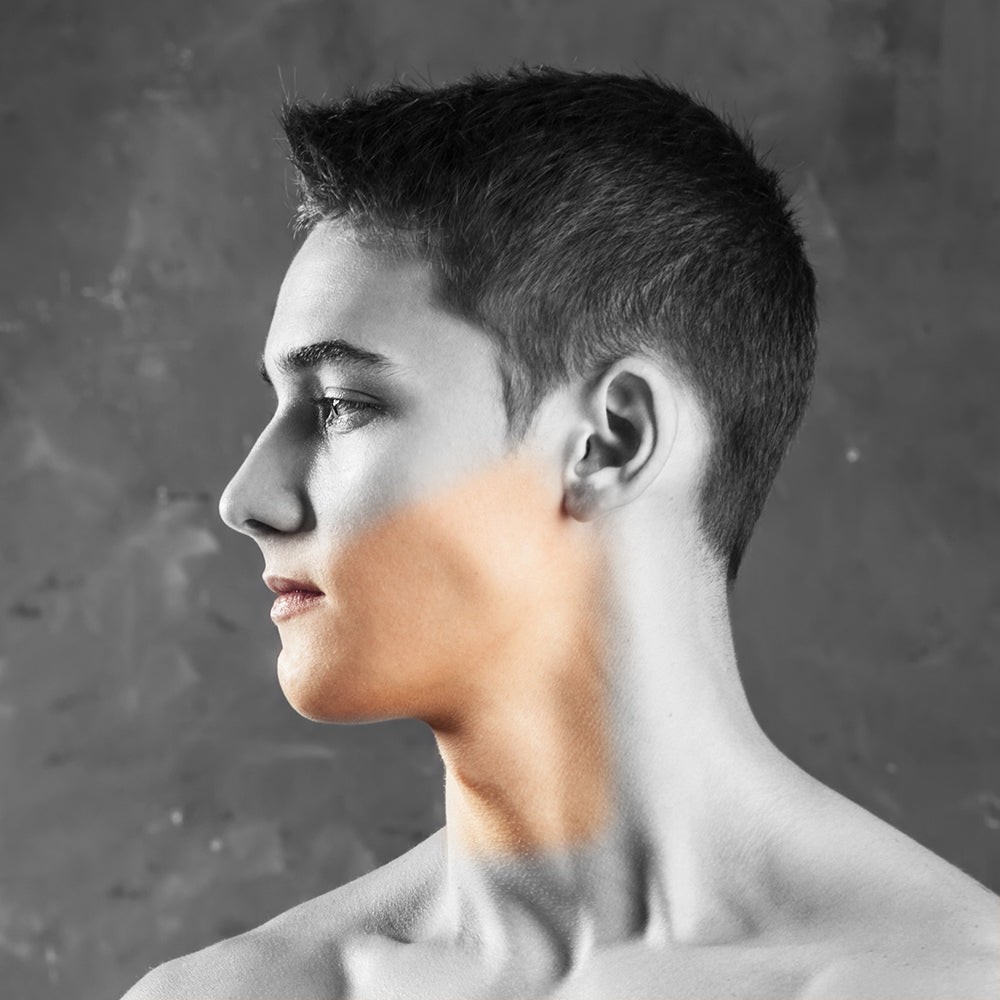
Why is beard hair harder to treat with laser?
Beard hair ranks among the thickest and densest hair on the body. After puberty, androgens turn fine vellus hair into coarse terminal hair, packing dark, dense strands into a relatively small area of the face. Laser hair removal works by heating the dark melanin in hair to damage the follicle, so thick, dark beard hair makes a clear, well-defined target and tends to respond well.
But that same density cuts both ways. When pigment is concentrated in such a tight area, heat builds up quickly even at the same energy setting, and the skin surface tends to heat up right along with it. Facial skin is also thinner and more sensitive than skin on the arms or legs, and has more sebaceous glands, so pain, redness, and folliculitis show up relatively more often here.
Follicle depth is another variable. Beard follicles often sit deeper than hair elsewhere on the body, so targeting only the surface may not deliver enough heat down to the root. Shoot too shallow and you miss the follicle; shoot too aggressively and you risk damaging the thin facial skin, a balance that isn't always easy to strike.
Beard hair is, in a sense, a good target that's also tricky to manage. That's why treating it well calls for a device that can fine-tune wavelength, energy, and cooling together, adjusted carefully to skin tone and hair condition. The device used and how it's dialed in make a big difference in the outcome.
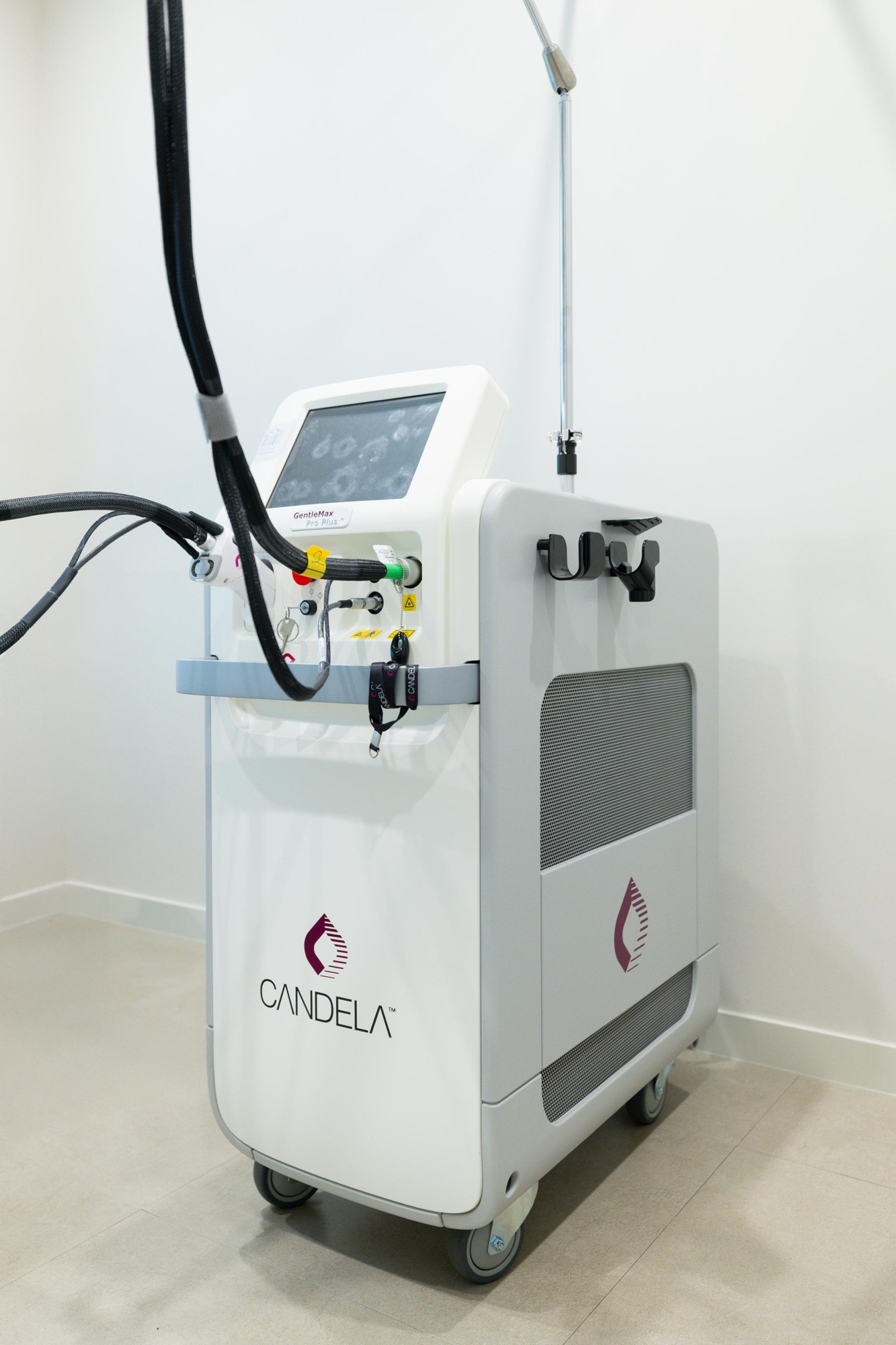
The two wavelengths of GentleMax Pro Plus
Laser hair removal works by selectively heating pigment. Dark melanin in the hair absorbs the laser light and converts it to heat, which travels down to the follicle that grows the hair and damages it so it can't regrow. Surrounding skin, with far less pigment, absorbs much less heat by comparison.
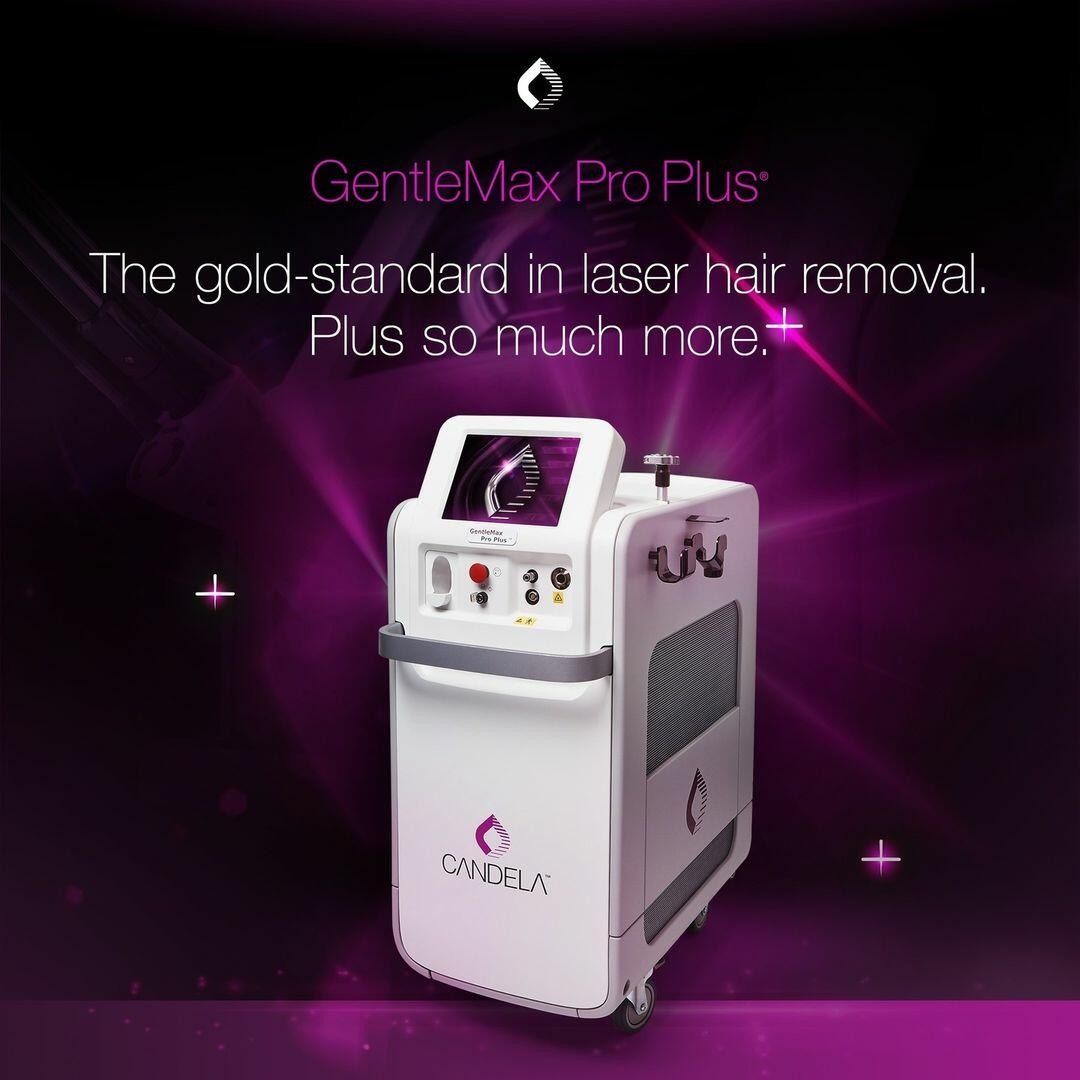
GentleMax Pro Plus, made by Candela, packs two wavelengths, 755 nm Alexandrite and 1064 nm Nd:YAG, into a single device. The 755 nm wavelength has high melanin absorption, making it efficient on thick hair in lighter skin, while 1064 nm penetrates deeper with lower melanin absorption, making it relatively safer for darker skin tones. A built-in cooling system sprays cryogen onto the surface right as the laser fires, so heat still reaches the follicle while the skin above it stays protected.
Having both wavelengths in one device is a particular advantage for men's beard hair. Lighter skin tones can lean on 755 nm for efficiency, while tanned or naturally darker skin can prioritize safety with 1064 nm instead.
| Item | Alexandrite 755 nm | Nd:YAG 1064 nm |
|---|---|---|
| Melanin absorption | High | Low |
| Penetration depth | Shallower | Deeper |
| Best suited for | Lighter skin | Darker skin |
| Strength | Efficient on thick hair | Lower burn risk |
How many sessions, and how far apart?
The reason multiple sessions are needed comes down to the hair growth cycle. Hair cycles through growing, resting, and shedding phases, and laser only works well on hair that's actively growing, since that's when pigment is highest. One session only catches the hair that happens to be growing at that moment, while hair that was resting gets caught in a later session.
That's why sessions are usually spaced 4 to 6 weeks apart. In a long-term follow-up study of Alexandrite hair removal, patients received a minimum of three sessions, averaging 5.6. Each additional session catches another wave of growing hair, so total hair count and thickness decrease together over time.
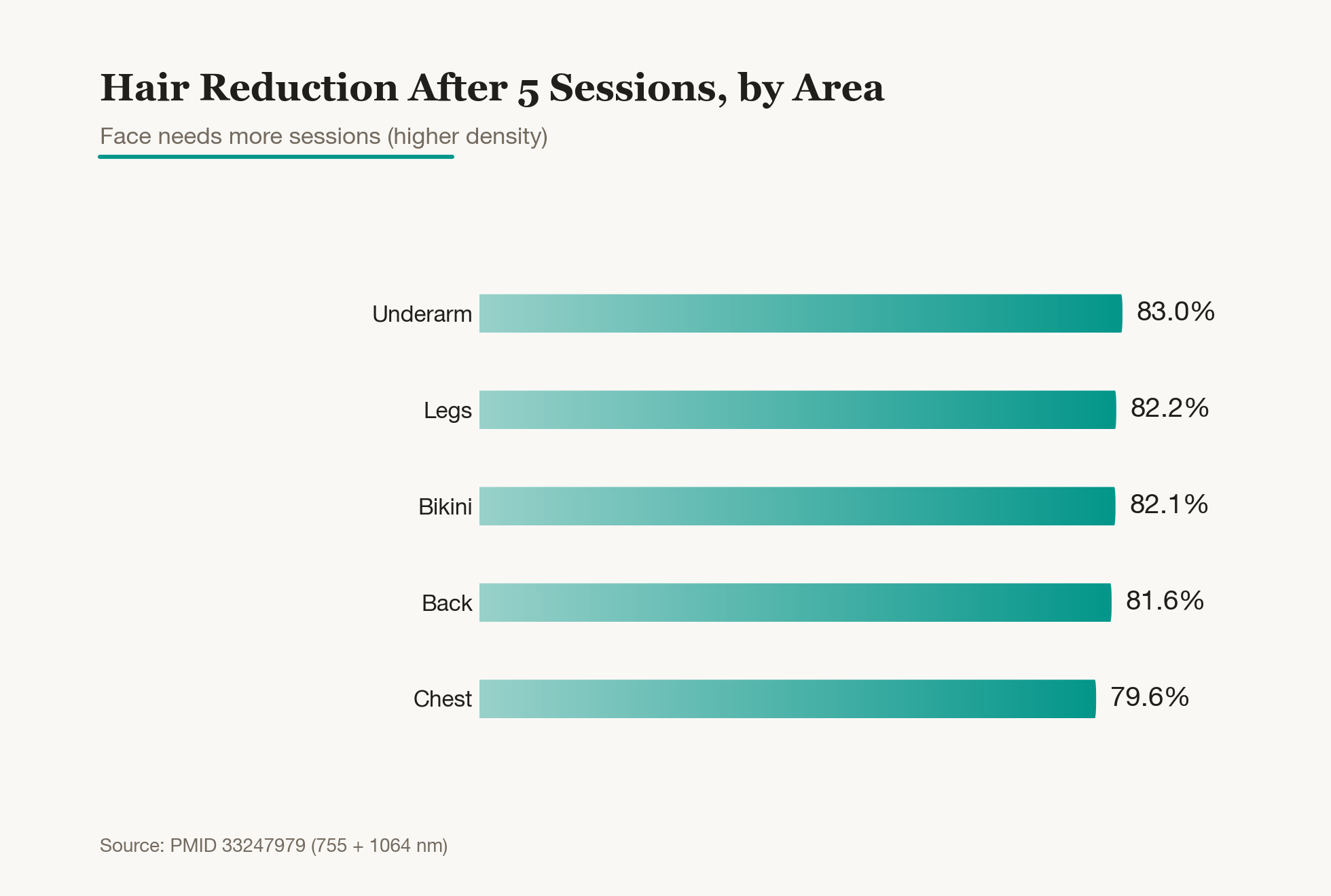
The degree of improvement varies by body area. In a clinical trial combining Alexandrite and Nd:YAG, reduction rates after 5 sessions came in at 83.0% for the underarms, 82.1% for the bikini line, 82.2% for the legs, 81.6% for the back, and 79.6% for the chest, clustering around the 80% mark. Beard hair, being on the face, is often denser and may need more sessions, but its thickness and dark color still work in its favor for a good response. That said, "permanent hair removal" doesn't mean every hair vanishes forever; it means the hair that regrows is meaningfully reduced. Some hair can return over time, so periodic maintenance sessions are often needed.
How bad are the pain and folliculitis?
The beard area has dense nerve supply, so the stinging sensation during treatment tends to be stronger here than elsewhere. That said, the cooling system helps ease the surface heat, and numbing cream can be applied beforehand if needed to reduce discomfort. Redness or slight swelling around the follicles right after treatment is common, and it usually settles within a day or two.
It helps to know about folliculitis ahead of time. Small, temporary pimple-like bumps can appear at the follicles after treatment, but most clear up within a few days. In fact, laser hair removal is also used to treat pseudofolliculitis, the chronic, ingrown-hair-driven folliculitis that shaving can cause. A study using 1064 nm Nd:YAG on darker skin to address this issue found that low-energy treatment reduced small papular lesions by about 92%, with an average overall improvement of 86.5% when combining hair and lesion outcomes.
Pigment changes are rare but worth knowing about. If your face is tanned or naturally darker, the epidermis can absorb heat and temporarily darken or lighten, but avoiding tanning and strong sun exposure before and after treatment, along with diligent sunscreen use, prevents this in most cases. Adjusting wavelength and energy to match skin tone is the single most important factor in minimizing these reactions.
| Reaction | Pattern | Management |
|---|---|---|
| Pain | Stinging | Cooling, numbing cream |
| Redness | A day or two | Soothing, moisturizing |
| Folliculitis | Temporary bumps | Usually resolves on its own |
| Pigment change | Rare | Sun protection |
Paradoxical hypertrichosis, when hair grows in more
Paradoxical hypertrichosis is a reaction where hair in or around a treated area actually grows back thicker and denser. The exact cause isn't fully understood yet, but the leading explanation is that heat too mild to destroy the follicle can instead stimulate a resting follicle into growth.
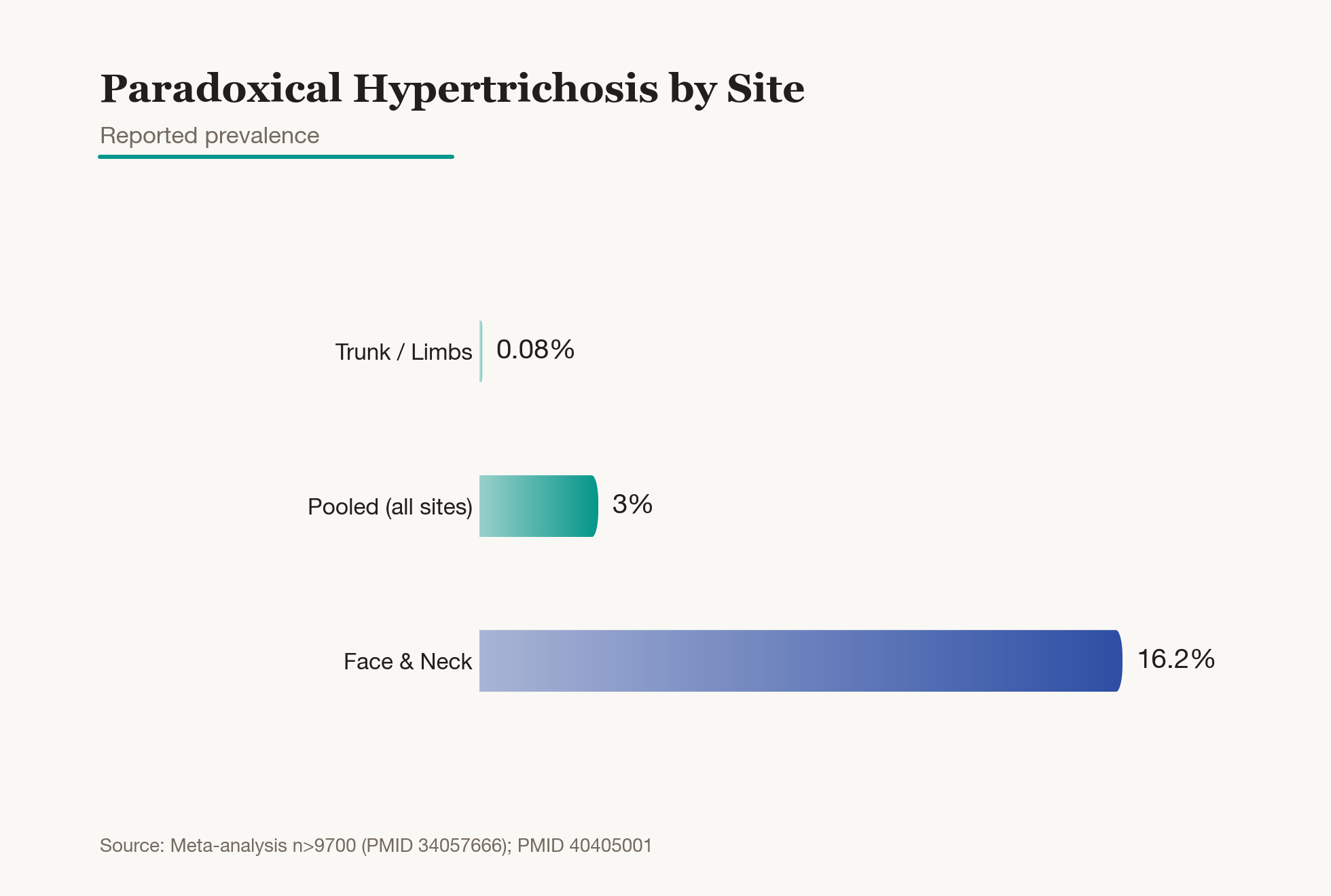
Location matters a lot here. A pooled analysis of multiple studies found the trunk and limbs to be very rarely affected, at just 0.08%, while the face and neck were reported far more often. Pooled across all areas, the rate runs around 3%, and one study focused specifically on the face found rates as high as 16.2%. Given that the face and neck happen to be the areas most affected, this is a reaction worth keeping in mind specifically for beard hair removal.
The risk factors are also fairly well established. Darker skin tones, thick dark hair, and a hormone-related predisposition all tend to raise the risk. The key to prevention is avoiding energy that's too mild. Using energy strong enough to reliably target the follicle, and treating the margins just outside the intended border as well, can lower the risk. That's why, especially for sensitive areas like the face, it's important to work with a provider who knows how to dial in energy based on skin tone and hair condition.
How does it compare with shaving?
Shaving is the simplest option, but it only cuts hair at the surface, so stubble returns within hours and has to be repeated daily. The blade can scrape the skin and leave redness or small nicks, and when a cut hair tip curls back into the skin, it can trigger pseudofolliculitis, the ingrown hairs that lead to recurring red bumps.
Laser hair removal takes a different approach entirely, reducing the follicle itself. As hair count and thickness decrease over multiple sessions, shaving frequency drops, and chronic folliculitis from ingrown hairs tends to ease as well. If your goal is escaping the daily hassle and razor burn, it's a good fit.
That said, laser isn't a cure-all. Light or white hair, or very fine vellus hair, has little pigment to target and responds poorly, requiring more sessions and maintenance treatment. If the goal is a natural reduction in density or a cleaner edge rather than complete removal, it's worth discussing ahead of time exactly which areas to reduce and which to preserve.
| Item | Shaving | Laser hair removal |
|---|---|---|
| Duration | A few hours | Long-term after sessions |
| Folliculitis | Common | Actually eases |
| Hassle | Daily | Periodic sessions |
| Limitation | Needs repeating | Low response on white hair |
Was this helpful?
About this article
Written by a practising aesthetic physician and intended for general education — not a substitute for individual medical advice.
Read next

Laser Hair Removal Sessions and Intervals: How Many Are Needed to Finish?
Laser hair removal doesn't wrap up in one or two visits, and here's why: it comes down to the growth cycle that alternates between an active growth phase and a resting phase. We'll walk through how many sessions each area typically needs and how the alexandrite and Nd:YAG wavelengths differ.
By Dr. Kim
GentleMax Pro Hair Removal: Alexandrite or Nd:YAG, Which One Is Right?
The GentleMax Pro packs two wavelengths, an Alexandrite laser and an Nd:YAG laser, into a single device, letting practitioners switch between them based on skin color and hair thickness. Here is how each wavelength works and why cooling is always built in alongside them.
By Dr. Lee

CureMax Laser: How Dual Wavelengths Work and the Difference From Picosecond
CureMax is an Nd:YAG pigment laser that pairs two wavelengths, 532 nm and 1064 nm, in one device. Here is how selective photothermolysis targets melanin and how nanosecond pulses break pigment apart, plus which pigment conditions it treats and how to care for skin afterward.
By Dr. Lee