CureMax Laser: How Dual Wavelengths Work and the Difference From Picosecond
By Dr. Lee7 min read
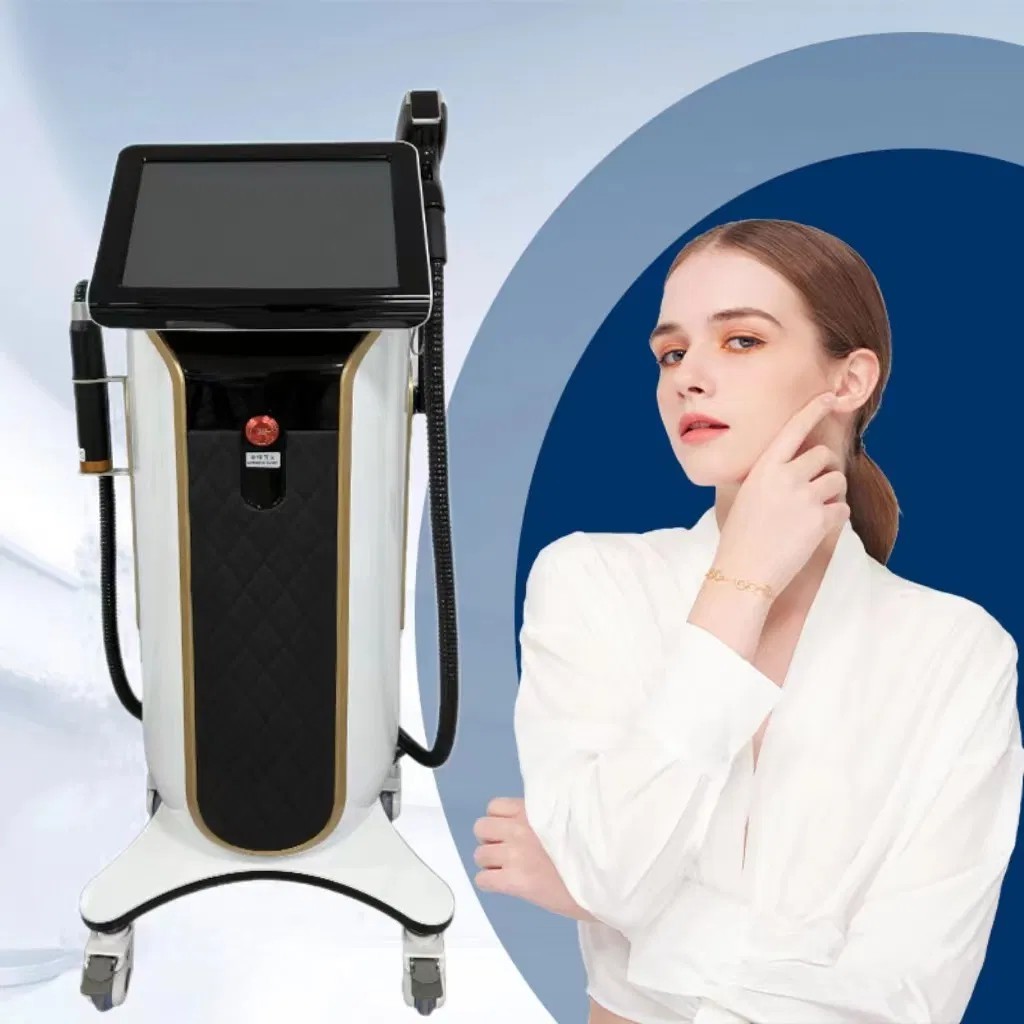
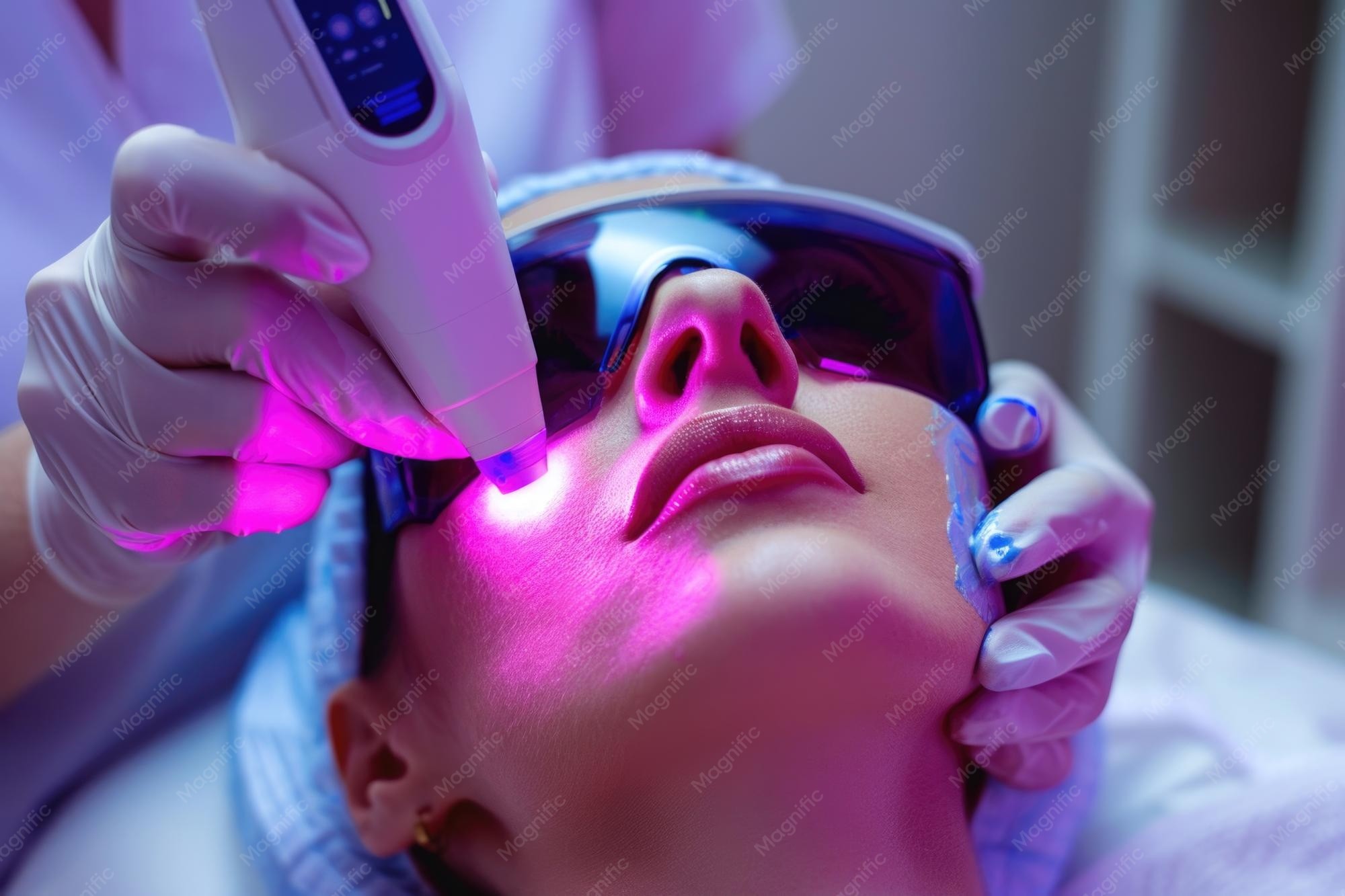
If you have heard the term laser toning before, chances are you have run into the name CureMax too. It is an Nd:YAG (neodymium doped yttrium aluminum garnet, named for the neodymium element embedded in the laser crystal) device that Korean dermatology clinics reach for often when treating melasma, sunspots, and age spots. The name sounds new, but the underlying principle is the same well established selective photothermolysis that has been used for decades. What is different is how precisely the device now handles wavelength and pulse timing.
What kind of device is the CureMax laser?
CureMax is a Q switched pigment laser that switches between two wavelengths, 532 nm and 1064 nm, depending on the target. Q switching refers to a mechanism that releases laser energy all at once in an extremely short burst. Think of the difference between squeezing a water gun slowly and compressing the same water into a single powerful blast.
Energy needs to fire short and strong so it can zero in on pigment alone without spreading heat elsewhere. Wavelength, in turn, determines how deep that short, intense burst can travel. That is why CureMax stands out for handling shallow pigment and deep pigment within a single device.
Why does it use two wavelengths, 532nm and 1064nm?
At 532 nm, the shorter wavelength only reaches close to the skin surface. That makes it the go to choice for freckles and shallow spots sitting near the epidermis. The longer 1064 nm wavelength, on the other hand, penetrates further into the skin, which is why it is used for melasma settled deeper in the dermis or for darker lesions that need stronger energy to respond.
A helpful comparison is shining a flashlight into water. Short wavelength light scatters near the surface, while longer wavelength light reaches further down. The same logic applies inside skin tissue, so the wavelength is chosen to match how deep a lesion sits. Being able to switch between shallow and deep targeting with one machine is exactly what makes a dual wavelength laser like CureMax appealing.
How does it target only melanin?
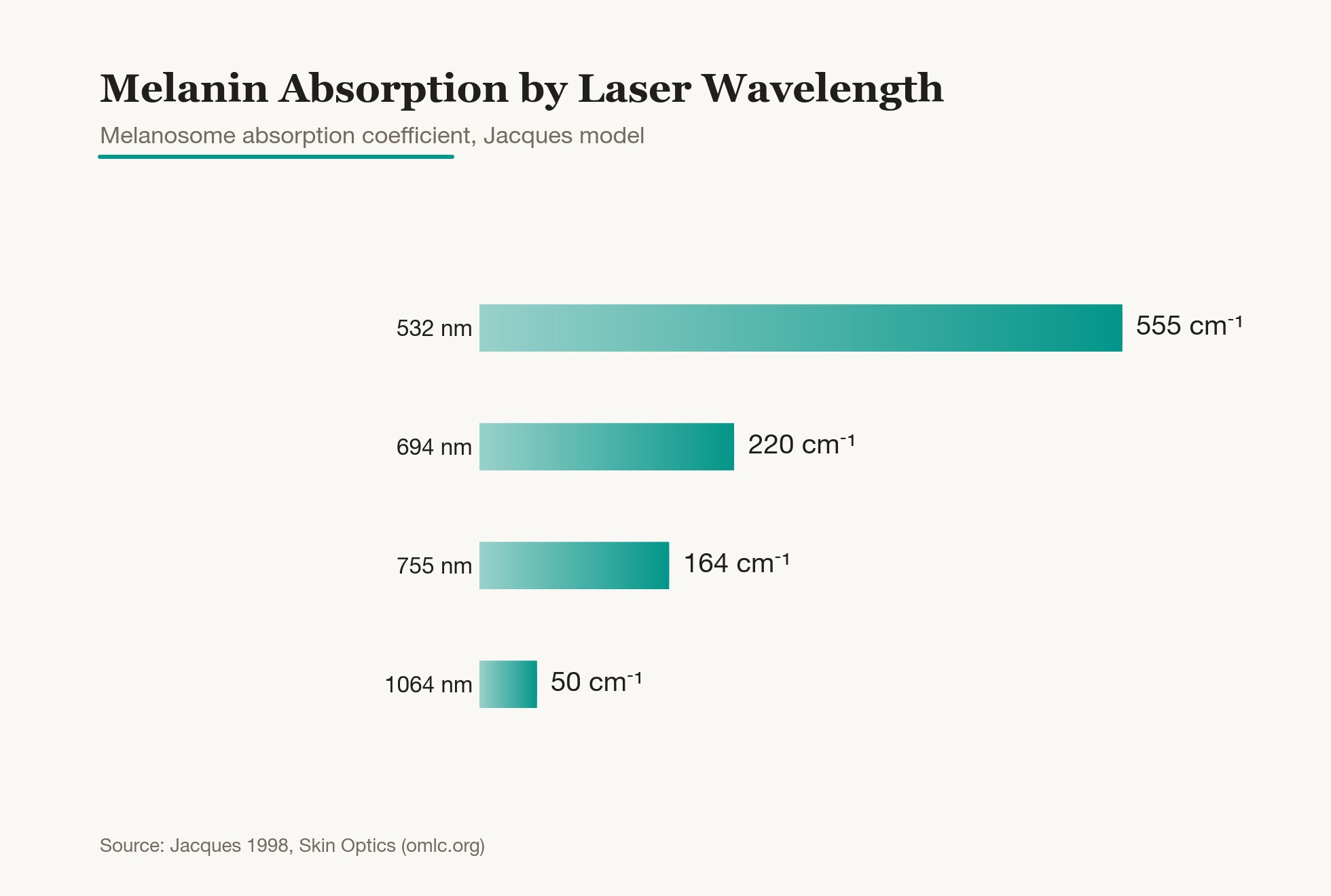
The reason a laser can clear pigment without scorching the surrounding skin comes down to selective photothermolysis. It relies on the fact that melanin, the pigment granule responsible for skin color, absorbs certain wavelengths of light far more readily than the tissue around it.
Picture a piece of colored glass. Red glass lets red light pass through but absorbs other colors and converts them into heat. Melanin behaves in a similar way, soaking up light near 532 nm and 1064 nm at a much higher rate than the skin around it. So when the laser passes through, temperature spikes sharply right where melanin sits, while pigment free skin nearby barely changes temperature at all.
Pulse duration is the key variable here. If the pulse is shorter than the time it takes melanin to cool off, the reaction stays contained inside the melanin before heat can spread outward. It is a bit like pouring a burst of hot water onto an ice cube sitting in a pot: the ice melts quickly while the pot itself never gets very hot.
How does a nanosecond laser break up pigment?
CureMax delivers energy in nanosecond bursts, each one a billionth of a second long. When that much energy concentrates on melanin in such a short window, the temperature inside each melanin granule spikes so fast that the granule shatters. It is not purely a heat effect either, a micro explosive mechanical force comes into play alongside the thermal one.
Think of the difference between letting a sugar cube dissolve slowly in hot water versus striking it with a hammer. Nanosecond pulses work more like the hammer, breaking down pigment clumps into fragments too small to notice. Macrophages, the immune cells that engulf debris, then absorb these fragments and clear them gradually through the body or lymphatic circulation. That is why results rarely appear right after treatment. Skin usually keeps lightening gradually over the following weeks.
Which lesions is it used for, including melasma and nevus of Ota?
Dual wavelength nanosecond lasers like CureMax cover a wide range of pigment lesions. Because location and depth of color vary from one condition to the next, the wavelength and intensity are adjusted case by case.
- Melasma: Since it spreads broadly near the border of the dermis and epidermis, lower energy delivered across several sessions is the typical approach. Aggressive energy can actually cause the pigment to darken again.
- Sunspots and freckles: These sit close to the epidermis, so 532 nm is the usual choice. Because the depth is shallow, energy absorbs well near the surface without needing to travel far.
- Age spots: These often carry darker color and cluster near the epidermis, so a stronger single pass approach is sometimes used. Denser pigment absorbs more energy.
- Dermal pigment such as nevus of Ota: Since this pigment sits deep in the dermis, a longer reaching wavelength like 1064 nm is required. Shorter wavelengths simply cannot penetrate far enough to reach it.
How is it different from picosecond lasers?
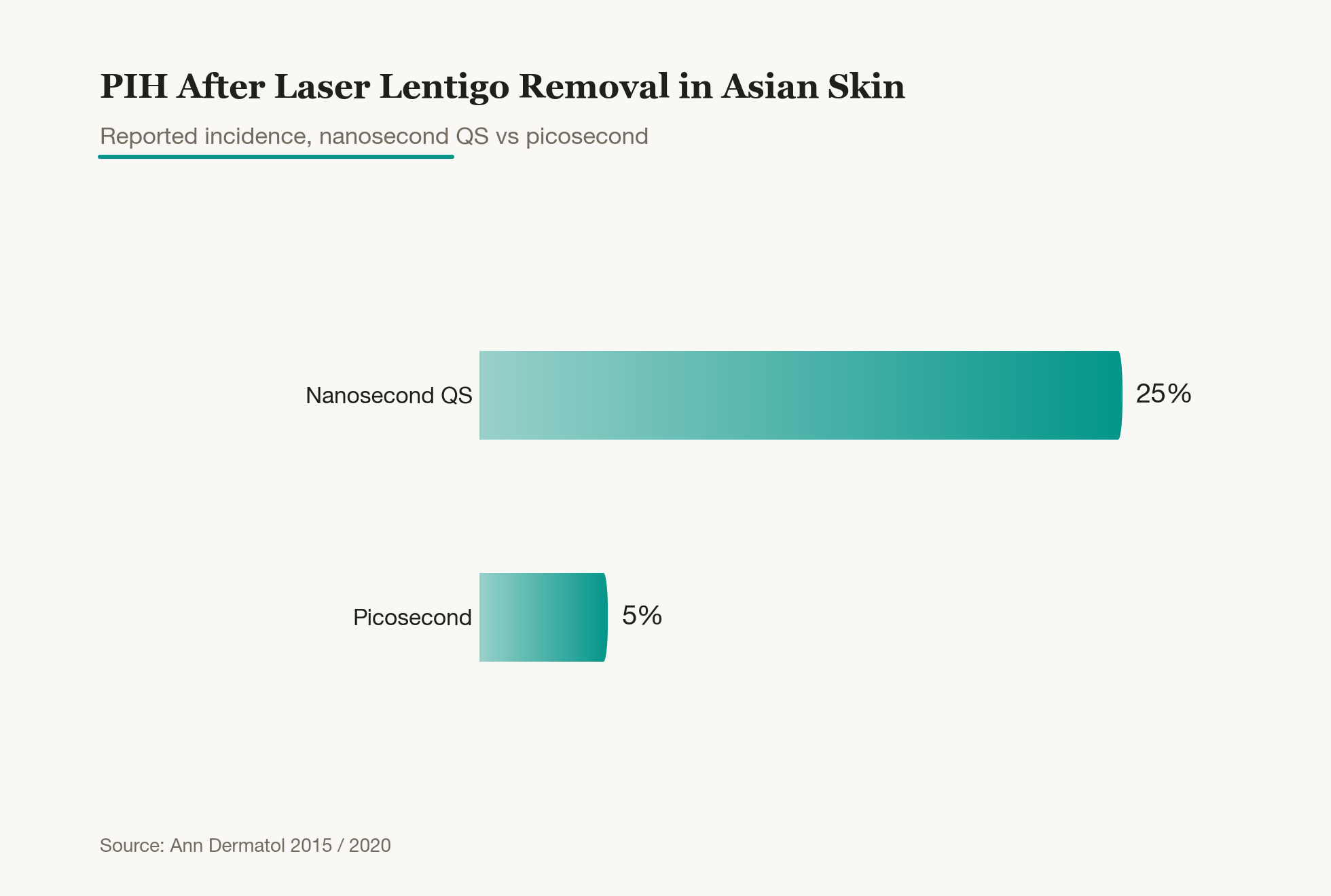
Picosecond lasers, which fire pulses lasting a trillionth of a second, have become common in pigment treatment as well. Compared with a nanosecond device like CureMax, picosecond pulses are so much shorter that heat plays a smaller role while mechanical fragmentation plays a larger one, which is often cited as a reason for reduced thermal damage.
That does not mean nanosecond technology falls behind. Nanosecond Q switched lasers have been used long enough to build a substantial track record, and for dense, stubborn pigment, the extra thermal energy can actually help drive the reaction. Which approach fits better depends on the type of lesion, how dark it is, and the condition of the skin, so the two technologies work more as complements than substitutes for one another.
A dual wavelength device like CureMax also adds flexibility to a clinic visit, since it can treat shallow and deep pigment in the same session. When pigment sits across multiple layers, switching wavelengths mid treatment allows both depths to be addressed in one visit.
Scabs, UV protection and aftercare
Right after treatment, the treated area may look red or develop light crusting. Areas treated at higher energy often form a thin brown crust for a few days before it comes off naturally. Picking at the crust can leave irritation behind, so letting it fall off on its own is recommended.
Sun protection matters even more after this kind of treatment. Skin that has just been through laser stimulation has pigment producing cells that are temporarily more reactive, so unprotected sun exposure can trigger post inflammatory hyperpigmentation, essentially making pigment come back darker. Depending on the lesion, treatment is often spread across several sessions a few weeks apart rather than done in one pass, timed to match the pace of pigment clearing so the skin is not overstimulated.
References
Korean Dermatological Association, American Academy of Dermatology (AAD), and Ministry of Food and Drug Safety (MFDS).
Was this helpful?
About this article
Written by a practising aesthetic physician and intended for general education — not a substitute for individual medical advice.
Read next
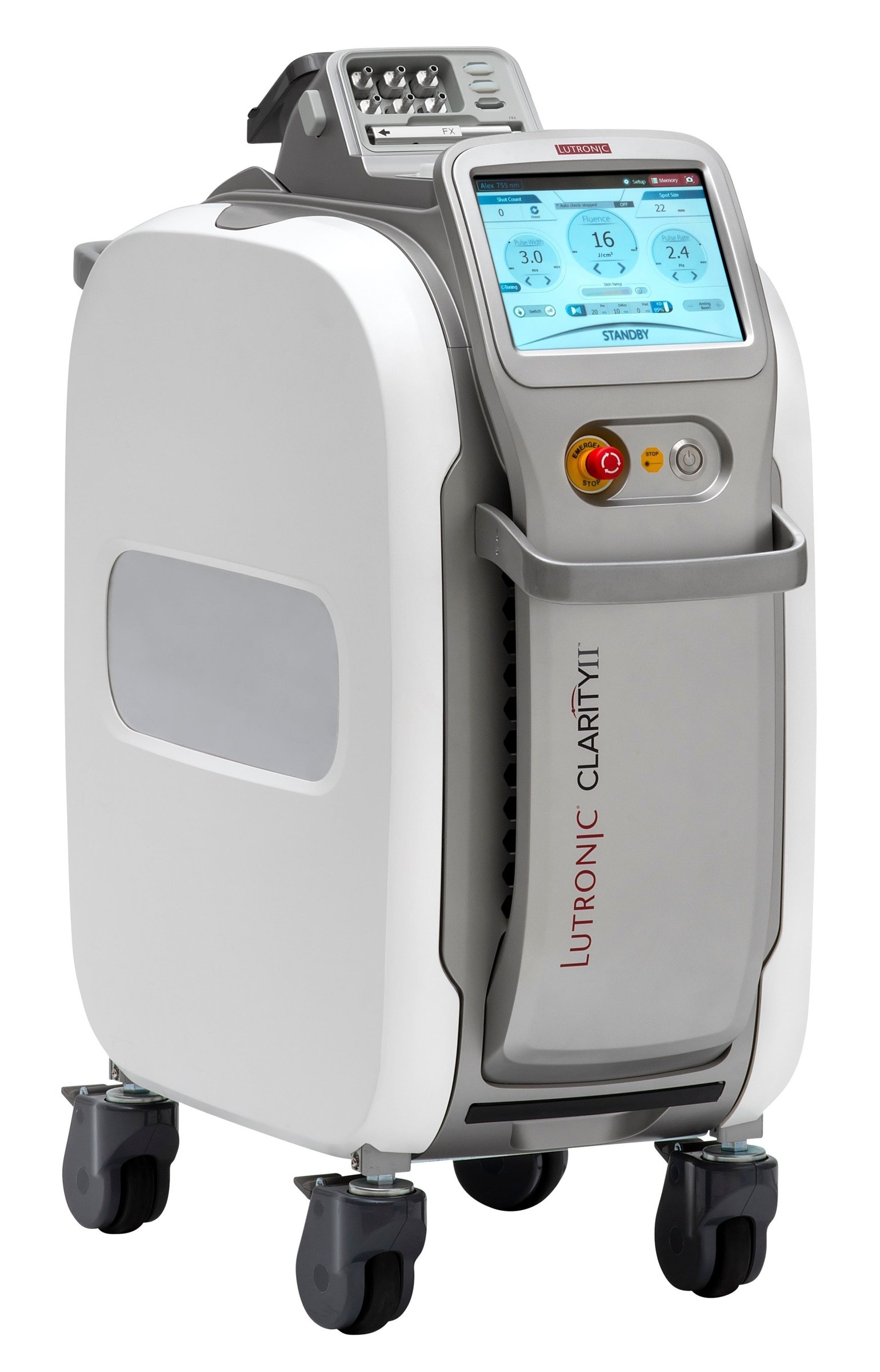
Clarity II Toning: Effects, How It Works and the Difference Between 755 and 1064 Nanometers
Clarity II toning pairs an alexandrite laser with an Nd:YAG laser in a single device, treating shallow spots and deeper melasma with two different approaches. Here is why two wavelengths are needed and how toning differs from a procedure that removes a mole.
By Dr. Kim
Cafe-au-Lait Spots Returning After Laser: Causes, Number of Sessions and Expectations
A café au lait spot forms because the pigment-making cells in that one patch of skin are locally overactive. Laser treatment breaks up the pigment that has already built up, but it doesn't switch off those cells, which is why the color so often returns. Here's the biology behind it, why results differ so much from person to person, and what a realistic treatment timeline actually looks like.
By Dr. Kim

Can Thin People Get a Double Chin? How to Tell Fat From Sagging
A double chin can come from fat buildup or from sagging skin and muscle, and the treatments that actually work depend entirely on which one it is. Here is why that difference matters and how to tell the two apart.
By Dr. Kim