Men's Acne Causes: Why Is It Bigger and More Scarring?
By Dr. Kim8 min read
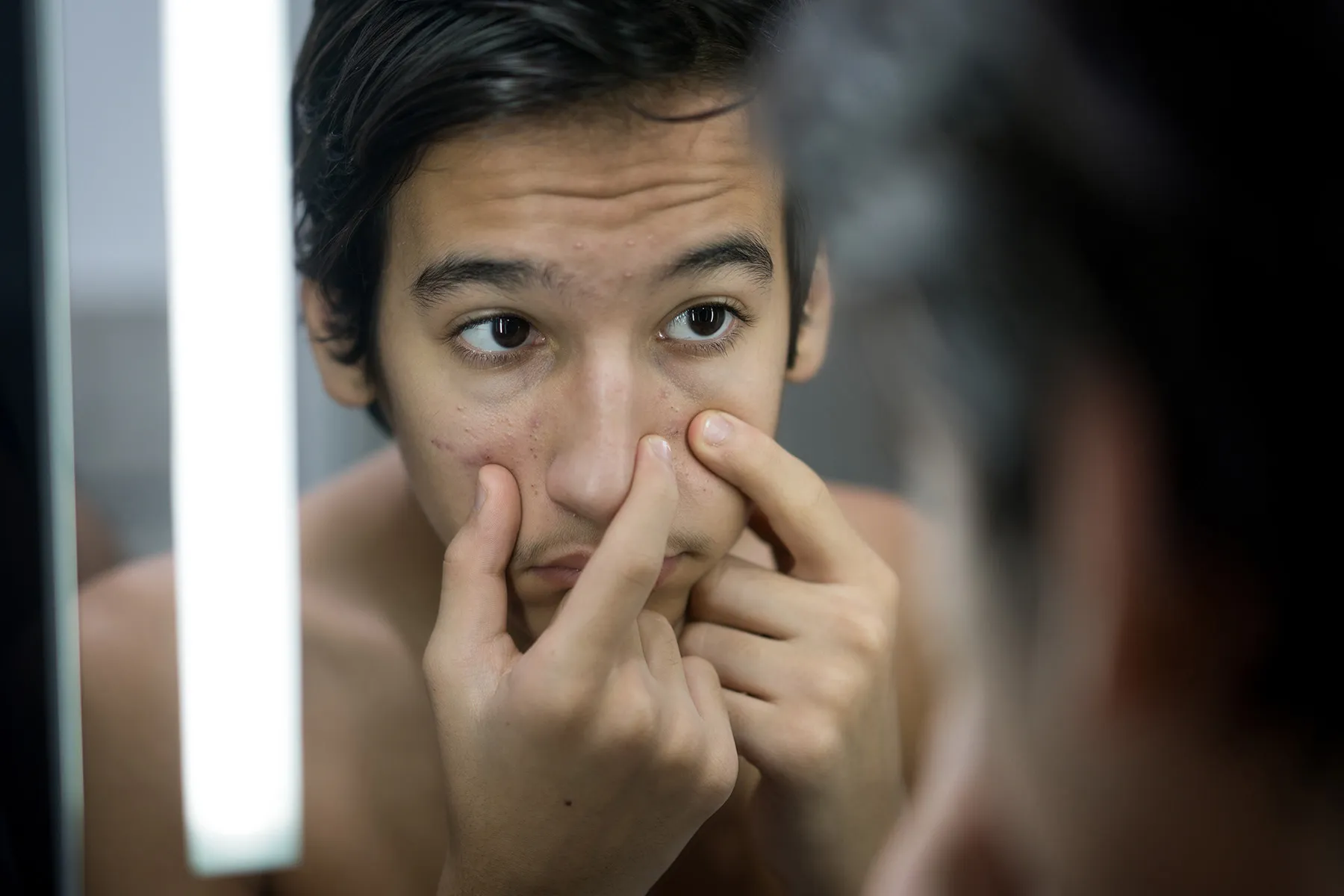
Acne is usually thought of as a teenage phase that flares up and then fades away. For men, though, it often plays out differently. Plenty of guys in their late twenties and thirties are still dealing with breakouts along the jaw and back. And even when it is technically the same condition, men's acne tends to show up bigger, firmer, and spread over a much wider area.
That difference has nothing to do with being lazy or slacking on skincare. It comes down to how male hormones act on the oil glands, a habit unique to men (shaving), and even the point at which men finally decide to see a dermatologist. Let's break down why men's acne behaves so differently.
Why is men's acne bigger and harder?
Acne starts at the sebaceous gland, the tiny factory in the skin that produces oil (sebum). What largely determines how hard that factory runs is a male hormone called testosterone.
After puberty, men produce far more testosterone than women. In the skin, testosterone converts into DHT (dihydrotestosterone, a more potent form created by an enzyme), and DHT stimulates the sebaceous glands directly, ramping up oil production. More oil means pores clog more easily with sebum and dead skin cells, which creates the perfect environment for acne-causing bacteria to move in.
Women have testosterone too, just in much smaller amounts. So while sebum production tends to ease up for women after puberty, men often keep getting that hormonal push well into adulthood. That is essentially why men's acne can drag on into their twenties and thirties: the hormonal trigger just does not switch off.
Why oil gland response differs from person to person
Even with the same amount of testosterone circulating, acne severity varies quite a bit from person to person. That comes down to androgen receptors, proteins inside the sebaceous gland cells that receive male hormones, and how dense or sensitive they are, which differs by individual.
Think of androgen receptors as locks and testosterone and DHT as the keys that fit them. Skin with more locks, and more sensitive ones, reacts more strongly to the same amount of hormonal "key," producing more oil as a result. Receptor density is thought to be strongly influenced by genetics, so if a parent or sibling had severe acne, there is a relatively higher chance you will too.
On top of that, men's skin is generally thicker with a higher collagen density than women's. Thicker skin means pore openings tend to be deeper and narrower, so oil and dead skin cells get trapped more easily beneath the surface. In thinner skin, sebum can work its way out more freely, but in thicker skin it tends to build up inside, letting inflammation settle in deeper.
Razor marks and ingrown hair inflammation
Men's acne comes with one extra variable women don't have to deal with: shaving. When a razor repeatedly scrapes across the skin's surface, it creates tiny wounds on a skin barrier that is already weakened by acne. Bacteria can slip in through those wounds more easily, and irritating an already inflamed area can make it swell up and turn even redder.
Shaving against the grain or cutting too close can also cause ingrown hairs, where the clipped tip of a hair curls back and grows into the pore instead of out. The body reacts to that ingrown hair as a foreign object, triggering an inflammatory response that produces red bumps resembling acne, a condition called folliculitis. Once true acne and shaving-related folliculitis start mixing together, it becomes hard to tell which bump is actually acne, and the irritation-triggers-more-irritation cycle keeps feeding itself.
Why does back and chest acne happen?
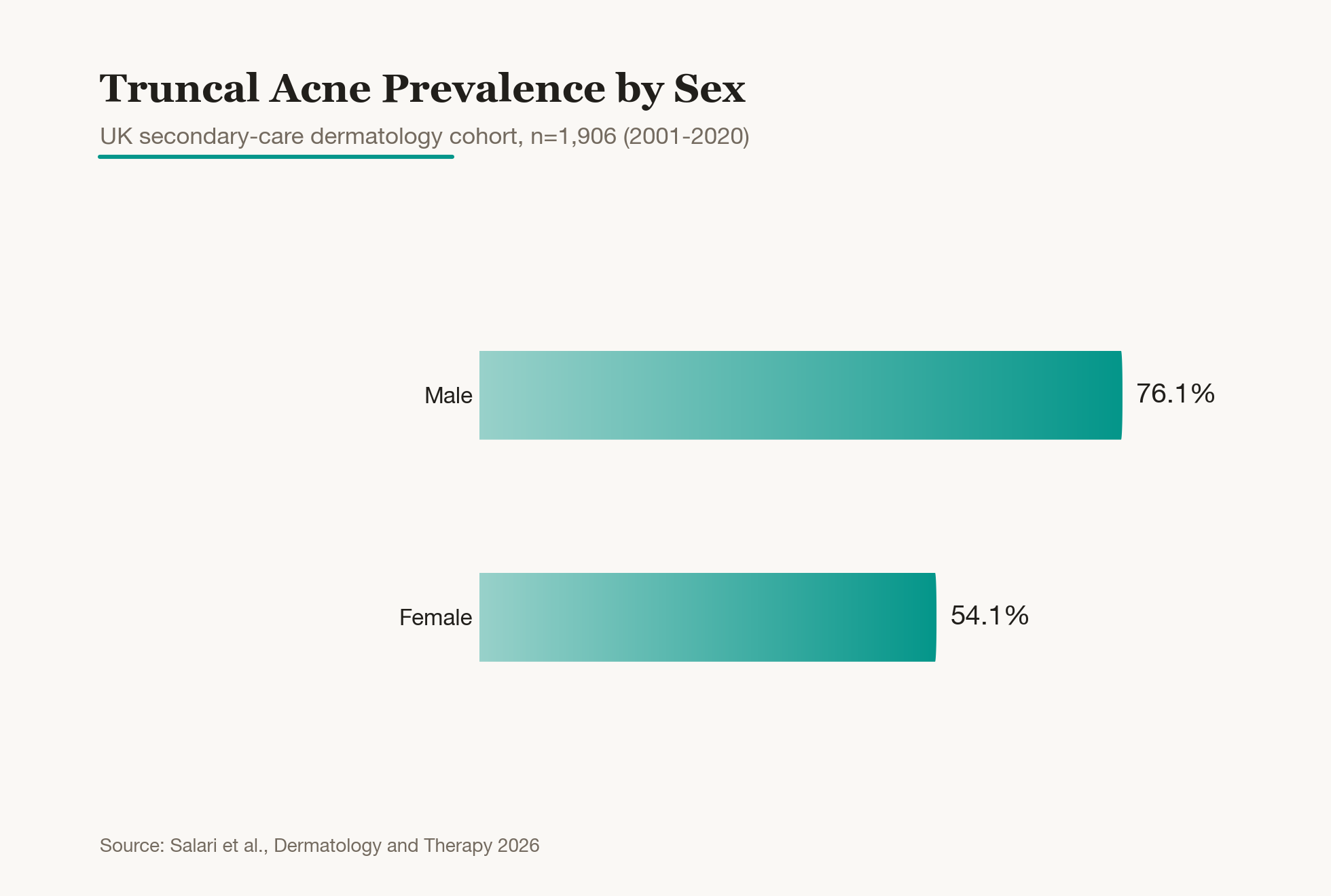
Men's acne rarely stays confined to the face. It is far more common than in women for it to spread across the back, chest, and shoulders. These areas naturally have oil glands nearly as dense and large as those on the face, so when testosterone stimulates them, the reaction can be just as intense.
Exercise, sweat, and clothing add another layer to the problem. Men who do a lot of physically demanding exercise tend to have sweat and oil trapped against their skin under clothing for long stretches. Wearing tight workout gear or fabrics with poor breathability for too long presses on the pores and clogs them, creating a warm, damp environment where bacteria thrive. Back and chest acne is often called body acne, and because these spots are hard to see on yourself, it is easy to miss the right time to start treating it.
Why do scars last longer?
Men's acne tends to leave marks behind more often, even after it clears up. There are two main reasons for that.
One is how deep the individual lesions run. Men's acne shows up as nodules or cysts, where inflammation pushes deep into the skin, more often than in women. When that inflammation reaches deep into the dermis (the collagen-rich layer beneath the surface), the repair process that follows tends to lay down collagen unevenly, and that unevenness is what shows up later as a pitted scar.
The other is timing. Men reportedly tend to visit a dermatologist later than women do, often brushing off acne as no big deal or assuming it will clear up on its own given time. But acne is the kind of condition where the longer inflammation sticks around, the higher the risk of scarring, so the later treatment starts, the higher the odds of scarring end up.
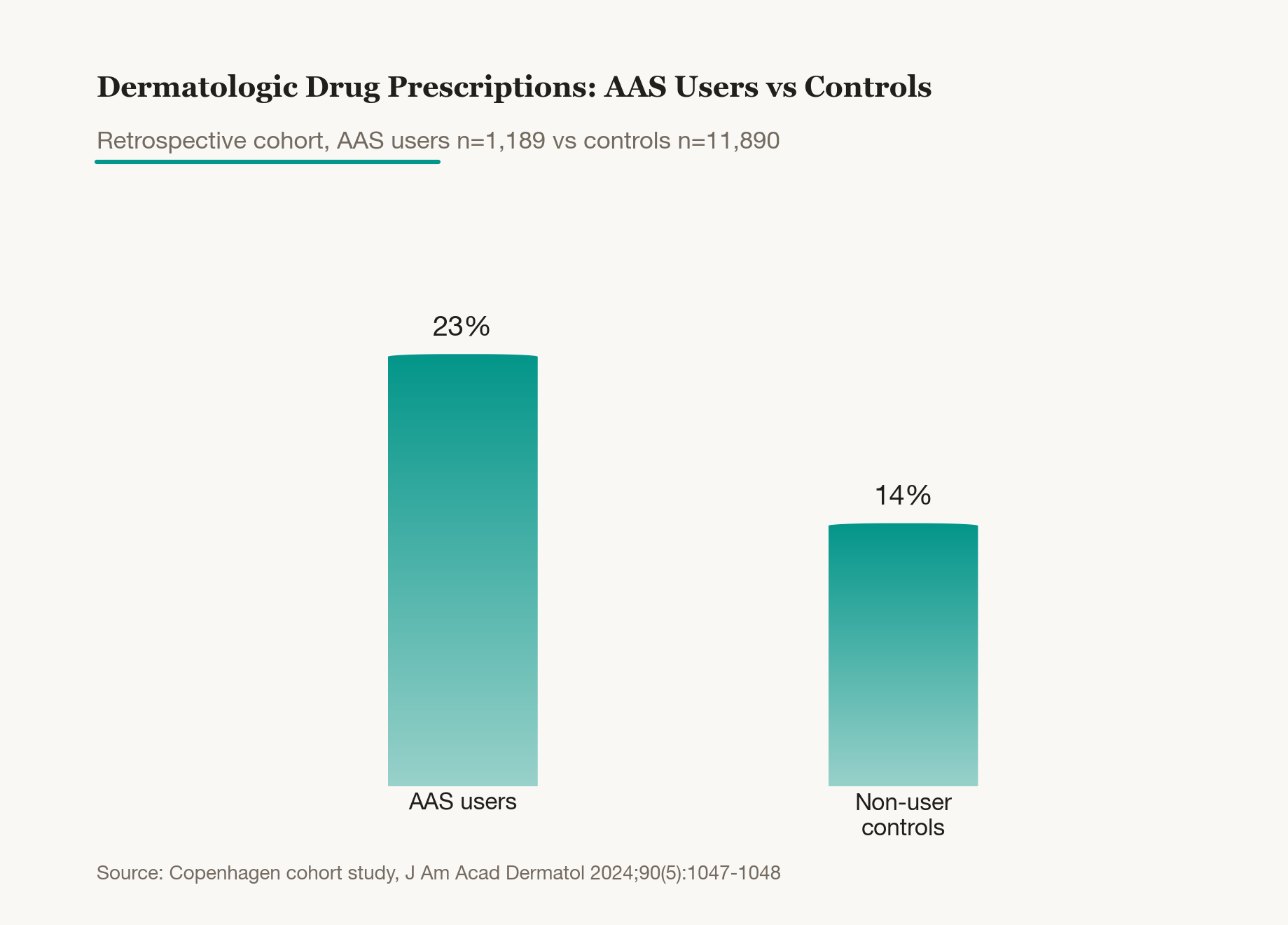
Supplement and steroid acne
Among men who train hard, some use testosterone-based supplements or steroids to build muscle faster. These substances push testosterone levels in the body up artificially and significantly. As a result, the oil glands get stimulated far more intensely than usual, and there are reported cases of sudden, severe acne breaking out across the back and chest.
This type of acne often does not respond well to standard acne medication, since the underlying cause is a hormone level that is out of the normal range to begin with. So if body acne suddenly flares up out of nowhere, mentioning any recent supplements or medications during your appointment can help pinpoint the real cause.
How is men's acne treatment different?
Because men's skin produces more oil and tends to have a thicker outer layer, as explained above, treatment approaches shift in a few specific ways.
- Topical retinoid strength: Since men's thicker outer skin layer makes it harder for active ingredients to penetrate, retinoid ointments often need to be used consistently over a longer stretch before results show. If irritation is a concern, starting at a low concentration and gradually increasing it is generally recommended.
- Isotretinoin dosing: Isotretinoin, the oral acne medication, is dosed based on both body weight and oil gland activity. Since men tend to weigh more and have more active oil glands, their total treatment dose commonly ends up higher than for women.
- Treating the trunk: Areas like the back and chest are hard to reach with topical treatment alone and awkward to manage day to day, so oral medication or a combination with antibiotics for a more systemic approach is often considered.
- Length of treatment: Since hormonal stimulation in men tends to persist, maintenance treatment often continues for four to twelve weeks or longer even after visible acne has cleared, to help prevent it from coming back.
Daily habits that reduce relapses
Adjusting a few daily habits alongside treatment can help lower the chance of recurrence.
- Soaking the skin with warm water before shaving softens dead skin cells, and swapping out a dull blade right away helps reduce irritation. A dull blade doesn't cut cleanly in one pass, so you end up dragging it across the skin multiple times, which means more chances for tiny cuts.
- After a workout, changing out of sweat-soaked clothes as soon as possible, rather than staying in them, is recommended. Wet fabric sitting against the skin for a long time keeps that damp, clogged environment going.
- Washing your face about twice a day is a reasonable target, and cleansing gently rather than scrubbing with your hands is recommended. Washing too often or too roughly damages the skin barrier, which can actually trigger a compensatory increase in oil production.
- Gentle products containing niacinamide or salicylic acid are known to help clear out debris inside the pores, so they are worth using consistently.
Acne itself often improves substantially with four to twelve weeks of consistent care. That said, because the hormonal trigger behind men's acne does not switch off easily, keeping up with skincare even after symptoms settle down is what helps cut down on both recurrence and scarring.
References
Korean Dermatological Association, American Academy of Dermatology (AAD), and Ministry of Food and Drug Safety (MFDS).
Was this helpful?
About this article
Written by a practising aesthetic physician and intended for general education — not a substitute for individual medical advice.
Read next

Hormonal Acne Causes: Why It Keeps Returning on the Chin and Around the Mouth
Breakouts that keep returning to the jaw and mouth in adulthood follow a different pattern than teenage acne. Here is a look at how hormones like androgens keep stimulating the oil glands and hair follicles, plus how the menstrual cycle and stress fit into the picture.
By Dr. Kim
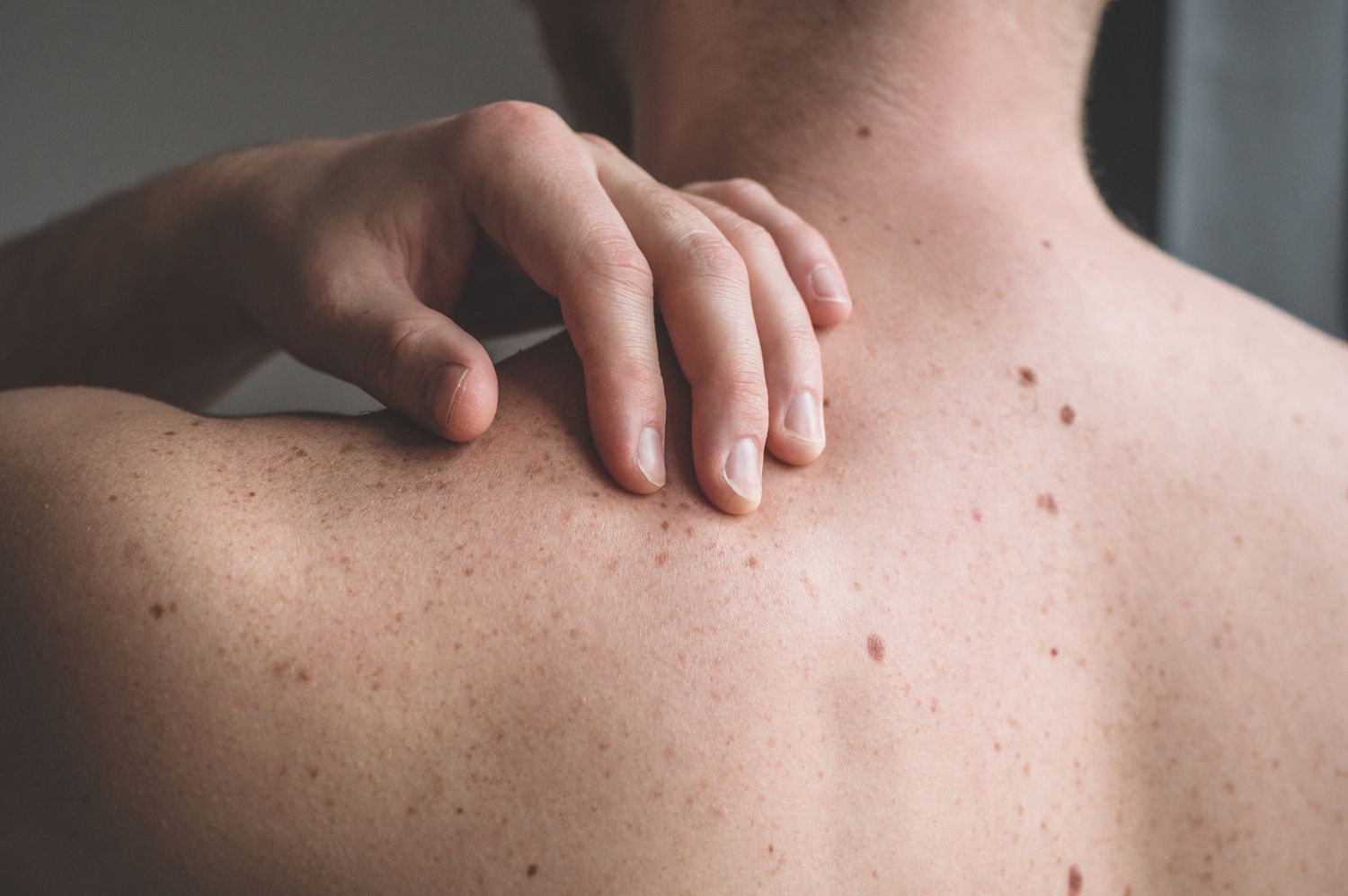
Back Acne: Causes, Treatment Ingredients, Healing Time and Care
Back acne starts from the same root as facial acne, but thicker skin, denser oil glands, sweat, and friction change how it grows. Here is why the back breaks out so easily and why treatment takes longer to work, along with how to manage it.
By Dr. Kim
Neck Wrinkles: Causes and Treatment, and Can Botox and Lifting Help?
The neck has thinner skin and fewer oil glands than the face, so it tends to lose firmness earlier, and because it moves constantly, vertical bands and horizontal lines often show up together. Here is why sagging and lines overlap on the neck, and how both skincare and treatments work to address them.
By Dr. Kim