Melasma Recurrence After Laser: Why Does It Come Back Within 6 Months?
By Dr. Lee8 min read
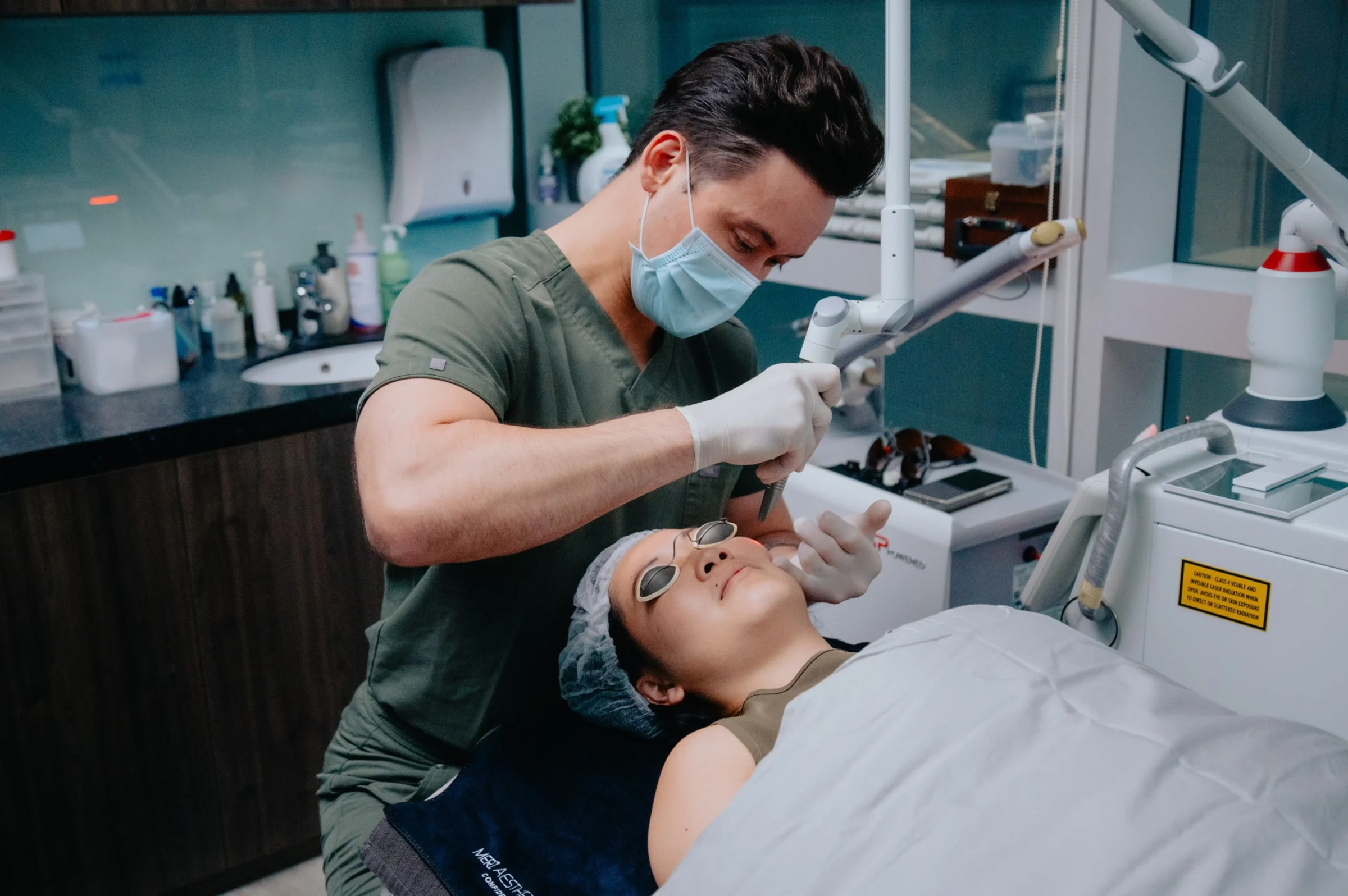
For the first week or two after a laser session, your skin genuinely looks brighter. Then three to six months later, the same brown patches often show up in the exact same spots. That's why dermatologists tend to talk about melasma less as something you "treat" and more as something you "manage."
Why does this keep happening? Melasma isn't just pigment sitting on the surface. It's the result of several systems inside the skin going off track at the same time. Once you break the causes down one by one, it becomes much easier to understand why it comes back so often.
Put simply, melasma isn't like a cold you catch once and get over. It's closer to a skin tendency you carry for life, the way some people carry allergies. But the timeline for recurrence varies a lot from person to person, and the reasons why are worth going through one at a time.
What causes melasma?
Melasma happens when melanocytes, the cells that produce melanin, become overactive and pump out too much brown pigment. The problem is that more than one signal is telling these cells to fire. UV light, female hormones, chronic irritation, and even the tiny blood vessels under the skin can all be sending signals at once. Even if a laser breaks down the pigment that's already formed, the underlying instructions telling the cells to keep making more pigment often stay in place. So the skin can look clear right after treatment, but the same spot fills back in with pigment once enough time has passed.
How does UV light affect melasma?
UV light is the single strongest trigger that wakes melanocytes up directly. When skin is exposed to the sun, it releases signaling molecules that tell melanocytes to produce more melanin as a protective response. Skin that has already had melasma is primed to overreact to this signal, so even a small amount of UV exposure can be enough to restart pigment production. Skipping sunscreen for a day or two won't show up right away, but that exposure tends to build up quietly and often surfaces as visible pigment two to four weeks later.
How are female hormones linked to melasma?
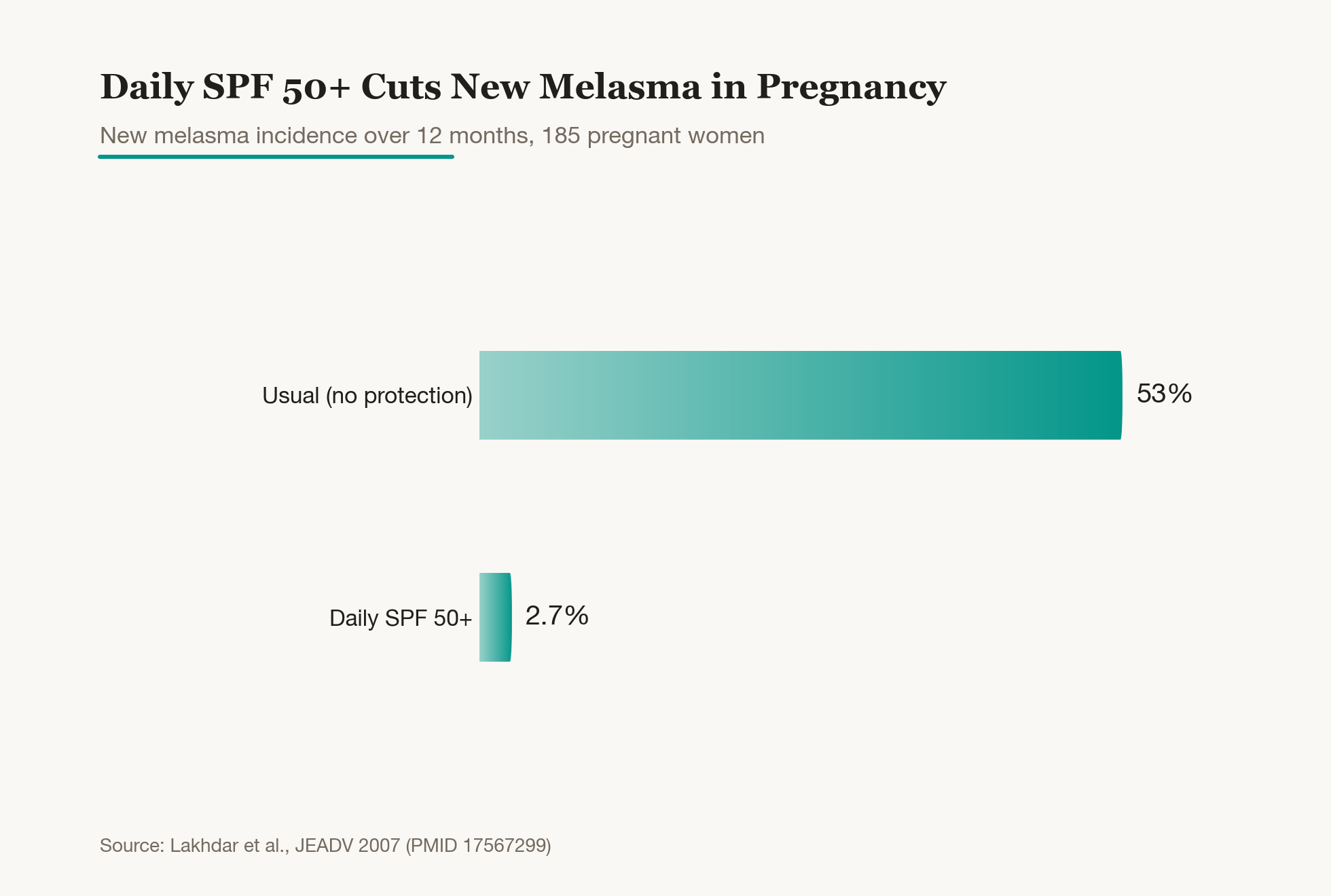
Female hormones like estrogen and progesterone are known to work through pathways that overlap with the ones that stimulate melanocytes. That's part of why melasma tends to appear or darken during pregnancy, while taking oral contraceptives, or during hormone therapy, all periods when hormone levels shift. Melasma that develops during pregnancy is often called the mask of pregnancy, and while it typically fades once hormones settle after delivery, some cases have been reported to leave a lasting trace rather than disappearing completely. Melasma can darken through a similar pathway in women receiving hormone replacement therapy during menopause, so if you're on hormone-related treatment, it helps to keep an eye on how your skin responds. Because hormones circulate throughout the entire body, a treatment aimed only at the skin can't shut off that signal at its source.
Do blood vessels make melasma worse?
There's a growing body of reports showing that skin affected by melasma tends to have abnormally increased tiny blood vessels, or microvasculature, underneath it. When these vessels expand, substances released from the cells around them are thought to stimulate nearby melanocytes, prompting them to produce even more pigment. In simple terms, the blood vessels sitting next to pigment cells act like a neighbor that keeps nudging them awake. A laser aimed only at pigment can't touch this vascular factor, so even after the pigment is cleared, recurrence is likely if the vessels that keep triggering it are left untouched.
What does laser for melasma actually treat?
Laser treatment works by using light energy to break down melanin that has already formed so it can be cleared out of the body. In other words, it removes the end product, not the signaling system that tells the skin to keep producing pigment in the first place. In fact, the heat from the laser itself can register as another form of irritation to the skin, and there are reports of this re-stimulating melanocytes rather than calming them. That's why melasma laser treatment is usually done at a lower intensity, spread across five to ten sessions at roughly one-week intervals, an approach meant to clear pigment while keeping additional irritation to a minimum.
Does a weakened skin barrier cause melasma to return?
The surface of the skin has a thin protective layer made of water and lipids, known as the skin barrier. When this barrier is strong, outside irritants have a harder time getting in. But exfoliating too often, or layering several strong whitening products at once, can thin this barrier out.
Once the barrier thins, skin becomes more prone to redness and stinging even from minor triggers, and this kind of inflammation is itself known to act as a signal that wakes melanocytes up. It works on a similar principle to how a healed wound can leave a dark mark behind. Repeated small bouts of inflammation mean a little more pigment builds up in that spot each time.
That's why, when it comes to managing melasma, how gently and consistently you use whitening ingredients tends to matter more than how strong they are. Gentle cleansing, adequate moisturizing, and introducing new products one at a time all help protect the barrier and slow down pigment recurrence.
How heat and friction irritate melasma
Situations that expose the skin to heat, like saunas, hot compresses, or washing your face with hot water, are also considered a trigger for melanocytes. When skin heats up, blood flow increases, which activates the same vascular pathway described earlier. In the same way, scrubbing your face too hard while cleansing or exfoliating too frequently creates minor irritation that can also encourage a pigment response. In short, melasma is a sensitive condition that responds not just to sunlight but to everyday triggers like heat and friction too.
When does melasma usually come back?
Even with the same laser treatment, the time it takes for melasma to return varies widely from person to person. The biggest reason is that melanocytes themselves don't respond with the same sensitivity in everyone. People with naturally deeper skin tones or skin that tans easily tend to have melanocytes that react more intensely to triggers. That means the same amount of sun exposure can bring pigment back faster and darker.
Lifestyle habits also make a real difference. Someone who applies sunscreen every day and someone who only applies it occasionally build up irritation at very different rates. It's a bit like a boat with a slow leak: how often you bail out the water determines how long it takes to start sinking. Consistent management can keep pushing back that point, the moment pigment becomes noticeably visible again.
Season matters too. Recurrence often speeds up after a summer of strong UV exposure, then slows back down in winter. So it's more accurate to say melasma recurrence doesn't follow a fixed timetable. It's the result of a person's individual skin characteristics layered on top of their daily habits.
Long-term melasma management
Realistically, there's still no treatment that clears melasma once and for all. That's because the triggers described above keep recurring throughout everyday life. This is why dermatologists tend to use the word management more often than treatment. The main pillars of management are as follows.
- Sun protection: Since UV exposure is the most common trigger that wakes melasma up, applying and reapplying sunscreen every morning is the single most basic habit for slowing recurrence.
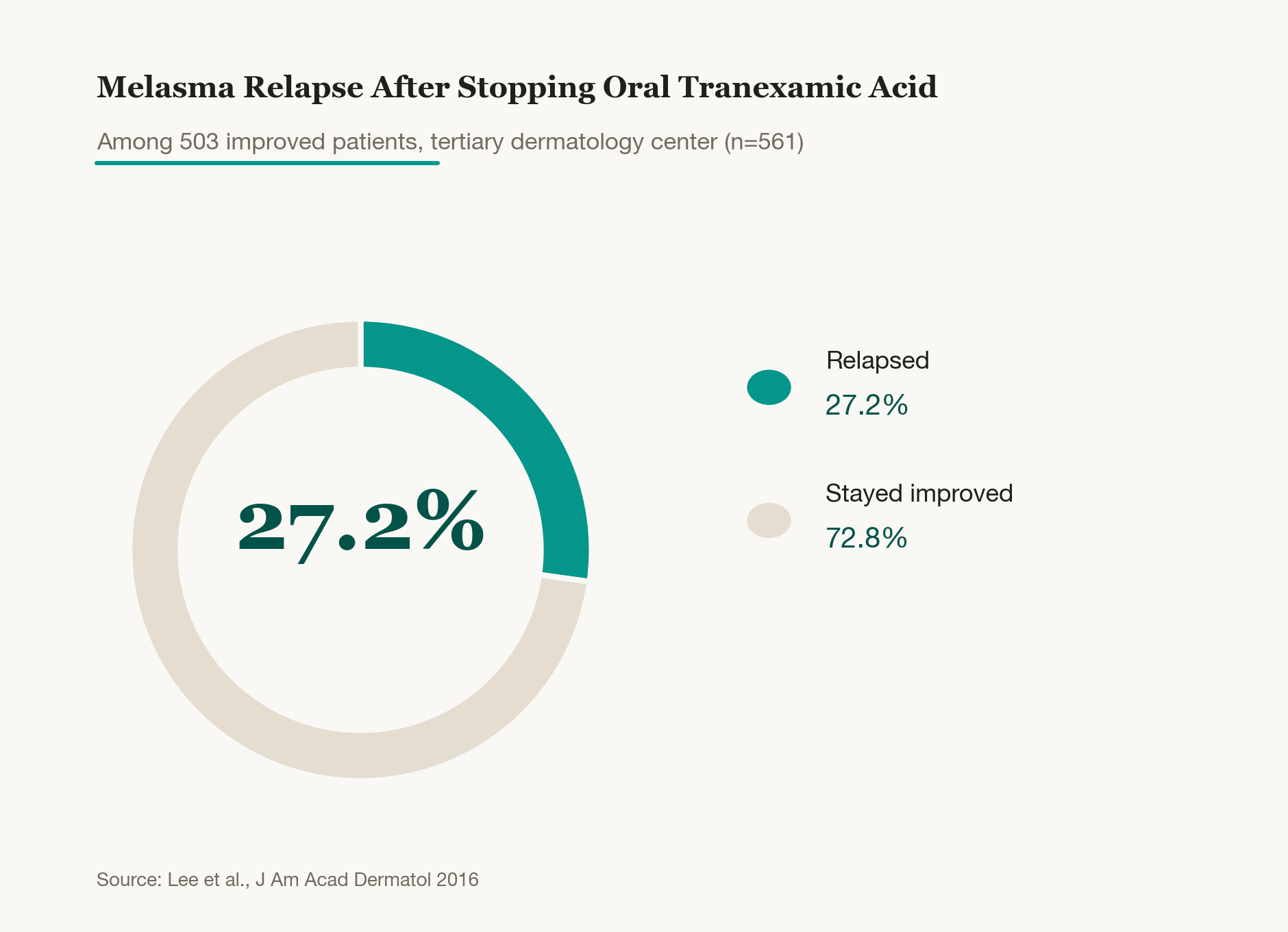
- Consistent use of whitening ingredients: Ingredients like hydroquinone and tranexamic acid are known to calm the activity of the enzyme that produces melanin, helping slow how quickly pigment builds back up.
- Cutting back on heat and friction: Avoiding hot compresses and rough scrubbing reduces the vascular trigger described earlier, which in turn helps lower the pigment response.
- Protecting the barrier with moisture: A thinned skin barrier makes inflammation more likely from even minor triggers, and that inflammation can fuel more pigment. Gentle cleansing and adequate moisturizing help protect the barrier and slow recurrence as well.
- Regular follow-up: Checking in on pigment changes around hormonal shifts or seasonal changes lets you adjust your routine before things darken.
For example, skin that would normally show noticeable pigment again within three to six months with no management at all can often stretch that interval out to six months, or even one to two years, by keeping up with the four pillars above. This doesn't mean melasma disappears for good. It means the pace at which it darkens again slows down, and understanding it that way makes it a lot easier to keep up with management without burning out.
References
Korean Dermatological Association, Ministry of Food and Drug Safety (MFDS), American Academy of Dermatology (AAD), and U.S. Food and Drug Administration (FDA).
Was this helpful?
About this article
Written by a practising aesthetic physician and intended for general education — not a substitute for individual medical advice.
Read next

Melasma and Female Hormones: Why Does Pregnancy Make It Darker?
Melasma is shaped by hormones just as much as by sun exposure. Here is how estrogen and progesterone push melanocytes into overdrive, and why melasma tends to darken and come back after pregnancy or birth control pills.
By Dr. Lee
Cafe-au-Lait Spots Returning After Laser: Causes, Number of Sessions and Expectations
A café au lait spot forms because the pigment-making cells in that one patch of skin are locally overactive. Laser treatment breaks up the pigment that has already built up, but it doesn't switch off those cells, which is why the color so often returns. Here's the biology behind it, why results differ so much from person to person, and what a realistic treatment timeline actually looks like.
By Dr. Kim

Keloid Scar Causes and Treatment, Including Recurrence and Management
A keloid is a scar that keeps piling up collagen even after the wound has fully healed, growing larger than the injury that started it. Here's why the collagen never seems to know when to stop, how a keloid differs from an ordinary scar, how injections and laser treatments work to calm it down, and why it tends to come back so often.
By Dr. Lee