Melasma and Female Hormones: Why Does Pregnancy Make It Darker?
By Dr. Lee7 min read
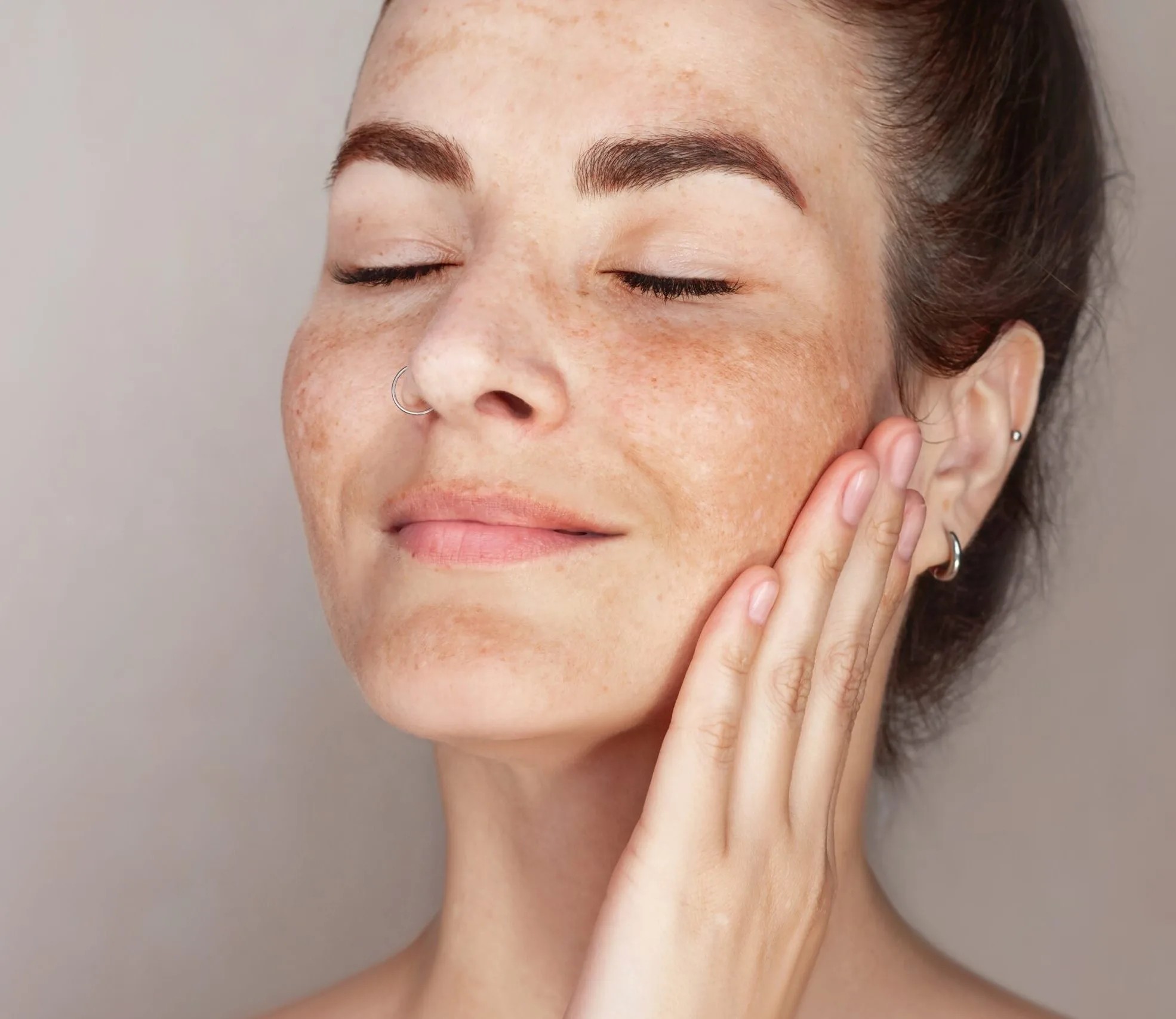
Melasma is usually filed under "sun damage," but it shows up far more often in women, and it tends to get noticeably darker during pregnancy or while taking birth control pills. Sun exposure alone cannot explain that pattern. Two people can spend the same amount of time outdoors, and one develops melasma while the other does not.
The variable that makes the difference is hormones. Estrogen and progesterone, the two main female hormones, act directly on melanocytes, the cells that produce skin pigment, and make them far more reactive to UV light. So melasma is less a simple sunlight problem and more a reaction that happens when hormonal signals inside the body meet UV exposure from outside it.
Why is melasma more common in women?
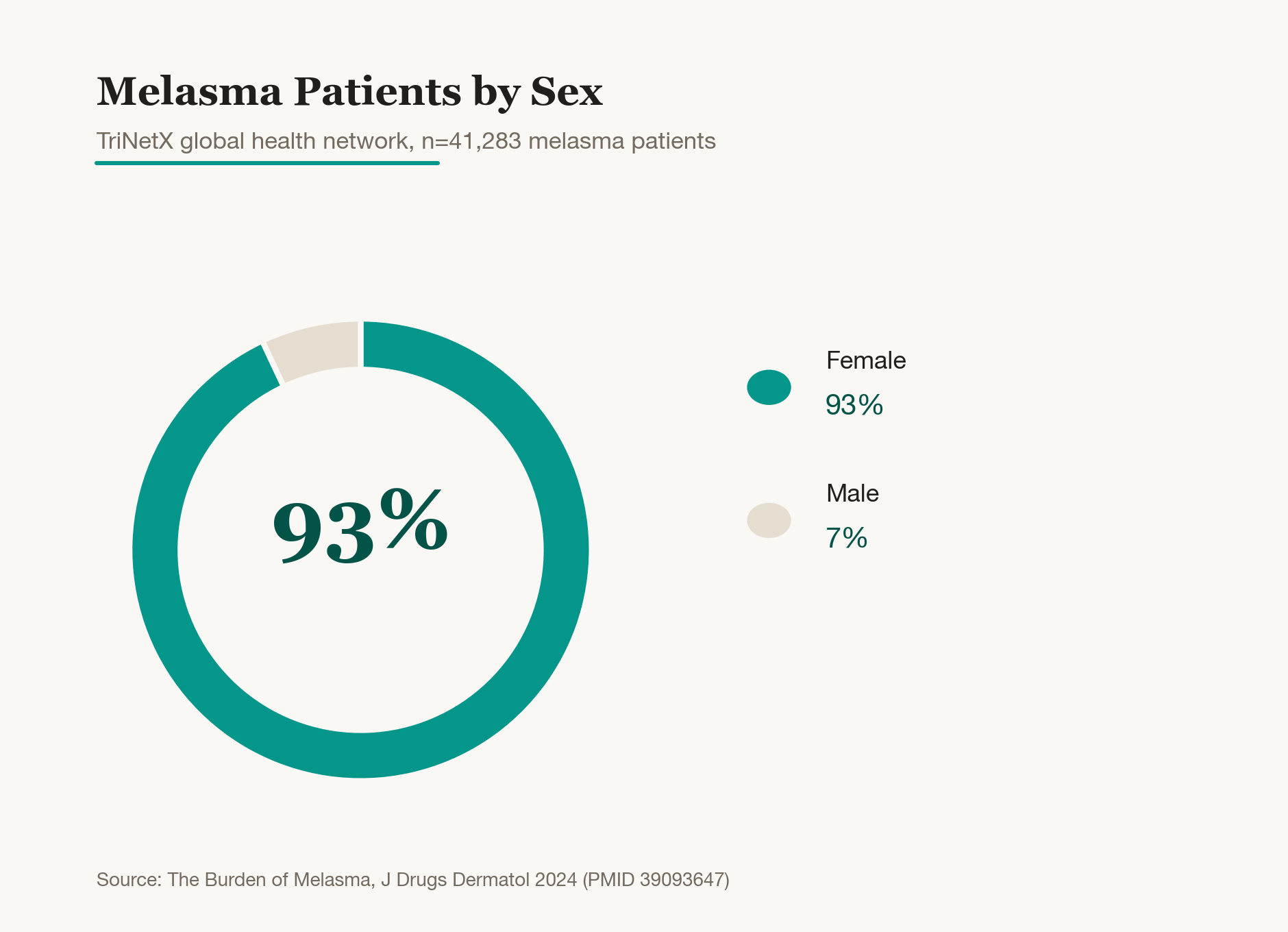
Most people with melasma are women, and the odds climb sharply for those who have been pregnant or have used birth control pills or hormone therapy. Men can get melasma too, but at a much lower rate.
That imbalance is not a coincidence. Estrogen and progesterone each have their own receptors on the surface of melanocytes, essentially a lock that only their matching hormone can open. When the hormone fits into that lock and the door swings open, it flips on the switch inside the cell that produces pigment. Men have some of these receptors too, but women experience much wider swings in hormone levels through pregnancy, the ovulation cycle, and birth control pills, which means that switch gets flipped far more often.
How do hormones trigger pigment production?
Both hormones head toward the same outcome, but they take different routes. Estrogen binds directly to estrogen receptors on melanocytes and ramps up tyrosinase, the enzyme that manufactures melanin. Tyrosinase is essentially the first machine on the pigment production line, so when it runs faster, more melanin comes out the other end.
Progesterone works through a slightly different path. Once it binds to the progesterone receptor, it triggers a signaling molecule called CREB, which then switches on a gene called MITF. MITF acts like a master switch that pulls out the blueprints for several pigment-making enzymes at once. So when progesterone rises, it is not just tyrosinase that increases, but a whole set of related enzymes along with it.
On top of that, estrogen also raises levels of VEGF, a signal that tells the body to grow new blood vessels. That is part of why melasma-affected skin often shows more than just darker pigment. A faint reddish tone from extra fine vessels can show up too, and that vascular change comes from the same hormonal signaling.
How the pregnancy mask forms
During pregnancy, estrogen and progesterone climb far higher than usual and stay elevated for months. By the third trimester, both hormones can reach levels several times higher than before pregnancy.
That kind of prolonged, high-level hormone exposure keeps melanocytes under constant stimulation. This is why brown patches often appear symmetrically on the cheeks, forehead, around the nose, and above the upper lip, a pattern commonly called the pregnancy mask. After delivery, hormone levels return to their pre-pregnancy baseline and the pigment often fades, but it is not unusual for some trace of it to linger.
Do birth control pills and hormone therapy play a role?
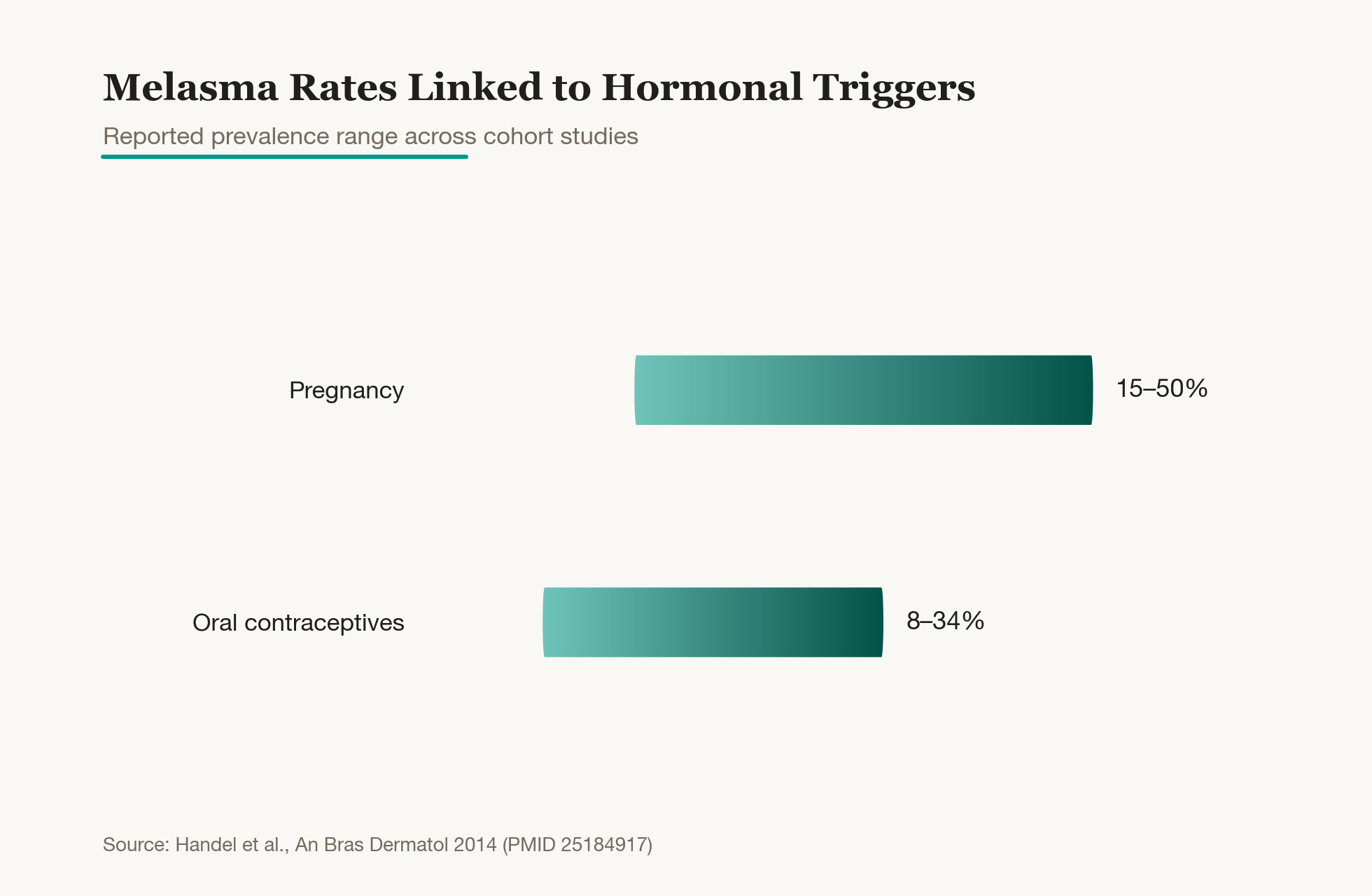
Oral contraceptives supply the body with estrogen and progesterone, so they can stimulate melanocytes in much the same way pregnancy does. It is a documented pattern for new melasma to appear, or existing melasma to darken, within a few months of starting the pill.
Hormone replacement therapy used during menopause can trigger or worsen melasma for the same reason. That said, how much melasma actually develops varies a lot from person to person, depending on how sensitive their hormone receptors are, their skin tone, and how much UV exposure they get. So the practical takeaway is not that everyone needs to avoid the pill or hormone therapy, but that anyone prone to melasma should be extra disciplined about sun protection while on these medications.
How does UV light affect melasma?
UV light triggers the skin to release more alpha-melanocyte-stimulating hormone. As the name suggests, this is itself a signal that stimulates melanocytes, so it essentially presses the switch a second time, right after estrogen and progesterone have already opened it.
In other words, hormones prime the melanocyte into a more reactive state, and UV light is the trigger that actually fires it. Either one on its own produces a mild response, but together they push pigment production noticeably higher. That is why sunscreen is treated as being just as important as any treatment for anyone with melasma or a tendency toward it.
Why melasma returns even after treatment
It is common for melasma to fade after treatment, only for it to darken again a few months later. It has a reputation for relapsing more than other pigmentation conditions, and hormones are a big part of why.
Even after treatment clears out the melanin that was already produced, the cells that made it, and the hormone receptors sitting on their surface, are usually still there. So when ovulation, pregnancy, birth control pills, or UV exposure line up again, the same spot starts producing pigment all over again. It is a bit like clearing the leaves off a plant while leaving the roots in the soil; given the right conditions, it grows right back.
Melasma care and treatment options
Having hormones as a major driver does not mean melasma is untreatable. The following approaches are the ones that tend to actually help.
- Daily sunscreen: reducing the UV trigger cuts down how often the hormone-primed switch actually gets pressed.
- Brightening ingredients like hydroquinone and azelaic acid: these lower tyrosinase activity directly, slowing how fast new melanin gets produced.
- Oral or topical tranexamic acid: this helps calm both the vascular signaling and the inflammatory pathway, which can reduce not just pigment but also the reddish tone that often comes with melasma.
- Extra care during high-hormone periods: during pregnancy, while on birth control, or around ovulation, being more diligent than usual with sunscreen and gentle brightening care helps reduce the chance of relapse.
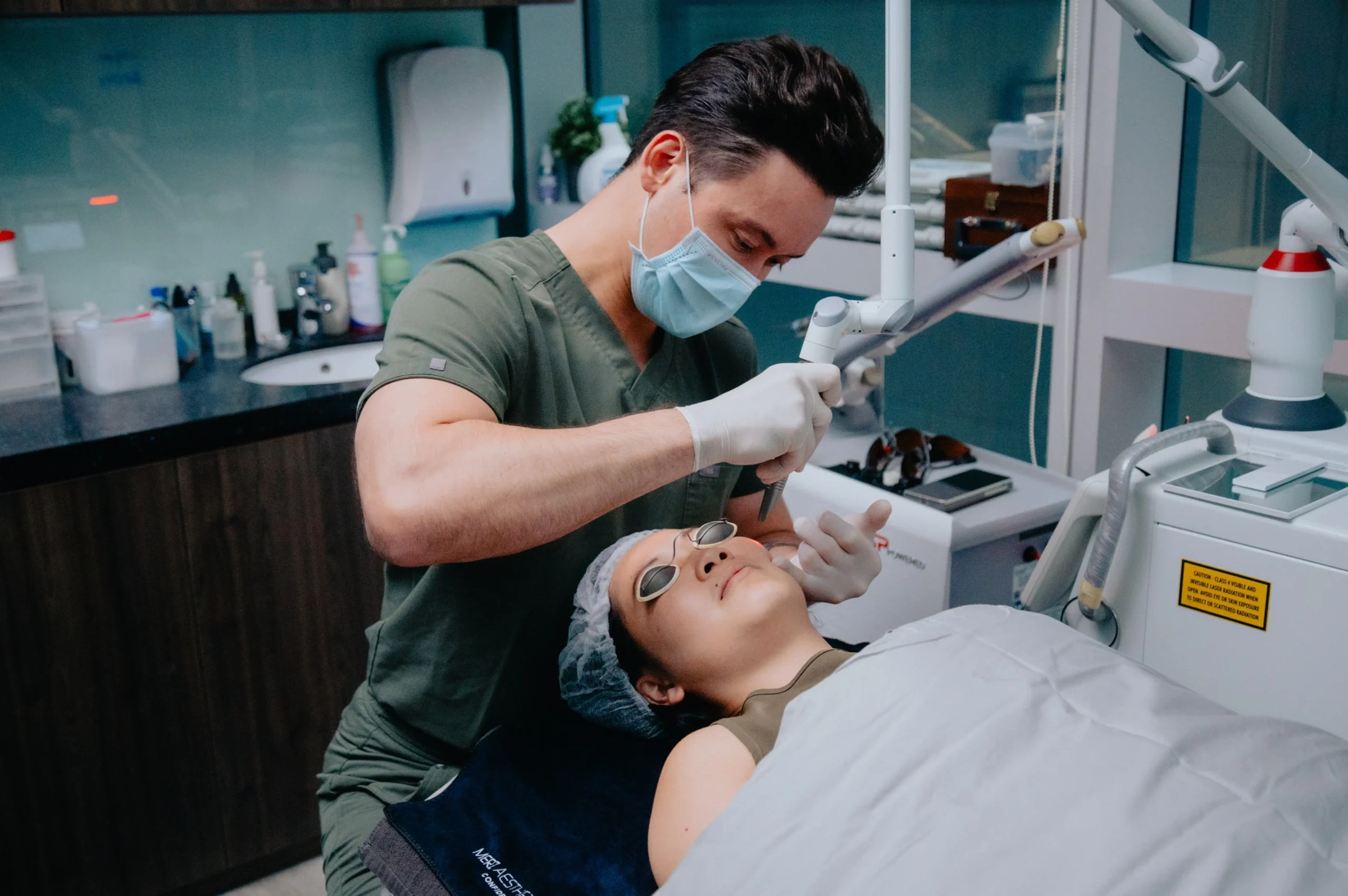
Laser treatment is an option that calls for caution. Melasma reacts strongly to inflammation, so a laser that is too aggressive can actually make the pigment darker. For that reason, the usual order is to work through sunscreen and brightening ingredients first, then consider a low-fluence laser carefully if needed, alongside the rest of the routine. Results typically take about 4 to 12 weeks to show, and consistent sun protection has to continue afterward to maintain them.
In the end, managing melasma is less a one-time procedure and more an ongoing process that lasts as long as hormone exposure continues. Pigment often fades on its own once major hormonal shifts, like pregnancy, childbirth, or stopping the pill, have passed. So rather than rushing toward an aggressive treatment, sticking with sun protection and gentle care over the long run tends to be the safer path.
References
Korean Dermatological Association, American Academy of Dermatology (AAD), and Ministry of Food and Drug Safety (MFDS).
Was this helpful?
About this article
Written by a practising aesthetic physician and intended for general education — not a substitute for individual medical advice.
Read next
Melasma Recurrence After Laser: Why Does It Come Back Within 6 Months?
Melasma often fades after laser treatment only to return months later. This piece breaks down why, looking at UV exposure, hormones, and blood vessels as three separate but overlapping triggers, and explains why melasma calls for ongoing management rather than a one-time cure.
By Dr. Lee
Cafe-au-Lait Spots: Laser Effect, Recurrence and Telling Them From Moles and Melasma
A cafe-au-lait spot is a light milk-coffee brown patch on the cheek or arm, and because its pigment sits in the shallow epidermis, laser light reaches it easily, though it also tends to come back. Here's how to tell it apart from moles and melasma, why multiple spots call for a check-up, how much laser treatment can fade it, and how to manage recurrence.
By Dr. Kim
Sebaceous Hyperplasia: Causes, How to Tell It From Acne, Removal and Recurrence
If you have a yellowish bump on your forehead or cheek that won't go away no matter how much you squeeze it, it might not be acne at all, but sebaceous hyperplasia. Here's an easy breakdown of why enlarged glands form a dimpled bump, how it differs from acne, how electrocautery clears it, and why it tends to come back.
By Dr. Kim