Lip Flip Botox Effects, Duration, and Precautions
By Dr. Kim6 min read
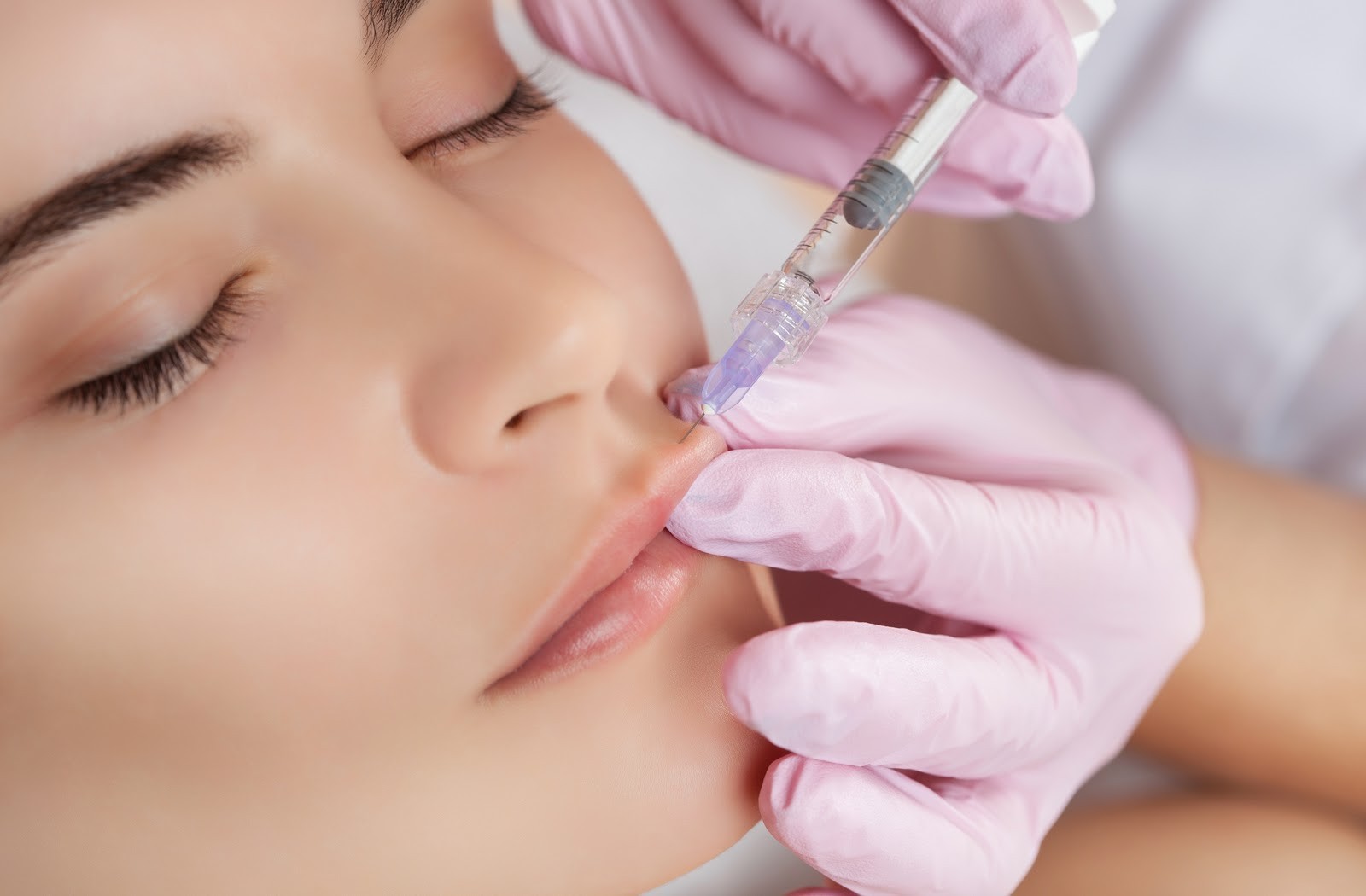
Lip flip Botox is a treatment that makes the upper lip look fuller using nothing but a small dose of Botox, no filler involved. The name refers to "flipping" the lip, but the lip does not actually gain any volume. Instead, the muscle around the mouth is relaxed just enough that the lip curls a little further outward than it normally would.
So a lip flip is not really a treatment that makes the lip bigger. It changes the angle the lip sits at. Here is why easing off that muscle alone can make the lip look fuller.
Why does the upper lip look especially thin?
There is a muscle that wraps around the mouth in a circle. It works constantly, every time you purse your lips, whistle, or sip through a straw.
When this muscle stays tense most of the time, it pulls the lip slightly inward. That pulls the red lip tissue, the part that shows the natural lip color, further out of sight, so the lip can end up looking thinner than it actually is.
This effect shows up more in people with a well-defined lip line, the border where the lip meets the skin. Lip shape comes down to a balance between how hard the muscle pulls the lip inward and how much the lip naturally wants to curl outward on its own.
The upper lip often looks thinner with age for a similar reason. As the skin and lip tissue lose elasticity, they lose some of the support that used to counter the muscle's pull, so the inward pull tends to win out a bit more than the outward curl.
The role of the orbicularis oris muscle that purses the lips
The muscle that encircles the mouth is called the orbicularis oris. Like the orbicularis oculi around the eyes, it forms a ring, a sphincter-like muscle wrapped around the mouth.
It sits just under the skin, right along the border where it meets the red part of the lip. So the angle and apparent thickness of the lip shift slightly depending on how much tension this muscle is holding.
The orbicularis oris moves thousands of times a day, every time you talk, eat, or make an expression. It is involved in shaping sounds like "m," "b," and "p," and it is also at work every time you take a sip of a drink. It is one of the hardest working muscles on the face.
Why does the lip roll up when Botox relaxes the muscle?
Botox, or botulinum toxin, works by blocking the release of acetylcholine, the chemical messenger that carries signals from nerve to muscle. With less signal reaching the muscle, it relaxes and produces less force than usual.
Lip flip Botox applies this same principle, but in a very small dose, targeted precisely at the strip of orbicularis oris right above the lip line. Unlike Botox used across broader areas of the face, the key here is a very narrow area and a very small amount.
Once the orbicularis oris relaxes slightly, the force pulling the lip inward eases up too. That lets the lip move a bit more freely in the direction it naturally wants to curl, which brings a little more of the red lip tissue into view.
A simple way to picture it is a balloon opening pinched between your fingers. Loosen your grip slightly and the opening widens, even though the rubber itself has not stretched. Nothing has expanded, it has simply been let go and sprung back toward its natural shape.
How is a lip flip different from filler?
Filler works by injecting a substance, such as hyaluronic acid, directly into the lip to add volume. A lip flip adds nothing at all. It only relaxes muscle tension.
That difference in mechanism gives the two treatments a very different feel. Filler produces a clearly fuller lip with a more defined contour, while a lip flip only creates a subtle, soft-looking fullness. Since the lip's actual volume never changes, only its angle does, the result is naturally more understated.
Filler also leaves material in place that holds its shape, while a lip flip gradually fades back to normal as muscle strength returns. Because of this, some people combine the two. Adding a touch of volume with filler and adjusting the lip angle with a flip lets the two distinct effects layer on top of each other.
When does a lip flip take effect and how long does it last?
Botox does not take effect the moment it is injected. It takes several days for the signal between nerve and muscle to wind down, so results typically start showing anywhere from a few days to about a week later.
A lip flip tends to fade faster than Botox placed on the forehead or between the brows. The muscles around the mouth are in near constant motion from talking and eating, so the connection between nerve and muscle tends to recover comparatively quickly there.
In other words, the more a muscle is used, the faster it rebuilds its nerve signaling, which works against how long the effect lasts. That is why a lip flip is often described as needing more frequent touch-ups than Botox in other areas.
The very small dose involved also plays a role in how long it lasts. Forehead and glabella treatments spread a larger dose across several injection points, while a lip flip uses only a very small amount along the lip line, which is part of why the muscle tends to regain its strength relatively quickly.
Who it suits and what to watch for
A lip flip suits people whose lips are not significantly lacking in volume and who want a subtle change without filler. It is sometimes considered alongside cases of a noticeably gummy smile, though that typically involves treating additional muscles, which changes the scope of the procedure.
On the other hand, people whose lips are already full and naturally curl outward may notice little to no visible change. Since the core mechanism is releasing muscle tension, the effect tends to be more noticeable in cases where strong muscle tension was pressing the lip inward to begin with.
Even at such a small dose, it is still a treatment that affects muscle function, so a few things are worth knowing beforehand.
- A higher dose can make it harder to purse the lips. Since the orbicularis oris is also involved in speech and eating, too much relaxation can briefly make using a straw or pronouncing "m," "b," and "p" sounds feel a little off.
- Even a slight difference in injection placement can change the result significantly. Because this treatment works so close to the lip line, having a practitioner who knows the muscle's anatomy precisely makes a real difference in the outcome.
- It sits close to the muscles that lift the corners of the mouth, so it can affect expressions. Several other muscles involved in smiling are packed tightly around the orbicularis oris, so treating a wider area can change the smile itself.
- If the goal is more lip volume, this may not match expectations. A lip flip changes angle, not volume, so filler is likely the better fit for anyone wanting a noticeably fuller look.
Once the effect fades, the lip naturally returns to its original shape, which is part of why this treatment is often described as a good option for a light, low-commitment first step rather than a dramatic change.
References
Korean Dermatological Association, American Academy of Dermatology (AAD), and Ministry of Food and Drug Safety (MFDS).
Was this helpful?
About this article
Written by a practising aesthetic physician and intended for general education — not a substitute for individual medical advice.
Read next
Trapezius Botox Effect and Duration, Including Side Effects and Who It Suits
Trapezius Botox, known as Bobby Botox, relaxes the muscle at the top of the shoulders to make the neck look longer and the shoulder line smoother. Here is an easy, research backed look at how it slims the shoulders, how long results last, whether shoulder weakness or other side effects show up, and who makes the best candidate.
By Dr. Kim

How Long Botox Lasts and Why It Varies: Dose and Antibodies Included
Botox works by blocking the signal pathway between nerves and muscles, temporarily stopping muscle movement. How long the effect lasts depends on the dose, the size of the muscle, and how quickly the nerve recovers, so results vary from person to person. Here is how repeat treatments, antibody formation, and aftercare all affect how long Botox lasts.
By Dr. Kim
Marionette Line Filler: Results, How Long It Lasts, and Combining With Botox
Marionette lines running from the corners of the mouth down toward the jaw form when the supporting ligaments loosen, the fat pad sags, and the muscle pulling down on the mouth corners adds to the strain. HA filler works by rebuilding this collapsed structure from the inside out, restoring lost volume layer by layer. Here's a look at recovery time, how long results last, and why Botox is often paired with it.
By Dr. Kim