Linear Z Linear Ultrasound: Differences From Point Methods and Evidence of Effect
By Dr. Lee8 min read
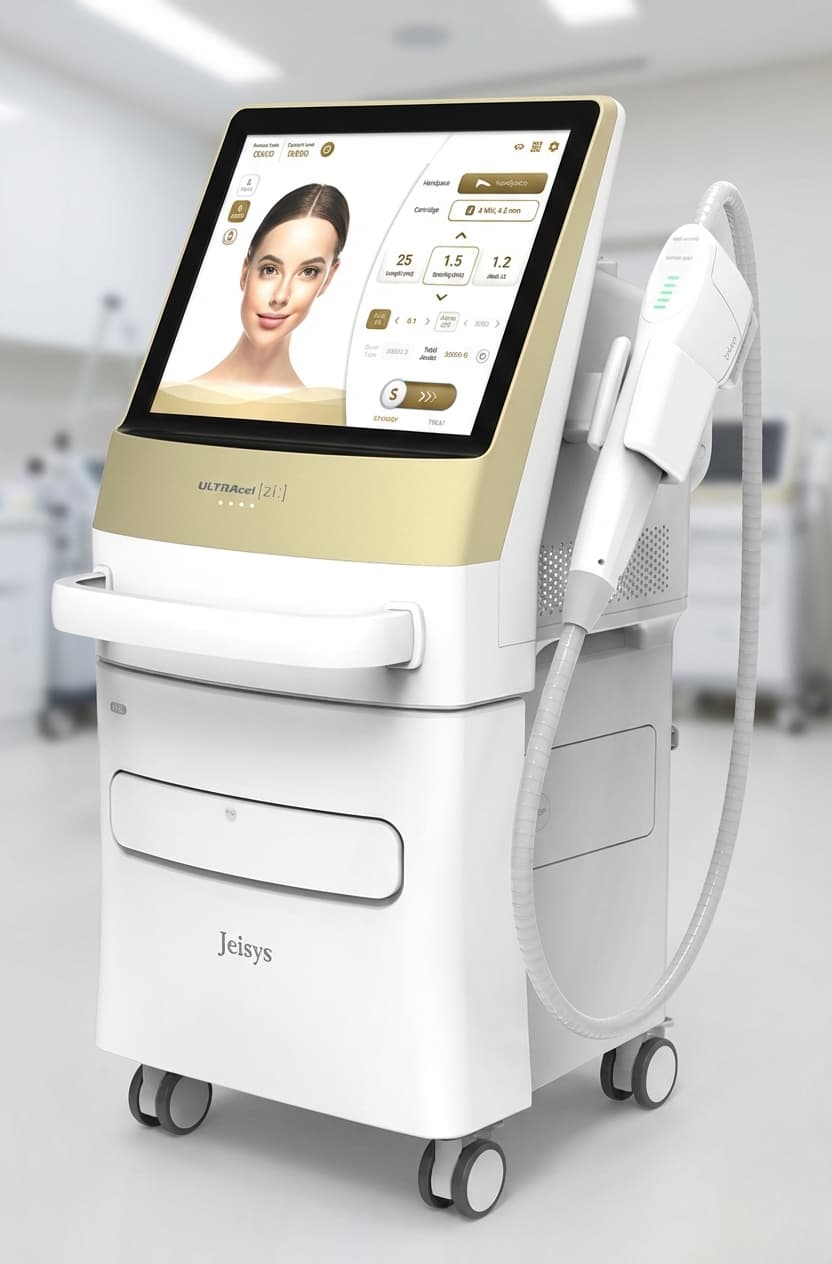
If you've been researching non-surgical lifting, you've probably come across Linear Z. It looks like other focused-ultrasound devices, Ultherapy, Sofwave, the various HIFU machines your local med spa might offer, but it's marketed with a twist: instead of firing energy as isolated dots, it can draw continuous lines. The pitch is that linear delivery covers more ground, more evenly, more quickly. Some clinics go further and call it a superior lift, or use phrases like "Linear Z exclusive results."
So what's actually going on here? Is the linear approach a genuine technical advancement, a procedural convenience, or mostly a branding angle? And does focused ultrasound actually lift the face in the first place? Let's look at what the research says, and just as importantly, where it stops.
What kind of ultrasound lifting is Linear Z?
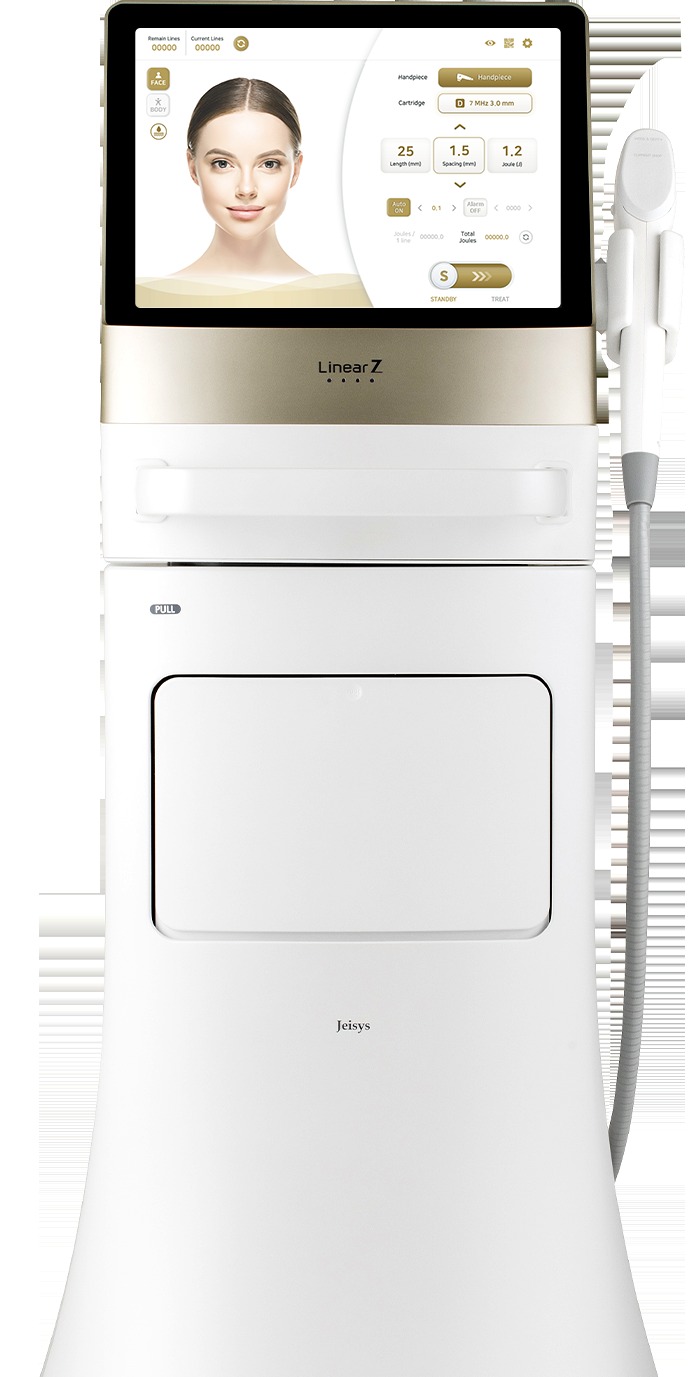
Linear Z is a high-intensity focused ultrasound (HIFU) device made by Jaysys Medical, a South Korean manufacturer. The underlying physics is the same that makes Ultherapy work: focused ultrasound converges energy at a precise depth beneath the skin, heating that specific layer without disturbing the surface above it. Each focal point creates a small thermal coagulation zone, a controlled micro-injury that triggers immediate collagen contraction, followed by months of new collagen production. Think of it like a magnifying glass focusing sunlight to a single hot point, except the focal point sits inside the dermis.
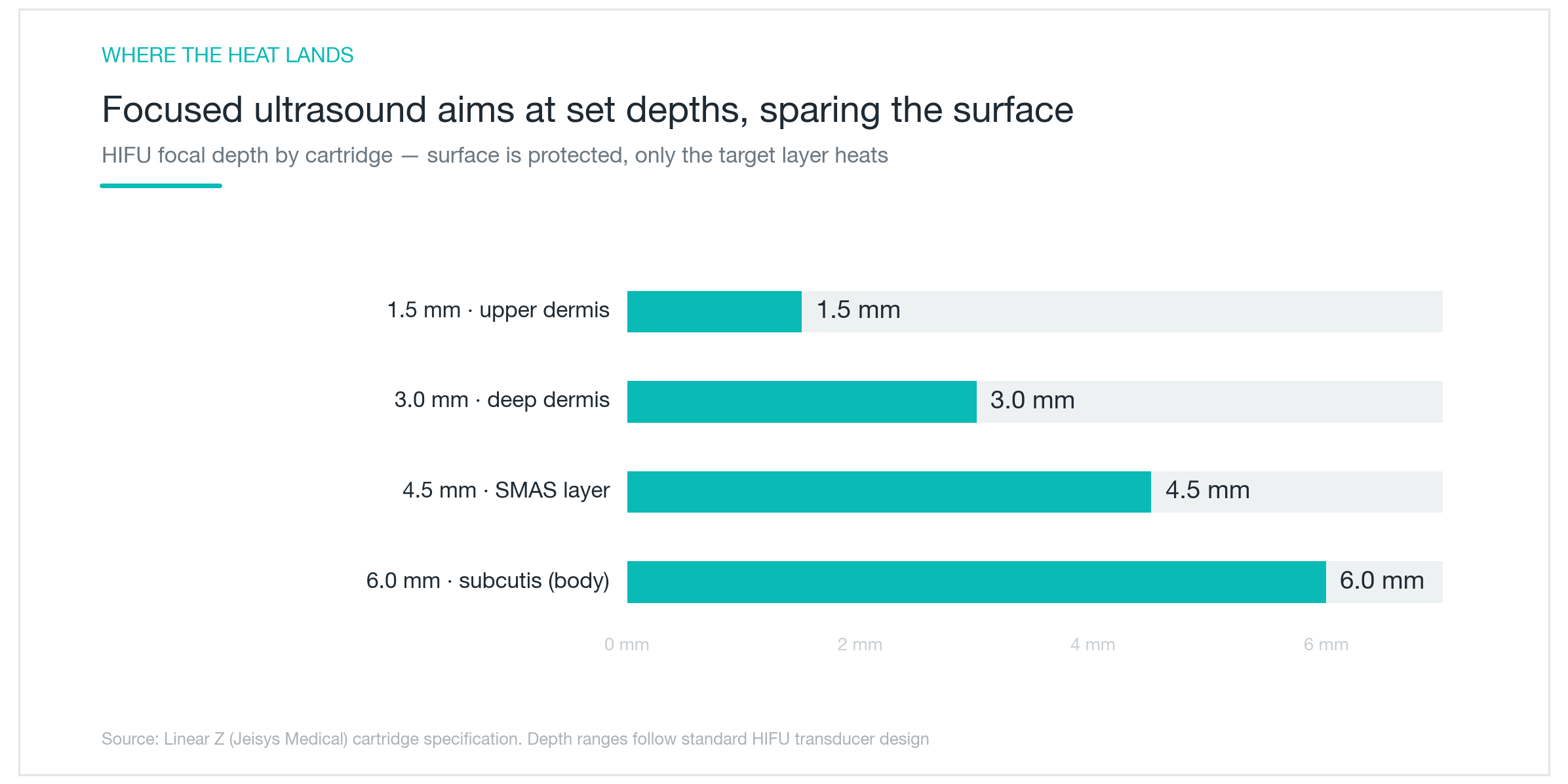
What Linear Z adds to this established category is the delivery pattern. Conventional HIFU devices place individual dots sequentially, one after the next. Linear Z can string those focal points into continuous lines, hence the name. The result is denser, more uniform coverage in less time. Cartridges range from 1.5 mm depth (superficial dermis) up to 6 mm (body applications), with 3.0 mm and 4.5 mm depths most commonly used on the face. The 4.5 mm cartridge reaches the SMAS, the same fibromuscular layer surgeons tighten during a facelift.
Linear Z carries clearance from the Korean Ministry of Food and Drug Safety (MFDS). That's meaningful: regulatory clearance means the device met safety and performance thresholds. What it doesn't mean is that it outperforms other cleared devices, a distinction worth holding onto when you read clinic ads. The real skill in using Linear Z lies in matching depth and delivery pattern to each patient's skin thickness and degree of laxity, which varies considerably from face to face.
How warming a deep layer tightens collagen
The mechanism is cleaner than most energy-based treatments. Cartridge depth determines where the thermal zone forms, 1.5, 3.0, or 4.5 mm, and at 4.5 mm the target is specifically the SMAS, the layer a surgeon would tighten in a traditional facelift. Each coagulation point causes immediate collagen contraction, then a slower remodeling phase kicks in over the next two to three months as fibroblasts lay down new matrix. That's why most patients see their best results around the eight-to-twelve-week mark, not the day after treatment.
The supporting lab science is reasonably solid. Cadaver skin studies have confirmed that thermal zones form exactly at the intended focal depth with the epidermis left intact. A porcine skin study found roughly a fourfold increase in fibroblast activity and about a 2.5-fold expansion in elastin area following HIFU treatment. The biology tracks: heat the deep layers, trigger regeneration.
A few honest caveats, though. The often-cited figure that collagen begins denaturing near 65°C comes from in vitro studies on isolated collagen protein, not from direct temperature measurements in living human skin during treatment. And most histological evidence comes from animal models and cadaver tissue, not from prospective trials in human faces. Mechanism plausibility is not the same thing as demonstrated clinical efficacy, which requires separate human studies, a different category of evidence entirely.
Are there clinical studies showing Linear Z's effect?
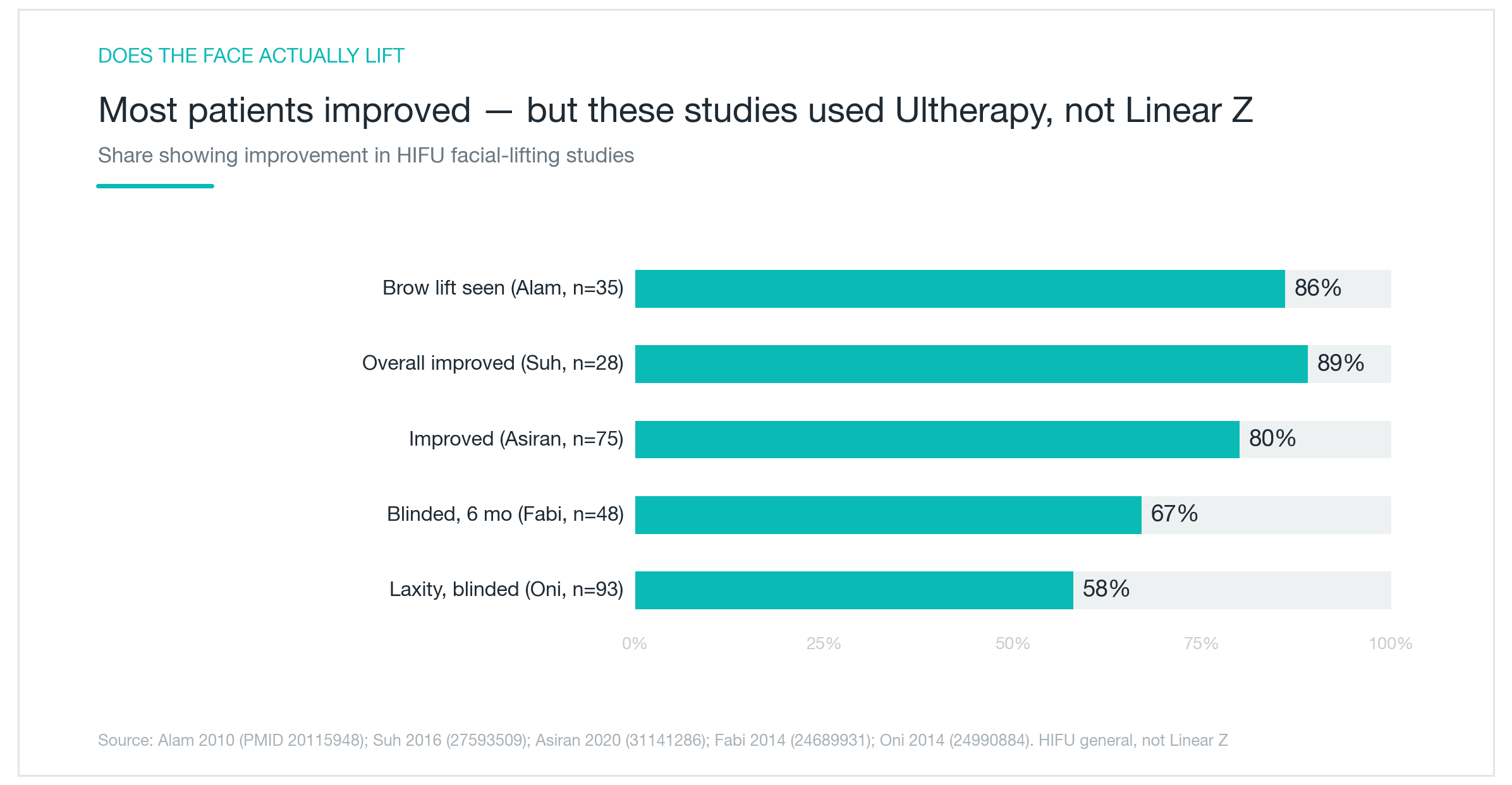
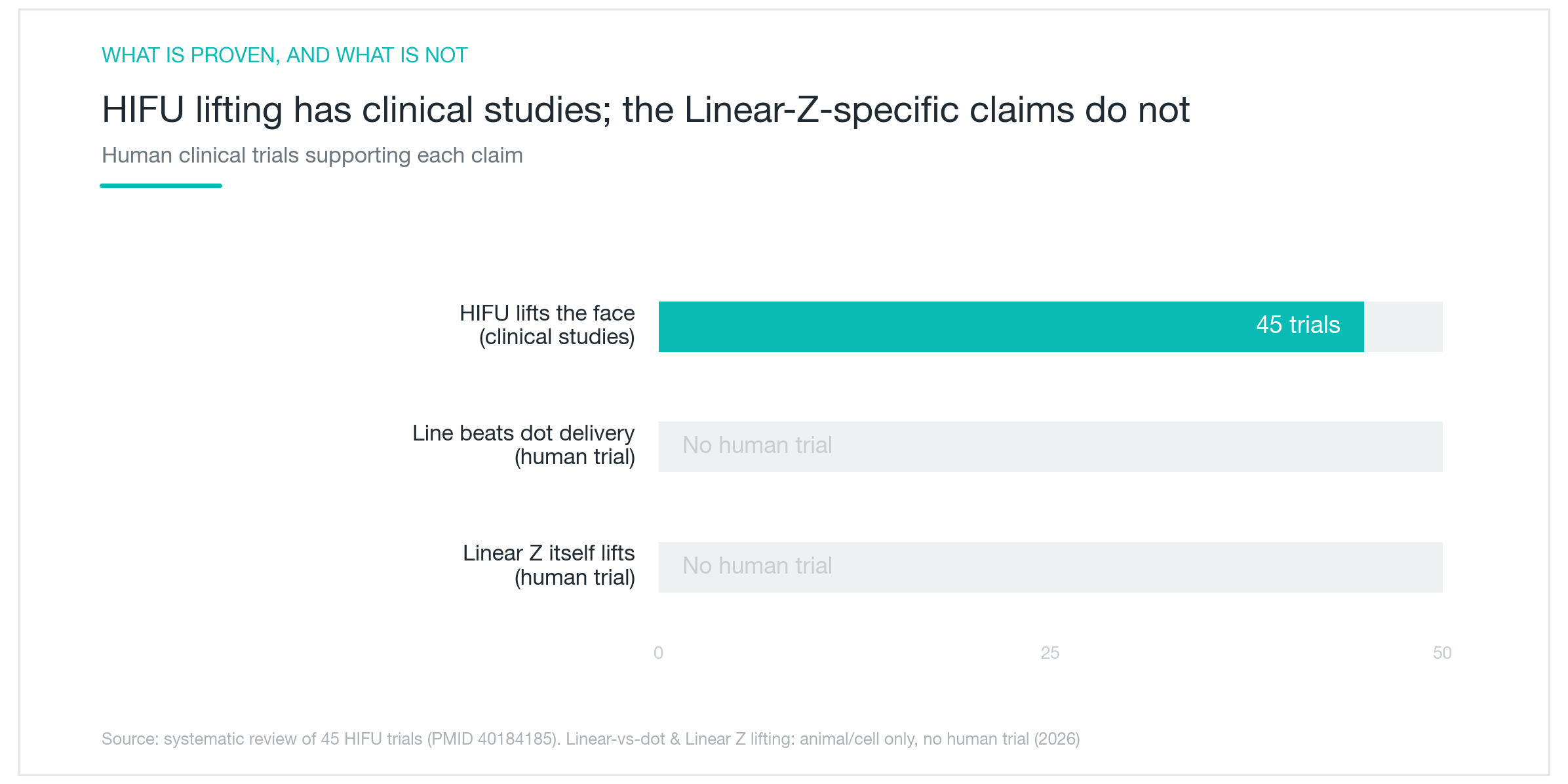
There's a legitimate body of clinical evidence for HIFU facial lifting, more than for many aesthetic procedures. Published studies report average brow elevation of about 1.7 mm, with 80 to 90 percent of patients noting visible improvement at three months. Blinded assessors, evaluators who didn't know which patients had been treated, still identified meaningful improvement in the majority of cases. A meta-analysis pooling multiple trials estimated roughly 18 to 30 percent improvement in skin laxity scores, with serious adverse events in fewer than 5 percent of patients.
Two clarifications before those numbers run away with your expectations. First, the magnitude of change is refinement, not transformation. A 1.7 mm brow elevation is real and noticeable, but it's a different order of magnitude from surgical brow lifting. Second, and critically, nearly all of that evidence was generated using Ultherapy, the most extensively studied HIFU platform on the market. The data supports focused ultrasound as a category. It does not validate Linear Z as a specific device.
That said, Linear Z operates on identical biophysical principles. Expecting category-level outcomes is reasonable: modest but real tightening, most apparent in patients with mild to moderate laxity, developing gradually over a few months. The key is anchoring that expectation to what HIFU science has actually demonstrated, not to what the Linear Z brand name implies.
How much improvement any individual patient sees also depends heavily on age, baseline skin quality, and degree of laxity. Results that genuinely impress a 38-year-old with early jowling may feel underwhelming in someone with significant sun damage and heavier folds.
Is the linear method more effective than the point method?
This is where marketing tends to outpace the evidence. The case for linear delivery is intuitively reasonable: connecting focal points into continuous lines should allow for denser, more uniform coverage with shorter treatment time and fewer gaps. Those are real procedural advantages if they hold up.
The problem is that no published human study has compared linear HIFU delivery against dot delivery for facial lifting outcomes. The only comparative data between these two patterns comes from a single animal study, which hasn't been replicated in human subjects. "Linear is more effective" is a plausible hypothesis. It is not a clinical finding.
The same gap applies to Linear Z versus established platforms. There's no published head-to-head comparison of Linear Z against Ultherapy, Sofwave, or Ultraformer in human subjects. Without that data, any claim that Linear Z outlifts its competitors is marketing, full stop. That's not a knock on the device. It's simply where the published science currently sits.
What we can say with confidence: Linear Z is a legitimate HIFU device from a regulated manufacturer, built on well-understood physics. The linear delivery pattern is a sensible engineering choice that likely improves treatment efficiency and coverage consistency. What it hasn't demonstrated in human trials is superior lifting efficacy. Faster to treat is not the same as better results.
Linear Z pain, side effects, and limits
Pain during HIFU treatment is real and varies by area. Studies report intra-procedural discomfort ranging from about 3 to 6 out of 10, with bony prominences, such as the jaw angles, brow bone, and zygomatic arch, typically more uncomfortable than fleshier zones. Most clinics apply topical numbing cream beforehand, and some add oral pain medication for more sensitive patients. Post-treatment, expect temporary redness, mild swelling, and a deep bruised or tender sensation that usually resolves within a few days.
Rare but serious complications have appeared in the medical literature. Transient facial nerve weakness causing temporary asymmetry, localized fat atrophy from energy delivered too superficially, and ocular injury from periorbital treatments have all been documented. These are uncommon, but they underscore why operator training and technique matter. Precise depth selection, genuine cartridges, and a provider who understands facial anatomy are non-negotiable.
The limitations are equally honest. Patients with significant laxity tend to see less impressive results. One study found that more than half of higher-BMI patients didn't achieve meaningful improvement. HIFU is not a replacement for facelift surgery in patients with advanced sagging. And durability is a real conversation. Most practitioners and patients find that results last somewhere between several months and a year before gravity reasserts itself.
Linear Z suits patients with mild to moderate laxity who want visible refinement without surgery or downtime. If the goal is more dramatic repositioning, meaningful jowl reduction, or a true brow lift, then thread lifting or a surgical consultation belongs in the conversation alongside or instead of HIFU. When you see a clinic ad claiming Linear Z lifts more powerfully because it's linear, or produces results no other device can match, apply healthy skepticism. The technology is real. The category-level HIFU evidence is reasonably solid. But the device-specific and linear-specific superiority claims are, for now, ahead of the published science.
Was this helpful?
About this article
Written by a practising aesthetic physician and intended for general education — not a substitute for individual medical advice.
Read next
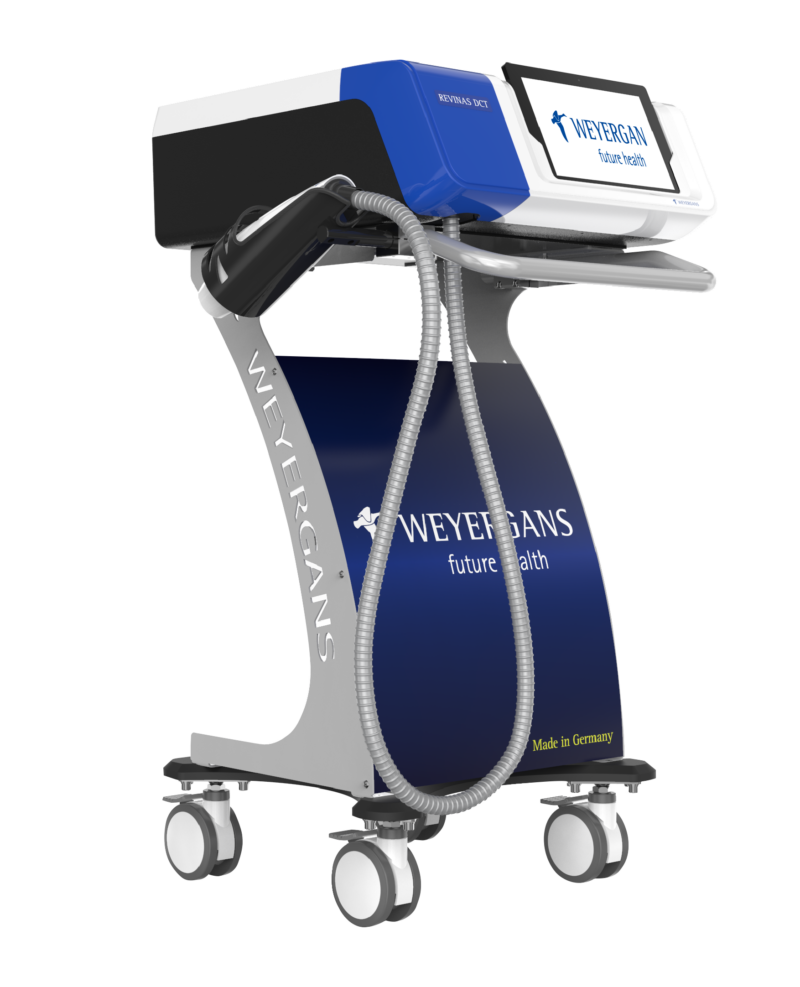
REVINAS Shockwave Effects and Side Effects: Can It Lift Without Heat?
A clear-eyed look at what REVINAS is, how shockwave energy stimulates tissue, what the collagen and cellulite research actually shows, and where the 'deep SMAS lifting' claim crosses from mechanism into marketing, including the fact that no REVINAS-specific clinical trials exist.
By Dr. Kim
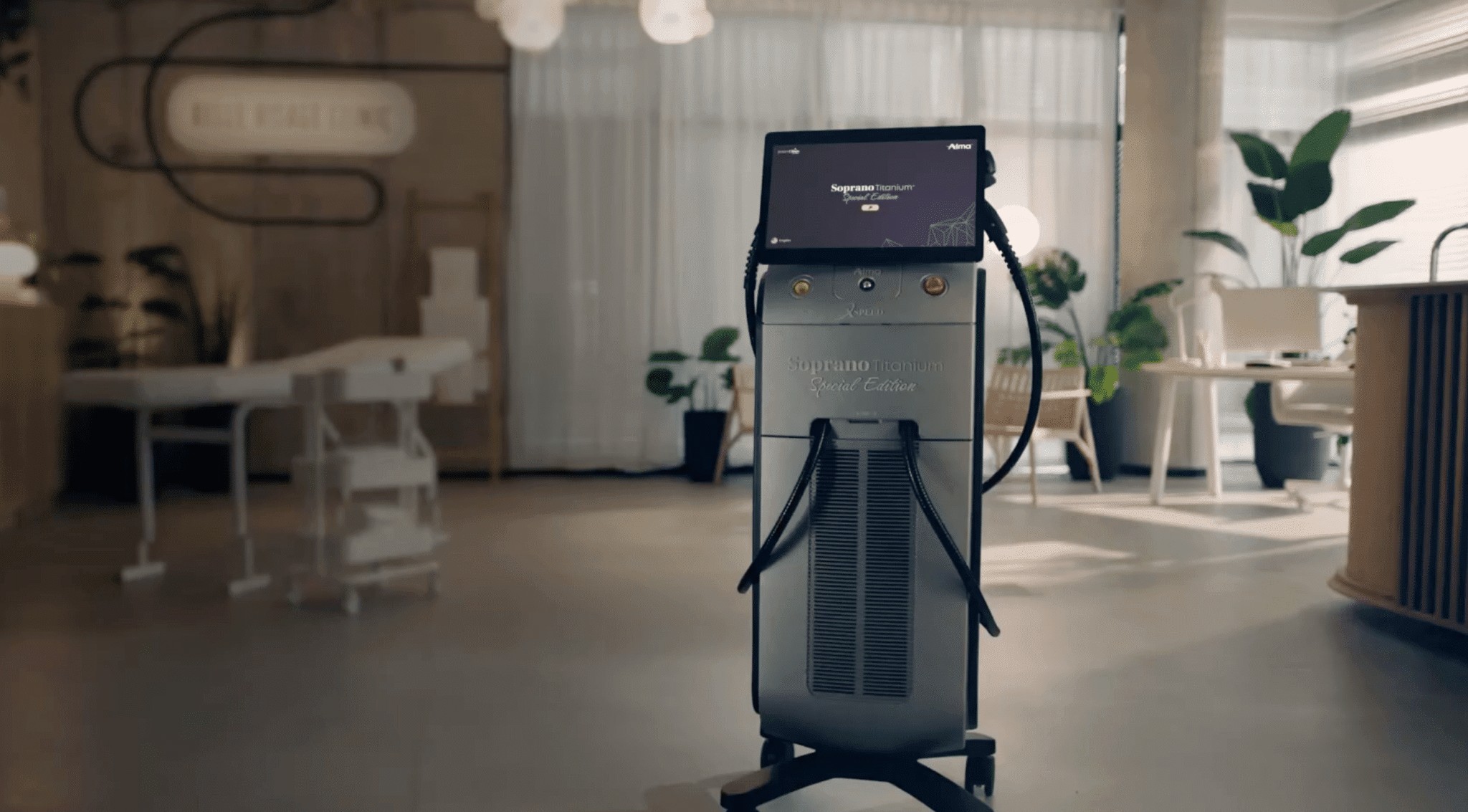
Titanium Lifting Effect and Limits, and How It Differs From Ultherapy and Thermage
What Soprano Titanium's triple-wavelength diode laser actually does for skin laxity, texture, and tone, with a clear-eyed look at the clinical evidence and its real limitations.
By Dr. Lee
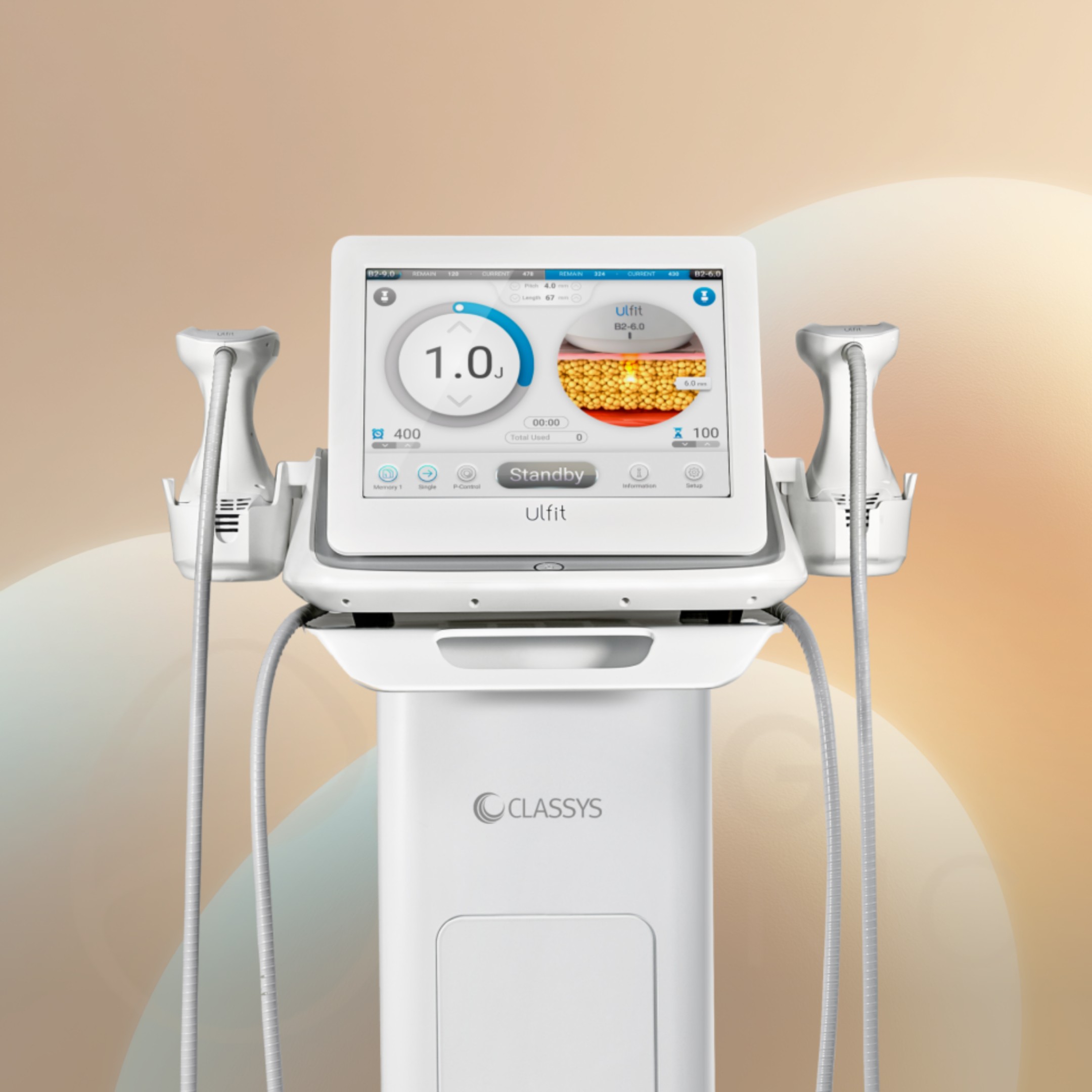
Ulfit Body HIFU Fat Reduction Effect: How Many Sessions Do You Need?
Ulfit Body HIFU is a non-surgical body contouring treatment that focuses ultrasound energy on the fat layer beneath the skin, gradually shrinking fat cells with heat. Here is a principle-first look at why the ultrasound heats only fat and nothing else, how that destroyed fat actually leaves your body, why the settings differ from facial HIFU, and roughly how many sessions and how much maintenance you can expect.
By Dr. Kim