Effects After Lifting Treatment and Duration, Including Swelling and Aftercare
By Dr. Kim8 min read

After a non-surgical lifting treatment like HIFU, RF, or a thread lift, most people end up asking the same questions. How much downtime is there, when does the effect start showing, and how long does it actually last? Non-surgical lifting tends to settle in gradually over months rather than showing an immediate change. The time it takes for post-treatment swelling and redness to fade is a separate story from the time it takes for new collagen to build in under the skin. Downtime and how long results hold both vary quite a bit depending on the treatment. There's plenty of advice out there claiming aftercare changes your results, but it's worth separating the parts that are actually backed by solid evidence from the parts that are closer to clinical folklore. Whether you're about to get treated or already have been, it helps to know the real numbers on recovery, duration, and when to get retreated ahead of time.
Here's a quick side-by-side of downtime and duration by treatment.
| Treatment | Downtime | Duration |
|---|---|---|
| HIFU (ultrasound) | Redness, swelling for hours to days | About 6–12 months |
| RF (radiofrequency) | Minimal, brief redness | About 6–12 months |
| Thread lift | Swelling, bruising for 1–4 weeks | 6–24 months |
When do lifting effects start to appear?
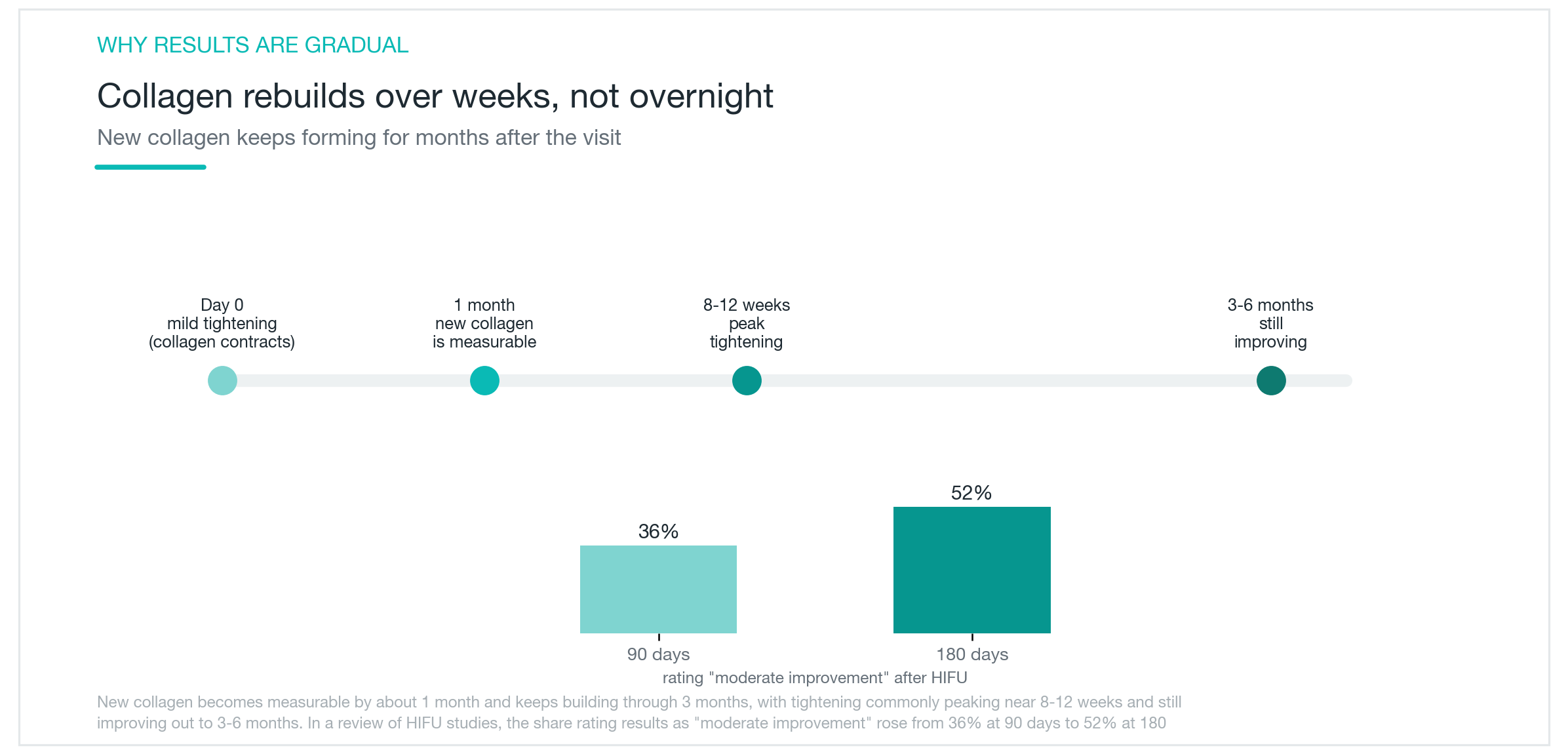
The effect of non-surgical lifting comes in two stages. One is the immediate tissue contraction that happens on the day of treatment, and the other is collagen remodeling, which builds gradually over months. When the heat energy from HIFU or RF reaches the dermis and fascia, collagen fibers contract right away. That's why some people notice a slight tightening feeling right after treatment.
The real change starts after that. As the body repairs tissue disrupted by the heat, it produces new collagen, and that takes time. A study analyzing the skin of people who received monopolar RF found type 1 and type 3 collagen starting to increase at 1 month and holding through 3 months.
A review pooling 16 studies on HIFU shows a similar pattern. The improvement rate for skin sagging was 36% at 90 days after treatment, rising to 52% at 180 days. Satisfaction also climbed steadily, from 42% at 90 days to 53% at 360 days. Rather than expecting a dramatic change on the day of treatment, it's more realistic to expect the effect to really kick in between 8 and 12 weeks, becoming most noticeable between 3 and 6 months.
Swelling and recovery time by treatment
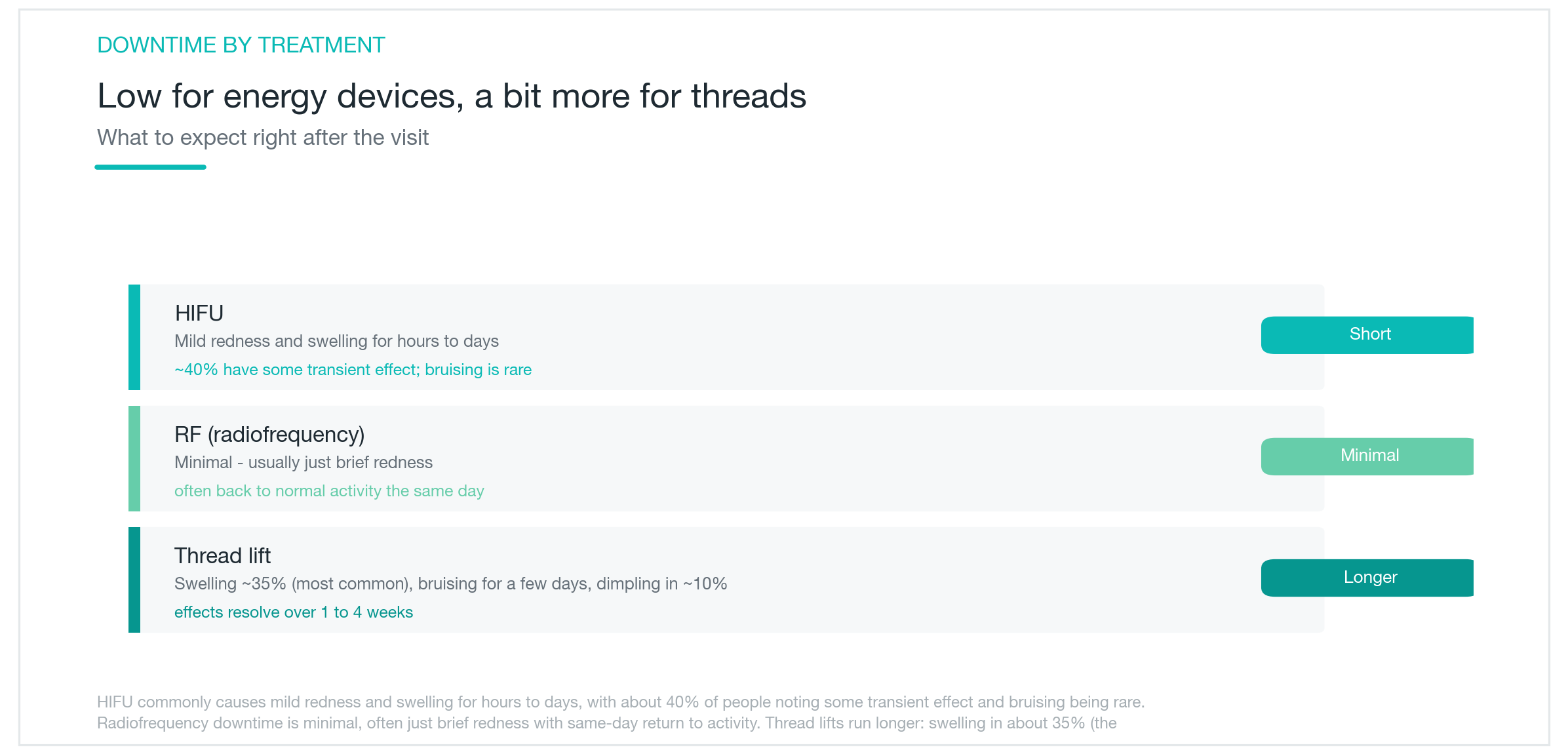
Downtime varies quite a bit depending on the treatment method. In one HIFU study, mild adverse events occurred in 40% of 20 patients, mostly temporary redness and swelling, with some bruising as well. Pooled data covering 573 patients put the adverse event rate at a low 2%, and pain during treatment was reported at around 3.8 out of 10. Temporary nerve compression that causes an odd facial expression is rare, but it usually resolves on its own.
RF has the shortest downtime of the three. A randomized controlled study of 40 people found zero serious adverse events. Most cases involved temporary redness that looked a bit like a burn and settled within 24 hours.
Thread lifts need comparatively more recovery time. Data pooling 26 studies showed swelling in 35% of cases, dimpling (where the skin caves in) in 10%, and sensory changes in 6%. Dimpling occurred in 3.1% of cases with absorbable threads versus a higher 11.7% with non-absorbable threads, and infection ran around 2%. In people over 50, the dimpling rate climbed to 16%. Swelling and bruising usually resolve within 1–2 weeks.
How long do results last?
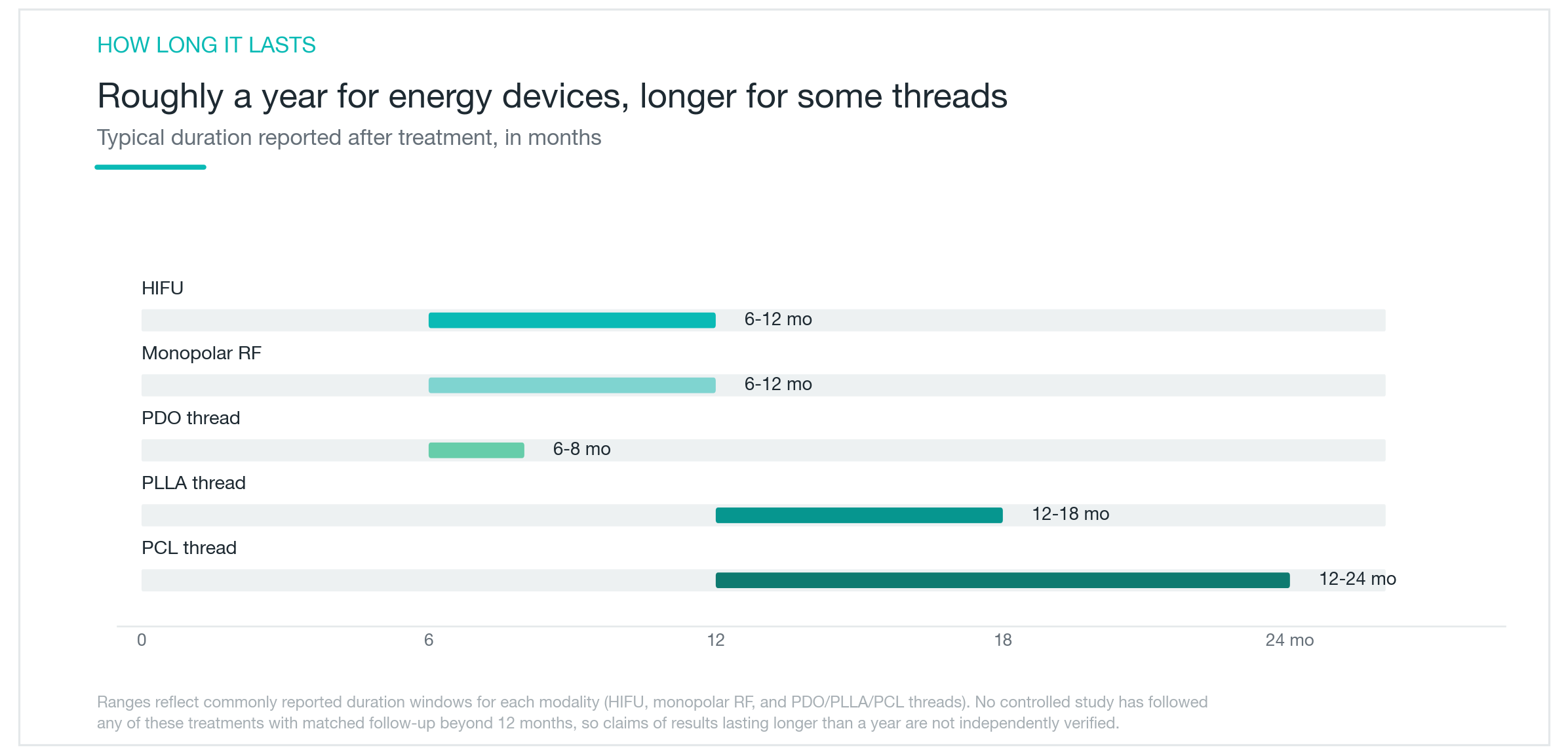
Duration depends on the treatment method and, for threads, the material. HIFU's effect typically becomes noticeable around 3 months and often holds through about 12 months. Data pooling 45 studies reported skin sagging improvement in the range of 18–30%. That said, no study has confirmed the effect lasting beyond 12 months, so any marketing claim pushing further than that is getting ahead of the evidence.
For RF, a randomized controlled study confirmed results holding through 6 months. Claims that it lasts up to 12 months are still closer to an estimate, and there isn't much clinical data directly tracking that long a period.
For thread lifts, absorption time varies by thread material, and that timeline lines up with how long the effect lasts. PDO threads are generally cited at 6–8 months, PLLA at 12–18 months, and PCL at 12–24 months. That said, most of these numbers are closer to clinical folklore based on practical experience. The 24-month figure for PCL actually comes from a study on filler made of the same material, not thread itself, and one animal study found the order PCL, then PLLA, then PDO for how long results held. It's worth keeping in mind that there isn't yet enough long-term human tracking data on this.
How many months before a repeat treatment?
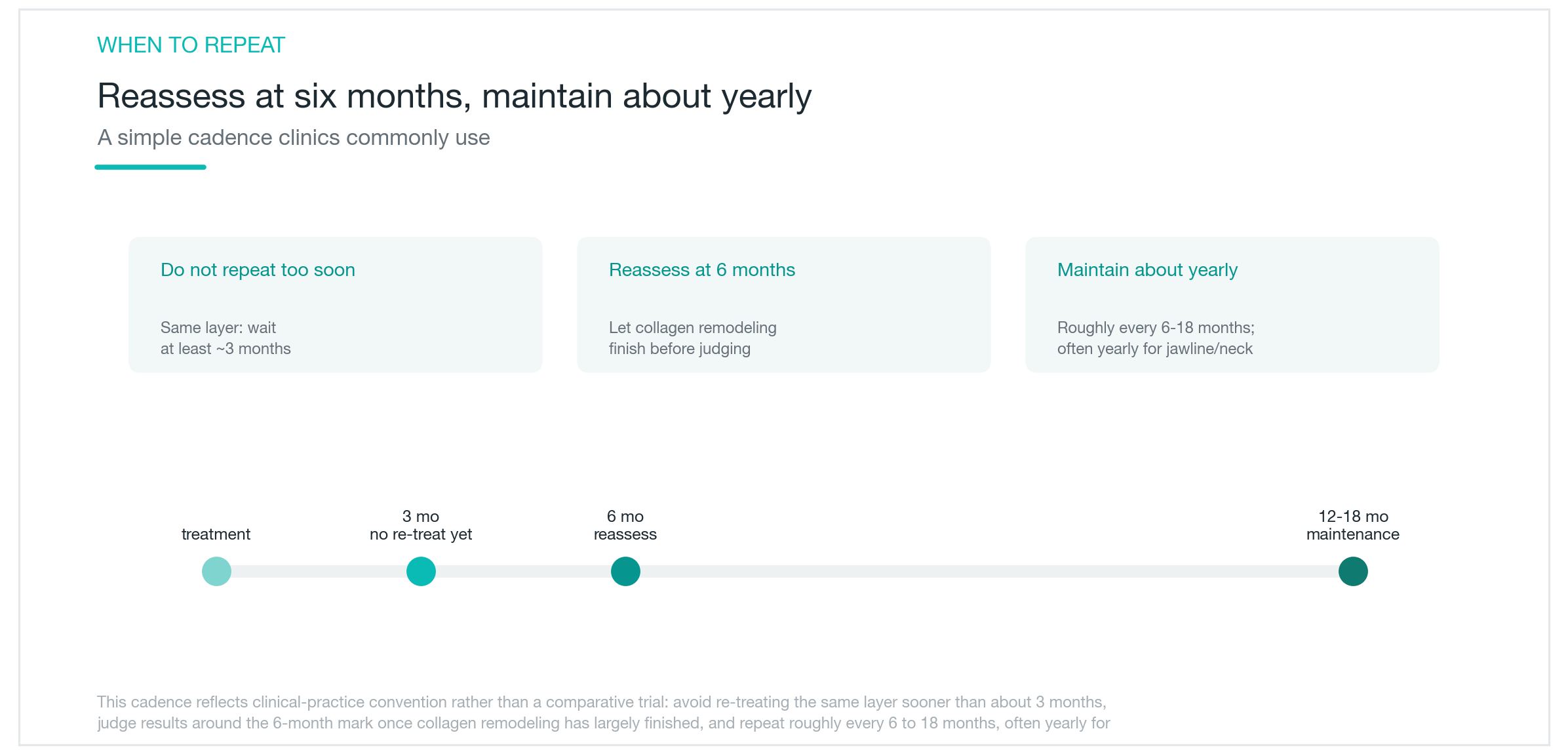
There's no randomized controlled study that pins down an exact retreatment timeline. This part of the picture leans more on experience built up in clinical practice.
The general standard is not to retreat the same area and layer within 3 months. That's roughly how long tissue stimulated by the earlier treatment needs to recover and for collagen to settle in. Most people check in on their skin around the 6-month mark and consider an additional treatment then if sagging has progressed again.
A maintenance cycle of roughly 6–18 months is common. For areas with more significant sagging, some people get treated about once a year as ongoing maintenance. Combining HIFU and RF is common in clinical practice too, but research directly comparing the effect of that combination is still limited to observational studies. It's generally best to decide on retreatment by comparing photos over time or talking it through with your provider.
For a repeat thread lift, it also matters how much of the previous thread has been absorbed. It makes sense to plan a repeat treatment around 6 months for fast-absorbing threads like PDO, and later for longer-lasting threads like PLLA or PCL. It's safer to give the tissue enough time to recover rather than layering threads in too soon.
What to do and avoid in the days after treatment
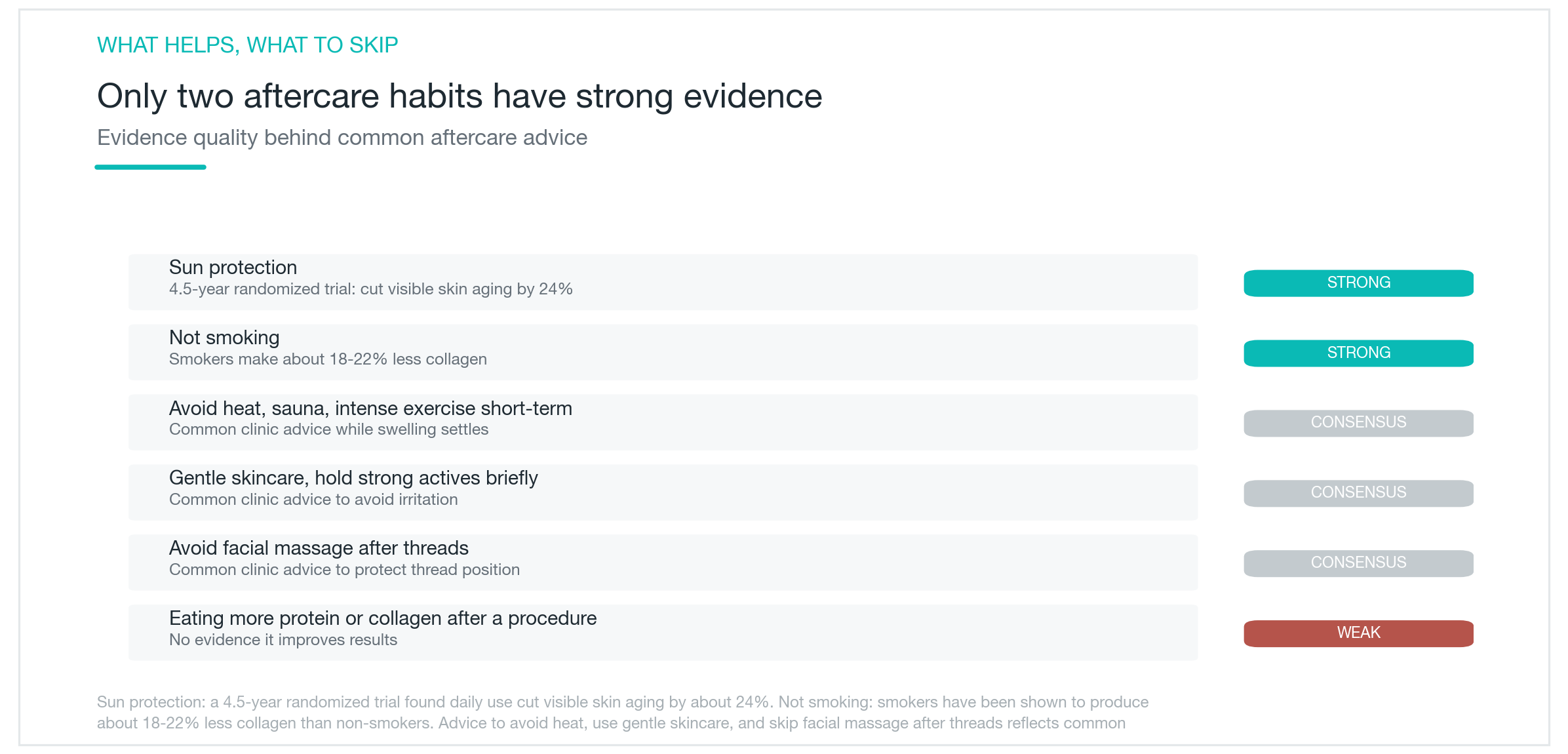
For the first few days after treatment, there are just a few things worth paying attention to. Apply sunscreen carefully every morning. The treated area is more sensitive right now, so it can react to sun exposure more easily.
Cutting back on smoking, or quitting for a few days if you can, helps recovery. It's well established that compounds in cigarette smoke interfere with collagen synthesis.
It's safer to hold off on saunas, steam rooms, and intense exercise for a few days until any swelling settles, since heat and sweat can irritate the treated area. It also helps to moisturize more carefully than usual.
If you got a thread lift, be especially careful about massage. Rubbing firmly before the threads settle into place can shift their position or cause dimpling. It's safest to avoid pressing or rubbing the face firmly for at least 2 weeks.
It's also worth avoiding big facial expressions and sleeping face-down for the first few days. If pressure or force keeps being applied before the threads or tissue fully settle in, they can shift out of position. Alcohol can make swelling worse, so it's sensible to skip it for a few days right after treatment.

Is there evidence for aftercare methods?
There's plenty of common advice floating around for post-treatment care, but the weight of evidence behind each piece of it varies quite a bit.
Sunscreen has the strongest evidence behind it by far. In a study of 903 people, the group that used sunscreen consistently showed 24% fewer signs of skin aging. It's a habit worth keeping up not just after a lifting treatment but as a daily routine.
Not smoking has fairly clear evidence too. One study found collagen synthesis was 18–22% lower in smokers than in non-smokers. That's an even better reason to pay attention after a lifting treatment, when your skin needs new collagen to build in.
On the other hand, advice like avoiding saunas and intense exercise, keeping up with moisturizer, and skipping massage after a thread lift is mostly clinical folklore built up over time. None of it is wrong exactly, but it isn't backed by research as solid as the evidence for sunscreen or not smoking. Oral collagen supplements have some research behind them for boosting the skin's own moisture and firmness, but there's no evidence yet that they add anything on top of a lifting treatment's effect. What influences your results the most is sticking to the basics: sunscreen and not smoking.
Was this helpful?
About this article
Written by a practising aesthetic physician and intended for general education — not a substitute for individual medical advice.
Read next
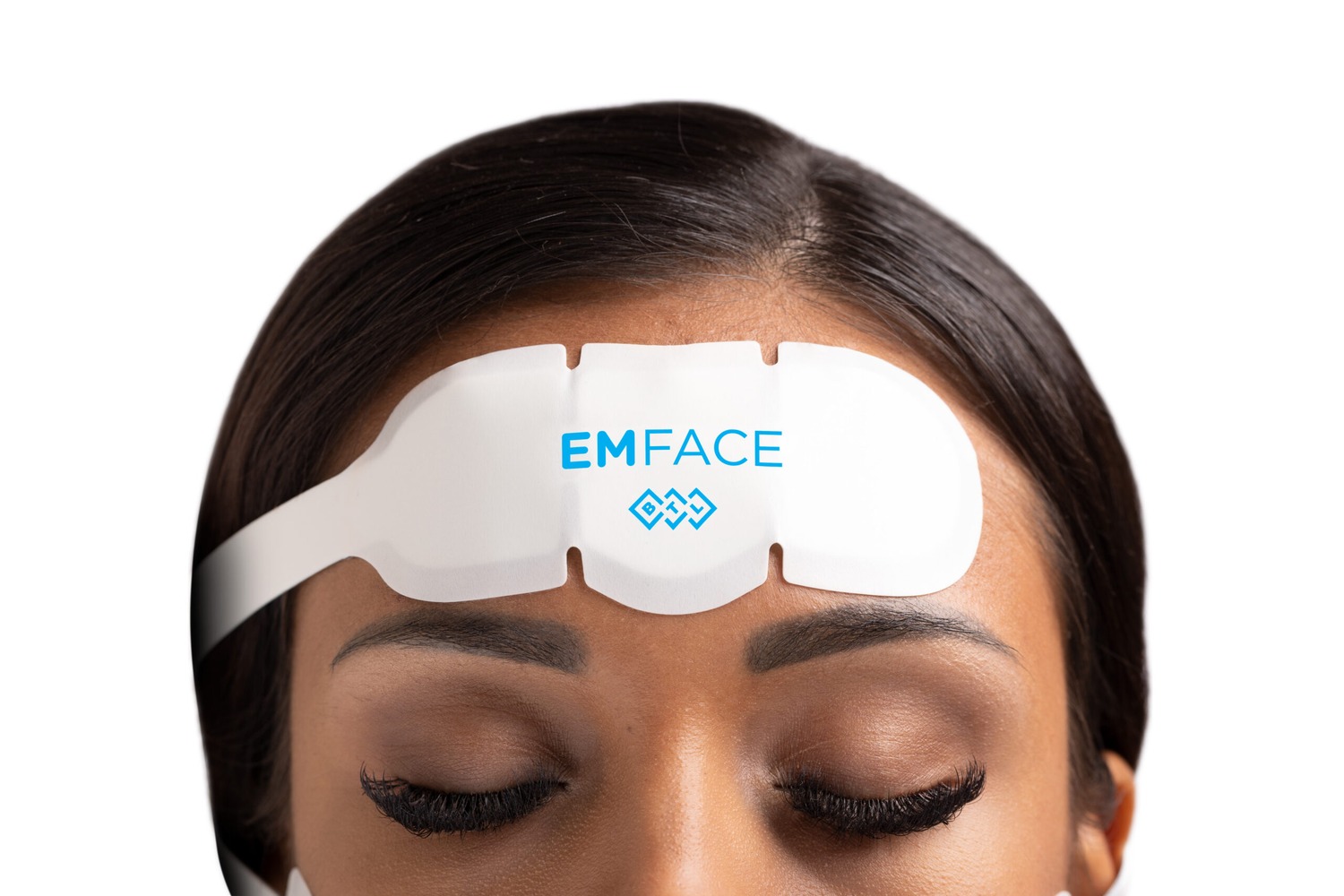
Emface Lifting Effect and Wrinkle Improvement, Including Number of Sessions
Here is what EMFACE actually does, how HIFES and synchronized RF work on facial muscles and skin at the same time, and how far the wrinkle and lifting results hold up under real research. We also look at how it differs from surgical facelifts and who tends to suit it best.
By Dr. Kim
Ultherapy Prime and Original Ultherapy: Differences and Effect Compared
A closer look at how Ultherapy Prime differs from the original Ultherapy, covering the transducer, treatment depths, real-time imaging, pain, and number of sessions from a clinical perspective. The core principle, focused ultrasound lifting the SMAS layer, stays the same, but the imaging and treatment speed have changed. We also cover real clinical numbers showing improvement in brow lift, neck, and jawline.
By Dr. Kim

Lip Filler Effects and Duration, Including Lumps and Side Effects
A close look at lip filler results, how long they last, and side effects like lumping and asymmetry, plus which filler formula suits a part of the face that moves as much as the lips. We cover the science behind restoring the Cupid's bow and lip corners, the trend toward smaller volumes, and vascular complication safety with hyaluronidase, all backed by real study numbers.
By Dr. Lee