Laser Genesis Effects: How Many Sessions for Redness and Pores?
By Dr. Kim10 min read
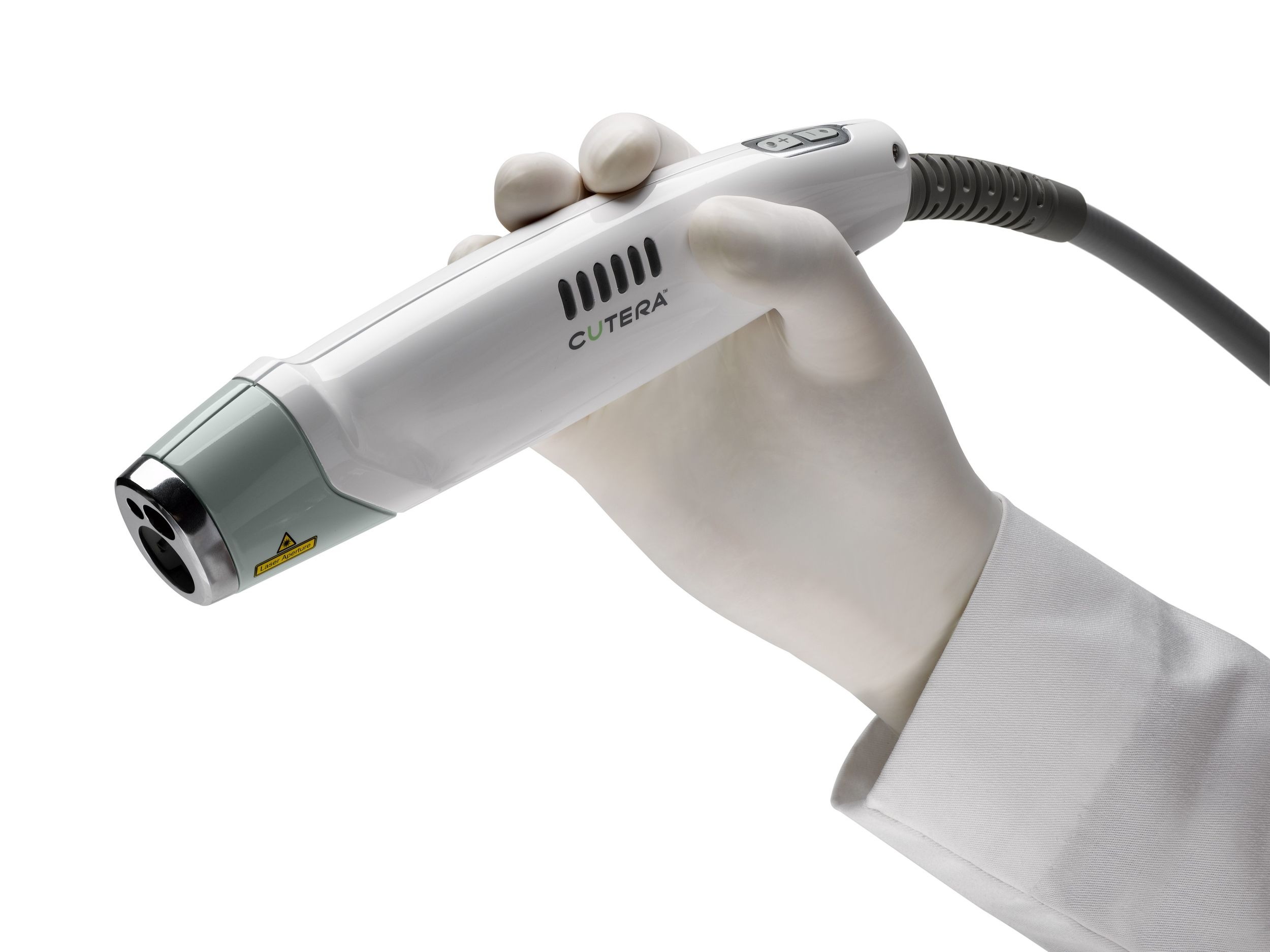
If persistent redness, enlarged pores, and rough texture have you looking into lasers, you've likely come across the name Laser Genesis. What makes it unusual is the promise: no ablation, almost no downtime, and results that accumulate across sessions. Understandably, that raises the question of whether it actually does anything.
The short answer: Laser Genesis is not an ablative laser. It does not remove or wound the skin surface. Instead, it delivers controlled heat into the dermis, gently stimulating collagen and settling the dilated microvasculature that makes skin look persistently red. The improvements to redness, pores, fine lines, and texture build gradually over multiple sessions rather than arriving dramatically after one. Below is a breakdown of how it works, where it is genuinely effective, how it compares to similar treatments, and what an honest treatment course looks like.
What kind of treatment is Laser Genesis?
Laser Genesis is a treatment made by Cutera, a US-based device company, using a 1064nm wavelength Nd:YAG laser. The wavelength matters because it penetrates past the skin surface into the dermis without causing surface injury. This is what makes the treatment non-ablative: the outer skin layer stays intact while the tissue below is gently heated.
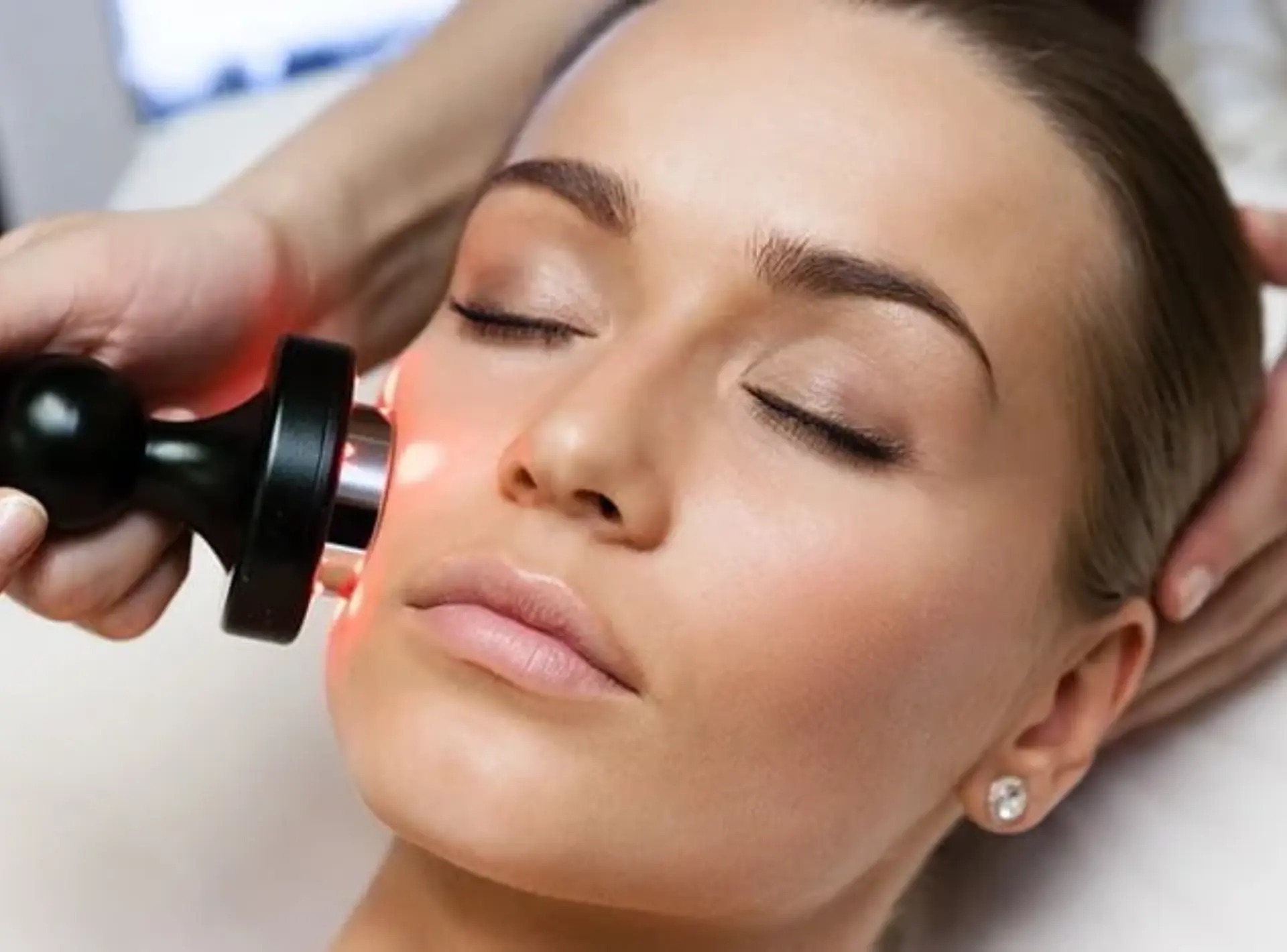
The delivery method is also different from most lasers. Rather than firing a single strong pulse at each spot, the handpiece is held slightly off the skin and moved repeatedly over the treatment area in quick passes, layering heat gradually rather than concentrating it in one burst. Because the energy accumulates slowly, the surface does not get hot enough to wound, while the dermis reaches the temperature needed to trigger a response.
The experience during treatment reflects this. Most patients describe warmth and mild tingling rather than sharp discomfort, and anesthetic cream is generally not required. Afterward, some transient redness typically appears and settles within a few hours. Most patients apply makeup and return to their day immediately following the session. The absence of downtime is one of the most consistently cited strengths of Laser Genesis.
An additional practical advantage is the 1064nm wavelength itself. Longer wavelengths like this are less preferentially absorbed by melanin compared to shorter-wavelength lasers targeting pigment, which means the risk of causing post-inflammatory hyperpigmentation is lower across a broader range of skin tones. This makes Laser Genesis a workable option for darker skin types that would require more caution with melanin-targeting treatments, and it also makes it usable year-round for those with active outdoor lifestyles.
How redness and pores improve
Laser Genesis works through two overlapping mechanisms, both triggered by dermal heating.
The first is collagen stimulation. When the dermis is exposed to controlled heat, the tissue registers this as a mild stress signal and responds by producing new collagen and elastin. As collagen replenishes over the following weeks, skin gains firmness from within, texture becomes smoother, enlarged pores appear tighter, and shallow fine lines soften. This is not a surface-stripping process. It is a gradual internal remodeling, which is why results do not appear overnight and why changes become more apparent across a series of sessions rather than after a single one.
The second mechanism is vascular reduction. Persistent facial redness, particularly the kind associated with rosacea, often reflects dilated or proliferating microvasculature close to the skin surface. The heat from the 1064nm wavelength targets these small vessels, causing them to contract and reducing the visible redness they produce.
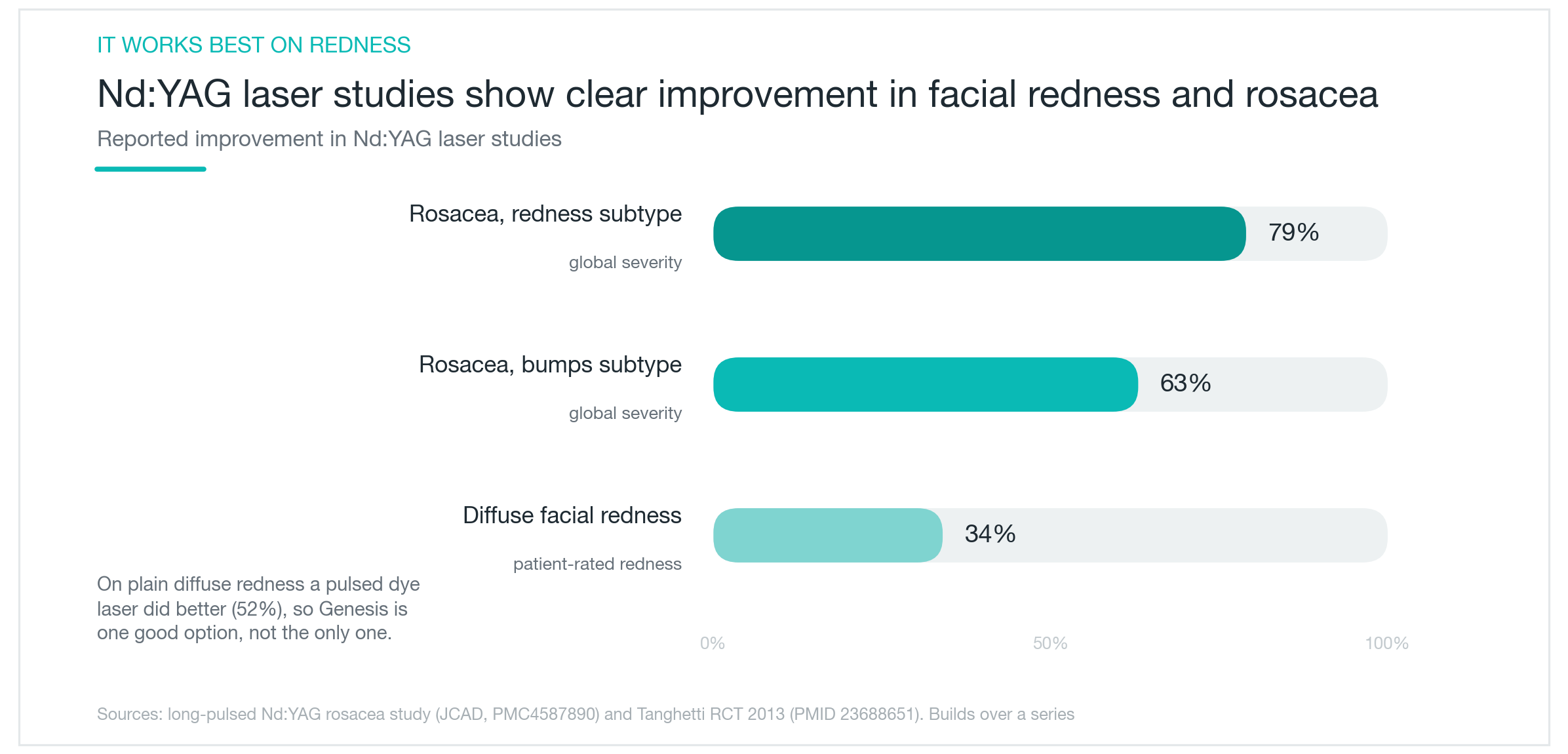
Clinical data from Nd:YAG laser studies gives a sense of what to expect. The graph above shows that in studies of rosacea, the erythematotelangiectatic subtype (redness and flushing as the dominant feature) improved by approximately 79%, while the papulopustular subtype (redness with bumps) improved by approximately 63%. General facial redness, assessed by patient ratings, decreased by approximately 34%. One honest caveat: in the same body of research, pulsed-dye laser, which directly targets blood vessels using a different wavelength, produced approximately 52% improvement in diffuse redness, outperforming the Nd:YAG result in that specific comparison. Laser Genesis is a solid option for redness, but not the only one, and not always the strongest one for isolated vascular concerns.
It is also worth keeping expectations calibrated on timing. Collagen remodeling takes weeks to months. The visible change after a single session is subtle. The results build and become easier to evaluate with side-by-side photos taken at monthly intervals across the full treatment course.
Which concerns it works well on, and which it doesn't
Understanding where Laser Genesis is genuinely effective, and where it isn't, avoids misaligned expectations.
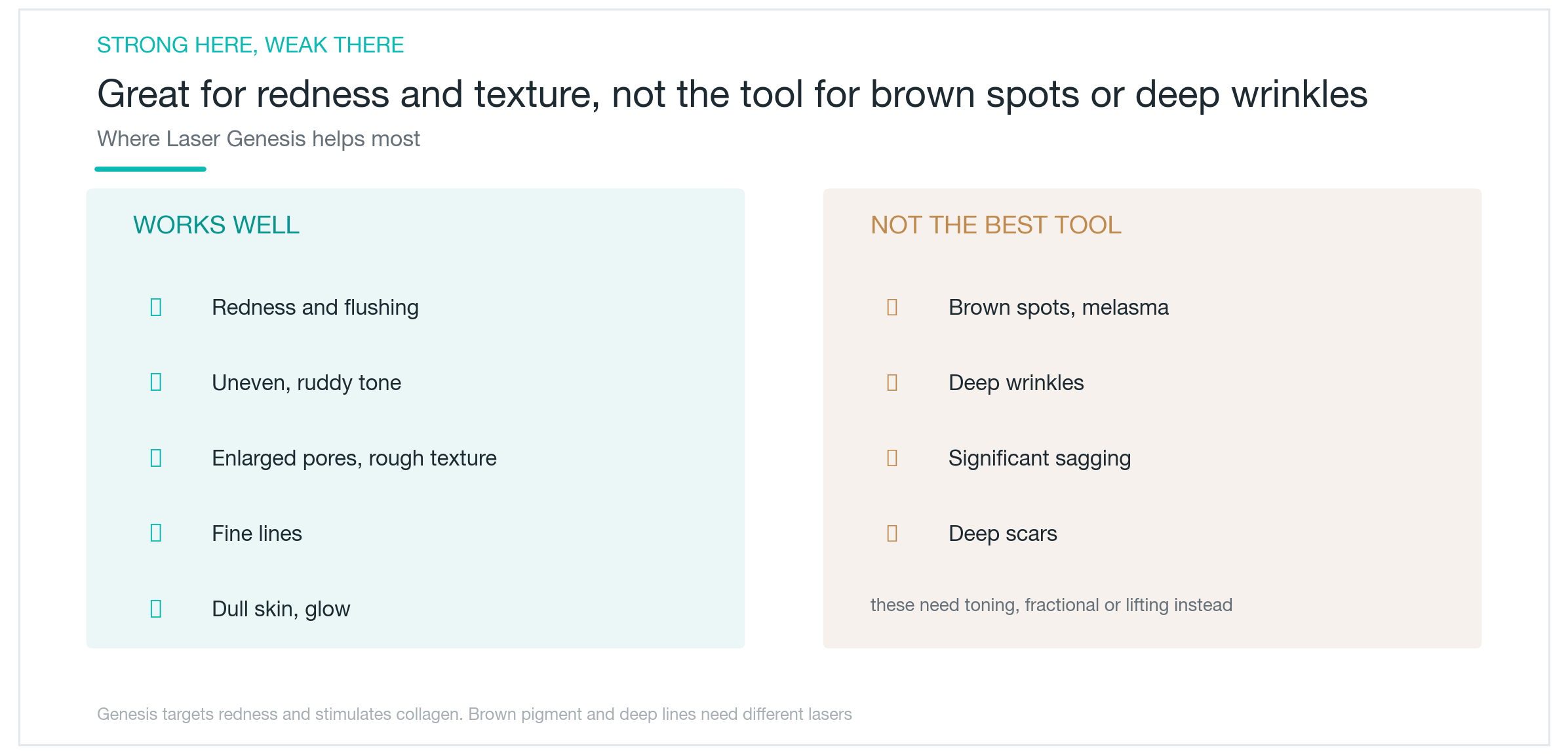
The strongest results tend to appear in skin that is persistently red or flushed, has rough or uneven texture, has visibly enlarged pores, carries shallow fine lines, or looks dull overall. Mild redness from acne scarring also responds reasonably well. These are the concerns the treatment was designed around, and the clinical record supports them.
Where Laser Genesis has limited impact is equally worth knowing. Deep wrinkles and significant tissue laxity are not meaningfully addressed by the level of heat delivered. If sagging or volume loss is the primary concern, radiofrequency, ultrasound lifting, or other interventions are more appropriate. Brown pigmentation, including melasma, sunspots, and post-inflammatory hyperpigmentation from acne, is another area where Laser Genesis is not the right primary tool. The 1064nm wavelength is not optimized for melanin targeting. Treatments like picotoning or other pigment-specific lasers are better suited to brown discoloration. Deep textural scarring and severely enlarged pores also typically require ablative or fractional approaches to produce meaningful change.
The practical way to use this information is to identify the skin concern that actually needs to be addressed. If it is redness, texture, and overall tone, Laser Genesis is a reasonable match. If it is pigmentation or significant laxity, a different primary treatment is likely more appropriate, and Laser Genesis may be useful as an adjunct rather than the lead option.
How it differs from other lasers
Because the options can look similar from the outside, a direct comparison is useful:
| Treatment | Primary Targets | Downtime |
|---|---|---|
| Laser Genesis | Redness, texture, pores, shallow lines, glow | Minimal |
| IPL | Brown spots and redness together, pigmentation | Several days of crusting |
| Picotoning | Brown pigmentation, melasma, sun spots | Minimal |
| Fraxel | Scarring, deep texture, pores | Several days of redness and peeling |
As the table shows, Laser Genesis is the low-downtime option for redness and texture. IPL covers both brown pigmentation and redness but involves a post-treatment phase where darkened spots crust and peel off, which can last several days. Picotoning is more precisely aimed at brown discoloration and involves minimal downtime, but it is not primarily addressing redness or skin texture in the same way. Fraxel is fractional ablative and produces the most dramatic textural results but requires meaningful recovery time.
IPL is probably the most common point of comparison. The distinction worth keeping is that Laser Genesis works progressively and gently on redness and texture with essentially no surface disruption, while IPL works more aggressively on both pigment and vascular concerns in fewer sessions but requires planning around the recovery period. They are not competing treatments so much as different tools suited to different priorities. Clinicians often use them in combination or sequence depending on what the skin needs.
The overarching point is that no single laser is universally better. The match between treatment and concern determines the outcome. Redness is a reason to consider Laser Genesis. Brown spots are a reason to look elsewhere. Scarring and deep texture call for something like Fraxel. Knowing this makes the decision more straightforward.
How many sessions are needed and how long does it last?
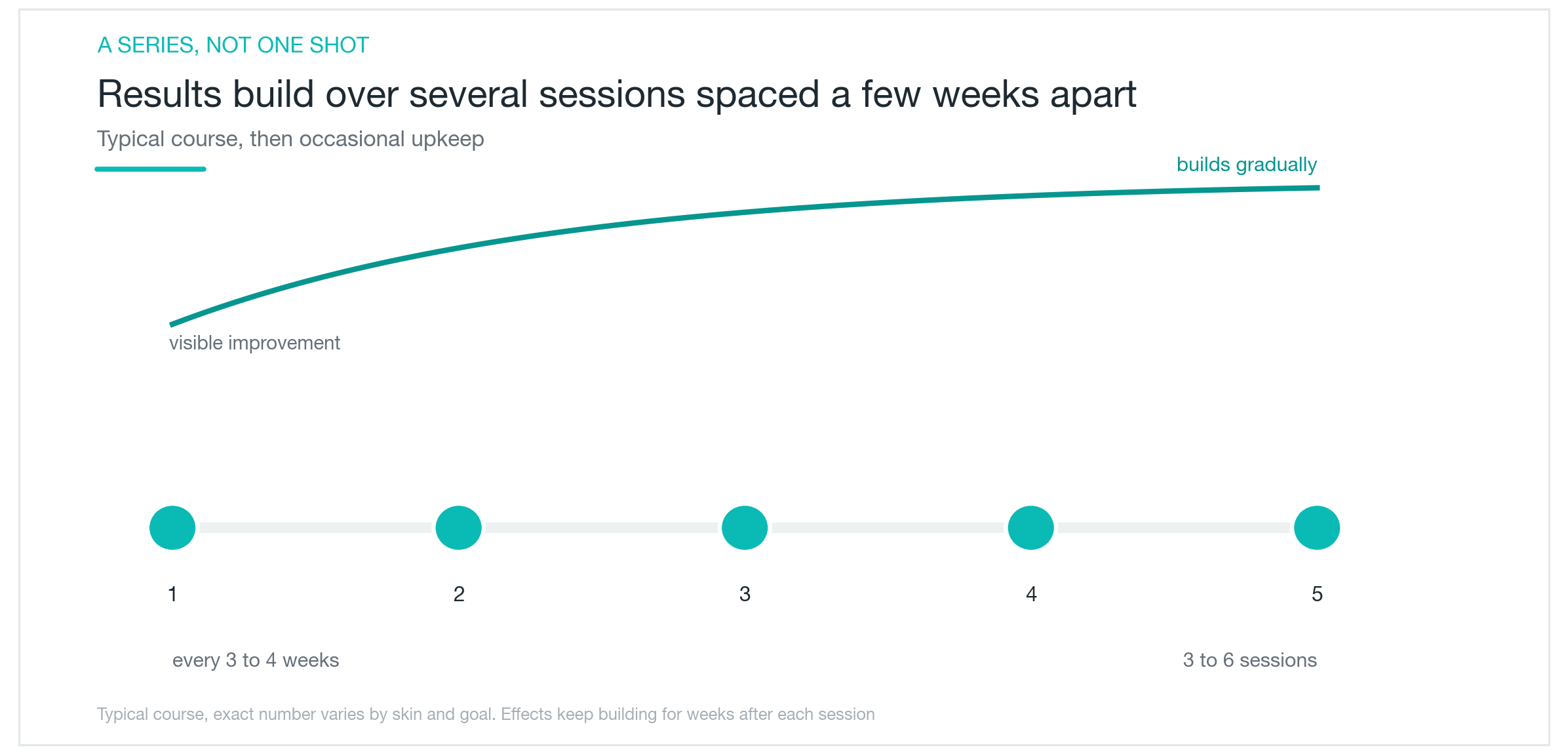
Laser Genesis is not a one-session treatment. The collagen stimulation mechanism requires repeated heating to accumulate a meaningful result. The standard approach is a course of 3 to 6 sessions spaced 3 to 4 weeks apart, as shown in the graph above. The exact number depends on the severity of the concern and how much improvement is visible as the series progresses.
Understanding the timeline matters for managing expectations. The session itself produces only mild flushing and a slight improvement in glow that day. The more substantial changes (smoother texture, reduced redness, tighter-looking pores) become visible over the weeks following each session as collagen remodels. The results of the full course therefore look quite different from the results of session one. This is why evaluating after one or two sessions and concluding the treatment isn't working is a common error. The appropriate comparison point is after the full planned course.
Redness tends to respond most visibly as sessions accumulate. Texture and pore appearance follow more slowly. Some patients are satisfied after 3 sessions; others with more pronounced redness or laxity benefit from extending to 5 or 6.
Maintenance is a realistic part of the picture. Collagen is a living tissue that continues to break down over time, and redness can return as vascular changes reassert themselves. Many patients return for a single maintenance session every few months once the initial course is complete. Consistent sun protection and good skincare basics in the interim extend how long the results hold.
When calculating the cost of Laser Genesis, the realistic frame is the full course plus periodic maintenance, not the per-session price. A single session gives an incomplete view of both the cost and the outcome.
Side effects and when not to get it
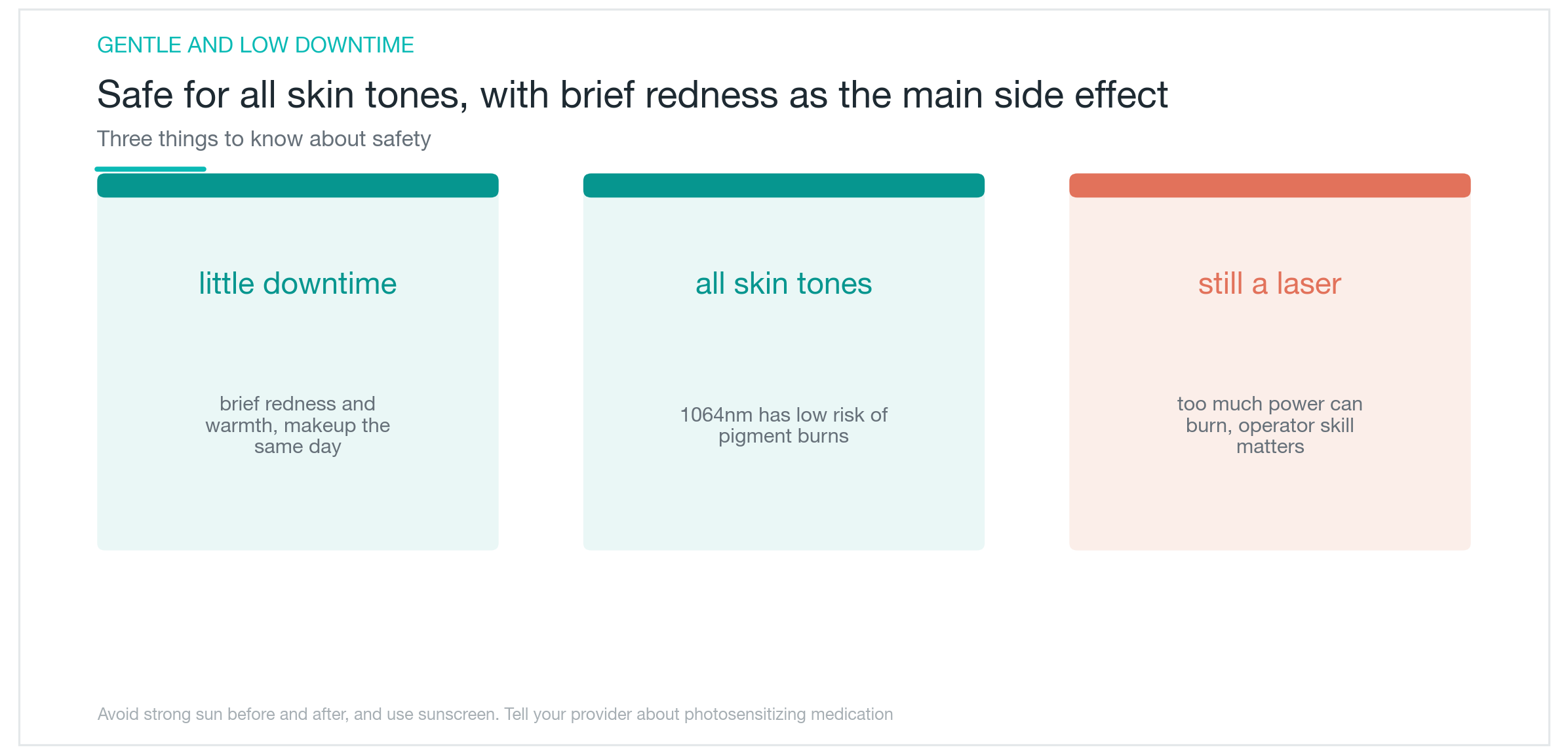
The side effect profile of Laser Genesis is mild, which reflects its non-ablative nature. Transient redness and warmth immediately after treatment are expected and typically resolve within a few hours. Occasional mild swelling or temporary sensitivity can occur, particularly in those with reactive skin. Because the surface is not ablated, there is no crusting, weeping, or significant peeling associated with the treatment. The 1064nm wavelength carries a lower risk of post-inflammatory pigmentation compared to shorter wavelengths targeting melanin, making it relatively safe across a wide range of skin tones.
That said, no laser treatment is entirely without risk. Even at gentle energy levels, excessive heat concentrated in one area can cause burns or pigment changes if the treatment is performed poorly. The operator's experience in calibrating energy to the individual's skin is genuinely important, not something to overlook when choosing a clinic.
Certain situations call for caution or deferral. Active infection or significant inflammation in the treatment area should be resolved before proceeding. Patients taking photosensitizing medications should discuss the interaction with their clinician before starting. Pregnancy is a standard contraindication. Sun exposure before and after treatment should be minimized, and diligent broad-spectrum sunscreen use in the weeks surrounding each session supports both safety and results.
To summarize: Laser Genesis is a non-ablative Nd:YAG treatment that gradually reduces redness, refines texture and pores, and softens fine lines over a course of multiple sessions with minimal downtime. It is well matched to persistent redness including rosacea, uneven texture, and dull skin, but is not the appropriate primary treatment for brown pigmentation, deep wrinkles, significant laxity, or deep scarring. Results build across the series rather than arriving immediately, and periodic maintenance is a realistic part of staying ahead of ongoing collagen loss and vascular change.
Was this helpful?
About this article
Written by a practising aesthetic physician and intended for general education — not a substitute for individual medical advice.
Read next
Toenail Fungus Laser: Effectiveness, Cure Rate, and Number of Treatments
Why laser is used for yellowed, thickened nail fungus, how the 1064nm Nd:YAG laser uses heat to fight fungus, how its cure rate compares with oral terbinafine and topical treatment, how many sessions it takes, and how to prevent relapse and keep results lasting, all explained with real study numbers.
By Dr. Lee

Apogee Plus Hair Removal: Effects, Sessions and Precautions by Skin Tone
A clear-eyed look at Apogee+ laser hair removal, how the alexandrite 755nm wavelength targets follicles, what clinical studies actually show, how many sessions to expect, whether it treats pigmentation, and who it works best for across all skin types.
By Dr. Lee
Differin (Adapalene) Effects: When Do They Start and How Irritating Is It?
A clear-eyed look at what Differin gel is, where adapalene sits in the retinoid family, and how it works at the follicle level, backed by clinical trial data, not marketing copy. Covers the purging phase, realistic timelines, the tretinoin and Aklief comparisons, and when topical adapalene isn't enough.
By Dr. Lee