Jawline Filler Duration and Side Effects, Including the Difference Between HA and CaHA
By Dr. Kim7 min read
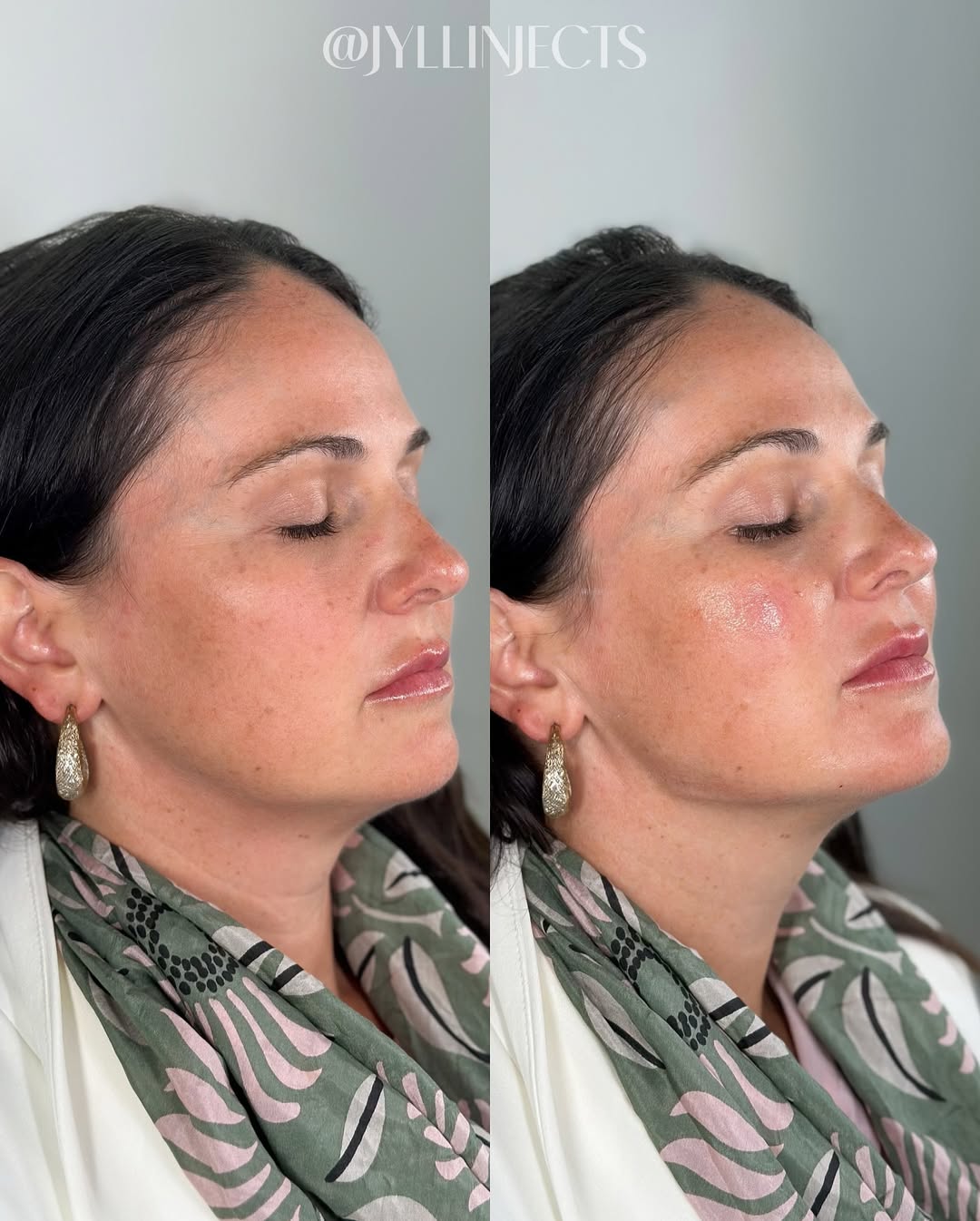
A defined, slim jawline pulls the whole face together. As we age, though, the jawbone itself can lose volume, or the tissue under the chin starts to sag, and the mandibular angle (the corner where the lower jawbone turns) softens and loses its edge. Jawline contour filler is designed to rebuild that area and re-sharpen the lower face.
Instead of surgically shaving or grafting bone, this treatment places a gel filler under the skin to add volume exactly where the jawbone should be doing the work. But simply adding volume does not automatically bring back a sharp angle. Understanding how the filler holds its ground inside the tissue explains why some fillers keep their shape for a long time while others sag within months.
Where is jawline filler placed?
Jawline filler generally addresses two spots. The first is the mandibular angle, the corner where the lower jawbone bends. Volume here gives the jawline a crisp, angular drop when viewed from the side, similar to how a coat hanger needs a defined shoulder before the rest of the line can hang straight.
The second is the stretch between the chin and the mandibular angle, where fat and ligaments weaken with age and leave a hollow. When that area caves in, the jawline looks wavy and uneven. Filling that hollow reconnects the line running from the chin all the way to the angle of the jaw into one smooth curve.
In other words, jawline filler is not about making the jaw bigger for its own sake. It is closer to restoring the volume that used to be there, just enough to reconnect the line.
G-Prime, which holds the shape
The lifting power of a filler is not just about adding bulk. What matters most is how firmly the gel holds its structure, a property called G prime (how strongly the gel resists being pressed or deformed).
A soft gel with low G prime spreads like liquid, which works well for filling round, soft areas like the cheeks. A firmer gel with high G prime holds its shape under pressure, which suits an area like the jawline that needs to sit on bone and hold a defined structure. Think of the difference between gelatin and firm clay: gelatin spreads sideways when you press it, while firm clay largely keeps the shape it was molded into even under pressure.
That is why jawline contour filler almost always uses a high G prime product. The muscles around the jaw are constantly moving from chewing, talking, and making expressions, and a soft gel would get pushed sideways by that movement, blurring the jawline instead of defining it.
How do HA and CaHA differ?
Two main ingredients are used in jawline fillers. One is HA (hyaluronic acid), and the other is CaHA (calcium hydroxylapatite).
HA is an ingredient that pulls in and holds onto water. The denser the mesh-like network inside the gel, the higher its G prime, and the more firmly it holds its shape. One of HA's biggest advantages is that it is reversible. If the result is not what you wanted, or if you feel any lumping, an enzyme called hyaluronidase can dissolve it away.
CaHA is a gel mixed with tiny particles similar in composition to what makes up our own bone and teeth. As these particles settle into place, they are reported to trigger a reaction that encourages the surrounding tissue to produce its own collagen. So on top of the immediate volume effect, your own collagen gets added into the mix over time. Unlike HA, though, CaHA cannot be dissolved with an enzyme, so it needs to be injected carefully and gradually.
Injection depth and method
Jawline filler is typically injected using a cannula (a thin tube with a blunt, rounded tip, unlike a sharp needle). Because a cannula pushes tissue aside as it moves rather than piercing through it, it carries a lower risk of damaging blood vessels than a sharp needle would.
The injection is usually placed just above the bone, in the layer between the muscle and the periosteum (the thin membrane covering the bone). Filler placed in this layer settles as if resting directly on the bone, lifting the skin and fat above it along with it. If it is placed too shallow instead, the filler can look raised or create an uneven surface.
Rather than injecting a large amount in one spot, the treatment is usually spread out in small amounts across the mandibular angle, the chin, and the line connecting them. This keeps the whole line looking natural and continuous, rather than creating an unnatural bump in just one area.
How long does jawline filler last?
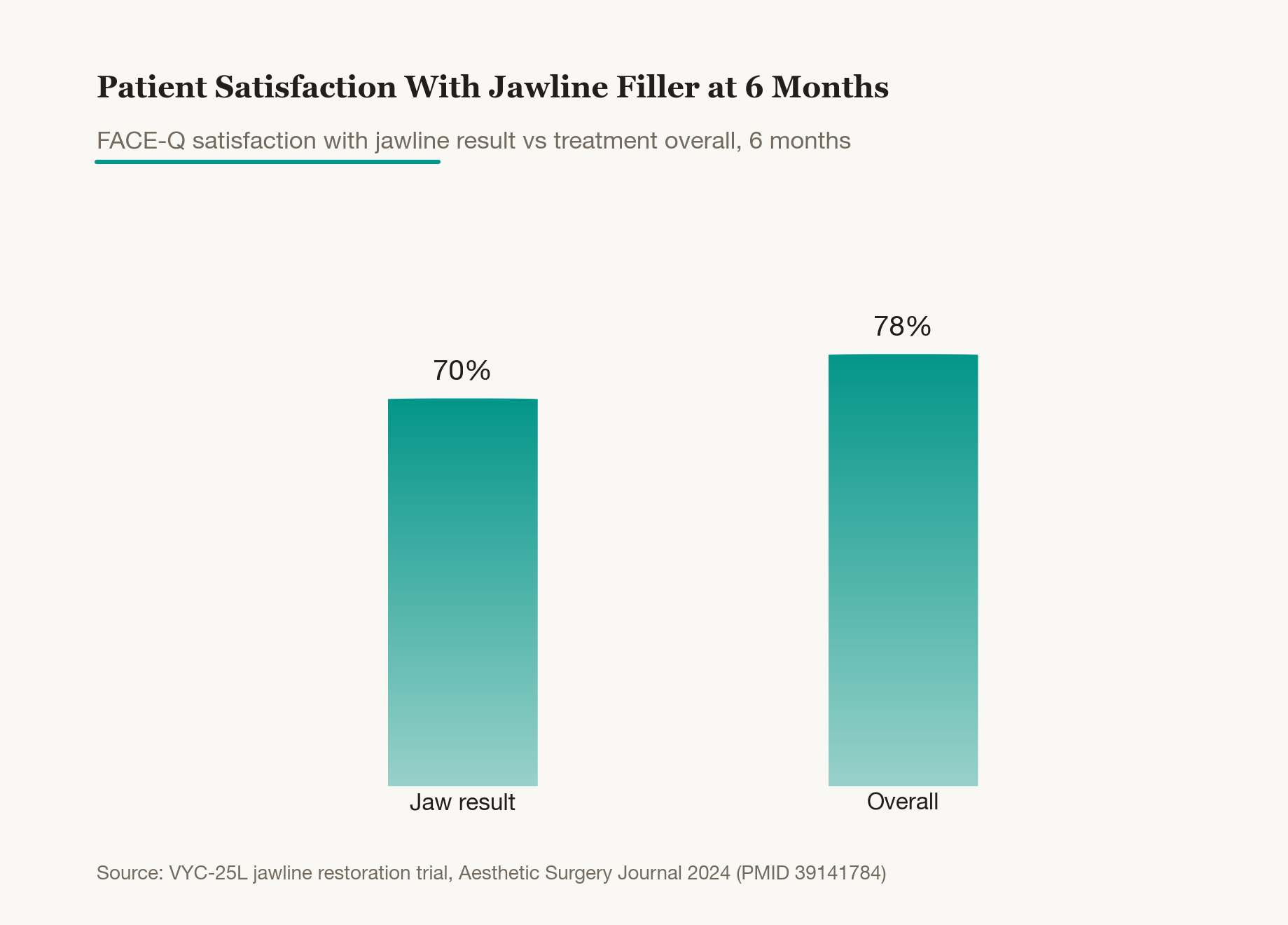
How long jawline filler lasts varies widely depending on the ingredient and the area treated, but it is generally reported to last somewhere between 6 and 12 months. This can be shorter than in areas with less movement, like the cheeks, because the jaw moves thousands of times a day from chewing and talking, which may speed up how quickly the filler shifts out of place or breaks down.
The amount injected and how deep it is placed also matter. Filler placed close to the bone, in adequate volume and the correct layer, tends to last relatively longer. Filler placed too shallow or in smaller amounts tends to get absorbed faster as it gets pushed around by tissue movement.
Because CaHA adds a collagen-stimulating effect, some improvement is reported to remain even after the filler itself has been absorbed. That said, this response varies a lot from person to person, so it is hard to put an exact number on how many extra months of benefit it provides.
When do swelling and bruising settle?
Swelling and bruising are common right after the procedure. Even with a cannula, it can still brush against a few small blood vessels along the way, so some bruising at the injection site is a normal reaction. Initial swelling usually settles within a few days, but it typically takes about 4 to 12 weeks for the tissue to fully settle into a natural-looking shape.
A few habits during this period can help recovery go smoothly.
- Avoid pressing firmly or massaging the area for the first several days. Pressure before the filler has fully settled can shift it out of place.
- Avoid saunas or steam rooms for about 1 to 2 weeks. Heat can cause tissue to swell and loosen, which may disturb the filler before it has settled.
- Avoid intense exercise or sleeping face-down early on. Repeated pressure on the face can push filler that has not yet settled off to the side.
Following these steps allows the swelling and bruising to fade naturally while the jawline gradually reveals its final shape.
Jawline filler side effects and vascular risk
The most important complication to watch for with jawline filler is a vascular issue. The facial artery and its branches run through this area, and if filler is accidentally injected into a vessel or compresses one, the skin tissue that vessel supplies can lose blood flow and develop necrosis. This is not a common complication, but when it does happen, fast response matters, which is why it is important to be treated by a practitioner who knows the anatomy of the area well.
A few other things can also come up.
- Asymmetry: Faces are never perfectly symmetrical to begin with, so even injecting the same amount on both sides can look slightly different. This usually reflects underlying differences in bone structure that were already there.
- A palpable lump: If the skin is thin or a larger amount of filler was used, you may be able to feel a firm spot when you touch the area. This often softens over time as the filler integrates with the surrounding tissue.
- Infection: Rare, but if the treated area becomes swollen, warm, or inflamed and the symptoms persist, you should see a doctor right away.
One of the biggest advantages of HA filler is that it can be reversed with hyaluronidase if something goes wrong. CaHA, on the other hand, has no reliable way to be reversed, so starting with a smaller amount and building up gradually as needed is the safer approach.
References
Korean Dermatological Association, American Academy of Dermatology (AAD), and Ministry of Food and Drug Safety (MFDS).
Was this helpful?
About this article
Written by a practising aesthetic physician and intended for general education — not a substitute for individual medical advice.
Read next
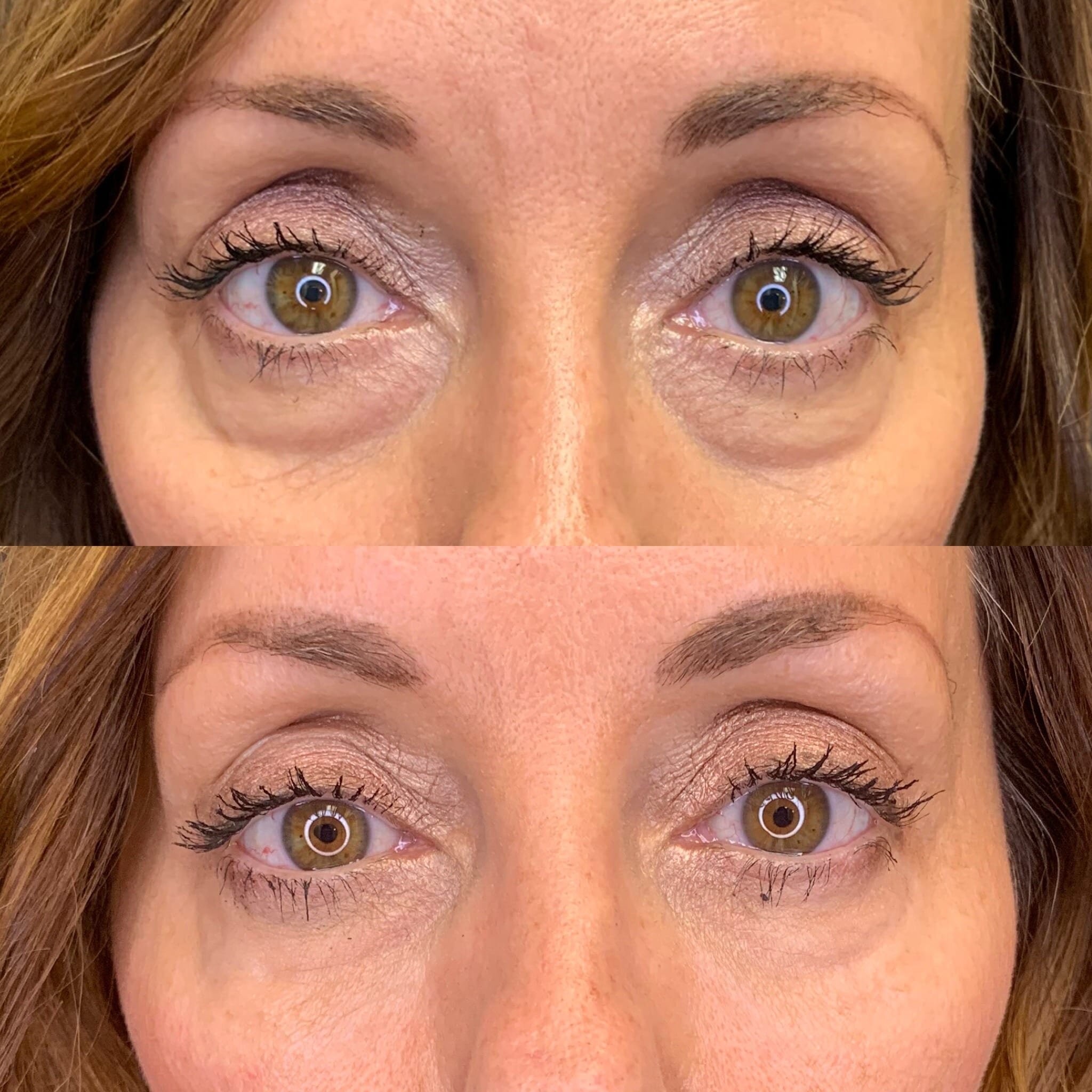
Tear Trough Filler Duration and Side Effects, Including Vessel Risks
The hollow that forms just under the under-eye fat pad, the tear trough, improves when filler physically fills that empty space. But skin and blood vessels are thin in this area, so there are separate precautions around cannula technique and the Tyndall effect. Here is how the filling works, how long results last, and what recovery looks like.
By Dr. Kim
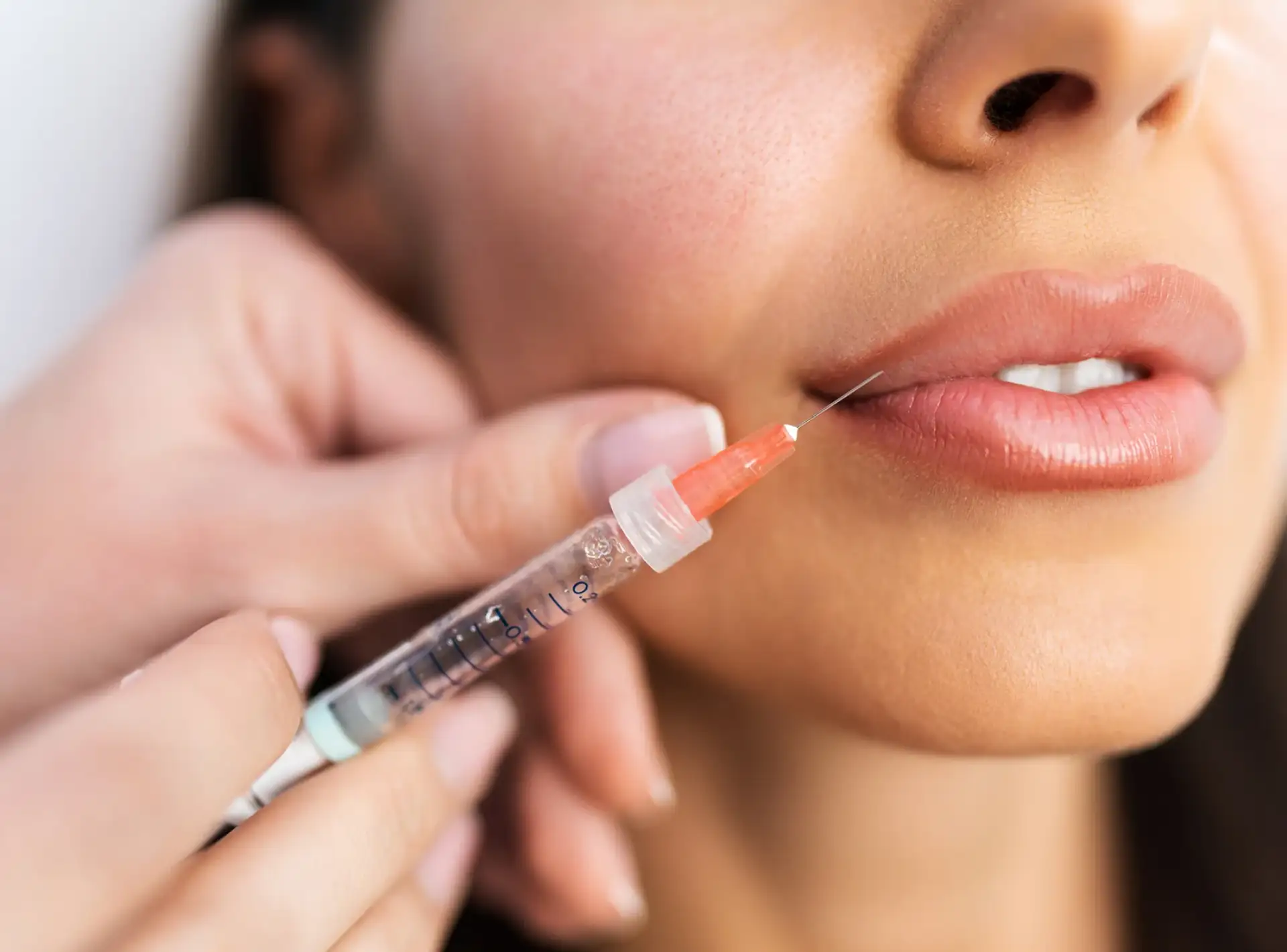
Lip Filler Duration and Side Effects, Including Aftercare
Lip volume filler works by drawing in water through hyaluronic acid as it settles into place. Because lips move more than other areas, how long results last and how recovery unfolds differ too. Here's a full rundown of the texture differences between filler types and how to care for results safely.
By Dr. Kim

Parotid Botox and Masseter Botox: Differences and Effect Compared
Parotid gland Botox injects botulinum toxin into the parotid salivary gland to shrink its volume and slim the jawline. It targets a different tissue and location than masseter Botox, which works on muscle. Here is what the evidence says about dosing, how long it lasts, and side effects like dry mouth.
By Dr. Kim