Ionzyme Treatment Principle and Ingredients Used, and When to Avoid It
By Dr. Kim7 min read
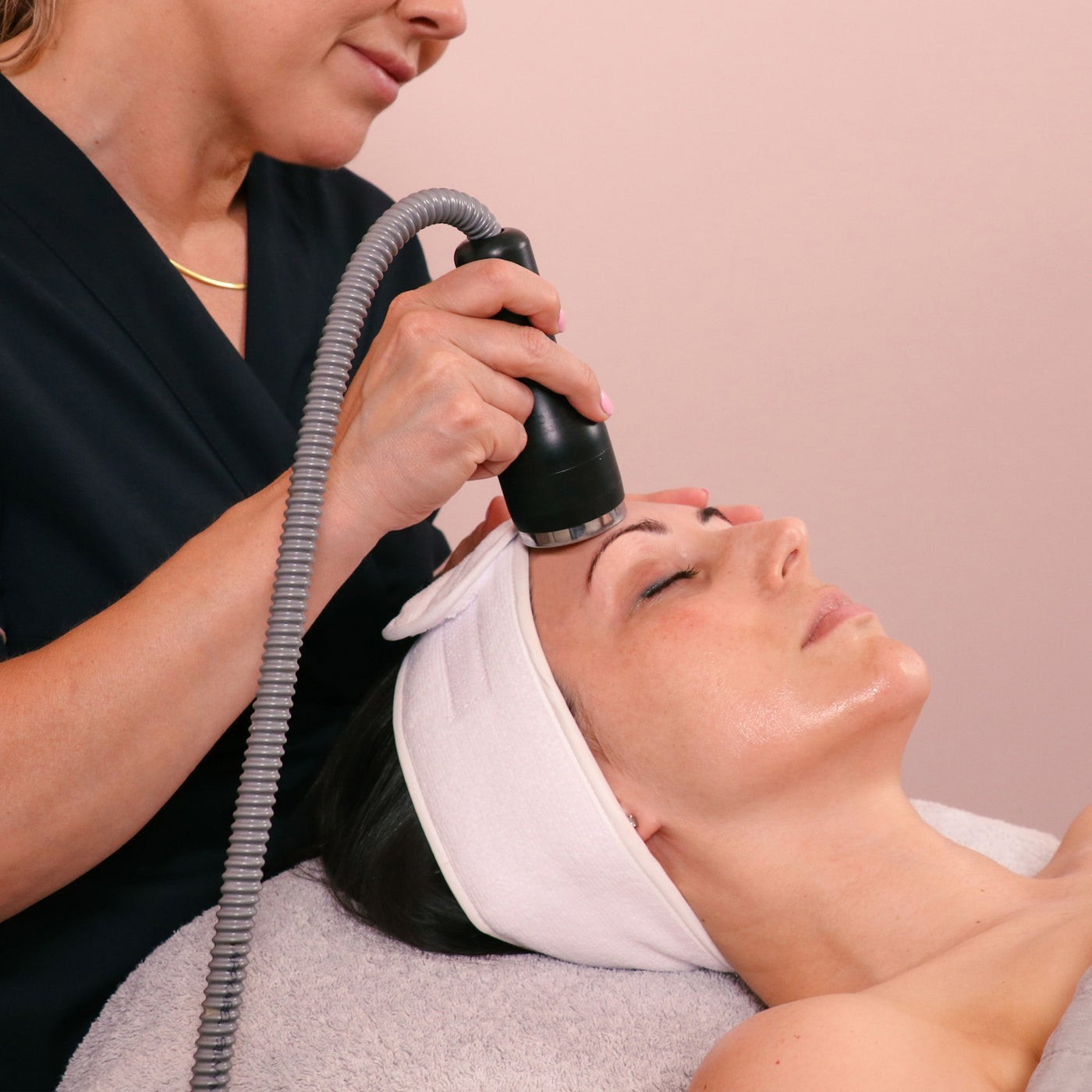
Even the best skincare product can stall right at the surface of your skin. When the outer layer is thick or sealed under a stubborn oil film, active ingredients never make it down to the dermis, they just sit on top. An ionzyme facial is built to push past that barrier using electricity and ultrasound. You will often see it offered at dermatology clinics and skin studios under names like "vitamin treatment" or "brightening treatment," yet most people who get one are not quite sure how it actually works. Here is what happens inside the skin during an ionzyme session, step by step.
What kind of treatment is Ionzyme?
Ionzyme is a skin treatment that combines iontophoresis (a mild electrical current) with low-frequency ultrasound, also called sonophoresis, to carry vitamins and other active ingredients deeper into the skin. The "ion" in the name refers to using electricity to move charged particles, while the treatment is built around activating nutrients and enzyme-driven processes in the skin.
The basic sequence is simple: first the skin is exfoliated, then electrical current and ultrasound are applied together to drive ingredients inward. When you massage a serum in by hand, most of it stops at the surface of the outer skin layer. Ionzyme adds physical force to nudge that barrier open just enough for ingredients to pass through. That is why it is so often paired with ingredients like vitamin C and AHA, which split into charged ions once they are dissolved in water.
The biggest difference from ordinary skincare is that ionzyme does not just "place" ingredients on the skin, it actively "pushes" them in. A lotion or ampoule relies on a concentration gradient and simply waits for the product to seep in on its own. Ionzyme adds outside force, electrical current and vibration, to speed up that process and pull ingredients further down. That is why it tends to come up as an option for ingredients that normally feel like they barely absorb at all.
Why is dead skin cleared before treatment?
Every ionzyme session starts with an exfoliation step. The outermost layer of skin is built like a brick wall, dead skin cells stacked between lipid layers, and its whole job is to keep outside substances from getting in.
If that wall stays fully intact, most of what you apply on top simply evaporates or gets wiped away. So a light peel or gentle exfoliation is used first to open small gaps in that brick-and-mortar structure, essentially cracking open a tiny door in the wall. Only once that gap exists do the electrical current and ultrasound that follow actually have something to work with.
How does electricity push ingredients in?
Iontophoresis runs a very mild electrical current through the skin to steer charged ingredients in a specific direction. Vitamin C and many other active ingredients pick up a positive or negative charge once they dissolve in water, and the treatment simply uses a basic rule of electricity: like charges repel, opposite charges attract.
Think of two magnets, same poles push apart, opposite poles pull together. When the device applies the same charge as the ingredient to the skin's surface, the ingredient is pushed away from that charge and moves inward instead. This is believed to carry ingredients further into the skin than manual application alone.
The current used is kept very low. Unlike the electrical stimulation used to contract muscles, iontophoresis current is only strong enough to give ions a gentle push. Most people feel a faint tingling during the session rather than any sharp discomfort. A stronger current does move ingredients faster, but it also increases irritation, so getting the strength and duration right matters.
What role does ultrasound play in absorption?
Ionzyme pairs iontophoresis with low-frequency ultrasound. Ultrasound is an extremely fast vibration you cannot see or hear, and that vibration creates tiny gaps in the lipid layer between skin cells.
When ultrasound waves travel through water, they trigger cavitation, tiny bubbles forming and then collapsing, and that force gently disturbs the lipid structure at the skin's surface. It works a bit like a washing machine shaking dust loose from the fibers of your clothes. If electricity is the force pushing ingredients forward, ultrasound is what widens the path they travel through. Both effects working together are what actually drive absorption efficiency up.
That combination is also why the two are used together rather than separately. Electrical current alone pushes ingredients through a path that is still fairly narrow, so efficiency suffers. Ultrasound alone widens the path but provides no driving force, so ingredients still have to make their own way in. Layering the two in sequence widens the road and pushes ingredients down it at the same time, completing both halves of the job together.
Which ingredients can be used?
There is no fixed list of ingredients used with ionzyme, but the ones chosen usually carry an ionic charge and offer some clear skin benefit.
- Vitamin C: Carries a charge once dissolved in water, which makes it a natural fit for iontophoresis. It is known for helping even out skin tone and, as an antioxidant, for protecting damaged cells.
- Retinol (vitamin A): Stimulates cell turnover. Its molecular weight is around 286, small enough that it already absorbs reasonably well on its own. Retinol is non-ionic, meaning it does not carry a charge even once dissolved, so the iontophoresis mechanism of pushing charged ions does not really apply to it. When retinol is used in an ionzyme session, it is really leaning on the micro-channels created by ultrasound rather than the electrical push.
- AHA (alpha hydroxy acid): A mild acid that softens and dissolves dead skin cells, which pairs naturally with the exfoliation step that opens the session. Applied once the outer layer has already been thinned, it can boost results without added irritation.
- Vitamin E, beta-carotene: Antioxidants that help protect the skin barrier, often used alongside other ingredients rather than on their own.
Because charge and molecule size vary by ingredient, the combination used should really be matched to the skin's needs. A session aimed at evening out tone might lean on vitamin C, while one aimed at texture and renewal might lean more heavily on retinol, with the exact mix adjusted to whatever concern is being treated.
Skin concerns it suits and cases to avoid
Ionzyme is commonly chosen for dull or uneven skin tone, pigmentation concerns like melasma or dark spots, and for skin that has become dry or lost some of its elasticity. Because ingredients reach below the surface rather than just sitting on top, it is often described less as a quick moisture fix and more as something that gradually improves the skin's underlying condition. Since ingredients travel deeper rather than staying on the surface, many people report that the benefits build up with consistent sessions over time.
That said, since the treatment combines electrical current with ultrasound, a few things are worth checking beforehand.
- If you have a pacemaker or another implanted electronic device: this treatment should be avoided, since it relies on electrical current.
- If you are pregnant or have significant skin wounds or inflammation: talk to your provider before booking.
- Redness or sensitivity right after treatment: this can show up temporarily right after exfoliation and typically settles down on its own.
Sun protection is worth being extra careful about afterward, since the outer skin layer is slightly thinner right after treatment and more reactive to outside irritants. How often you can repeat the treatment depends on your skin, but sessions are usually spaced a few days or more apart to give the outer layer time to rebuild.
References
Korean Dermatological Association, American Academy of Dermatology (AAD), and Ministry of Food and Drug Safety (MFDS).
Was this helpful?
About this article
Written by a practising aesthetic physician and intended for general education — not a substitute for individual medical advice.
Read next
MGF Baby Injection: How It Works, Results, and the Role of Growth Factors
The 'baby injection' treatment uses microneedling to deliver growth factors into the skin and support collagen production. One of those growth factors, MGF, is a substance the body naturally produces when tissue is damaged, carrying regeneration signals to cells. Here is how it works in the skin and how it differs from the other growth factors used alongside it.
By Dr. Lee
Filorga NCTF 135 Ingredients and the Difference From Water-Glow Injections, Including Sessions and Interval
Filorga NCTF 135 is a mesotherapy treatment that delivers vitamins, amino acids, minerals, and hyaluronic acid, dozens of ingredients in a single syringe, straight into the dermis. Here's a principle-first look at why so many ingredients are mixed together, what each one actually does in the skin, and how this differs from a classic skin booster.
By Dr. Kim

APL Slim Injection: How It Works, Treatment Areas and Reactions Afterward
APL slim injections deliver a special solution that is more diluted than body fluid directly into the fat layer, using an osmotic pressure difference to burst fat cells. It stands apart from other fat dissolving injections by containing no PPC or steroid ingredients. Here is how the mechanism works, where it is typically used, and what to expect afterward.
By Dr. Lee