InMode Forma and FX Lifting: Differences and Limits of the Effect Compared
By Dr. Lee8 min read
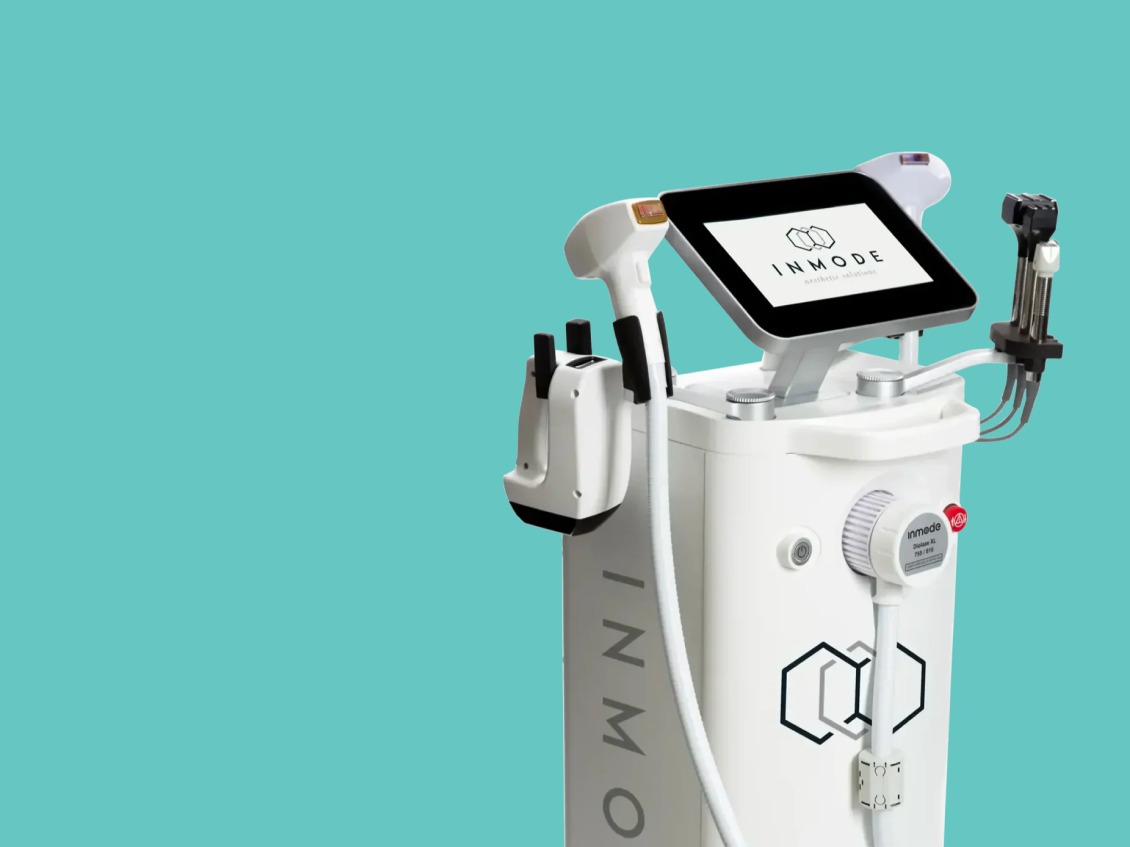
InMode keeps coming up in conversations about non-surgical face lifting, and for good reason. The pitch is compelling: radiofrequency energy tightens skin and softens jowls without needles, without real downtime, without the kind of recovery that keeps you off Zoom for a week. But InMode isn't a single treatment. It's a platform with multiple handpieces that do very different things. Forma and FX are the two most commonly combined in a non-invasive lifting package, and the confusion between them (and about what they can realistically deliver) is worth untangling.
What follows is a look at the mechanism, the clinical evidence, and the honest limitations of Forma and FX, so you can walk into a consultation knowing the difference between what's been studied and what's been assumed.
What kind of device is InMode?
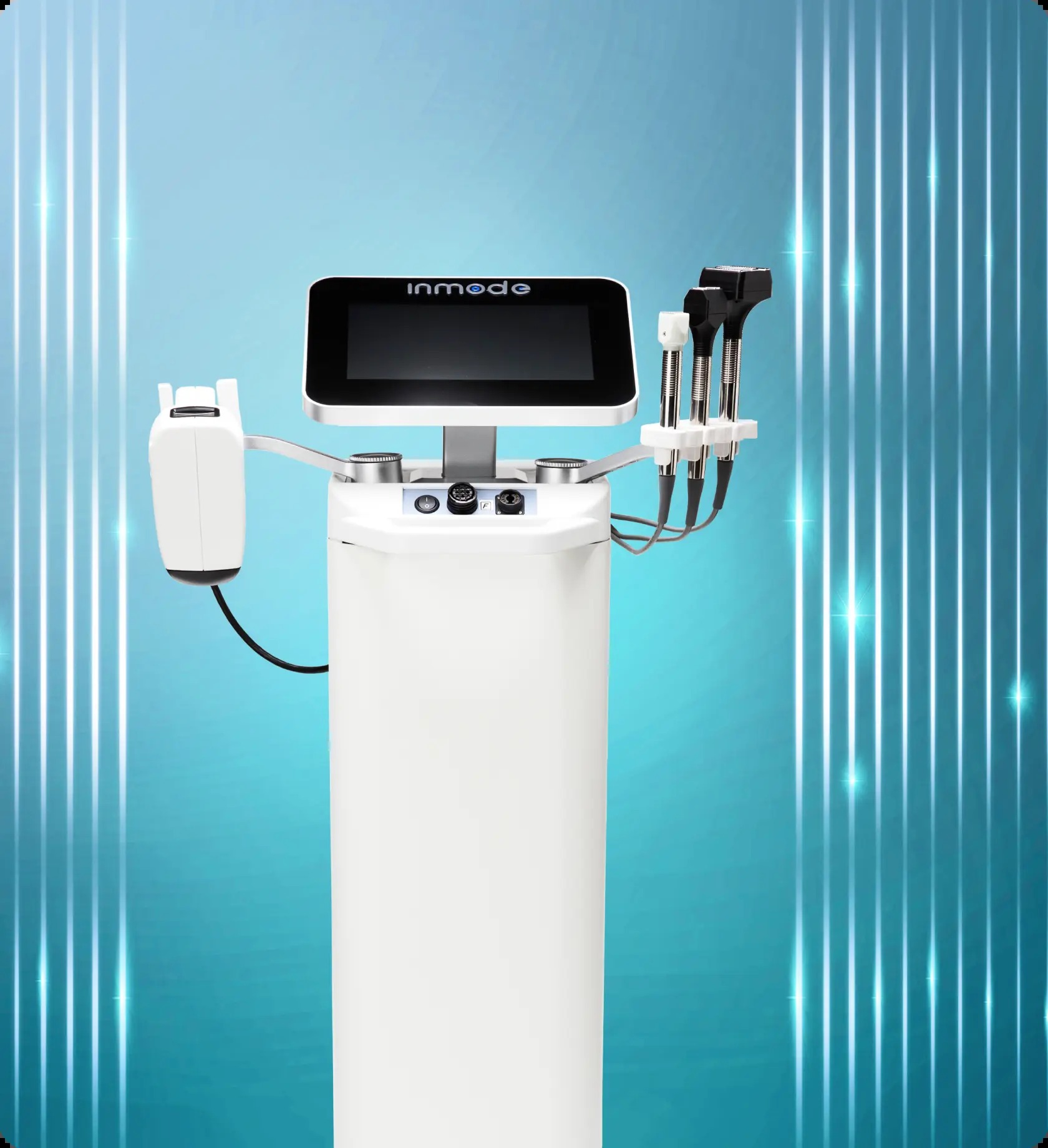
InMode is an Israeli medical device company that builds a multi-application RF platform: swap the handpiece, and you get a different treatment. When US clinics advertise "InMode lifting," they typically mean Forma and FX used together in a single session: Forma for skin firmness, FX for contouring and fat reduction. Addressing two concerns in one visit is a big part of the appeal.
Forma uses bipolar radiofrequency delivered through a gliding handpiece held directly against the skin. The target is the dermis, not the surface. The goal is to heat collagen and elastin fibers deep enough to trigger remodeling without burning the epidermis. FX adds a vacuum component: suction draws the skin up into the handpiece, pulling the subcutaneous fat layer closer to the energy source, and then delivers RF alongside short high-voltage pulses. That combination is designed to both heat and disrupt fat cells in a way standard RF alone doesn't reach as effectively.
Compared to Thermage FLX or Ultherapy, InMode sits in a lower-intensity category. Thermage delivers a single-pass, high-energy treatment that can produce meaningful tightening in one session, with significant discomfort to match. Ultherapy uses focused ultrasound to hit the SMAS layer, the same fascial plane surgeons work in during facelifts. InMode's non-invasive modes work more gradually across multiple sessions, with considerably less discomfort. The FDA has cleared these devices, but clearance means a safety threshold was met, not that the device outperforms alternatives. Worth keeping in mind.
Where do Forma and FX each act?
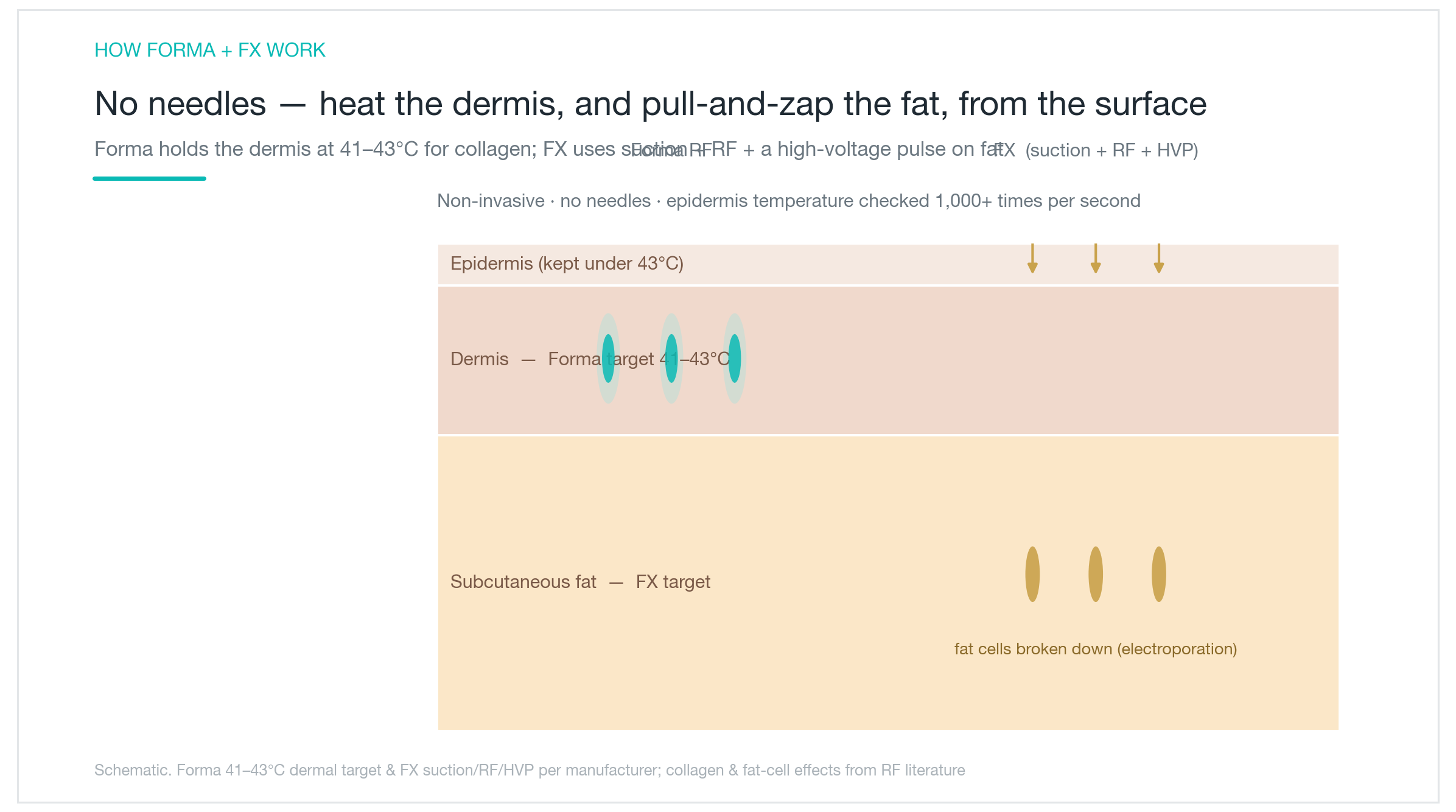
The diagram above shows how the two handpieces work at a tissue level. Forma's bipolar RF heats the dermis through the skin's surface. The meaningful range for collagen stimulation sits roughly between 41°C and 43°C, warm enough to cause immediate collagen fiber contraction and initiate remodeling, not so hot that it damages surrounding tissue. InMode's system samples skin surface temperature over a thousand times per second and adjusts output to stay within that window. That real-time feedback loop is what keeps the epidermis from overheating during the treatment. Collagen contracts immediately upon heating, then the more lasting change unfolds gradually over months as new collagen fills in and the dermis rebuilds.
FX's mechanism is more involved. Vacuum suction draws the skin and underlying fat upward into the handpiece, physically bringing the subcutaneous fat layer closer to the RF source. The device then delivers RF heating alongside brief, high-voltage electrical pulses. Those pulses create the electroporation component: transient pores open in fat cell membranes, which the manufacturer states leads to meaningful fat cell death over time. The principle is scientifically real; electroporation is a well-studied phenomenon. How consistently it plays out on the face across a general patient population is a separate question.
Two things are worth being clear about. The underlying principles (collagen stimulation via controlled dermis heating, and fat disruption via RF plus electroporation) are biologically sound and aren't invented for marketing. But the specific figures and percentages cited in promotional materials come largely from manufacturer-conducted data, not independent peer-reviewed trials. The step from "this mechanism exists" to "you'll see X result on your face" still needs population-level clinical evidence to close.
How does treatment differ by handpiece?
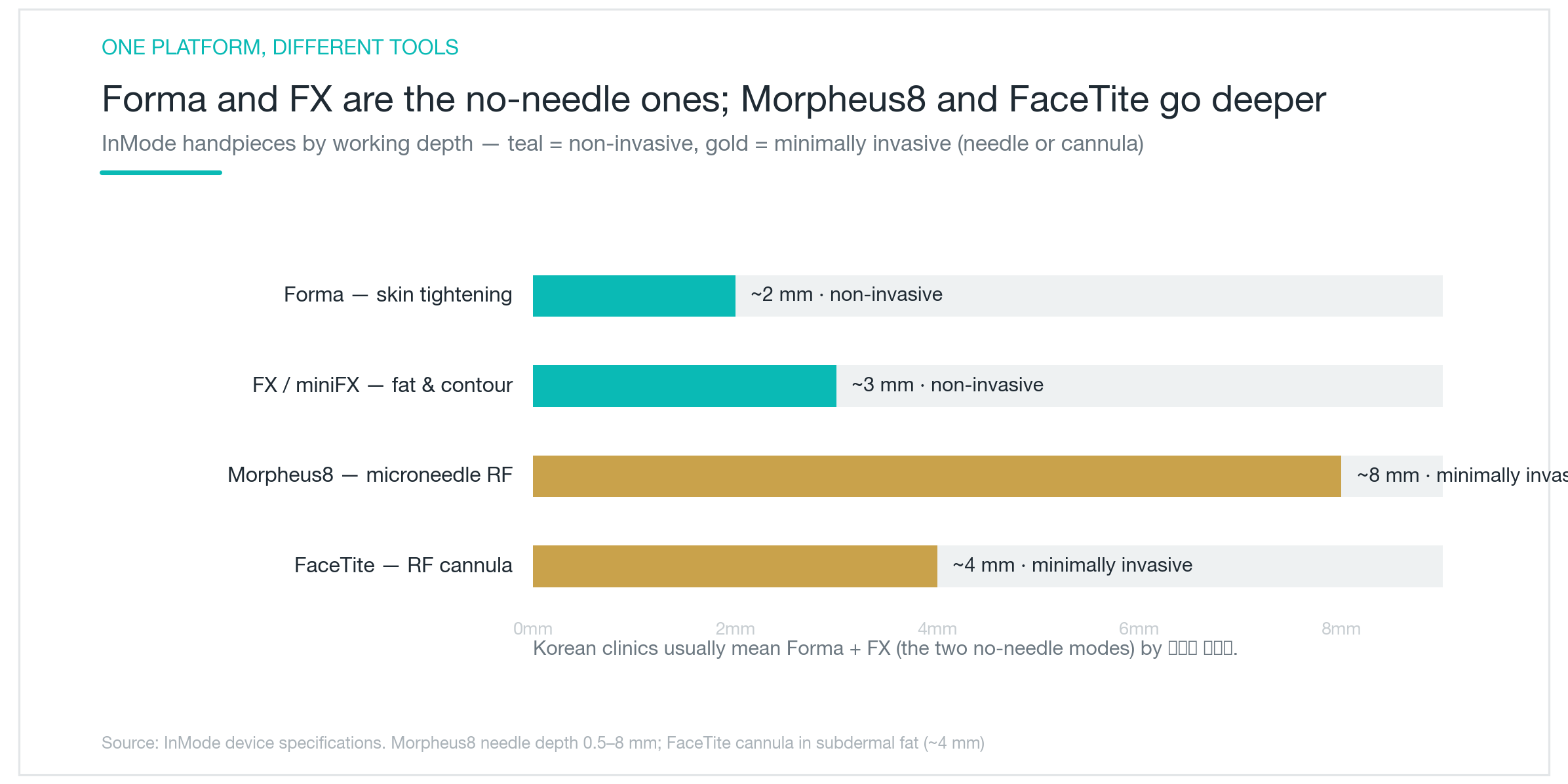
This is where most of the confusion lives. InMode markets multiple handpieces under one brand name, and they operate at completely different invasiveness levels. Forma and FX are surface-only treatments: no needles, no incisions, genuinely non-invasive. Morpheus8, which is probably InMode's most searched treatment in the US right now, is RF microneedling: tiny needles punch 0.5 to 8 millimeters into the skin to deliver energy much closer to the target tissue. FaceTite is a different category entirely: a thin cannula inserted beneath the skin to melt fat and tighten from the inside, requiring local anesthesia and carrying real recovery time.
Morpheus8 in particular has built enormous name recognition in the US aesthetics market, which sometimes bleeds into how people perceive the InMode brand overall. The results attributed to Morpheus8, including some fairly dramatic before-and-afters, don't apply to Forma and FX. Same company, fundamentally different mechanism and tissue depth.
This matters practically. Before booking any InMode appointment, ask specifically which handpiece. Under one brand name you'll find everything from a warm, painless session to a procedure that leaves you swollen and flaking for a week. If the before-and-after photos in the clinic or on Instagram showed significant tightening, it's worth asking whether those results came from Forma and FX or from Morpheus8 or FaceTite. Different treatments, different expectations. This article is about Forma and FX, the non-invasive pair.
Clinical evidence for InMode's effect
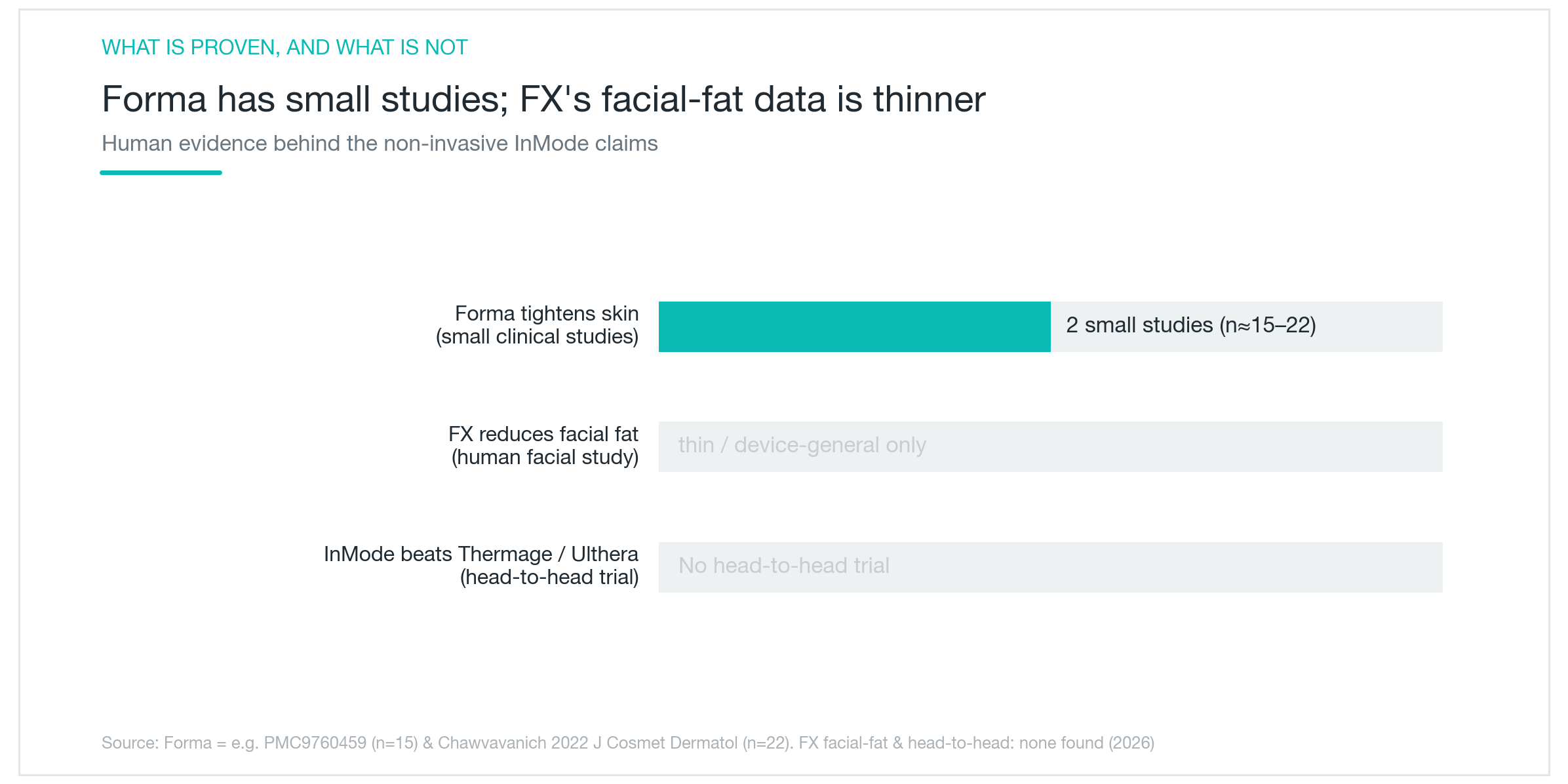
Non-invasive RF skin tightening as a category has a real evidence base. The physics are sound, and multiple RF device families, not just InMode, have published clinical data showing measurable dermal changes. For Forma specifically, small clinical trials do exist. One study found all participants showed measurable skin improvement post-treatment. Another examining submental laxity, the zone under the chin and along the jawline where most patients first notice sagging, showed meaningful improvement in skin elasticity scores and some fat reduction after a series of sessions. Those outcomes are consistent with how controlled dermis heating and collagen remodeling are supposed to work.
The honest limitations: Forma studies tend to run with ten to twenty participants, no control group, and often rely on physician grading or patient-reported satisfaction rather than objective tissue measurements. That's not useless information, but it doesn't let you say with confidence how large the effect is across a general population. For FX specifically (the fat-reduction, contouring piece), the dedicated facial clinical evidence is thinner than Forma's. Much of the supporting data comes from body applications like the abdomen and flanks, or from manufacturer-conducted studies. And there are no published head-to-head trials comparing InMode Forma and FX against Thermage FLX, Ultherapy, or Sofwave in the same patient cohort. Any claim that one device beats another is extrapolation, not evidence.
The reasonable takeaway: Forma and FX sit on legitimate scientific footing as non-invasive RF treatments. The results are real but gradual and modest, measurably better skin texture and firmness, a lighter refinement along the jawline, not a surgical-level repositioning of tissue. Multiple sessions are the expectation, not the exception. Provider skill is another variable that rarely gets enough attention: device settings, technique, and reading the anatomy all influence outcomes with any RF platform, and the same device in different hands produces noticeably different results.
Advantages and limits of InMode
The strongest argument for Forma and FX is exactly what it sounds like: minimal discomfort, no real downtime. Forma genuinely feels like a warm, gliding massage. The continuous surface temperature monitoring keeps the treatment below any threshold where it feels alarming, and topical anesthetic isn't required the way it is with Morpheus8 or a Thermage session. Post-treatment redness is common and typically resolves within a few hours. You can cleanse, apply makeup, and go about your day immediately. FX occasionally produces light bruising from the suction, nothing dramatic, nothing that requires scheduling around social events.
The tradeoffs are real, though. Because the energy delivery is gentler than high-intensity alternatives, Forma is recommended as a series of sessions rather than a single treatment. Effects build gradually over time and don't hold permanently; maintenance sessions are the practical reality for anyone who wants to sustain results. And for patients with significant facial laxity, visible jowling, a truly descended lower face, or substantial skin redundancy, non-invasive RF has a ceiling. If the outcome you're picturing looks like a facelift, Forma and FX won't get you there. Thread lifts, Ultherapy, Sofwave, or a surgical consultation is the more realistic conversation to have.
Where Forma and FX genuinely fit: patients in their late 30s to early 50s with early-to-moderate skin laxity who want to maintain what they have and see gradual improvement without scheduling around bruising or swelling. It's a reasonable entry point into RF skin tightening, particularly for someone building a longer-term approach to skin quality rather than chasing a single dramatic result. The commitment is a course of sessions; the payoff is incremental firmness and a slightly cleaner jawline over time. That's a legitimate outcome, as long as the expectation is set there from the beginning. InMode at its best is a slow, consistent refinement rather than a transformation.
Was this helpful?
About this article
Written by a practising aesthetic physician and intended for general education — not a substitute for individual medical advice.
Read next
Titanium Lifting Effect and Limits, and How It Differs From Ultherapy and Thermage
What Soprano Titanium's triple-wavelength diode laser actually does for skin laxity, texture, and tone, with a clear-eyed look at the clinical evidence and its real limitations.
By Dr. Lee
Emface Lifting Effect and Wrinkle Improvement, Including Number of Sessions
Here is what EMFACE actually does, how HIFES and synchronized RF work on facial muscles and skin at the same time, and how far the wrinkle and lifting results hold up under real research. We also look at how it differs from surgical facelifts and who tends to suit it best.
By Dr. Kim

Apogee Plus Hair Removal: Effects, Sessions and Precautions by Skin Tone
A clear-eyed look at Apogee+ laser hair removal, how the alexandrite 755nm wavelength targets follicles, what clinical studies actually show, how many sessions to expect, whether it treats pigmentation, and who it works best for across all skin types.
By Dr. Lee