Hyaluronidase Effects and How It Works, Including Allergy and Swelling Duration
By Dr. Kim6 min read
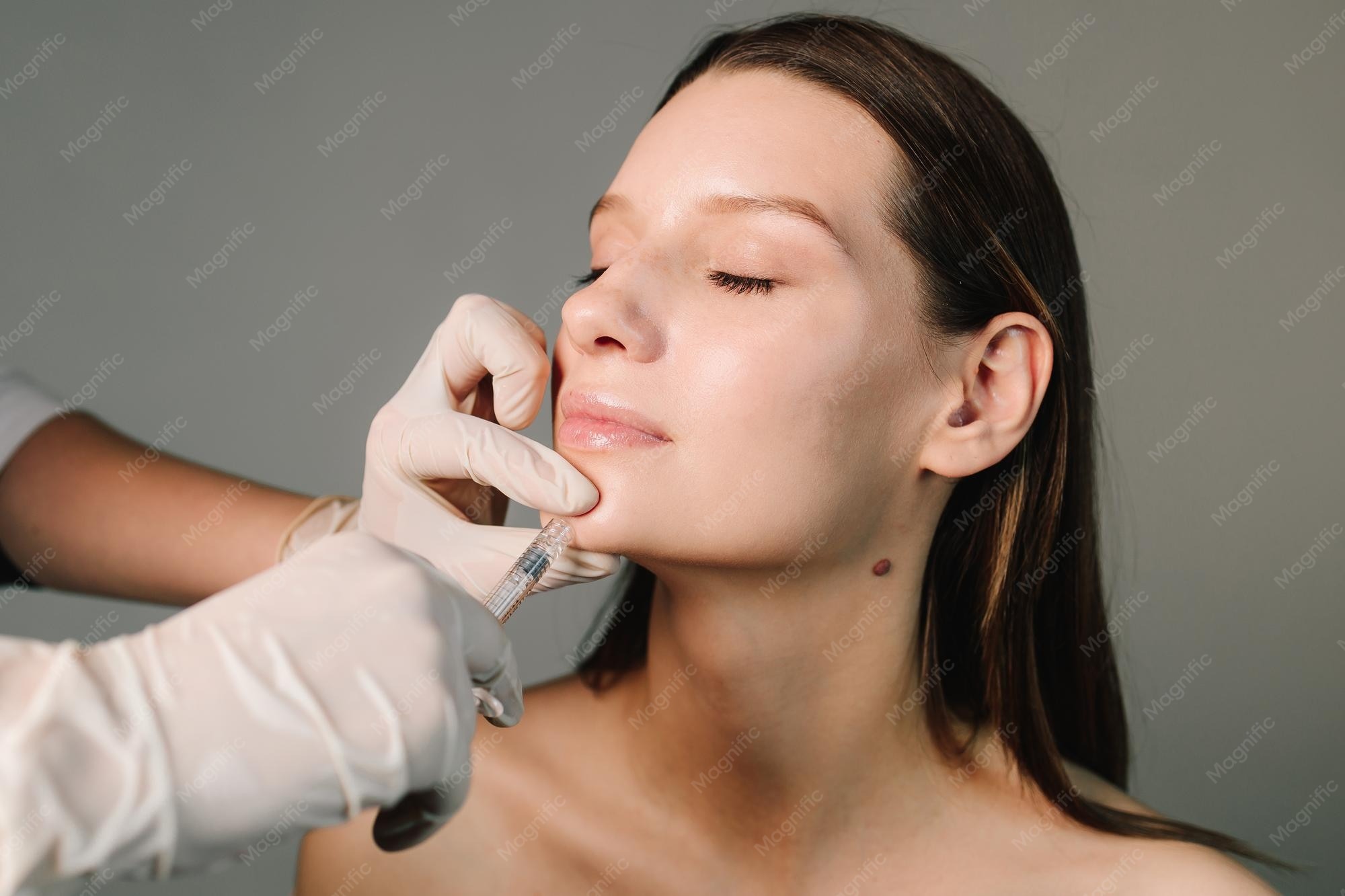
If a filler didn't come out the way you hoped, one side looks noticeably more swollen than the other, or, in a rare but serious case, a blood vessel gets blocked, your doctor will reach for an injection called hyaluronidase. The name sounds intimidating, but what it does is simple. It's an enzyme that seeks out and breaks down hyaluronic acid (HA), the main ingredient in most fillers, and nothing else.
Understanding how it works makes it obvious why this injection is such a big deal. Once you see the shape hyaluronic acid takes inside the body, and how hyaluronidase cuts through that structure, it starts to make sense why the same enzyme doubles as a lifesaving treatment in an emergency, and why it leaves the rest of your tissue completely alone.
Can filler be reversed?
Once filler is injected, it stays put until the body slowly absorbs it on its own. But if the result looks overdone, comes out uneven, forms a lump, or, worse, presses on a blood vessel and cuts off circulation, there's no time to just wait it out. That's where hyaluronidase comes in: a fast way to reverse a filler when you actually need to.
Most fillers on the market today are built on a hyaluronic acid base. That means this one enzyme can handle the vast majority of fillers, whatever the brand. Fillers made from other materials won't respond to it at all, though, so it matters a lot that your doctor knows exactly what was injected before treatment begins.
Seen this way, hyaluronidase isn't just an eraser for a result you don't love. It's a safety net that makes the whole idea of getting filler feel a lot less risky. Knowing there's a way to undo it is what lowers the barrier to trying it in the first place.
How does hyaluronidase dissolve filler?
Hyaluronic acid is a polysaccharide, a long chain built from small sugar molecules linked together over and over. Picture a long necklace strung tightly with tiny beads. To keep filler in place and stop it from dispersing too fast, manufacturers link these chains together even more tightly through a process called cross-linking, turning the material into a gel.
Hyaluronidase works like a pair of scissors that only cuts at specific points along that chain. Once the chain is sliced into short pieces, the gel loses its structure and turns into a thin, liquid-like substance. Those smaller fragments then get swept up into the lymphatic system and bloodstream, where the body absorbs them naturally. That's why filler dissolved this way disappears so much faster, and so much more visibly, than it would through any other route.
Emergency treatment when a vessel is blocked
In rare cases, filler can end up directly inside a blood vessel, or press on one hard enough to cut off blood flow. When that happens, the skin or tissue that vessel supplies loses its oxygen and nutrients. If it goes on too long, the tissue can die from lack of blood supply, a condition called necrosis.
In this kind of situation, doctors inject a large dose of hyaluronidase around the affected area right away. The goal is to break down the hyaluronic acid that's blocking or compressing the vessel on the spot, so blood flow can get moving again. Because every minute counts, many clinics keep hyaluronidase on hand specifically to be ready for this.
Is my own skin tissue safe?
Hyaluronidase isn't an enzyme that dissolves whatever tissue it happens to touch. It recognizes one specific chain structure, hyaluronic acid, the way a key fits one particular lock, and cuts only there. Collagen, muscle, and the proteins that make up your blood vessel walls are all chemically different from hyaluronic acid, so the enzyme simply doesn't recognize them as a target. That's why only the filler dissolves, while your own skin tissue stays exactly as it was.
That said, your skin does naturally contain a small amount of hyaluronic acid of its own. So while the filler is being broken down, a tiny bit of that natural HA can get caught up in the process too. The body keeps making hyaluronic acid on its own, though, and it's reported to return to its original level after about 2 to 4 weeks.
Time to dissolve and repeat injections
Most people notice a change within 24 hours of the injection, and the full effect is known to build gradually over 48 to 72 hours. The enzyme itself breaks down quickly in the body and clears out within 24 to 48 hours. After that, whatever's already been dissolved stays dissolved. No new enzyme activity continues once it's gone.
Depending on the area and how much filler is involved, one injection isn't always enough to dissolve everything. In that case, repeat sessions spaced 1 to 2 weeks apart are usually needed to get the full result you're after. Rather than pushing a large dose all at once, doctors generally prefer spacing things out and adjusting based on how it looks along the way. Older filler that's already hardened can be trickier too, sometimes breaking down gradually over 2 to 3 sessions instead of dissolving all at once, with the next appointment planned around how the last one went.
Is there an allergic reaction?
Hyaluronidase is typically derived from animal tissue, usually from cows or sheep. Because of that, a small number of people can have an allergic reaction to the protein itself.
- Redness and hives: localized redness and itching can show up right after the injection. This is a mild immune response to a protein the body doesn't recognize, and it usually settles down on its own.
- A temporary spike in swelling and pain: as the filler breaks down quickly, it can trigger a short-lived surge in local inflammation. This is a natural response to tissue suddenly being rearranged.
- Anaphylaxis: extremely rare, but a severe, whole-body allergic reaction is possible. It tends to happen in people whose immune systems react strongly to animal-derived proteins, which is why some doctors run a small skin test beforehand.
Swelling and recovery after treatment
Mild swelling and a bit of bruising are common right after treatment and usually settle within 3 to 7 days. As the volume in the treated area gradually goes down, your face returns to its original contour.
Because this procedure only removes the filler material and doesn't cut or disturb the surrounding tissue, recovery tends to happen without scarring or major damage. If you'd like, the area can be refilled with new filler about 2 to 4 weeks later.
What to tell your doctor before the injection
- Tell your doctor exactly what filler you got, and when and where: the type of filler and where it was placed determine how much hyaluronidase is needed and how widely it should be injected.
- Mention any allergy history: if you're allergic to animal-derived proteins, your doctor may want to run a test first or discuss a different approach.
- Let your doctor know if you're pregnant or breastfeeding: safety data for this period is limited, so extra caution is needed.
- Choose a clinic equipped to handle emergencies: this matters in case of a vascular complication that needs an immediate response.
Hyaluronidase takes a lot of the pressure off getting filler done in the first place. Knowing there's a way back makes the whole decision feel a lot lighter.
References
Korean Dermatological Association, Ministry of Food and Drug Safety (MFDS), American Academy of Dermatology (AAD), and U.S. Food and Drug Administration (FDA).
Was this helpful?
About this article
Written by a practising aesthetic physician and intended for general education — not a substitute for individual medical advice.
Read next

Hyaluronidase Effects and Dose, Side Effects, and Fillers That Don't Dissolve
Hyaluronidase is the enzyme that dissolves HA filler. This covers the four main situations where it's used, lumps, Tyndall effect, overfill, and vascular occlusion emergencies, along with how doses work in vials, allergy risk, and when it's safe to resume filler.
By Dr. Lee
Getting Filler for the First Time: Duration, Side Effects, and Precautions
The questions people ask most before their first filler treatment, answered in order. How hyaluronic acid adds volume, how long it lasts and how much it hurts, why vascular complications are dangerous and whether they can be reversed, how filler differs from Botox, and what to watch for before and after.
By Dr. Lee
HIFU Lifting Effects and How It Works, Including Sessions and Duration
Here's why HIFU lifting targets a deeper layer called the SMAS rather than the surface of your skin, starting with how focused ultrasound converges at a single point. We break down the two stages: the immediate tightness you feel right after treatment, and the collagen that builds gradually over 4 weeks to 6 months.
By Dr. Lee