Ultherapy, Shurink, Sofwave, and Linear Z: Differences and Effects Compared
By Dr. Kim8 min read
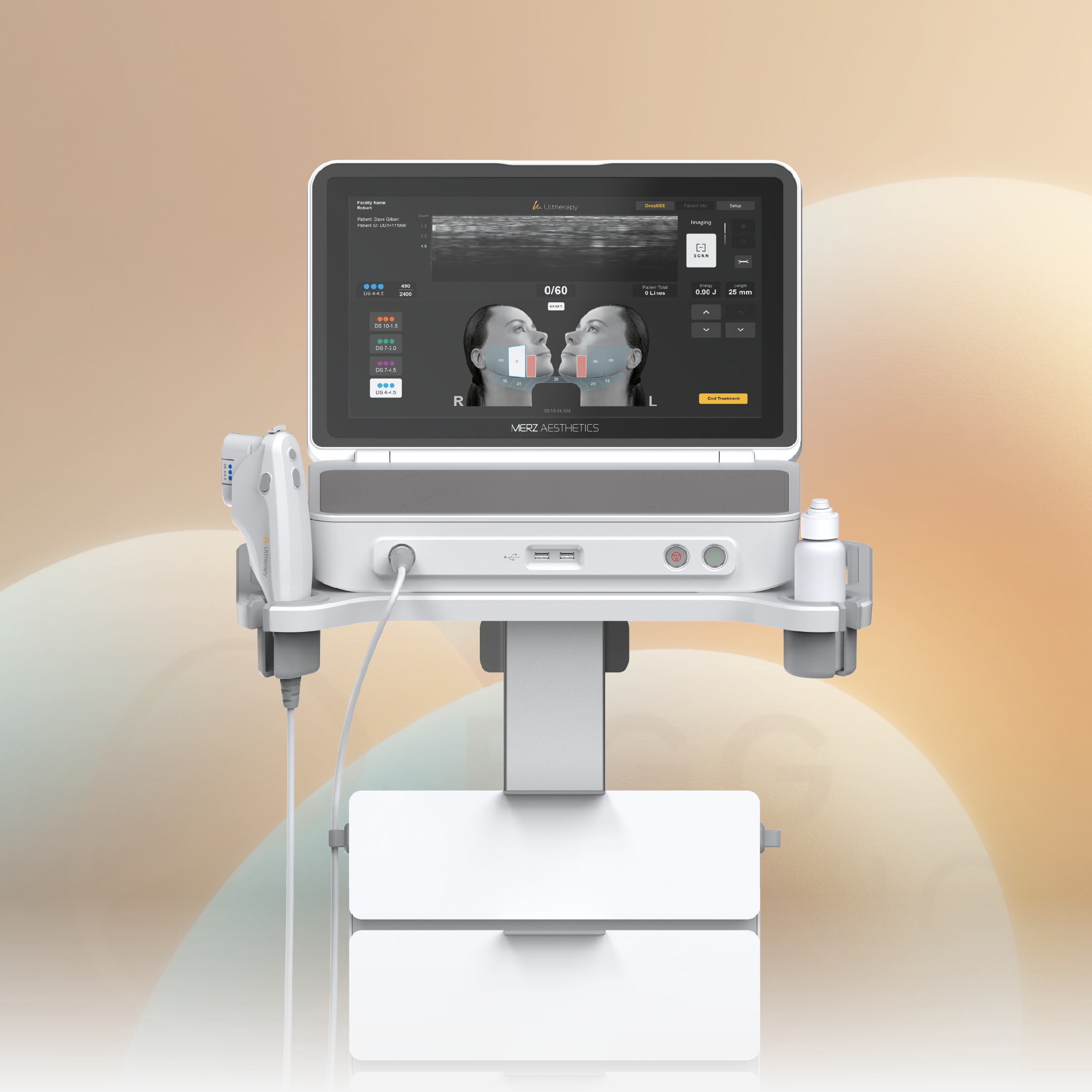
When you start researching non-surgical face lifting, names like Ultherapy, Shurink, Sofwave, and Linear Z come up constantly. They're all described as ultrasound lifting treatments, yet prices can vary several-fold and every clinic seems to recommend something different.
All four devices share the same basic principle: focused ultrasound energy heats a targeted depth in the skin to stimulate collagen production. But they differ significantly in how deep they reach, how they fire, whether real-time imaging is available, and how much clinical data backs them up. Sofwave in particular targets a completely different skin layer from the other three. Here is a clear-eyed look at how each device works, what depth actually means for outcomes, what the clinical evidence shows, and how to decide.
How does HIFU lifting work?
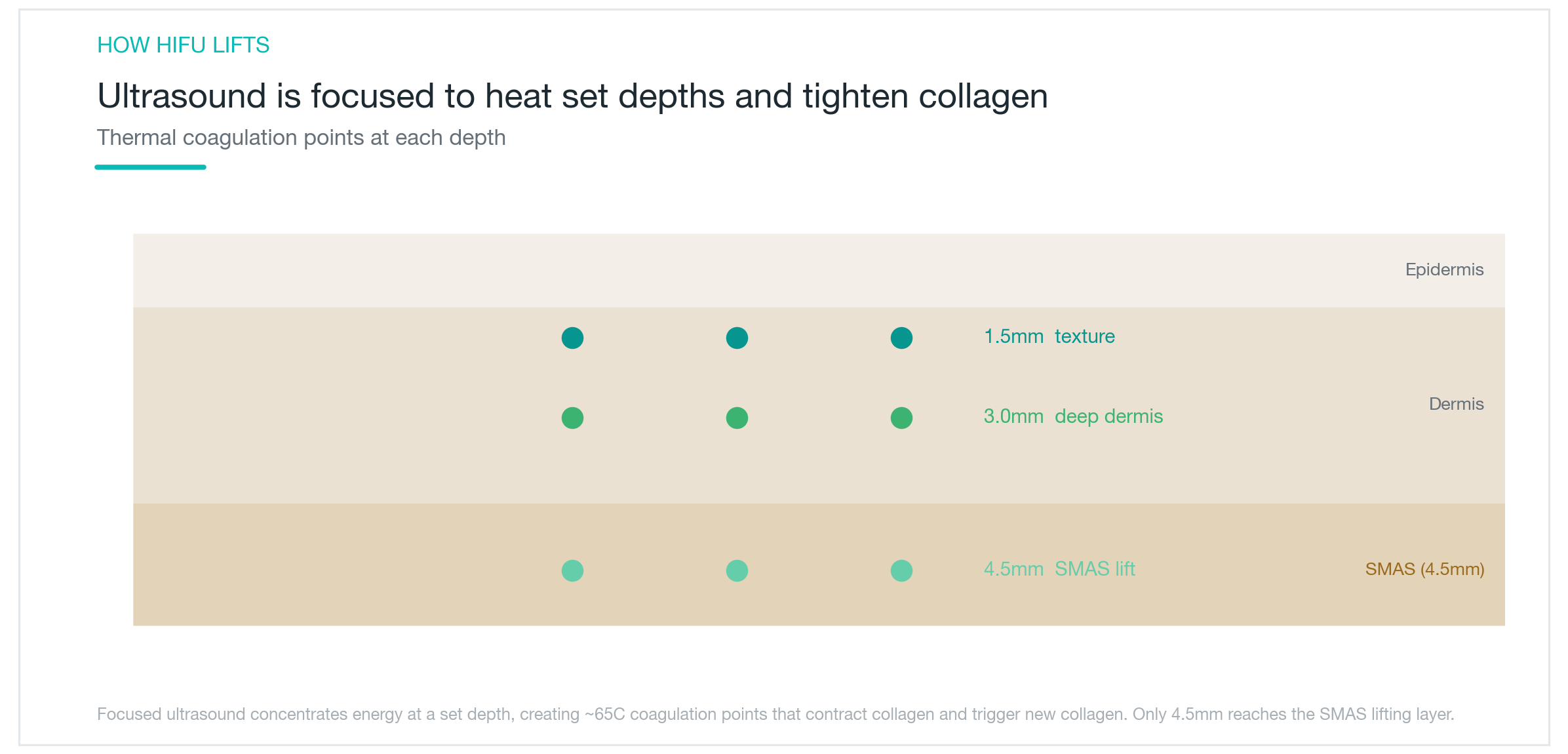
HIFU focuses ultrasound waves at a precise point inside the skin. Just as a magnifying glass concentrates sunlight, the focused energy raises the temperature at the target depth to around 65°C, creating small thermal coagulation zones. This triggers immediate collagen contraction, followed by gradual new collagen production over the next several months, progressively firming the skin.
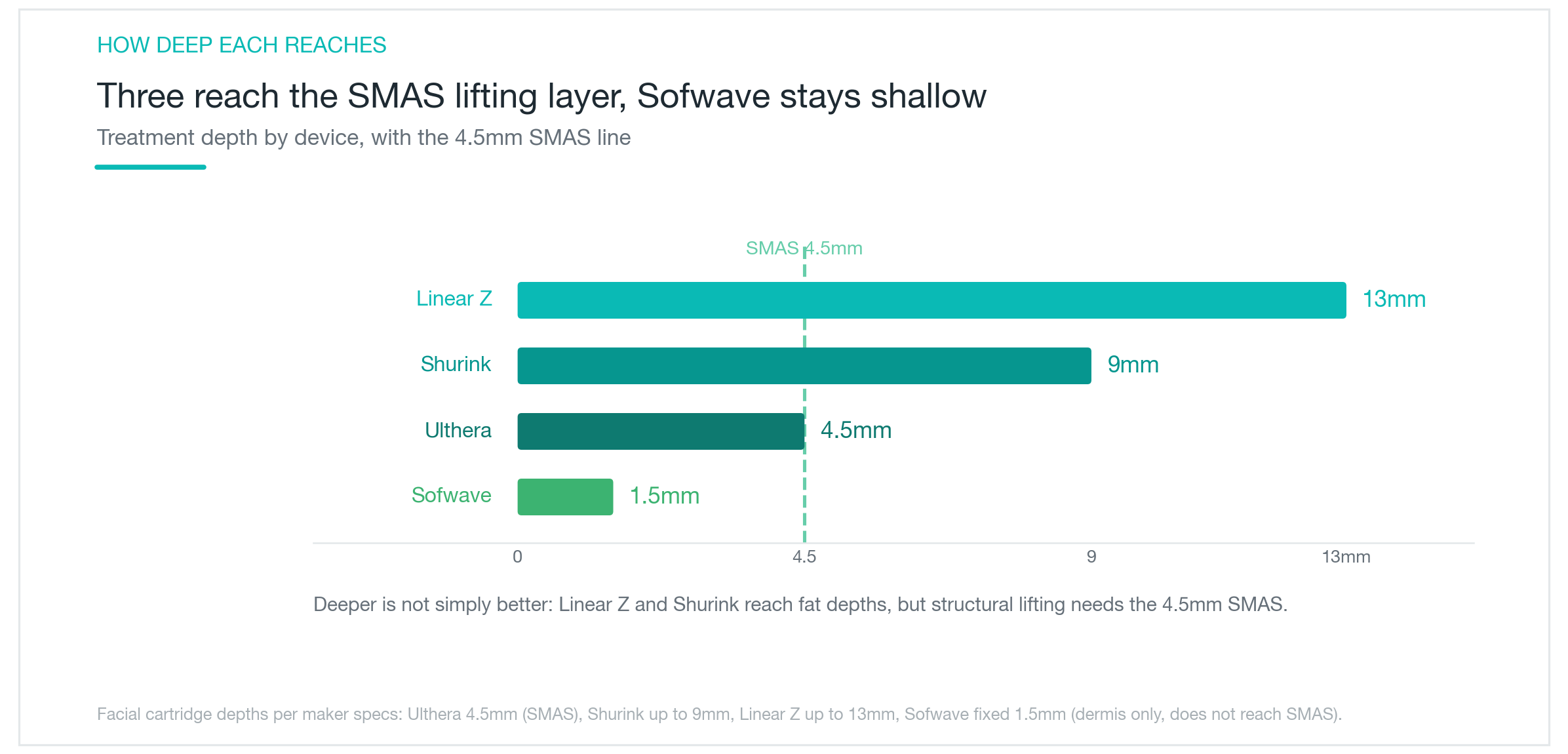
Depth is the key variable. At 4.5mm, the energy reaches the SMAS, the muscular fascia that plastic surgeons physically tighten during a facelift. Stimulating this layer produces structural lifting. At 3.0mm, the device works in the deep dermis, while at 1.5mm it targets the mid-dermis, addressing skin texture and fine lines.
This is why depth matters when comparing HIFU devices. Correcting visible sagging requires reaching the SMAS. Improving surface texture and elasticity alone can be achieved at shallower depths. The most important differences between these four devices come down to exactly this: depth and firing mechanism. Before asking which device is best, it is worth deciding whether your goal is structural lifting or texture refinement.
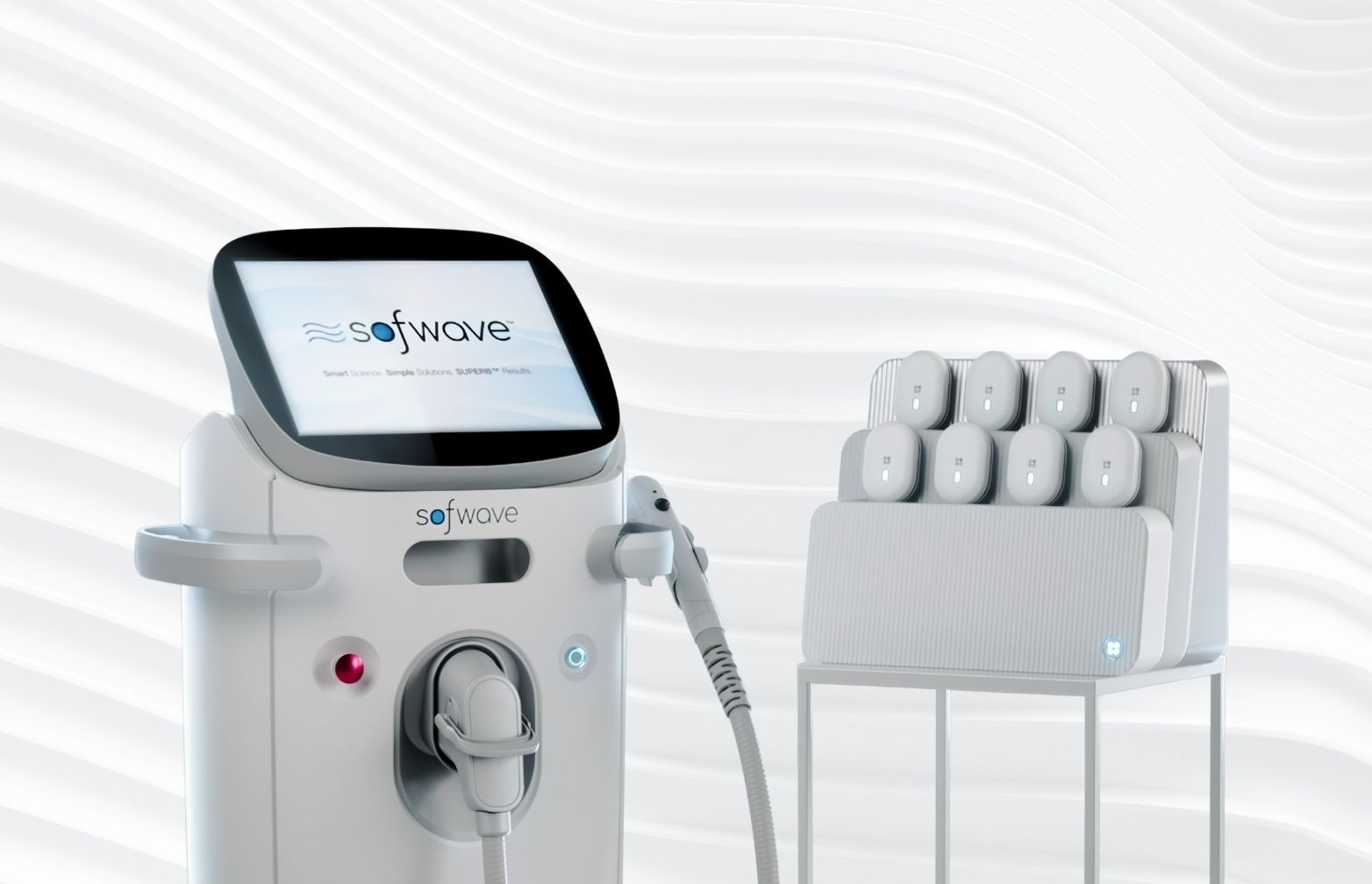
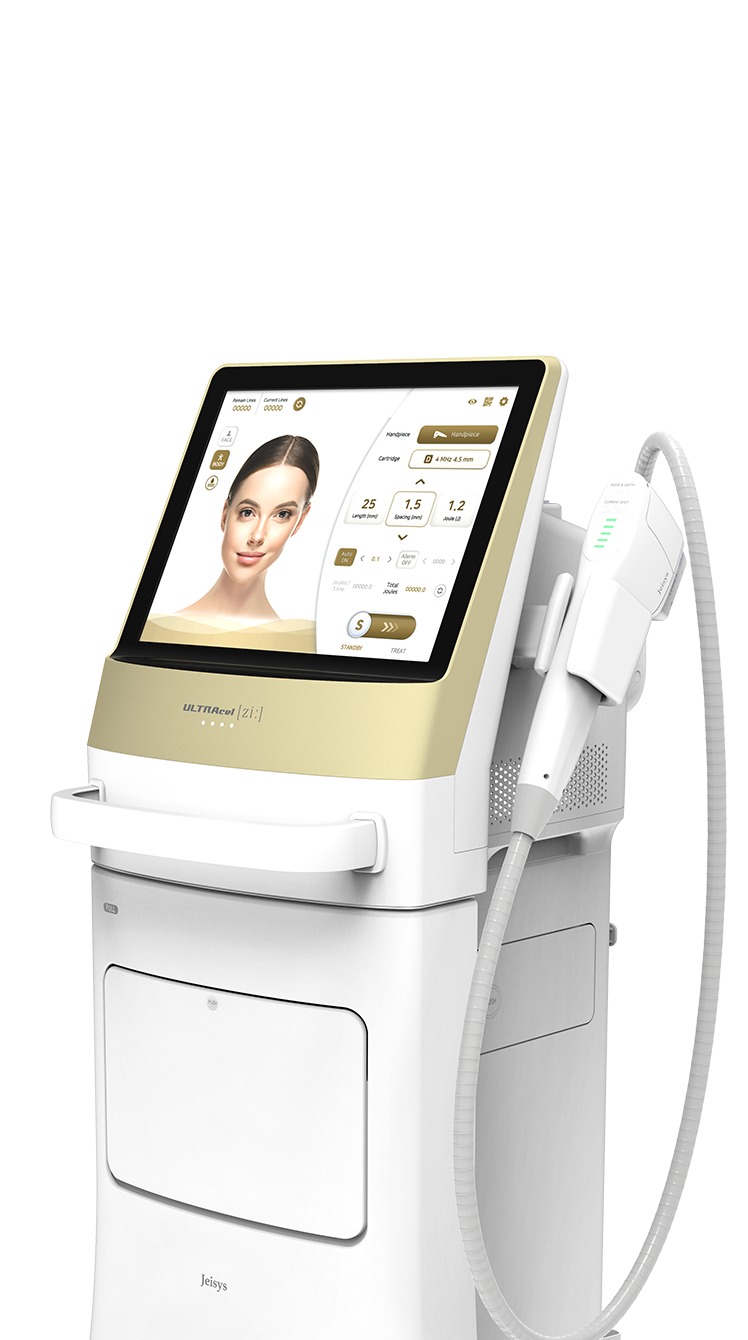
Differences between Ultherapy, Shurink, Linear Z, and Sofwave
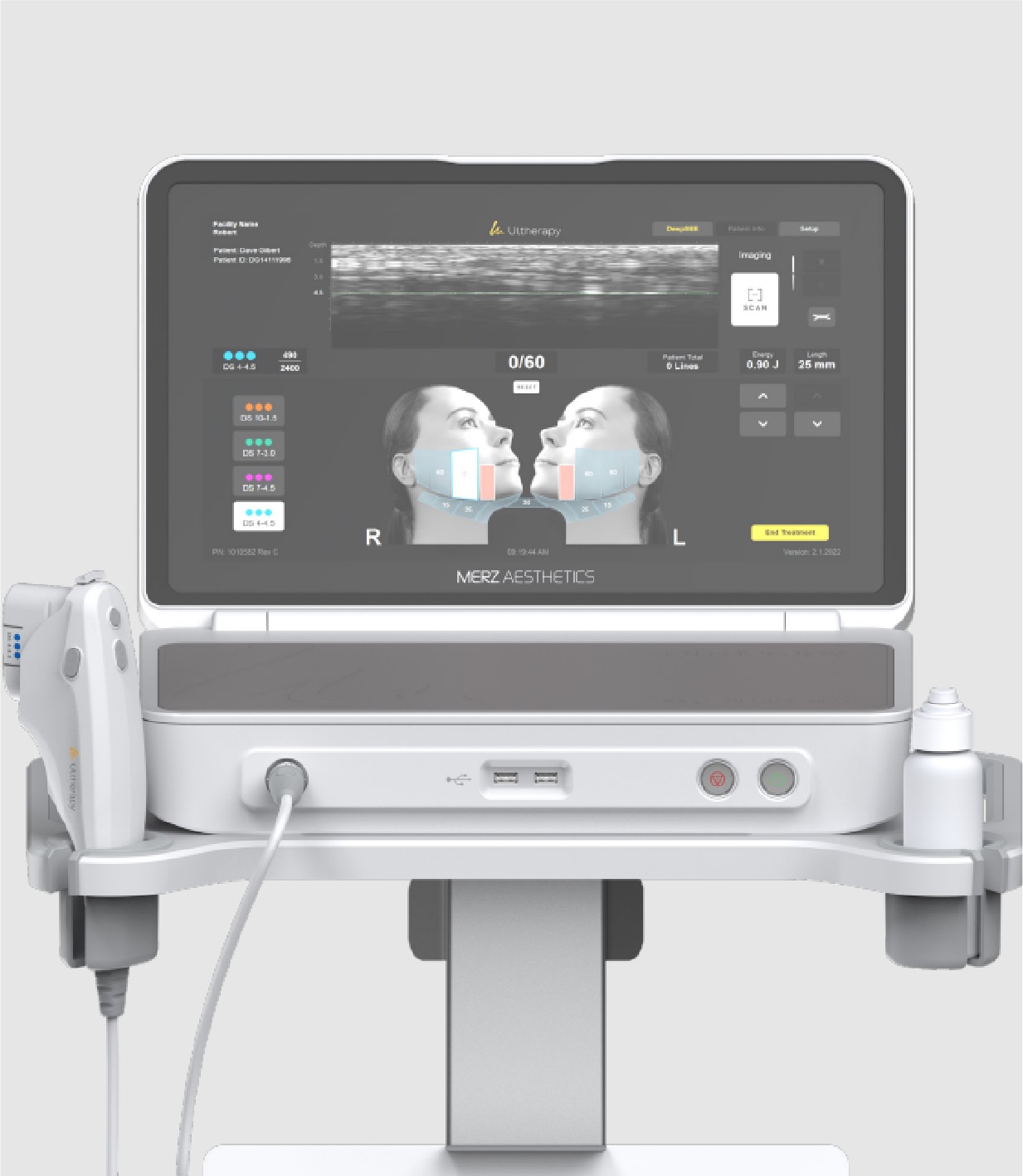
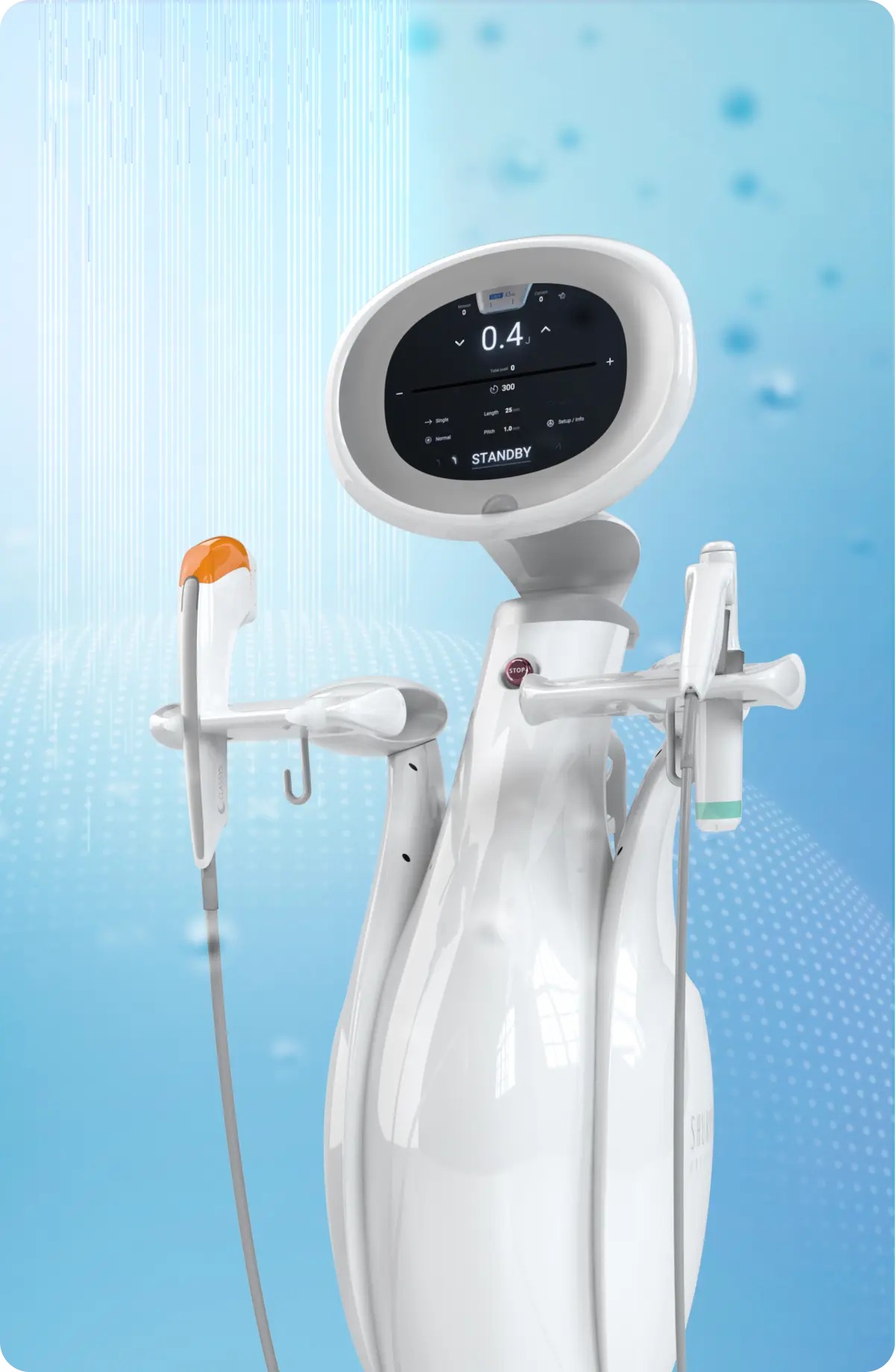
Here is the quick breakdown. Ultherapy, from US company Merz, is the original HIFU device and the only one with real-time ultrasound imaging that lets the operator visualize skin layers during treatment. Shurink from Classys offers a range of depth cartridges at a more accessible price point and has the widest adoption in South Korea. Linear Z from JEISYS uses a linear firing pattern as its main differentiator. Sofwave targets a fundamentally different skin layer from the other three.
| Device | Manufacturer | Firing Mode | Key Feature |
|---|---|---|---|
| Ultherapy | Merz (USA) | Point | Exclusive real-time ultrasound imaging, most evidence, highest cost |
| Shurink | Classys (Korea) | Point, Line | Wide depth cartridge range, strong value |
| Linear Z | JEISYS (Korea) | Point and Line | Linear firing reduces pain and treatment time, limited independent evidence |
| Sofwave | USA/Israel | Parallel Beam | 1.5mm dermis only, does not reach SMAS, focused on texture and fine lines |
Two points stand out in this comparison. First, only Ultherapy allows the operator to visualize blood vessels and nerves in real time to avoid them during treatment. Second, Sofwave does not reach the SMAS. Because depth and firing mechanism differ across devices, the intended effects and pain levels vary even among devices within the HIFU category.
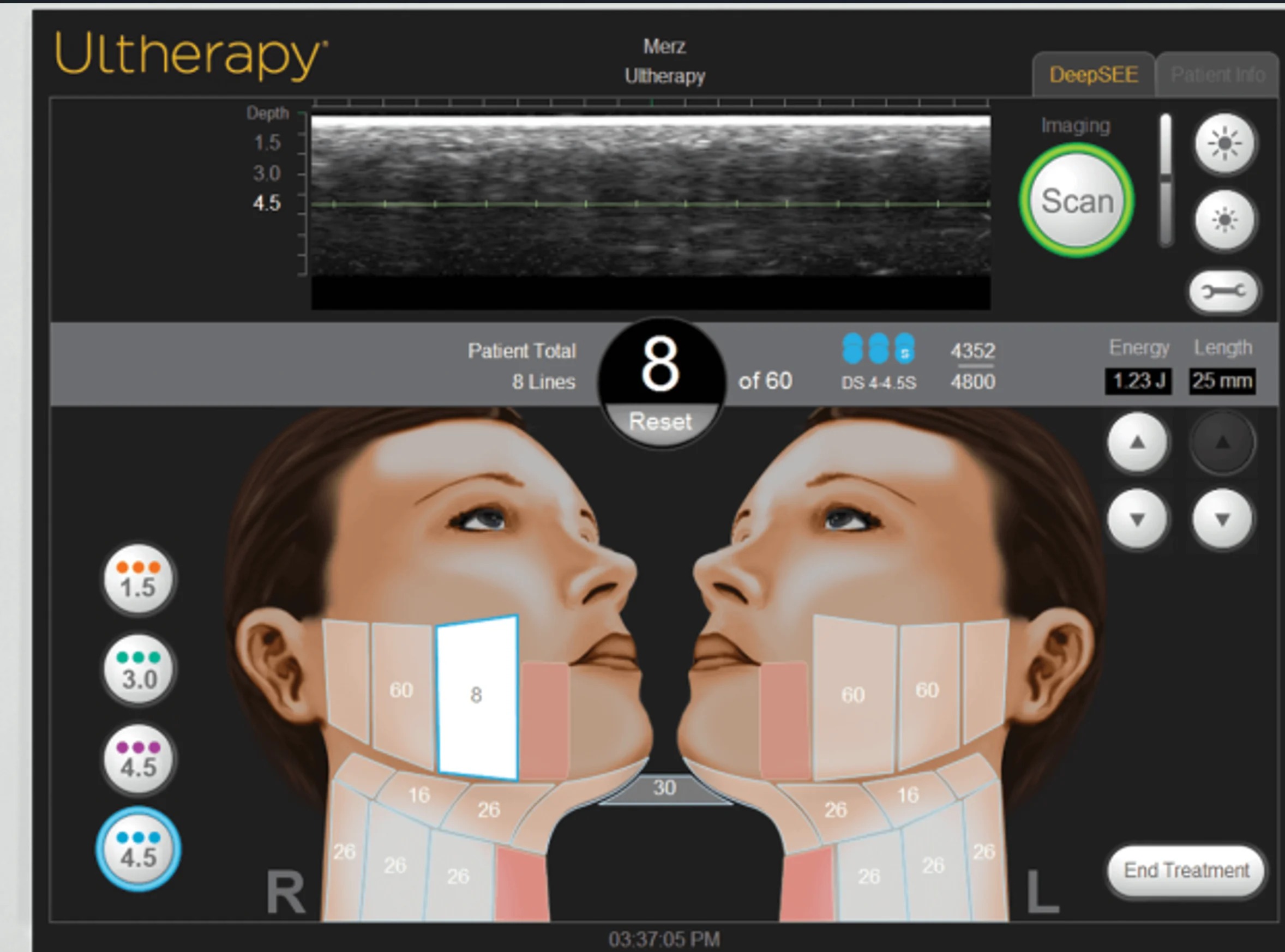
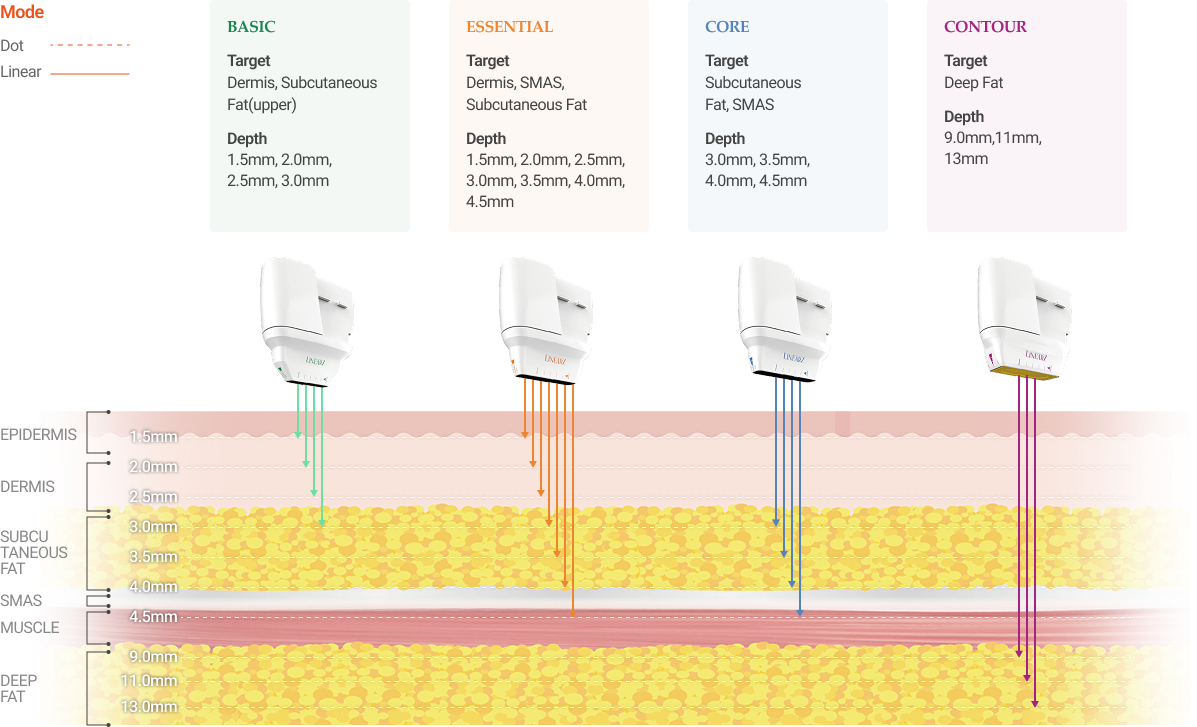
Which devices reach the SMAS?
Depth determines the type of lifting you actually get. Ultherapy, Shurink, and Linear Z can all reach 4.5mm or deeper to stimulate the SMAS. Correcting structural sagging requires working at this fascial layer, and all three can do it. Shurink and Linear Z can reach even deeper layers with certain cartridges.
Sofwave works only at 1.5mm, staying in the mid-dermis and never reaching the SMAS. Expecting Sofwave to lift visible sagging will likely lead to disappointment. What it does well is stimulate collagen in the superficial layers to smooth fine lines and improve skin texture.
This is a difference in application, not a quality ranking. Because Sofwave does not work near bone or nerve-rich deep layers, its safety profile is favorable and it suits people dealing with early-stage aging or surface-level concerns. For more pronounced sagging, the three devices that reach the SMAS are a better fit. The starting point for choosing is to clarify whether your concern is sagging or texture.
What do studies and reviews say about results?
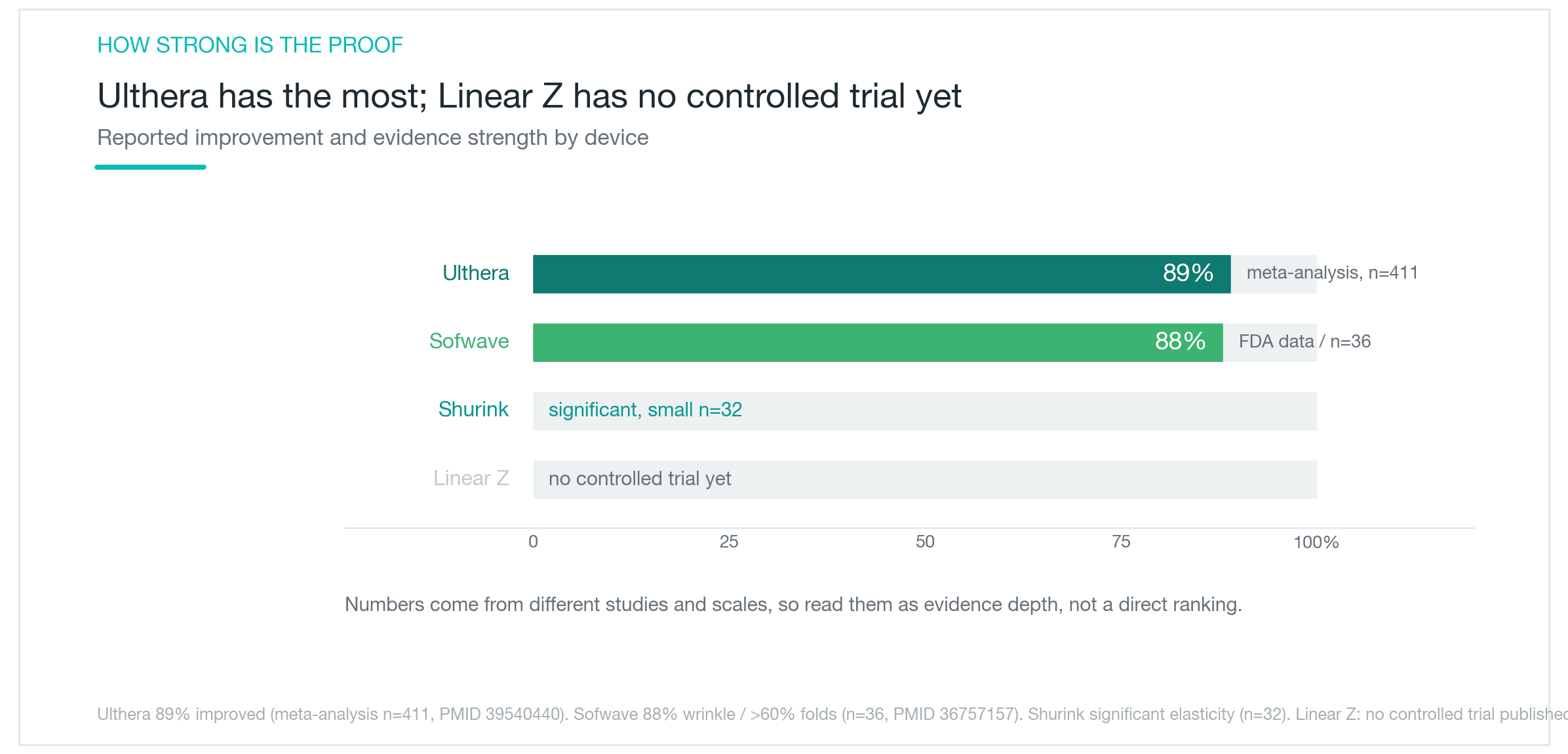
Evaluating devices fairly requires looking at both published research and real-world patient feedback. Ultherapy has by far the most clinical backing. A pooled analysis of over 120 studies found that approximately 89% of patients showed improvement by physician assessment, with brow elevation averaging around 1.7mm. Patient reviews consistently reflect this: the consensus is that Ultherapy delivers the most noticeable lift, though complaints about pain and price are equally consistent. This depth of evidence is why Ultherapy serves as the reference standard in evidence-based practice.
Sofwave also has published data, with wrinkle improvement rates reported in the high 80% range. Given that it does not reach the SMAS, this tracks with patient reviews, which show more satisfaction with smoother texture and firmer skin than with dramatic lifting of visible sagging.
Shurink has fewer large-scale, brand-specific clinical trials than Ultherapy, but its widespread use means operators have substantial hands-on experience, which matters a great deal for real-world outcomes.
Linear Z deserves an honest note. Patients frequently report that it is faster and less painful, but the independent clinical evidence for its efficacy is still thin, mostly manufacturer data and case reports. That is not the same as saying it does not work. If you prioritize validated data, Ultherapy is the clear leader; if you are weighing value and convenience alongside effectiveness, Korean devices are a reasonable consideration.
How do pain and treatment speed differ by device?
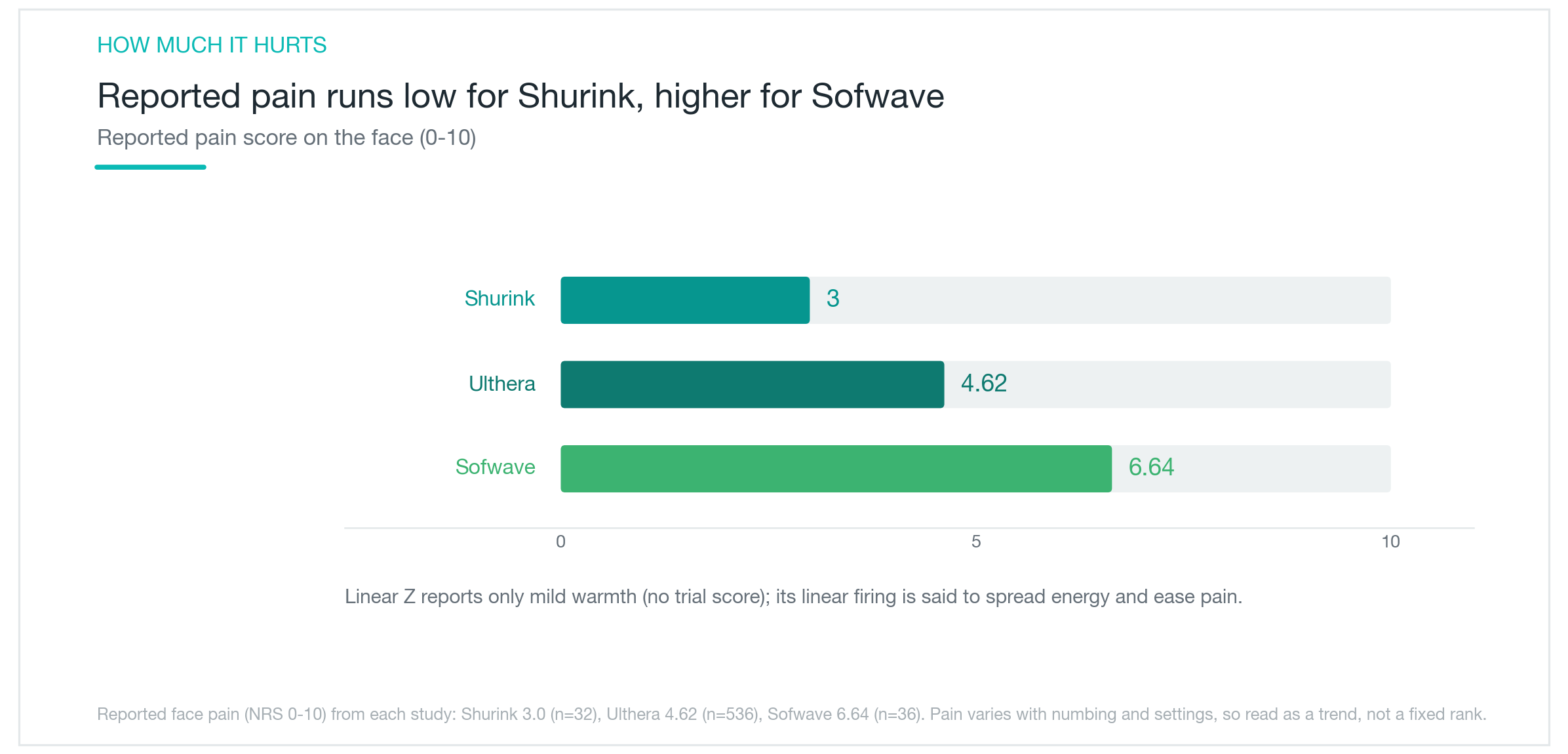
Pain levels vary meaningfully across devices. Published pain scores during treatment place Shurink at roughly 3/10, Ultherapy at around 4.6/10, and Sofwave at approximately 6.6/10. Patient reviews match these numbers: Shurink is generally described as tolerable, while Sofwave is noted as more intense. That said, pain is heavily influenced by anesthesia, energy settings, and the individual practitioner, so treat these figures as directional rather than absolute.
Firing mode affects both pain and treatment speed. Point-by-point firing is the baseline, but line-mode firing covers a broader area in a single pass. Linear Z leads with this feature, and Shurink also offers a line mode. Line firing distributes energy across a larger surface area, shortening treatment time and reducing localized intensity, which lowers perceived discomfort. A full-face treatment can be completed in minutes, appealing to time-constrained patients.
On speed and comfort, devices with linear firing modes have a real practical advantage. However, these benefits are largely based on manufacturer specifications and clinical experience rather than independent efficacy trials. Being faster and less painful is a genuine benefit, but it does not automatically translate to better outcomes.
Choosing a device for sagging or texture concerns
There is no universal answer, because each device targets a different layer and excels in different areas. If your primary concern is visible sagging and you prioritize the most validated evidence along with real-time safety imaging, Ultherapy is the reference point. It comes at the highest price. For SMAS-level treatment at a more accessible price, Shurink is the practical mainstream choice.
If speed and lower pain are priorities, Linear Z is attractive, but the thinner evidence base is worth factoring in. If your concern is more about skin texture, fine lines, and early aging prevention rather than structural lifting, and you want a lower-risk, less painful option, Sofwave fits well. Just keep in mind that Sofwave is not a structural lifting device.
Start with your specific concern rather than the device name. Identifying whether your issue is sagging or texture, whether you prioritize evidence or cost, and how sensitive you are to pain will narrow the choices considerably. And regardless of device, outcomes depend heavily on operator experience: the same machine at different energy settings and shot counts can produce very different results. Finding a skilled, experienced practitioner matters as much as choosing the right device.
Was this helpful?
About this article
Written by a practising aesthetic physician and intended for general education — not a substitute for individual medical advice.
Read next

Shurink and Ultherapy: Differences in Effect, Pain and Price Compared
Shurink Universe and Ultherapy are both HIFU lifting devices, yet they diverge on real-time imaging, default energy, pain, and price. A balanced breakdown to help you choose based on your degree of sagging and budget.
By Dr. Lee

Ultherapy and Thermage: Which Suits Your Sagging?
A clear breakdown of how Ultherapy (focused HIFU reaching the SMAS layer) and Thermage (monopolar RF heating the dermis) differ, what head-to-head research actually found, how they compare on pain, and how to choose based on your specific concern rather than hype.
By Dr. Kim
Rejuran, Water-Glow Shots and Salmon Injections: Differences, Effect and Duration
Rejuran, Juvelook, and Re2o all fall under the skin booster label, but their active ingredients, mechanisms, and accumulated clinical evidence are entirely different. An evidence-based breakdown of what each one actually does and how to decide which fits your skin concern.
By Dr. Lee