Female Hair Loss Causes and Symptoms, Treatment by Type, and Management
By Dr. Kim7 min read
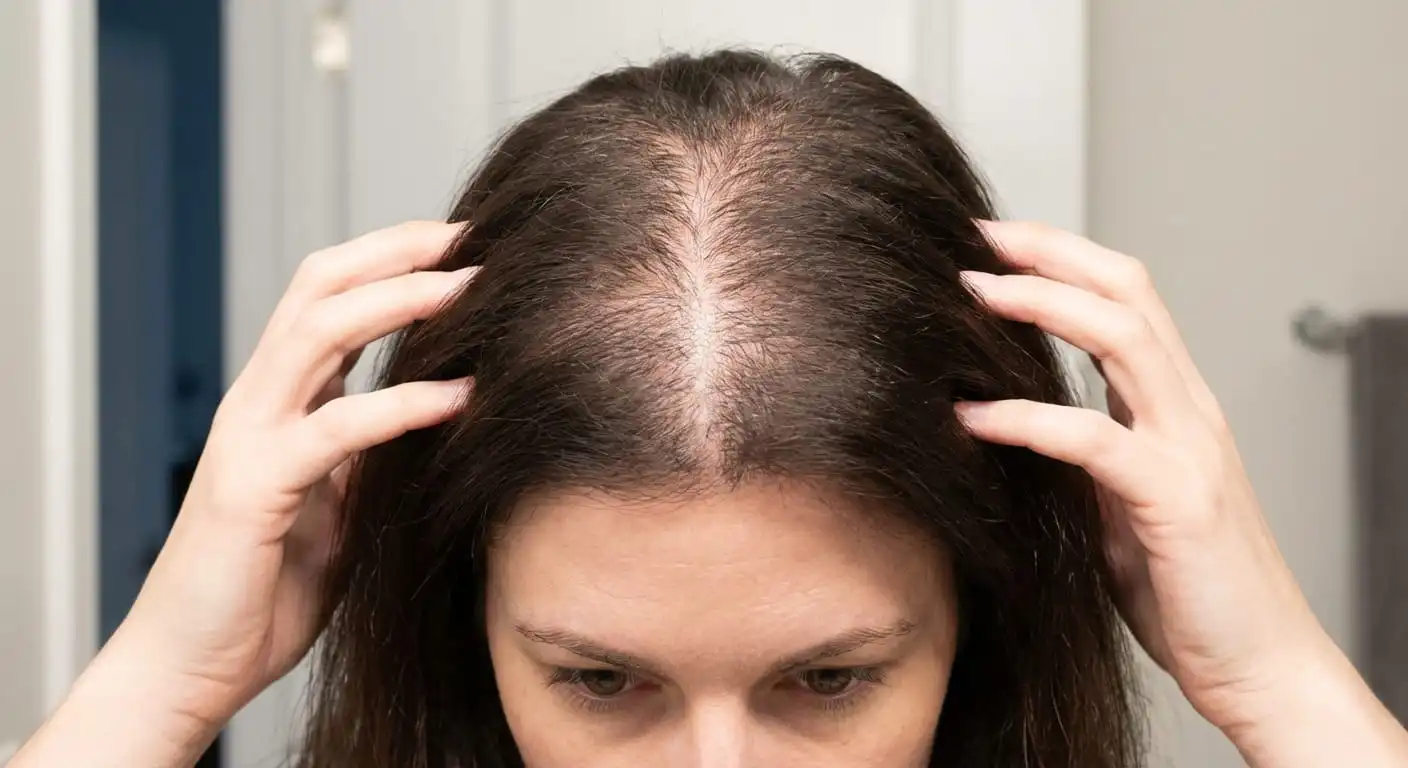
Hair loss in women looks almost nothing like hair loss in men. Men tend to see the hairline move back or a bald patch open up at the crown, but women more often notice a slow, overall thinning that spreads across the whole crown area. Because it happens so gradually, many women don't even catch it at first.
There's also no single cause behind it. It could be hormonal, or it could come from stress, childbirth, or low iron. Since the cause changes both how fast it progresses and whether it can be reversed, figuring out which type you're dealing with is really the first step toward managing it.
Why does female hair loss start at the crown?
At the core of female pattern hair loss is something called follicular miniaturization. Hair follicles gradually shrink, so instead of thick, long strands, they can only produce fine, short ones. Think of repotting a tree into smaller and smaller pots each year. It's the same tree, but it keeps growing weaker and smaller.
The main driver behind this miniaturization is DHT (dihydrotestosterone, a male hormone that testosterone converts into through an enzyme in the body). When DHT binds to receptors in genetically sensitive follicles, those follicles cut their growth phase short and move into a resting phase early. The shorter the growth phase, the less time hair has to thicken before it stops growing altogether.
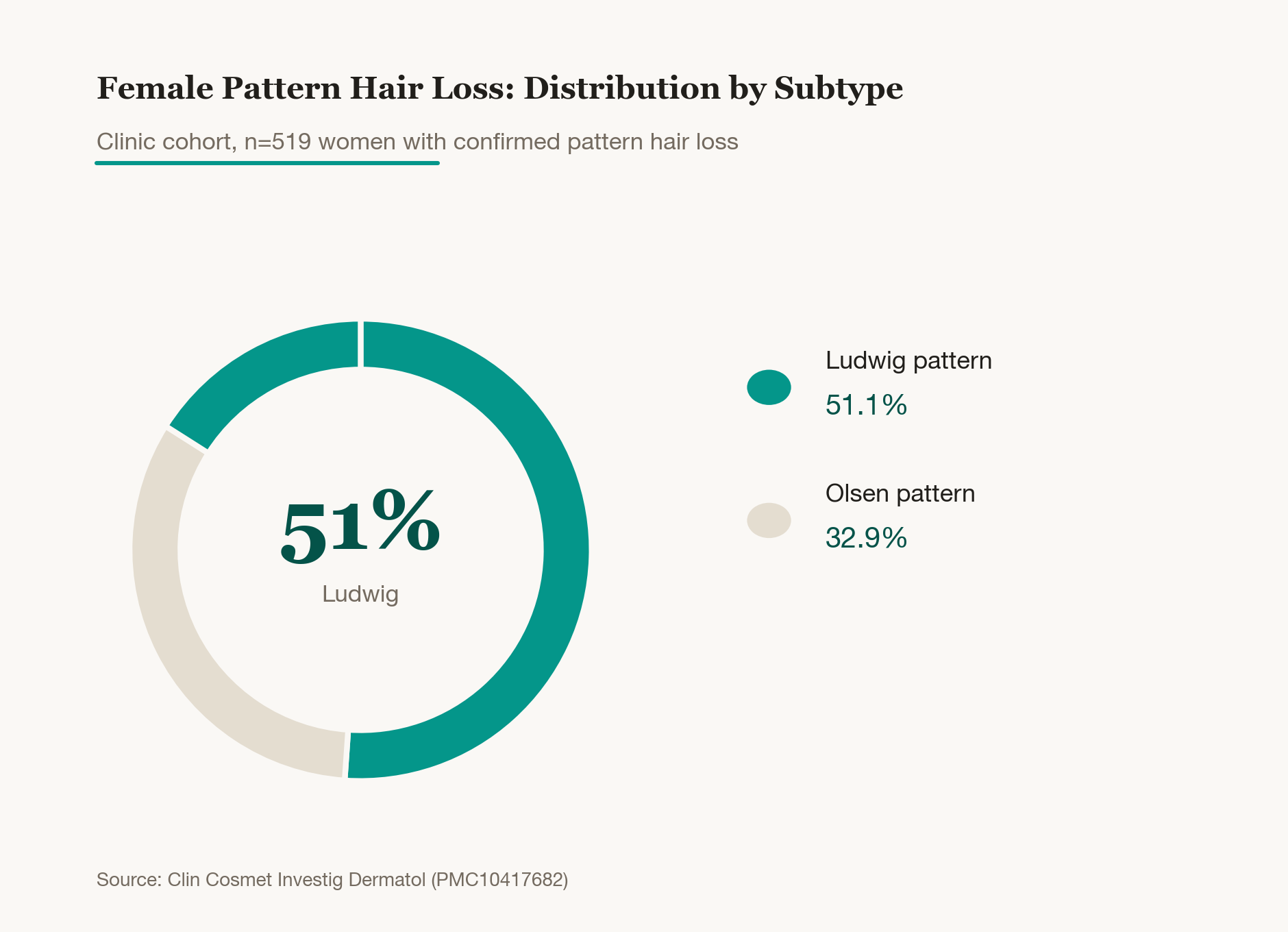
That said, women rarely lose hair from one specific spot the way men do. The genes behind male pattern baldness and female pattern hair loss appear to be different, and because sensitive follicles are spread more broadly across a woman's scalp, the result tends to be overall thinning rather than a bald patch in one area.
How do hormonal and stress-related hair loss differ?
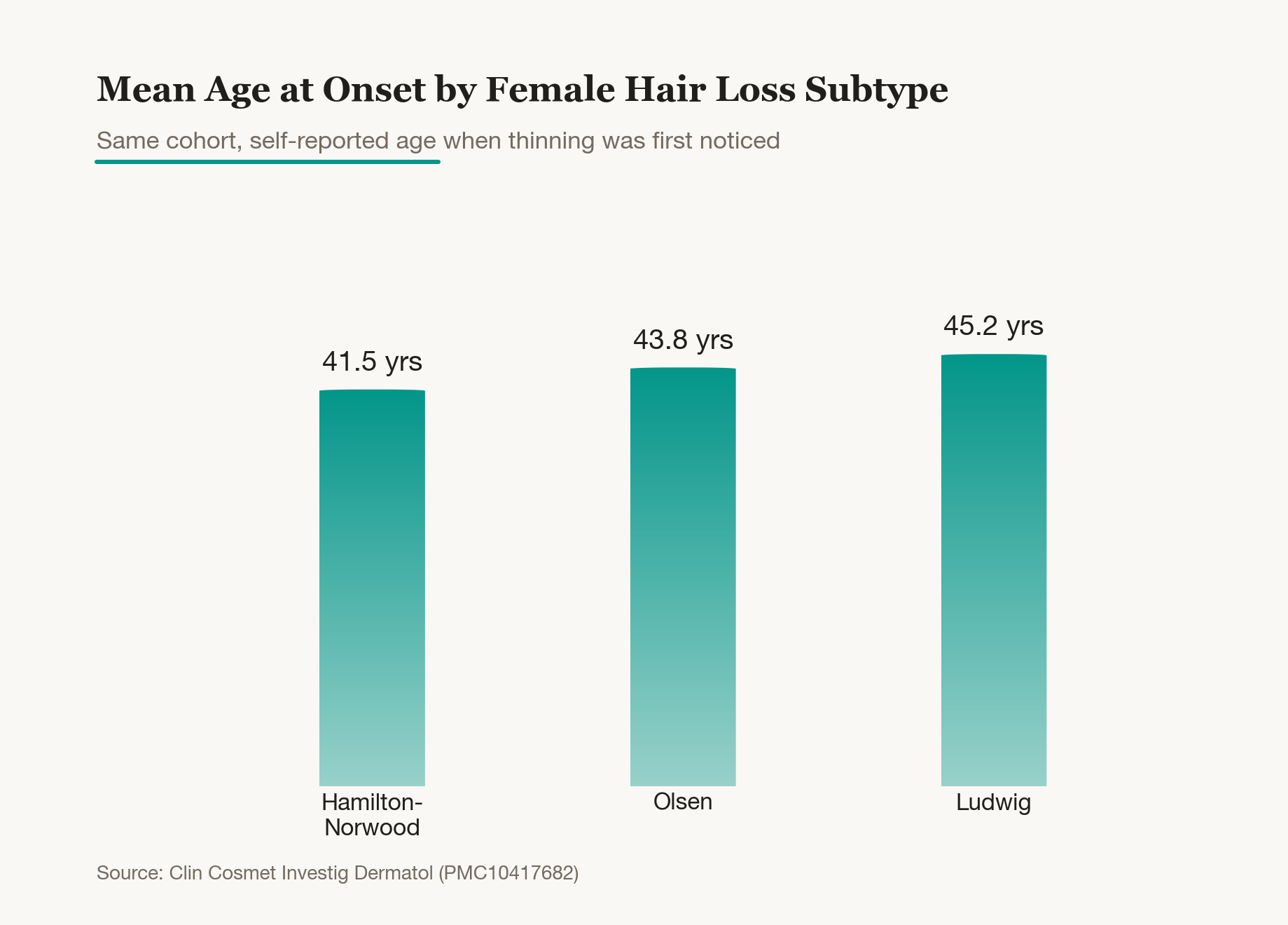
Female hair loss generally falls into two categories. One is the hormonal type described above, and the other is stress related shedding, known as telogen effluvium (resting phase hair loss). The two behave in completely different ways.
Hormonal hair loss is a structural change where the follicles themselves gradually shrink, so it plays out slowly over years. Telogen effluvium is different. The follicle structure stays intact, but hairs that should be in their growth phase suddenly get pushed into the resting phase all at once. That's why it can feel like hair is coming out in clumps overnight.
Telling the two apart matters because recovery works differently for each. Once the trigger for telogen effluvium is gone, most follicles bounce back and start growing normally again. Hormonal hair loss, on the other hand, keeps pushing follicles to shrink further if it's left untreated.
Why does hair fall out after childbirth or surgery?
When the body goes through a major physical shock, a large number of hair follicles stop their growth phase at the same time and shift into the resting phase together. Normally each follicle is on its own cycle, so the growth and resting phases are staggered and you only lose a small amount of hair each day. A big event syncs all those timers up at once.
Childbirth is the classic example. During pregnancy, hormonal changes keep more follicles than usual sitting in their growth phase. After delivery, hormone levels reset, and a large batch of those follicles moves into the resting phase together. That's why noticeable shedding often shows up around two to four months after giving birth.
Surgery, illnesses with high fever, rapid weight loss, and intense psychological stress all work the same way. The body reads the event as a threat and pulls resources away from lower priority processes, hair growth being one of them. The good news is that this kind of resting phase shedding usually resolves on its own within four to twelve months.
Are iron and thyroid related to hair loss too?
The cells that make up hair follicles are some of the fastest dividing cells in the body, which means they're also among the first to feel it when nutrient or oxygen supply drops even slightly.
Low iron reduces the blood's ability to carry oxygen to cells. Several studies have found that women with lower serum ferritin (a marker of the body's stored iron) are more likely to experience telogen effluvium. That link isn't fully settled science though, and results vary quite a bit from study to study.
Thyroid hormone affects hair for a similar reason. The thyroid regulates the body's overall metabolic rate, so when it's underactive or overactive, the rate at which follicle cells divide gets thrown off too. That's why, when hair loss shows up without an obvious cause, checking both iron and thyroid levels is often recommended.
Hair loss together with PCOS
Women with polycystic ovary syndrome (PCOS, a condition involving irregular ovulation along with relatively elevated male hormone levels) frequently deal with hair loss as well. When the ratio of male hormones in the body rises, it makes it easier to trigger the same DHT driven miniaturization process described earlier.
Hair loss from PCOS tends to show up alongside acne, irregular periods, and hirsutism (excess hair growth on the face or body), so it's rarely an isolated symptom. Looking at whether it's appearing together with these other signs can help with diagnosis.
In these cases, scalp care alone won't address the underlying issue. Treatment usually needs to target the hormonal imbalance directly, which is why it's typically approached that way.
How does treatment differ by cause?
Different causes call for different approaches. Here's a summary of the main options.
| Option | How it works |
|---|---|
| Minoxidil (topical) | Increases blood flow around the follicle and extends the growth phase. Exact mechanism still not fully understood, but wider blood vessels are thought to improve nutrient delivery to follicles. Visible change takes 4 to 12 weeks, and it needs to be used consistently to keep the effect. |
| Spironolactone (oral) | Blocks androgen receptors in the body, reducing how much DHT can bind to follicles. Mainly used for hormonal female pattern hair loss, and effects typically take several months to appear. |
| Iron and thyroid supplementation | Only recommended when bloodwork shows low levels. Taking extra iron when levels are already normal isn't advised. |
| Scalp exfoliation and gentle cleansing | Doesn't directly regrow hair, but helps by preventing scalp inflammation or excess oil from making the environment around the follicle worse. |
Lifestyle management to prevent hair loss
Hair reflects what's going on in the body as a whole, so basic daily habits usually matter more than any single treatment.
- Extreme dieting or not getting enough protein can cut off the raw materials follicles need, which can trigger telogen effluvium.
- Frequent coloring or heavy heat styling mostly damages the hair shaft rather than the follicle itself, but combined with scalp irritation it can slow recovery.
- Chronic sleep deprivation and stress are known to disrupt hormone balance throughout the body and increase how often telogen effluvium happens.
- If sudden, noticeable hair loss continues for several months, seeing a dermatologist to pin down the actual cause, rather than guessing on your own, is the faster path to recovery.
References
Korean Dermatological Association, American Academy of Dermatology (AAD), and Ministry of Food and Drug Safety (MFDS).
Was this helpful?
About this article
Written by a practising aesthetic physician and intended for general education — not a substitute for individual medical advice.
Read next
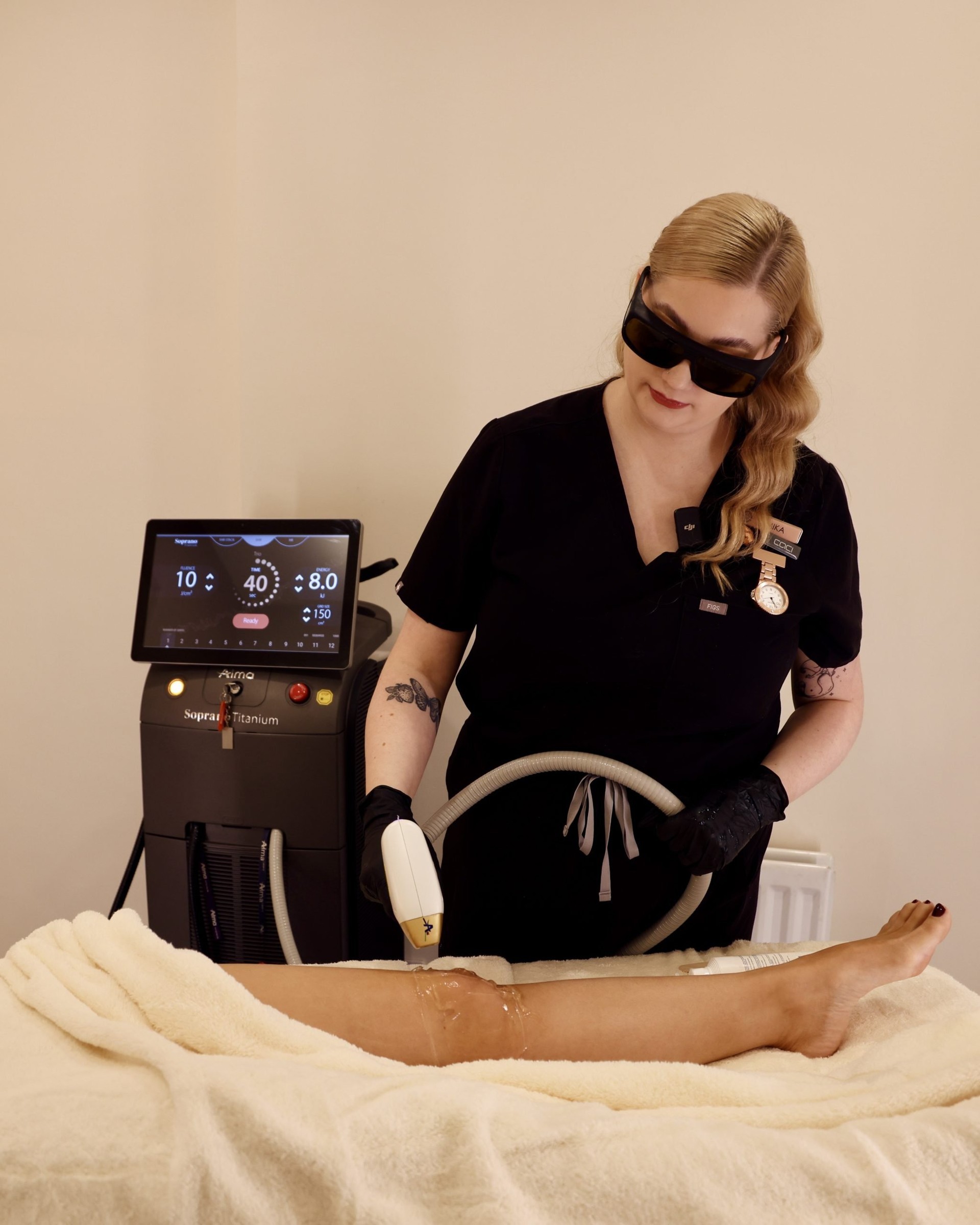
Brazilian Hair Removal: Pain, Number of Sessions and Aftercare
Brazilian hair removal is often far more painful than arm or leg treatments, and it usually takes more sessions before results show. Here is how the hair growth cycle and the skin in this area differ from other parts of the body, and how to manage the process safely.
By Dr. Kim
Keloid Scar Causes and Treatment, Including Recurrence and Management
A keloid is a scar that keeps piling up collagen even after the wound has fully healed, growing larger than the injury that started it. Here's why the collagen never seems to know when to stop, how a keloid differs from an ordinary scar, how injections and laser treatments work to calm it down, and why it tends to come back so often.
By Dr. Lee
Cafe-au-Lait Spots Returning After Laser: Causes, Number of Sessions and Expectations
A café au lait spot forms because the pigment-making cells in that one patch of skin are locally overactive. Laser treatment breaks up the pigment that has already built up, but it doesn't switch off those cells, which is why the color so often returns. Here's the biology behind it, why results differ so much from person to person, and what a realistic treatment timeline actually looks like.
By Dr. Kim